Dining Room Hutch Decorating Ideas: 5 Display Tips

By Julio Arco
Architect and online interior designer
In this post
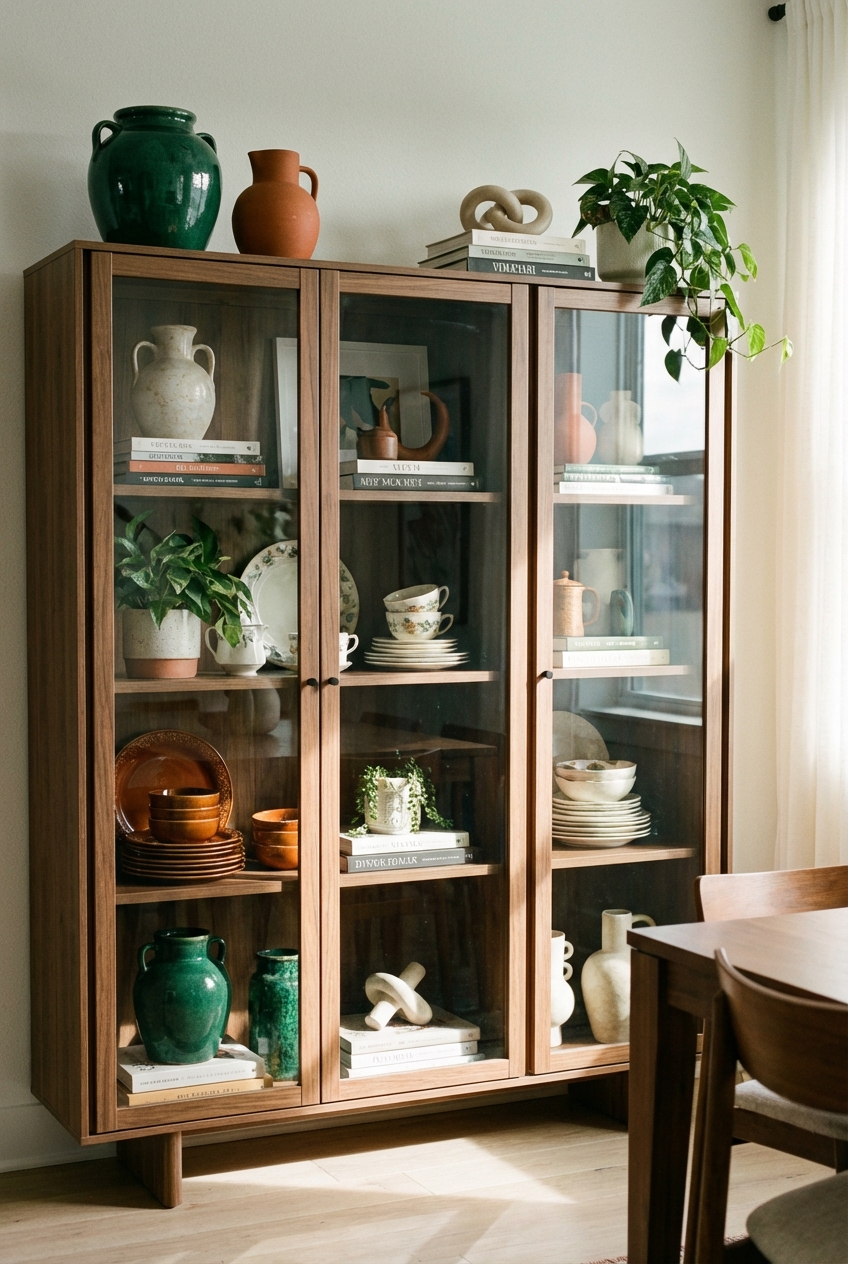
To style a dining room hutch, empty it completely, put the heaviest-looking pieces on the lowest shelf, layer objects front to back, mix at least three materials, and leave real gaps between groups. Add warm light and it stops looking like storage and starts looking like a display.
It's very common for a hutch to become a catch-all for paperwork, mismatched containers and china nobody has used in years. Don't feel bad if yours has. The fix is a method, not a shopping trip.
How do you balance a hutch with visual weight?
Start by taking everything out and wiping down the shelves. You can't style around clutter, and a blank cabinet shows you what you're really working with.
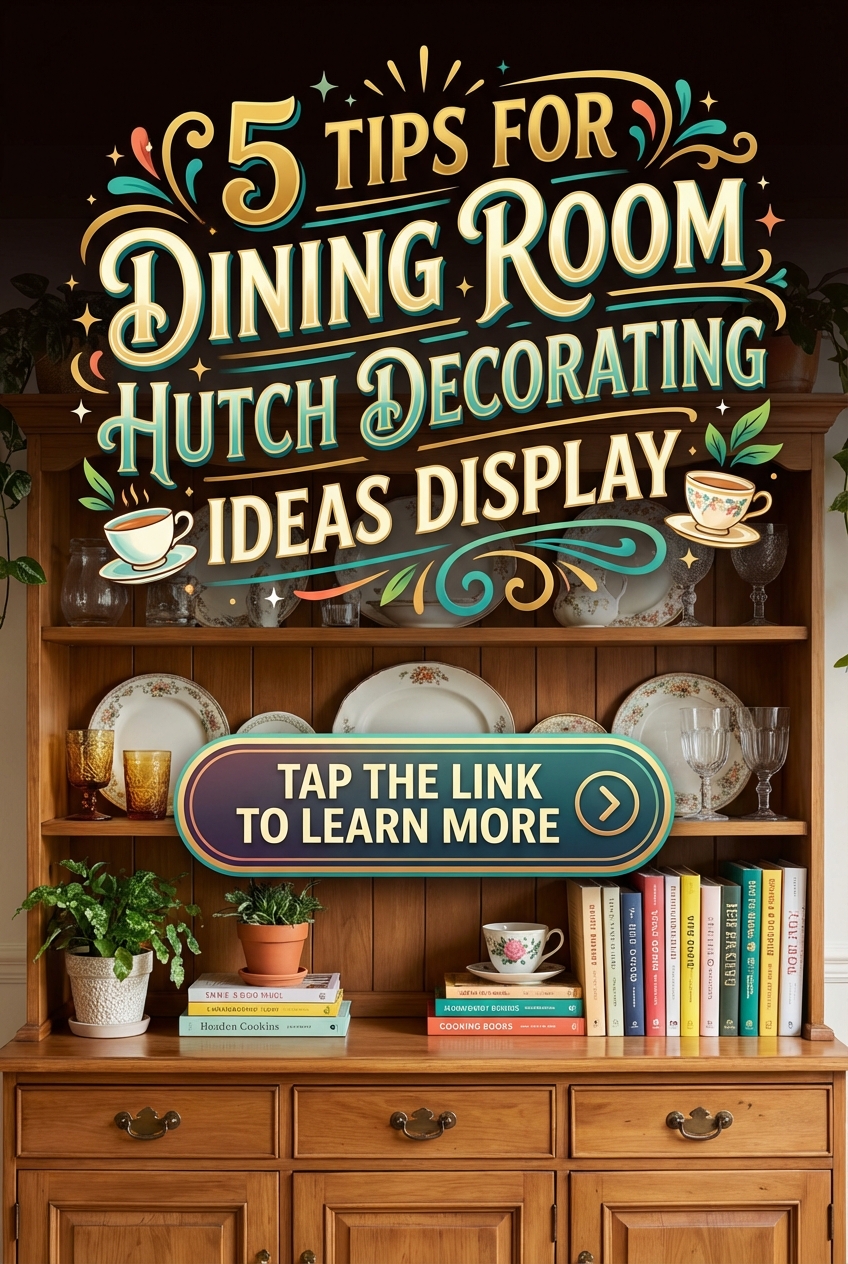
Visual weight is how heavy an object looks, which isn't the same as how much it weighs. Dark, large and solid pieces look heavy. Clear glass, pale colors and open-work pieces look light. Put the heavy-looking items low and the light ones high, and the display feels grounded, much like a building that is wider at its base.
- Bottom shelf of the upper cabinet: tureens, stacks of dinner plates, heavy pitchers, a large platter leaned at the back.
- Upper shelves: stemware, teacups, small figurines.
As an architect, I'd place two matching anchors, such as a pair of large bowls or two identical plate stacks, at the left and right of the lowest shelf. The symmetry frames everything above it.
A common mistake is putting small knick-knacks on the bottom shelf, where they get lost. Group them on a tray so they gain collective mass, or move them up to eye level.
How do you add depth to hutch shelves?
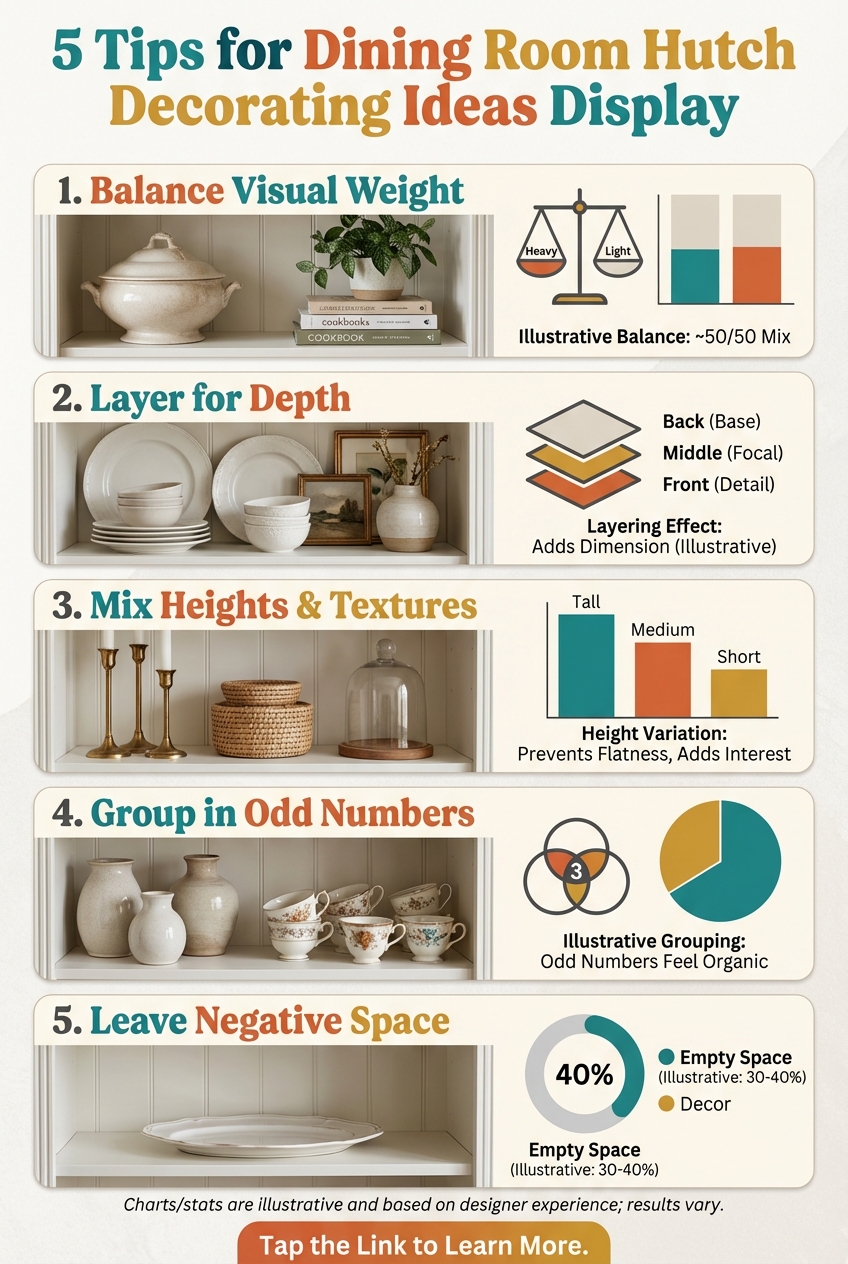
Most hutch shelves are about 12 to 15 inches deep, yet people often use only the front few inches. A single row of objects looks like a store display. Use three layers instead.
- Back: lean platters, trays or framed art against the back panel. Use a plate stand if the plates have no lip.
- Middle: stacks of salad plates, bowls or books that create height.
- Front: small, interesting pieces like a creamer, napkin rings or a piece of fruit.
Fill tall gaps with risers
If a shelf has 14 inches of height and you stack plates only 4 inches high, the rest is dead space. Acrylic risers or a stack of coffee table books lift a bowl and fill that gap. Let edges overlap slightly, so a bowl covers the corner of the platter behind it. Overlap ties objects into one composition.
Which materials look best together in a hutch?
A wooden hutch filled only with white ceramics can feel sterile, and one filled only with clear glass can look empty. Aim for at least three of these:
- Ceramics: plates, bowls, serving ware.
- Glass: stemware, pitchers, vases. It reflects light.
- Metal: candlesticks, pewter mugs, brass bowls. It adds a crisp edge.
- Wood or woven pieces: cutting boards, baskets, salad bowls.
- Textiles: folded linen napkins or a runner under a heavy bowl.
Books work well here, and they don't have to be cookbooks. Stack them flat to act as a mini shelf for an object, or stand them up to fill a gap. Removing glossy dust jackets gives a calmer look.
Every hutch also benefits from one organic element: dried botanicals, preserved boxwood balls or a bowl of faux lemons. The soft shape breaks up all those straight lines. If you like the collected look, my post on designing an eclectic room goes further with mixing.
How much empty space should a hutch have?
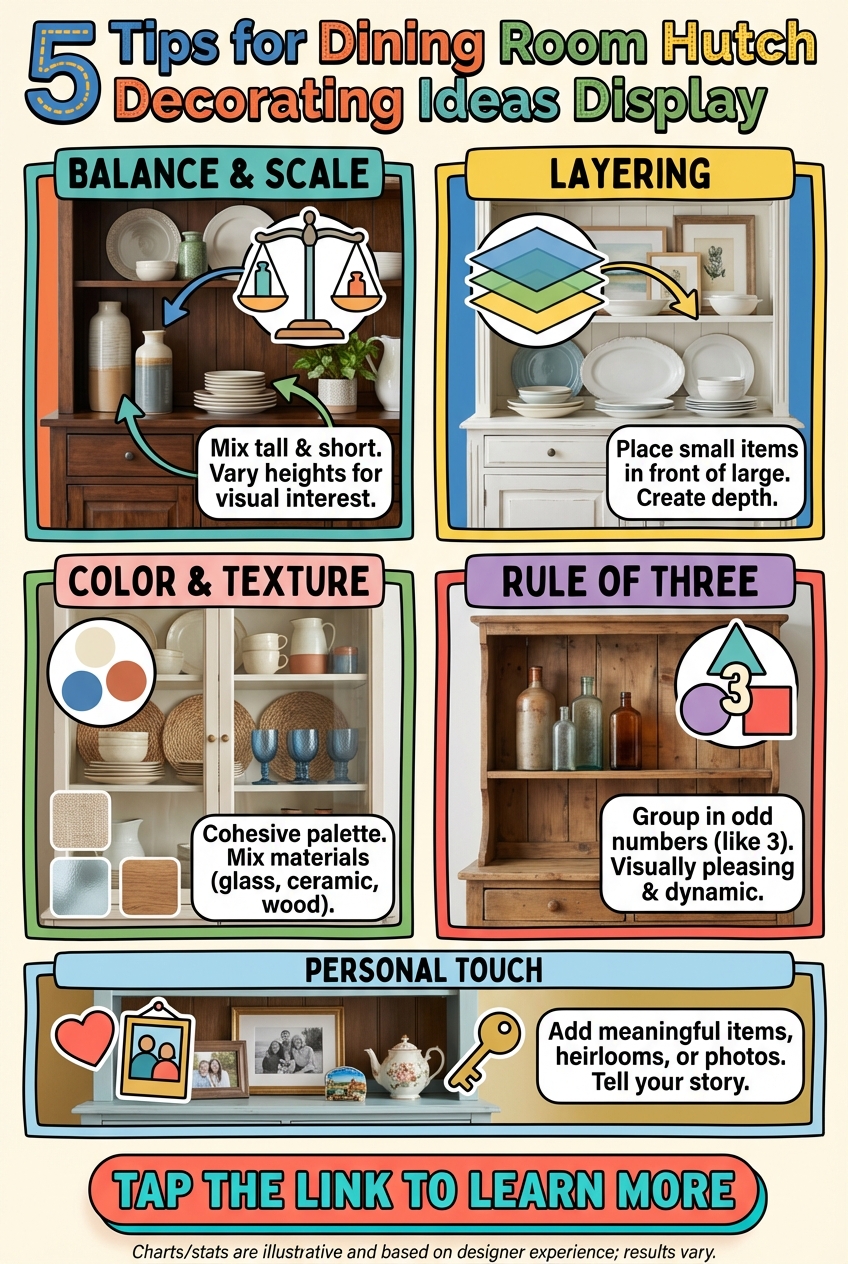
If every inch is filled, the eye has nowhere to rest and the display reads as messy. Empty areas are what let your favorite pieces stand out.
Odd-numbered groupings usually look better than even ones, so cluster small objects in threes or fives. A tall candlestick, a medium vase and a small paperweight form a loose triangle that leads the eye up and down.
You can use the same idea across the whole cabinet. If you own blue pieces, put a pitcher on the upper left, a bowl on the middle right and a platter at the bottom center. The eye travels over the entire unit.
Avoid spacing items evenly, like 4 inches between every cup. Cluster them and leave larger gaps, around 8 to 10 inches, between clusters. Uneven spacing looks more natural.
Dark wood back panel swallowing dark dishes? Pale foam board cut to fit each section, or peel-and-stick wallpaper in a light texture, restores contrast without permanent changes. Paint choices matter too, and the small dining room color ideas can help you pick a backdrop.
How do you light a hutch and keep it practical?
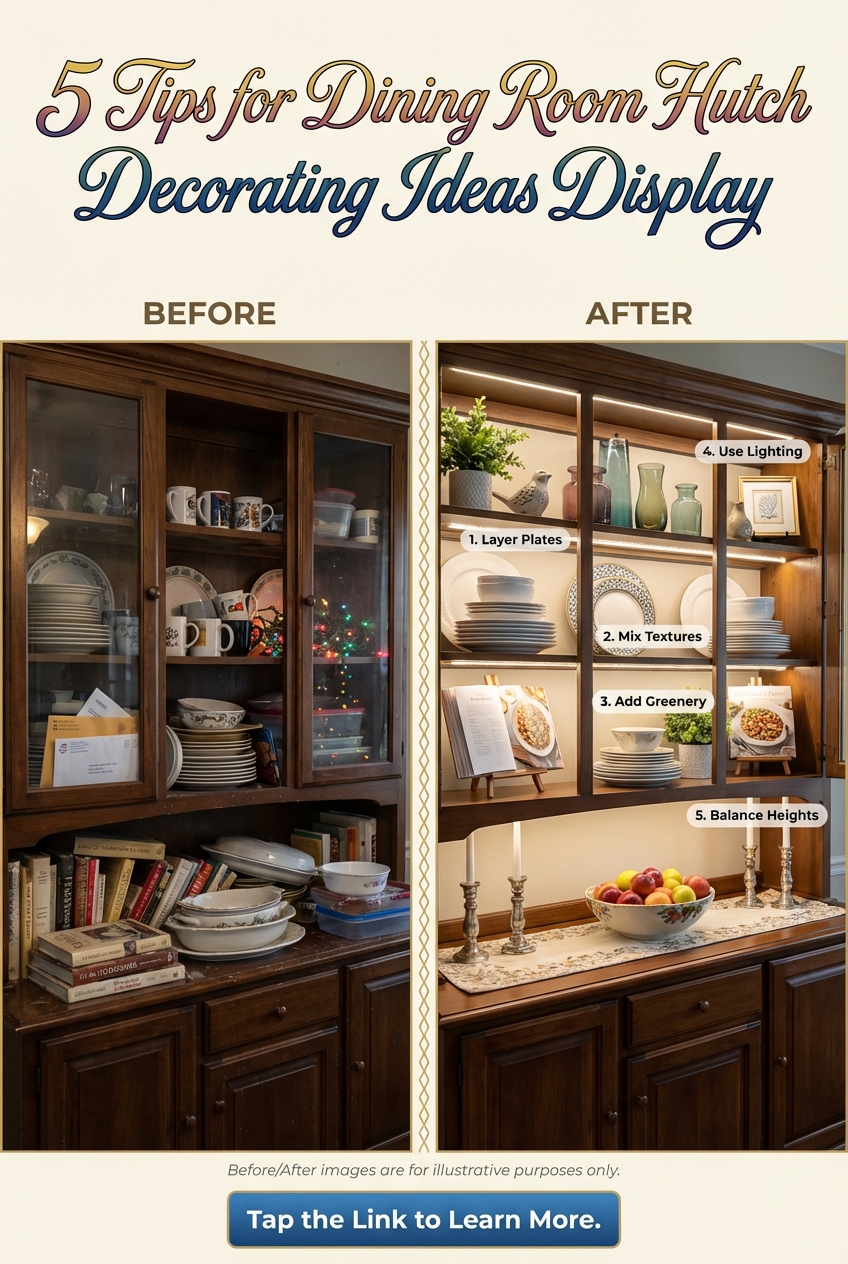
A dark hutch hides what you've styled. Vintage pieces rarely have built-in lights, but you don't always need an electrician.
- Battery-operated LED puck lights stick under shelves. Choose a warm white of about 2700K to 3000K, since cool blue tones look clinical.
- An LED strip run vertically behind the face frame lights every shelf, if you can hide the cord.
- A small cordless lamp fits in an open middle section and adds a cozy glow.
Secure breakables and keep daily items reachable
If you have pets, kids or live in an earthquake-prone area, secure fragile pieces. Museum wax (earthquake putty) under a vase holds it in place and releases with a firm twist. A tall hutch should also be anchored to the wall, and a licensed professional can help if you're unsure about your wall type.
Keep the platter you use every Sunday on the bottom shelf, not behind three heavy pieces. Use the closed lower cabinets for linens, napkin rings and seasonal decor, in bins or baskets, so the upper section stays tidy. If your dining room leans vintage, the mid-century modern dining room post shows how to pair a hutch with the rest of the room.
A quick final check
- Walk past the hutch. If plates rattle, adjust the stands or add a dot of museum wax.
- Step back 10 feet and squint. If one color dominates a corner, move some pieces across.
- If it feels crowded, remove two items from each shelf.
- If everything sits at one height, add a book stack or a taller vase.
- Check that something organic or woven is in there.
Shelves with odd corners are a similar puzzle, and decorating a niche uses many of the same ideas.
Frequently asked questions
Can you mix silver and gold in a hutch display?
Yes. Mixed metals look collected as long as they seem intentional. If most pieces are silver, add two or three gold accents so a single gold item doesn't look like a stray.
How do you style the top of a hutch?
Leaving it empty keeps the ceiling height visible. If the ceilings are high and the hutch looks short, use a few large identical pieces, such as woven baskets or matching pitchers, and skip small items that read as clutter from below.
What is the best way to store wine glasses in a hutch?
Group them by type, such as red, white and champagne, and line them in rows. A mirrored tray gives a more styled look.
What if the back of my hutch and my dishes are both dark?
Add contrast behind the dishes. Light foam board pressed into each section, or peel-and-stick wallpaper, works well and is renter-friendly.
Filed under
ArticlesMeet the author
Written by an architect.
Julio Arco is a passionate architect with years of experience in architecture, interior design, urban design, and housing. He studied at prestigious universities across North America and Europe.

- Name
- Julio Arco
- Job
- Architect and online interior designer
- Studied
- Architecture, ITESM · Urban Design and Housing, McGill
- Partner
- Thor, Australian Shepherd
- Thor’s title
- Head of quality control