Bird Feeder Ideas for Your Yard, Balcony or Window
Bird feeder ideas for yards, balconies and windows: styles, materials, placement and cleaning tips, plus easy DIY feeders you can make cheaply.

By Julio Arco
Architect and online interior designer
In this post
The best bird feeder is one you can see from where you sit, refill without a ladder, and clean in two minutes. Pick the style second. Start with a spot within view of a window or seating area, then choose a feeder that suits the space and the birds you want to attract.
Feeders are also among the simple garden ideas for yard and balcony projects: they cost little, need no digging, and give a still corner some movement. Wisconsin Horticulture notes that landscaping can invite wildlife into your yard, and a feeder is the quickest way to start.
Where should you put a bird feeder?
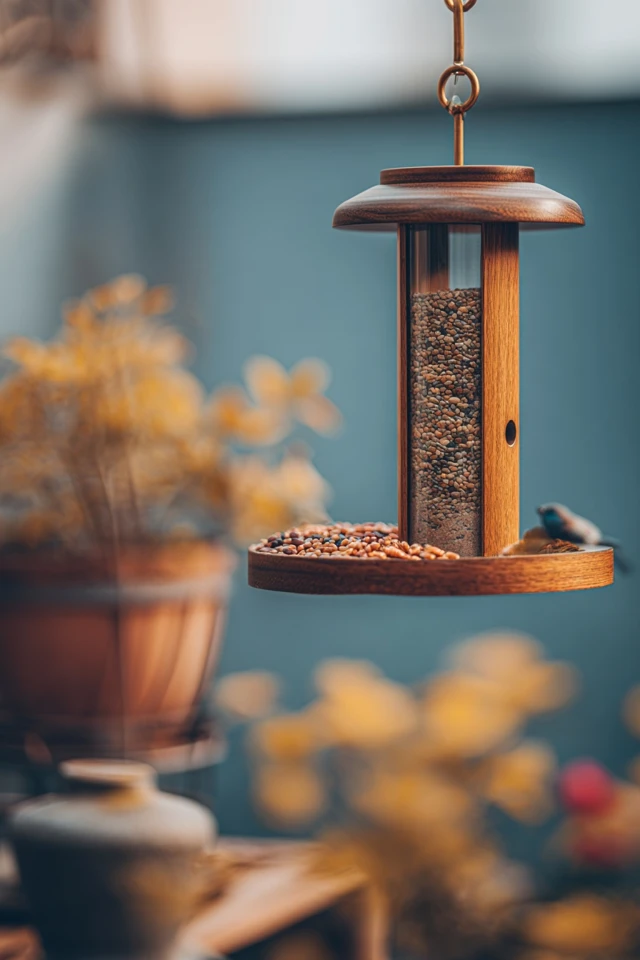
Placement decides whether you enjoy the feeder or forget it. Measure the distance from your favorite chair to the spot, then check what the birds will see around it.
- Choose a spot you can see from a kitchen window, desk or sofa. Close enough to see detail, far enough that people moving indoors don't spook the birds.
- Glass reflects the sky, and birds can fly into it. Mount feeders either right against the window or well away from it, and add decals or screens if you see strikes.
- Keep some cover nearby, such as a shrub or small tree, so birds have somewhere to retreat.
- Place feeders where you can reach them. If refilling is a chore, you'll stop doing it.
If you have a dog or cat, think about the ground below. Spilled seed attracts rodents and tempts dogs, and a cat hiding under a low feeder is bad news for the birds. Hang feeders higher, sweep up hulls, and ask your vet if your dog has eaten moldy seed.
Which bird feeder styles work best?
Style matters for how a feeder looks, but the type of feeder decides which birds show up. A platform tray suits many species. A tube holds small seed. A suet cage serves woodpeckers and nuthatches. A hopper keeps seed dry.
Classic and rustic
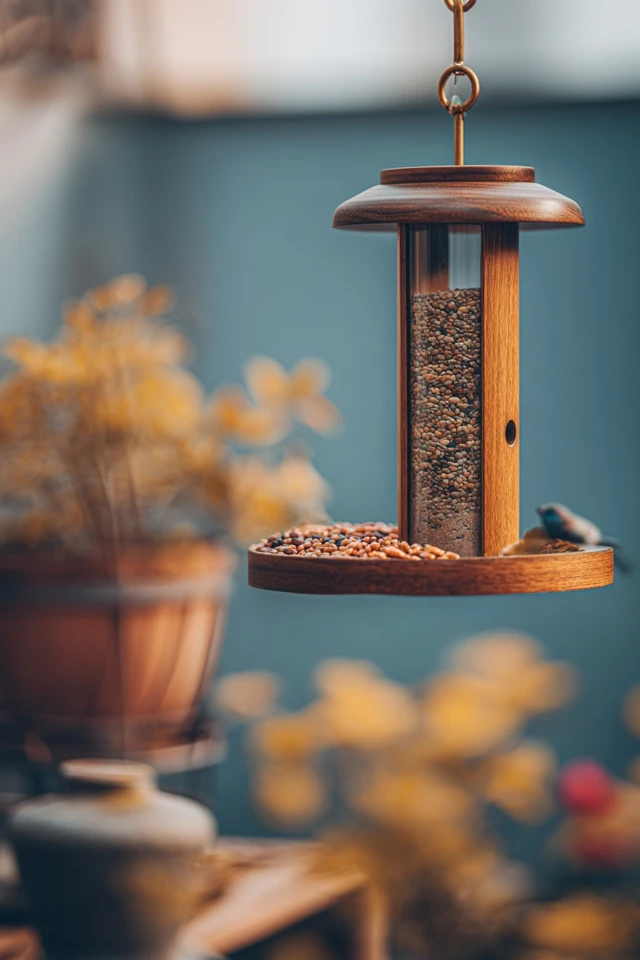
A wooden platform or hopper feeder in cedar looks right on a porch or beside a fence. If your home leans country, the same materials show up in modern rustic interiors, so the view from inside and out matches. A galvanized bucket or a carved log feeder fits the same look.
Modern and minimal
Powder-coated metal tubes, glass hoppers and acrylic window feeders keep clean lines. A matte dark feeder stands out against winter sky, while a pale one reads well against dense green. Contrast also helps birds find it.
Handmade and playful
Teacups on saucers, mason jar dispensers, glazed ceramic dishes and painted vintage tins make charming small-bird feeders. Glass and ceramic break easily, so hang them in sheltered spots and out of reach of a swinging dog tail or a rowdy wind. If your style is relaxed, a macramé hanger holding a tray feeder suits a boho look.
What are easy DIY bird feeder ideas on a budget?
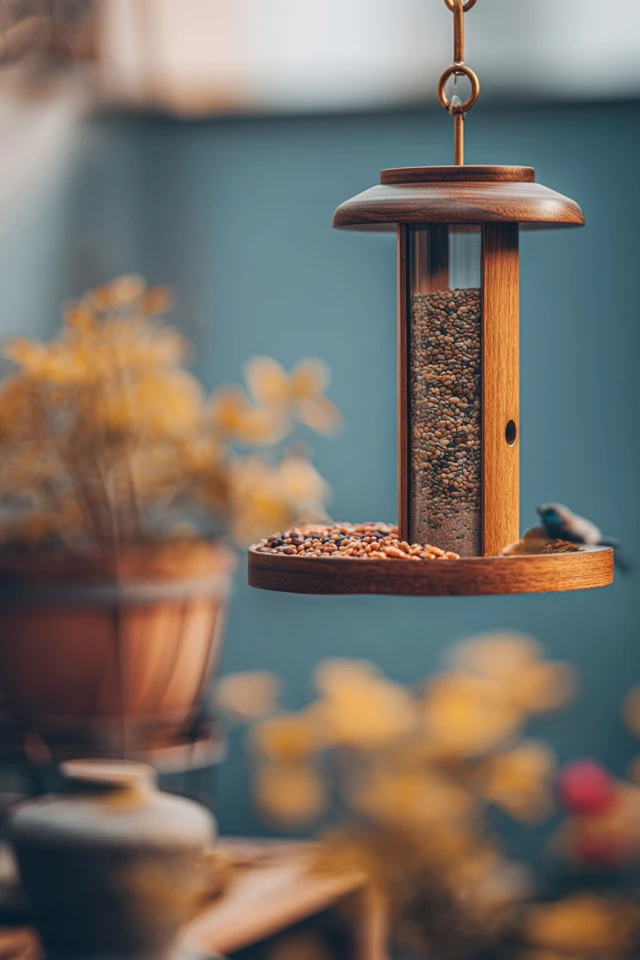
You don't need to buy anything fancy. These are good diy landscaping ideas on a budget, and most take under an hour:
- A teacup glued to a saucer and hung from a branch with chain or cord.
- A pinecone rolled in suet or seed butter and hung from twine.
- A mason jar fixed upside down over a dish for a gravity-fed seed dispenser.
- A reclaimed pallet board turned into a shallow tray with a lip.
- An upcycled colander or galvanized bucket with drainage holes, hung under a shelter.
Whatever you make, give it drainage so seed doesn't sit wet and mold, and use materials you can wash.
How do you fit feeders into a small space?
Balconies and townhouse yards need vertical thinking. Use a suction-cup window feeder, a railing-mounted tray or a hanging tube from a bracket. A slim, transparent feeder keeps the view open from indoors. Put a few potted plants nearby to give the birds cover and you a green view. If you like a calm, uncluttered outlook, the principles in zen room design apply outside too: fewer objects, each with space around it.
How do you plant around a feeder?
Native shrubs and perennials near a feeder give perches, shelter and natural food, and they make it look like part of the garden. Penn State Extension's Master Gardener Deb Christopher suggests, in this article on native groundcovers: "If disease or pest problems arise, the entire monoculture planting may be killed. Instead, consider planting drifts or groups of single species, providing a patchwork-quilt effect." The same logic works around a feeder: group a few species rather than one.
Choose plants that suit your climate and need little care, and your yard will fall into the low maintenance backyard landscaping ideas category. Place the feeder at the edge of a bed rather than in the middle so you can reach it without trampling plants.
How do you keep squirrels and mess under control?
A baffle on a pole stops climbers, and a cage feeder lets small birds in while keeping larger animals out. Put a tray or a patch of gravel under the feeder to catch hulls, and rake or sweep it regularly. As an architect, I'd treat the ground under a feeder like a small piece of floor you'll maintain: pick a surface that is easy to clean, not a delicate flower bed.
Wash feeders with hot soapy water on a regular schedule, and more often in warm, wet weather when seed spoils fast. Let them dry fully before refilling. A feeder that is easy to take apart is far more likely to get cleaned.
Quick picks by situation
- Window and apartment: suction-cup tray, small tube, railing feeder.
- Porch or patio: hopper feeder, hanging ceramic dish, lantern-style seed holder.
- Open yard: multi-arm feeding pole with a baffle, platform feeder, birdbath nearby.
- Budget: teacup, pinecone and mason jar feeders.
- Low effort: large hopper or tube that holds enough seed for several days.
Start with one feeder, watch who comes for a couple of weeks, then add a second type to widen the crowd. Move it if the birds ignore it or the mess lands in the wrong place.
Frequently asked questions
What are some easy garden ideas for my backyard?
A bird feeder with a few native shrubs nearby, a simple container garden by the door, and a mulched bed along a fence are all quick projects. Start with one and add more as you see what you use.
How often should you clean a bird feeder?
Clean it with hot soapy water every week or two, and more often in warm, damp weather when seed spoils quickly. Dry it completely before refilling.
How high should a bird feeder be hung?
Hang it high enough that cats and dogs can't reach it, often about 5 feet or more off the ground, and near some cover so birds can retreat. A pole baffle helps against squirrels.
Can you put a bird feeder on a balcony?
Yes. Use a railing mount, a hanging tube or a window feeder, and put a tray underneath to catch hulls so they don't fall onto neighbors. Check your building's rules first.
Filed under
ArticlesMeet the author
Written by an architect.
Julio Arco is a passionate architect with years of experience in architecture, interior design, urban design, and housing. He studied at prestigious universities across North America and Europe.

- Name
- Julio Arco
- Job
- Architect and online interior designer
- Studied
- Architecture, ITESM · Urban Design and Housing, McGill
- Partner
- Thor, Australian Shepherd
- Thor’s title
- Head of quality control