Colors That Go With Brown: Palettes for Rooms and Furniture
Find colors that go with brown furniture and walls, which shades to avoid, and how to make brown pop with textures, metals and lighting.

By Julio Arco
Architect and online interior designer
In this post
- What color compliments brown?
- Which wall and paint colors go with brown furniture?
- What colors go with dark brown?
- What color makes brown pop?
- What colors don't go well with brown?
- How do wood, leather and metals work with brown?
- Brown palettes by room mood
- Cheap ways to try a palette first
- Frequently asked questions
Brown is easy to pair. Warm off-whites, cream and greige give the softest result, muted blues and sage greens add a cool contrast, and rust, terracotta and brass deepen the warmth. If you have a dark brown sofa, floor or cabinet set and no idea what to put next to it, start with one of those families and build outward.
Below you'll find the colors that work, the ones that tend to go wrong, and how to use paint, textiles and lighting without spending much.
What color compliments brown?
Brown is an orange hue with the brightness turned down, so its natural partners sit on either side of the color wheel. Blue is the opposite of orange, which is why soft blues and teals feel fresh against brown. Cream, ivory and warm white share its warmth, so they feel calm instead of contrasting.
That gives you two routes. Stay in the warm family (cream, camel, gold, terracotta) for a cozy, cohesive room. Add a cool counterpoint (slate blue, sage, teal) when the room needs to feel lighter and more composed. Many rooms work best with one dominant route and a small dose of the other.
Which wall and paint colors go with brown furniture?
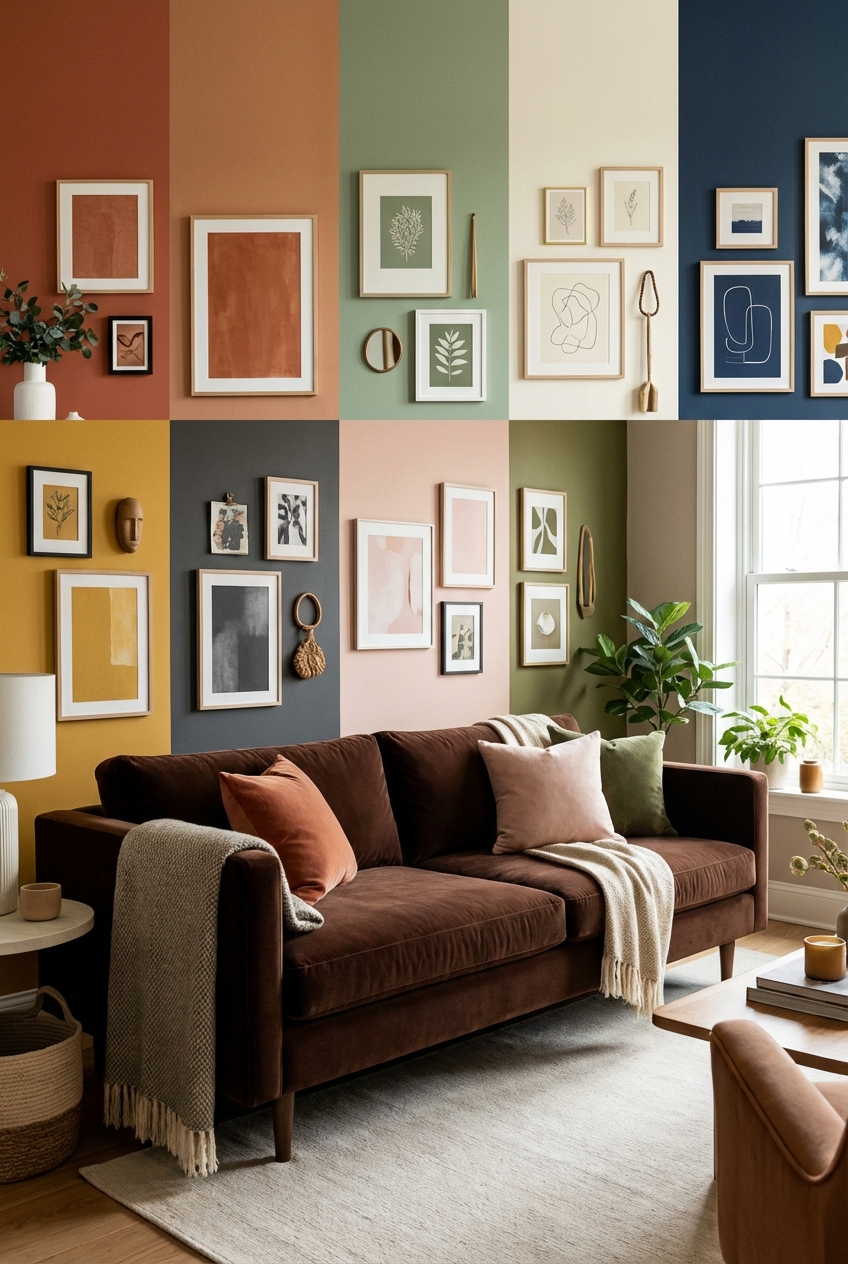
For paint colors that go with brown furniture, undertone matters more than the color name. Pick walls that share the furniture's warmth or contrast with it on purpose.
- Warm white, cream or greige: the safest choice, and it keeps a dark sofa or dresser from swallowing the room.
- Soft sage or muted olive: reads natural and calm, especially with wood.
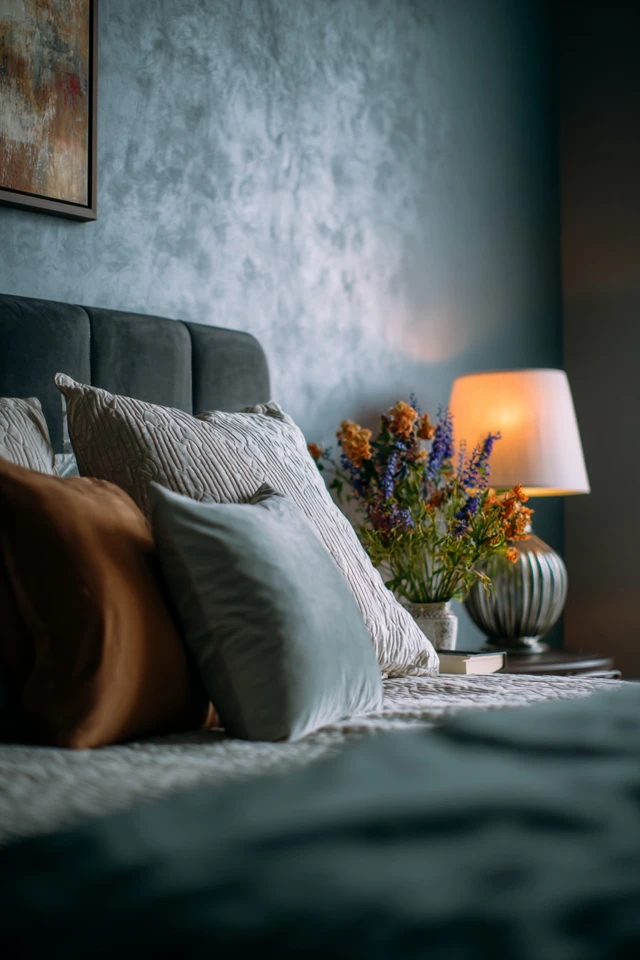
- Dusty blue or blue-gray: a cooler wall that makes brown look richer.
- Blush or dusty peach: gentle and warm, good in bedrooms.
- Deep green or navy: a moodier choice that works best in rooms with decent daylight.
As an architect, I recommend painting a large swatch (about two feet square) on two different walls and looking at it morning and evening for a couple of days. Daylight pulls out brown's warmth, and warm bulbs push it even further. If you want a longer walkthrough of this topic, see our guide to wall color and decor for brown furniture.
What colors go with dark brown?
Dark brown is visually heavy, so the colors around it do the work of balancing it. Lighter, lower-saturation tones keep the combination from feeling dim.
Whites, creams and beiges
These are the easiest partners. White trim frames dark brown cabinets or bookcases crisply. Cream walls soften the contrast, and a lighter rug under a dark sofa lifts the whole seating area.
Blues and greens
Slate blue, teal and sage all work. Studies of color in built spaces do show that blue has a measurable effect on the body: a Deakin University study led by Isabella S Bower reported that "exposure to the chromatic color condition (blue) compared to the achromatic control (white) and resting‐state (black, no built environment) significantly increased the range in respiration and skin conductance response." In plain terms, color changes how a space feels, so test it in your room instead of trusting a swatch alone.
Rust, terracotta, mustard and gold
These warm accents sit close to brown, so they look intentional and not busy. Use them in pillows, a throw, ceramics or a single armchair. Mustard and deep gold especially suit leather.
What color makes brown pop?
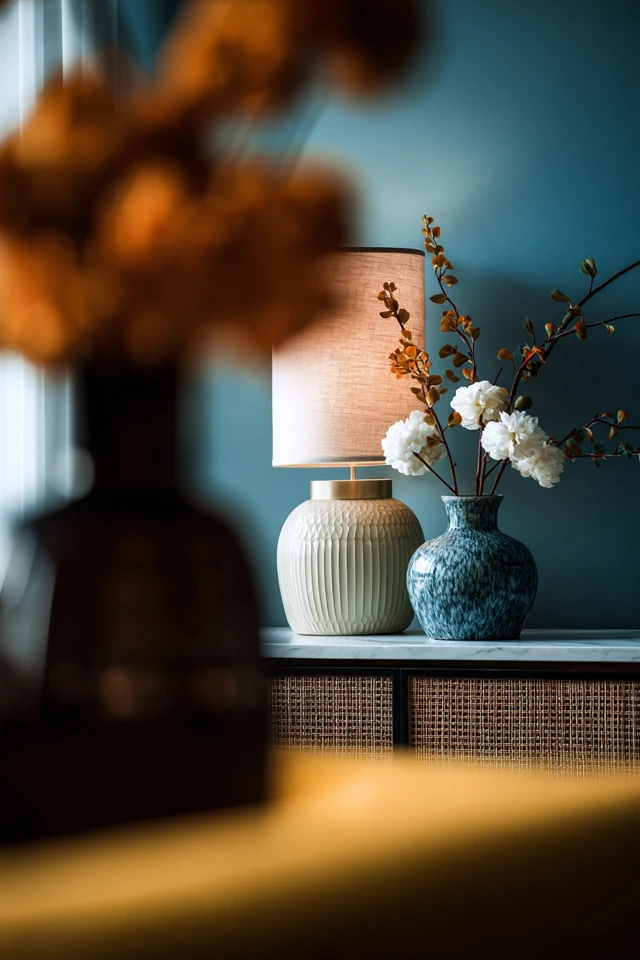
Contrast in value (light against dark) makes brown stand out most. White, cream and pale blue push dark brown forward. For color contrast, teal and soft blue create the strongest pop because they sit opposite brown's orange base. Metallics help too: brushed brass or gold glows against brown, while matte black gives a more graphic look.
Keep the pop limited. One or two accent colors repeated three or four times around the room (pillow, vase, art, throw) reads as a plan. Ten different accents read as clutter.
What colors don't go well with brown?
Nothing is banned, but some pairings are hard to pull off.
- Black with dark brown in similar amounts: the two merge and the room looks muddy. Use black in small, crisp touches instead.
- Dark gray walls with dark brown furniture: heavy on heavy, and often cold. Warm gray works better.
- Bright, saturated reds and oranges: they compete with brown's warmth and can feel loud.
- Cool, stark white walls: against warm brown they can look harsh and slightly blue. Choose a white with a warm base.
- Neon or very saturated brights: fine as a tiny accent, tiring as a main color.
If you already own one of these combinations, a lighter rug and warmer lighting often fix more than repainting.
How do wood, leather and metals work with brown?
Texture changes how color reads. Matte paint absorbs light and makes brown feel deeper, while satin and semi-gloss reflect more and wipe clean more easily, which helps on trim and doors.
- Wood: mix tones carefully. Lighter woods like ash or oak brighten a room next to dark brown, while matching dark woods give a cabin-like feel.
- Leather and fabric: pair dark leather with wool, linen or cotton in muted shades. If a dog is allowed on the sofa, I recommend washable covers or throws, and a woven rug that handles claws and mud better than a delicate pile.
- Metals: brass and warm gold suit brown. Mixing two finishes, such as brass and matte black, looks deliberate if each appears more than once.
- Plants: greenery gives brown a natural counterpart and costs little. Check with your vet or the ASPCA's plant list before bringing in anything new if you have pets.

Brown palettes by room mood
Cozy and warm
Cream walls, a terracotta pillow, a camel throw and brass lamps. Use warm bulbs so the browns look rich, not flat.
Calm and airy
Soft sage or dusty blue walls, white trim, a light rug and linen curtains. This is the best route for small rooms, along with exposed furniture legs and a large mirror.
Modern and graphic
Warm white walls, matte black fixtures, and one deep teal or mustard accent. Keep patterns medium or small so the dark brown stays the anchor.
Yellow shares a lot with brown in warm palettes, so our notes on colors that compliment yellow are a useful comparison if you're torn between the two. Brown also works well beside warm metals, as in a copper backsplash in a kitchen with dark cabinets.
Cheap ways to try a palette first
- Swap pillow covers, throws and lampshades in one or two accent colors before painting anything.
- Paint trim white or warm white to frame dark brown furniture.
- Thrift brass or ceramic vases and group them in odd numbers on a shelf.
- Leave at least 30-36 inches for main walkways, and float furniture slightly off the wall in small rooms.
- Photograph the room with swatches and fabric samples in place. A photo shows balance problems your eye skips over.
Frequently asked questions
What is the 3 color rule?
It's a common decorating guideline: one dominant color, one secondary color and one accent, often split roughly 60-30-10. With brown, the brown furniture can be the dominant or secondary color, with cream and a single accent such as sage or rust completing the set.
What color makes brown pop out?
White, cream and pale blue create the strongest light-dark contrast, and teal gives the strongest color contrast. Brass or gold metallics also make brown stand out.
Are cool blues a bad choice with dark brown?
No. Slate blue, dusty blue and teal contrast well with brown. Add warm accents or natural textures so the room doesn't feel chilly.
How can I make a small room with dark brown furniture feel larger?
Use light, warm wall colors like cream or greige, add a large mirror, show furniture legs, and keep patterns small or medium. A lighter rug under the seating also helps.
Filed under
ArticlesMeet the author
Written by an architect.
Julio Arco is a passionate architect with years of experience in architecture, interior design, urban design, and housing. He studied at prestigious universities across North America and Europe.

- Name
- Julio Arco
- Job
- Architect and online interior designer
- Studied
- Architecture, ITESM · Urban Design and Housing, McGill
- Partner
- Thor, Australian Shepherd
- Thor’s title
- Head of quality control