Affordable Entryway Mirror Design Ideas You Can Do Now
Entryway mirror ideas for any budget: how to pick a shape and size, hang it over a console, add hooks or a shelf, and make a small entry feel bigger.

By Julio Arco
Architect and online interior designer
In this post
- What shape of mirror is best for an entryway?
- How big should an entryway mirror be?
- Is a mirror in the entryway a good idea?
- Small entryway mirror ideas
- Full-length mirror in the entryway
- Mirror with hooks or a shelf
- How to style an entryway mirror
- Budget upgrades you can do this weekend
- Frequently asked questions
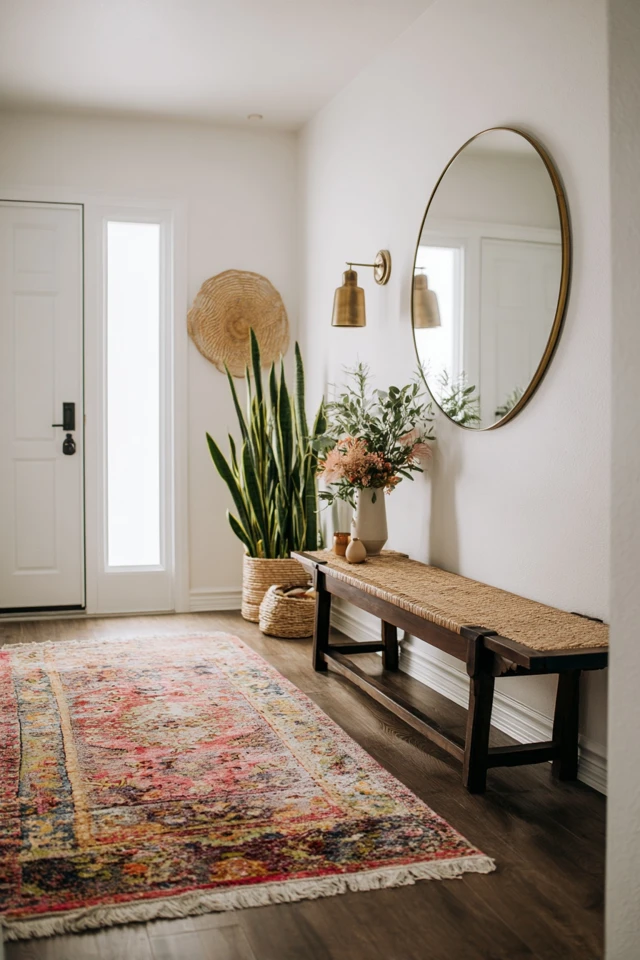
The simplest way to improve an entryway on a budget is to hang one well-sized mirror where it catches light, then keep everything around it uncluttered. Pick a shape that suits your wall, size it to the furniture below, and add a lamp or a hook rail if you need the mirror to work harder.
Below are the choices that matter most, from shape and scale to frames, lighting and a few cheap upgrades.
What shape of mirror is best for an entryway?
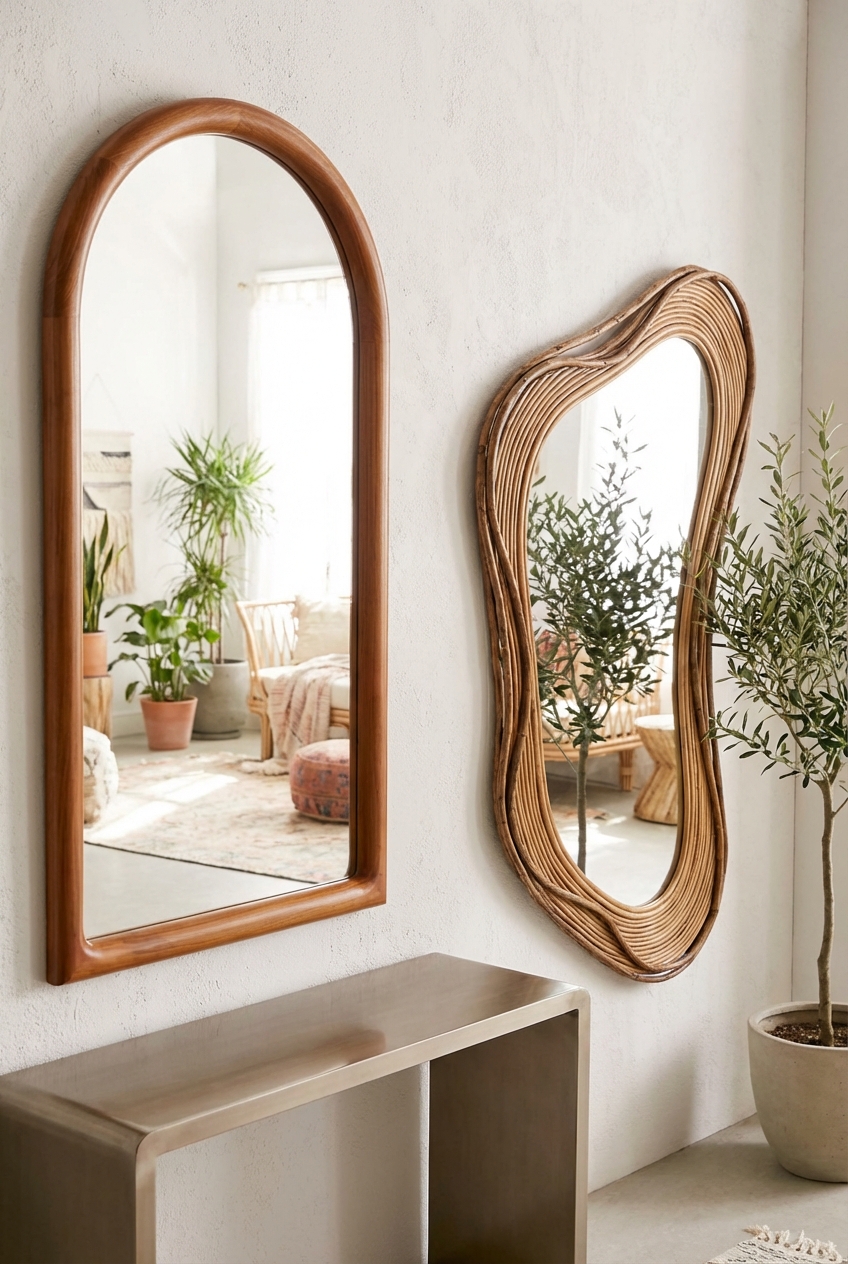
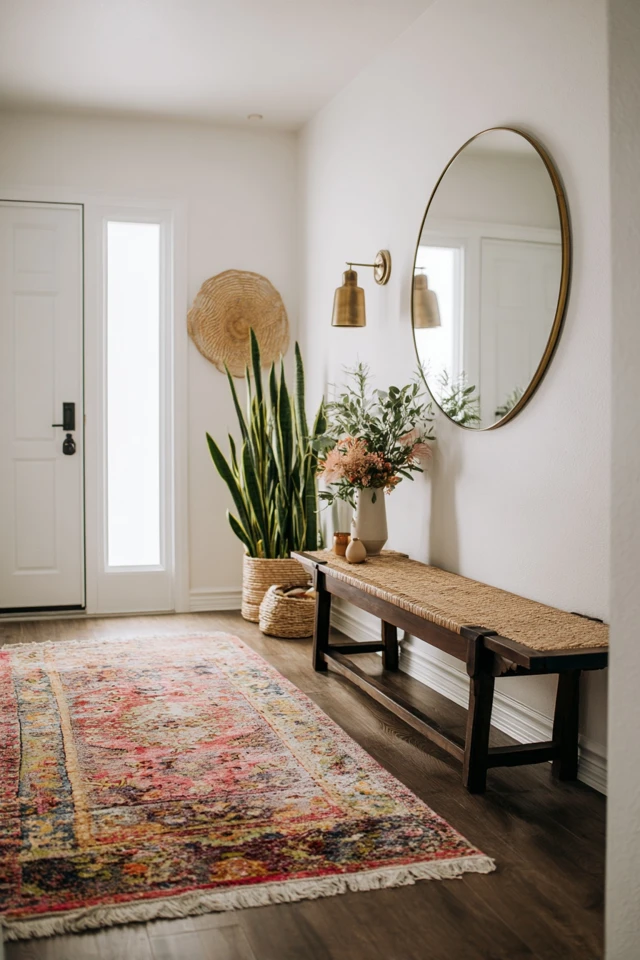
There's no single winner, but the best mirror shape for an entryway usually follows the space you have. Match the shape to the wall, not to a trend.
- Round: softens a boxy entry full of right angles and works over a narrow console.
- Arched: adds height and suits tall doors and ceilings.
- Rectangular or vertical: fits slim walls beside a door and gives a quick head-to-toe check.
- Sunburst or irregular shapes: work as a single focal piece, so keep the rest of the wall quiet.
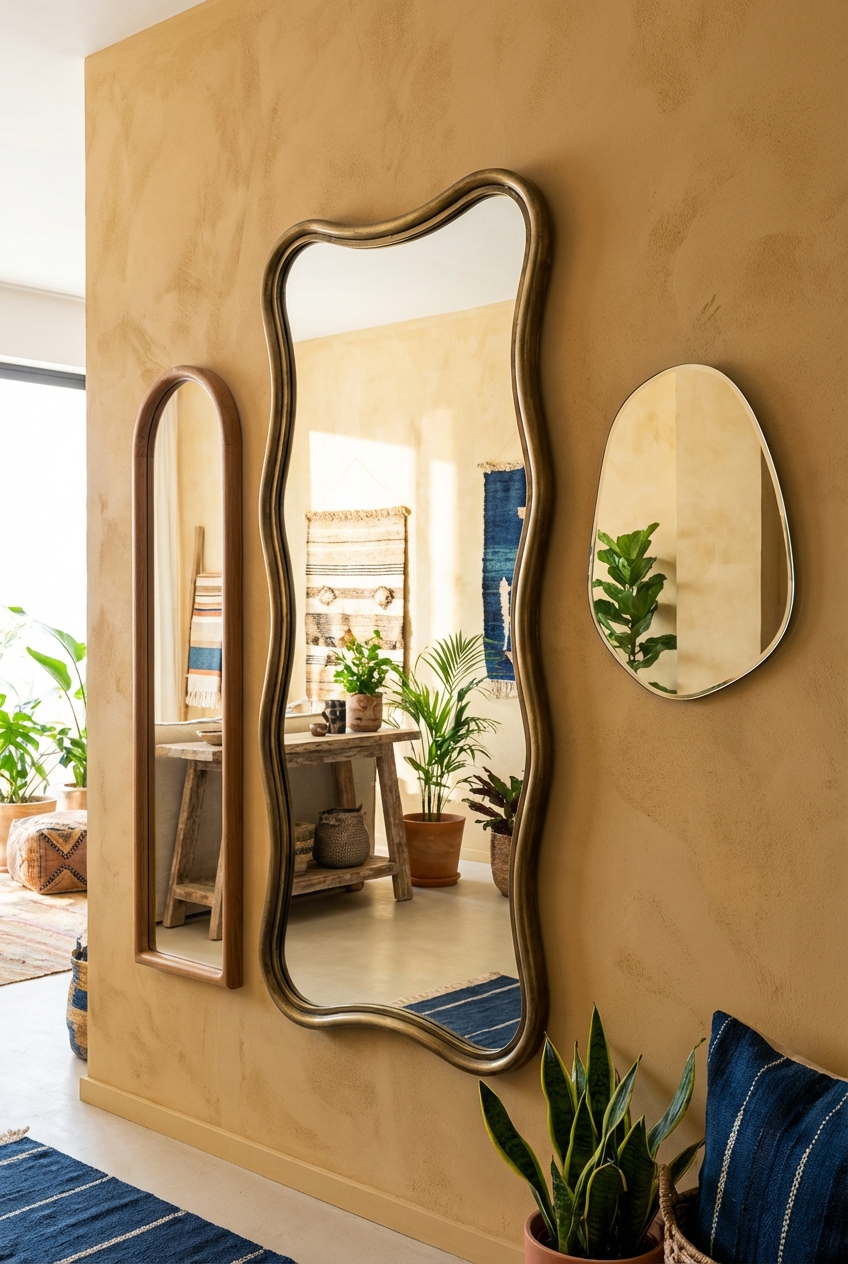
If your hallway is narrow, a tall vertical mirror draws the eye up, and a few small round mirrors can add rhythm without crowding the wall.
How big should an entryway mirror be?
Over a console table or bench, aim for a mirror about two-thirds to three-quarters the width of the furniture below. Hang it so the center sits near eye level, roughly 57-60 inches from the floor, and leave a few inches of wall between the table top and the bottom edge.
Scale also ties to the body. Charlotte Jirousek of Cornell University puts it this way in her overview of design principles: "Our most universal standard of measurement is the human body; that is, our experience of living in our own bodies." A mirror you can actually use at your own height will always feel right-sized.
Balance matters too. The same source describes symmetrical balance as having equal "weight" on equal sides of a centrally placed fulcrum, which is a useful way to think about centering a mirror over a console with matching lamps on each side.
Is a mirror in the entryway a good idea?
Yes, for two practical reasons. It gives you a last check before you leave, and it bounces light around a space that often has no window. Hang it on a wall beside or opposite a light source and the entry will read brighter and a little deeper.
One caution: think about what the mirror reflects. A view of a plant, a window or a tidy wall is lovely. A reflection of a pile of shoes is not. If the reflected spot is messy, move the mirror or add a basket.
Small entryway mirror ideas
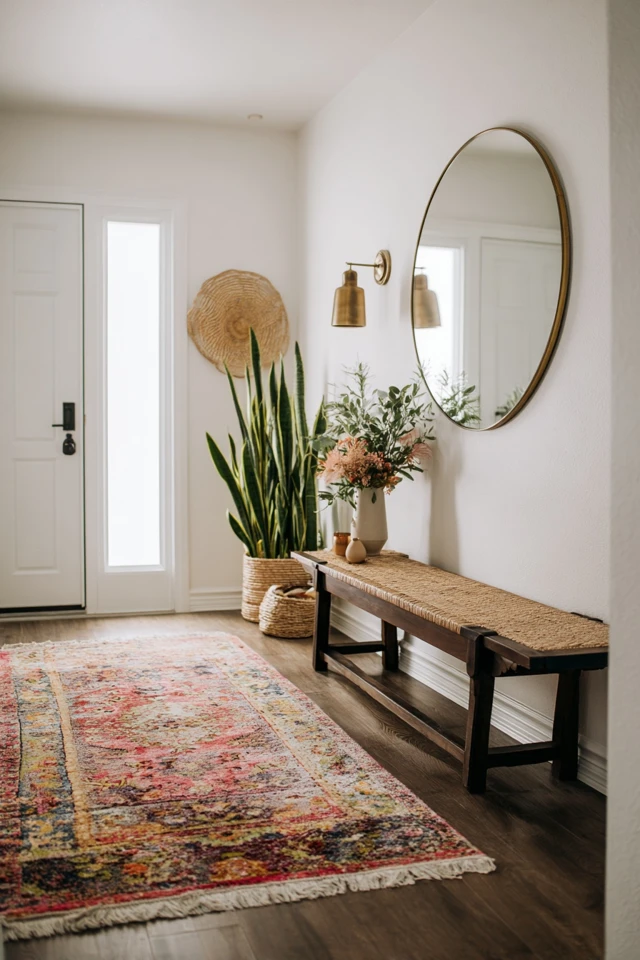
In a tight foyer, the mirror shouldn't eat up usable space. These options help:
- A slim mirror hung beside the door, so it doesn't compete with coat storage.
- A wide, shallow mirror opposite a light source to stretch the sense of width.
- A small cluster of mirrors in mixed shapes, mapped on kraft paper before you drill.
- A mirror with built-in hooks, so one piece covers two jobs.
Pale walls and a warm LED sconce help the reflection feel bright instead of harsh.
Full-length mirror in the entryway
A full-length mirror leaned against the wall is the easiest renter-friendly move: no drilling, and you can reposition it. Tuck it into a corner or beside the door, and angle it slightly so it catches daylight.
If you have a dog, check that the base is stable. A big leaning mirror can tip if a wagging tail or an excited greeting hits it, so anchor it with a wall strap or choose a wall-mounted version.
Mirror with hooks or a shelf
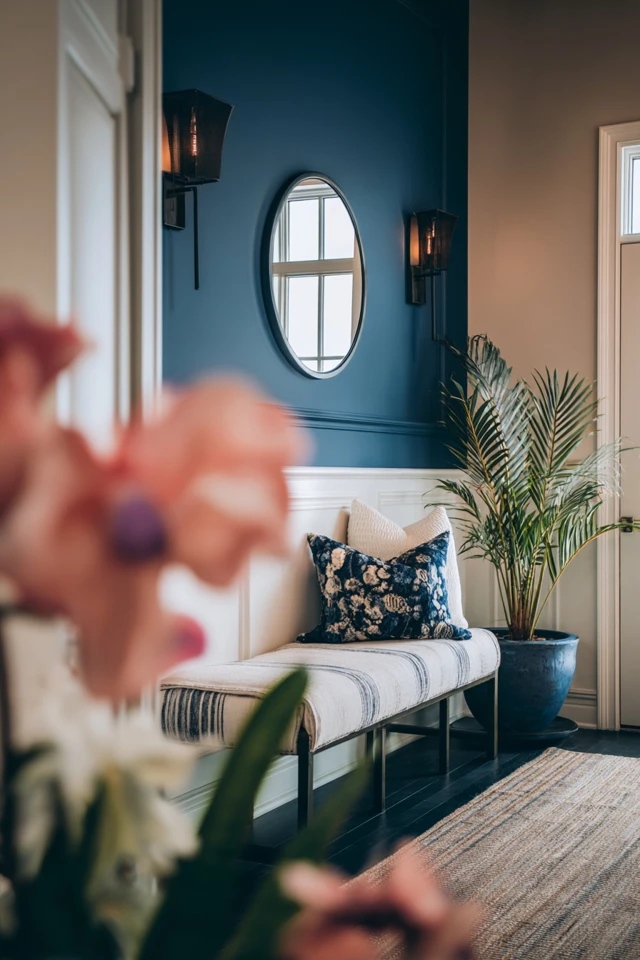
A narrow mirror with a hook rail below turns a blank wall into a drop zone for coats, bags and leashes. Keep hooks at a height everyone in the household can reach, and fit a small shelf or ledge for keys and sunglasses.
I recommend a shelf that's shallow, around 4-6 inches, so nobody bumps it in a narrow hall. If you hang it over a bench, leave enough clearance that the shelf doesn't hit your head when you stand up.
How to style an entryway mirror
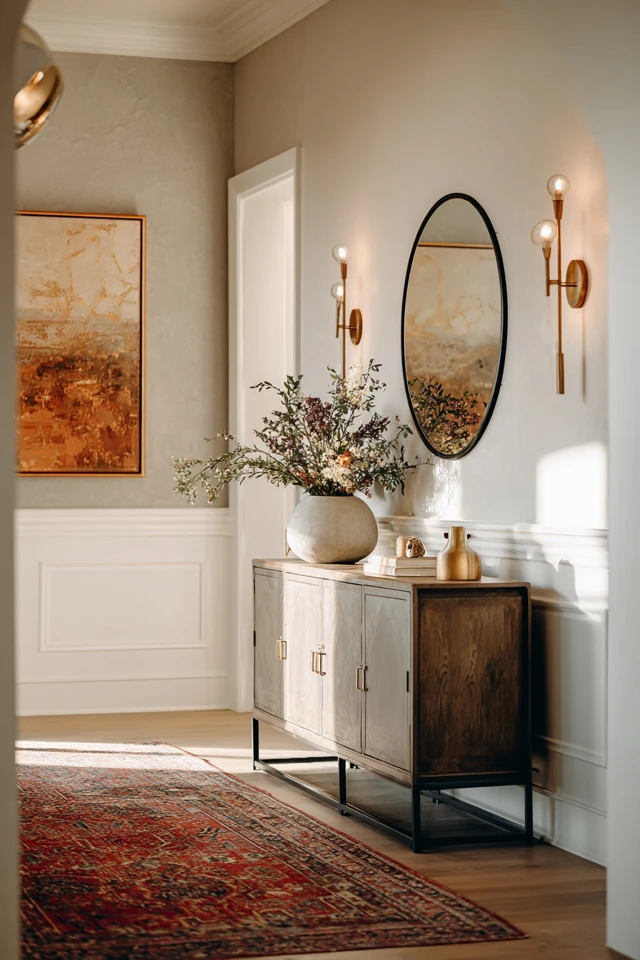
Start with the console or bench below, then build upward. A lamp to one side, a tray for keys and one small plant or branch in a vase is plenty. Let the mirror frame overlap a little with a leaning piece of art for depth, but don't stack the whole wall.
Frames carry most of the personality:
- Wood frames feel warm and are easy to restain or paint if you find one secondhand.
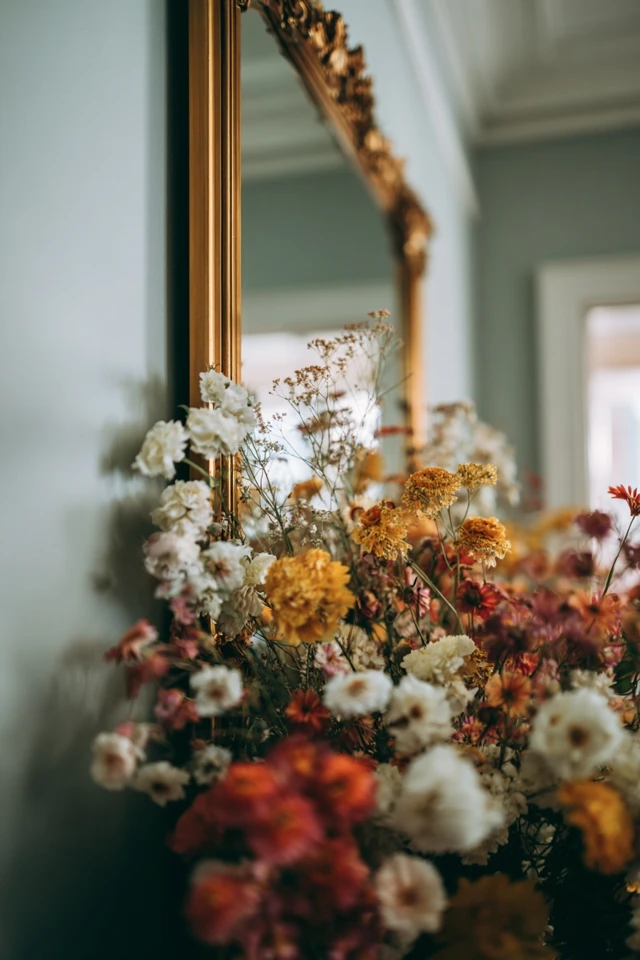
- Brass or gold frames bounce light and suit dim entries.
- Matte black frames look modern and crisp against pale walls.
Match the frame metal to your door hardware or light fixture and the wall will feel cohesive. If you want contrast, pick one: a dark frame on a light wall, for example.
Budget upgrades you can do this weekend
- Sand and repaint a thrifted frame, or spray it gold.
- Add peel-and-stick molding to a plain store-bought mirror.
- Swap a harsh bulb for a warm one near the mirror.
- Hang a mirror where it reflects a window or plant.
- Check thrift stores and online marketplaces for solid frames you can rework.
For more ideas on shapes and frames, see these unique mirror ideas for a cozy, modern entry. If you're furnishing the rest of the space on a budget, these Ikea alternatives may help.
As an architect, I'd pick one good mirror and light it well before buying anything else for the entry. Measure the wall, tape the mirror's outline with painter's tape, and live with it for a day before you hang it.
Frequently asked questions
What shape of mirror is best for an entryway?
Round and arched mirrors soften boxy entries, while tall rectangles suit narrow walls. Choose the shape that contrasts with your room's dominant lines.
How do you style an entryway mirror?
Pair it with a console or bench, a lamp, and one or two small accessories. Keep the surface below tidy so the reflection stays calm.
Can a mirror make a small entryway feel larger?
Yes. A wide mirror placed opposite or beside a light source reflects brightness and adds visual depth, especially with pale walls.
Should I use one large mirror or a cluster?
One large mirror gives a calm, unified focal point. A cluster adds personality and texture, and suits walls where a single piece would feel too heavy.
Filed under
ArticlesMeet the author
Written by an architect.
Julio Arco is a passionate architect with years of experience in architecture, interior design, urban design, and housing. He studied at prestigious universities across North America and Europe.

- Name
- Julio Arco
- Job
- Architect and online interior designer
- Studied
- Architecture, ITESM · Urban Design and Housing, McGill
- Partner
- Thor, Australian Shepherd
- Thor’s title
- Head of quality control