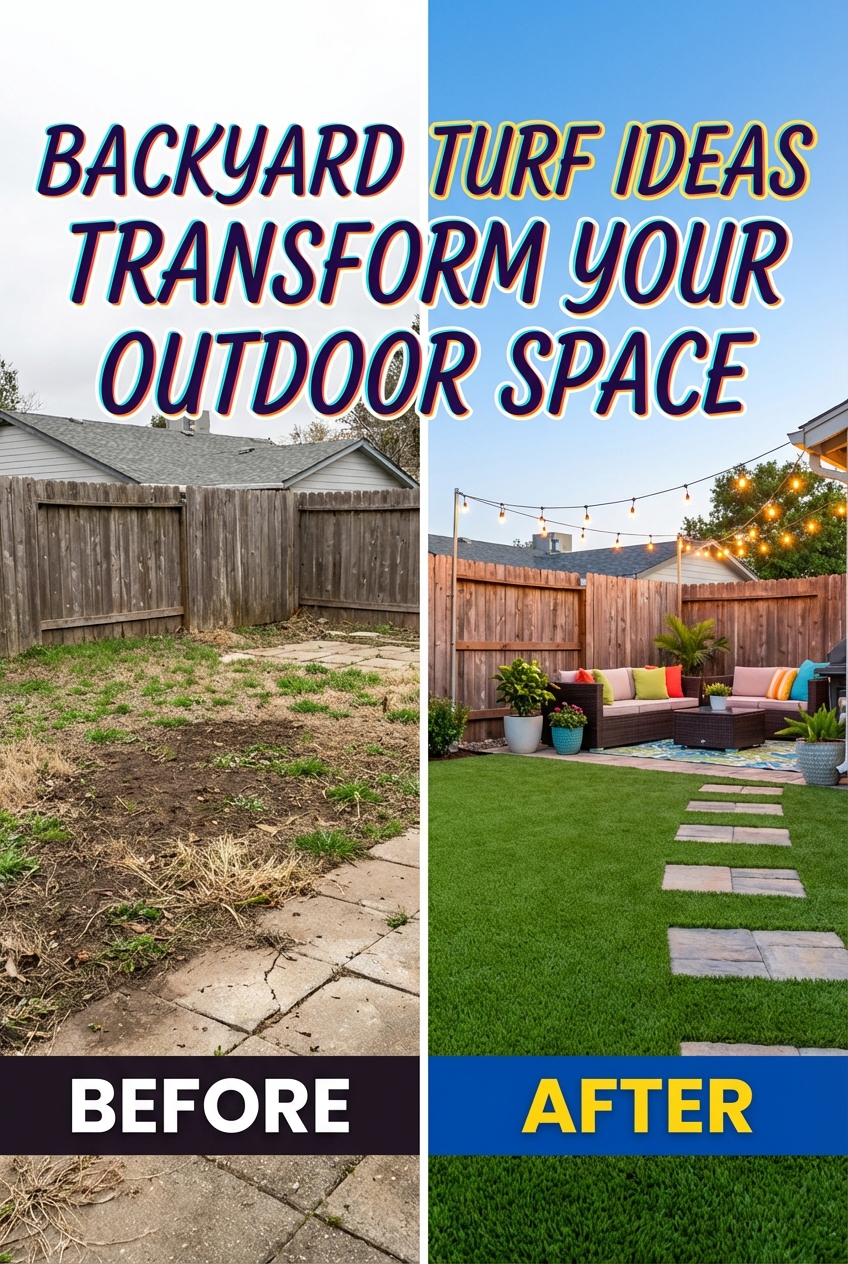
Backyard Turf Ideas Transform Your Outdoor Space
Dog friendly backyard no grass ideas: turf, gravel, mulch, ground covers and paths, with tips on drainage, safety and keeping costs down.

By Julio Arco
Architect and online interior designer
In this post
If your lawn is muddy, patchy or yellow from your dog, you don't have to keep fighting it. The most reliable replacements are artificial turf, crushed stone, a few dog-safe ground covers, and a path or two for the routes your dog already runs. Most yards end up using a mix.
Here is what to put in a backyard instead of grass for dogs, what each option does well, and where it falls short.
Why give up the lawn at all?
Dogs wear grass out in predictable places: along the fence, by the back door and around the spot they use as a bathroom. University of Maryland Extension notes that turfgrasses are challenging to grow in Maryland's climate and need constant maintenance, with costs that include pesticide exposure for humans and pets, pollution and water waste. That is one state's guidance, but the point holds for many yards: a lawn takes work.
Before you rip anything out, check the cause. Compacted soil and poor drainage are common reasons grass struggles, and Maryland Extension advises correcting those conditions before filling in declining areas. If the lawn is mostly weeds, the same source suggests considering a full renovation once it is more than 50% weeds. Replacing it is a fair choice at that point.
Artificial turf for dogs
Turf is the closest thing to a lawn without the mowing. It suits shade, tight side yards and dog runs where grass never survives. Its success depends on what's underneath it, not the blades.
- Remove the old grass and soil to about 3-4 inches, then add compacted crushed rock as a base. Crushed rock locks together and still drains; rounded pea gravel doesn't.
- Slope the surface slightly away from the house so water doesn't pool.
- For dogs, choose a short, dense pile. Long soft blades trap debris and mat down under heavy traffic.
- Look for a flow-through backing rather than a few punched holes, so liquid drains across the whole surface.
Turf also gets hot in direct sun. Test it with your hand in the afternoon before you commit, and rinse it regularly. For urine odor, check the manufacturer's care instructions and ask your vet if you're unsure about a cleaner. I'd avoid turf for an area where your dog loves to dig, since claws can pull at edges and seams.
Gravel, mulch and wood chips
These are the cheapest ways to cover ground, and they work for a dog friendly backyard no grass on a budget. Pea gravel is easy to spread yourself, though small stones can stick in paws and get tossed around. Larger, rounded stone is gentler underfoot than sharp crushed rock. Wood chips are soft and cool, but they break down and need topping up.
Avoid cocoa mulch. Penn State Extension points out that it contains the same compound that makes chocolate toxic to dogs. Plain hardwood or pine chips are the usual substitutes.
Skip plastic landscape cloth under the stone or mulch. Penn State Extension does not recommend plastic or synthetic landscape cloth, because it can increase erosion and water runoff.
Dog friendly ground cover plants
If you want something green and living, ground covers are the low maintenance grass alternatives for dogs that look best. Colorado State University Extension describes suitable ground covers as plants that are low-growing, generally under 24 inches, and spread easily. Not every one of them tolerates paws or is safe if chewed, so confirm each plant against the ASPCA's toxic plant list or ask your vet before buying.
White clover is a useful candidate. UC Marin Master Gardeners report that white clover does not show pet urine damage. It still won't hold up to a daily sprint route, so keep ground covers in beds and corners rather than main runs.
Prepare the soil first. Colorado State suggests working 3 to 5 cubic yards of compost into 1,000 square feet. And plant in groups of a single species. As Deb Christopher, a Westmoreland County Master Gardener, advises Penn State readers: "If disease or pest problems arise, the entire monoculture planting may be killed. Instead, consider planting drifts or groups of single species, providing a patchwork-quilt effect."
Paths, play zones and a digging spot
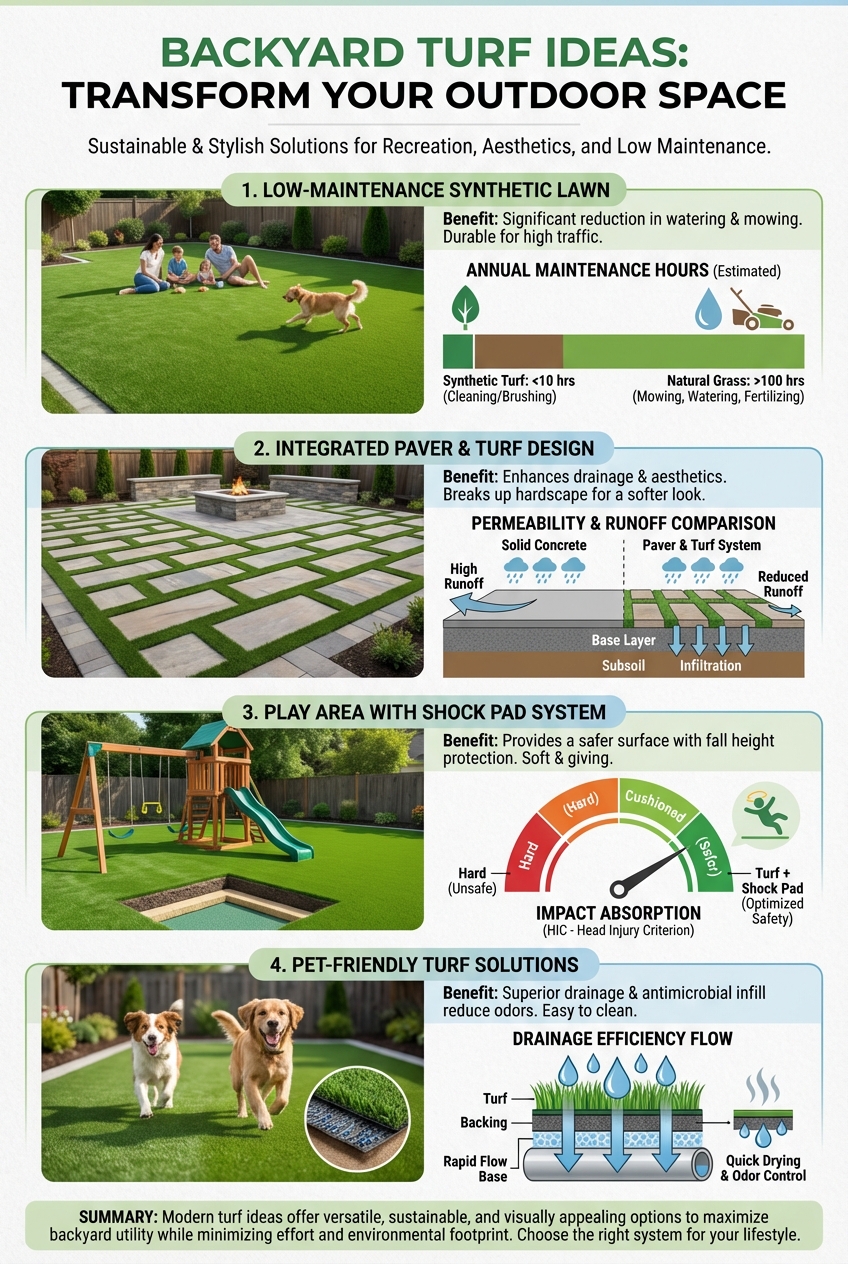
Watch where your dog actually runs, then pave or surface that route. A stepping-stone path or compacted stone lane saves the rest of the yard from becoming a racetrack. Pavers with 4-6 inch turf or gravel strips between them also look tidy.
A dedicated digging pit, a sandbox-sized frame filled with sand or loose soil, gives a digger somewhere legal to go. Bury a toy or two to teach the rule. Put a shaded rest spot and fresh water nearby.
Keep beds protected. Penn State Extension recommends a 2- to 3-foot buffer between the fence and planting beds, which also stops fence-line patrolling from trampling them. Holly List, a Penn State Master Gardener, adds in the same Petscaping guide that "Containers with tender plants may keep them safer, rather than being in the ground."
Small yards and tight budgets
In a small dog friendly backyard with no grass, keep the palette simple: one surface for the dog zone, one for seating, and pots for plants. Modular turf tiles or pavers work on a patio, and they are easier to lift if you rent.
To cut costs, do the base work yourself. Gravel and wood chips are the budget end, turf with proper base prep is mid-range to high, and pavers sit in between depending on size. Get local quotes, since prices vary a lot by region.
As an architect, I'd spend money on drainage and edging first, because fixing those later means digging everything up. If you plan to use the yard at night, our outdoor lighting guide covers the options, and the modern Japanese garden ideas show how gravel and stone can look intentional rather than bare.
Maintenance and finishing touches
Rake gravel level every so often and refresh wood chips once or twice a year. Rinse turf and pick up waste promptly. Use a leaf blower on low for debris.
Outdoor rugs can sit on turf or pavers to define a seating area. If you add outdoor furniture, this guide on cleaning polywood furniture helps when muddy paws get involved.
Frequently asked questions
What can I put in my backyard instead of grass for dogs?
Artificial turf with good drainage, gravel or wood chips, dog-safe ground covers such as white clover, and pavers or stepping stones are the common options. Avoid cocoa mulch, and check any plant with your vet or a toxic plant list.
What to do with a backyard that doesn't grow grass?
Find out why it fails first: shade, compacted soil and poor drainage are typical causes. Then cover the area with mulch, gravel, pavers or shade-tolerant ground covers instead of reseeding again.
Is artificial turf hot for dogs?
It can get hotter than natural grass in direct sun. Test it with your hand, rinse it with water, and give your dog shade and a cooler surface to rest on.
Filed under
ArticlesMeet the author
Written by an architect.
Julio Arco is a passionate architect with years of experience in architecture, interior design, urban design, and housing. He studied at prestigious universities across North America and Europe.

- Name
- Julio Arco
- Job
- Architect and online interior designer
- Studied
- Architecture, ITESM · Urban Design and Housing, McGill
- Partner
- Thor, Australian Shepherd
- Thor’s title
- Head of quality control