Entryway Lighting Ideas for an Opera Aesthetic Look

By Julio Arco
Architect and online interior designer
In this post
- What makes opera-style entryway lighting work?
- Warmth and color temperature
- How big should an entryway chandelier be?
- Entryway chandelier ideas by room type
- Entryway wall sconces as the second layer
- Dimmers, layers and hidden light
- Lighting and a mail station
- Finishes that help the light
- Frequently asked questions
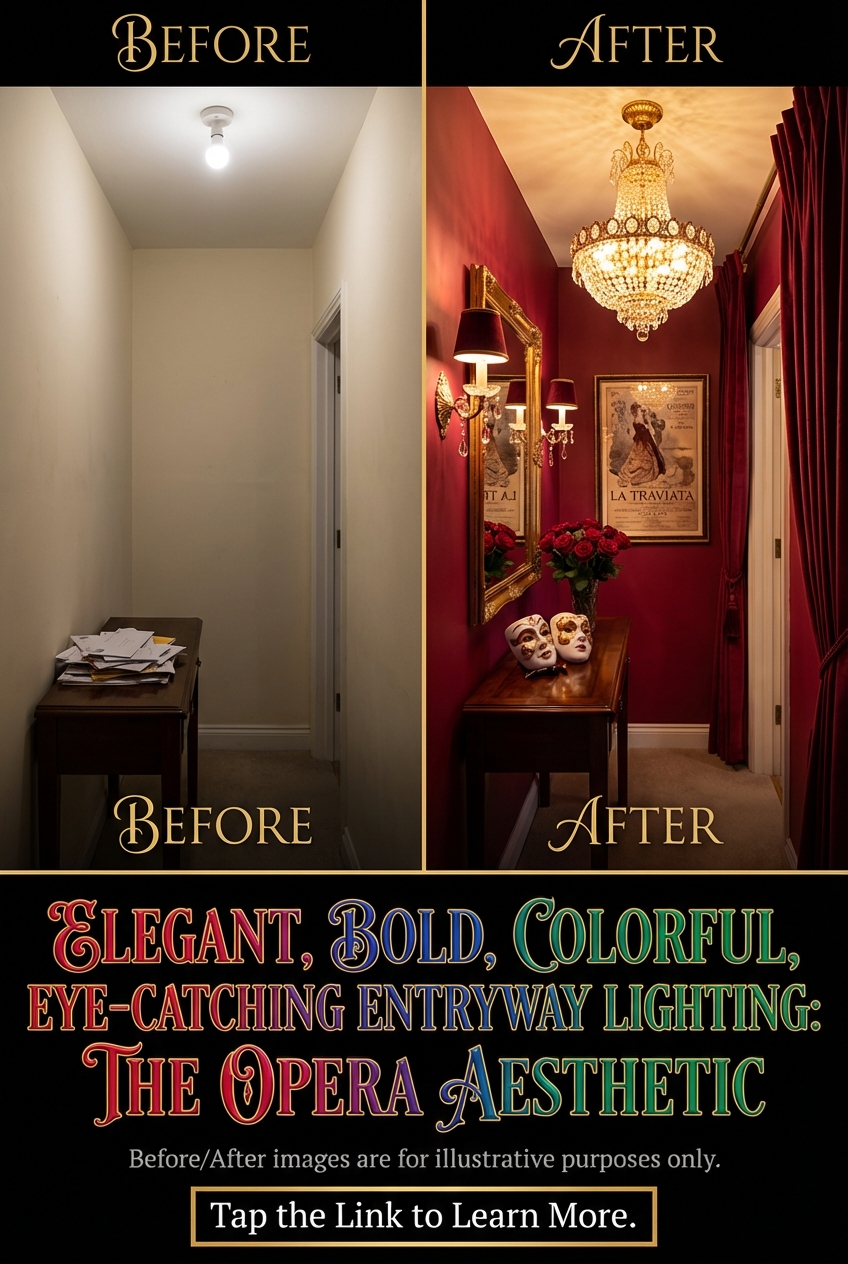
The opera look in an entryway comes down to four things: a large, warm-toned central fixture, a pair of sconces, bulbs around 2700K, and a dimmer on everything. Get those right and a plain hallway starts to feel like the lobby before the curtain rises.
Below are entryway lighting ideas sorted by what your space actually looks like, with sizes and heights you can measure before you buy anything.
What makes opera-style entryway lighting work?
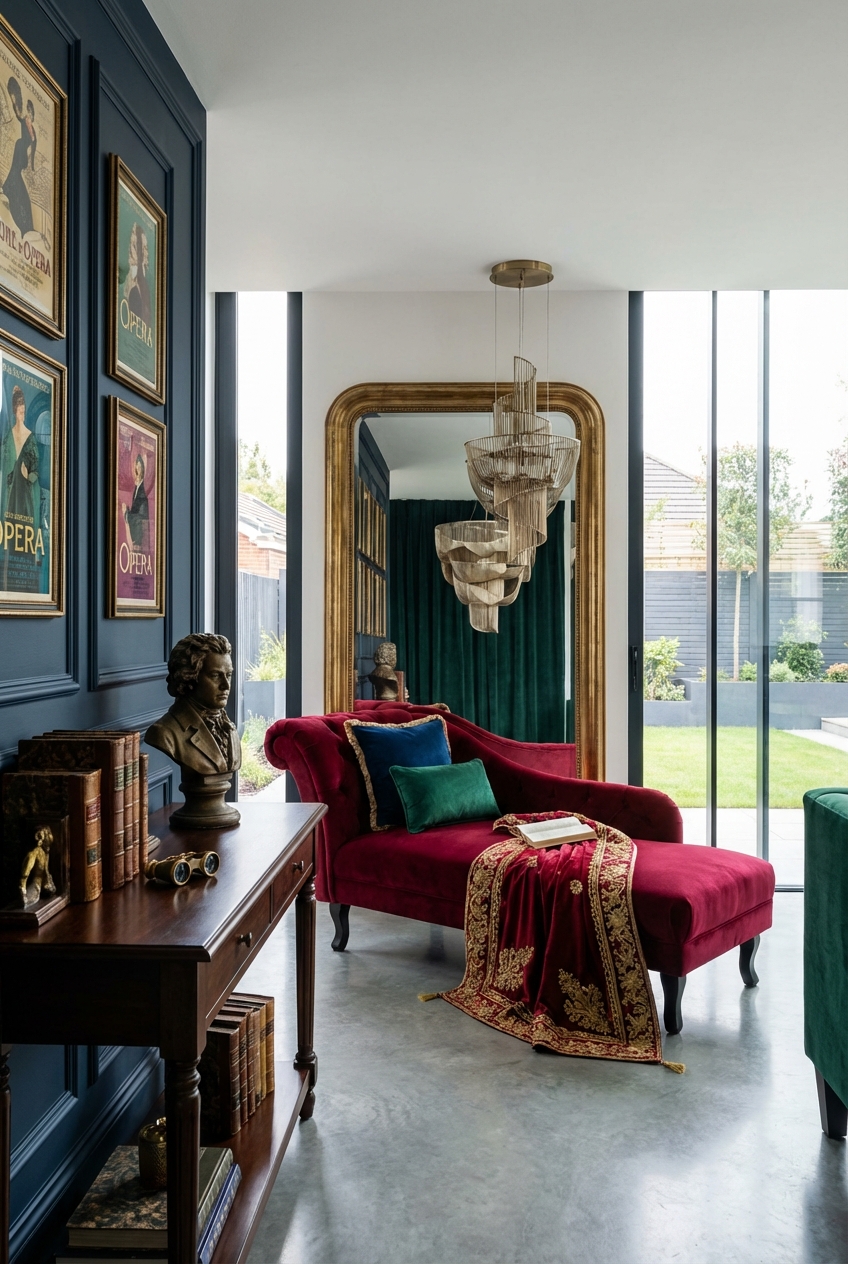
The style borrows from Baroque and Neo-Classical interiors: deep colors, heavy metals, and strong contrast between light and dark. Light should land in pockets, not wash evenly over every wall. That's why the fixtures matter less than how bright and how warm they are.
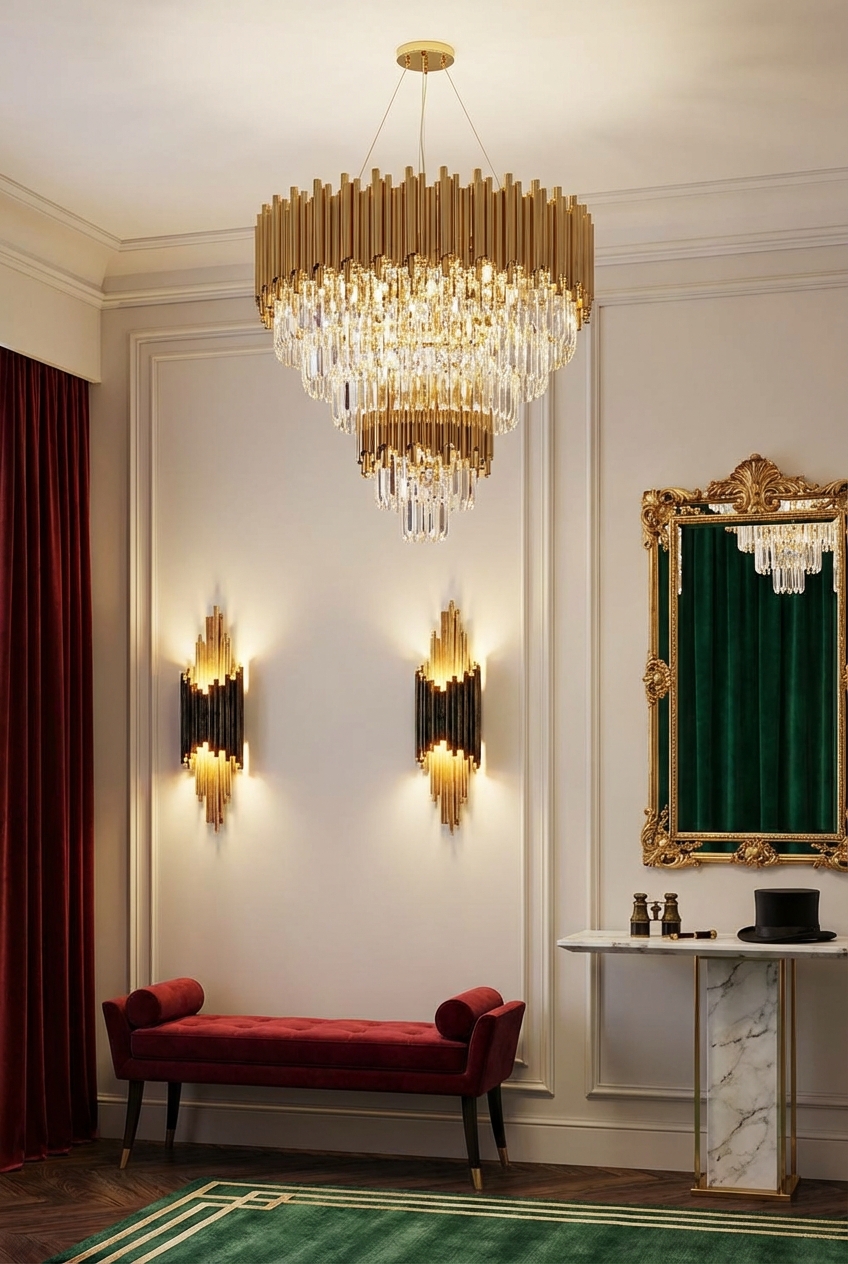
Look for tiered or empire-shaped chandeliers, candelabra-style bulbs, and fluted or faceted glass that breaks light into patterns. Finishes like unlacquered brass and oil-rubbed bronze have the weight this look needs. If you prefer something darker, black entryway lighting in forged iron works well with burgundy or charcoal walls, as long as the bulbs stay warm.
Symmetry helps too. A matching pair of sconces flanking a mirror or door reads as theatrical without any extra effort.
Warmth and color temperature
Aim for about 2400K-2700K, the range that reads as candlelight. Correlated color temperature (CCT) is one of the main measures used to describe how light looks, according to the Department of Energy's color and spectrum page. Bulbs sold as daylight or cool white (5000K and up) flatten textures and make an entry feel like an office.
Pick bulbs with a high color rendering index (90 or above) so velvet, brass and paint colors look true. LEDs are fine here. The Department of Energy notes that good-quality white LED products are expected to last 30,000 to 50,000 hours or longer, which matters when your chandelier is a pain to reach. Choose filament-style LEDs so the bulb itself still looks period-appropriate.
How big should an entryway chandelier be?
A common rule: add the room's length and width in feet, and use that number in inches as the minimum fixture diameter. A 10 by 14 foot foyer gives you 24 inches. For a dramatic look, I'd go somewhat larger than the rule says, because undersized fixtures are the most common mistake in this style.
Hang the bottom of the fixture at least 7 feet (84 inches) above the floor wherever people walk beneath it. Hanging it higher than that disconnects it from the furniture below.
Opera-style fixtures are heavy. Before you buy a brass chandelier that weighs 50 pounds, have a licensed electrician confirm that the ceiling box is rated for it and add bracing between joists if needed.
Entryway chandelier ideas by room type
Grand foyer or high ceiling
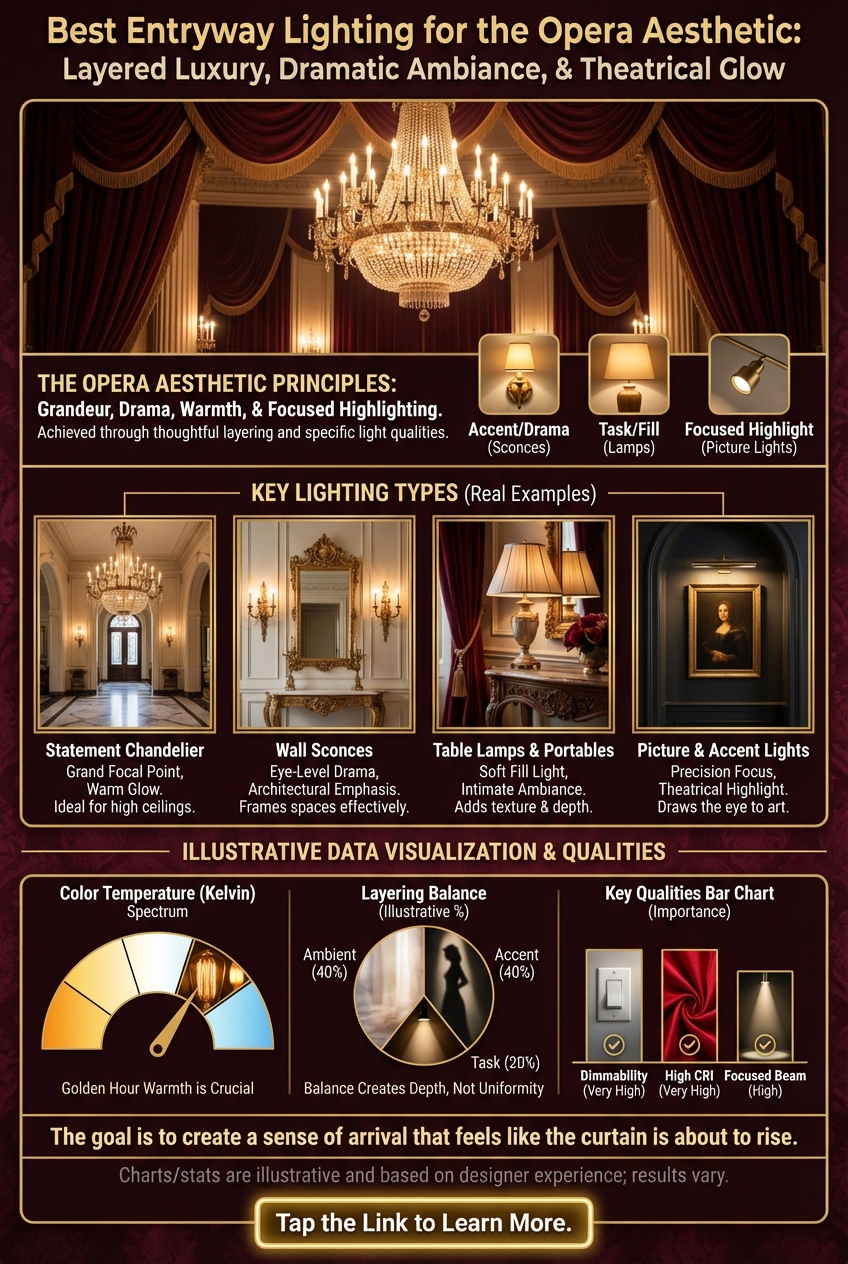
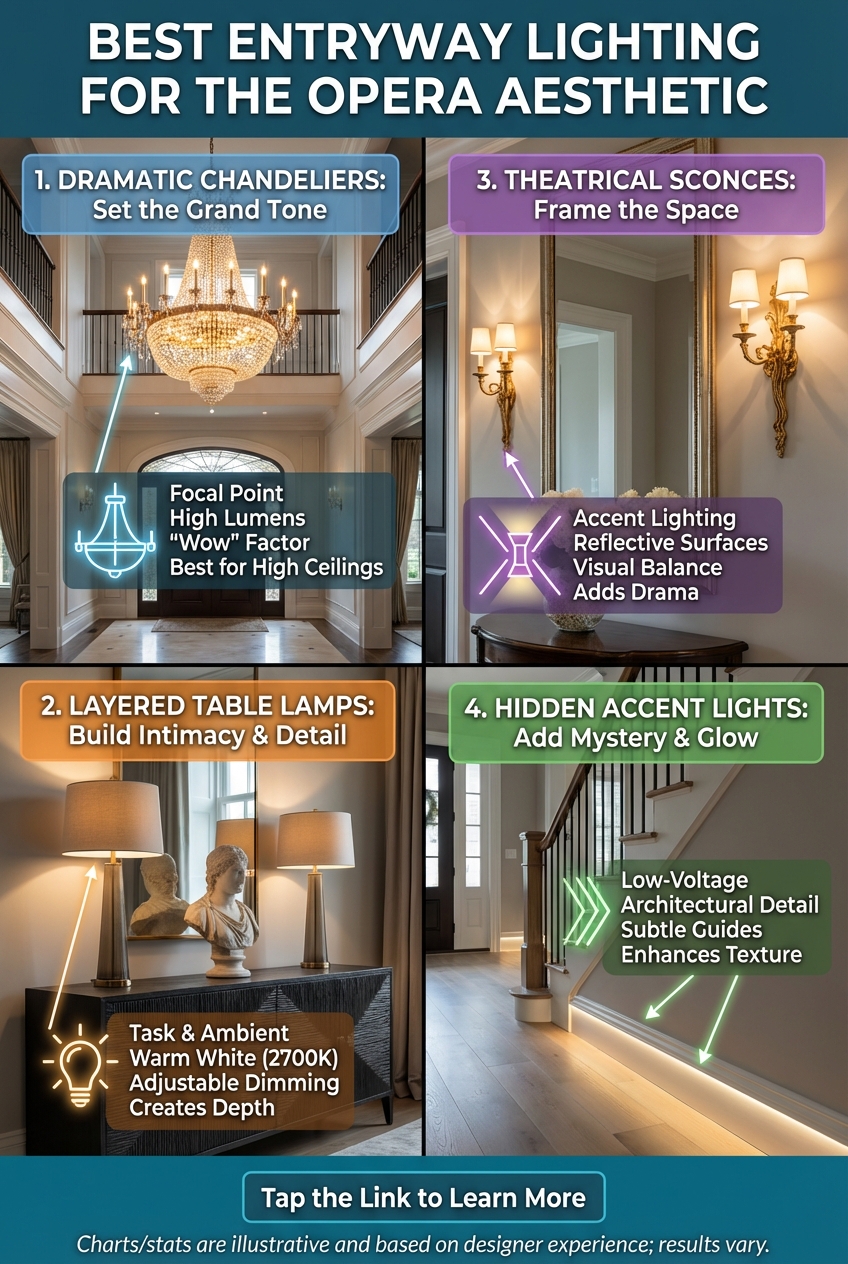
For entryway light fixtures with a high ceiling, a tiered chandelier that drops through the stairwell is the classic move. Check how it looks from the ground floor and from the landing. If there is a transom window above the door, hang the fixture so it reads well through the glass from outside.
Small entryway lighting ideas
A tiny vestibule can't carry a big hanging fixture. Use a semi-flush or flush mount with crystal drapes or a brass starburst shape, which keeps headroom and still gives you some glamour. This also suits 8-foot ceilings. Add one dramatic sconce by the door and a mirror opposite it to bounce light around.
Long hallway entry
Skip the single center light. A row of identical lanterns or pendants spaced evenly gives the corridor a rhythm, like columns in a theater passage. Small uplights on the floor can pick out art along the wall.
Entryway wall sconces as the second layer
Mount sconces so the light source sits roughly 60-66 inches from the floor. That is about eye level, and it keeps harsh shadows off faces in the mirror. Beside a door, keep them about 6-10 inches from the frame. In a long hall, space them every 6-8 feet.
If you rent and can't touch the wiring, plug-in sconces with cord covers do the job. For more shapes and glow ideas, see these opera aesthetic sconce ideas, and for a softer take on warm entry light, this entryway lighting post is a good companion.
Dimmers, layers and hidden light
As an architect, I recommend putting every fixture in the entry on a dimmer. If you use LEDs, check that the dimmer is compatible with them, or you'll get flicker. The Department of Energy describes light as playing "a key role in setting and regulating the body's biological clock", which is a good reason to drop the brightness in the evening.
Build three layers: the central fixture, the sconces, and a low-level source such as a console lamp or a small picture light. If the room feels as bright as your kitchen, switch off the overhead and see whether the sconces and lamp alone look better. They usually do.
Lighting and a mail station
A console near the door often doubles as the place for keys and mail, and it needs enough light to read an envelope. A small lamp on the console, with a warm bulb, handles that without breaking the mood. Keep the lamp's finish in line with the other metals, and see this console styling arrangement for how to dress the surface around it.
Finishes that help the light
- Matte or eggshell walls avoid glare from crystal. Deep burgundy or charcoal absorbs light and adds depth.
- A large mirror opposite a fixture doubles the sparkle in a small entry.
- Match metals: if the fixture is antiqued brass, carry that to the hinges and door hardware.
- Something soft, like a velvet runner or upholstered bench, catches light differently from hard surfaces.
A ceiling medallion behind the canopy hides a flimsy plate and makes a plain fixture look more substantial. If you're deciding where the budget goes, this splurge versus save guide helps. I'd put money into the central fixture and the dimmer, and save on bulbs and secondary lamps.
Frequently asked questions
Can I use the opera aesthetic in a rental entryway?
Yes. Plug-in sconces with decorative cord covers and a lamp on a console give you the layered look without rewiring. If you swap a fixture, keep the original and reinstall it before you move out.
Is a crystal chandelier hard to clean?
It takes some upkeep. Dust it regularly with a microfiber duster and use a drip-dry chandelier cleaner now and then to remove film from dust or cooking.
What if my entryway ceiling is only 8 feet?
Choose a flush or semi-flush fixture with crystal or bead drapes instead of a long hanging chandelier. It gives the same glamour and nobody bumps their head.
Are LED bulbs okay for a dramatic entryway?
Yes, if you choose warm filament-style LEDs around 2700K with a high color rendering index. Pair them with a compatible dimmer.
Filed under
ArticlesMeet the author
Written by an architect.
Julio Arco is a passionate architect with years of experience in architecture, interior design, urban design, and housing. He studied at prestigious universities across North America and Europe.

- Name
- Julio Arco
- Job
- Architect and online interior designer
- Studied
- Architecture, ITESM · Urban Design and Housing, McGill
- Partner
- Thor, Australian Shepherd
- Thor’s title
- Head of quality control