Best Fabrics for Families: Durable, Easy-Care Picks
Choose the best fabrics for families: performance synthetics, tight weaves, leather and slipcovers that handle kids, pets and spills.

By Julio Arco
Architect and online interior designer
In this post
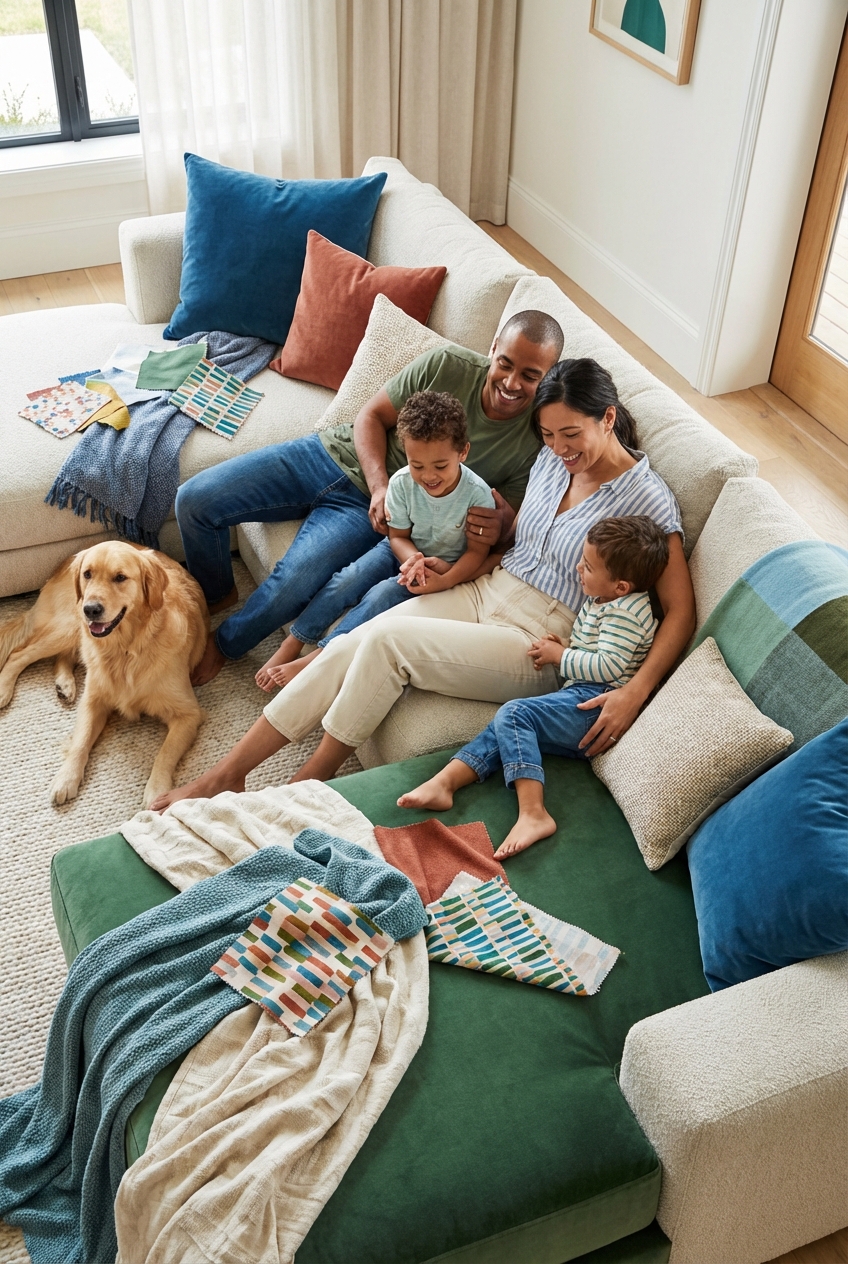
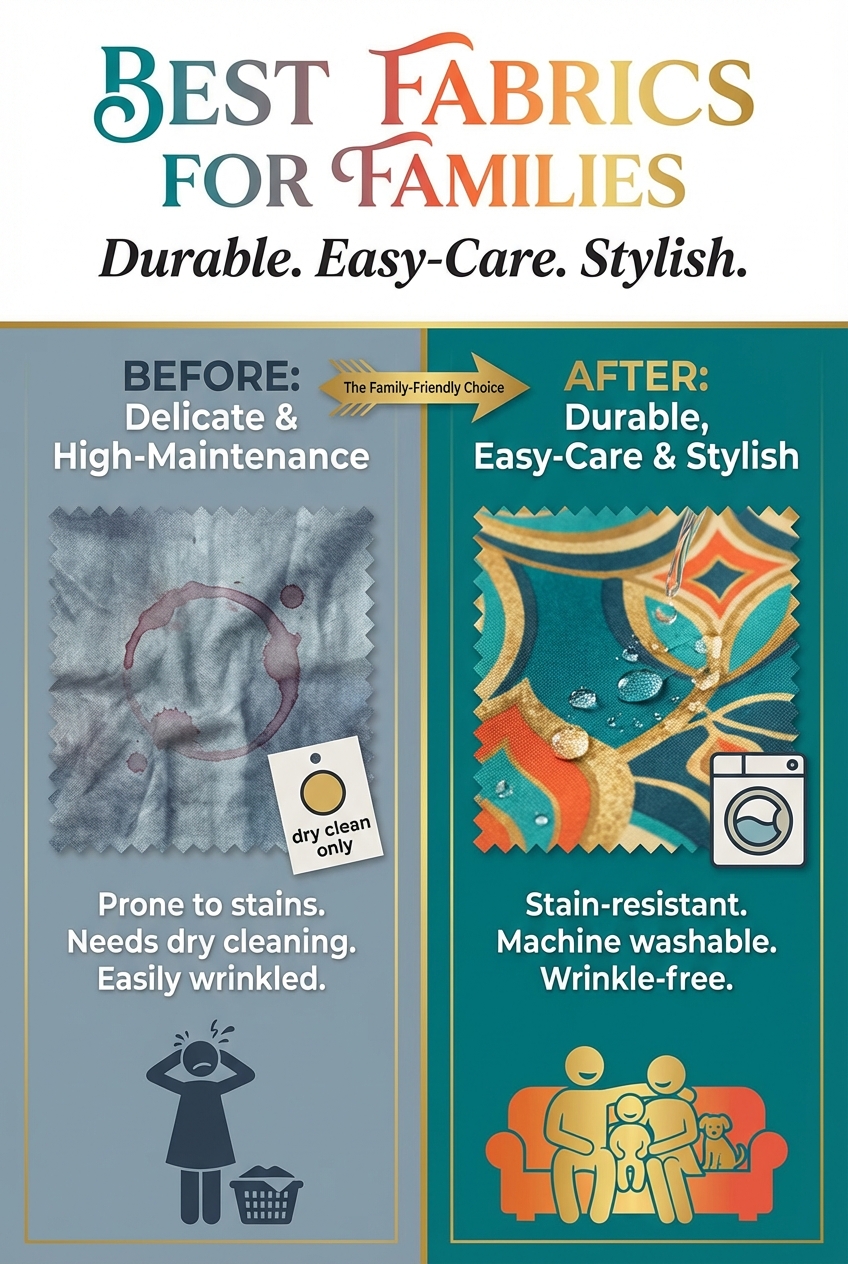
The best fabrics for families are tight-weave performance fabrics: polyester or solution-dyed acrylic blends, micro-velvet, and protected leather. They resist stains, don't snag easily, and clean up with little effort.
You don't have to wait until the kids are grown to buy a sofa you like. Pick the fiber, the weave and the color pattern with your household's mess in mind, and the room can look good and still survive juice, muddy paws and the occasional marker.
Which fabrics hold up best with kids and pets?
Performance polyester and nylon blends
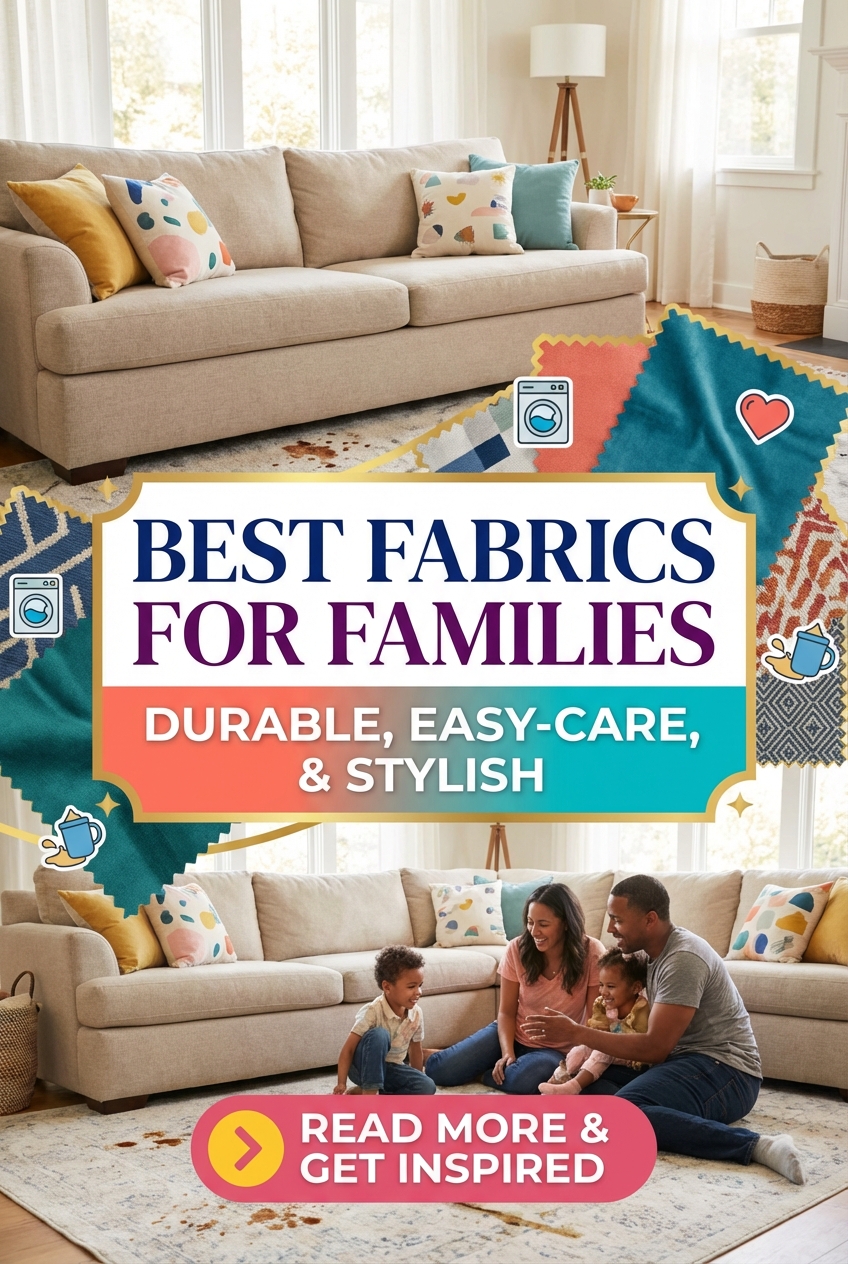
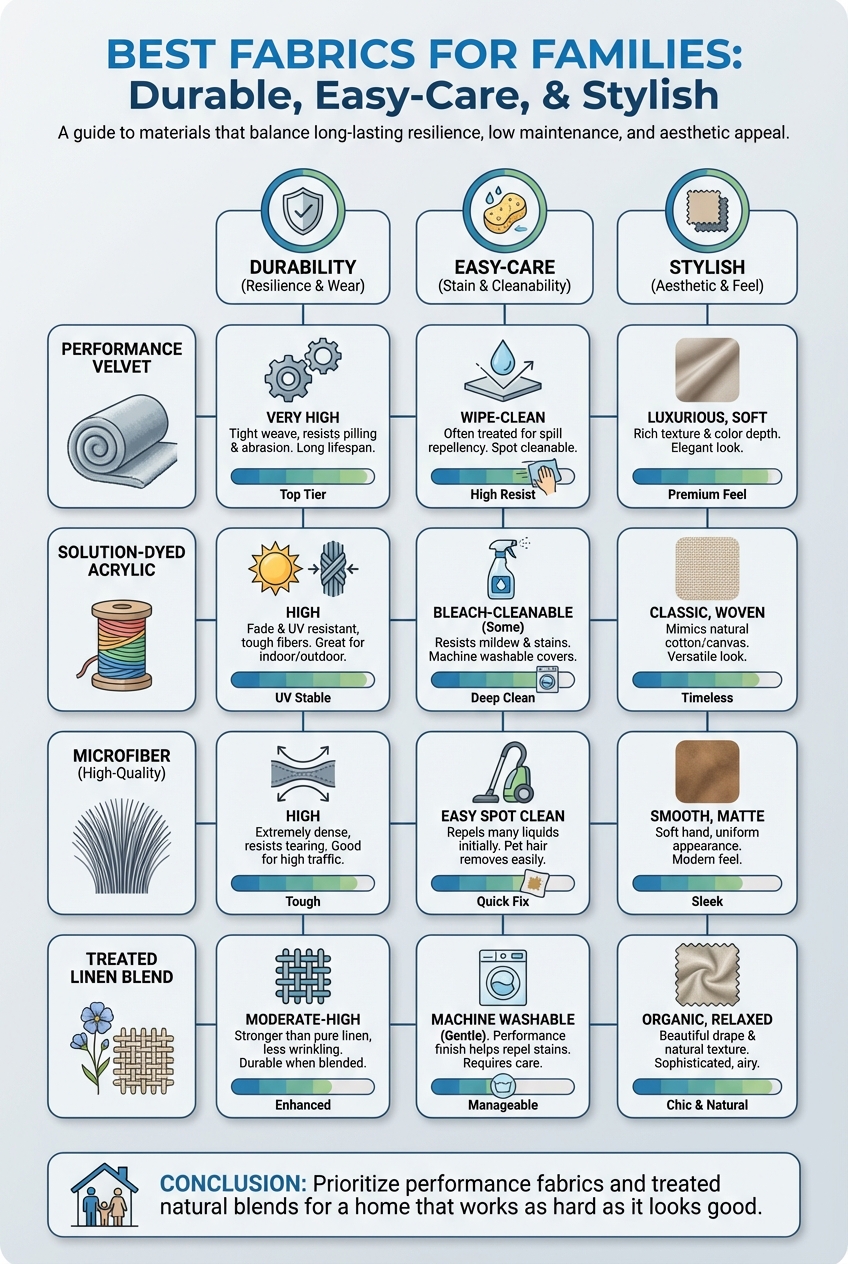
Modern performance fabrics (Crypton and Sunbrella are two well-known brands) use synthetic fibers that feel closer to cotton or linen than the shiny polyester of the past. Tight construction means liquid tends to sit on the surface for a while, which gives you time to blot.
Micro-velvet and microfiber
Micro-velvet is a cut-pile fabric with no loops. Claws have nothing to hook into, and the dense pile lets most spills sit on top. It's one of the easiest fabrics to wipe down, and it has a soft sheen that looks more expensive than it is.
Solution-dyed acrylic
In solution-dyed fibers the color is added while the fiber is still liquid, so it runs through the whole thread instead of sitting on the surface. Many manufacturers allow diluted bleach cleaning on these fabrics without fading, but check the care tag first.
Protected leather
Choose leather with a clear protective topcoat (often sold as pigmented or protected) over delicate aniline leather. It shrugs off spills, and on a distressed finish a new scuff from a toy car blends into the surface. If you have a cat, test a sample first, because claws can mark any leather.
What should you check before buying?
The double-rub count
Abrasion resistance is measured in double rubs, usually by the Wyzenbeek test. As a rule of thumb, about 15,000 is the floor for a busy family room, and 30,000 or more gives you extra margin for a sofa that gets daily use. A fabric can feel soft and still wear out fast, so ask for the number rather than judging by touch.
Weave and pattern
Loose, loopy weaves such as bouclé invite claws, so skip them if you share your home with a cat or a digging dog. Heathered fabrics and tweeds hide crumbs and small marks better than a flat solid. A dark solid doesn't hide as much as you'd expect: lint, dander and cracker dust show up on it.
The key and the swatch test
Drag a house key firmly across a swatch. If threads pull or leave a mark that won't brush away, move on. Order a few swatches and leave them overnight with a smear of ketchup or a splash of wine, then see what's left in the morning.
Cleaning code
Look at the tag: W means water-based cleaners, S means solvent-based, WS allows either. For a household with kids, W or WS is the easier life. Our guide to pet-friendly fabrics for furniture goes deeper on how each material copes with fur and claws.
Are slipcovers and sprays worth it?
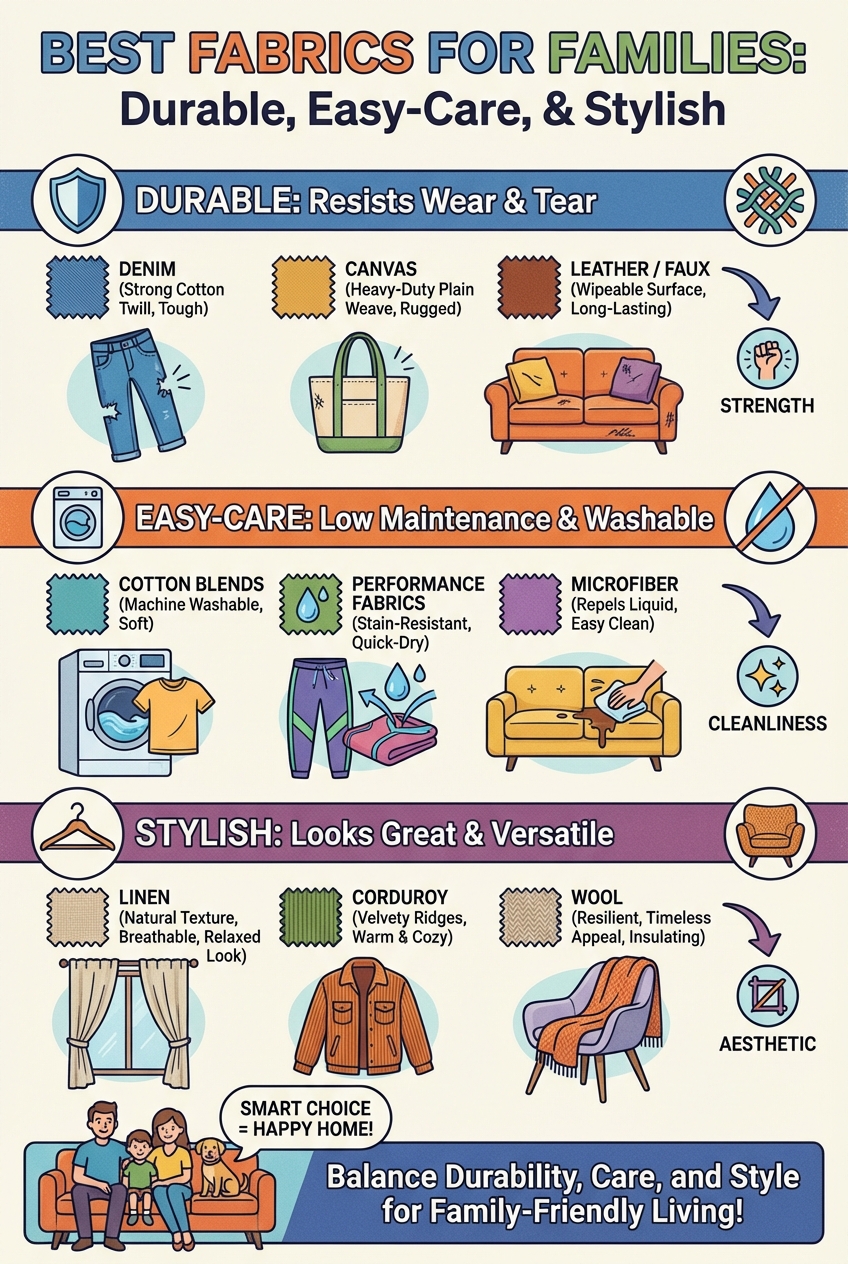
Slipcovers are the most practical tool you have. A tailored cover in washable cotton denim or a heavy cotton blend goes in the machine, so the sofa gets a real clean instead of spot treatment. As an architect, I'd choose a sofa with removable covers over a fixed-cover sofa in a fancier fabric for any room where people eat or nap.
Aftermarket protectant sprays are a weaker bet. They can wear off unevenly and change how the fabric feels. Fabrics treated at the mill keep their protection longer and don't turn crunchy.
How do you choose by room?
Living room
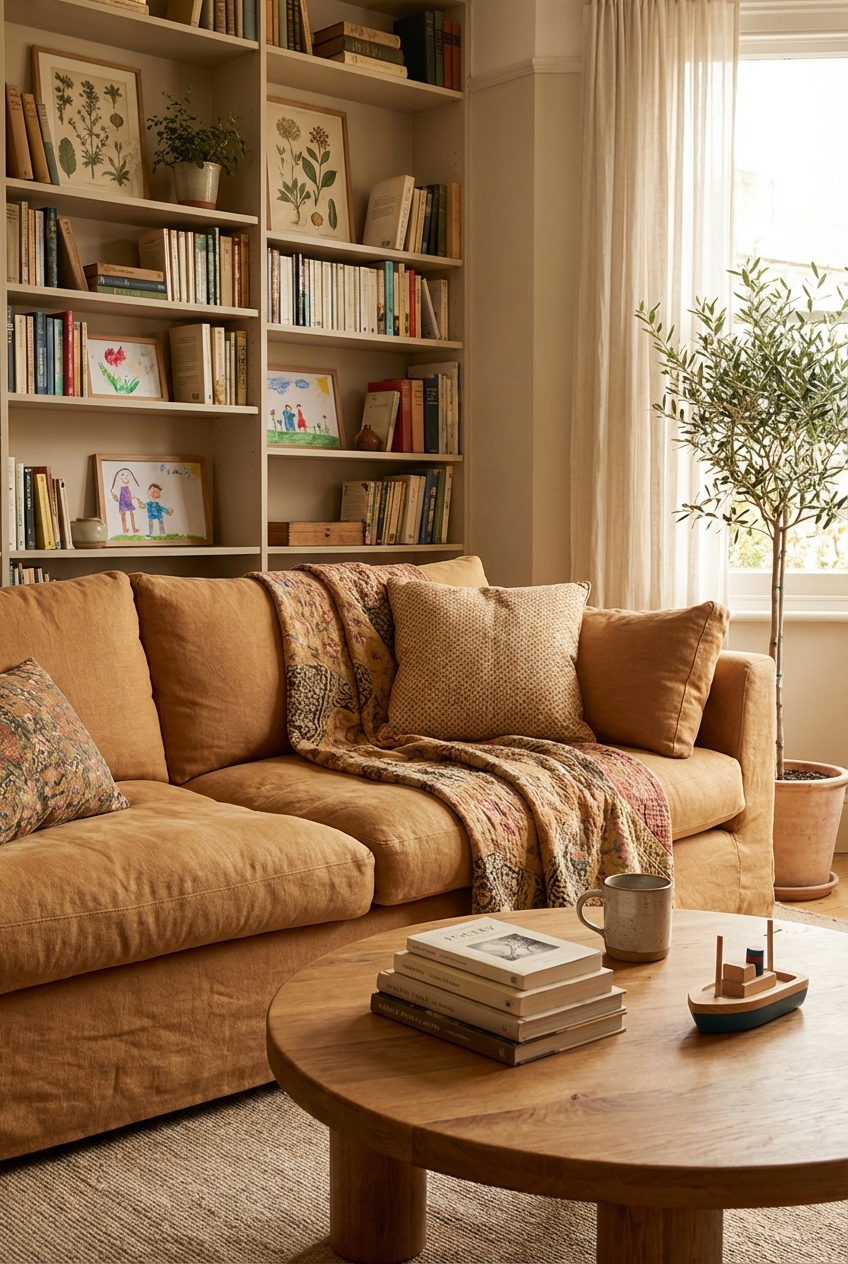
A performance micro-velvet or heavy polyester blend suits the sofa or sectional. If a dog sleeps on it, a color close to the dog's coat keeps the between-vacuum look calm.
Dining room
Upholstered chairs are comfortable, but spaghetti night is hard on them. Wipe-clean performance fabric or good vinyl works, and a bench on one side with a removable outdoor-fabric cushion is easy to clean.
Bedroom
Choose washable covers: a cotton or linen-look performance fabric for the headboard and a coverlet you can launder. If you already own a fabric headboard, here's how to clean an upholstered headboard.
Playroom
Bean bags and modular seating in outdoor-grade fabrics hold up well. Carpet tiles beat wall-to-wall carpet: if a marker wins, you lift one tile and replace it.
Which rugs and layout choices protect the fabric?
A wool rug resists stains thanks to its natural lanolin, and polypropylene handles heavy spills, for example under a dining table. Size the rug so at least the front legs of every seat sit on it, which usually means 8x10 or 9x12 in a family room. That also keeps furniture from sliding.
Leave about 18 inches between sofa and coffee table, and round side tables are kinder to toddlers at head height. Hang curtains so they just touch the floor. Puddled fabric collects dust and pet hair. If toys and shoes pile up by the door, a plan like these mudroom storage ideas for families keeps the mess off your upholstery.
What about budget?
On a small budget, look at sofas with removable, machine-washable covers, and indoor/outdoor polypropylene rugs you can hose off. In the middle range, many retailers offer performance velvet or performance linen as a standard option, treated at the factory. At the top end you pay for a sturdy frame and licensed performance or protected leather that should last a decade. Whatever you spend, put the money into the largest upholstered piece first, in a mid-tone color like greige, slate or heathered oatmeal.
Common mistakes to avoid
- Buying a dark solid because you assume it hides stains.
- Trusting a spray to turn a delicate fabric into a durable one.
- Choosing by softness alone and never checking the rub count.
- Picking dry-clean-only pillows for a room where people snack.
- Falling for loose linen or silk blends on a sofa a cat can reach.
If you love the look of linen, a linen-polyester blend gives you the appearance with more stability and stain resistance. 100% linen wrinkles and absorbs liquid fast. I recommend that blend for any family room.
Frequently asked questions
Is white furniture ever okay for a family with kids?
It can work with a bleach-cleanable cotton denim slipcover or a top-tier performance fabric where liquids bead up. Stain-resistant isn't stain-proof, so blot spills quickly.
What is the best fabric for cats that scratch?
Micro-velvet or tight microfiber. Cats tend to hook into loops like those in linen, tweed or bouclé, and a cut pile gives claws less to grab.
How do I remove pilling from my sofa?
Use an electric fabric shaver, the kind made for sweaters, and go gently. Pilling is common even on expensive fabrics and doesn't mean the sofa is failing.
Can I use outdoor fabric indoors?
Yes. Modern outdoor fabrics are soft, fade-resistant and easy to clean, so they suit breakfast nooks, sunrooms and playrooms.
Filed under
ArticlesMeet the author
Written by an architect.
Julio Arco is a passionate architect with years of experience in architecture, interior design, urban design, and housing. He studied at prestigious universities across North America and Europe.

- Name
- Julio Arco
- Job
- Architect and online interior designer
- Studied
- Architecture, ITESM · Urban Design and Housing, McGill
- Partner
- Thor, Australian Shepherd
- Thor’s title
- Head of quality control