Afrohemian Rugs: Jute, Kilim and Layering for Living Rooms
How to choose and layer Afrohemian rugs in a living room: jute base, kilim topper, sizes, runners, pet-aware care and safe edges.

By Julio Arco
Architect and online interior designer
In this post
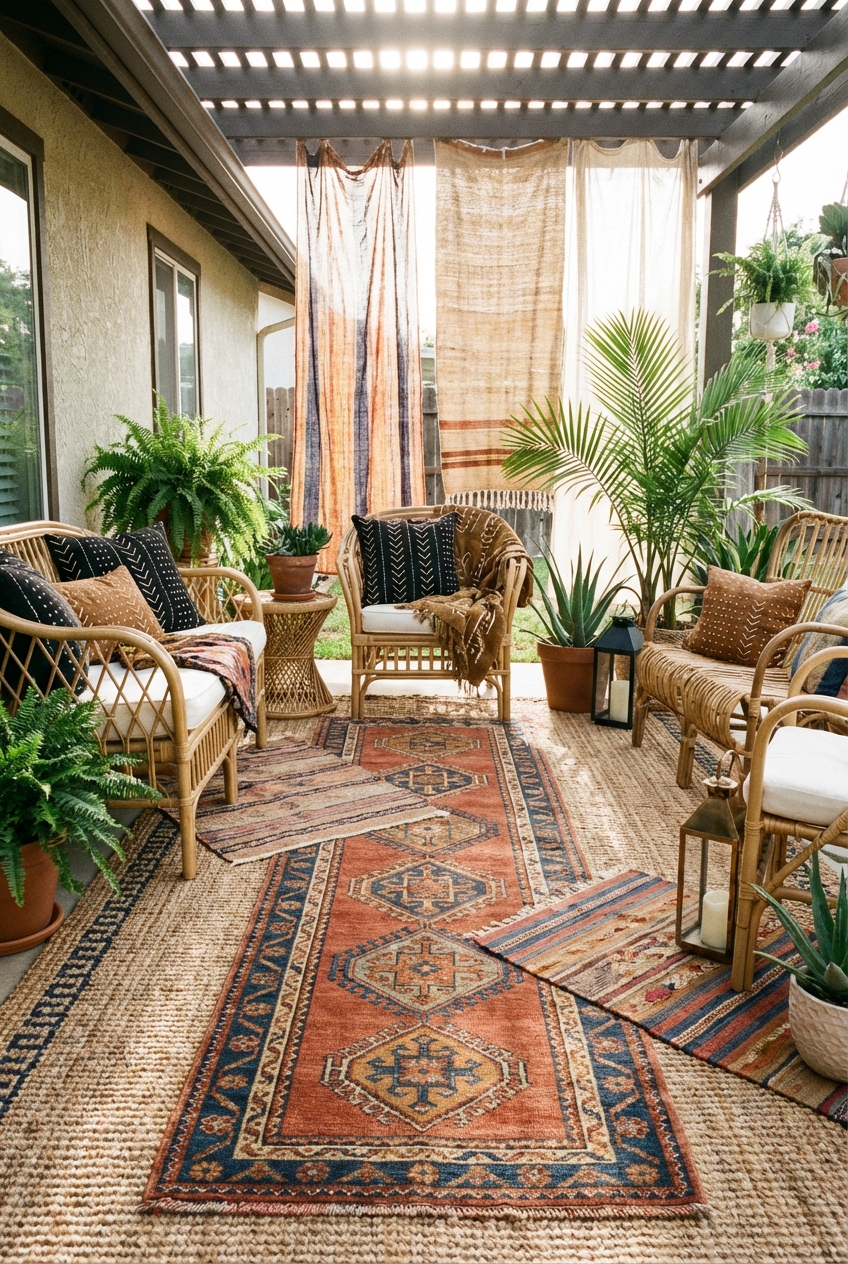
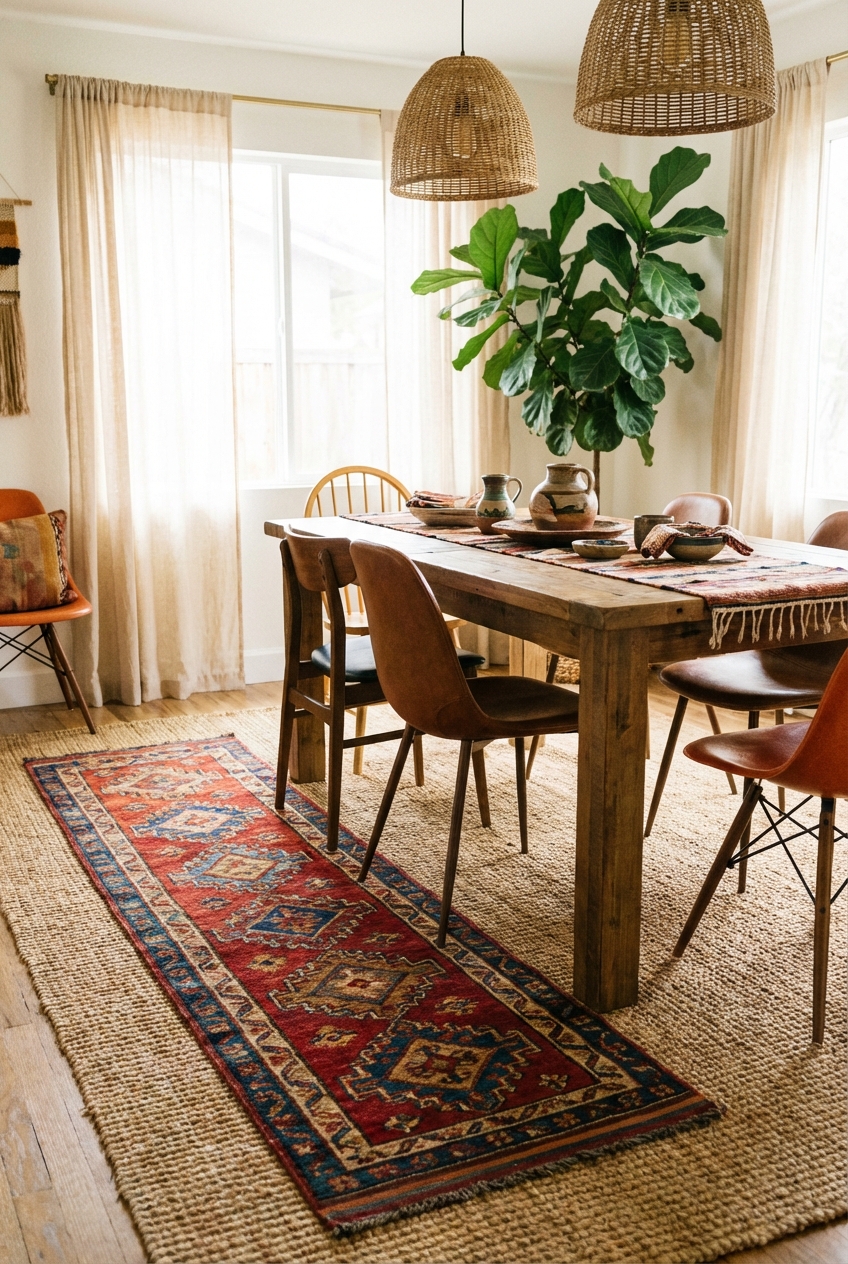
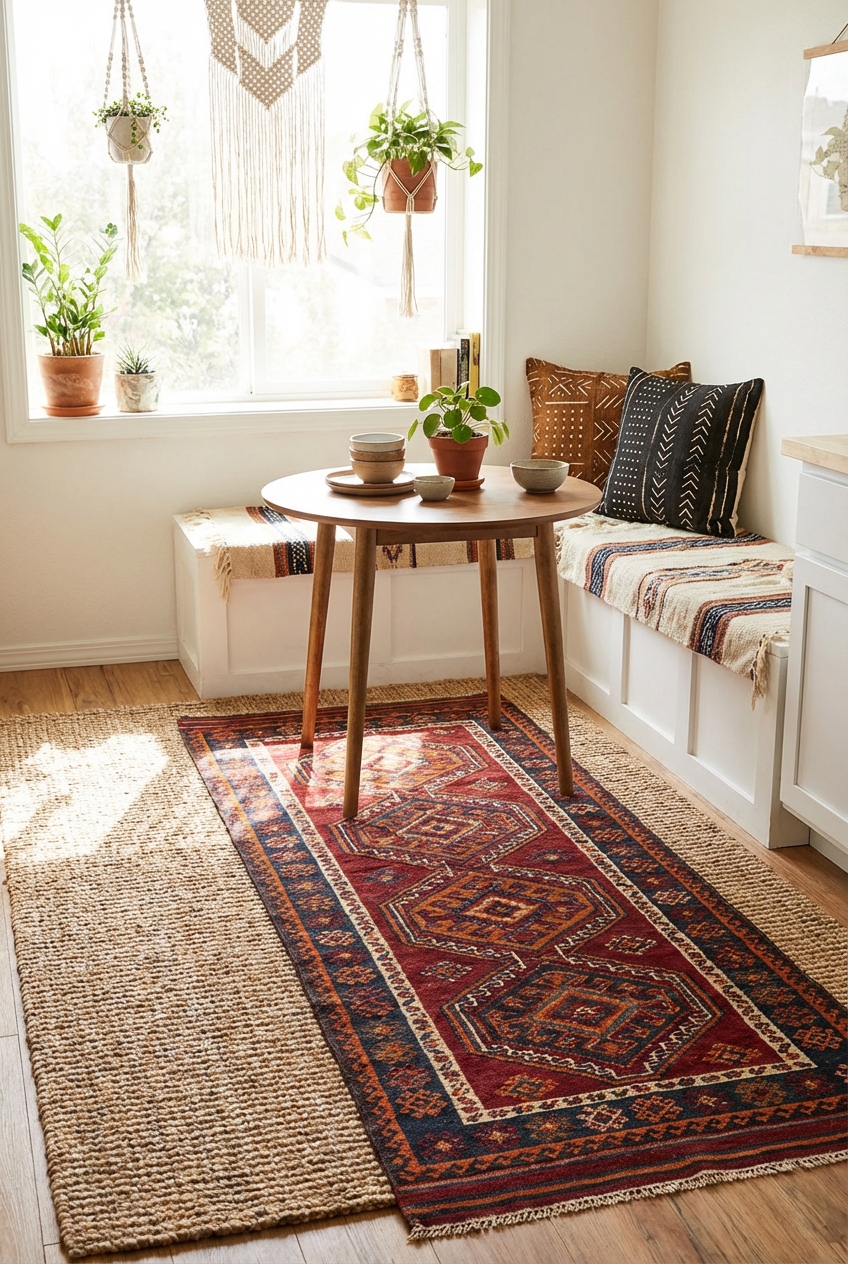
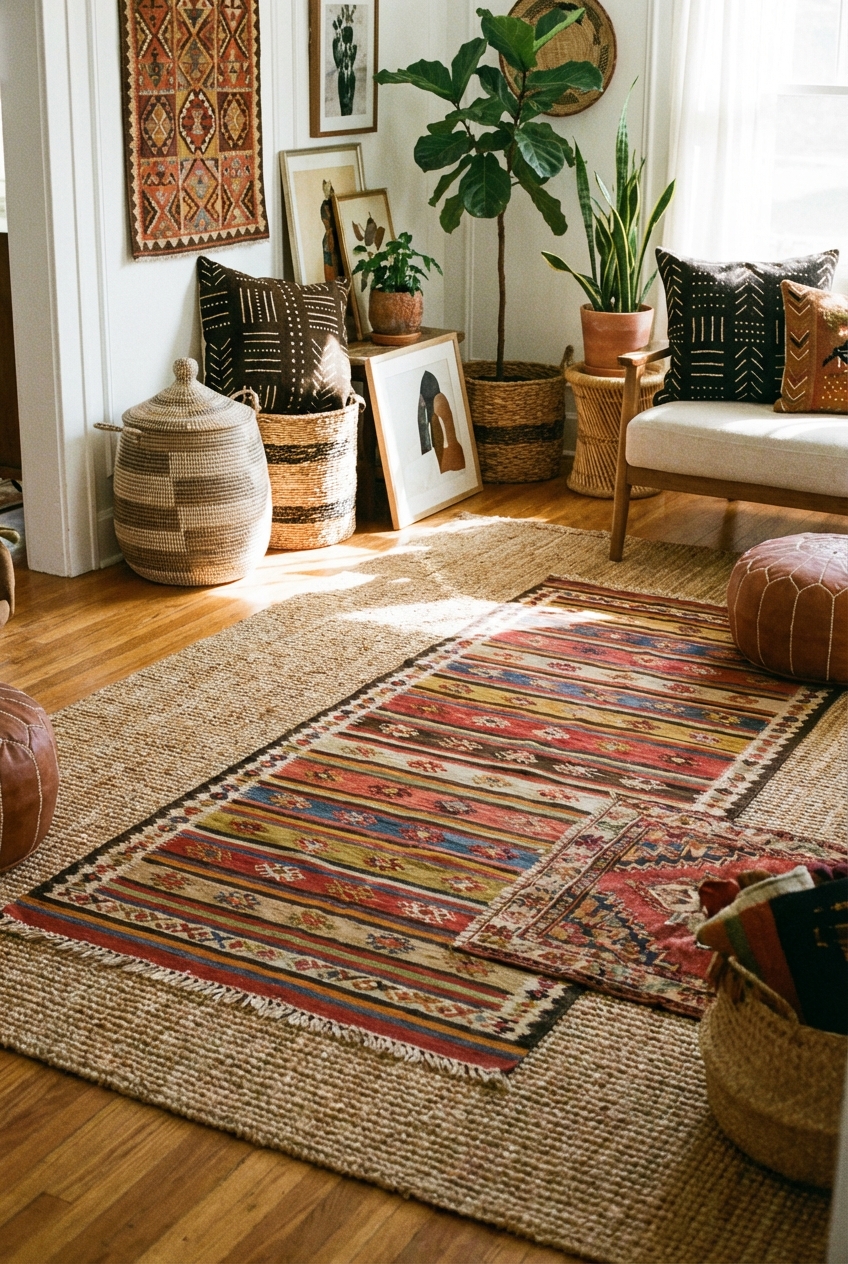
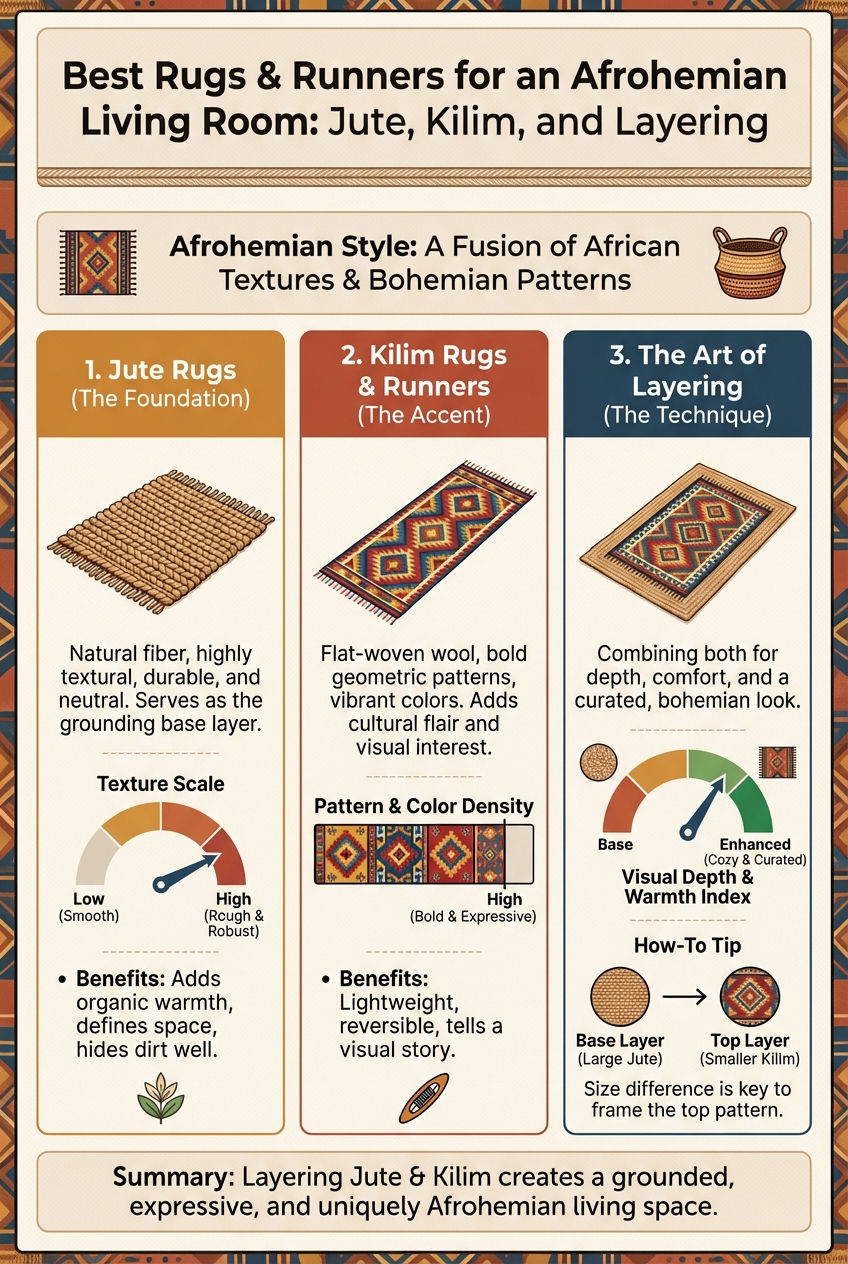
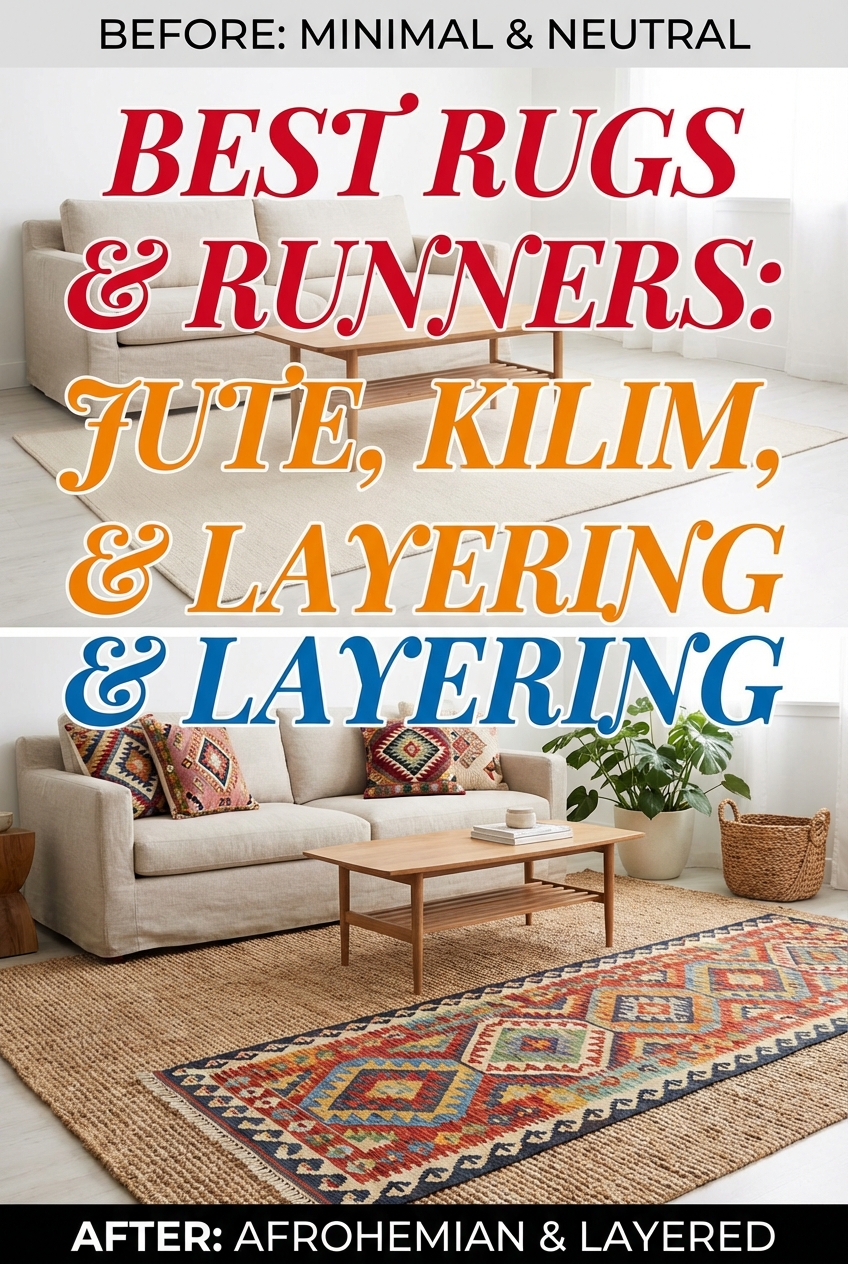
The simplest formula for Afrohemian rugs is a large natural-fiber base, usually jute, with a smaller flat-weave kilim or mudcloth-inspired rug on top. The base brings texture and calm. The topper brings color, pattern and the story.
Get the size right first. Most living rooms need a rug big enough for at least the front legs of the sofa and chairs to rest on it. Everything else is secondary.
What makes a rug Afrohemian?
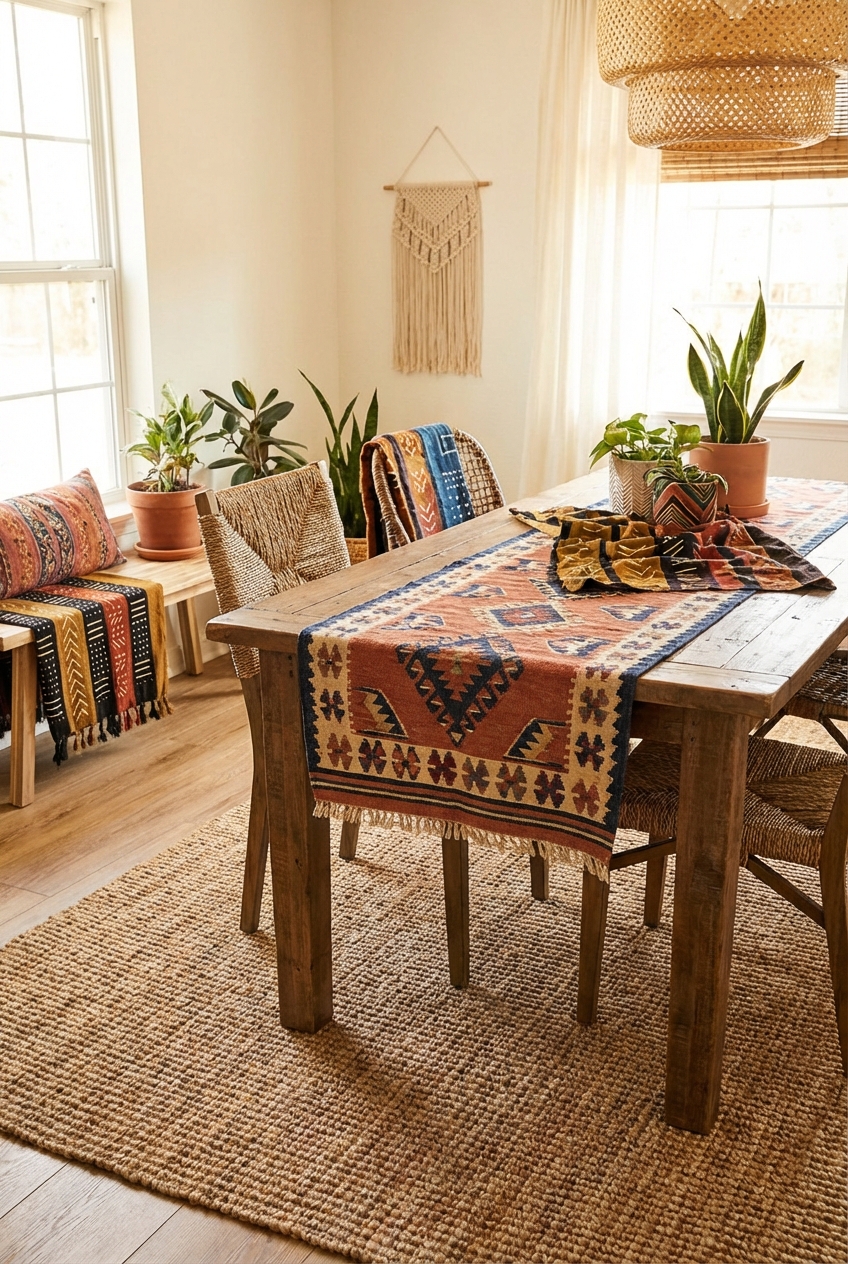
Afrohemian is a branch of boho that draws on African textile traditions: geometric patterns, earthy reds and oranges, deep indigo, and black-and-white graphic work. The mix is deliberate. Nothing needs to match, but the pieces need to share a few undertones.
Three material families do most of the work:
- Jute: golden-tan, chunky and soft underfoot compared with sisal. It grounds light furniture.
- Kilim and other flat-weaves: thin, pile-free wool rugs, ideal for layering and for high-traffic spots.
- Patterns inspired by West African mudcloth (Bogolan) or Central African Kuba cloth: lines, dots and squares. These are textiles, not rugs, so look for floor coverings that echo them.
How big should a living room rug be?
For a typical living room, 8x10 feet is the practical minimum, because it lets the front legs of the sofa and accent chairs sit on the rug and ties the seating group together. In a larger or open-plan space, 9x12 lets every leg sit on it.
Leave about 12-18 inches of bare floor between the rug and the walls. That strip frames the room so it doesn't read as wall-to-wall carpet.
Measure the seating area, not the room. If your sofa is 84 inches long, the rug should be at least 96 inches wide so it extends past both ends.
How do you layer a jute rug with a patterned rug on top?
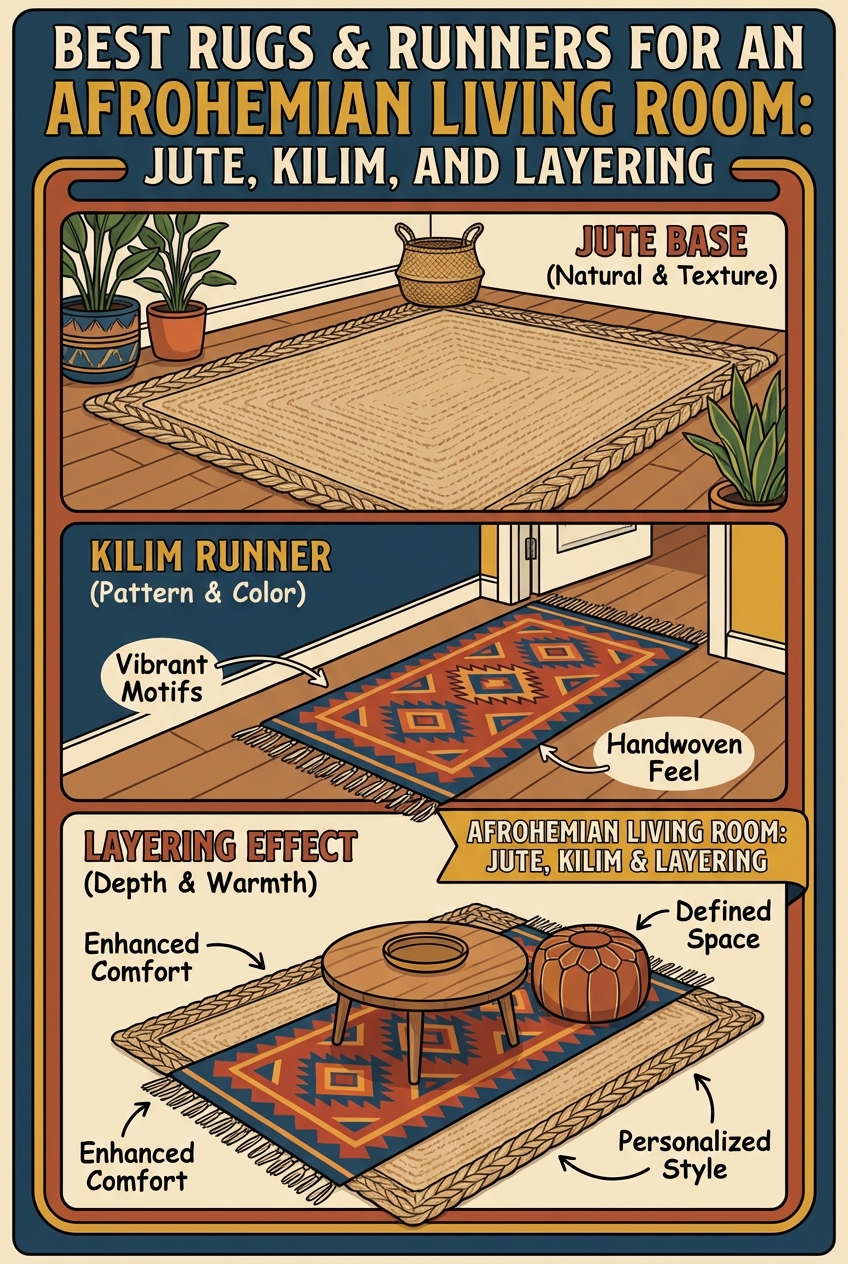
Lay the jute down first, centered on the room's focal point, such as a fireplace or TV wall. Then center the kilim on top. Sit the coffee table on the topper so it anchors both layers.
For proportions, let the jute extend about 2 feet beyond the topper in each dimension. An 8x10 jute pairs well with a 5x7 or 6x9 kilim, leaving a border of natural texture.
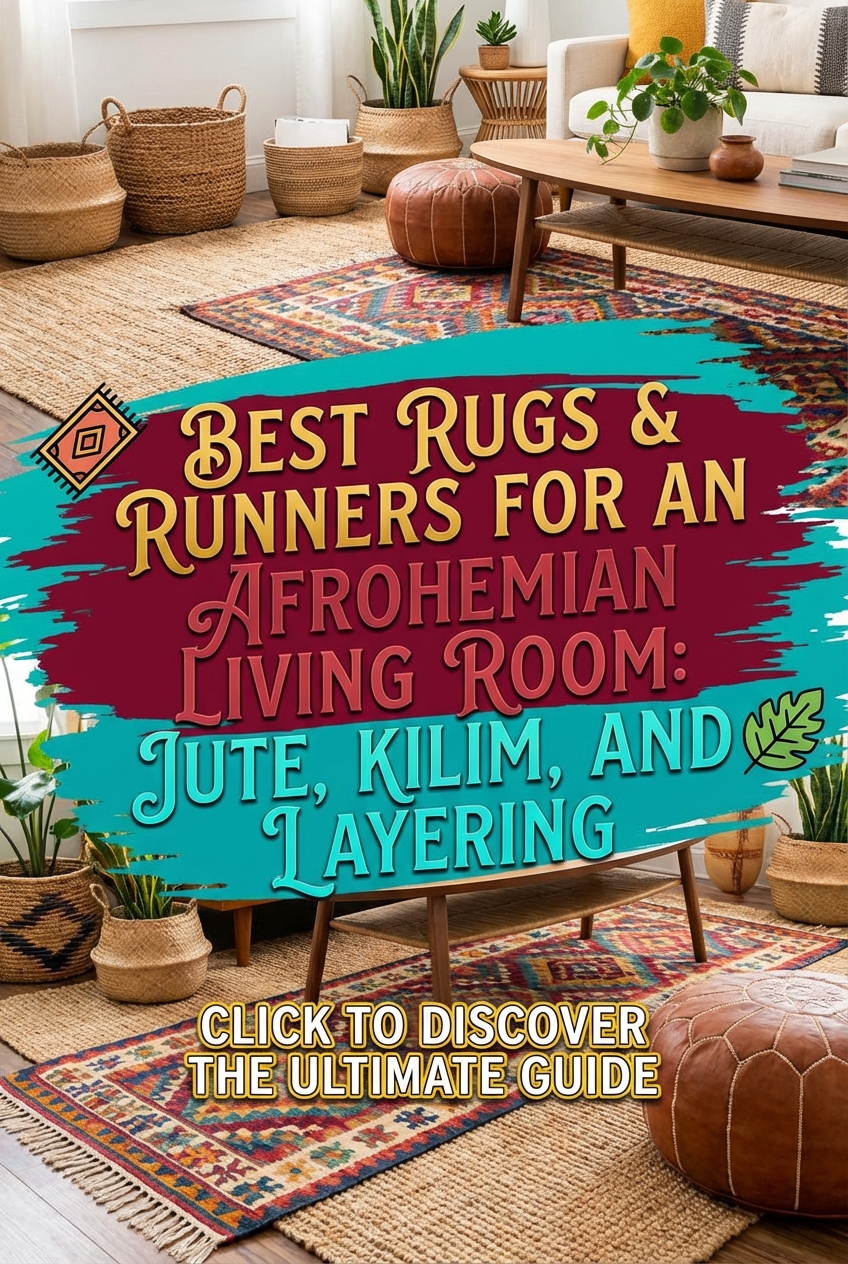
Choose a flat-weave for the top layer
As an architect, I'd keep the topper thin. A plush shag on jute creates a ridge people catch their toes on. A flat-weave keeps the profile low, and the step between layers is barely noticeable.
This matters for safety. A review in the National Institutes of Health's PMC archive notes that loose throw rugs and area carpets with curled edges or folds are among the extrinsic factors most often described as unsafe and as potentially raising fall risk. Use rug tape at the corners of the topper, and replace any rug whose edges curl for good.
Match undertones
A golden jute looks best with warm kilims in red, orange or brown. A grayer or bleached jute suits indigo, black and cool green. If your sofa is already colorful, a black-and-white mudcloth-style pattern calms things down. If the furniture is neutral, go bold.
Which base works best: jute, sisal or seagrass?
Jute is the softest of the three and the usual pick for a living room. Bleached jute is lighter and a bit gentler on bare feet. Sisal is tougher and scratchier. Seagrass is smoother and more stain-resistant, so it can suit homes where accidents happen, though it is less cozy.
Pets change the choice. Some cats treat jute and sisal as scratching posts, so a tight-weave wool rug with a similar look may last longer. Jute also hates water: blot spills right away with a dry towel, don't rub, and avoid steam cleaning. For anything beyond that, check the care label.
Do you need a rug pad?
Yes for the base. A felt-and-rubber pad stops sliding and adds a little give to hard jute. Between the two rugs you usually don't need one, since wool on jute grips well, but tape at the corners of a small or light topper adds security.
What about runners for hallways and kitchens?
Carry the look past the living room with a kilim runner in Afrohemian style. Flat-weave wool is durable and easy to vacuum, which suits hallways. Avoid plain jute runners unless they have a non-slip backing, because they tend to slide in narrow spaces. The same logic works for afrohemian runner rugs in a kitchen, where wool or a washable flat-weave handles spills better than jute.
If your living room opens onto other spaces, these pages show how the same approach plays out there: open-concept spaces, the dining room and the patio.
Small rooms and open plans
In a small living room, skip the layering and pick one medium rug with a large-scale pattern. A big motif tends to feel calmer than a tiny, busy one.
In an open plan, don't repeat the exact same rug. Use the jute-and-kilim stack in the living area and a plain jute under the dining table. They relate without repeating.
Setup and care checklist
- Vacuum with suction only. A beater bar can pull jute fibers loose.
- Expect shedding for the first few months. Vacuum the floor underneath too.
- If the sofa wobbles with two legs on the rug and two off, put felt pads under the legs on the floor.
- Set plants on waterproof trays near the rug edges.
- I recommend a floor cushion or low ottoman on the rug's edge. It makes the rug part of the seating.
Rugs are also a safety question for older relatives. In the U.S., an estimated 37,991 adults age 65 or older are treated in emergency departments each year for falls associated with carpets (54.2%) and rugs (45.8%). Flat edges, pads and tape are worth the few minutes.
For more ideas on the rest of the room, see Afrohemian living room decor ideas, and for the layering logic applied to fabric, the basics of layering textiles.
Frequently asked questions
Can I use a jute rug if I have a cat?
It depends on the cat. Some use jute as a scratching surface, so if yours scratches, a tight-weave wool rug with a similar look may hold up better.
How do I clean a spill on a jute rug?
Blot right away with a clean, dry towel and don't rub. Avoid soaking or steam cleaning, since water can cause shrinking or browning.
Is layering rugs hard to walk on?
Not with a flat-weave on top of a low-profile base. The step is slight, but keep edges flat with tape.
Do I need a rug pad for the top rug?
Usually not, because wool grips jute well. A very small or light topper benefits from rug tape at the corners.
Filed under
ArticlesMeet the author
Written by an architect.
Julio Arco is a passionate architect with years of experience in architecture, interior design, urban design, and housing. He studied at prestigious universities across North America and Europe.

- Name
- Julio Arco
- Job
- Architect and online interior designer
- Studied
- Architecture, ITESM · Urban Design and Housing, McGill
- Partner
- Thor, Australian Shepherd
- Thor’s title
- Head of quality control