Blue and Yellow Together: Palettes, Meaning, How to Use
Do blue and yellow go together? Yes. See why the pair works, what it means, and how to balance shades and proportions on your walls and in decor.

By Julio Arco
Architect and online interior designer
In this post
Yes, blue and yellow go together, and it's one of the easiest color pairings to live with. They sit opposite each other on the color wheel, so they contrast without clashing. The trick is proportion: let one color lead and use the other as support.
If you're worried yellow will feel loud or blue will feel cold, that's common. Both problems are solved by choosing the right shade of each and deciding where they go.
Do blue and yellow go together?
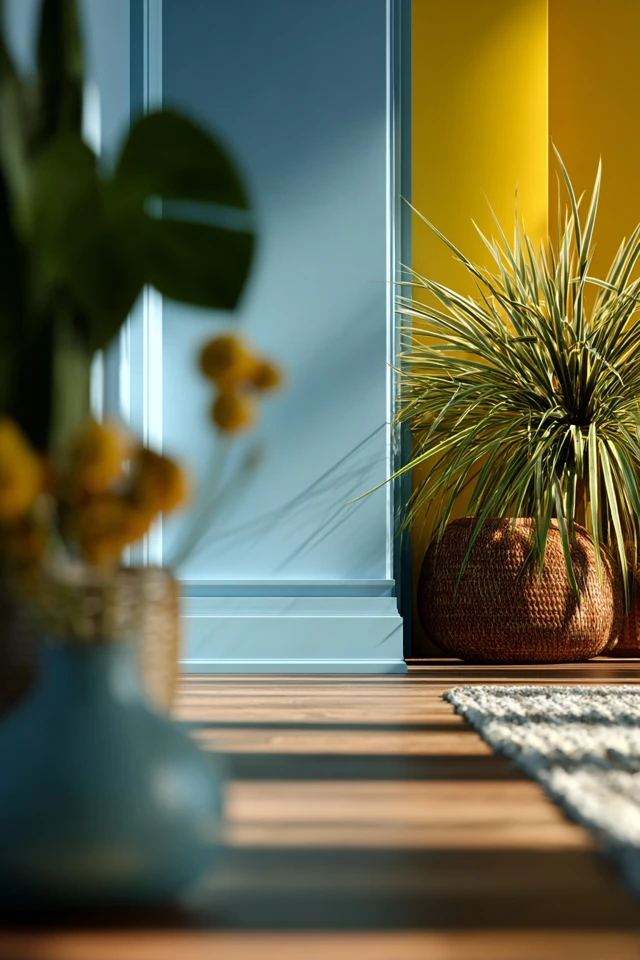
They do, because they're complementary colors. Complementary pairs make each other look more vivid, which is why a small amount of yellow can wake up a blue room. Blue tends to read as cool and receding. Yellow reads as warm and advancing. Together they balance temperature, which is why the combination feels fresh rather than flat.
The pairing works best when the two colors share a similar level of saturation. A dusty blue with a muted ochre feels calm and a little vintage. A navy with a bright lemon feels crisp and graphic. Mixing a very bright yellow with a very pale blue is where it starts to feel unbalanced.
What color is blue and yellow together?
Mixed as paint or pigment, blue and yellow make green. That's the answer most people are after when they search this. In a room, though, you're not mixing them, you're placing them side by side, so you get contrast instead of a new color. If you want the green in between, an olive, sage or teal accessory will bridge the two without extra effort.
What blue and yellow mean together
Blue is usually linked with calm, sky and water. Yellow is linked with sunlight, optimism and energy. As a pair, they tend to suggest a rested but cheerful space, which is why they show up so often in kitchens, breakfast nooks and kids' rooms.
There's some research behind the blue half of that. In a study from Deakin University's School of Psychology, Isabella S Bower and colleagues found that blue coloring of the built environment increases autonomic range and is associated with modulations of brain activity linked to emotional processing. In plain terms, blue walls measurably affect how the body responds to a space. The study doesn't test yellow, so treat the yellow side as a design convention, not a proven effect.
Which shades of blue and yellow work best?
Navy and yellow
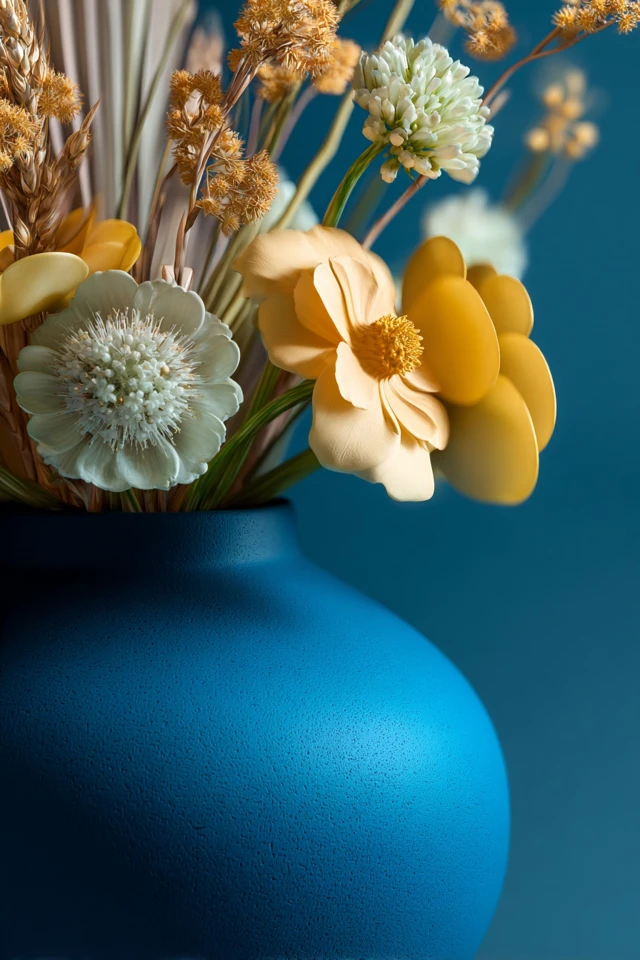
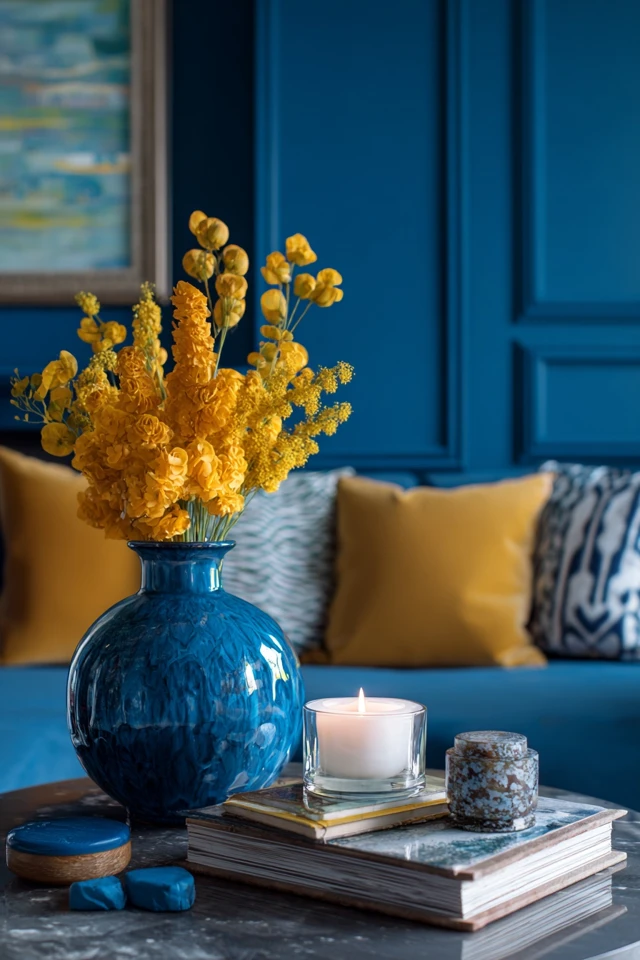
A yellow and navy blue combination is the high-contrast option. Navy has real visual weight, so it anchors a wall, a sofa or cabinetry. Butter or mustard yellow keeps it from feeling formal. A lemon yellow gives a sharper, more modern result.
Light blue and yellow
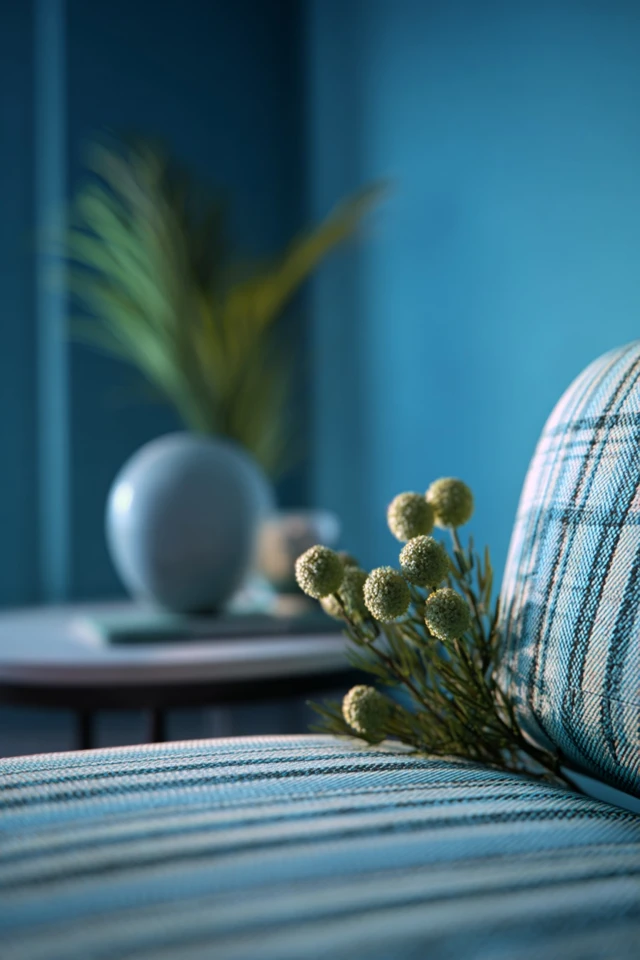
Yes, light blue and yellow go together too, and the effect is softer. Powder blue with a creamy yellow feels airy and suits small rooms and bedrooms. Keep both pale and add a warm white so the room doesn't turn sugary.
Muted and earthy versions
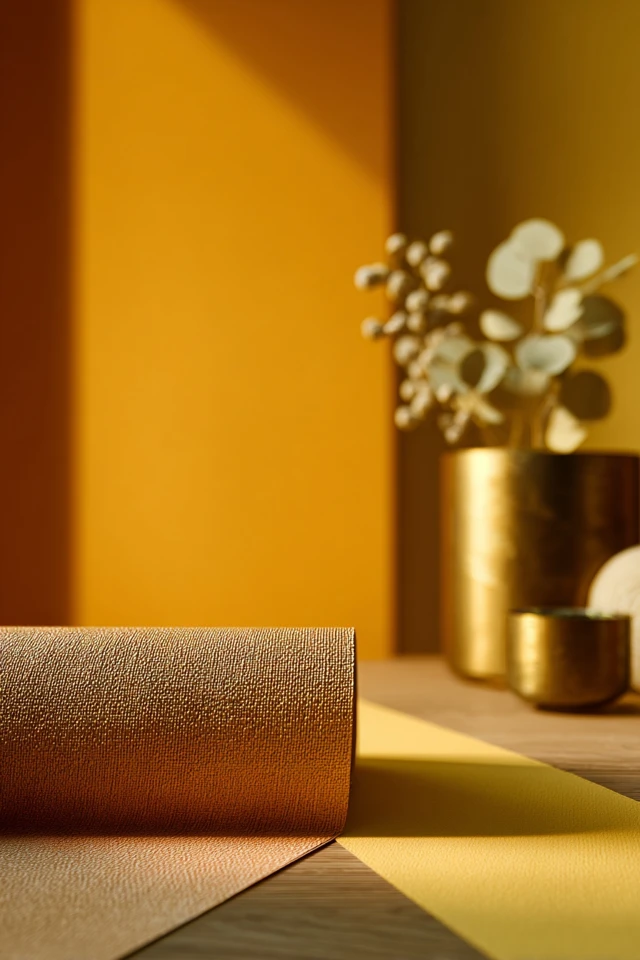
Slate or dusty blue with ochre or gold has an older, more grown-up feel. It pairs well with wood, linen and brass, and it hides the odd scuff better than pale tones, which matters if a dog shares your living room.
How to use blue and yellow in a room
Pick a leading color
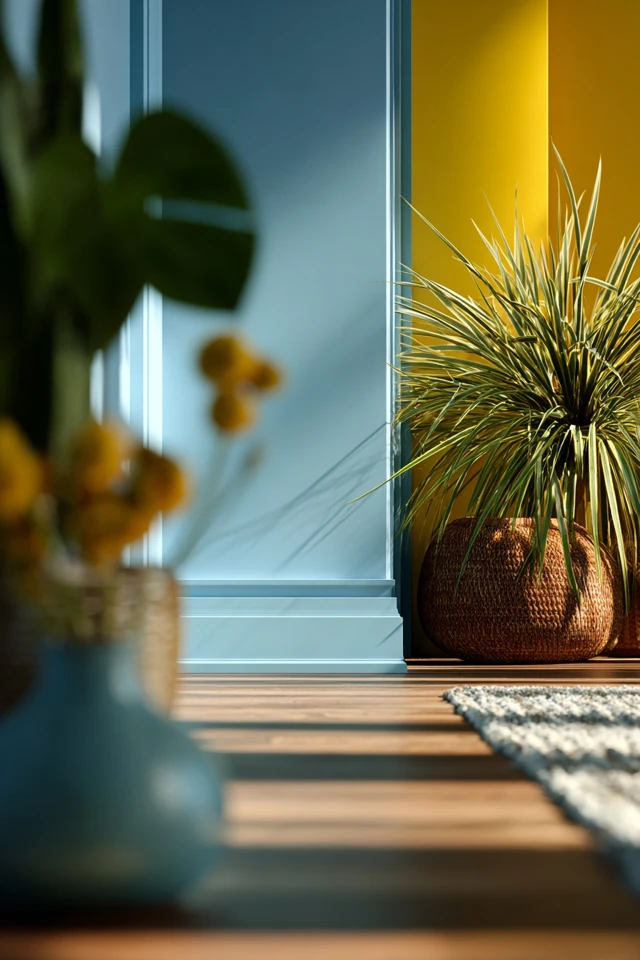
Choose one color for most of the walls and use the other for accents. A common split is roughly two-thirds one color, one-third the other, with neutrals filling in. Equal amounts of both compete for attention.
Start with one yellow accent
If you're unsure, paint the walls blue and add yellow through a chair, a pair of cushions, a lamp or a framed print. It's cheap to change if you tire of it. As an architect, I'd begin here before committing a whole wall to yellow.
Use yellow where you want energy
Yellow suits entryways, kitchens and dining areas, where people pass through or gather. Blue suits bedrooms, studies and bathrooms. In an open plan, a yellow dining wall next to a blue seating area marks the two zones without any partition.
Add neutrals to calm it down
Warm white, greige, natural wood and soft taupe give the eye a place to rest. They also tie the palette to trim, floors and cabinetry. For more on how a single strong wall can anchor a room, see this post on accent walls.
How light changes the palette
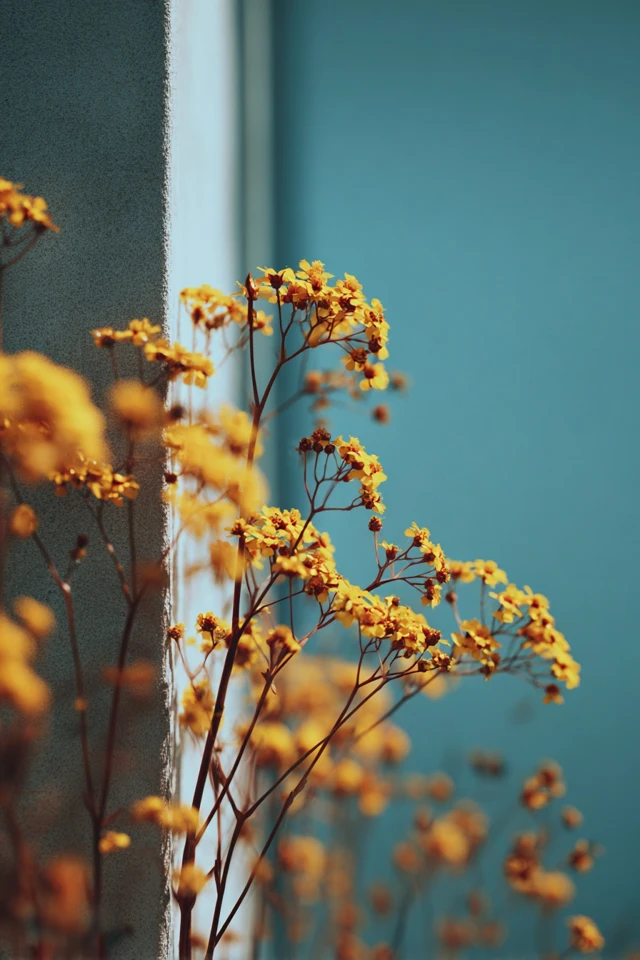
Daylight shifts both colors. North-facing rooms get cool light, which makes blue look colder, so a warmer yellow helps balance it. South- and west-facing rooms have warmer light and can handle deeper blues without feeling chilly.
Bulbs matter as well. Warm bulbs (about 2700-3000K) make yellow glow, while cooler bulbs (about 3500-4000K) push blues forward. Paint a large sample on the wall and look at it in the morning and in the evening before you buy gallons. If you're also planning other wall colors, these modern wall ideas may help you compare.
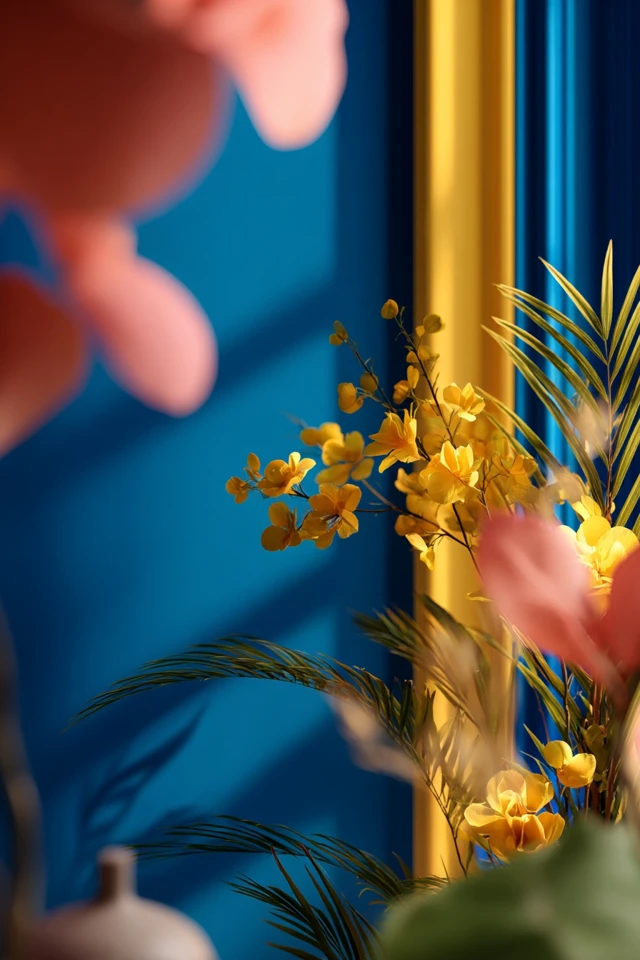
Finishes, textures and materials
Matte walls give a soft backdrop. Eggshell or satin holds up better to scrubbing, which helps in kitchens, hallways and anywhere a muddy paw might brush the wall. I recommend a washable finish on lower walls in any room your dog uses.
Wood, rattan and linen warm up blue. Brushed brass and aged gold suit yellow accents. Velvet in a deep blue gives a tactile counterpoint to lighter yellow pieces. A rug that repeats both colors in a small-scale pattern helps tie everything together.
Mistakes to avoid
- Using full-strength yellow on every wall. It tires the eye fast.
- Pairing very bright yellow with very pale blue, which looks mismatched in saturation.
- Skipping neutrals, so the room has no place to rest.
- Choosing paint from a chip alone without testing it in your own light.
Small rooms usually do best with a light, soft blue on most walls and a slim yellow touch such as shelving or a single accent. For a minimal take on this approach, look at this minimalist bedroom.
Frequently asked questions
What is the blue and yellow theory?
It usually refers to the color-wheel idea that blue and yellow are a complementary pair. Placed together, each makes the other look more vivid, which is why the pair feels lively but balanced.
What happens if you combine blue and yellow?
Mixing blue and yellow paint produces green. Placing them side by side in a room gives contrast instead, with blue feeling cool and yellow feeling warm.
Can blue and yellow work in a kitchen or bathroom?
Yes. Use washable paint and keep the shades muted. Yellow tends to suit kitchens, and blue suits bathrooms.
What if my natural light is very cool or very warm?
In cool north light, choose a warmer yellow and a slightly warmer blue. In warm south or west light, a richer blue balances it. Test samples at different times of day.
Filed under
ArticlesMeet the author
Written by an architect.
Julio Arco is a passionate architect with years of experience in architecture, interior design, urban design, and housing. He studied at prestigious universities across North America and Europe.

- Name
- Julio Arco
- Job
- Architect and online interior designer
- Studied
- Architecture, ITESM · Urban Design and Housing, McGill
- Partner
- Thor, Australian Shepherd
- Thor’s title
- Head of quality control