Chick Brooder Ideas for Healthy Chicks and a Tidy Home
Chick brooder ideas that keep chicks healthy and your home clean: where to put it, furniture upcycles, sizing, bedding, safe heat and styling.

By Julio Arco
Architect and online interior designer
In this post
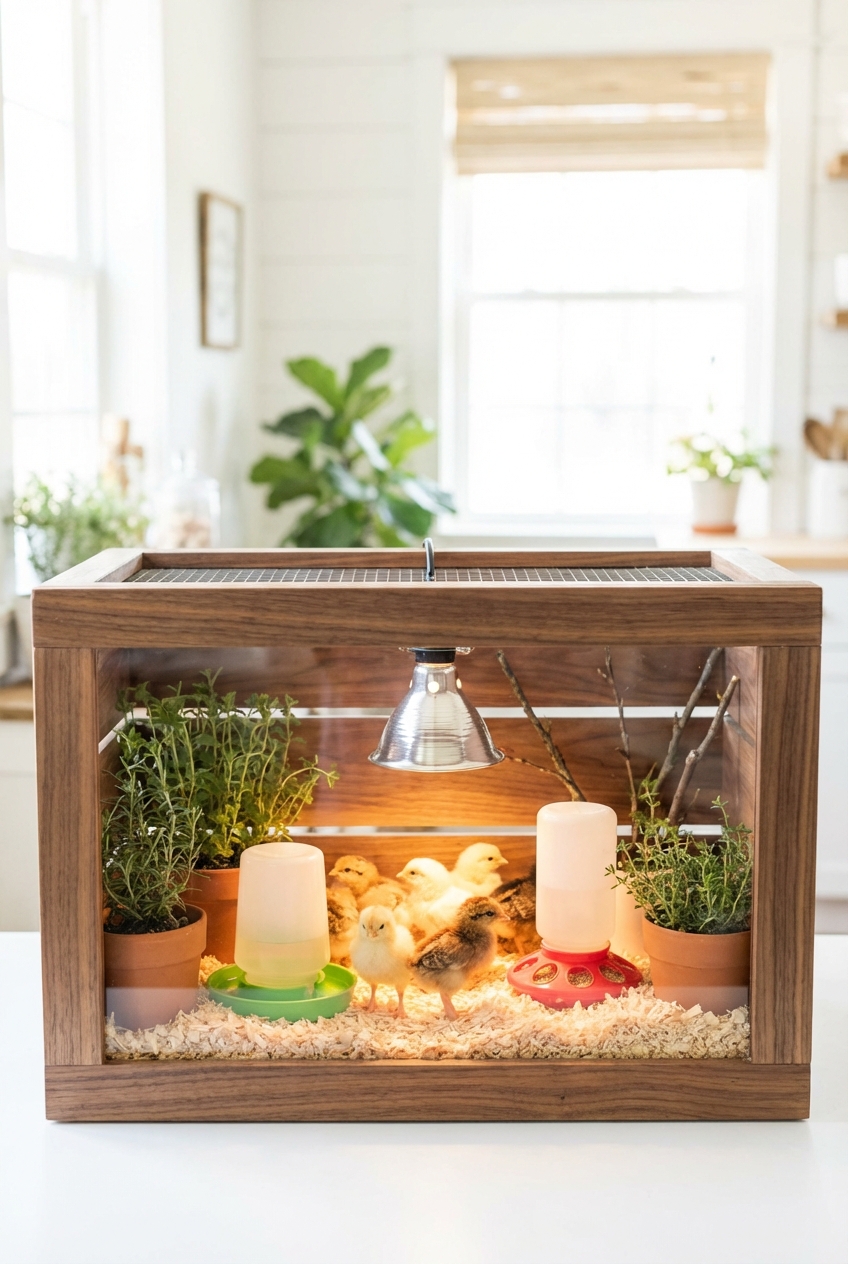
A good brooder needs four things: a draft-free spot with a little room around it, enough floor space per chick, grippy bedding, and a safe heat source. Style comes after that, and it's easier than you'd think. A plain plastic tote works, but you can do better.
It's very common to bring chicks home and realize within days how much dust and noise 'cute fluff' makes. Below are ideas that keep the chicks healthy and keep the mess from taking over your house.
Where should you put a brooder?
Pick a room with a steady temperature, no drafts and some fresh air. A heated garage, a mudroom or a utility room all work. I'd keep it out of bedrooms and living areas, because growing chicks shed a surprising amount of fine dust.
Leave about 3 feet of clear space around the brooder. You'll be changing water and bedding often, and a tight corner makes that chore easy to skip.
Think about sound too. Peeping carries easily through standard drywall, so avoid a shared wall with a bedroom or a nursery. Heavy textiles or a bookcase between the brooder and that wall will soften it a little.
Can you turn old furniture into a brooder?
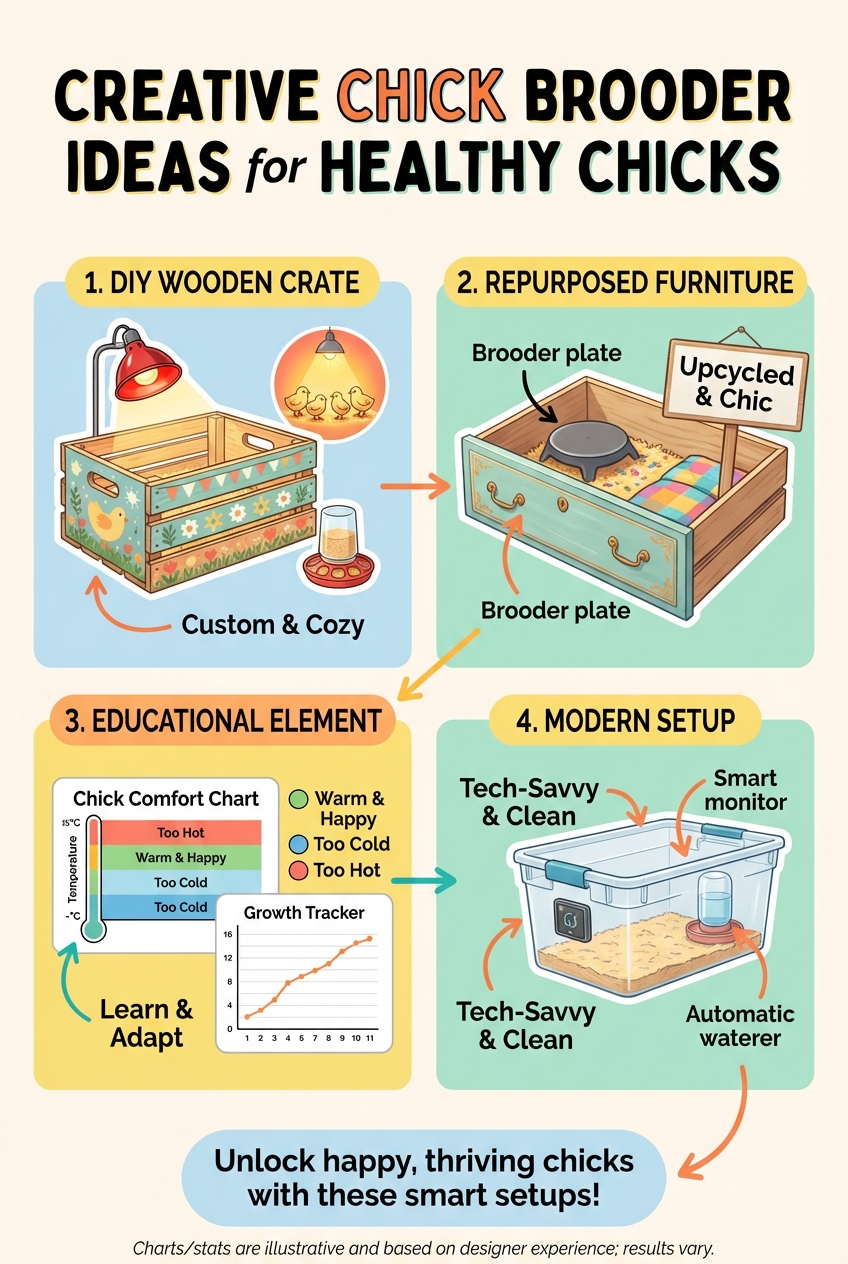
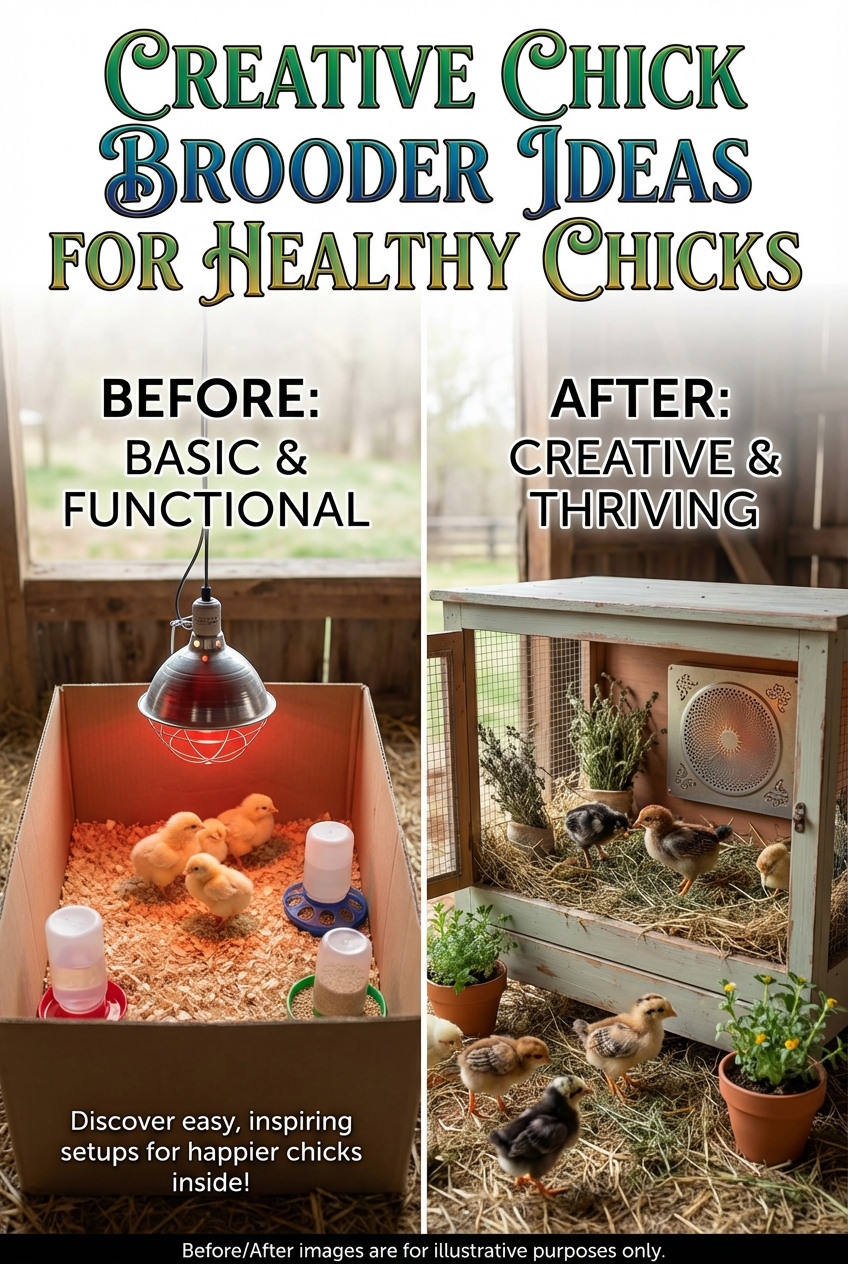
Yes, and it's a good option for renters who can't build anything permanent. An old buffet, cabinet or dresser with the doors removed can look like a deliberate piece of furniture.
Choose solid wood over particle board, which swells when it gets wet. If you do use composite material, seal every surface with a water-resistant finish.
Replace glass panels with 1/4-inch hardware cloth. Skip chicken wire if you have a cat or dog, since it's flimsy and paws can push through it. Remove drawer slides and any rough interior hardware where small legs could get caught. Line the bottom and the lower sides with sheet vinyl or linoleum and caulk the seams so you can wipe the whole thing down.

How big should a brooder be?
Crowding leads to feather picking and faster spread of disease, so size for the chicks' full brooding period, not for day one. A common guideline is about 0.5 square foot per chick for the first couple of weeks, growing to about 2 square feet per chick by eight weeks. Your hatchery's advice for your breed is the better guide.
Make the walls at least 24 inches tall, because chicks start hopping and flapping well before they leave the brooder. If you're having a carpenter build one, I recommend melamine panels inside. They're white, non-porous and easy to scrub.
Plan ventilation from the start. As an architect, I'd put openings high on the enclosure so ammonia from droppings can escape without a cold draft hitting the floor, where the chicks sleep.
A removable floor tray is the best built-in feature I can suggest. Slide it out, dump it in the compost, rinse it and slide it back.
What flooring and bedding are safest?
Slippery floors like bare plastic or newspaper can lead to spraddle leg, where the legs slide out sideways. A non-adhesive rubber shelf liner under the bedding gives better grip. If a chick's legs look splayed, call your vet or hatchery for help.
- Large-flake pine shavings are absorbent and too big to eat.
- Hemp bedding is absorbent and low in dust, though it usually costs more.
- Avoid cedar, whose aromatic oils can irritate birds' airways.
- Avoid fine sawdust, which chicks may peck at like food.
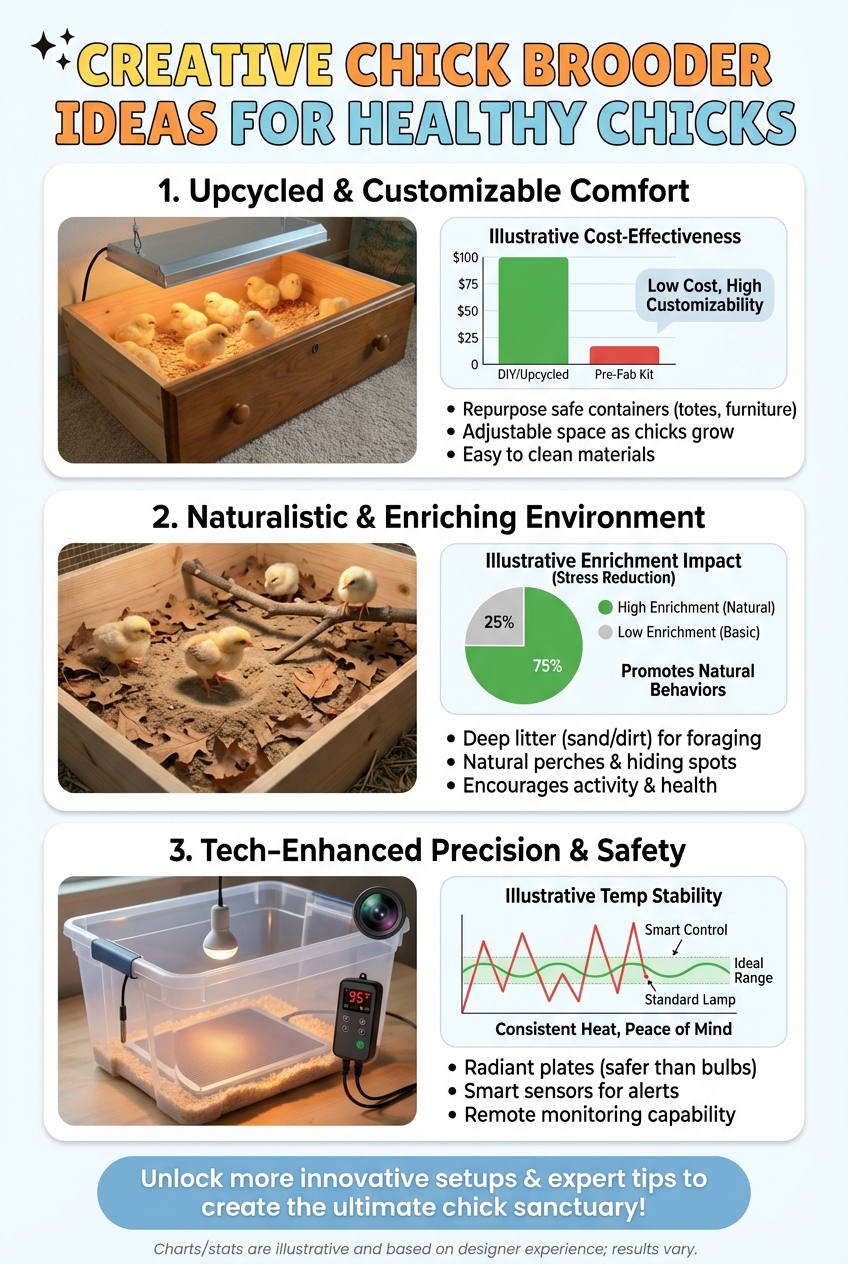
If you like the deep litter method, add fresh bedding on top every few days instead of emptying everything. Give the brooder a lip of about 8 inches so the growing pile stays inside.
How do you heat a brooder safely?
I recommend a radiant brooder plate over a clamp-style heat lamp. A plate works like a small table the chicks can nestle under, and it's much less likely to start a fire if it gets knocked into the bedding. Follow the manufacturer's instructions for height, and let the chicks tell you if the temperature is right: huddling means cold, panting and hugging the walls means hot.
Chicks also need darkness to rest. In a windowless garage, a small LED on a timer gives them a regular day and night.
Keep an outlet within reach so you don't need a long extension cord across the floor. Cord covers along the wall tidy the look and keep dogs and cats from chewing on wires. For anything beyond plugging into an existing outlet, hire a licensed electrician.
Finishing touches that keep it good-looking
- Use low-VOC or zero-VOC paint outside and let every coat cure fully before chicks move in. If you can still smell it, wait.
- Fit a hook-and-eye latch or barrel bolt. Raccoons and house cats can open a simple magnetic catch.
- Match the hardware finish to the room so the brooder reads as built-in.
- Cut a viewing window in a solid box, staple hardware cloth on the inside, and cover the cut edges with trim.
Frequently asked questions
How do I control dust in an indoor brooder?
Run a small HEPA air purifier nearby and keep bedding low-dust. A sheer fabric cover over the top can catch some airborne particles, as long as it stays well clear of any heat source.
Can I keep a brooder in the kitchen?
It's best not to. Poultry can carry Salmonella and other bacteria, so keep the brooder away from food prep areas and wash your hands after handling chicks or equipment.
How do I move chicks from the brooder to the coop?
Do it gradually. Once they're feathered, reduce the heat during the day and move the brooder to a cooler spot before they go outside for good. Your hatchery can confirm the right age for your breed and climate.
Why do chicks pile up in the brooder?
Piling usually means they're cold, scared or startled, for example by sudden darkness. Check the temperature and use a gentle light schedule rather than abrupt on and off.
Filed under
ArticlesMeet the author
Written by an architect.
Julio Arco is a passionate architect with years of experience in architecture, interior design, urban design, and housing. He studied at prestigious universities across North America and Europe.

- Name
- Julio Arco
- Job
- Architect and online interior designer
- Studied
- Architecture, ITESM · Urban Design and Housing, McGill
- Partner
- Thor, Australian Shepherd
- Thor’s title
- Head of quality control