Elegant Tv Room Ideas Decor Ideas You’ll Love
TV room decor ideas for any size: how to style the TV wall, pick a stand, layer lighting and keep cables hidden, with tips for small rooms and pets.

By Julio Arco
Architect and online interior designer
In this post
The easiest way to make a TV look intentional is to stop treating it as a black rectangle and make it part of a composed wall. Put it in a frame of storage, art, color or light, keep the surface around it calm, and hide the cables. The ideas below cover that, from small rooms to larger ones.
It's very common to inherit a layout where the TV ends up on the only wall that fits. Don't worry about it. Most of the fixes are about what surrounds the screen.
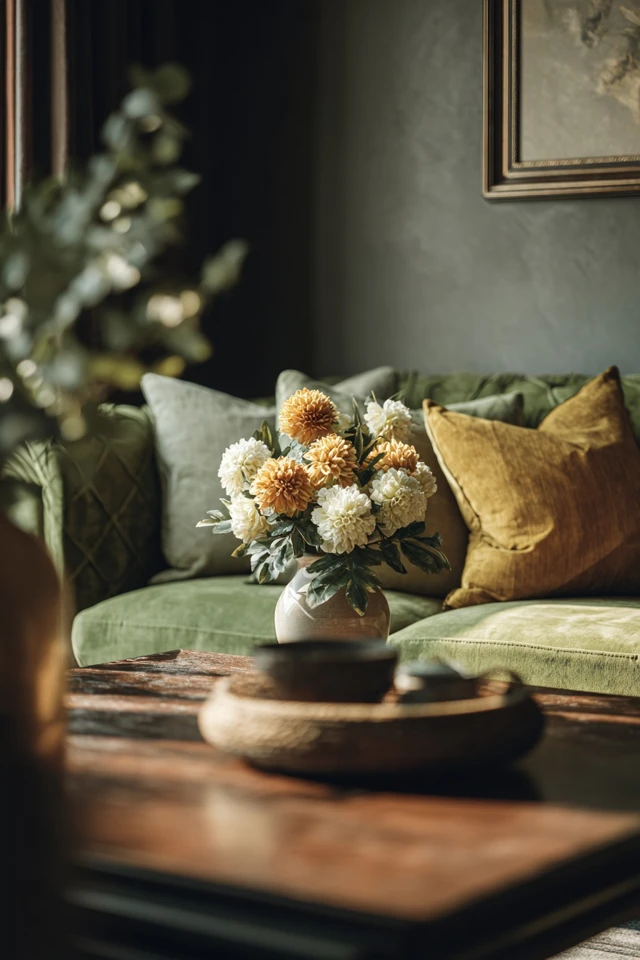
How do you decorate a TV wall?
Start with the wall, not the accessories. Decide whether the TV should blend in or be the focal point, then build around that choice. A dark screen on a dark wall nearly disappears. The same screen on a pale wall stands out, so it needs more around it to feel balanced.
Then work in layers: a backdrop (paint, paneling or wallpaper), a base (console or shelving), and a few objects at different heights. Keep the area right around the screen fairly quiet, and put the detail on the sides and below.
Ten TV wall design ideas that work
1. Paint the wall a deeper color
A mid-tone or dark wall makes the screen recede, because there is less contrast between glass and paint. Matte finishes help, since glossy paint reflects the screen and lamps. Test a sample on the wall and look at it in the evening, when the TV is actually on.
2. Add wood slats or paneling
Vertical slats or flat paneling give the wall texture and a warm tone. They also soften echo a little. Keep one wood tone dominant so the console, slats and shelves don't compete.
3. Build shelves on both sides
Built-in or freestanding shelves on either side of the TV frame it like a fireplace. Mix books with a few objects and leave gaps. A packed shelf looks busy, and a TV already adds plenty of visual weight.
4. Hang art nearby, not above in a pile
One large piece beside the screen, or a loose group on the adjacent wall, balances the TV. If you hang a gallery above it, keep the frames in a tight color range so the wall doesn't read as clutter.
5. Use a floating console
A wall-mounted unit keeps the floor visible, which makes a room feel larger. It is a good choice for small rooms and for robot vacuums. Anchor it into studs or use proper wall fixings, and ask a licensed professional if you're unsure about the wall.
6. Add backlighting
A soft light behind the TV reduces the harsh contrast between a bright screen and a dark wall. The U.S. Department of Energy notes that good-quality white LED products are expected to last 30,000 to 50,000 hours or longer, so an LED strip is a low-maintenance option. Choose a warm white and put it on a dimmer.
7. Bring in a plant
A plant on the console or floor beside it softens the straight lines. If you live with a dog or cat, check any plant against the ASPCA's toxic plant list or ask your vet before you buy.
8. Hide the gear
Closed cabinet doors keep consoles, game systems and cables out of sight. Leave some ventilation, since electronics get warm. If you have a chewer at home, run cables through a cable raceway on the wall or behind the unit.
9. Use a fabric or wallpaper accent
A textured wallpaper or a wall of upholstered panels adds depth and absorbs sound. Pick a quiet pattern. Large, high-contrast prints fight with moving images on the screen.
10. Keep it minimal
If you like a simple tv wall design for a living room, use one console, one lamp, one piece of art and nothing else. Empty space is a legitimate decorating choice.
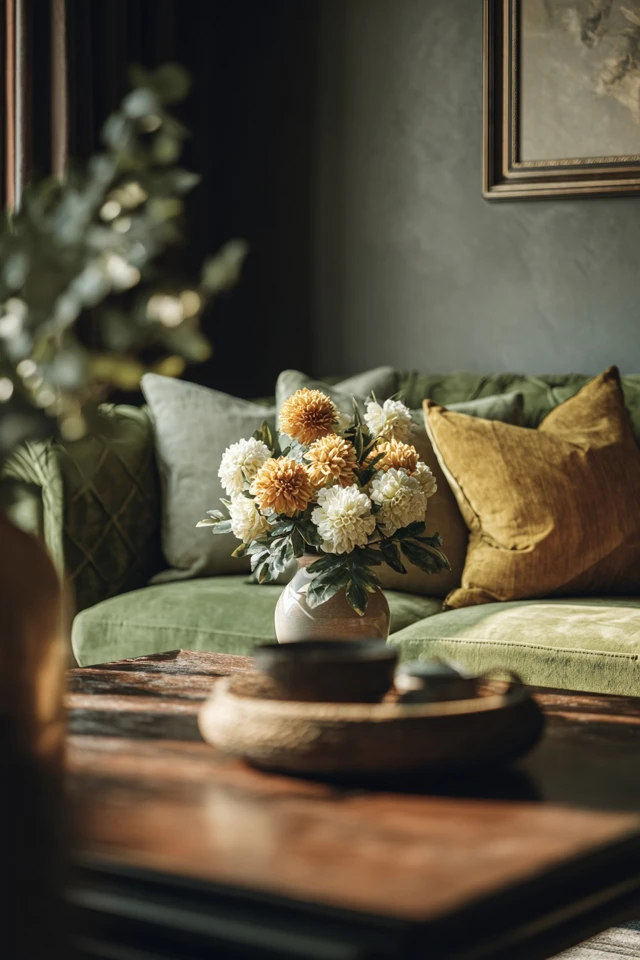
How to style a living room TV stand
For living room tv stand decor, think in a triangle: one taller item on one side, a medium one on the other, and something low in between. A lamp or plant works for height, a stack of books or a basket for the middle, and a small bowl or object for the low point.
- Keep the stand about as wide as the TV or wider. A stand narrower than the screen looks top-heavy.
- Leave part of the top clear so it doesn't read as a shelf with a TV on it.
- Use baskets or closed doors for remotes, controllers and dog toys.
- Choose rounded corners if kids or a bouncy dog share the room.
These same rules apply to any tv unit decoration ideas you collect: fewer objects, varied heights, and some empty surface.
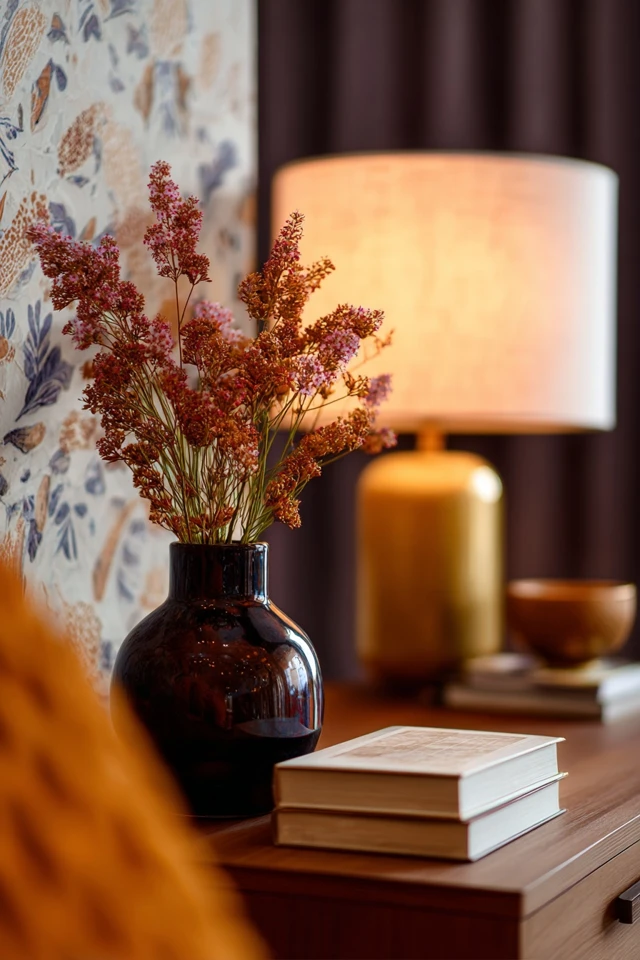
What works in a small TV room?
For small tv room decor ideas, the priorities are floor space and glare. Mount the TV or use a slim floating console, choose one properly scaled sofa instead of two small pieces, and keep walls light or one consistent mid-tone.
As an architect, I'd also keep a clear path of about 30-36 inches from the door to the seating, and measure before you buy anything. Furniture that looks fine in a store often crowds a compact room.
Seat height matters for the viewing angle. The screen's center should sit roughly at eye level when you're seated, which is lower than most people hang it. If you want more ideas for a room built around screens, see our media room ideas.
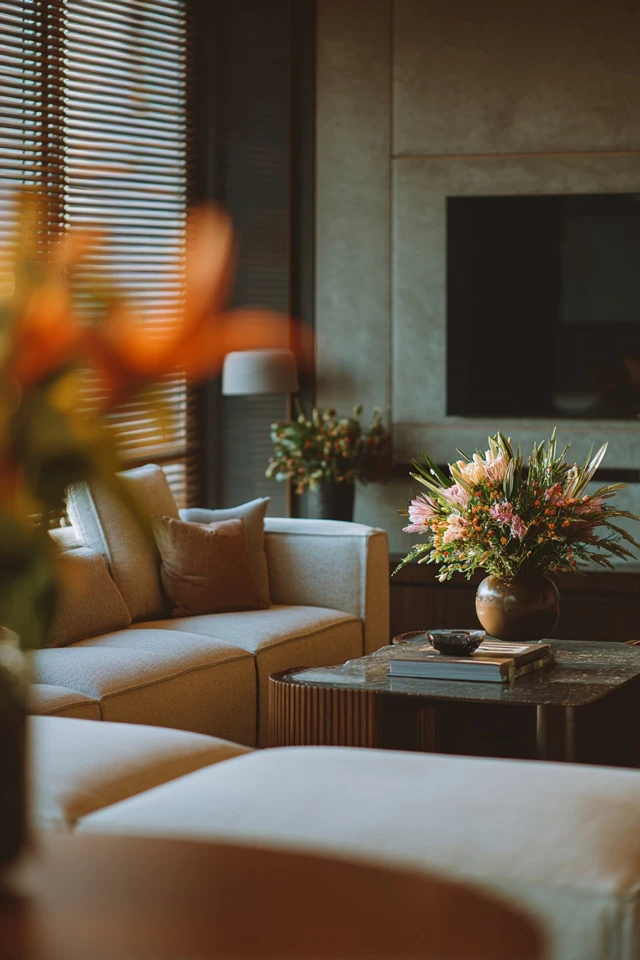
How should you light a TV room?
Layer the light: a general source, a lamp or two near the seating, and a soft accent behind or beside the screen. Dimmers let you move from a bright cleanup to a movie night without changing bulbs.
Color temperature changes the mood. The Department of Energy describes correlated color temperature as one of the primary metrics used to characterize the visual appearance of light. In practice, warm white in the evening feels cozier, and cooler white suits a room with a lot of daylight. Light also affects sleep: the Department of Energy states that "Light plays a key role in setting and regulating the body's biological clock." If you watch late, keep lamps low and warm.
Also avoid placing a lamp or window directly across from the screen, where it will reflect.
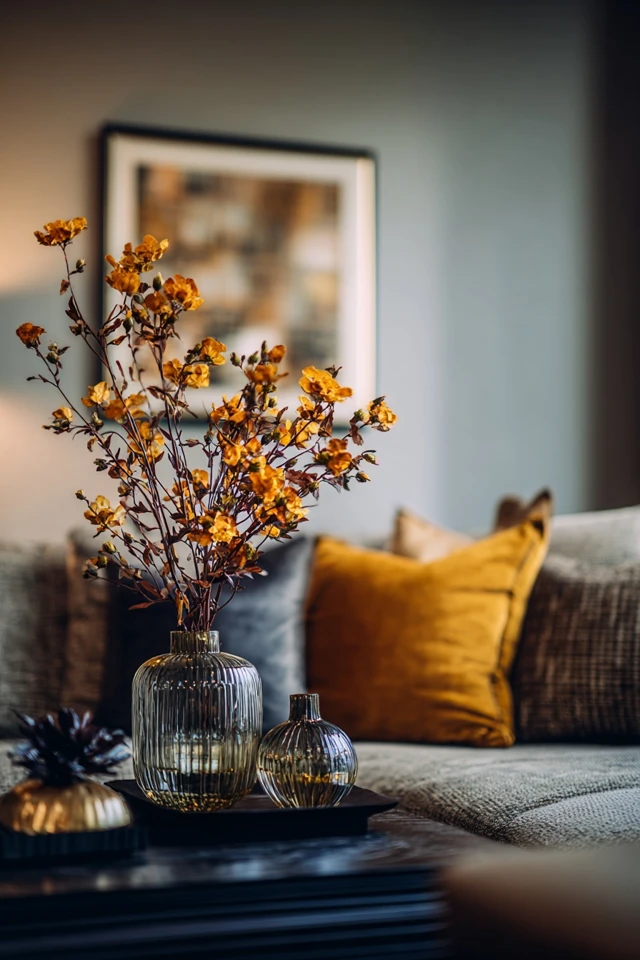
Which colors and materials suit a modern TV room?
For modern tv room decor ideas, keep the palette to a dominant neutral, one or two supporting tones, and a single accent. Warm gray, taupe and soft greige are easy to live with. Add texture through a wool or low-pile rug, linen curtains and a wood console, and use one metal finish for hardware and lamps.
If you have pets, pick performance fabrics or washable covers for the sofa, and a rug you can vacuum without a fight. If your room leans neutral, you may like our beige living room ideas, or for a textured backdrop, the brick wall living room ideas.
A rug under the front legs of the sofa and the coffee table defines the seating area and helps absorb sound. I recommend keeping lamps and sconces on separate switches so you can leave the screen wall dim.
Frequently asked questions
How can I decorate a TV wall?
Pick a backdrop such as deeper paint, slats or wallpaper, add a console or shelves, and place a few objects at different heights. Keep the area right around the screen simple and hide the cables.
What is the 3-5-7 rule in decorating?
It's a styling guideline that groups objects in odd numbers, usually three, five or seven, because uneven groupings tend to look more natural than pairs. It's a rule of thumb for shelves and consoles, not a requirement.
How can I make a small TV room feel larger?
Use a wall-mounted TV or floating console, keep walls light, and choose one well-scaled sofa. Clear floor space and simple window treatments make the biggest difference.
Should the TV be the focal point of the room?
Not necessarily. A dark wall helps it recede, while shelves, art and lighting around it make it part of a composed wall.
Filed under
ArticlesMeet the author
Written by an architect.
Julio Arco is a passionate architect with years of experience in architecture, interior design, urban design, and housing. He studied at prestigious universities across North America and Europe.

- Name
- Julio Arco
- Job
- Architect and online interior designer
- Studied
- Architecture, ITESM · Urban Design and Housing, McGill
- Partner
- Thor, Australian Shepherd
- Thor’s title
- Head of quality control