Under Stair Wine Cellar Ideas for Small, Awkward Spaces
Practical under stair wine cellar ideas: layout, racking, lighting, color and materials to turn the space below your staircase into a wine nook.

By Julio Arco
Architect and online interior designer
In this post
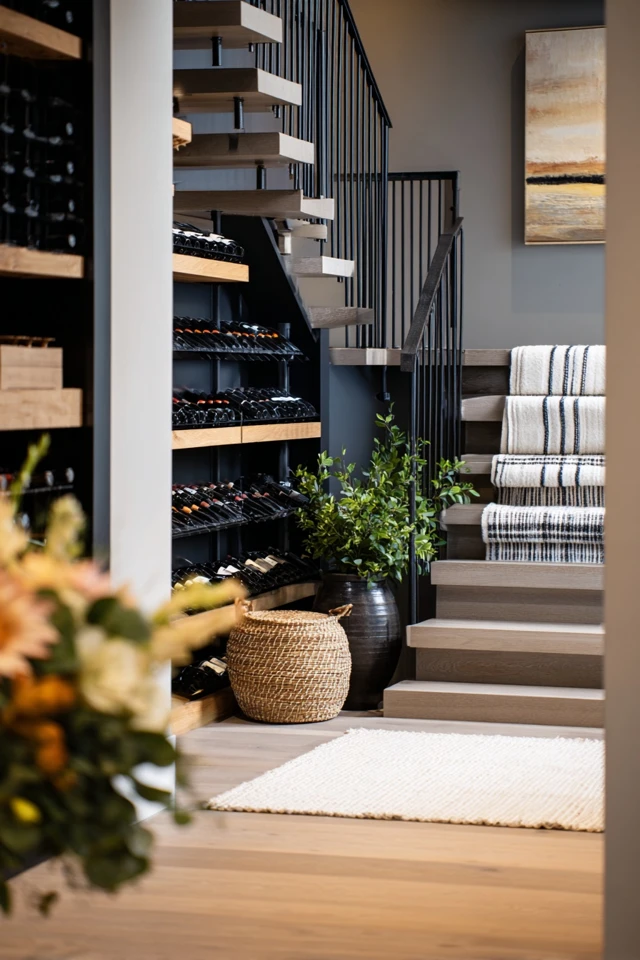
The space under a staircase is one of the easiest places in a house to turn into wine storage. Fit racking to the slope of the stair, add low warm light, and pick one or two materials so it reads as a built-in feature and not a leftover closet.
It's very common to have an awkward triangle of dead space under the stairs, so don't worry if yours looks unpromising. Sloped ceilings suit bottles well, because the shortest part of the void can hold the lowest racks and the tallest part can hold the display.
How do you plan the layout of an under-stair wine cellar?
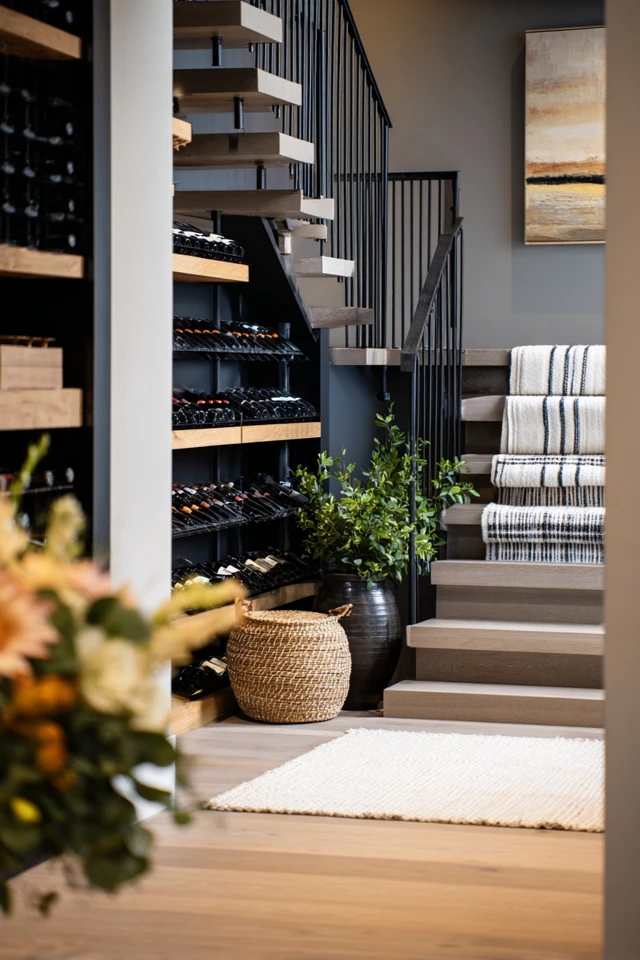
Start with a tape measure. Record the width, the depth, and the height at several points along the slope, then draw the stair profile on paper. Racking is built from that outline, not from a standard cabinet size.
Decide what the space is for before you choose shelves. Long-term storage, a few bottles for the week, and a small tasting spot each need a different layout.
- Narrow, deep voids work well with pull-out or sliding racks, so you don't need a wide door swing.
- Tall, shallow voids suit vertical racking with staggered shelves and one low drawer for corkscrews and stoppers.
- Wide, open voids can hold a short counter for decanting, with a compact under-counter wine cooler beside it.
Leave room to kneel, bend and reach. If you can't comfortably take a bottle out, you'll stop using the space. Keep the opening clear of the main walking path to the stairs or the front door.
If the plan involves cutting into stair framing, adding power for a cooler, or enclosing the void with a door, ask a licensed contractor or engineer to check it. The stair is structural and has to stay safe to use.
Which racking and materials look best?
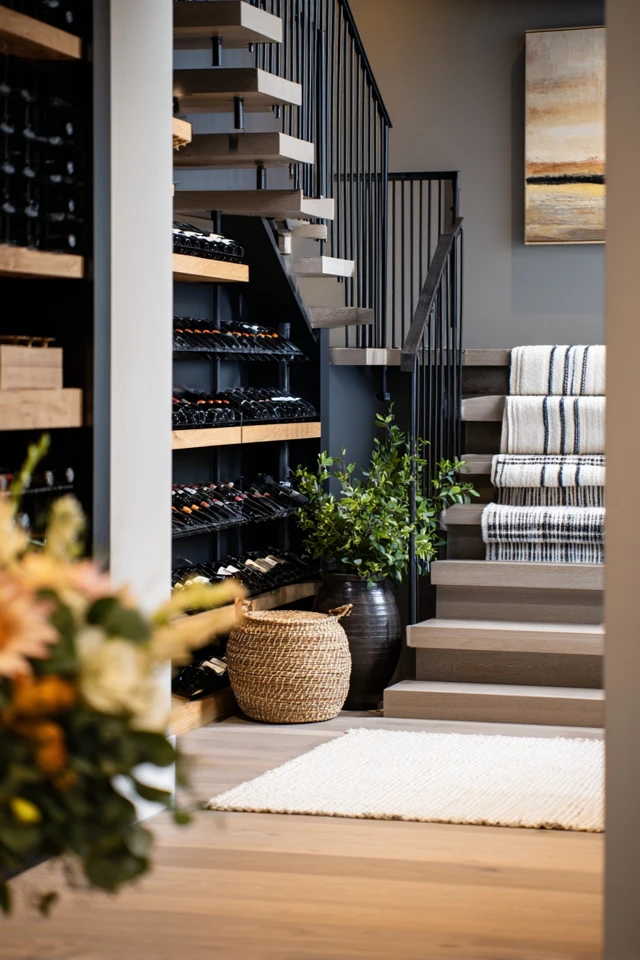
Pick one dominant material and let a second one support it. Warm wood racking (oak or walnut, oiled or sealed) is the classic choice and goes with almost any house. Brushed brass or dark steel adds a contrast without much visual bulk.
Glass is useful when the cellar sits near a living area. A glass door lets you see the bottles while a closed door keeps the temperature steadier. Frosted glass softens the view if you'd rather not display everything.
On the floor, stone or tile is easy to wipe and handles the odd spill. A matte finish reflects less light and feels calmer in a small nook. Keep the finishes close to those in the adjoining room so the cellar looks planned, not tacked on.
What colors work in a small wine cellar?
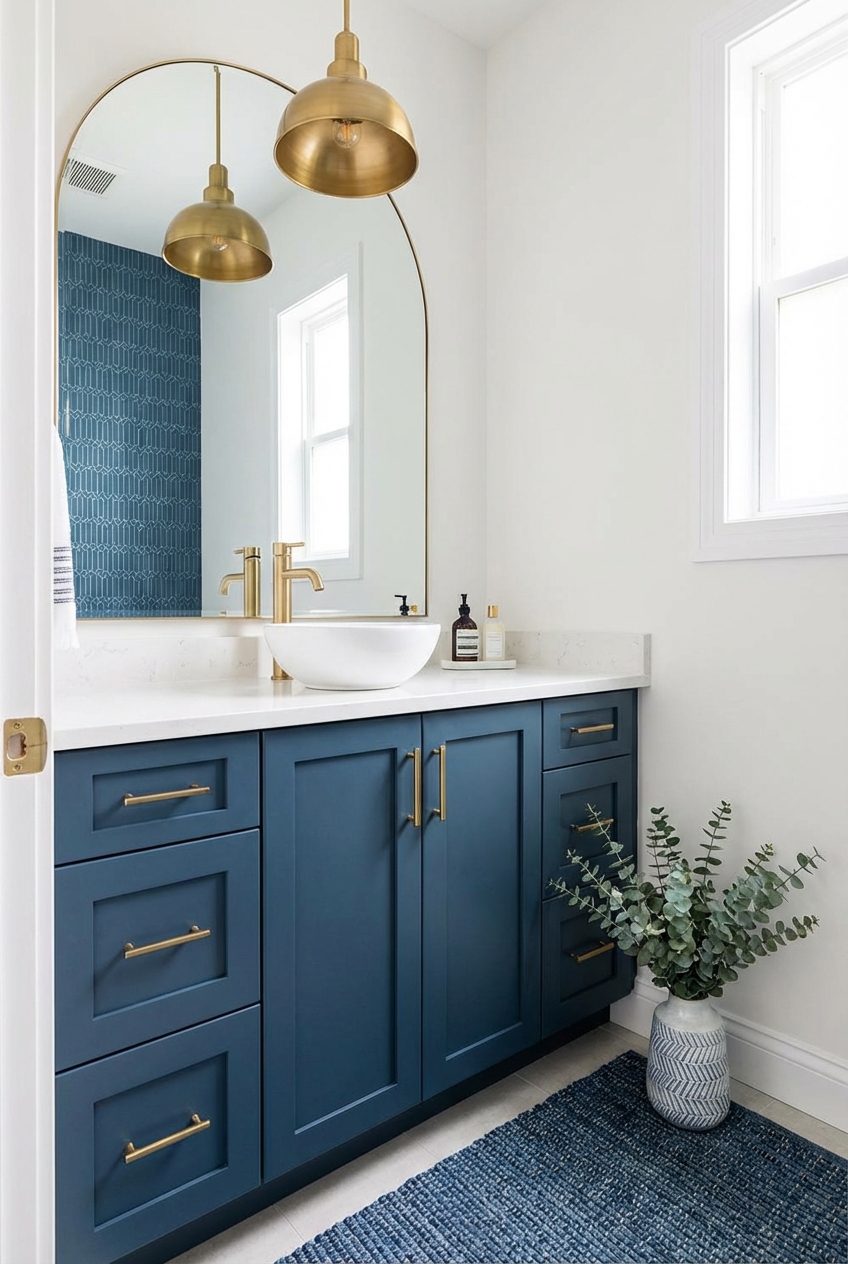
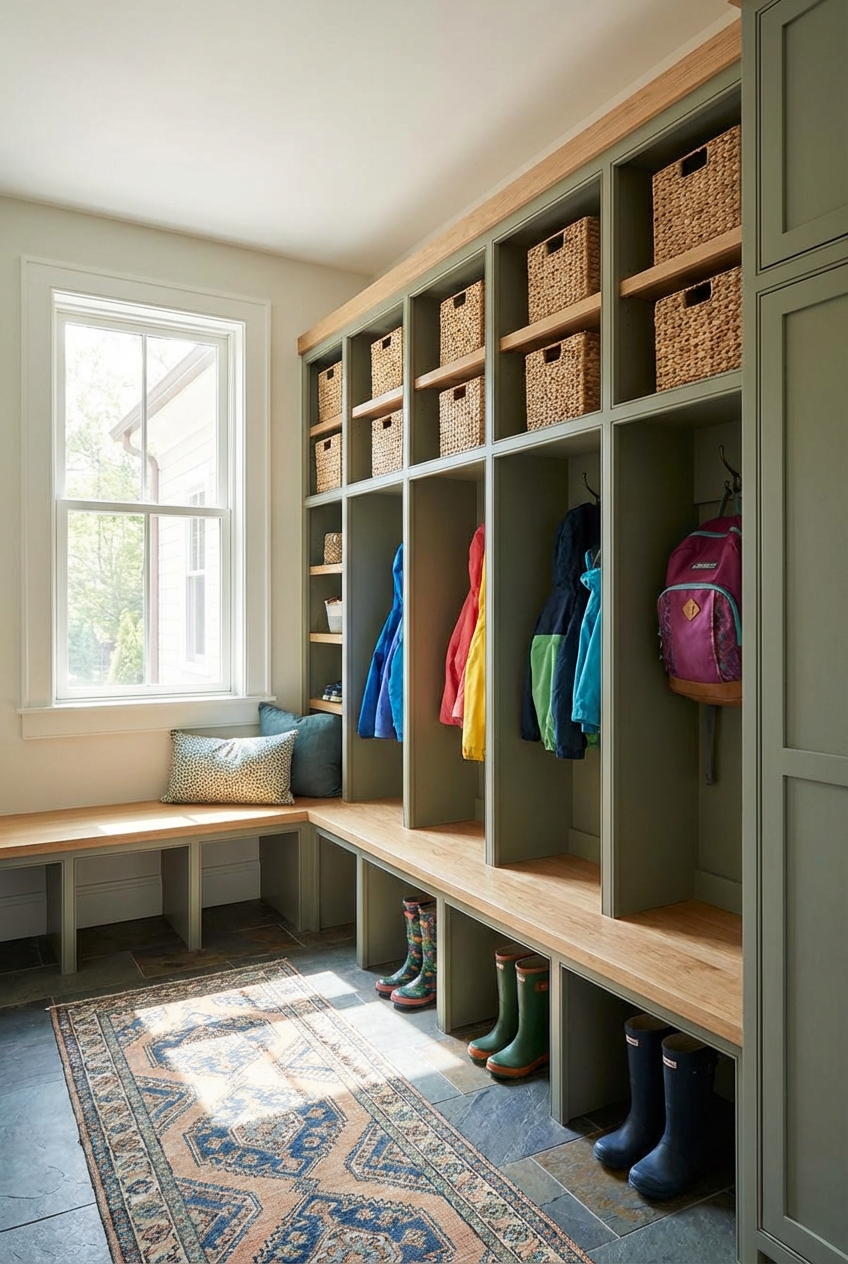
Dark, low-saturation colors are the safest choice. Charcoal, deep slate blue, muted olive and warm brown all recede, which makes a shallow void feel deeper. Paler schemes (soft olive with pale limestone, say) also work if the stair area is well lit.
A dark back wall behind lighter wood racking also helps legibility. In perception research, the figure-ground relationship is described as the first Gestalt principle: we separate a scene into a figure and a ground. Bottles are the figure, so a dark, quiet ground makes labels and shapes stand out.
Test paint samples at different times of day. Under a staircase the light is low and changes little, so colors often look darker than the swatch suggested.
How should you light an under-stair cellar?
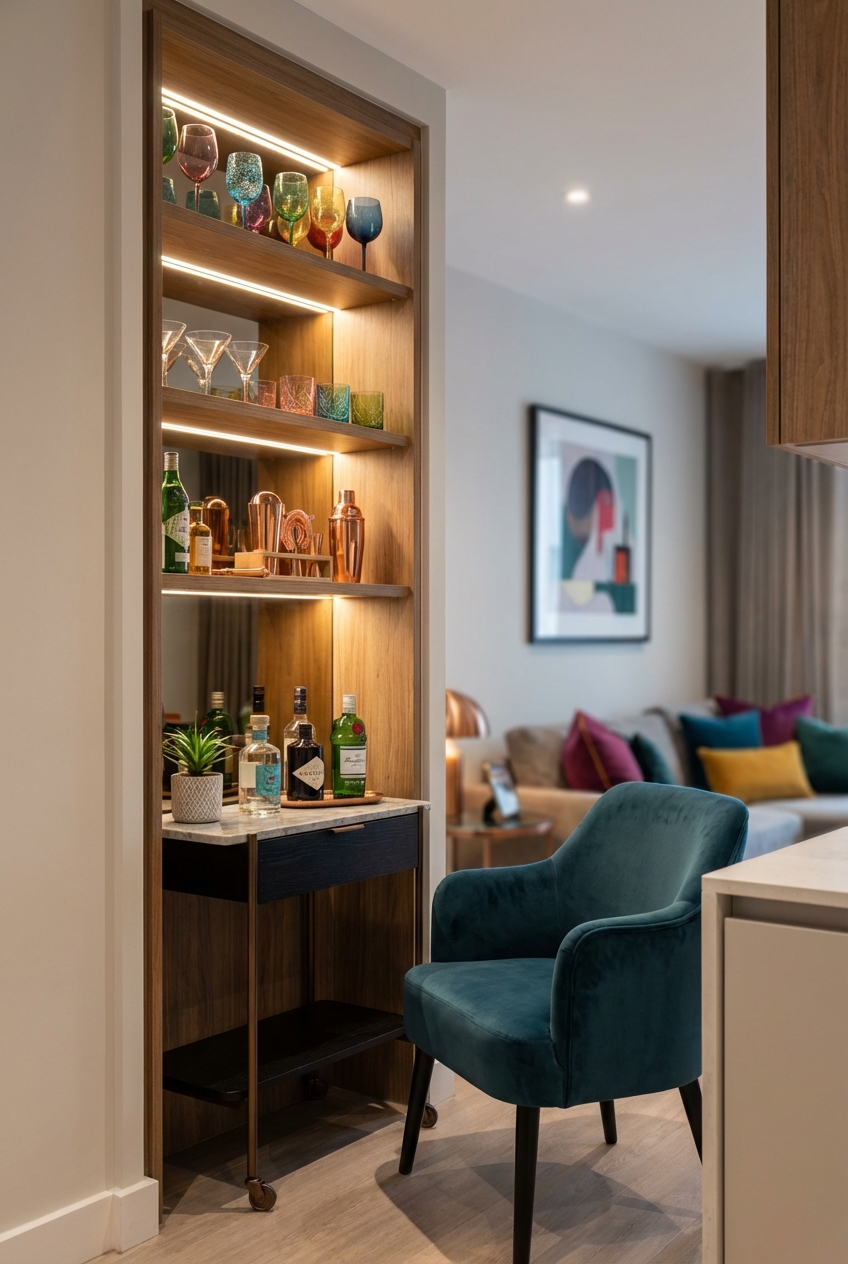
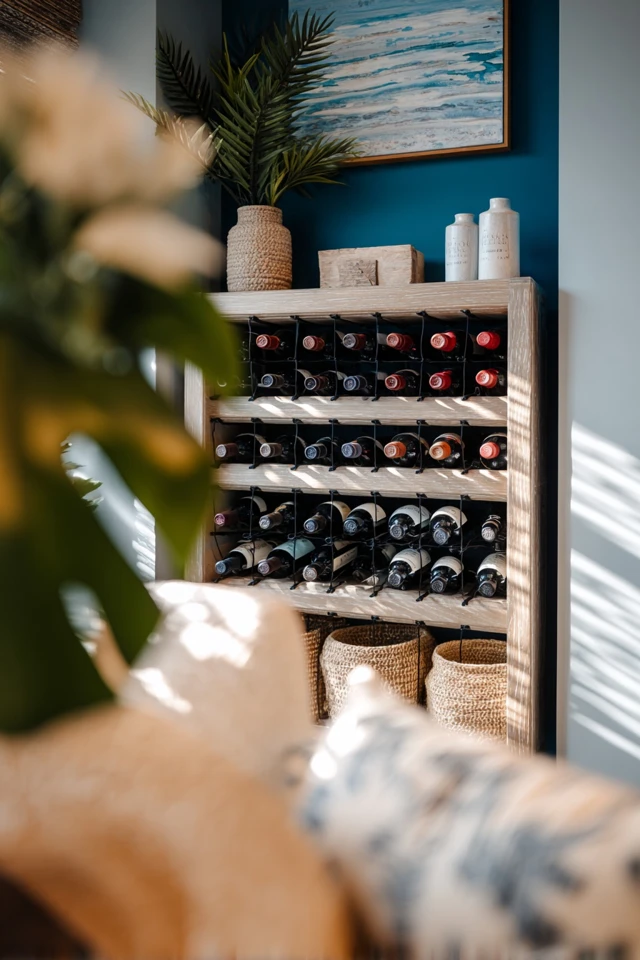
Keep the light low, warm and close to the bottles. Slim LED strips under each rack or small recessed lights in the stair underside suit the scale of the space. Oversized pendants overpower a stair void.
Warm white in the 2700K to 3000K range keeps wood and labels looking inviting. LEDs also give off little heat, which matters when you're trying to keep bottles cool. Put the lighting on its own switch, or a door sensor, so you aren't lighting the nook all day.
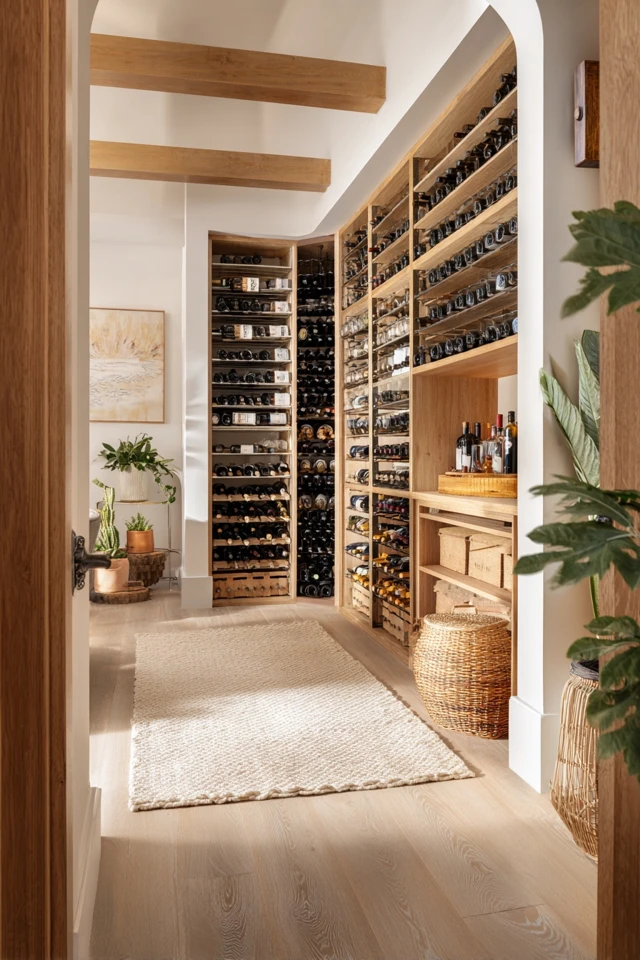
Cooling, humidity and keeping the space practical
Wine does best at a steady, cool temperature, away from direct sun and vibration. An under-stair void often sits against an interior wall, which helps, but it is not a climate-controlled cellar. For bottles you plan to keep for years, a compact cooler or a professionally installed cooling unit is a safer investment than hoping the closet stays cool.
If you have a dog or cat, fit a latch or a door that closes firmly so a tail can't clear a shelf. Keep corks and any open bottles out of reach. If a pet drinks wine or chews a cork, call your vet.
How do you style it without crowding it?
Build the space in layers. Do the structure first (racking and lighting), then the practical items (cooler, glassware drawer, tools), and add decoration last.
- Show one or two bottles label-out on a feature shelf as a focal point.
- Use deep drawers for glasses and tools, so nothing sits on top of the counter.
- Add a small tasting ledge with two stools if the space is wide enough.
- A small mirror on the back wall adds depth, if it's rated for humidity.
- A little greenery is fine only if the light and humidity suit the plant.
As an architect, I'd choose restraint over decoration here. A small void looks richer with one row of well-lit bottles than with art, plants and objects all competing. For more ways to treat this spot, see these wine under staircase decor tips and some aesthetic wine rack ideas. If your stairs begin in the entry, it may also help to read about what a foyer is and how to use it.
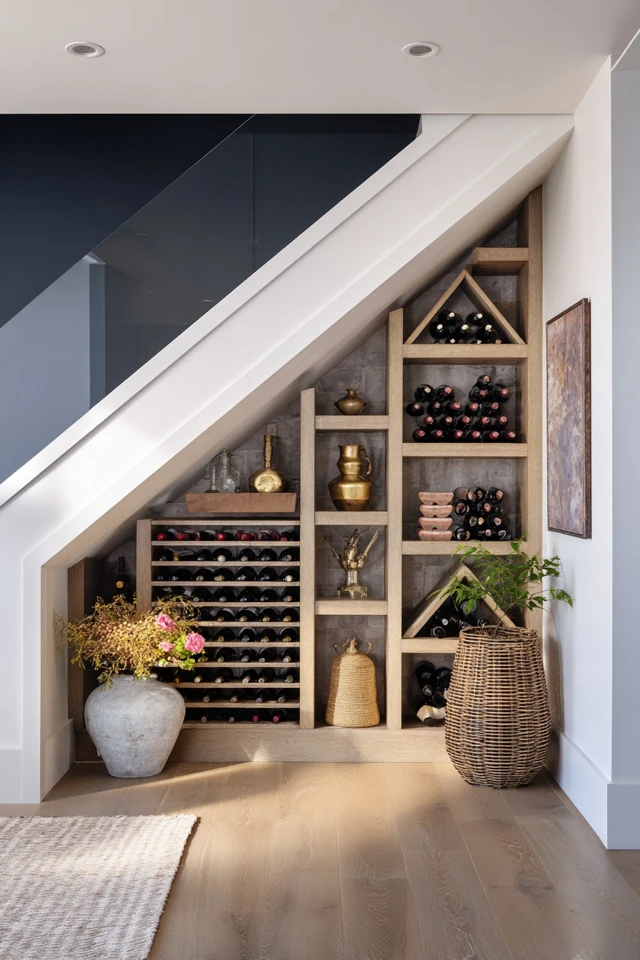
Frequently asked questions
How can I make a small under-stair cellar feel larger?
Use vertical racking, a dark and quiet back wall, and low lighting along the shelves. A glass door or a small humidity-rated mirror also adds perceived depth.
Can I mix modern racking with vintage decor?
Yes, as long as one material or color repeats. Steel racks with an antique wood accent in a similar tone usually look cohesive.
Do I need a wine cooler under the stairs?
For bottles you drink within weeks, a cool interior nook may be enough. For long-term storage, a compact cooler or professionally installed cooling is more reliable.
Can I add plants to a wine cellar?
Only if light and humidity suit the plant. Low-light, moisture-tolerant plants can work, but avoid anything that needs direct sun or heat.
Filed under
ArticlesMeet the author
Written by an architect.
Julio Arco is a passionate architect with years of experience in architecture, interior design, urban design, and housing. He studied at prestigious universities across North America and Europe.

- Name
- Julio Arco
- Job
- Architect and online interior designer
- Studied
- Architecture, ITESM · Urban Design and Housing, McGill
- Partner
- Thor, Australian Shepherd
- Thor’s title
- Head of quality control