Bathroom Mirror Ideas: Wavy Shapes and Soft Curves
Bathroom mirror ideas with wavy, organic shapes: how to size them to your vanity, hang them at the right height, light them well and avoid common mistakes.

By Julio Arco
Architect and online interior designer
In this post
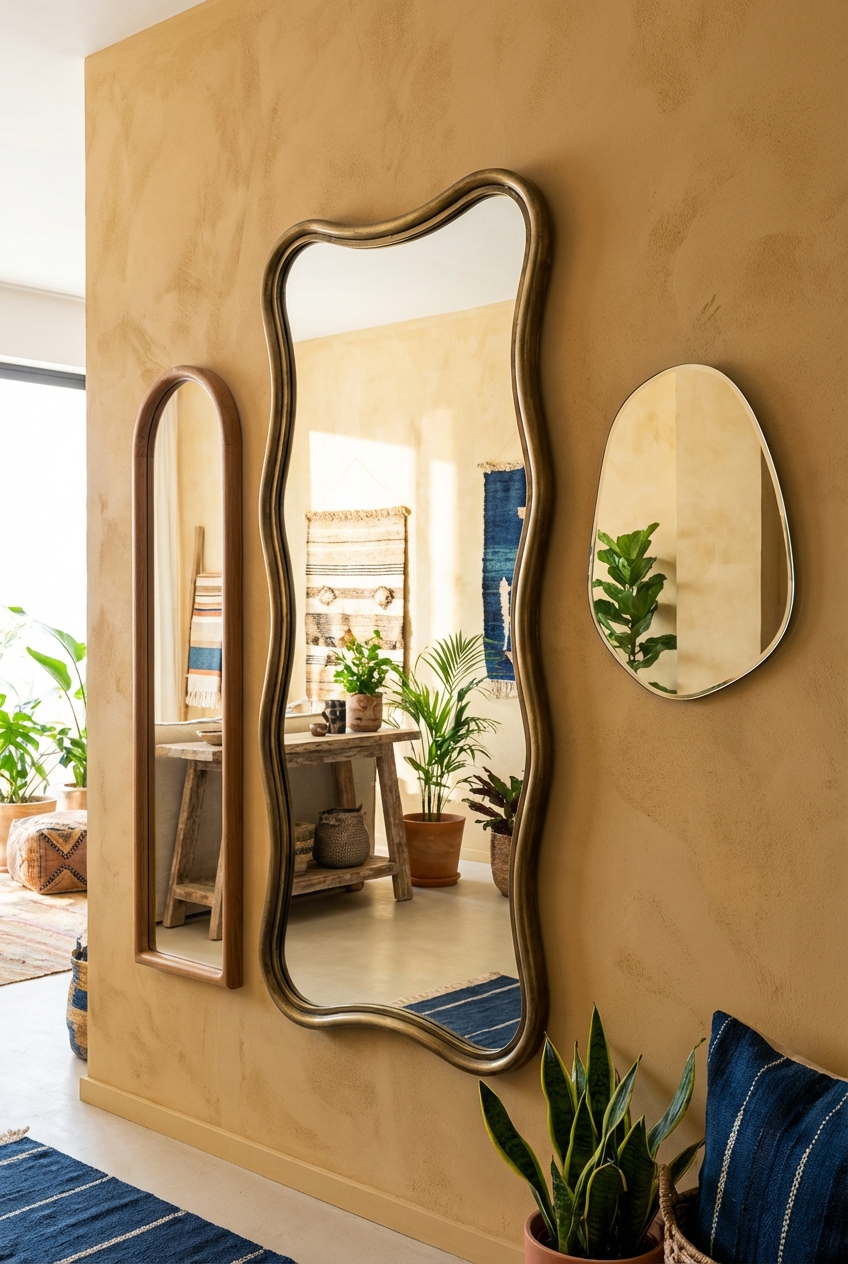
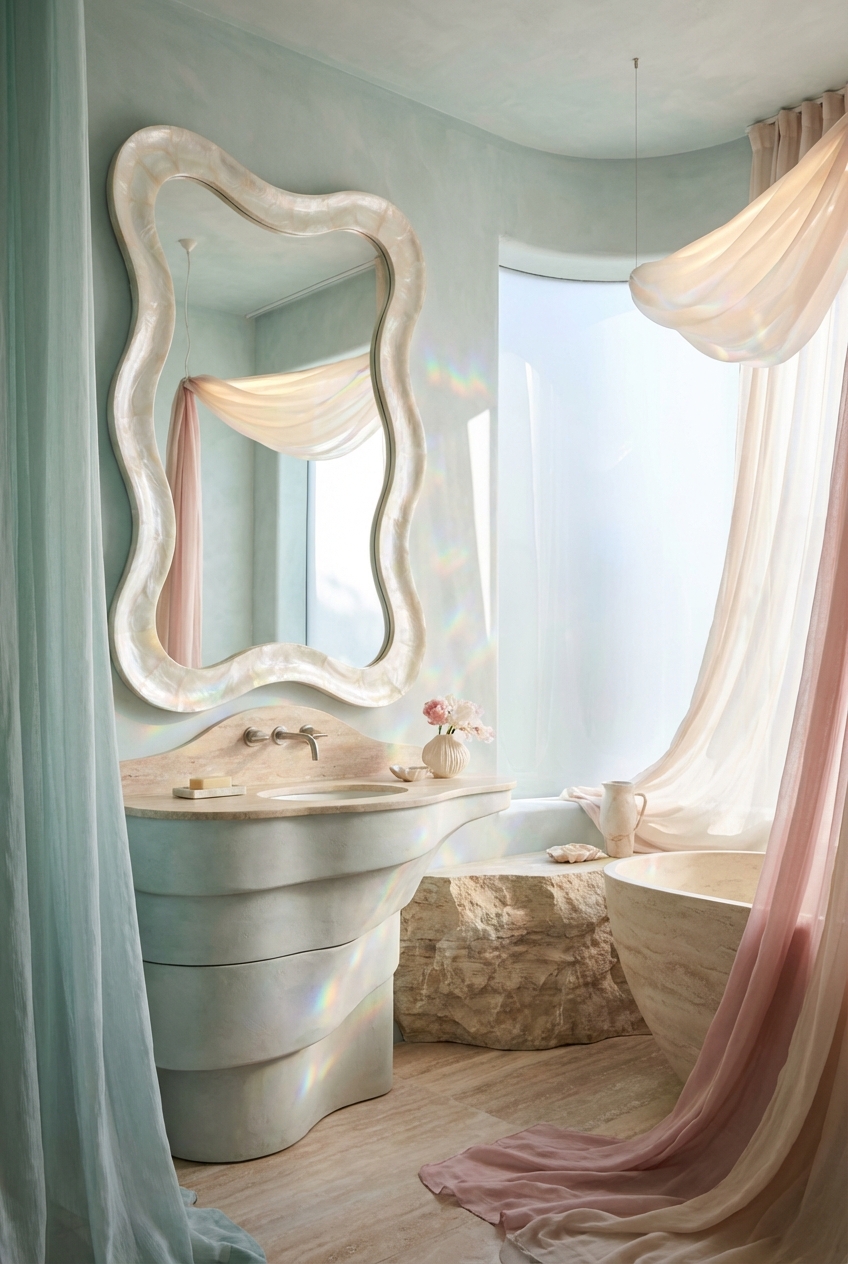
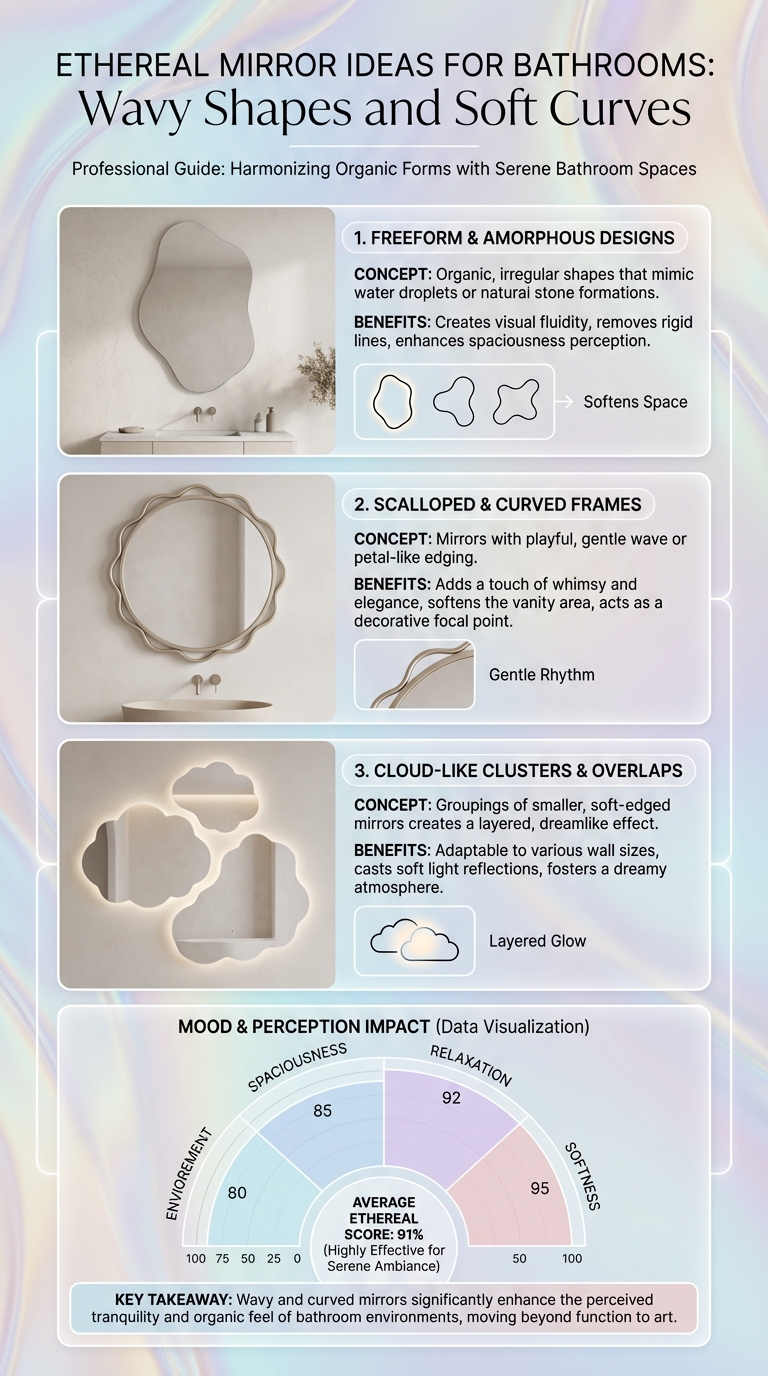
A wavy, softly curved mirror is one of the easiest ways to take the edge off a bathroom full of right angles. Size it to about 70-80 percent of the vanity width, keep the frame thin or skip it, and light it from the sides.
Tile, porcelain, stone and metal are all hard and straight. An organic mirror gives the eye something to follow, and it works more like a piece of art than a medicine cabinet. If you like Organic Modern, Japandi or soft minimalist rooms, it fits right in.
Why do wavy mirrors work in bathrooms?
A bathroom is mostly a grid: rectangular tile, a rectangular vanity, a rectangular tub. Curves break that rhythm without adding clutter. Designers often describe this as balance. Cornell's Principles of Design defines symmetrical balance as equal "weight" on equal sides of a centrally placed fulcrum, which is a useful way to think about a mirror that has no obvious middle.
They are also friendly to small bathroom mirror ideas. In a powder room, a mirror without sharp corners feels less boxy than a standard rectangle, and the eye travels around it more easily.
What features make a wavy mirror look good?
- A frameless polished or beveled edge, or a very thin frame (around half an inch) in a finish close to the wall color, such as brushed brass or matte white.
- Lightly tinted or antiqued glass if you want a moodier, vintage feel.
- A textured wall behind it, like lime wash, fluted tile or raw stone. The smooth mirror reads as the quiet element.
- Backlighting for a soft halo around the curves.
If you are wondering how to decorate a frameless bathroom mirror, the answer is mostly what surrounds it: a pair of slim sconces, a round tray on the counter echoing the curve, and hardware that matches your faucet.

How big should the mirror be?
A good starting point is 70-80 percent of the vanity width. Wider than that and it looks top-heavy over the cabinet; much narrower and it looks like an afterthought. A tiny wavy mirror on a big wall looks like a sticker, so for large bathroom mirror ideas, go bigger than your first instinct.
A few other proportions help:
- Leave roughly 2-4 inches between the faucet and the lowest curve so splashes don't constantly hit the glass.
- Leave a couple of inches of breathing room between the widest bulge of the mirror and any side sconce.
- Judge the center by the visual mass of the shape, not by its bounding width. An irregular mirror can be centered on paper and still look off.
How high should you hang it?
Hang it for the people who use it, not for the ceiling. Place the widest part of the curve near average eye level, roughly 60-64 inches from the floor, and keep the bottom edge a few inches above the vanity or backsplash. Cornell's Charlotte Jirousek notes that "Our most universal standard of measurement is the human body; that is, our experience of living in our own bodies." In a family bathroom, that means checking the height with the shortest and tallest user standing at the sink.
How do you light a wavy mirror?
Organic shapes cast uneven shadows, so lighting matters more than usual. Slim vertical sconces on both sides light a face evenly, while a single bar light above can leave shadows under the eyes. Backlit LED bathroom mirrors add a soft halo and ambient glow for night use, but they work best as a second layer, not the only light. I recommend warm white around 2700K so skin tones look natural.
Wiring behind a mirror or in a wall is a job for a licensed electrician, especially in a wet room. For more soft-glow ideas, see these sconce ideas.
How do you hang one so it sits right?
- Outline the shape on the wall with painter's tape and live with it for a day. You will see how it meets sconces, backsplash and ceiling.
- Decide on frameless or framed. Frameless looks lighter; a frame defines the curves more clearly.
- Find the studs. Wavy mirrors are heavy and often have odd hanging points, so use heavy-duty anchors if no stud lines up.
- Choose hardware that holds the mirror securely. On uneven walls such as handmade tile or plaster, a cleat system with a small gap behind the glass avoids stress on the mirror.
- Step back and look. A level tells you the hardware is straight, but an irregular shape can still look crooked, so trust your eye.
If you are drilling through tile, use a bit made for tile and go slowly. Never rely on the tile alone to hold a heavy mirror. If you ever need to take a mirror down, here is how to remove bathroom mirror clips.

What works in different bathrooms?
Powder room
This is the place to take a risk. You don't need makeup-grade lighting or storage, so a very irregular shape, or a tall asymmetrical one reaching toward the ceiling, can be the star.
Primary bath with two sinks
For bathroom mirror ideas for double sinks, I'd use two identical wavy mirrors, one over each sink. The repetition gives the soft curves a calm rhythm, and it keeps the layout symmetrical so each person gets their own reflection.
Kids' or guest bath
A pebble or puddle shape feels playful. Pick a mirror with a durable frame or well-finished edges, since bumps happen in busy bathrooms.
What mistakes should you avoid?
- Centering the mirror between vanity and ceiling. This often leaves it too high for shorter people. Set it from the vanity up instead.
- Mismatching shapes. A very flowy mirror over an angular vanity with square sconces can feel disconnected. Pick a mirror with one flatter edge at the bottom to ground it.
- Buying thin glass with poor silvering. Cheap mirrors can distort at the edges, and humidity can darken the edges over time. Look at the reflection from several angles in the store or in photos of reviews.

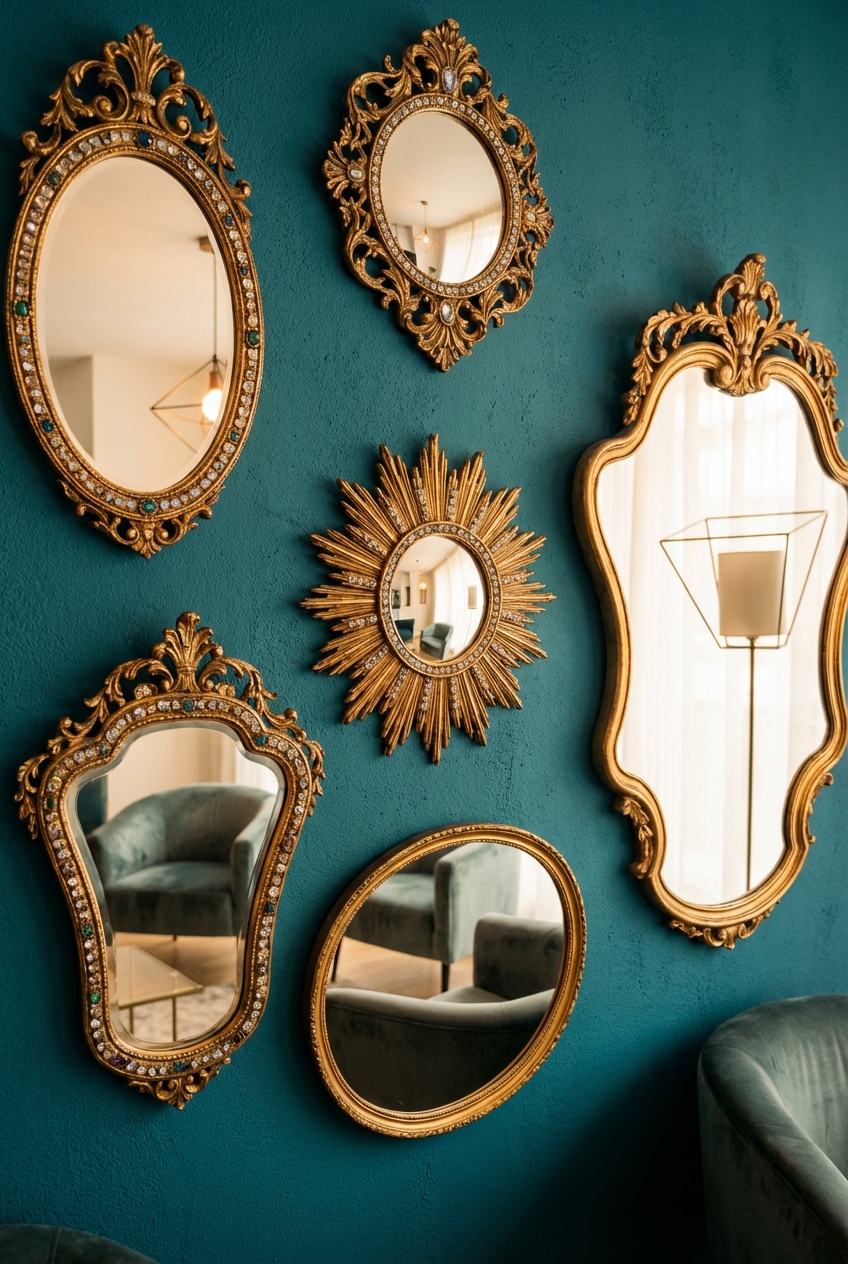
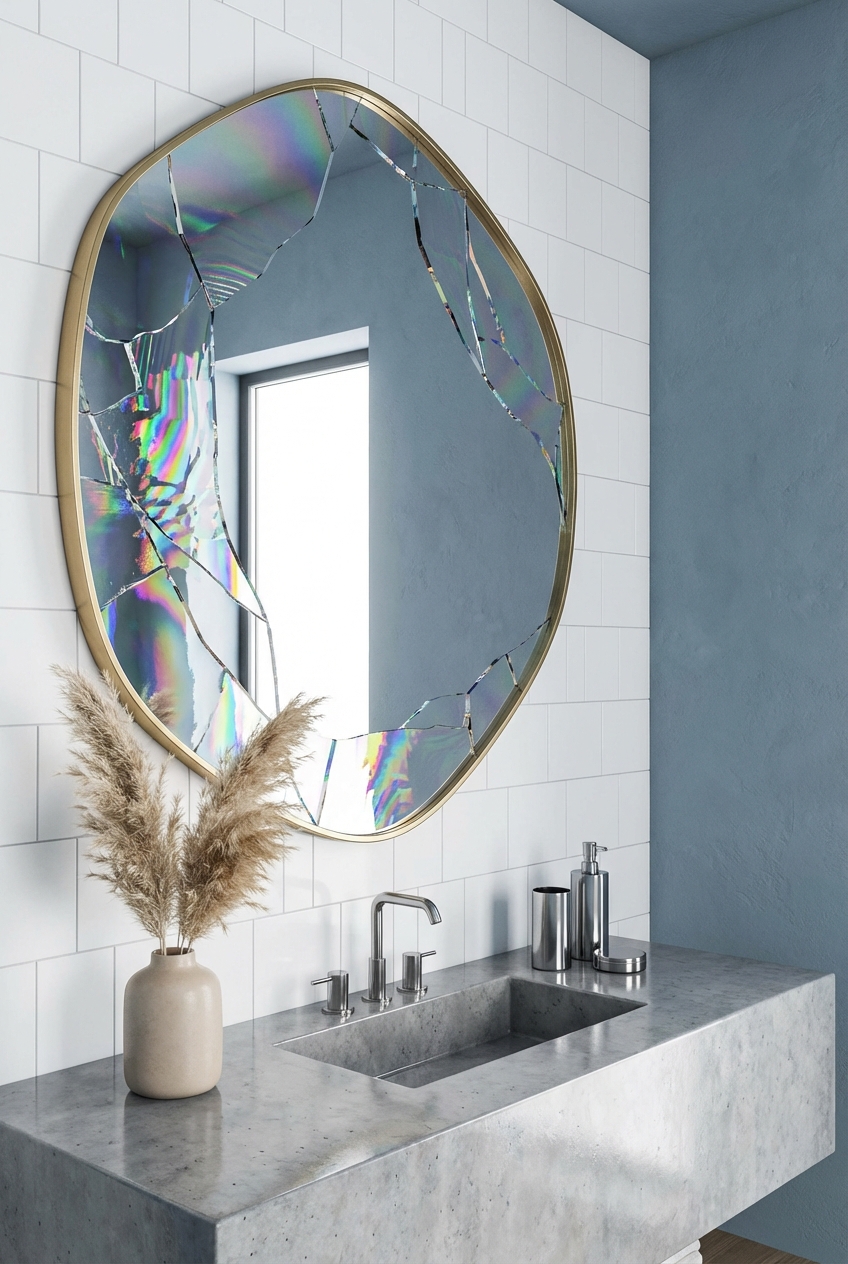
Wavy mirrors go well with other curved pieces in the room. If you like this look, see our offbeat bathroom mirror shapes and wavy mirrors for entryways. To clean one, a microfiber cloth gets into the curves without leaving lint.
Frequently asked questions
What is the best type of mirror for a bathroom?
The best one fits your vanity, 70-80 percent of its width, with good-quality silvering so the edges resist humidity. Pair it with side lighting for even light on your face.
Can I use a wavy mirror in a traditional bathroom?
Yes. A softly curved mirror can freshen a traditional bathroom without a renovation. A thin frame in a finish that matches your faucet helps it blend in.
Are wavy mirrors hard to clean?
Not really. Frameless mirrors with irregular edges can collect dust in the curves, so a microfiber cloth works well to reach them.
Do wavy mirrors go out of style quickly?
Organic shapes have long appeared in art and design. Choosing a natural form, like a river stone, rather than something jagged keeps it from feeling too trendy.
Filed under
ArticlesMeet the author
Written by an architect.
Julio Arco is a passionate architect with years of experience in architecture, interior design, urban design, and housing. He studied at prestigious universities across North America and Europe.

- Name
- Julio Arco
- Job
- Architect and online interior designer
- Studied
- Architecture, ITESM · Urban Design and Housing, McGill
- Partner
- Thor, Australian Shepherd
- Thor’s title
- Head of quality control