Paper Organization Ideas for Families That Look Good

By Julio Arco
Architect and online interior designer
In this post
- How do you organize paper clutter in the first place?
- Which home paperwork organization categories work best?
- Where should the mail go the moment it comes in?
- How to organize papers without a filing cabinet
- How to store a lot of paperwork
- How to make your own paper organizer
- Paperwork for kids
- What's the best organizer for paperwork?
- Keep it looking good
- Frequently asked questions
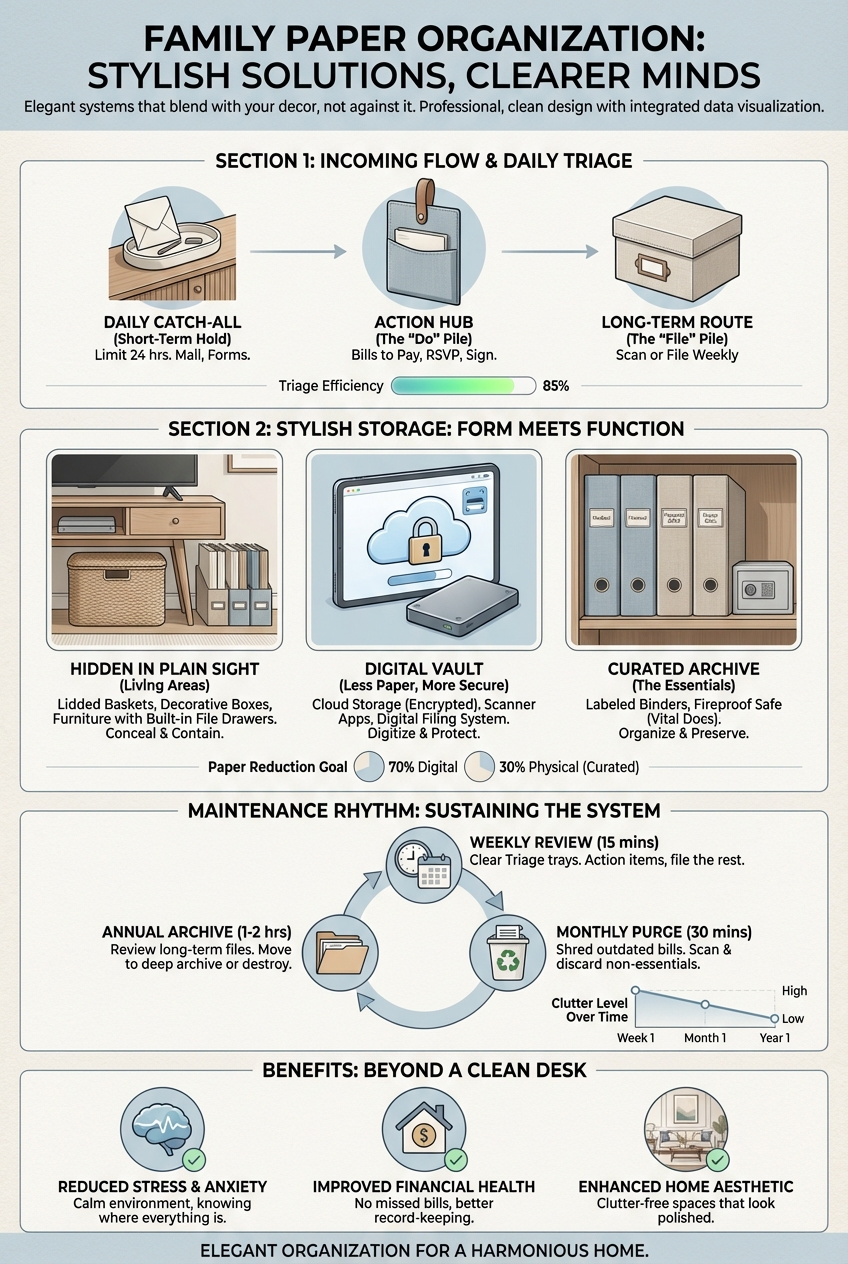
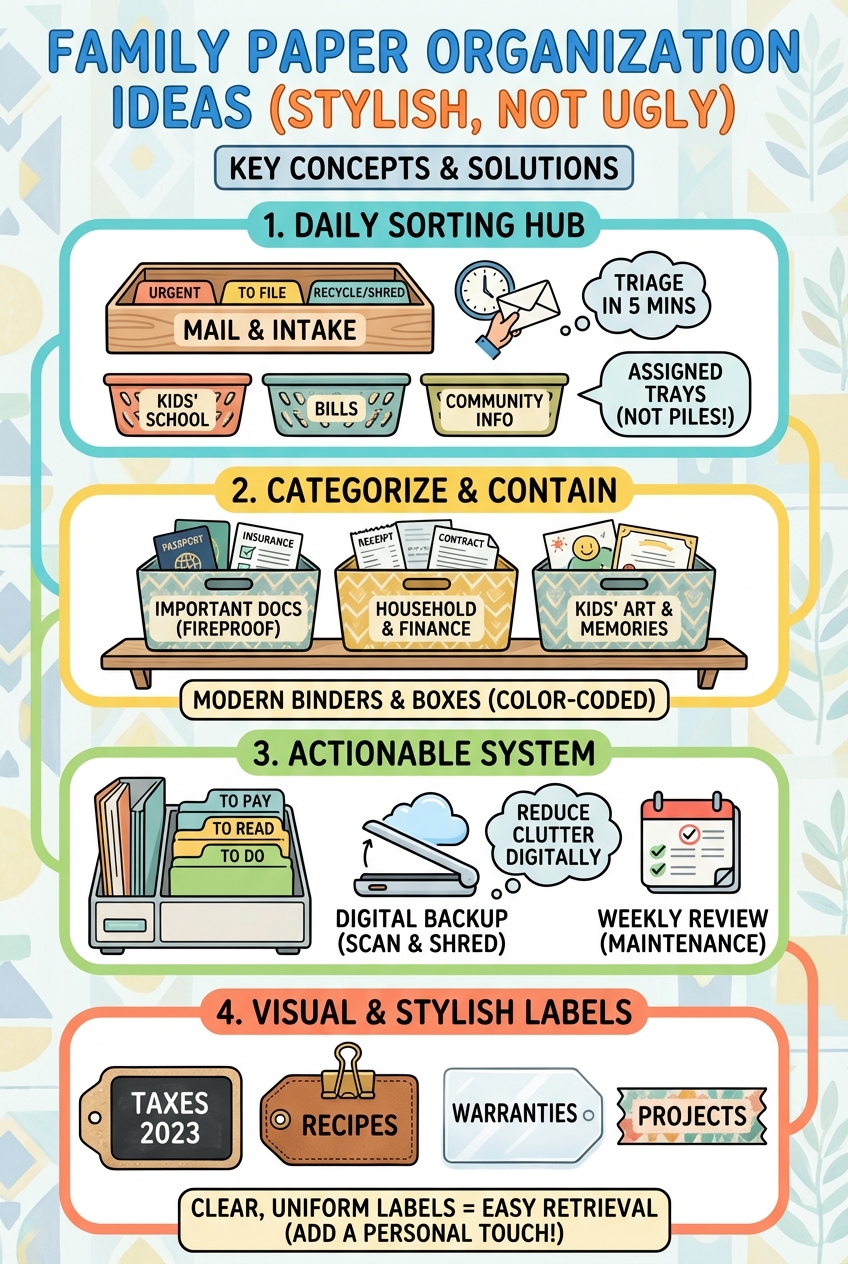
The simplest paper organization system for a family has three parts: one spot where all incoming mail lands, a small tray or pocket for papers that need action, and closed boxes or binders for everything you keep. Papers that need nothing go straight to recycling or the shredder.
It's very common for mail to pile up on the kitchen island, so don't feel bad if yours does. The fix is less about buying pretty containers and more about giving every piece of paper a clear destination, then choosing containers that look like part of the room.
How do you organize paper clutter in the first place?
If you're wondering how to organize paper clutter, start by emptying every pile onto one table. Sort into three stacks before you buy anything:
- Toss or shred: junk mail, expired flyers, outdated notices.
- Act: bills, forms, RSVPs, permission slips.
- Keep: records you may need later.
Anything you haven't touched in a year is a candidate for scanning or recycling. For tax and legal records, ask your accountant or check official guidance on how long to hold them, since that varies.
Measure what you actually have before shopping. A stack of keep papers that fits in one box needs a box, not a cabinet.
Which home paperwork organization categories work best?
Fewer categories get used more. For most households, these home paperwork organization categories cover nearly everything:
- Home: mortgage or lease, insurance, warranties, manuals.
- Money: bank statements, taxes, pay records.
- Health: medical bills, vaccination records, pet records.
- School: report cards, forms, schedules.
- Identity: passports, birth certificates, anything hard to replace.
Keep pet paperwork in its own folder. Vaccination records and microchip details are the things you'll want fast at a boarding kennel or a vet visit.
Where should the mail go the moment it comes in?
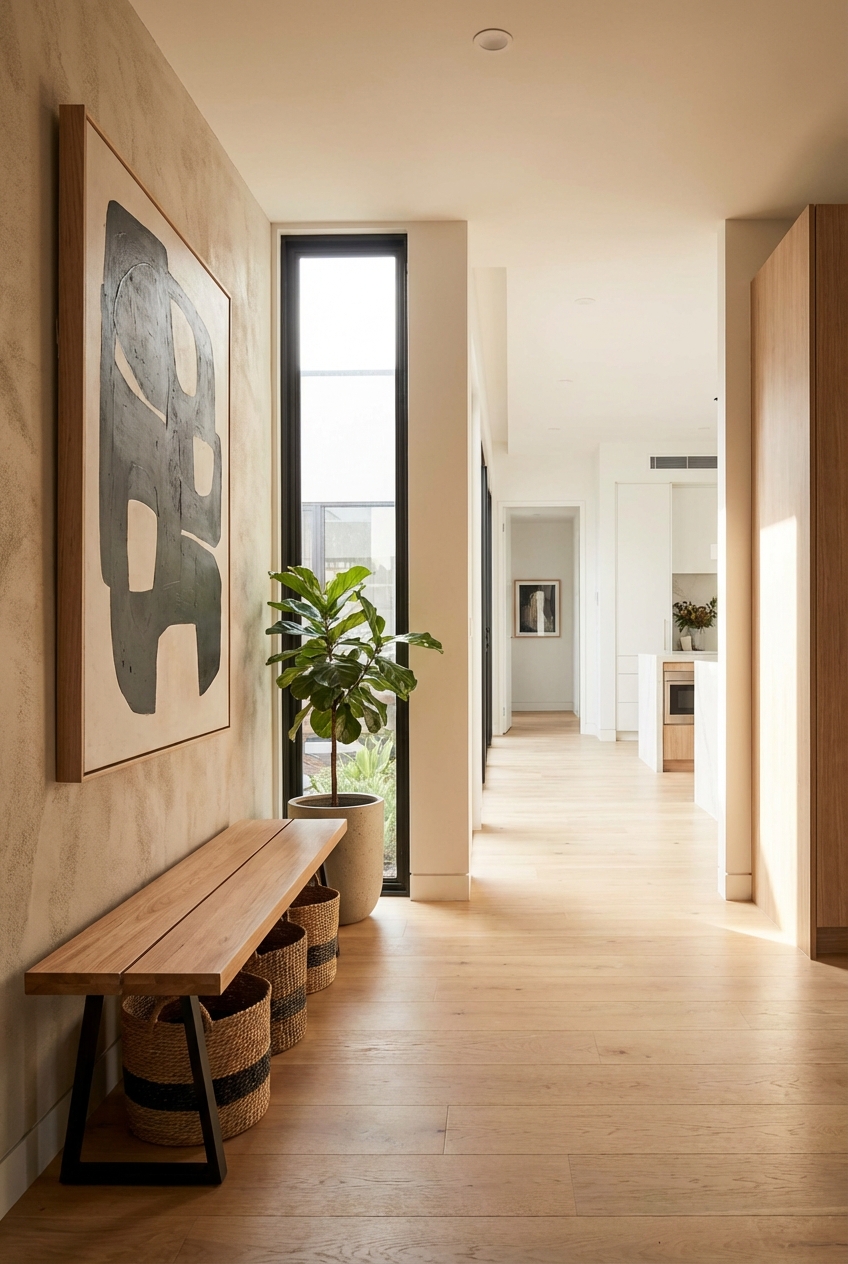
Pick one spot near the door where you drop keys and bags, ideally within a few feet of it. A single tray, a wall pocket or a shallow basket works. The family rule is simple: mail goes here and nowhere else.
A small trash or recycling bin right beside it lets you toss junk mail before it spreads into the house. As an architect, I'd keep this station to a modest footprint, around the size of a standard tray, so it doesn't swallow the console or counter it sits on.
Choose shallow over deep. A deep bin lets papers sink out of sight, while a shallow tray fills up quickly and nudges you to process it. If you use a tray for catalogs, make sure it's larger than a 9x12 inch envelope, or the mail will flop over the edge.
How to organize papers without a filing cabinet
You don't need a cabinet for most households. Several options hold a lot of paper in less space:
- Lidded document boxes on a shelf, one per category.
- Binders with sheet protectors for manuals and school records.
- An accordion file for current-year bills and receipts.
- A rolling cart that tucks into a closet.
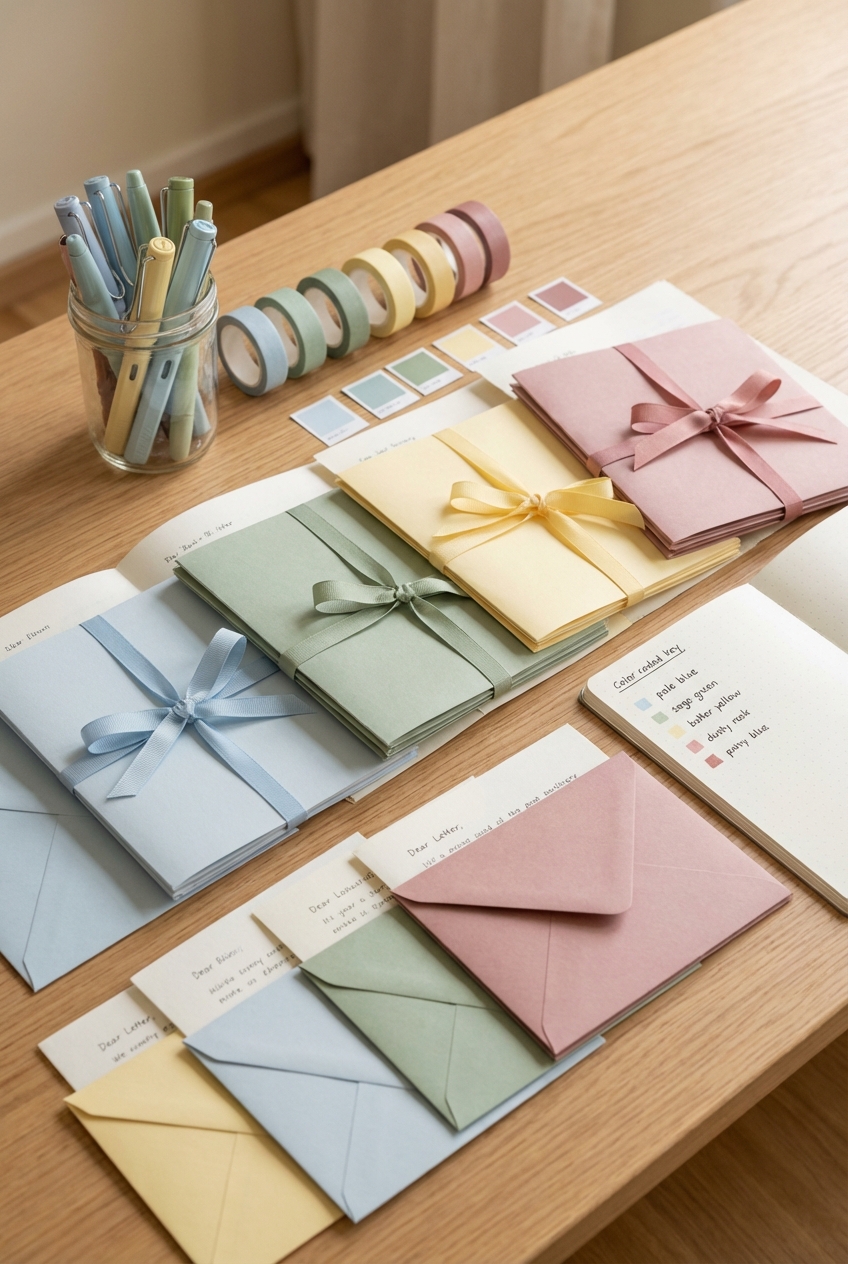
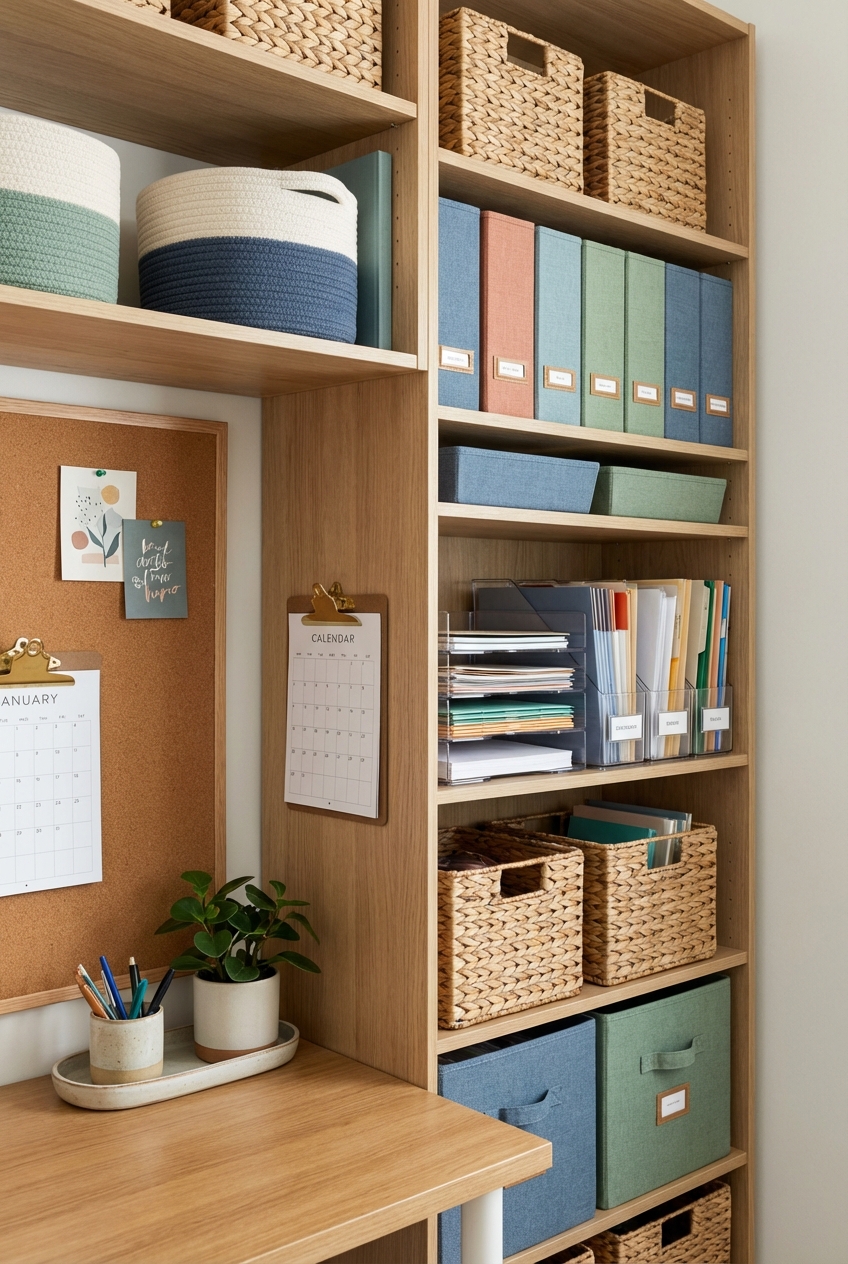
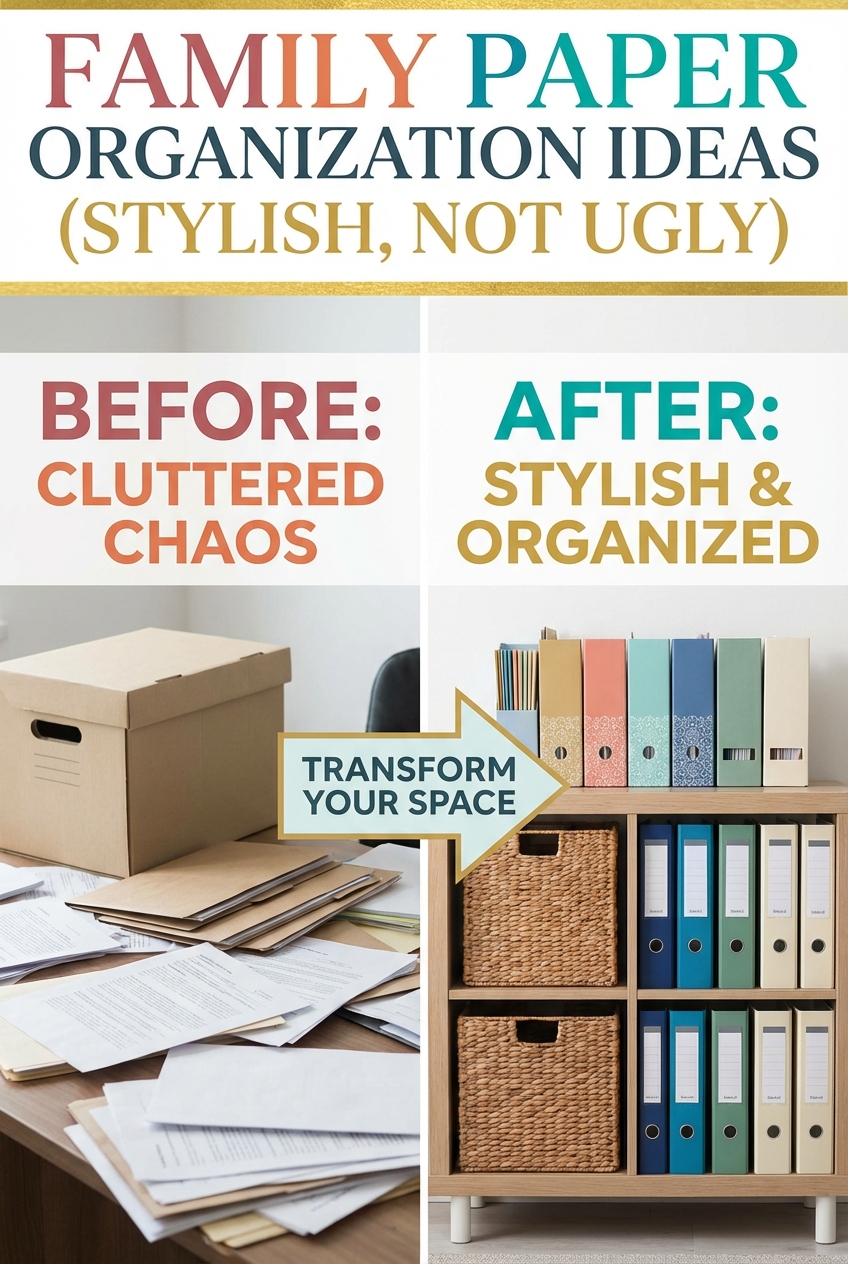
Lids matter. An open bin of paper still looks like a mess, while a closed box reads as a plain shape on a shelf. Matching colors and one material, such as linen-wrapped boxes or wood, quiet the look further.
How to store a lot of paperwork
Store it vertically and by category, then keep the active pile separate from the archive. Put the archive somewhere out of the way, like a closet shelf or under a bed in flat boxes. Paper stored in a garage or damp basement can pick up moisture and mildew, so choose a dry interior spot.
Scan records you rarely need, such as old statements and manuals, and keep the originals only for documents that must be paper. Back the scans up in two places. This is also the easiest way to shrink the archive when space runs short.
How to make your own paper organizer
A DIY paper organizer can be cheap and still look intentional. A few ideas that hold up:
- Wrap plain magazine files or boxes in fabric or heavy paper in one color.
- Mount three fabric or leather pockets in a column on the wall, with 2-3 inches between them so your hand fits.
- Screw a shallow wooden crate to the inside of a cabinet door for a hidden command center.
- Use cardstock folders in one color and write labels directly on the tab.
For wall pockets, I recommend keeping them shallow in a hallway, about 4 inches from the wall, so people don't bump them. Mount them at a height you can reach without stretching, and lower for children's school papers.
Paperwork for kids: artwork, forms and school papers
Give each child a cubby, bucket or slot. A cubby about 12 inches wide and 15 inches deep takes standard school folders without bending them. Add a clip for permission slips and a larger bin for artwork.
Display the current favorites and rotate them. Photograph the rest, then keep a single memory box per child for the pieces you truly can't part with. The same one-box logic works for other kid clutter, as in these ideas for displaying stuffed animals, and it helps when setting up a baby's dresser where birth papers and pediatric forms tend to land.
What's the best organizer for paperwork?
The best one is the one you'll use daily. For incoming mail, a shallow tray or wall pocket. For active papers, a desktop file sorter or accordion file. For long-term records, lidded boxes or binders.
Choose by how you work. If you like to see things, a desktop sorter helps. If you prefer a calm look, closed boxes in a cabinet or on a shelf win. The same sorting logic that works for deep bathroom drawers applies here: divide the space into shallow, labeled zones so nothing gets buried.
Keep it looking good
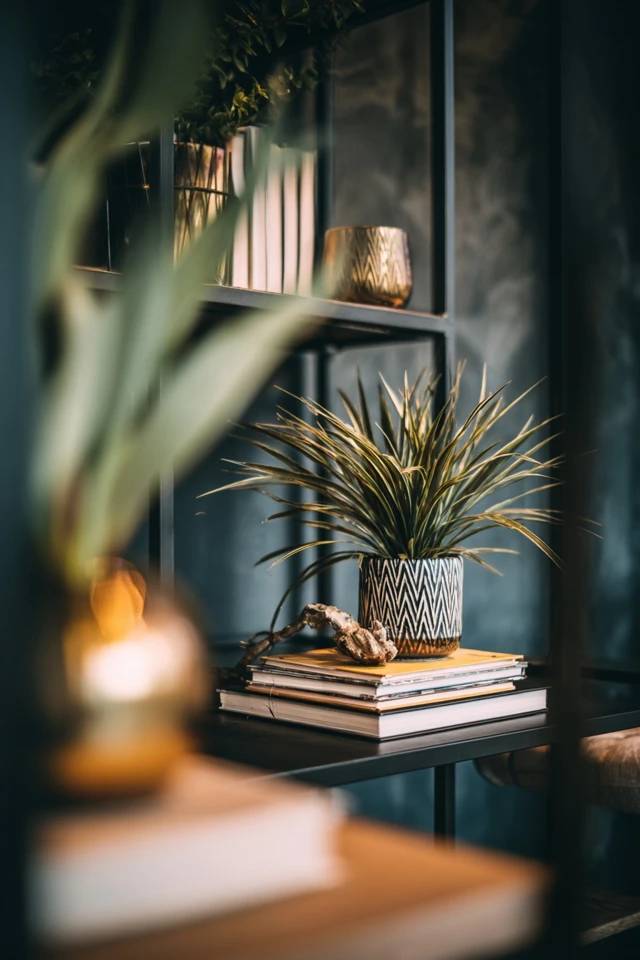
Label in one style, such as a label maker with clear tape or handwriting on every tab. Pick one or two finishes, like wood and matte black metal, and repeat them. A small plant or a heavy paperweight beside the tray softens all the rectangles.
Good light helps too. Put the sorting area where you can see what you're doing, and add a task lamp if the spot is dim. Do a two-minute sort of the action tray each day and a longer pass through the archive once a month.
Frequently asked questions
What is a good organizer for paperwork?
A shallow tray or wall pocket for new mail, an accordion file or desktop sorter for active bills, and lidded boxes or binders for records. Matching containers keep it tidy.
How to organize massive amounts of paper?
Sort everything into toss, act and keep, then scan what you rarely need. Store what remains in labeled boxes by category.
How to store a lot of paperwork?
Use lidded document boxes stored upright in a dry closet or shelf, one per category. Avoid garages and damp basements, where moisture can damage paper.
How to make your own paper organizer?
Wrap magazine files in fabric, mount a few shallow wall pockets, or fix a small crate inside a cabinet door. Keep colors and finishes consistent so it looks deliberate.
Filed under
ArticlesMeet the author
Written by an architect.
Julio Arco is a passionate architect with years of experience in architecture, interior design, urban design, and housing. He studied at prestigious universities across North America and Europe.

- Name
- Julio Arco
- Job
- Architect and online interior designer
- Studied
- Architecture, ITESM · Urban Design and Housing, McGill
- Partner
- Thor, Australian Shepherd
- Thor’s title
- Head of quality control