Fresh Entryway Full Length Mirror Decor Tips to Elevate Any Room
Entryway mirror ideas for any size of foyer: which shape works best, where to hang a full-length mirror, and how to style it with hooks, benches and light.

By Julio Arco
Architect and online interior designer
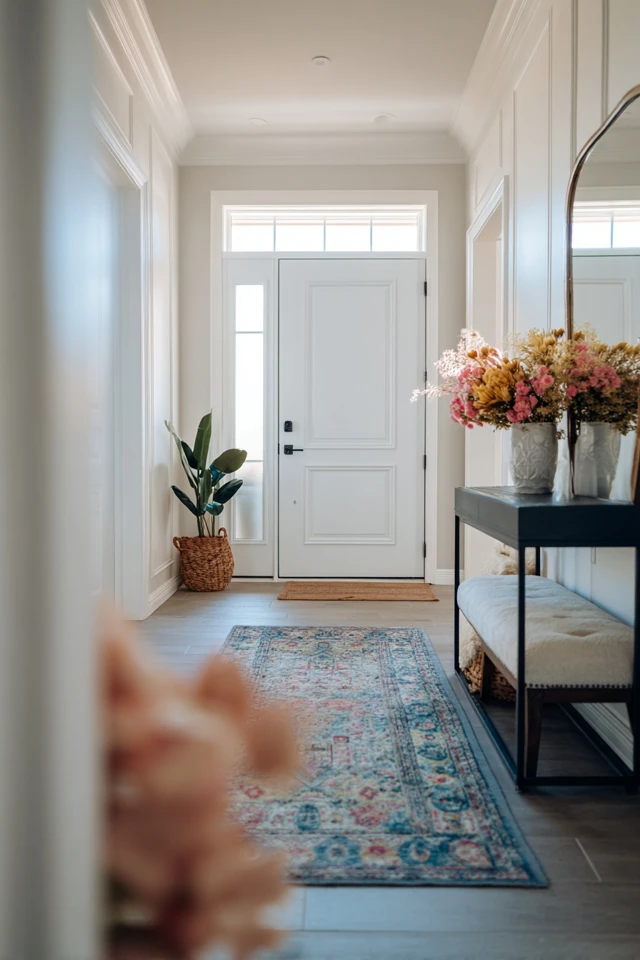
In this post
- Is a mirror in the entryway a good idea?
- What shape of mirror is best for an entryway?
- How tall should a full-length entryway mirror be?
- Small entryway mirror ideas
- Mirror with hooks, shelf or bench
- How to style an entryway mirror
- Frames, finishes and wall color
- Where else can you hang a mirror near the entry?
- Frequently asked questions
The best entryway mirror is one you can actually use: tall enough for a head-to-toe check, placed where it catches light from a window or lamp, and sized to the wall instead of crowding it. A full-length mirror does all of that in a small footprint, and it makes a dim hall feel deeper.
Below you'll find where to put the mirror, which shape to pick, how to handle a narrow space, and how to style it once it's up.
Is a mirror in the entryway a good idea?
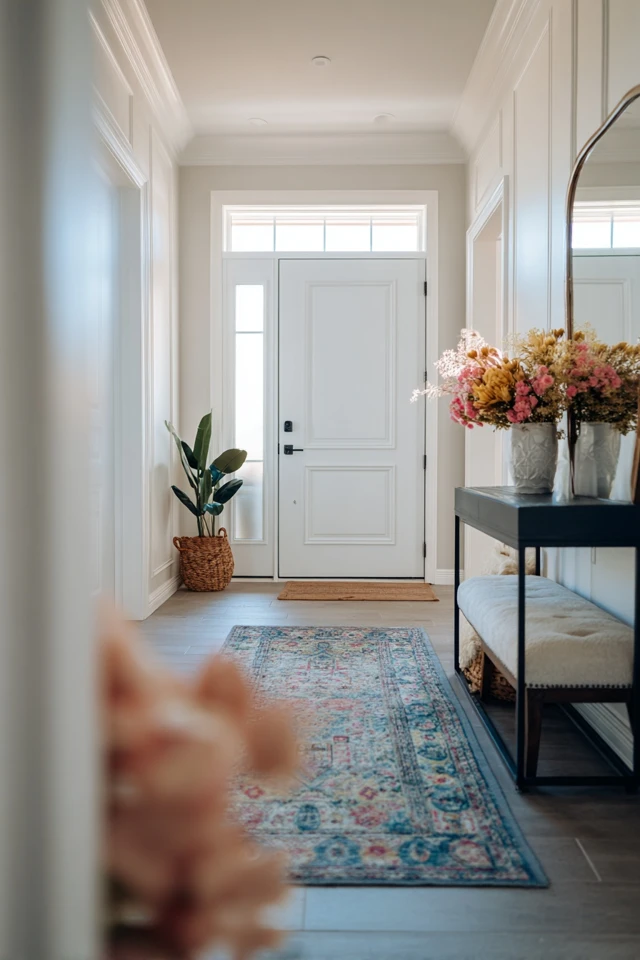
Yes, for two practical reasons. A mirror bounces daylight and lamplight deeper into the space, and it gives you a spot for the last-second check before you walk out the door. Entryways are usually the smallest, darkest part of a home, so a mirror earns its place quickly.
One caution: look at what the mirror will reflect before you hang it. A view of a window, a plant or a nice piece of art doubles something pleasant. A view of a pile of shoes doubles the pile.
What shape of mirror is best for an entryway?
There's no single winner, but there are good matches for each situation.
- Tall rectangle: the most useful full-length shape. It suits narrow halls and emphasizes height.
- Arched top: softens the hard corners of a doorway-heavy space and still gives you a full view of yourself.
- Round or oval: works best above a console table or bench, where it reads as a piece of art. It's less practical for a full outfit check unless it's large.
- Irregular or organic shapes: fun as an accent, but check that the reflection isn't distorted at the edges.
As an architect, I'd choose the shape that repeats something already in the room: an arched mirror if you have an arched doorway, a rectangle if your door and trim are square. Repetition makes the choice look planned.
How tall should a full-length entryway mirror be?
Start with your body. Designers have long used the human figure as the baseline for scale, and as Cornell's Charlotte Jirousek puts it in her overview of design principles, "Our most universal standard of measurement is the human body; that is, our experience of living in our own bodies." For a mirror, that means it should be taller than most people in the household, or close to it, so nobody has to crouch or tiptoe.
A common range for a full-length mirror is about 60-72 inches tall. If you hang it, keep the bottom edge a few inches above the floor, about 4-6 inches, so it clears baseboards and vacuum heads. If you lean it, anchor the top to the wall. That matters in homes with kids, and with dogs that bump and shake.
Small entryway mirror ideas
A tight entry needs a mirror that adds depth without taking floor space.
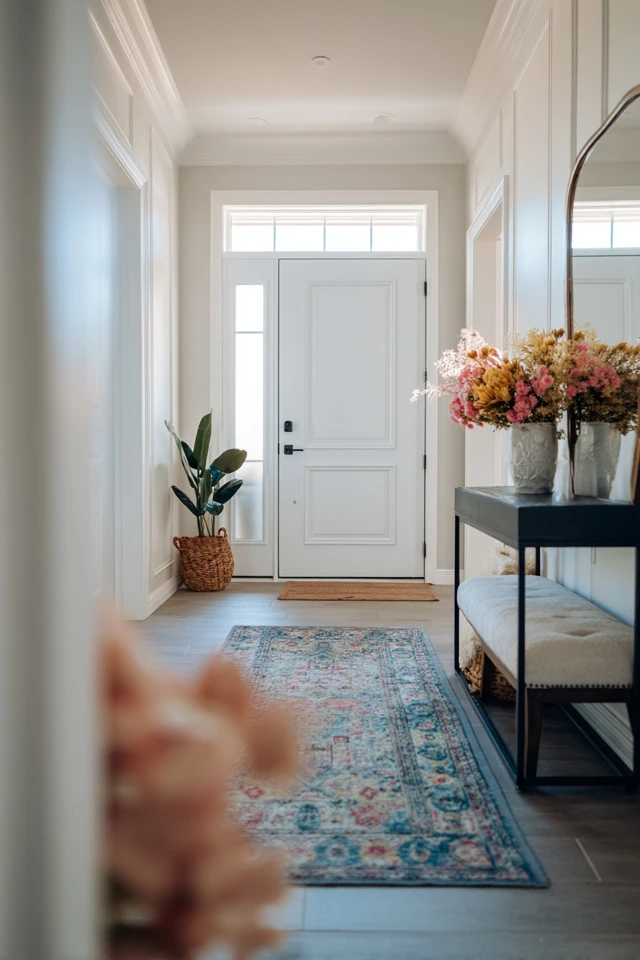
- Mount a slim, tall mirror on the wall beside the door, so it reflects the room instead of the door itself.
- Lean a full-length mirror against the wall if you rent. It needs no drilling, though you should still secure it.
- Place the mirror across from or at an angle to a window or light source. This is what makes a small foyer feel brighter.
- Keep about 32-36 inches of clear walkway in front of it.
If your entry opens into a living area, the same logic applies to the next room. Our post on small living room ideas covers how to keep a compact space from feeling cluttered.
Mirror with hooks, shelf or bench
An entryway mirror with hooks turns a decorative piece into a working drop zone: coats, leashes and bags hang right beside the glass. A mirror with a narrow shelf holds keys and mail, which keeps the console or floor clear.
A bench below a full-length mirror adds a spot to sit and put on shoes. Keep the bench shallow in a narrow hall. If you have a dog, I recommend a washable cushion or a hard-surface seat, because that's where muddy paws will land.
Hooks do add visual weight to one side. If you want a calm, formal look, place them symmetrically. Cornell's design principles page defines symmetrical balance as "equal 'weight' on equal sides of a centrally placed fulcrum." Hang the mirror at the center and match the hooks on both sides. For a looser look, let the hooks sit to one side and balance them with a lamp or plant on the other.
How to style an entryway mirror
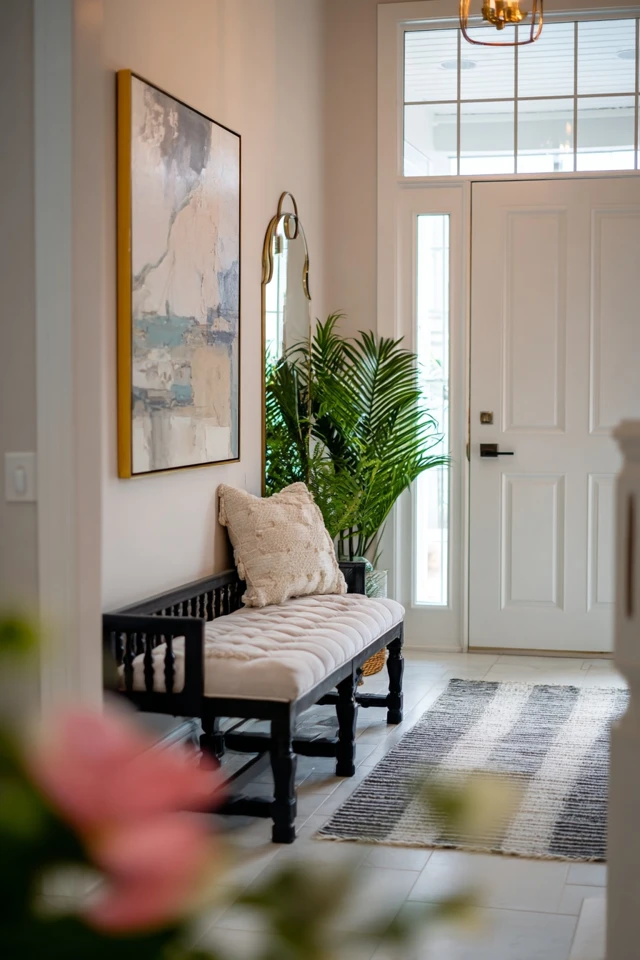
Once the mirror is up, build a small vignette around it instead of leaving it alone on the wall.
- Add a low console or narrow shelf under it, with a tray for keys.
- Put a lamp or wall sconce nearby. Soft light on both sides avoids harsh shadows on your face.
- Include one plant or a vase of branches, ideally positioned so it shows in the reflection. If you have pets, check with your vet or the ASPCA before choosing plants, since many common ones are toxic.
- Anchor the area with a runner or small rug that stays put under a bench.
- Keep the frame finish in line with your hardware: brass hooks with a brass frame, black hooks with a black frame.
Pick no more than two or three main materials, such as wood, metal and a natural fiber like jute. Repeating them keeps the entry calm even when it holds a lot of stuff.
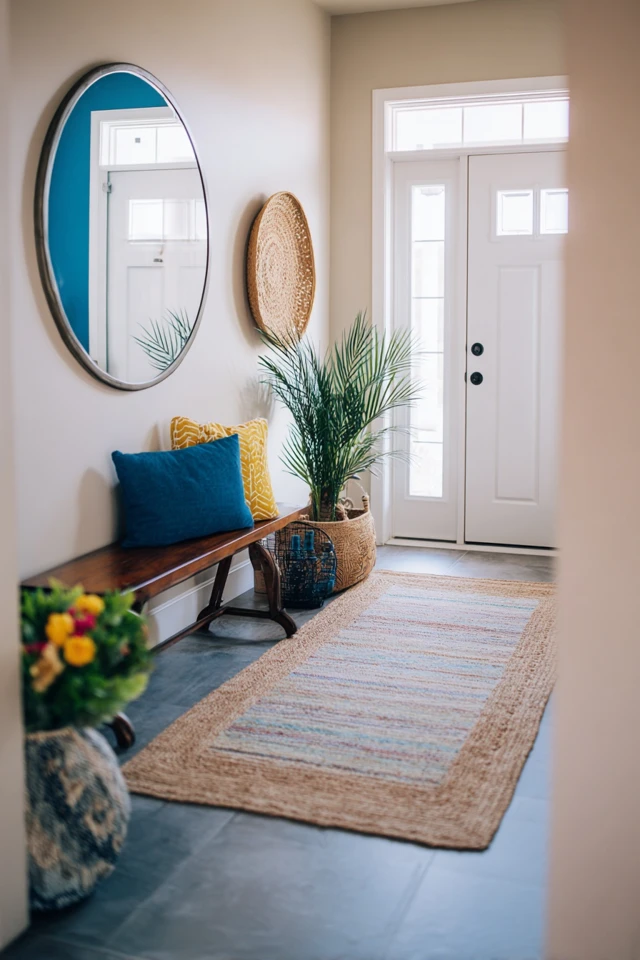
Frames, finishes and wall color
Thin metal frames in black or brass look modern and take little visual space. Wood frames add warmth and suit rustic or vintage entries. A gilded or sunburst frame works as a statement piece, so keep the rest of the wall simple.
Wall color changes how the mirror reads. A light, slightly muted wall maximizes reflected light. A deep color gives drama and makes the frame stand out, but pair it with a good light source so the mirror doesn't turn into a dark hole. Warm walls give a cozy reflection, cool ones feel airier.
For a more dramatic, moody look in other rooms, see masculine living room decor, where dark walls and metal finishes work the same way.
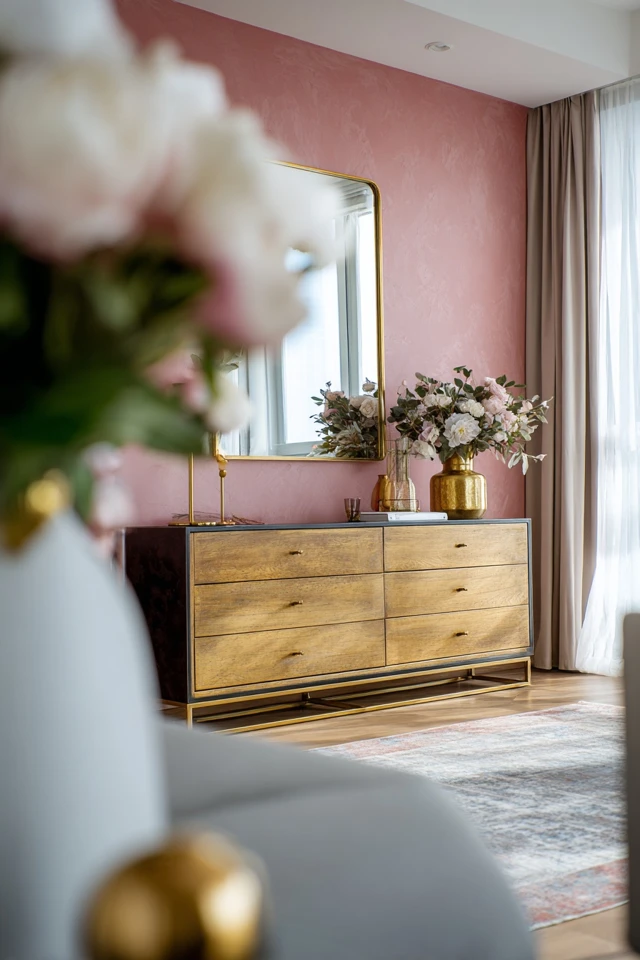
Where else can you hang a mirror near the entry?
- Above a console table: the classic spot. Choose a mirror about two-thirds the width of the table.
- In a corner: a leaning full-length mirror makes a corner feel intentional.
- As a cluster: several small mirrors grouped like a gallery wall add pattern, but they don't give a full-body view.
- Facing a view: aim it at a window, garden door or artwork rather than a blank wall.
Whatever you choose, test it first. Hold the mirror in place, or tape its outline with painter's tape, and look at it from the front door and from the next room before you drill.
Frequently asked questions
What shape of mirror is best for an entryway?
A tall rectangle or an arched top gives the most useful full-length view. Round and oval mirrors look good above a console table but show less of your outfit.
Is a mirror in the entryway a good idea?
Yes. It brightens a dark entry, adds a sense of depth and gives you a spot for a last check before leaving. Just make sure it reflects something pleasant.
How to style an entryway mirror?
Pair it with a console or bench, a lamp or sconce, a plant and a tray for keys. Match the frame finish to your hooks and other hardware.
Is it better to hang or lean a full-length mirror?
Hanging looks more formal and is more stable. Leaning is easier for renters, but anchor the top to the wall, especially around kids and pets.
Filed under
ArticlesMeet the author
Written by an architect.
Julio Arco is a passionate architect with years of experience in architecture, interior design, urban design, and housing. He studied at prestigious universities across North America and Europe.

- Name
- Julio Arco
- Job
- Architect and online interior designer
- Studied
- Architecture, ITESM · Urban Design and Housing, McGill
- Partner
- Thor, Australian Shepherd
- Thor’s title
- Head of quality control