Crochet Lace Decor Ideas for Tables, Windows and Pillows

By Julio Arco
Architect and online interior designer
In this post
- How do you choose lace by placement?
- What materials do you need?
- Crochet lace doily projects
- Lace table runners and tablecloths
- Placemats and coasters
- Lace curtains and window pieces
- Pillows, cushions and plant hangers
- Modern ways to use lace crochet
- A note on rugs and floor pieces
- Finishing and joining lace pieces
- Frequently asked questions
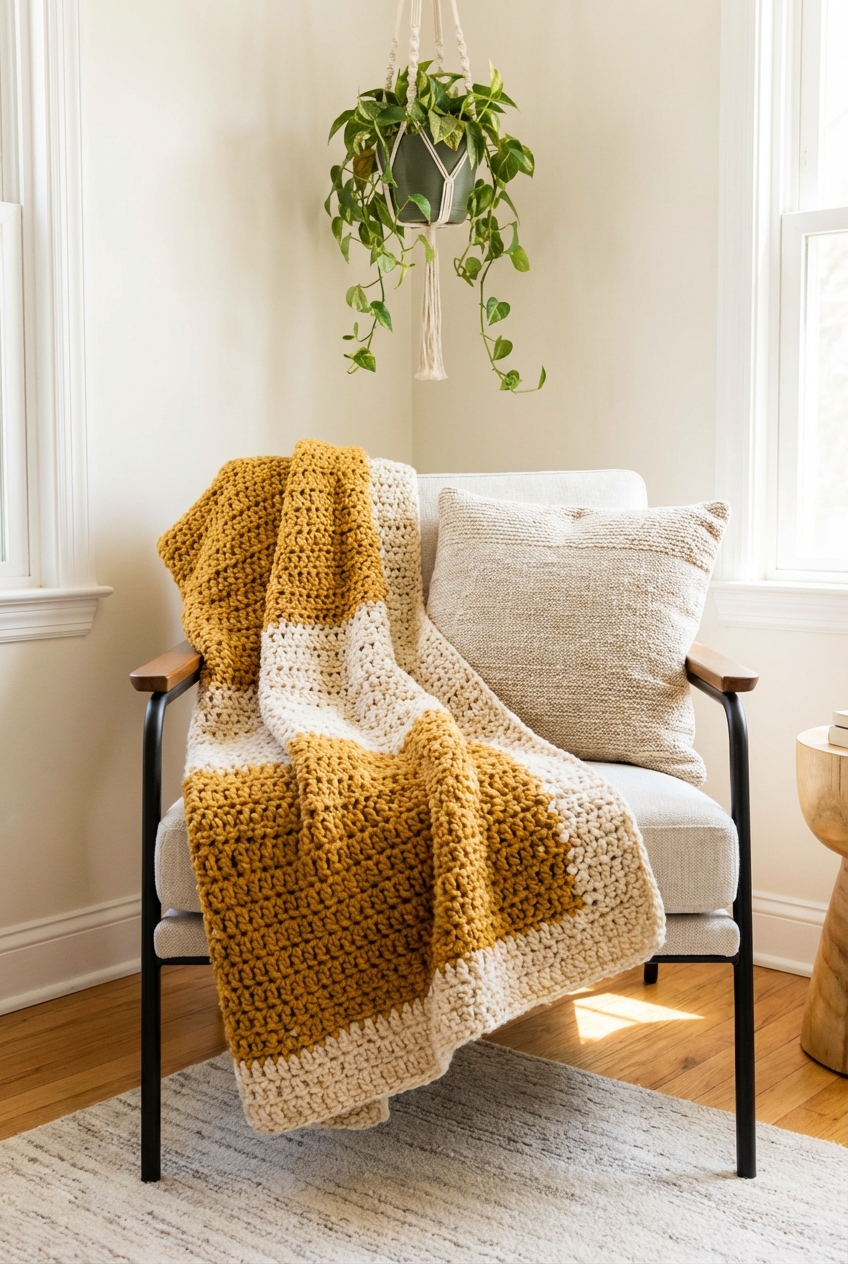
Crochet lace works best in small doses on flat, visible surfaces: a doily under a lamp, a runner down a table, a panel at a window, a trim on a pillow. Pick one or two places per room, keep the colors close to your existing palette, and let the openwork pattern do the talking.
If you're wondering what you can make with crochet lace, the answer is more than you'd expect. Most projects below are easy to start, and several suit beginners.
How do you choose lace by placement?
Start with where the piece will sit, because that decides size, fiber and weight. Lace that hangs in a window needs to look good with light behind it. Lace on a table needs to be flat, wipeable or easy to wash, and sturdy enough to survive a plate being dragged across it.
- Tables and shelves: fine cotton thread holds its shape and washes well.
- Windows: open, airy stitches let light through and cast soft patterned shadows.
- Pillows and seating: a thicker cotton or cotton blend resists snagging better than fine thread.
- Walls and accents: stiffened pieces can be framed or pinned flat.
A principle I like to apply: openwork lace is a texture of light as much as of thread. Over a dark wood table it reads crisp and graphic. Over a pale surface it nearly disappears, so use a contrasting background if you want the pattern to show.
What materials do you need?
For lace, cotton thread is the usual choice. It takes starch, holds blocking, and tolerates frequent washing. Use a steel hook sized to the thread (the thread label gives a range), a pair of small scissors, rustproof pins and a blocking surface such as foam mats.
White and ecru are classic. Colored thread is the easiest modern twist: a doily in charcoal or deep green looks far less nostalgic than the same pattern in white.
Crochet lace doily projects
Doilies are the most searched lace project for good reason. They're small, quick to finish and let you practice the circular stitch increases that most other lace patterns rely on.
To use them in a current way, skip the stack under every vase. Place one large doily under a single lamp or bowl, or group three different sizes on a sideboard. Leave plenty of bare surface around them so they read as a deliberate accent.
Lace table runners and tablecloths
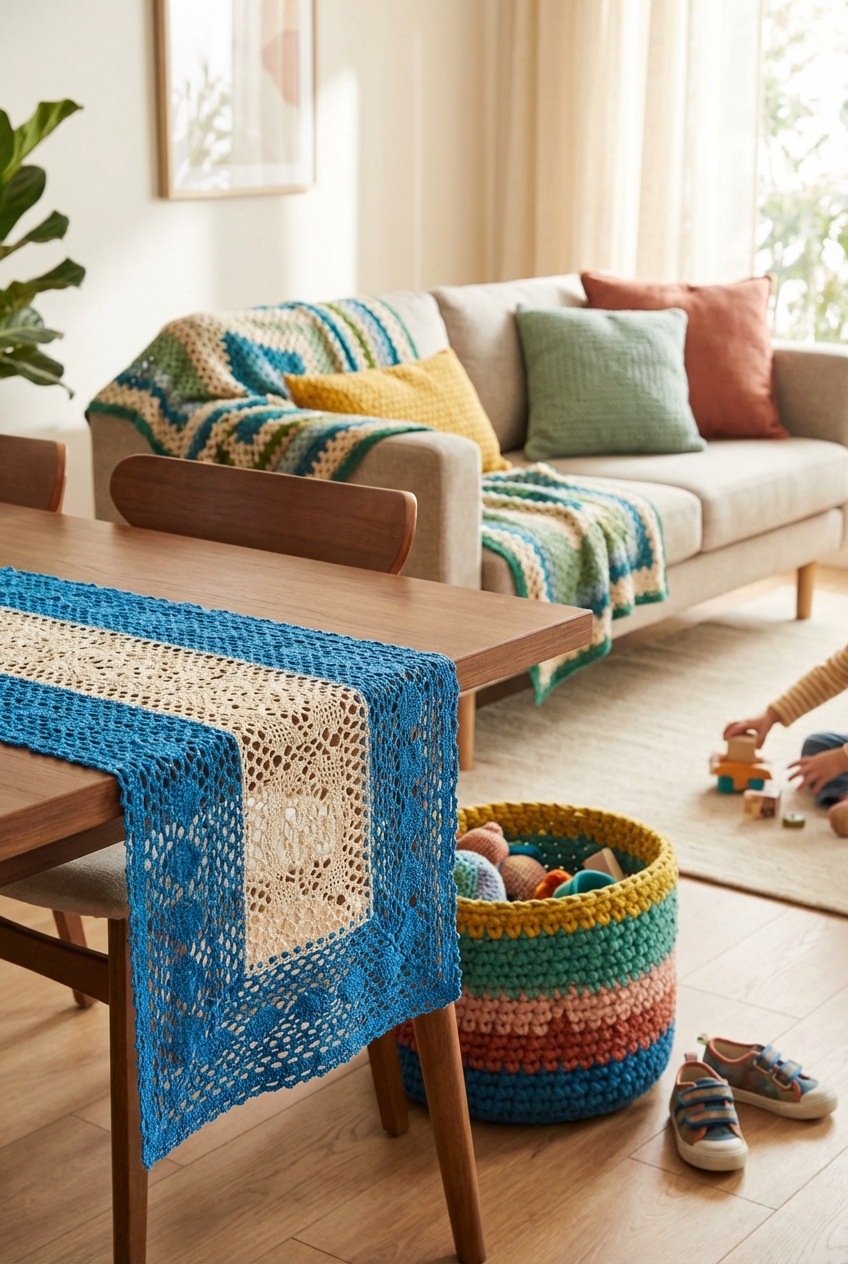
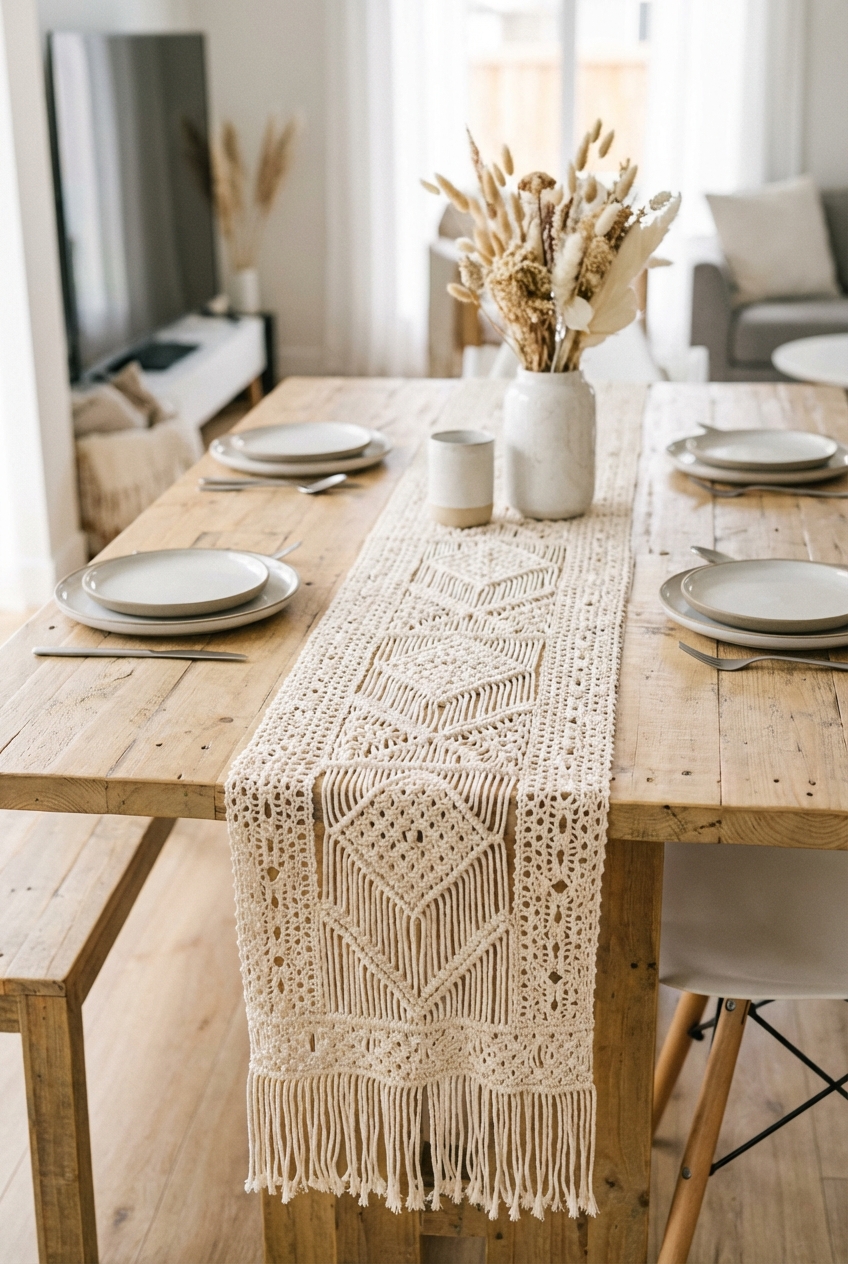
A crochet lace table runner is the best next step after a doily, since it repeats the same motifs in a line. Make it about 12-16 inches wide, and let it hang 6-10 inches past each end of the table if you want a relaxed look. For a dining table, a runner narrower than the place settings keeps plates off the lace.
Full tablecloths take a lot of thread and time. If that sounds like too much, join several square or hexagon motifs into a cloth, which also lets you work on one piece at a time.
Placemats and coasters
These are the easiest crochet and lace decor ideas for beginners. A coaster takes an evening, and you can use leftover thread. Make them in cotton so they absorb condensation, and wash them often.
Placemats work well in a simple round or oval shape. If you have a dog or cat that jumps on the table, skip the long hanging edges, since dangling lace is an invitation to tug.
Lace curtains and window pieces
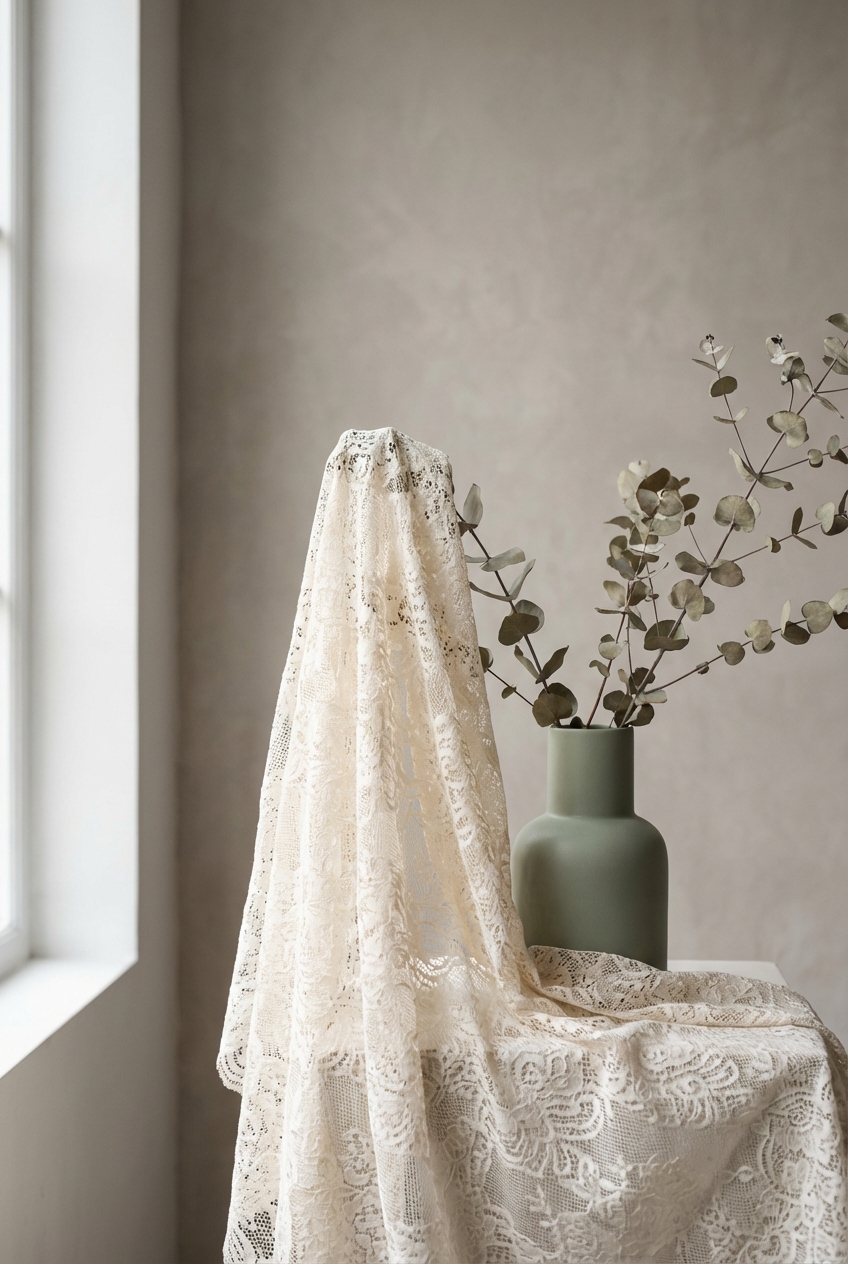
Lace is at its best with daylight behind it. A café-style panel covering the lower half of a window gives privacy while keeping the top clear. A narrow valance does a similar job in a kitchen or bathroom.
Measure the window first, then make a gauge swatch and calculate how many motifs you need. Hang lace on a slim rod with clip rings so you can take it down for washing. If you live with a cat that climbs curtains, keep the hem above the floor and consider a short panel instead of a long one.
Pillows, cushions and plant hangers
Lace on a pillow works best as a front panel over a solid fabric, so the pattern shows and the pillow stays sturdy. A crocheted trim along one edge is a lighter option and uses less thread.
Plant hangers are another quick project. Use a thicker cotton cord and a simple mesh pattern. Hang them well out of reach if you have pets, and check with your vet about which of your plants are safe around them before you hang anything low.
Modern ways to use lace crochet
Lace looks dated mostly when everything in the room matches it. A few ways to keep it current:
- Use bold or dark thread colors instead of white.
- Pair lace with plain, clean-lined furniture, so it becomes the one detailed element.
- Frame a single large doily on a wall like a piece of art.
- Mix lace with matte ceramics and natural wood rather than more fussy pieces.
As an architect, I'd keep it to one lace feature per surface. Two competing patterns on the same table make both look busy.
A note on rugs and floor pieces
Lace belongs on tables and walls, not underfoot. If you're tempted to crochet a floor mat, remember that loose rugs with curled edges are among the factors most often named in the research as raising fall risk. Soft lace has no grip, so keep it off walkways, and use a non-slip pad under anything that does go on the floor.
Finishing and joining lace pieces
Blocking is what makes lace look professional. Wet the finished piece, pin it flat to its final shape and let it dry fully. For a crisper result, use fabric stiffener or starch, which helps doilies and coasters hold a flat shape.
To join motifs, sew or crochet them together on the wrong side so the seam doesn't show. Weave in every thread end well, since loose ends are the first thing to unravel in a washed piece.

For other ways to layer texture in a room, see our posts on small living room ideas and olive green decor, and look for free crochet decoration patterns from yarn makers and pattern libraries to start your first piece.
Frequently asked questions
What is crocheting?
Crocheting is making fabric by pulling loops of yarn or thread through one another with a single hook. Lace crochet uses fine thread and open stitches to create airy, patterned pieces.
What can you make with crochet lace?
Common projects include doilies, table runners, coasters, placemats, curtain panels, pillow covers and trims, and plant hangers. Small pieces like coasters are the quickest to finish.
What thread is best for crochet lace decor?
Fine cotton thread is the usual choice because it holds its shape when blocked or starched and can be washed often. Choose a steel hook sized to the thread label.
How do you wash crochet lace?
Hand wash gently in lukewarm water, press out the water in a towel without wringing, then reshape and dry flat. Re-block or starch it if it loses its shape.
Filed under
ArticlesMeet the author
Written by an architect.
Julio Arco is a passionate architect with years of experience in architecture, interior design, urban design, and housing. He studied at prestigious universities across North America and Europe.

- Name
- Julio Arco
- Job
- Architect and online interior designer
- Studied
- Architecture, ITESM · Urban Design and Housing, McGill
- Partner
- Thor, Australian Shepherd
- Thor’s title
- Head of quality control