DIY Statement Mirror Decor: Easy Frame Ideas for Walls

By Julio Arco
Architect and online interior designer
In this post
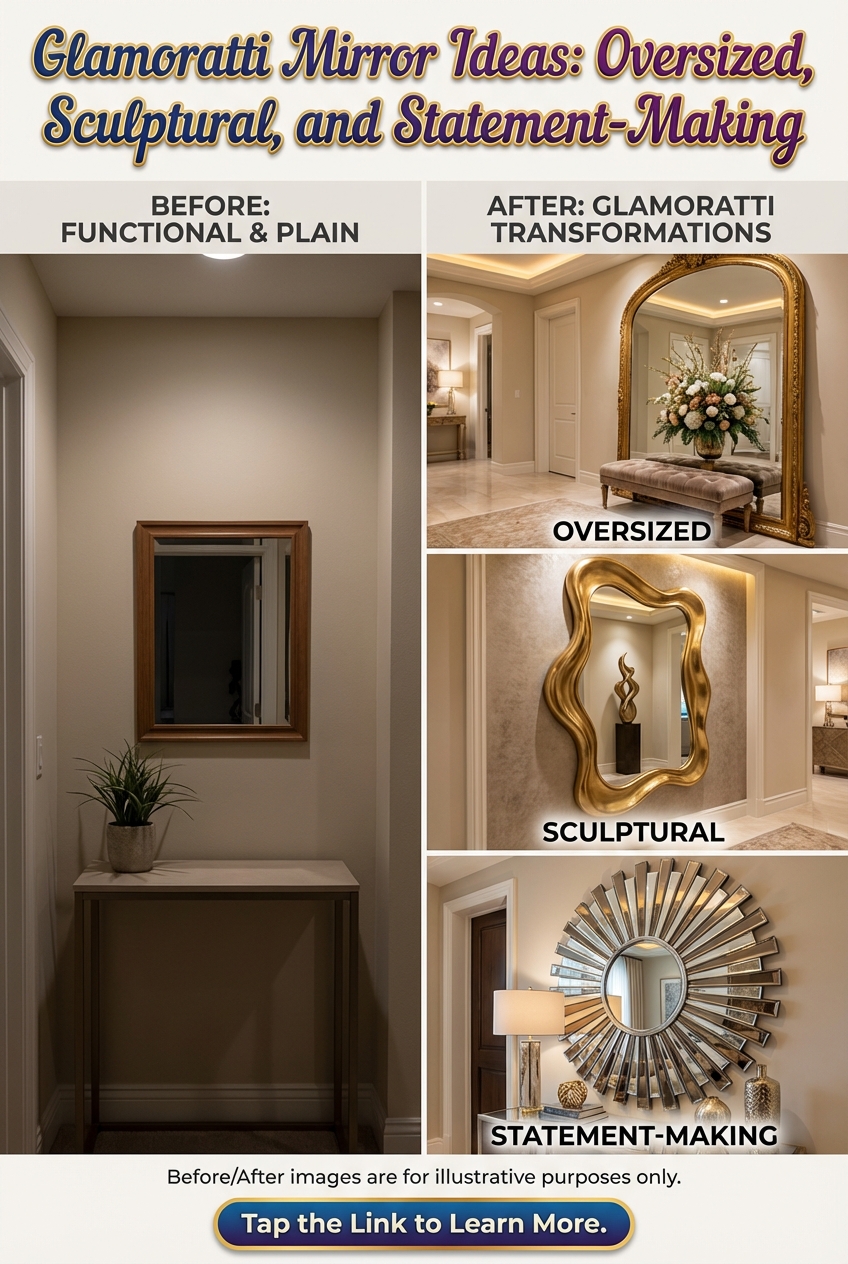
You don't need to buy an expensive designer piece to get a statement mirror. A big, plain mirror plus a frame you make yourself (a starburst, a painted border, a gilded edge) gives you the same drama for the price of some materials. Start with the largest mirror you can find and hang safely, then spend your effort on the frame.
Below are the DIY frame styles people look for most, how to size the result for a living room wall, and how to hang something heavy without worrying about it.
Which DIY mirror frame ideas make the biggest impact?
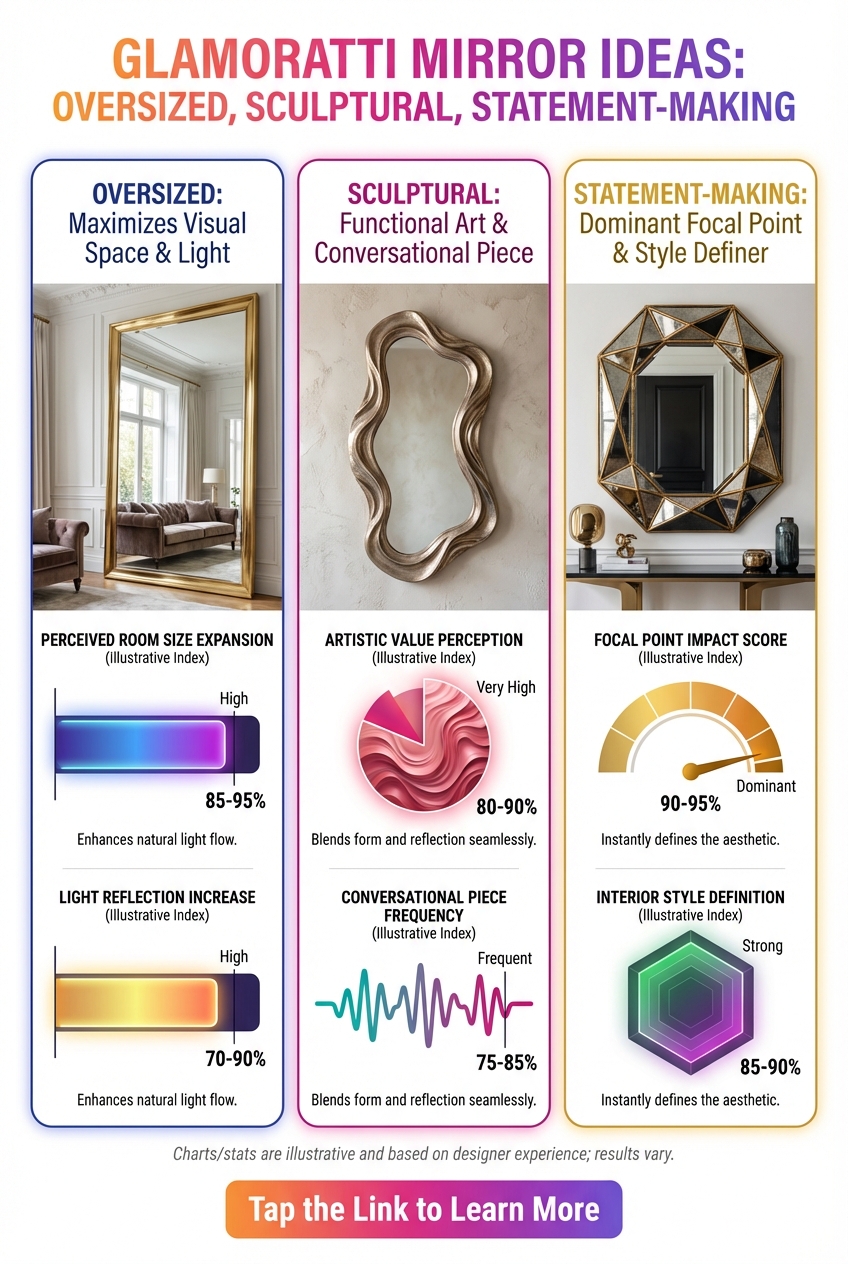
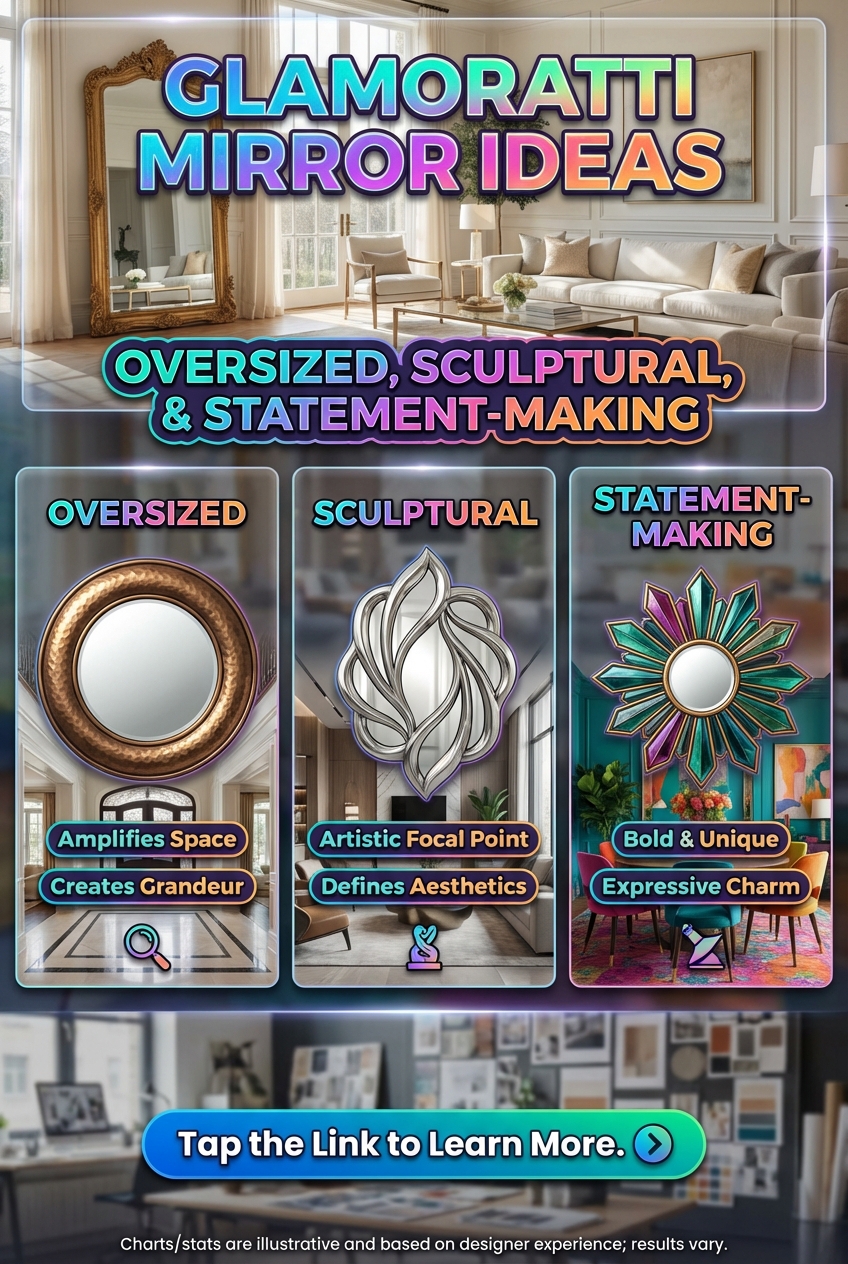
Pick a frame that contrasts with the room. If your furniture is boxy and straight-edged, a round or sunburst mirror softens it. If your seating and tables are curvy, a sharp geometric frame gives the eye something to hold on to. The same logic applies to a mirror's surroundings: an unframed rectangle on a plain wall rarely reads as a feature.
Starburst or sunburst frames
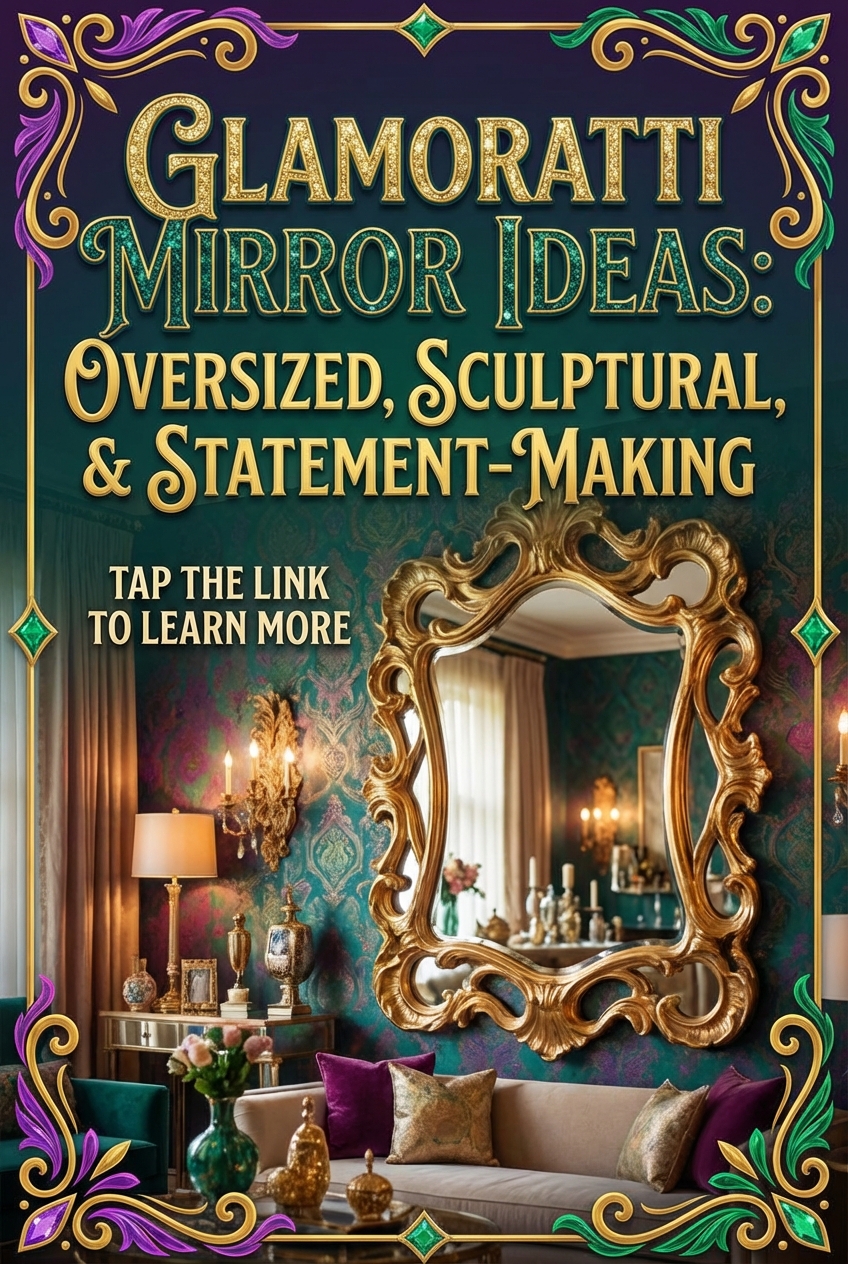
A DIY starburst mirror is the classic. Glue wooden dowels, bamboo skewers, paint stirrers or shims around a round mirror in a radiating pattern, longest rays at the compass points and shorter ones in between. Paint everything in one metallic or matte color before you glue, since it's much easier than painting between the rays. Use a strong construction adhesive and let it cure fully before you lift the piece.
Painted and two-toned frames
This is among the simplest DIY mirror frame ideas. Sand a thrift-store frame lightly, prime it, and paint it in a bold color, or split the frame in two tones along the inner and outer edge. Matte paint hides fingerprints and softens glare. Masking tape gives you clean lines.
Gilded and antique-style finishes
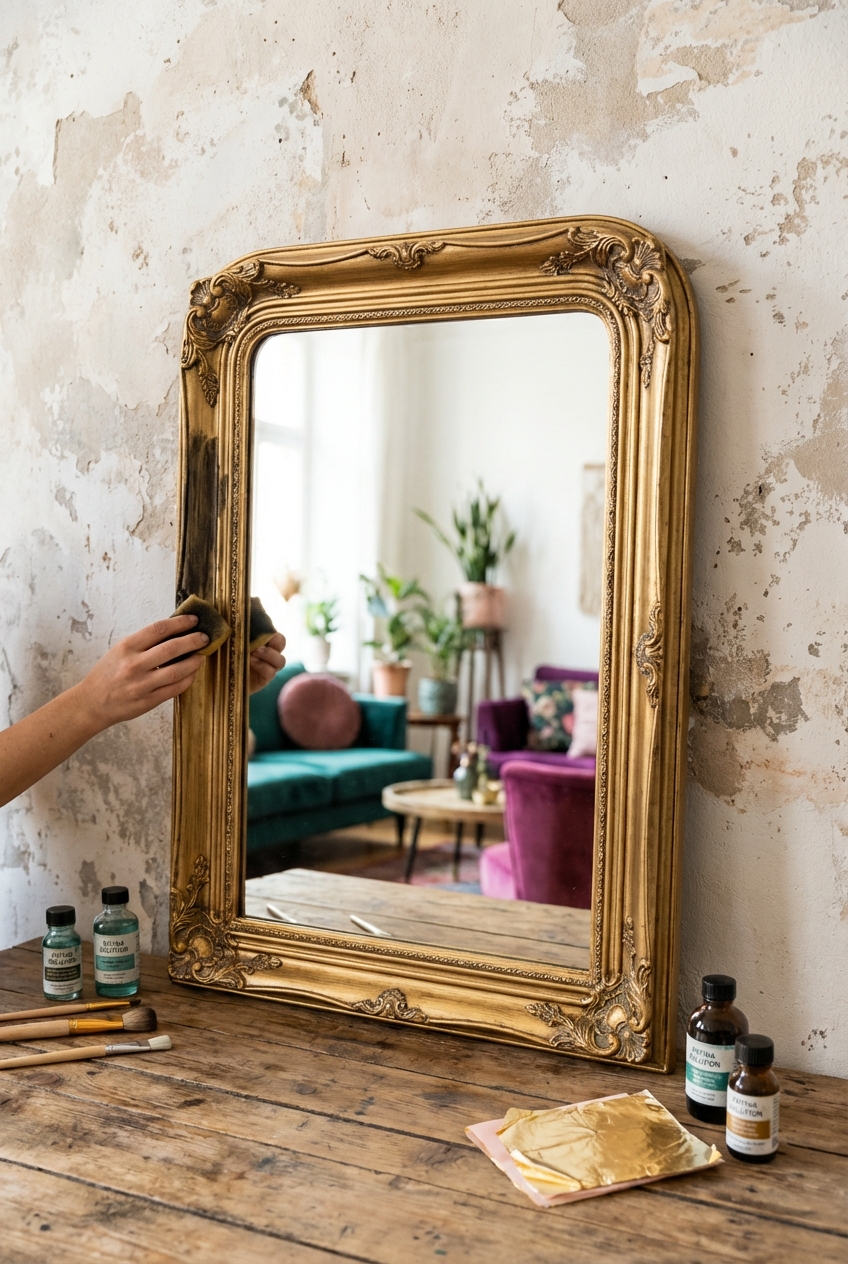
Gold or brass paint, a rub-on metallic wax, or gold leaf sheets will make a basic wooden frame look older and more expensive. Brush a dark undercoat first and let a little of it show through the high points. That small amount of unevenness is what makes a finish look aged rather than new.
Natural and rustic materials
Sticks, driftwood, cedar shims, rope and woven cane all work as frame material. Cut sticks to similar lengths, lay them flat around the mirror to test the shape, then glue them in layers. If your dog likes to chew sticks, keep a frame like this above their reach and check with your vet if you're unsure about what's safe for them to mouth.
Upcycled and embellished frames
Tile pieces, buttons, shells, bottle caps or mosaic glass can cover a frame cheaply. Choose one material and repeat it. Mixing five kinds of decoration on one frame tends to look busy rather than collected.
How big should a statement mirror be?
Go larger than your first instinct. Over a sofa or console, a mirror about two-thirds to three-quarters of the furniture's width looks balanced. Smaller than that and it seems to float away; much wider and the furniture looks squeezed beneath it.
For height, hang the center of the mirror near eye level, roughly 57-60 inches from the floor, and leave a few inches (about 4-8) between the bottom edge and the furniture below. Before you commit, cut a piece of cardboard or tape the outline on the wall with painter's tape and live with it for a day.
Centering matters here too. Cornell's Principles of Design describes symmetrical balance as having equal "weight" on equal sides of a centrally placed fulcrum. A mirror centered over a sofa or mantel is a simple way to use that idea, with a lamp or plant on each side if you want the full effect.
Where does a DIY statement mirror work best in a living room?
For a DIY statement mirror for a living room, three spots do the most:
- Above the sofa or console, centered, as described above.
- Opposite or beside a window, where it bounces daylight deeper into the room.
- Leaning in a corner, if it's a tall floor mirror, with a floor lamp beside it for evening glow.
Check what the mirror will reflect before you drill. Sit where you usually sit and look at the spot: you want a window, art or a pretty corner, not a TV glare or a cluttered shelf. If you need more ideas on placement, see 10 ways to make a room look bigger with mirrors, and for a multi-piece setup, our DIY statement mirror wall guide covers more diy mirror wall ideas.
How do you hang a heavy mirror safely?
A frame you build adds weight, so weigh the finished piece on a bathroom scale before you pick hardware. As an architect, I recommend a French cleat for anything heavy: two interlocking rails, one on the wall and one on the back of the mirror, that spread the load and keep the piece level. Screw the wall rail into studs where you can, or use anchors rated well above the weight for drywall.
Skip picture wire on large mirrors. For a leaning floor mirror, anchor the top to the wall with a furniture strap or L-bracket so a pet or child can't tip it. If you're unsure about your wall type or the load, ask a licensed contractor.
How do you keep a DIY mirror project cheap?
- Buy a plain mirror or an old framed one secondhand, then restyle the frame.
- Use craft materials with a low cost per piece: dowels, shims, paint stirrers, rope.
- Spend on the mirror glass and the hanging hardware, not on decoration.
- Choose glass that doesn't flex in the frame. Thin mirrors can warp the reflection.
If your mirror has no frame at all, these ideas for decorating a mirror without a frame pair well with the simple techniques above.
Common mistakes to avoid
- Hanging it too high, so it reflects the ceiling instead of the room.
- Putting mirrors on every wall. One major mirror per room usually feels calmer.
- Gluing decorations on before the frame is painted and sealed.
- Choosing a frame finish that clashes with the room's other metals, such as door handles and lamp bases.
Clean the glass with a soft microfiber cloth and spray the cleaner on the cloth, not the mirror, so liquid doesn't creep behind the frame edge and damage your handiwork.
Frequently asked questions
What are some creative DIY mirror design ideas?
Starburst frames from dowels or shims, painted two-tone borders, gold-leaf or metallic wax finishes, and frames made from sticks, rope or mosaic pieces are all doable at home. Choose one material and repeat it for the cleanest look.
How to make your own mirror stand?
For a leaning floor mirror, build or buy a simple wood frame and anchor the top to a wall stud with a strap or L-bracket. For a freestanding one, use a wide, weighted base so it can't tip.
What are some trending DIY mirror ideas?
Round and arched mirrors, sunburst frames, and aged gold finishes come up most often. Your room's existing shapes should guide the choice more than any trend.
Can a big mirror work in a small room?
Yes. A large mirror makes a small room feel deeper, as long as the frame isn't so chunky that it crowds the wall.
Filed under
ArticlesMeet the author
Written by an architect.
Julio Arco is a passionate architect with years of experience in architecture, interior design, urban design, and housing. He studied at prestigious universities across North America and Europe.

- Name
- Julio Arco
- Job
- Architect and online interior designer
- Studied
- Architecture, ITESM · Urban Design and Housing, McGill
- Partner
- Thor, Australian Shepherd
- Thor’s title
- Head of quality control