Art Deco Lighting: Glamorous Wall Sconce Ideas
Art Deco lighting explained through wall sconces: symmetry, polished finishes, mounting heights, bulb choices and where to place them at home.

By Julio Arco
Architect and online interior designer
In this post
- What makes art deco wall sconces look glamorous?
- How do you place sconces symmetrically?
- Art deco lighting ideas for living rooms and entryways
- Bedside sconces
- Choosing an art deco light fixture for the bathroom
- Which bulbs suit glamorous art deco lighting for home?
- Can renters get the look without wiring?
- Finishes, mixing metals and upkeep
- Frequently asked questions
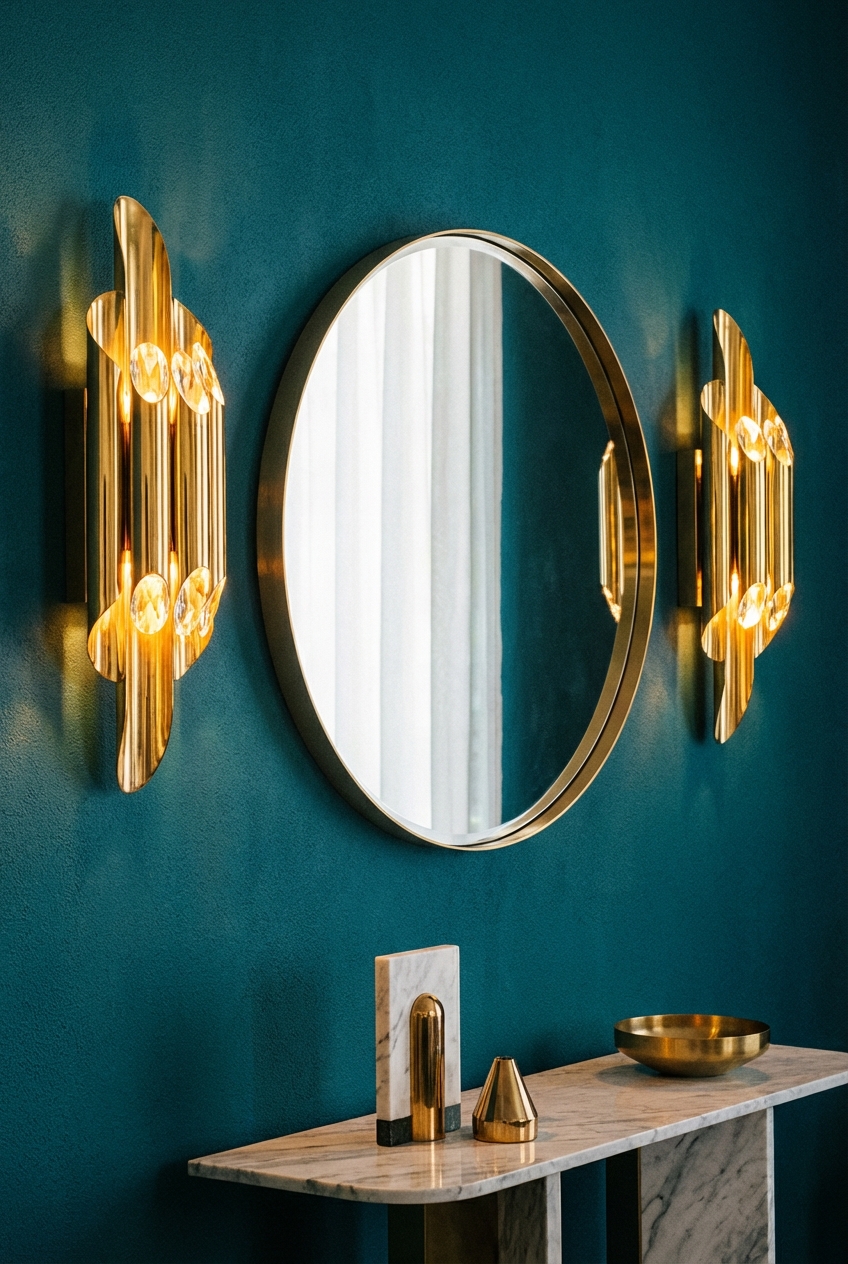
Art Deco lighting is built on symmetry, geometry and shine: polished metal, faceted glass or crystal, and fixtures that come in matched pairs. Wall sconces are the easiest way to get that look at home, because you can add a pair to a mirror, fireplace or bed without replacing a ceiling fixture.
Below you'll find what makes a sconce read as glamorous, how to hang a pair so it looks deliberate, and which bulbs keep the metal looking warm instead of clinical.
What makes art deco wall sconces look glamorous?
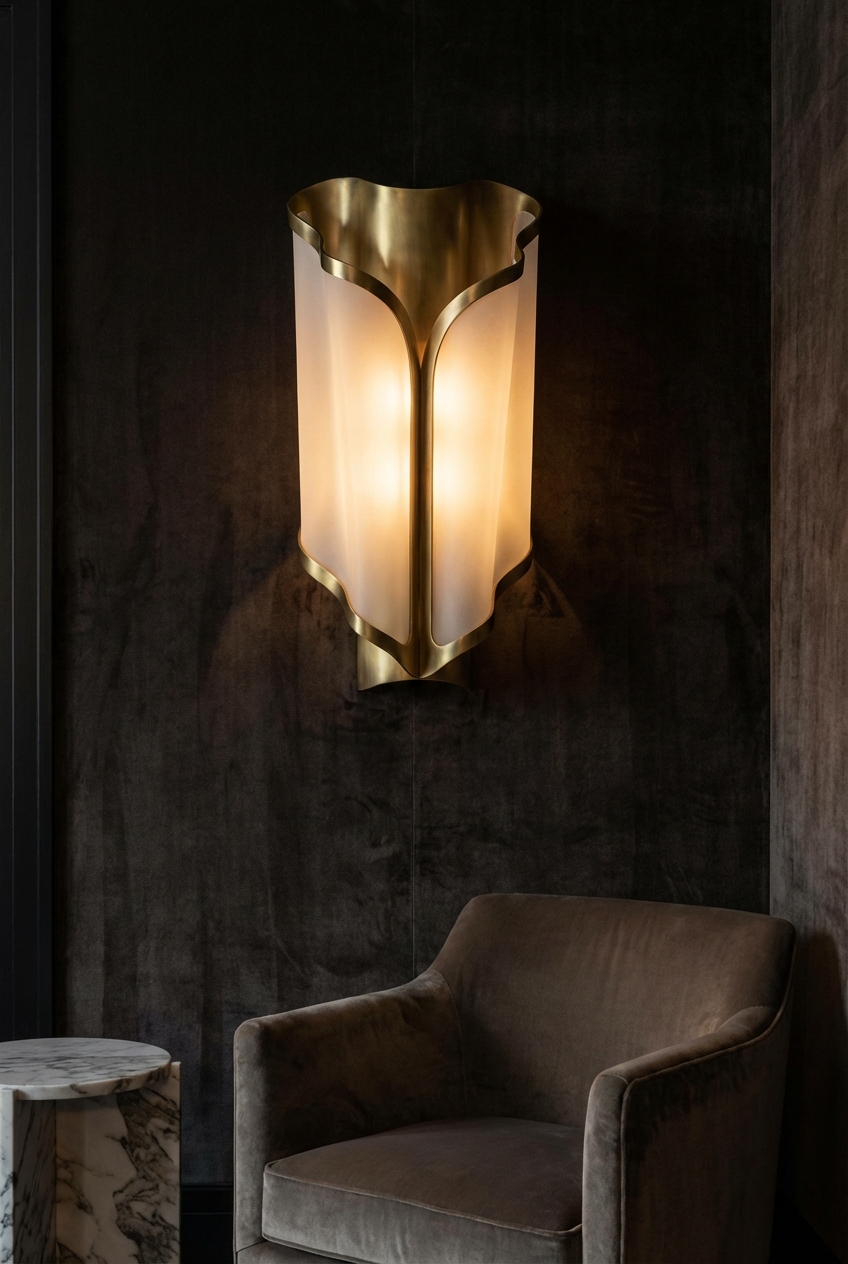
Three things do most of the work: a reflective finish, a refractive material and a bold scale. Polished brass, polished nickel and chrome bounce light around. Lucite rods, faceted crystal and seeded glass scatter it. Matte black or oil-rubbed bronze tends to feel more industrial than glamorous, so I'd save those for another room.
Scale matters as much as finish. A sconce that's too small looks timid on the wall. Cut a piece of cardboard to the fixture's dimensions, tape it up and look at it for a day. If it looks dinky, size up.
One principle helps with styling: let the fixture be the decoration. If you hang large crystal sconces, keep the wall around them quiet. Two statement pieces competing on the same wall cancel each other out.
How do you place sconces symmetrically?
Symmetry is the structure behind Art Deco, and the eye reads it as calm and orderly. Equal spacing on both sides of a mirror or artwork is what makes the pair look intentional. If you worry a matched pair will feel stiff, this piece on using symmetry without stiffness has useful ideas, and The Art of Symmetry in Interior Design covers the principle in more depth.
How high should you hang them?
- A common range is about 60-66 inches from the finished floor to the center of the junction box.
- With ceilings of 9 feet or more, you can go up to about 66-72 inches to keep proportion.
- Keep the bare bulb from sitting right at eye level, or you'll get glare, especially with shades open at the bottom.
How far apart should they be?
Beside a mirror or painting, leave about 4-6 inches between the fixture and the frame. On an empty wall, about 8-10 feet apart spreads light evenly without a runway effect.
Art deco lighting ideas for living rooms and entryways
In living areas, sconces give ambient light. They set a mood and don't need to do reading or cooking work, so you can take bigger risks with size and material.
Flanking a fireplace
Check the projection first. The sconce shouldn't stick out so far that it collides with mantel decor. Against stone or heavy masonry, pick a fixture with some visual weight, because a delicate wire design disappears there.
Above a console table
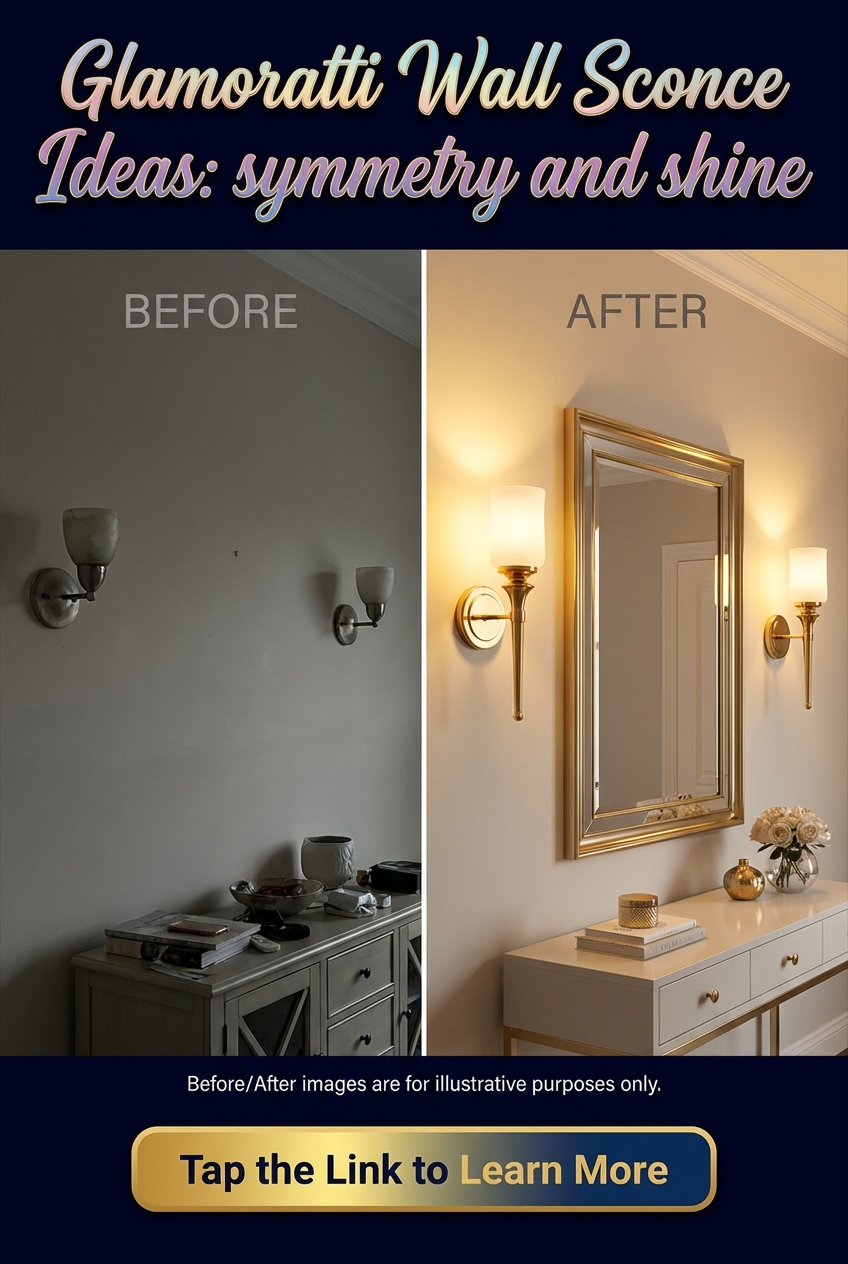
In an entry, a console with a mirror and a sconce on each side is a classic setup. Center each sconce roughly on the mirror's vertical middle, and keep the pair within the width of the console so the arrangement doesn't look top-heavy.
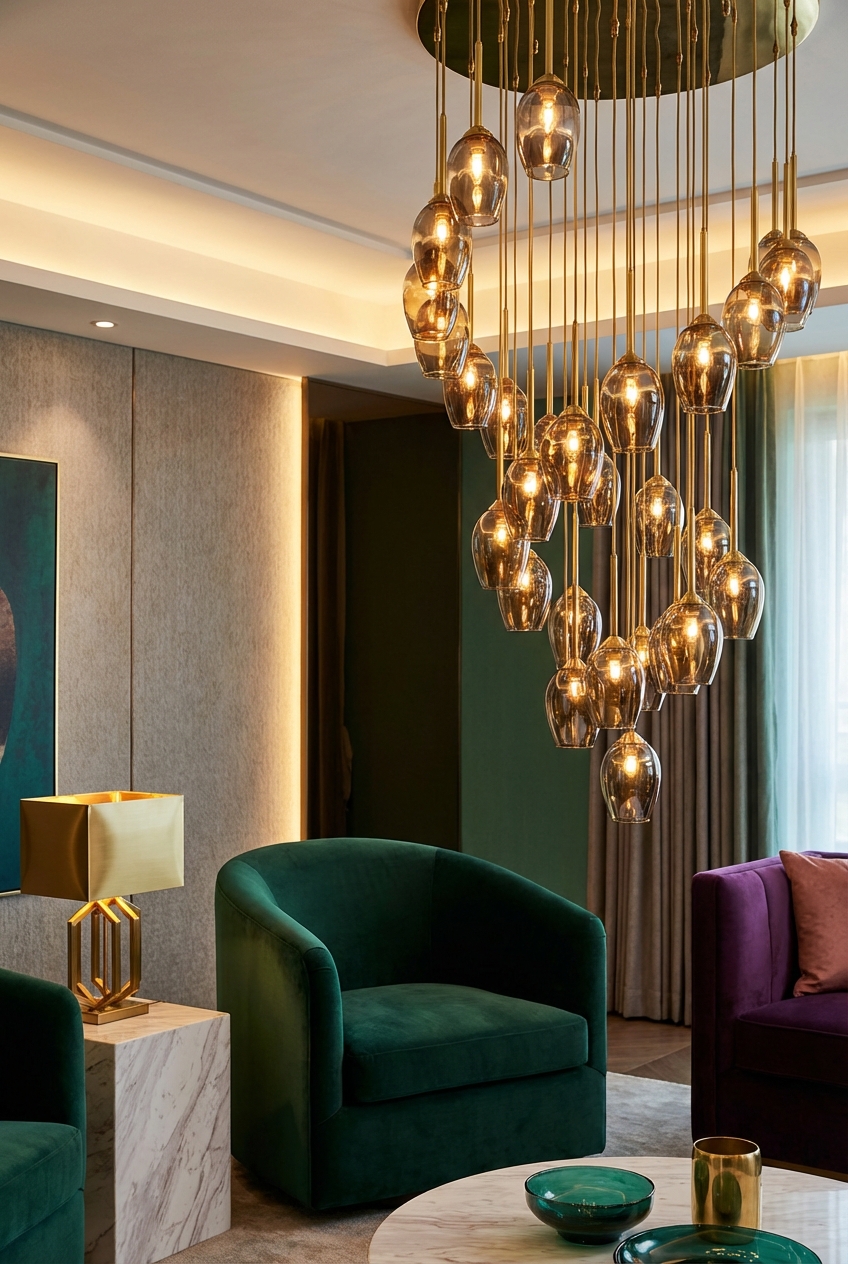
If the room also has a ceiling fixture, such as an Art Deco chandelier, the sconces don't need to match it. Coordinate the finish and the mood instead. A vintage crystal chandelier with clean-lined polished brass sconces looks collected, not catalog-matched.
Bedside sconces
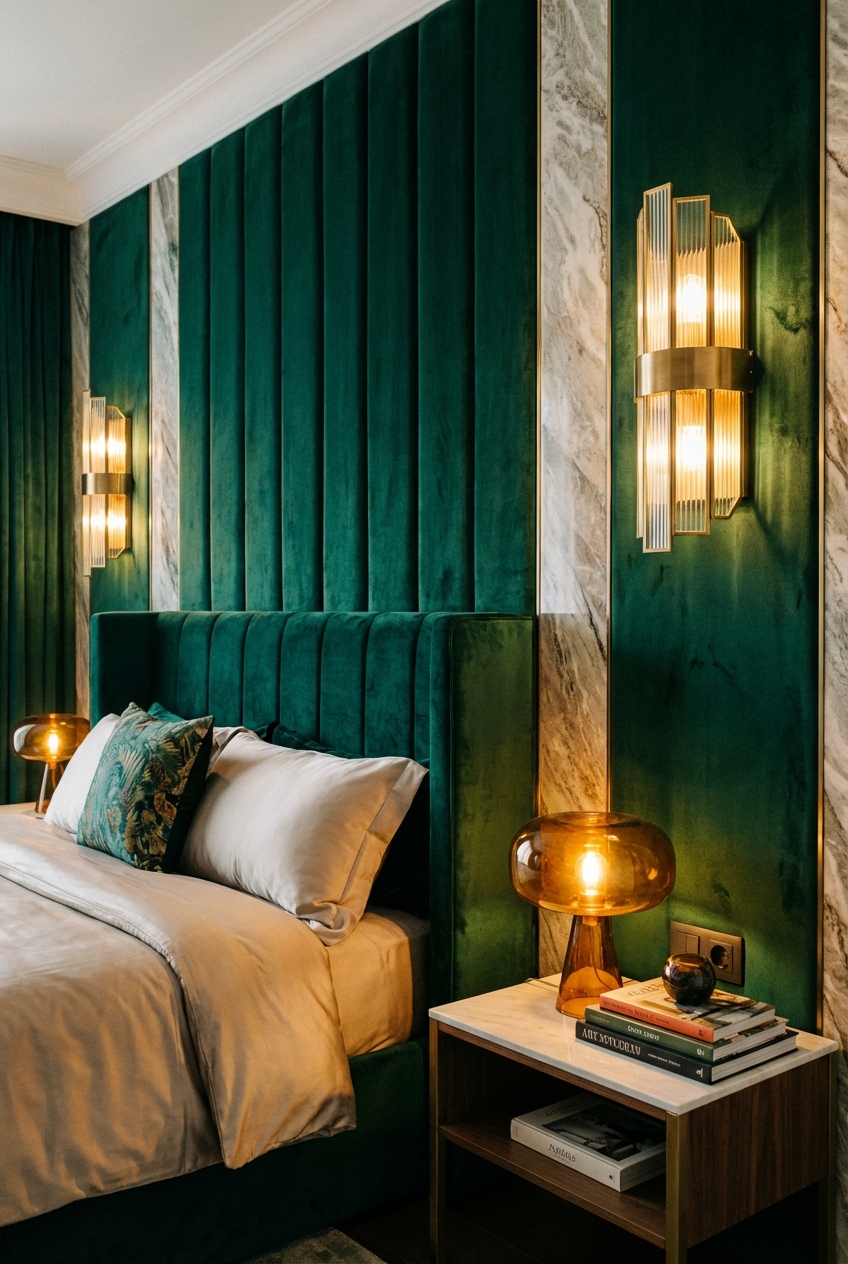
Wall sconces free up the nightstand, which helps in a small bedroom. As a starting point, mount them so the bottom of the shade sits about 20 inches above the mattress, centered over each nightstand or a few inches outward from the headboard edge.
Think about the switch. You want to reach it from bed, and if you're hardwiring, ask a licensed electrician about a bedside switch. For anything involving new wiring, a professional is the right call.
Choosing an art deco light fixture for the bathroom
Downlights throw shadows under the eyes. Sconces on both sides of the mirror light the face from the sides, which is more flattering and more useful for grooming.
- Put the light source at roughly eye level, about 65-70 inches from the floor.
- Space the pair about 28-36 inches apart so the light overlaps in the middle.
- Choose frosted glass or fabric shades. Opaque metal shades that only throw light up and down leave harsh shadows.
- Check local code for damp or wet ratings near a shower or tub. Ask your electrician if you're unsure.
Which bulbs suit glamorous art deco lighting for home?
The fixture supplies the shine, but the bulb decides whether it looks warm or clinical. The Department of Energy's page on color and spectrum explains that correlated color temperature (CCT) is one of the primary metrics for the visual appearance of light.
In practice, 2700K is warm and flatters brass and gold. 3000K is a little crisper and suits white marble or chrome. I'd avoid 4000K and above in these rooms, since it reads blue and sterile. Look for a color rendering index (CRI) of 90 or higher so fabrics and skin tones look natural.
LEDs make sense for sconces you'll leave on often. The Department of Energy says good-quality white LED products are expected to last 30,000 to 50,000 hours or even longer. Pair them with a dimmer rated for LEDs, so you can turn the sparkle up for guests and down for evenings.
If you use exposed candelabra bulbs, keep them low output and dimmed. Bare bulbs at full brightness are harsh.
Can renters get the look without wiring?
Yes. Plug-in sconces mount on the wall and run a decorative cord to an outlet, and you can paint a cord cover to match the wall. Another option is to mount a hardwired-style sconce without connecting it, then place a battery puck light inside the shade. It's too dim for reading but works for mood.
Finishes, mixing metals and upkeep
Look at the other metals in the room (door hardware, curtain rods, furniture legs). They don't need to match, but they should get along. Polished nickel pairs well with brass. A dominant metal with a smaller accent metal usually looks more settled than an even split.
Unlacquered brass darkens over time. If you want it to stay bright, you'll need to polish it regularly; lacquered or gold-plated finishes hold their shine with less effort. Dust crystals weekly with a dry microfiber cloth, and use a crystal cleaner once a year, with a towel below to catch drips. For other metal pieces in the room, cleaning copper candle holders follows similar logic.
If you're pairing sconces with furniture, these Glamoratti furniture tips cover silhouettes that suit the same look.
Frequently asked questions
What is Art Deco lighting?
It's a style of lighting defined by symmetry, geometric shapes and shiny materials such as polished metal, glass and crystal. Chandeliers, pendants and wall sconces in matched pairs are typical.
Can I mix metal finishes with my sconces?
Yes. Choose one dominant metal for most of the room and a second as an accent. Sconces are a good place to introduce that accent.
What if my electrical box isn't centered on the wall?
A sconce with a wide backplate or a horizontal arm can shift the visual center while covering the off-center box. Moving the box means an electrician and a drywall patch.
Are shades necessary for glam sconces?
No, many designs use exposed candelabra bulbs. If you go without shades, use low-output bulbs and a dimmer to avoid glare.
Filed under
ArticlesMeet the author
Written by an architect.
Julio Arco is a passionate architect with years of experience in architecture, interior design, urban design, and housing. He studied at prestigious universities across North America and Europe.

- Name
- Julio Arco
- Job
- Architect and online interior designer
- Studied
- Architecture, ITESM · Urban Design and Housing, McGill
- Partner
- Thor, Australian Shepherd
- Thor’s title
- Head of quality control