Sunken Tub Decor: Layout, Color and Materials
Sunken tub decor that feels calm: how to choose layout, colors, lighting and materials, plus safety tips for a bathroom with a lowered tub.

By Julio Arco
Architect and online interior designer
In this post
- How do you decorate around a sunken tub?
- Which colors suit a sunken tub area?
- What lighting works best around a sunken tub?
- How do you plan the layout and flow?
- Which materials and textures feel good and last?
- How do you bring in nature?
- What should you check before building one?
- Frequently asked questions
The easiest way to decorate around a sunken tub is to let the tub be the quiet center and keep everything else simple: one or two materials, soft layered light, and a clear path in and out. A lowered tub already has presence, so the decor only needs to support it.
If your bathroom doesn't feel like a spa yet, that's fine. Most of the work is editing, not adding.
How do you decorate around a sunken tub?
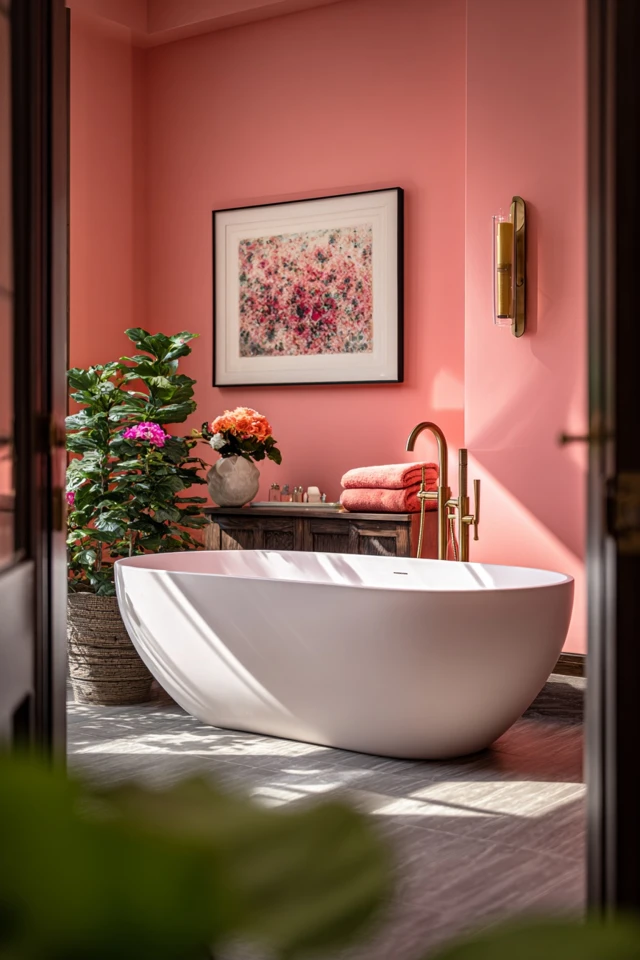
Start with a short palette. Pick one stone or tile, one wood tone and one metal finish, then repeat each of them in a couple of places. Repetition makes a room read as calm because the eye doesn't have to sort out many different things.
Balance matters too. You can flank the tub with matching elements, such as a centered mirror and two similar light fixtures. Or you can go asymmetric, with a long shelf on one side and a plant on the other. Both work as long as the visual weight roughly evens out.
Which colors suit a sunken tub area?
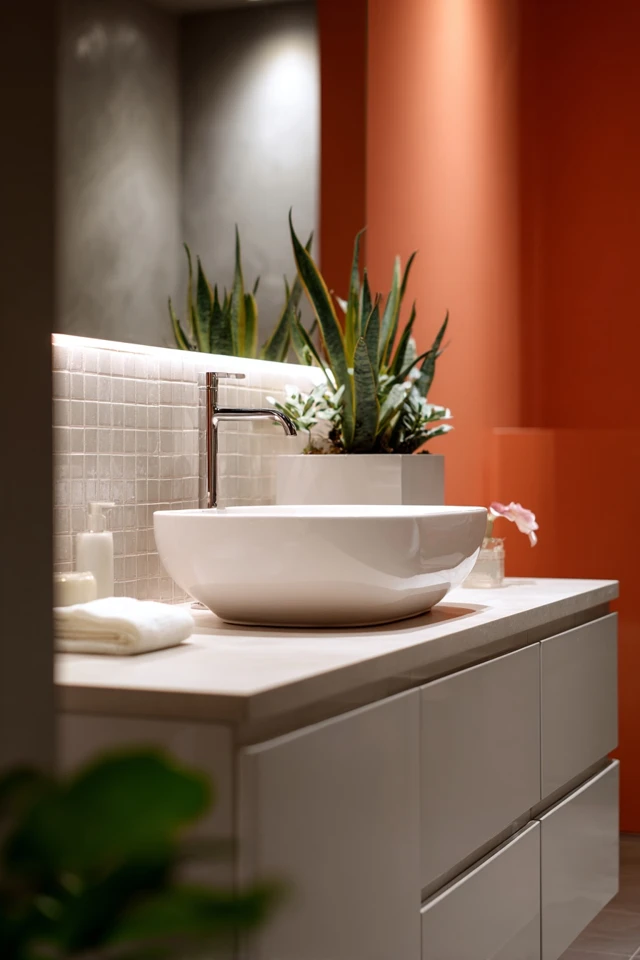
Low-saturation colors are the safest base. Soft whites, warm ivories, dove gray and sandy beige all keep reflections gentle and let natural materials do the talking. A stronger color, like sage or deep charcoal, works well on one surface, such as the wall behind the tub.
Here are three palettes that hold together:
- Calm neutrals: ivory and gray walls, a sage accent, brushed brass hardware, matte finishes.
- Warm and spa-like: creamy whites, taupe wall tile, natural stone around the tub, walnut cabinetry.
- Modern contrast: cool stone walls, charcoal details, a light wood tone to soften the edges.
Tape paint or tile samples near the tub and look at them morning and night. Bathroom light changes a color more than you'd expect.
What lighting works best around a sunken tub?
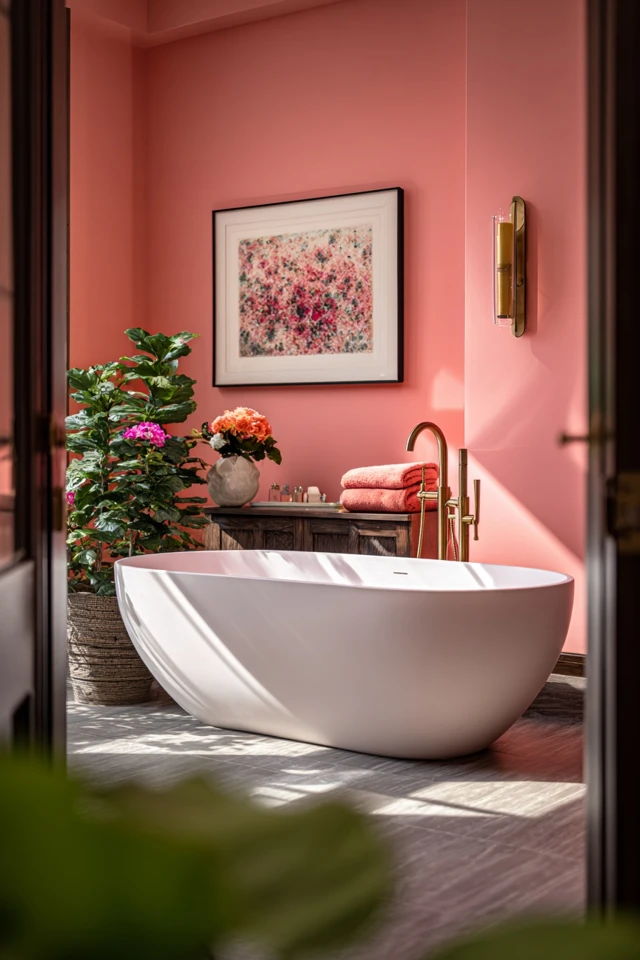
Layer it. Use ambient light overhead, task light at the mirror, and a low glow along the tub edge or under a shelf. Put the overhead lights on a dimmer so the room can shift from bright in the morning to dim in the evening.
For the warm, flattering glow near the water, bulbs of about 2700K-3200K are the usual choice. Around 3500K-4000K you get a cleaner, more modern look that still feels warm next to wood and linen. Whatever you pick, use the same color temperature throughout the room so the lights don't clash. Any wiring near water should be done by a licensed electrician. If you want more ideas on layering light, see our post on bedroom lighting, since the same logic applies.
How do you plan the layout and flow?
Treat the tub as the anchor and sketch the room around it. Mark the vanity, towel storage and a place to sit or set a book, then check that the path from the door to the tub stays clear. A sunken tub means a step down, so the approach should be unobstructed and well lit.
- In a larger bathroom, a low screen or partial wall can separate the tub from the vanity while keeping sightlines open.
- In a small bathroom, floating vanities and glass keep the floor visible, which makes the room feel bigger.
- Built-in niches in the tub surround hold bottles without adding clutter to the edge.
As an architect, I'd keep the edge of the tub free of decor. It's where people step, and a candle tray or plant pot there is a trip risk once the floor is wet.
Which materials and textures feel good and last?
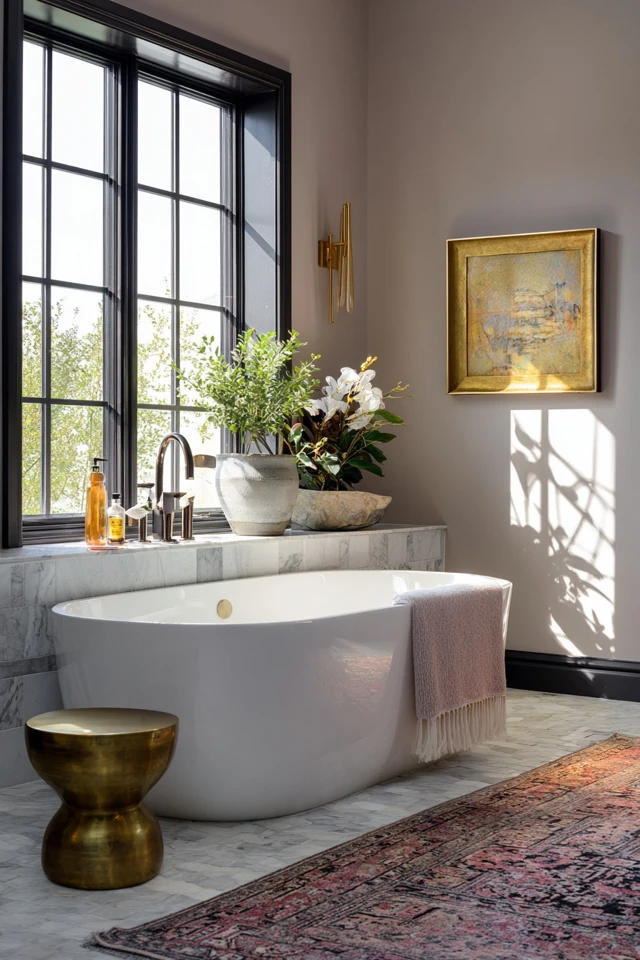
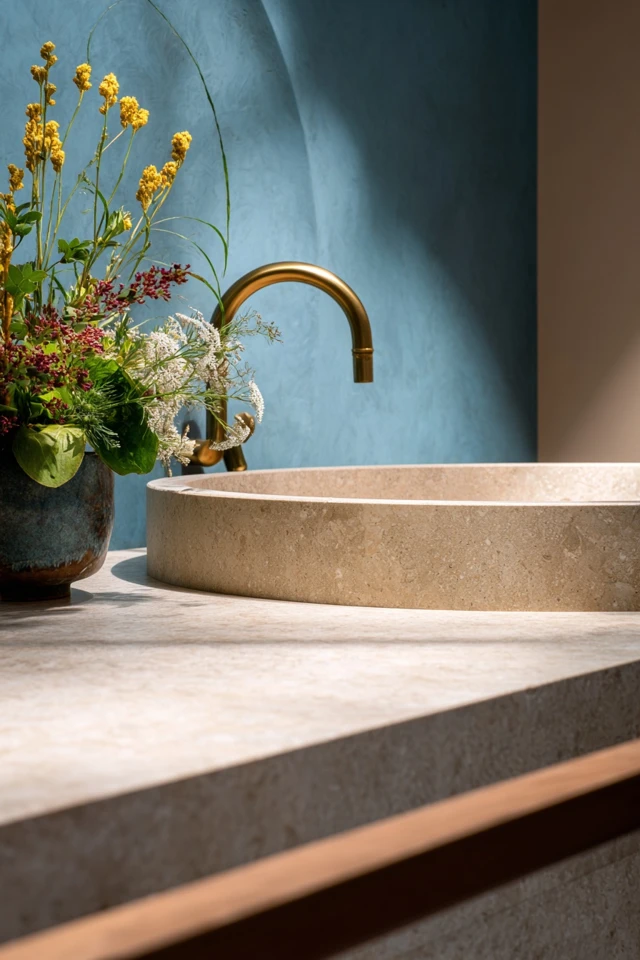
Mix a polished surface with a matte one. Glossy tile bounces light and makes sharp highlights, while honed marble, limestone or textured tile absorbs it and softens the room. Put the polished finish where you want sparkle, like a feature wall, and keep floors matte.
Floors are the one place to be strict. Wet polished stone is slippery, so choose a honed or textured finish near the tub and add a washable mat at the step. Walnut or oak cabinetry, linen towels and a wool or cotton bath mat add warmth without fuss. If a dog shares your bathroom, a non-slip mat helps paws too, and your vet can tell you whether your pet needs more help with steps.
How do you bring in nature?
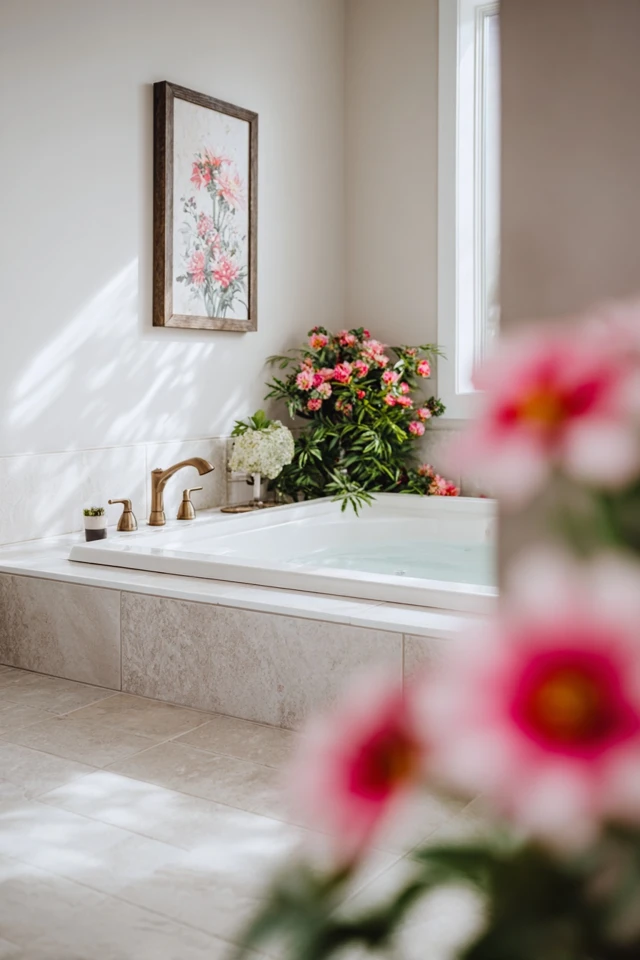
You don't need a jungle. One plant on a sill, natural stone or wood, and sheer window coverings that soften daylight are enough to give the room a connection to the outdoors. Check that any plant you choose is safe for pets before you bring it in.
If your bathroom is compact, the same principles apply at a smaller scale. Our apartment bathroom ideas cover small-space storage and finishes in more detail.
What should you check before building one?
A sunken tub changes the floor structure, drainage and waterproofing. I recommend talking to a licensed contractor or structural professional before you commit, especially in an existing home where the floor framing is fixed. Ask about waterproofing, access to plumbing, and how the tub will be drained and cleaned.
Frequently asked questions
Are sunken tubs safe for kids and pets?
The step down and wet surfaces are the main risks, so use non-slip flooring, good lighting and a clear approach. Never leave small children alone with water, and ask your vet about steps and wet floors for older or less steady pets.
Can a small bathroom have a sunken tub?
Sometimes, but it depends on floor structure and plumbing, not just space. A licensed contractor can tell you if your floor can accommodate it.
What flooring is best around a sunken tub?
Honed or textured stone and slip-resistant tile are better choices than polished surfaces. Add a washable mat at the step for extra grip.
Filed under
ArticlesMeet the author
Written by an architect.
Julio Arco is a passionate architect with years of experience in architecture, interior design, urban design, and housing. He studied at prestigious universities across North America and Europe.

- Name
- Julio Arco
- Job
- Architect and online interior designer
- Studied
- Architecture, ITESM · Urban Design and Housing, McGill
- Partner
- Thor, Australian Shepherd
- Thor’s title
- Head of quality control