Purple Bathroom Color Palette: Shades and Pairings
Pick purple bathroom shades, pair them with blues and neutrals, and get the lighting, finish and layout right in a small or large bath.

By Julio Arco
Architect and online interior designer
In this post
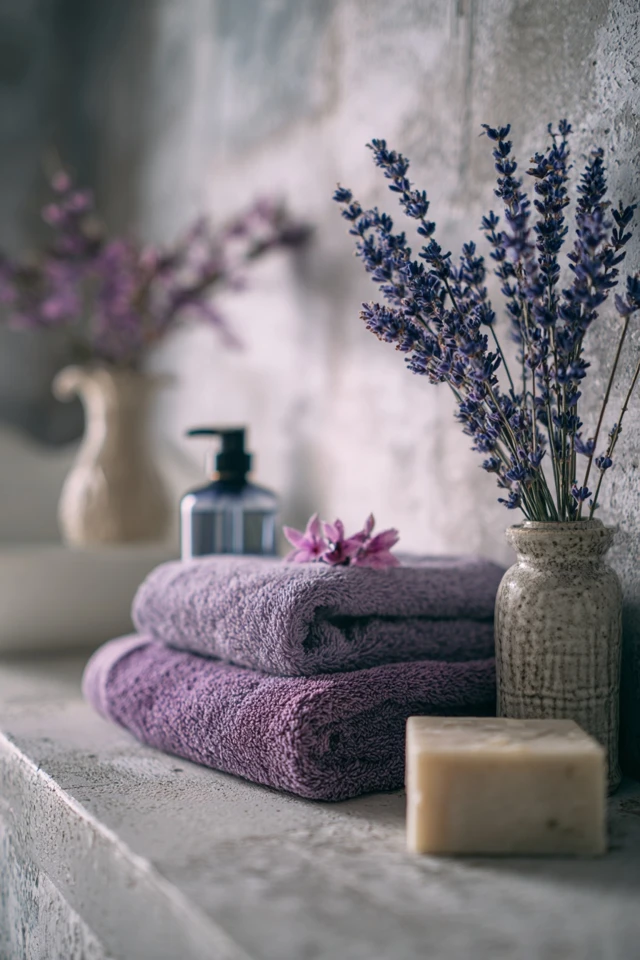
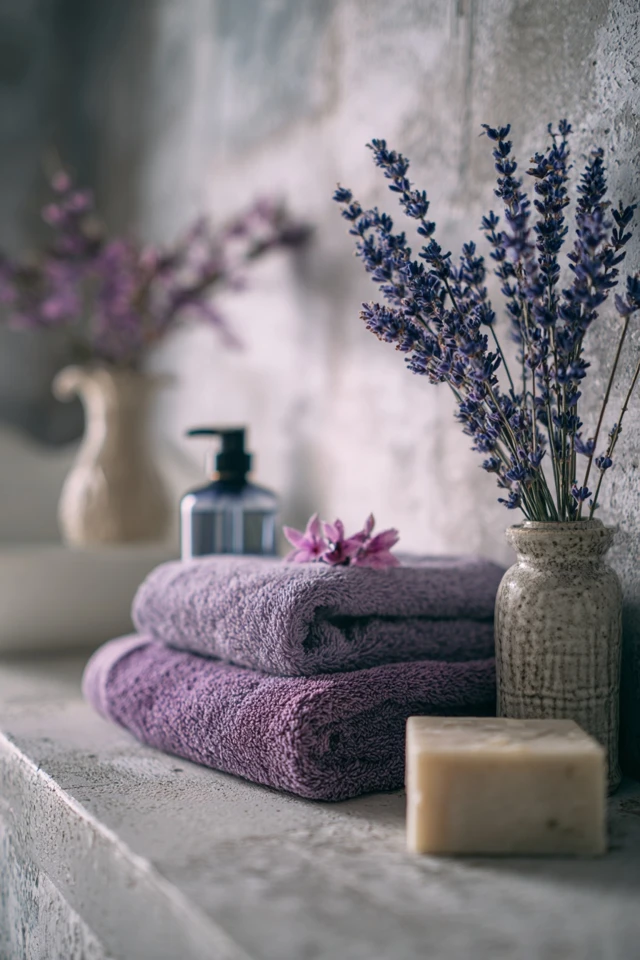
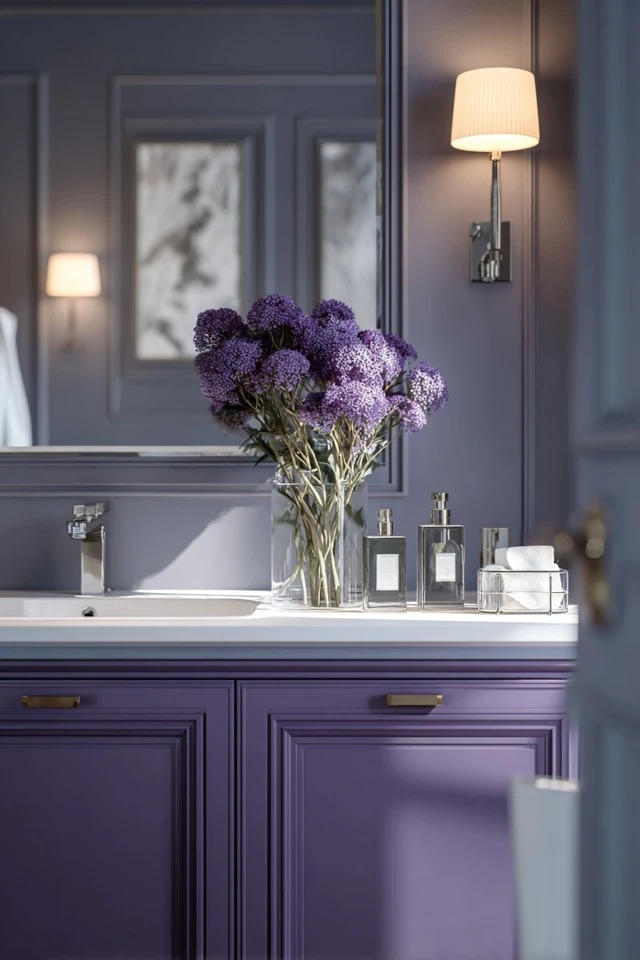
A good purple bathroom color palette has one dominant soft shade, one deeper accent and a few neutrals to rest the eye. Think lavender or greige-tinged lilac on the walls, plum on one feature piece, and warm white or wood to keep it from feeling heavy.
Purple has a reputation for being bold, but it's very common to want just a hint of it, and a bathroom is a forgiving place to try. The room is small, you can repaint in an afternoon, and most of the surfaces are tile and porcelain that stay neutral anyway.
Which purple should you choose?
Purple is a family, not one color. Cool purples (iris, periwinkle) lean toward blue and tend to look calm and a little modern. Warm purples (eggplant, aubergine, mauve) lean toward red and feel more intimate. The undertone matters more than the name on the paint chip.
Saturation changes the mood just as much. A muted lilac reads soft and spa-like. A saturated plum reads dramatic. As an architect, I recommend a low-saturation base on the walls or cabinets and a stronger purple in small doses: a vanity front, a tile band, towels.
Which colors go with purple in a bathroom?
Warm white, soft gray and creamy beige are the safest partners. They let the purple stand out without competing. Wood, whether a vanity or an open shelf, adds warmth that stops a cool lilac from feeling chilly.
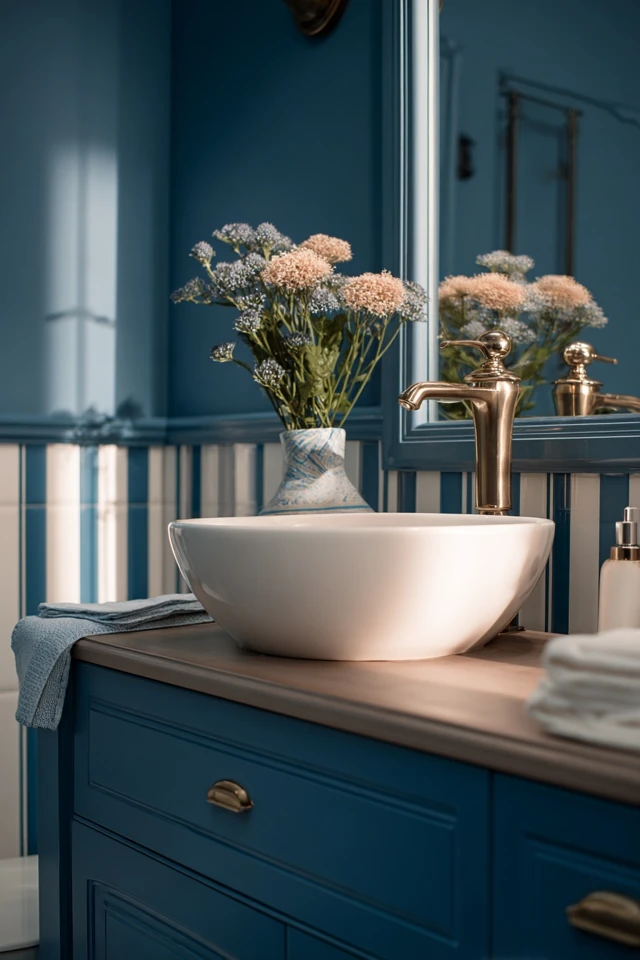
Blue sits next to purple on the color wheel, so the two blend easily. A light blue bathroom color palette with a touch of periwinkle looks airy, while a navy blue bathroom color palette next to deep plum gets rich and moody. If you're also wondering what color compliments blue in a bathroom, the same neutrals work: warm white, gray, brass and wood. For a fuller look at that pairing, see our post on a blue and white bathroom.
Blue also has some research behind it. RMCAD's color theory overview says that blue and green are favored for calming spaces, and a purple that leans blue borrows some of that effect. In a study from Deakin University's Isabella S Bower, "The findings show that blue coloring of the built environment increases autonomic range and is associated with modulations of brain activity linked to emotional processing." That's about blue, not purple, so treat it as a reason to try a blue-leaning shade, not a promise.
How do you use purple in a small bathroom?
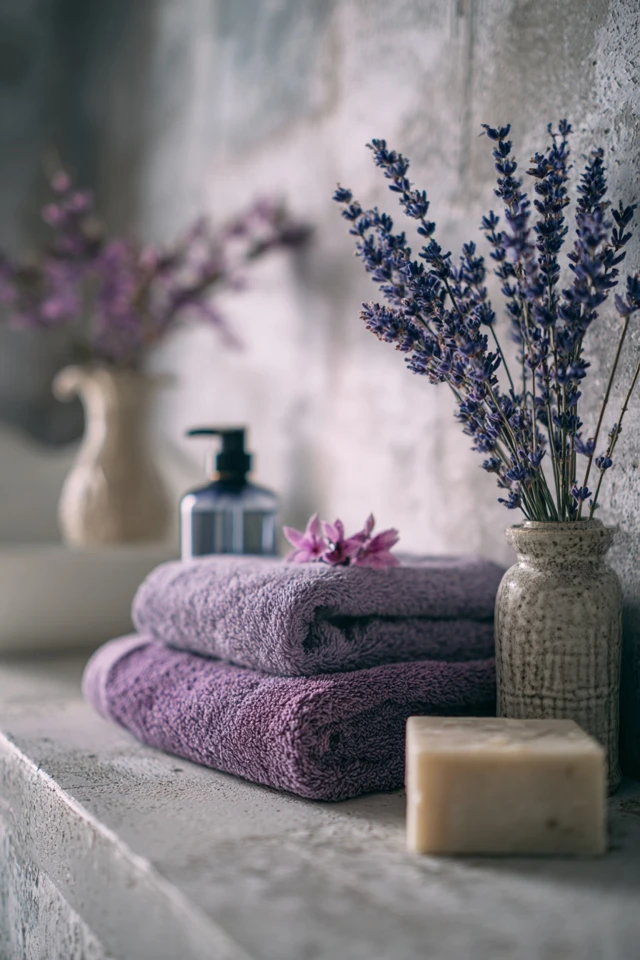
Keep the purple to one spot. A plum vanity, a lilac accent wall or a framed mirror gives the room a focus, while white or warm neutral walls elsewhere keep it open. The same logic applies to small blue bathroom ideas: one color moment, then quiet surroundings.
- Choose one hardware finish (brushed brass, matte black or chrome) and repeat it on the faucet, lighting and towel bars.
- Use clear or frosted glass on the shower so light travels through the room.
- Add a floating vanity or a recessed niche to cut visual clutter.
In a larger bathroom you can spread the color: lavender walls, plum grout or a deeper tile, and a matching rug. Just leave plenty of plain surface between the purple elements.
How does lighting change purple?
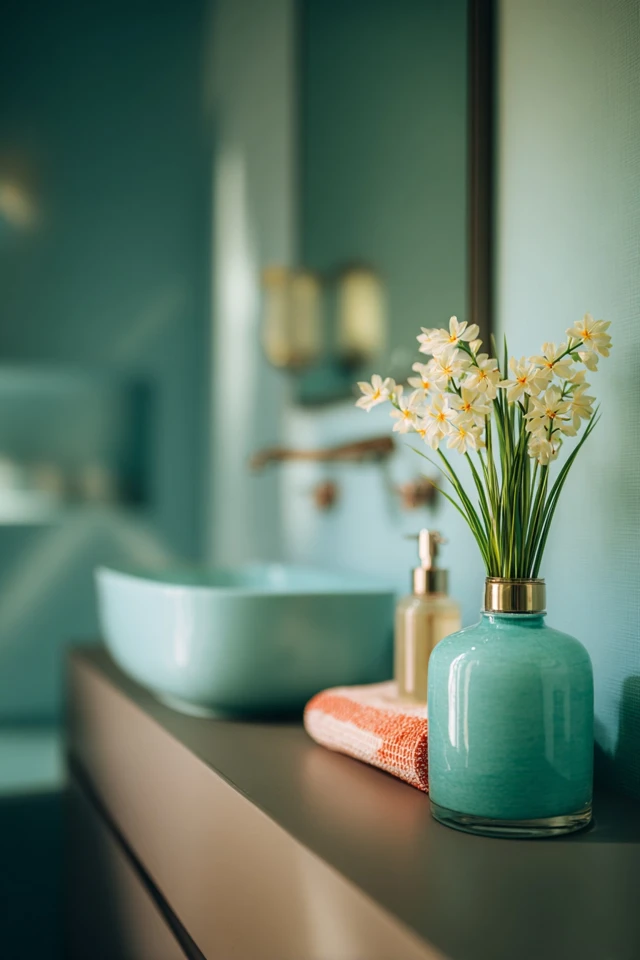
Purple shifts more than most colors. Cool daylight pulls it toward blue, and warm bulbs push it toward red. Warm light around 2700-3000K makes plum look velvety in the evening, while cooler task light makes lilac look fresh in the morning.
Paint a large swatch on the wall and look at it in morning, midday and night before you buy gallons. If the room has little daylight, pick a lighter shade so it doesn't turn flat and dull. Bulbs with a high CRI keep skin tones and tile colors honest at the mirror.
What materials and finishes work best?
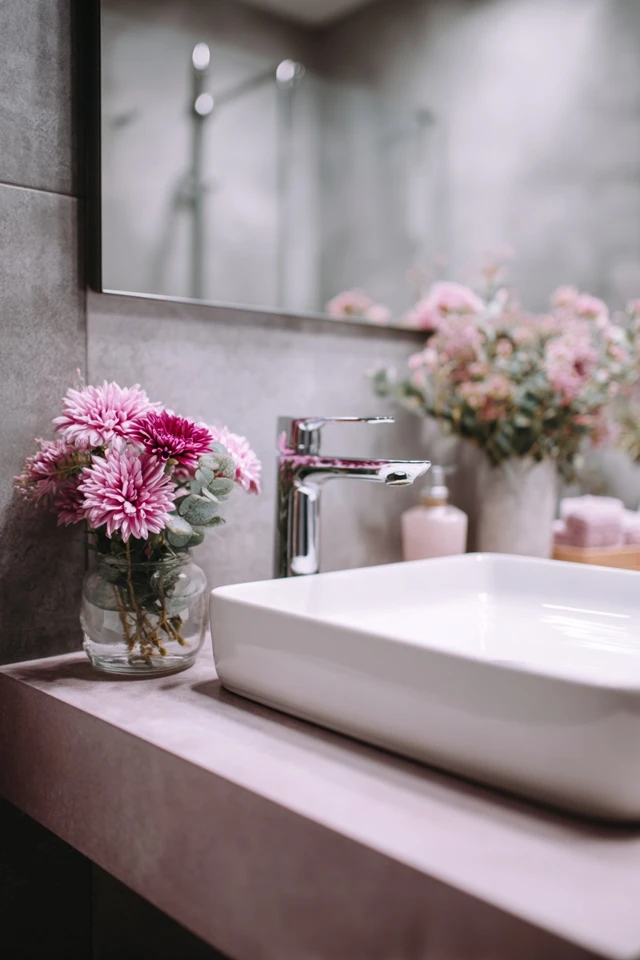
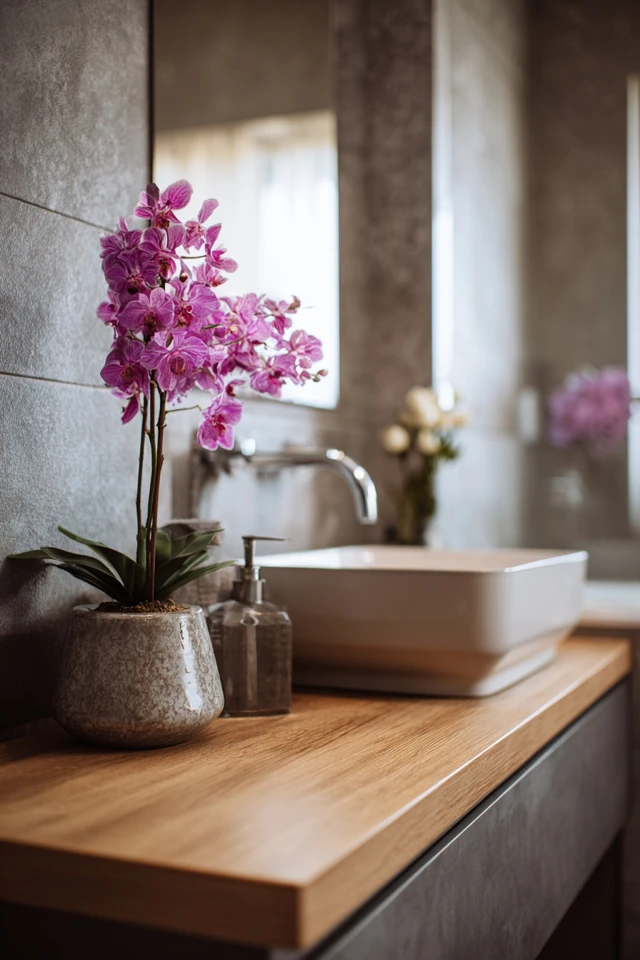
Mix textures so the color doesn't look flat. Matte purple tile beside a glossy white countertop, or a satin cabinet next to honed stone, gives depth. Glossy surfaces bounce light and show the color brighter. Matte ones absorb it and look softer.
Natural materials ground the palette. Marble mosaic, a quartz top with soft veining, wood shelves and a woven basket all calm a strong purple. If you like the idea of a wooden top, our live edge bathroom countertop post covers the care it needs. Soapstone is another warm option, but Iowa State University Extension notes it needs to be oiled regularly.
For textiles, use towels and a bath mat in two or three related shades. If you have a dog who drips on the mat after a bath, pick washable cotton and avoid very dark velvet that shows every hair. Want a punchier contrast than blue? Try the combinations in our pink and black bathroom guide.
Frequently asked questions
What color compliments blue in a bathroom?
Warm white, soft gray, sand and wood tones all pair easily with blue. Brass or brushed gold hardware adds warmth, and a touch of lavender works well with cool blues.
What is a good blue color for a bathroom?
Light, slightly gray blues feel airy and suit small rooms. Navy works well on a vanity or one wall when the rest of the room is light.
Is purple a good color for a small bathroom?
Yes, if you use it in one place, such as a vanity, mirror frame or tile band. Keep the other surfaces light so the room still feels open.
Filed under
ArticlesMeet the author
Written by an architect.
Julio Arco is a passionate architect with years of experience in architecture, interior design, urban design, and housing. He studied at prestigious universities across North America and Europe.

- Name
- Julio Arco
- Job
- Architect and online interior designer
- Studied
- Architecture, ITESM · Urban Design and Housing, McGill
- Partner
- Thor, Australian Shepherd
- Thor’s title
- Head of quality control