How to Match Rugs in an Open Floor Plan – 10 Great Ideas
From short-pile rugs to fluffy shaggy ones, we’ve got plenty of great ideas for ways you to Match Rugs in an Open Floor Plan

By Julio Arco
Architect and online interior designer
In this post
- 1Use several rugs in different sizes and shapes to divide the…
- 2Try stacking two of the same shape and size area rugs in…
- 3Create unexpected harmony by opting for an eclectic mix of…
- 4Using the same color palette to tie all the rugs together in…
- 5Shop a large bold-colored rug to define the main living space…
- 6Break up the room with two large contrasting rugs on either…
- 7Use a hallway runner rug or two narrow rugs to connect and…
- 8Look for rugs with an abstract pattern to create visual…
- 9Contrast light and dark colors within a single rug to help…
- 10Finally, why not add a rug for seating areas to make them cozy…
- Match Rugs in an Open Floor Plan – FAQ
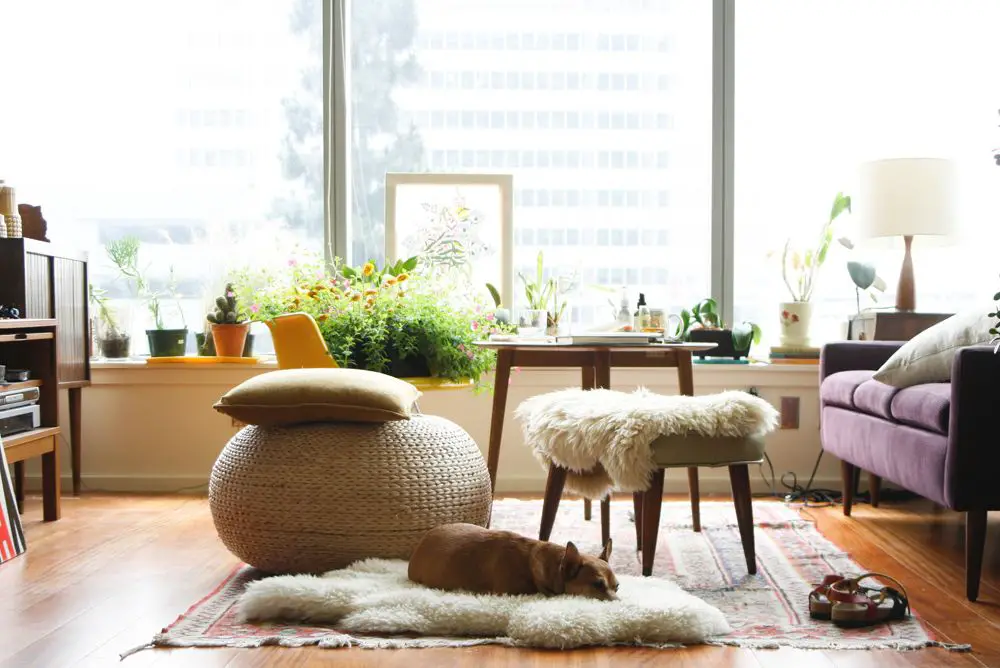
Welcome to the open floor plan revolution! Open floor plans are beloved for their airy feel and how they can help you maximize space – but at the same time, there’s a lot to consider when it comes to putting your own special touch on them.
Rugs can be a great way to define areas or give some personality or color while still lending themselves easily if you want to change out colors or patterns in the future. To make your open-floor dreams come true, let me show you 10 creative ways how to match rugs in an open-floor plan!
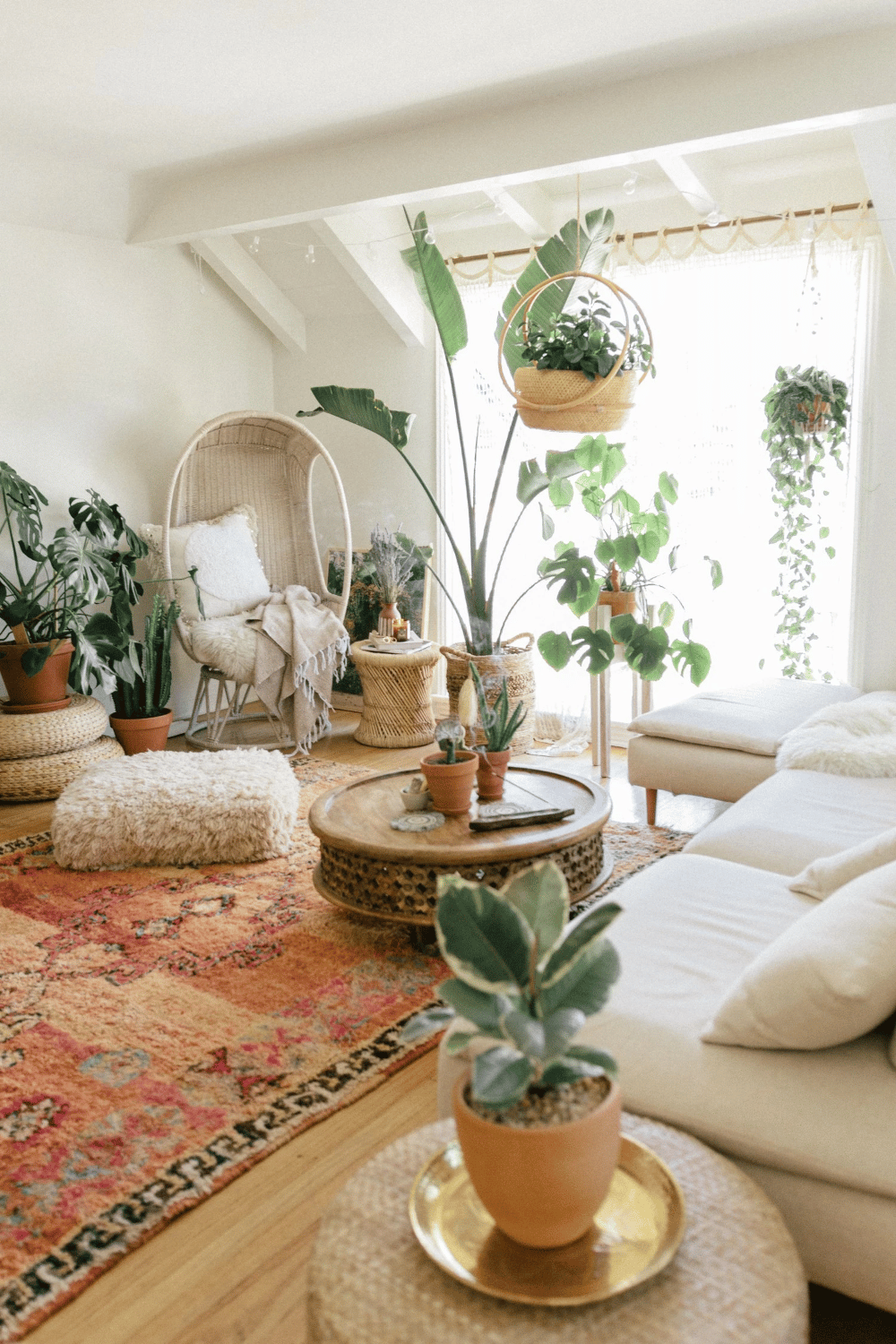
1.- Use several rugs in different sizes and shapes to divide the space nicely without sacrificing style and comfort.
For any open floor plan, rugs can be a great way to give the area definition without feeling cramped. Investing in several rugs of different sizes and shapes will make your space aesthetically pleasing and truly inviting.
Use larger ones to define areas such as the living room, dining room, and bedrooms, then add smaller accent pieces in hallways or entryways for heightened texture contrast and visual relief.
With this tasteful solution in place, you can enjoy all the benefits of an open floor plan with the cozy, homey feeling that comes only from the perfect rug.
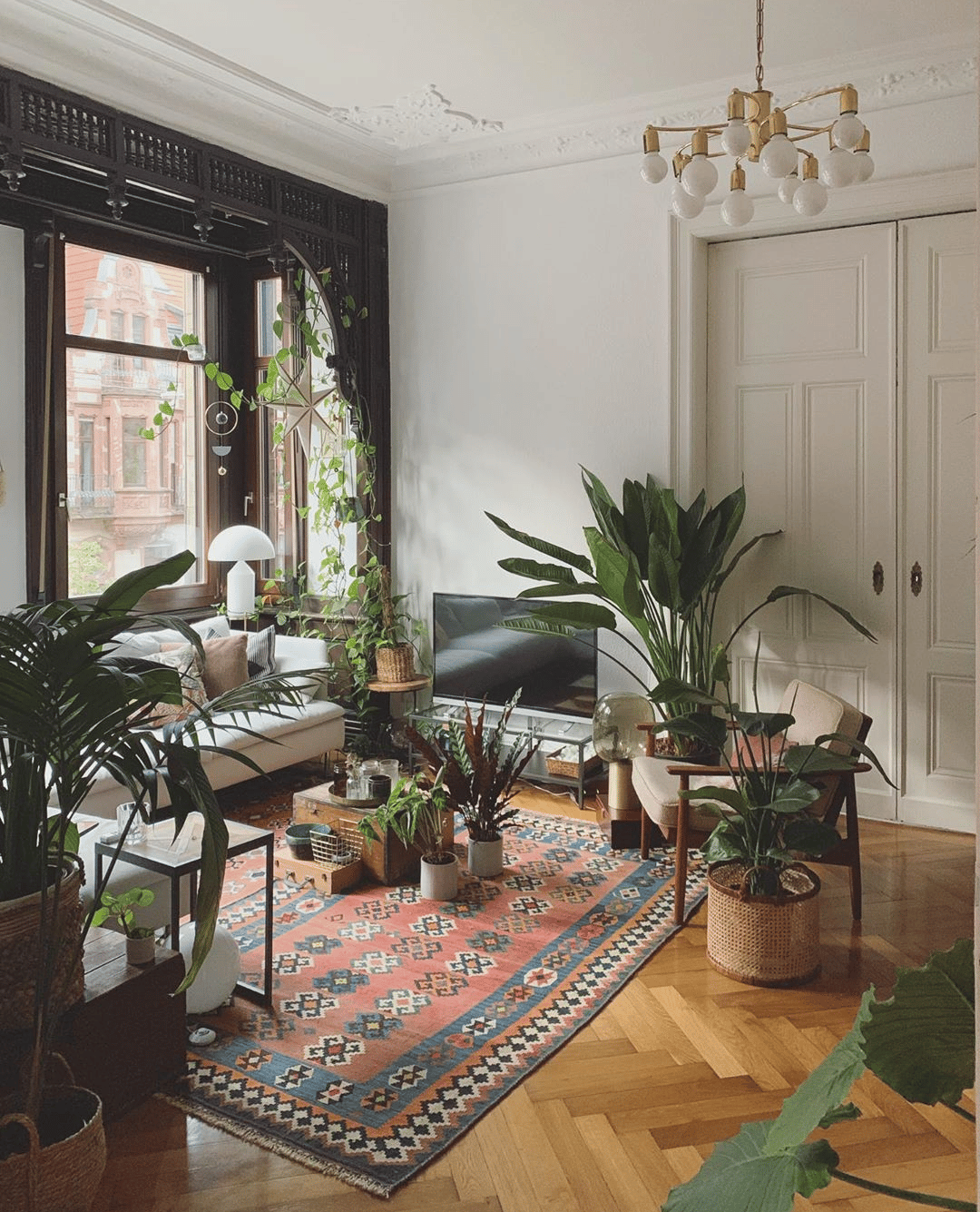
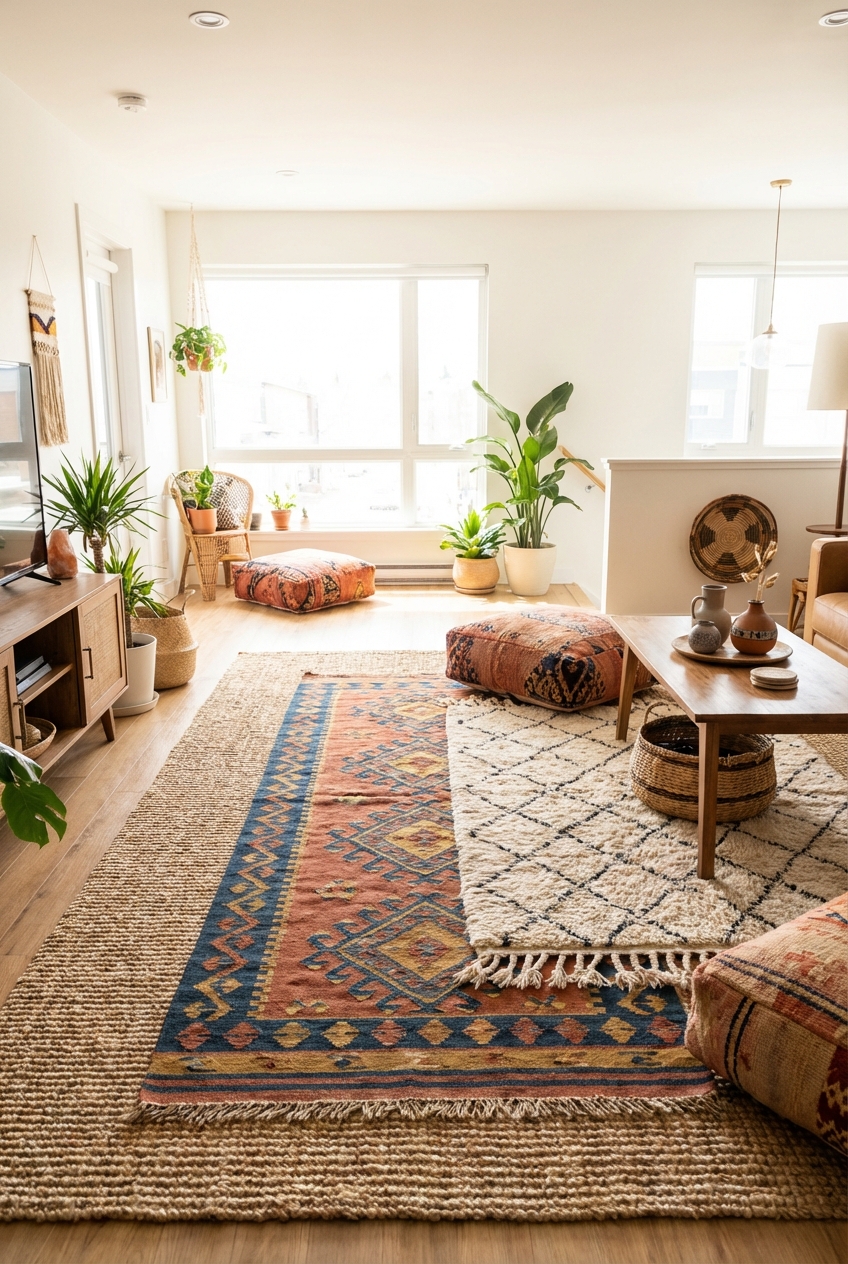
2.- Try stacking two of the same shape and size area rugs in different colors or patterns to create a sense of depth and visibly separate one area from another without having too drastic a contrast.
If you have an open floor plan that you would like to clearly define and make visually interesting, try experimenting with matching rugs! Stacking two of the same shape and size area rugs in different colors or patterns is a great way to create dimension and instantly separate your living space.
Going this route allows you to create a contrast in atmosphere between one section of your home and the next while retaining a cohesive design aesthetic. Try mixing bright colors together or muted shades and tones that complement each other- the possibilities are endless!
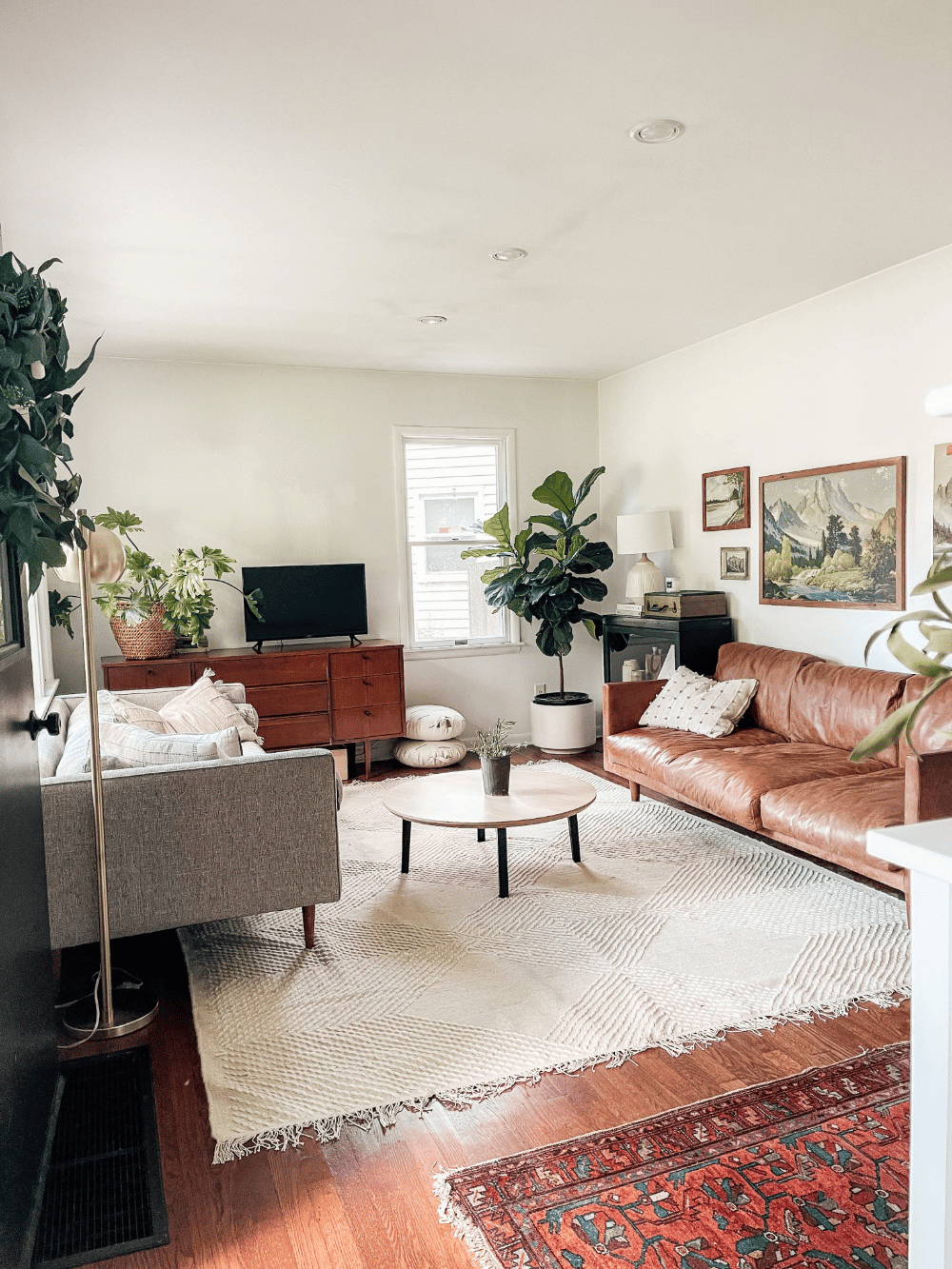
3.- Create unexpected harmony by opting for an eclectic mix of designs and textures, ensuring nothing looks too matchy-matchy.
Creating a cohesive look when your living room space is connected with an open floor plan doesn’t have to be difficult. Create unexpected harmony by opting for an eclectic mix of designs and textures, ensuring nothing looks too matchy-matchy.
Regarding rug matching, don’t be afraid to experiment with layering or contrast designs to keep the flow enjoyable and visually successful. Think of your rugs as design elements that are used to define living spaces and celebrate the larger room.
With bold splashes of color and prints, you can bring life into any open floor plan setting while still creating that complete feeling throughout the entire space.
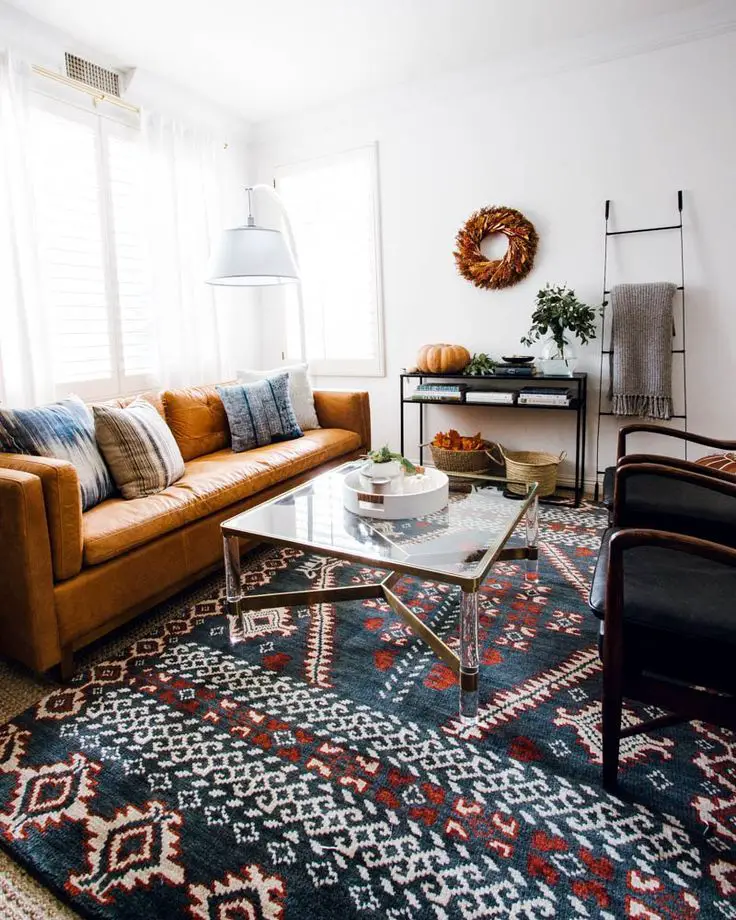
4.- Using the same color palette to tie all the rugs together in an open floor plan, even if they are in different shapes and sizes.
Whether you have a home with an open floor plan or just want to add some dynamic decor, matching rugs is a fantastic way to develop the aesthetics of your space. Using the same color palette to tie all the rugs together in an open floor plan, even if they are in different shapes and sizes, will help create unity while also making each one-of-a-kind feel like it was designed especially for you.
The creative possibilities are endless – experiment with contrasting materials, sizes, and shapes to achieve stunning results! Try adding visual interest and layers to separate different areas within the space, such as living rooms or study nooks.
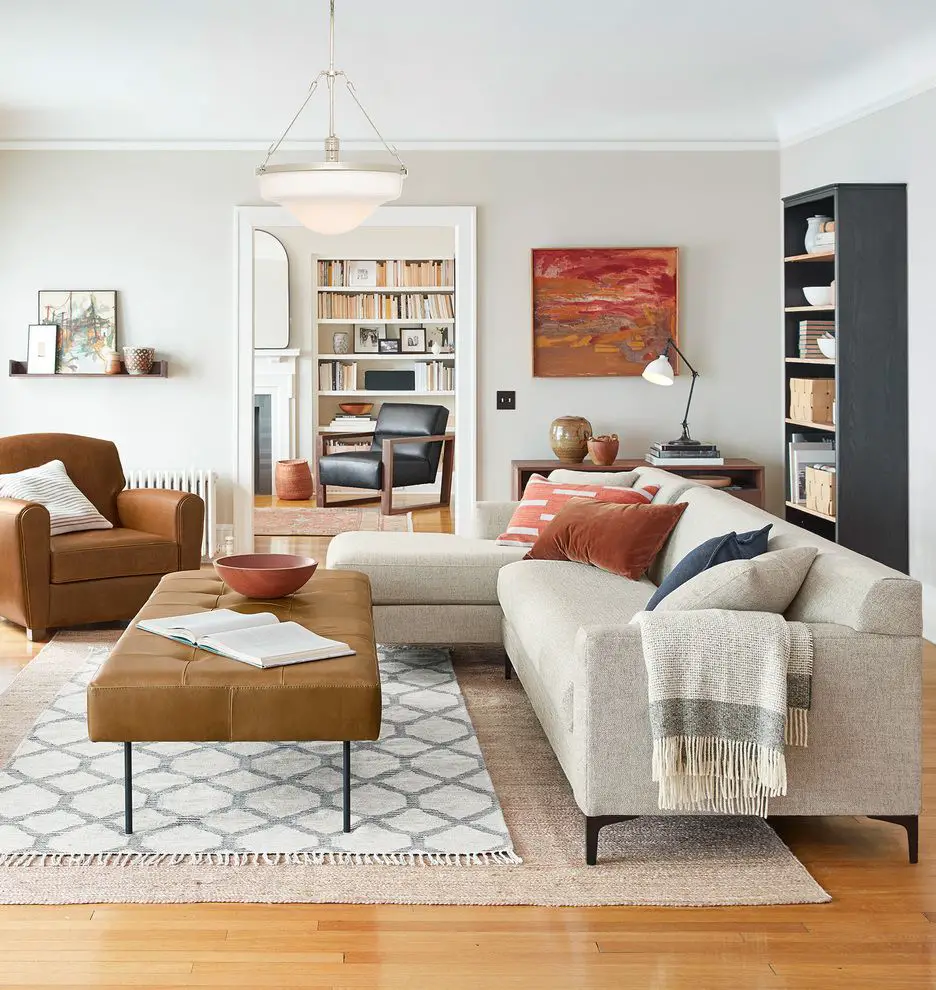
5.- Shop a large bold-colored rug to define the main living space, then add smaller rugs of complementary colors around it for accent areas in your room.
Shop a large, bold-colored rug to define the main living space and set the stage for everything else. Then strategically add smaller rugs throughout other parts of the room in complementary colors, allowing them to play off each other and create balance.
Whatever your color coordination aspirations might be for your open floor plan, matching rugs can help provide a cohesive theme with great visual appeal that’s sure to come together nicely.
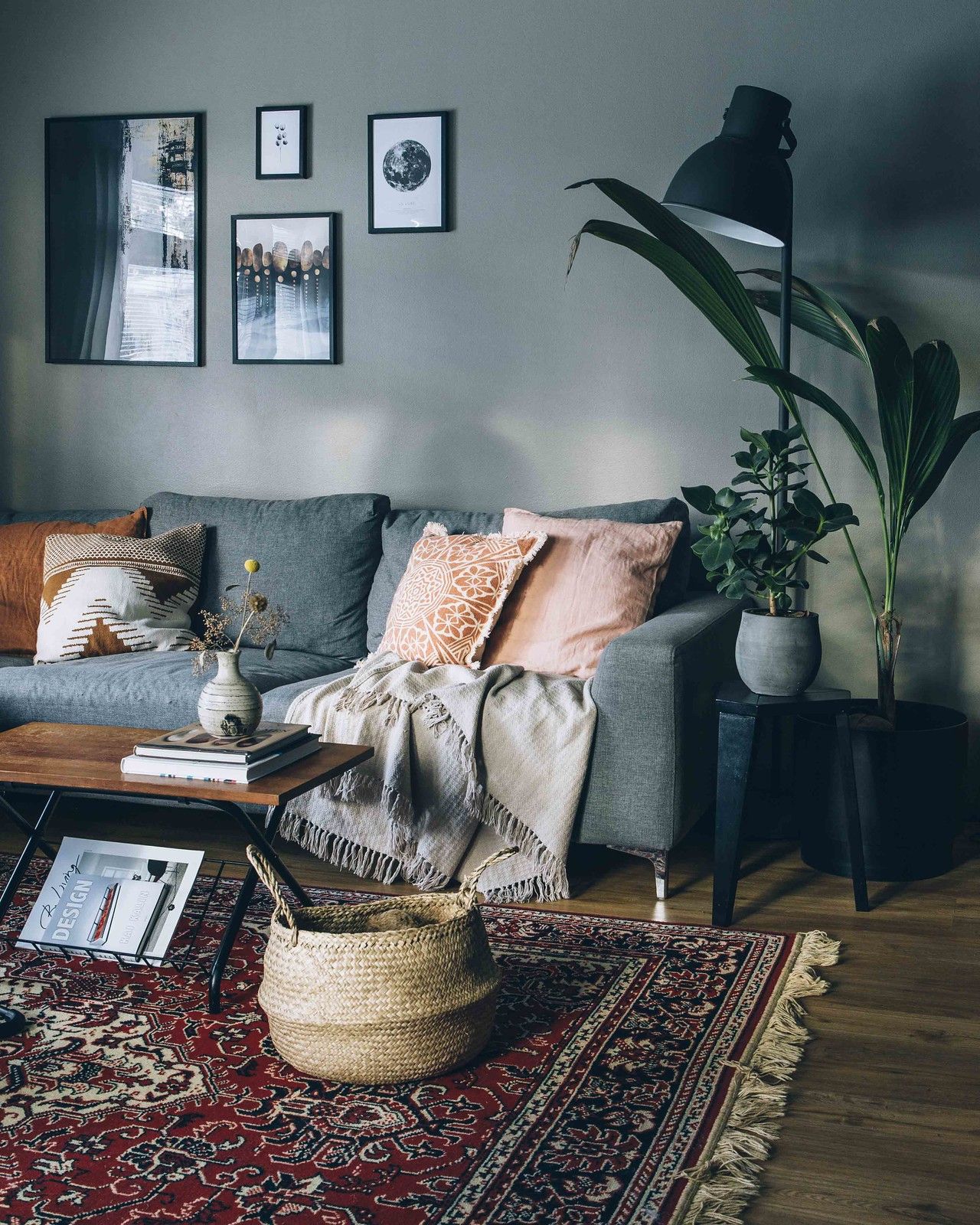
6.- Break up the room with two large contrasting rugs on either side of the room.
Making sure the rugs in your open-floor plan coordinate with one another while simultaneously adding pops of color and style is no small feat. However, the task is made relatively simple by opting for two large, contrasting rugs to break up the room – make sure they are big enough so that they cover a large portion of each side of the room.
This will add visual interest while also demarcating the space and defining your floor plan with bold patterns or color choices. Adding two large pieces can save on buying additional area rugs to fill out a larger space and have your decorative ideas accommodate both sides. It’s an affordable and creative option for those who want their floors to make a statement.c
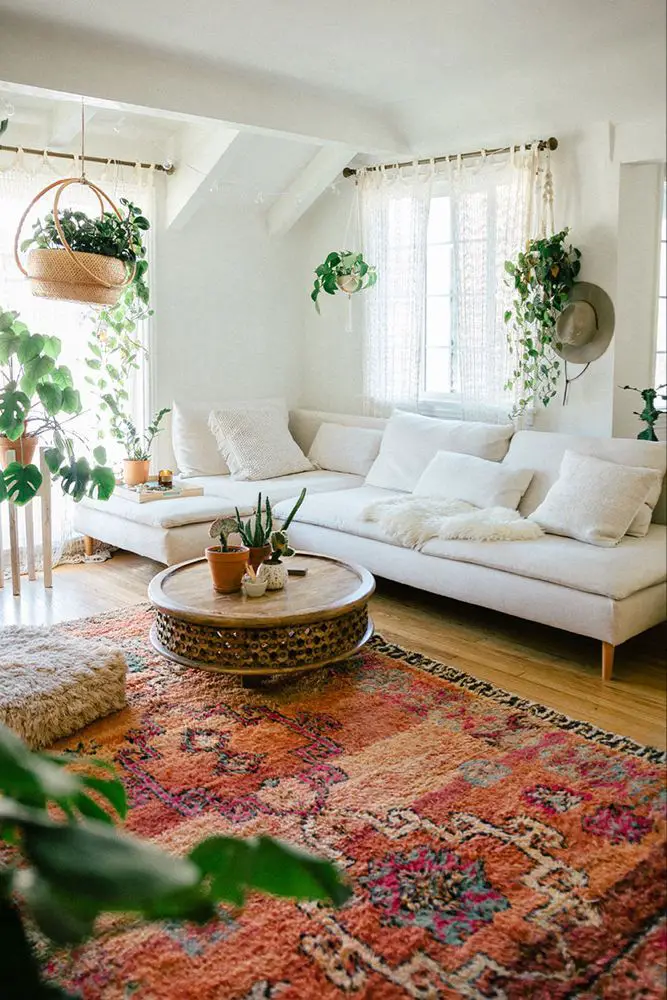
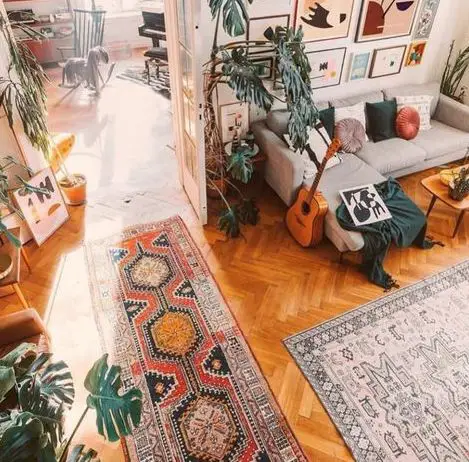
7.- Use a hallway runner rug or two narrow rugs to connect and match two distinct living areas while also establishing separate pathways between them.
Making sure your rugs match in an open floor plan is critical for achieving a cohesive and sophisticated look. The most effective way to provide visual harmony and create an inviting space throughout is to use a hallway runner rug or two narrow rugs that can help to connect the two distinct living areas while simultaneously defining them.
Not only will it add consistency, but the addition of the rug will also provide an interesting twist—not to mention plenty of creativity—in tying the entire room together with ease. It’s one of those little touches that makes all the difference, ultimately offering you more than just another decorative element; it’s a blend of artistry and organization that brings out everyone’s inner interior decorator.
8.- Look for rugs with an abstract pattern to create visual interest without disrupting the open-floor plan flow.
An open floor plan is a great design solution for contemporary homes, but matching the right rugs can be a challenge. Look for rugs with an abstract pattern to create visual interest without disrupting the open-floor plan flow.
Unexpected shapes and colors, such as an ombre pattern, will break up the space while keeping the room feeling light, airy, and visually pleasing. For a more cohesive look, try using identical sizes in complementary shades of blues or greens throughout your space, then layer unique designs with details that catch the eye, allowing each rug to hold its own in different ways.
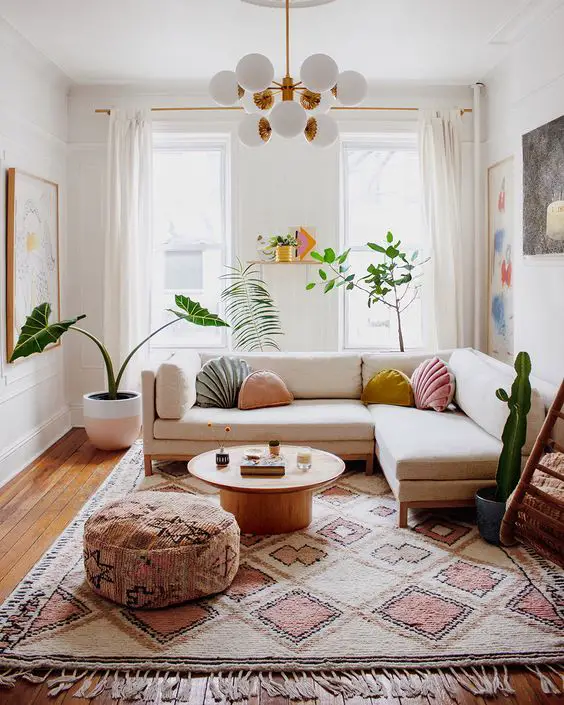
9.- Contrast light and dark colors within a single rug to help define the area and give more depth.
When it comes to matching rugs in an open floor plan, it’s important to consider the contrast between colors; lighter colors are great for creating more space, and darker colors can help to define an area.
Try marrying light and dark colors within a single rug to achieve the perfect balance and create visual harmony in your open floor plan. Contrasting colors add visual interest and serve the purpose of defining that space, bringing structure and coherence to what could otherwise be a chaotic space.
The use of multiple contrasting colors within one rug can give your surrounding room depth and character while preserving the feeling of an open-concept design.
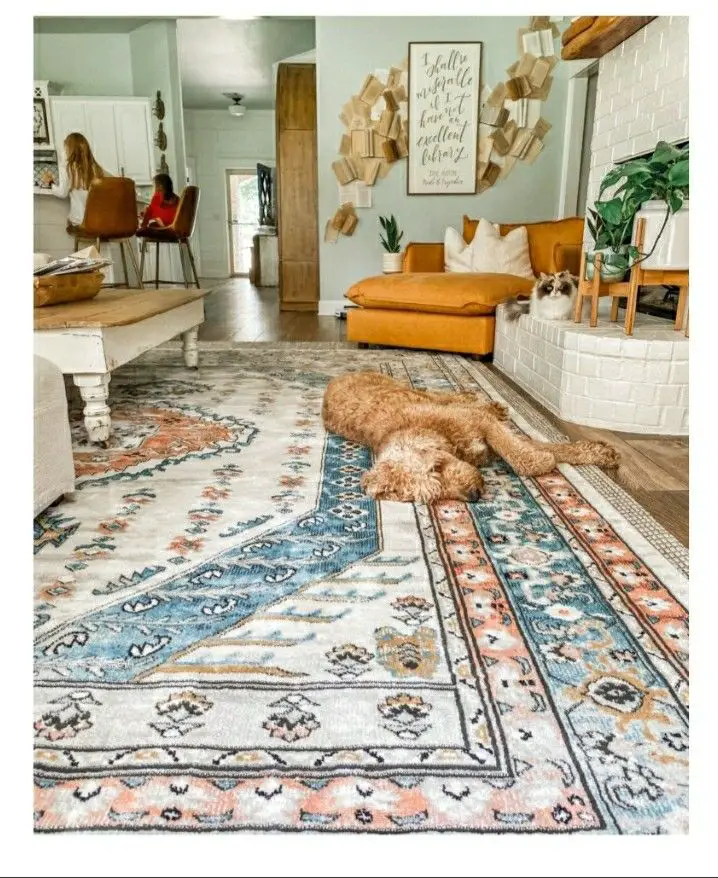
10.- Finally, why not add a rug for seating areas to make them cozy and inviting?
Finally, why not add a rug for seating areas to make them cozy and inviting? Rugs are an easy way to delineate spaces and add pops of color and pattern to a room, and they can also help protect your floor from scratches and wear and tear. When shopping for a rug, keep in mind the following tips:
– Consider the size of the room and the furniture placement when choosing a rug size. You want the rug to be large enough that all the furniture in the seating area can fit on it, with at least 18 inches of breathing room around the perimeter of the rug.
– If you have pets or small children, choose a durable material that can withstand stains and heavy traffic. Natural fibers like wool or jute are good options, or you could opt for a synthetic fiber like polypropylene or polyester.
– take into account the colors and style of your furniture and existing décor when selecting a rug. If you want the rug to be a focal point in the room, choose one with a bold pattern or vibrant color. If you want it to blend in, select a more neutral shade.
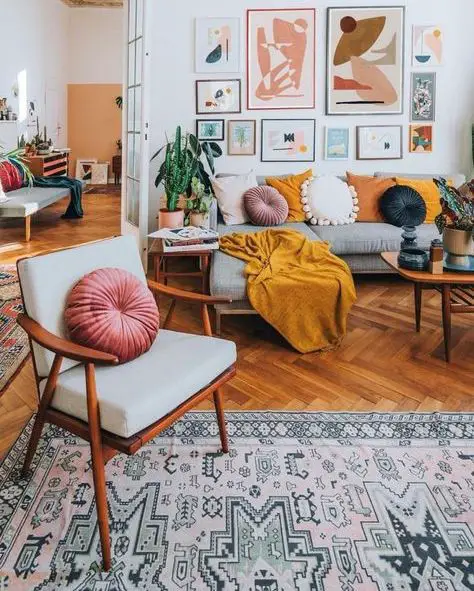
Match Rugs in an Open Floor Plan – FAQ
What colors and patterns should I use to match rugs in an open floor plan?
Answer: You can create visual interest by contrasting light and dark colors within a single rug or opt for several rugs of different sizes and shapes in complementary colors or patterns for a more eclectic look.
Are there any tips for adding a rug to seating areas in an open floor plan?
Yes, adding a rug specifically for seating areas is a great idea – it will make the area cozy and inviting! You could also look into using hallway runners or two narrow rugs to connect the two distinct living areas while establishing separate pathways between them.
How can I use area rugs to divide my space without sacrificing style?
Stacking two of the same shape and size area rugs in different colors or patterns can be an effective way to visually divide one space from another without creating too drastic of contrast while still looking stylish!
Are there any rules when it comes to connecting two distinct living spaces with rugs?
The main rule would be that all the chosen elements should complement each other while still having enough contrast, so they don’t look too matchy-matchy. Consider the color palette, texture, and pattern when connecting two distinct living spaces with rugs.
Do I need to use an abstract pattern?
No, it’s not necessary – but using an abstract pattern can help create visual interest without disrupting the open-floor plan flow.
Meet the author
Written by an architect.
Julio Arco is a passionate architect with years of experience in architecture, interior design, urban design, and housing. He studied at prestigious universities across North America and Europe.

- Name
- Julio Arco
- Job
- Architect and online interior designer
- Studied
- Architecture, ITESM · Urban Design and Housing, McGill
- Partner
- Thor, Australian Shepherd
- Thor’s title
- Head of quality control