How to Mix New Furniture with Vintage Finds
Learn how to mix new furniture with vintage finds: what to buy new, how to match wood tones and metals, and the sizes that keep a room balanced.

By Julio Arco
Architect and online interior designer
In this post
- What should you buy new and what should you buy vintage?
- How do you make old and new look like they belong together?
- How do you mix metal finishes across old and new pieces?
- What sizes and clearances keep a mixed room working?
- How do you start, step by step?
- Which vintage pieces need extra care?
- How does it work room by room?
- What are the most common mistakes?
- Frequently asked questions
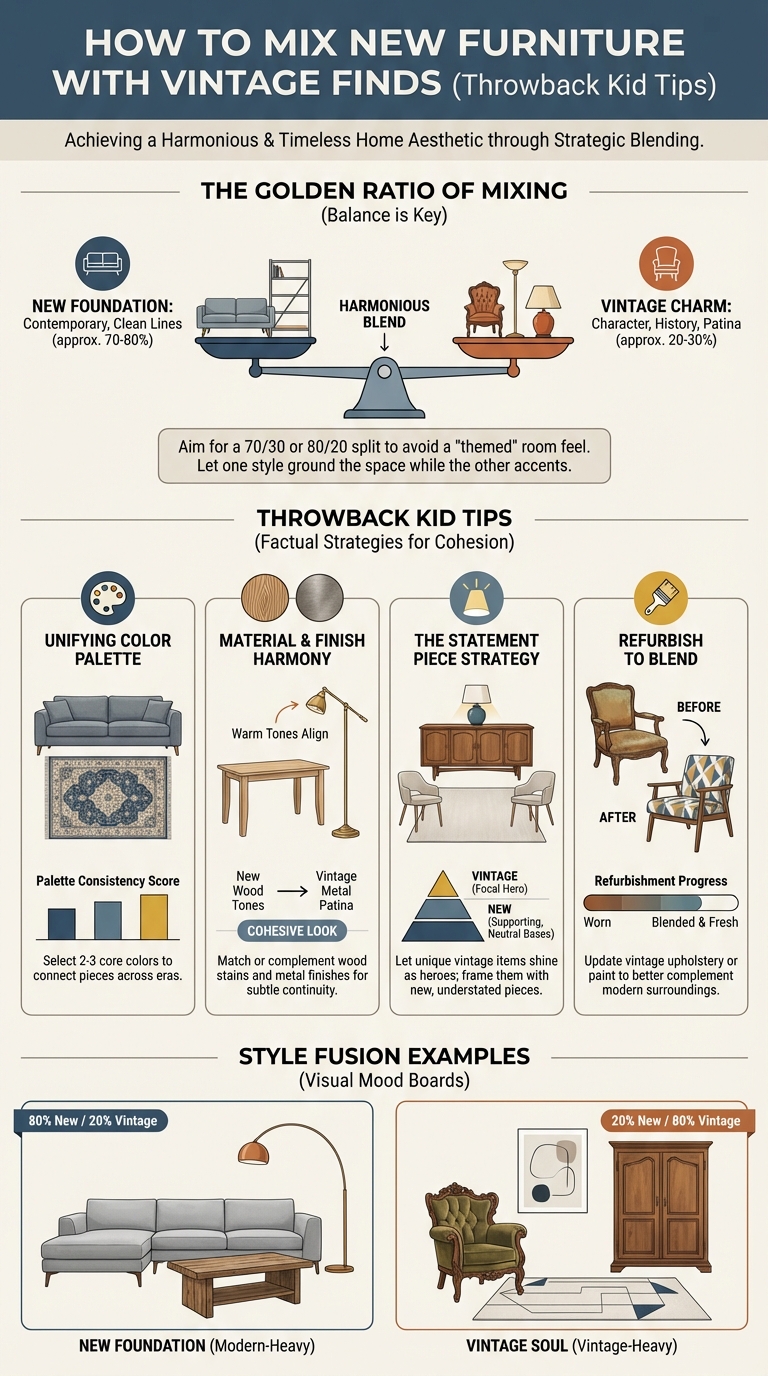
Buy the pieces you use every day new, and let vintage handle the character: a sideboard, a mirror, a lamp, a chair you only sit in for a few minutes. Then tie the two together with one repeated wood tone, metal or color. That's the whole method, and the rest of this post is how to apply it without ending up with a room that looks like a catalog or a thrift-store storage unit.
It's very common to love flea-market finds and still want a sofa that survives movie night (and a dog's paws), so you're not being inconsistent. You're just sorting pieces by job.
What should you buy new and what should you buy vintage?
Buy new for anything that takes daily wear or has to be comfortable: sofas, mattresses, main dining chairs. You get current ergonomics, cleanable fabrics and a warranty. Buy vintage for pieces that mostly sit there looking good: credenzas, side tables, mirrors, lamps, art.
A common rule of thumb is about 80% new and 20% vintage. It's a starting point, not a law. A room with one strong vintage piece and a handful of small ones usually reads better than five medium-sized finds fighting for attention.
Pet owners get a bonus here. Solid vintage wood often hides small scratches better than a high-gloss modern finish, and it's easy to refinish if needed.
How do you make old and new look like they belong together?
Repeat something. The eye reads a repeated wood tone, color or material as a decision, not an accident.
Match undertones, not exact woods
You don't need identical woods. Keep the undertone consistent: warm oak pairs well with walnut or cherry, while a cool grey-washed wood fights with red-toned mahogany unless there's plenty of white wall or rug between them.
Vary silhouettes and textures
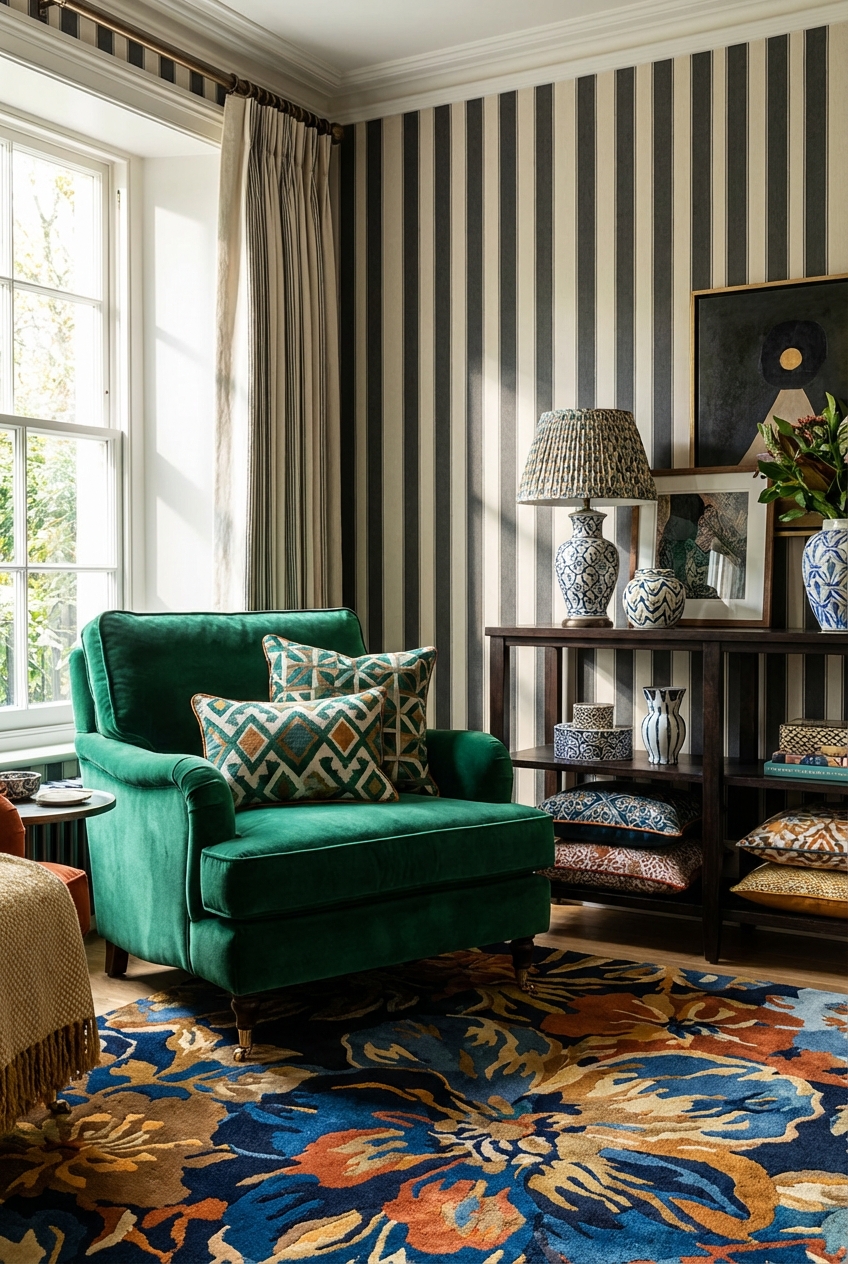
New furniture tends to be smooth and uniform. Vintage brings patina, curves, tapered legs and carved details. Put a boxy modern sectional next to a round vintage table, or a sleek velvet sofa on a worn hand-knotted rug, and each piece makes the other look more deliberate. Aim for at least three textures in the room, such as wood, metal and textile.
Give the vintage piece a plain backdrop
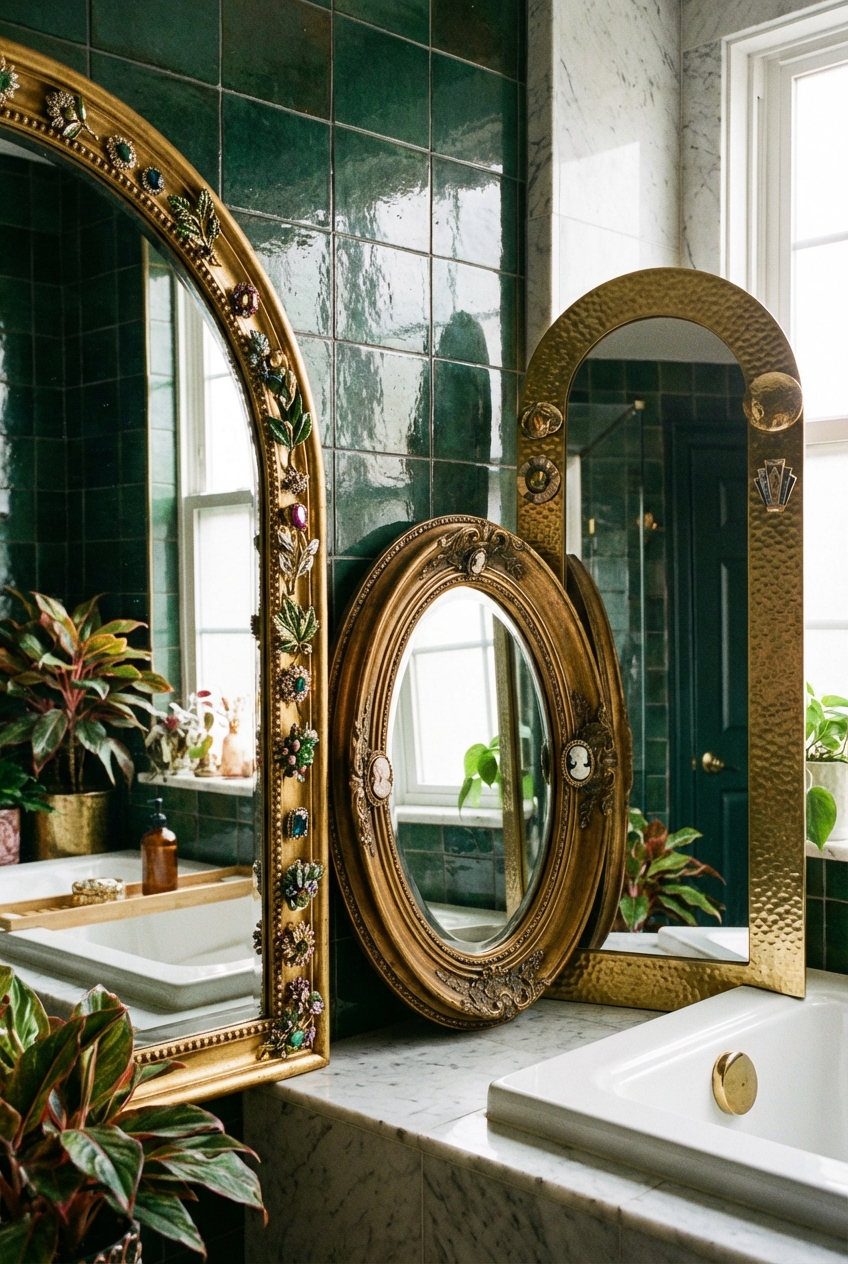
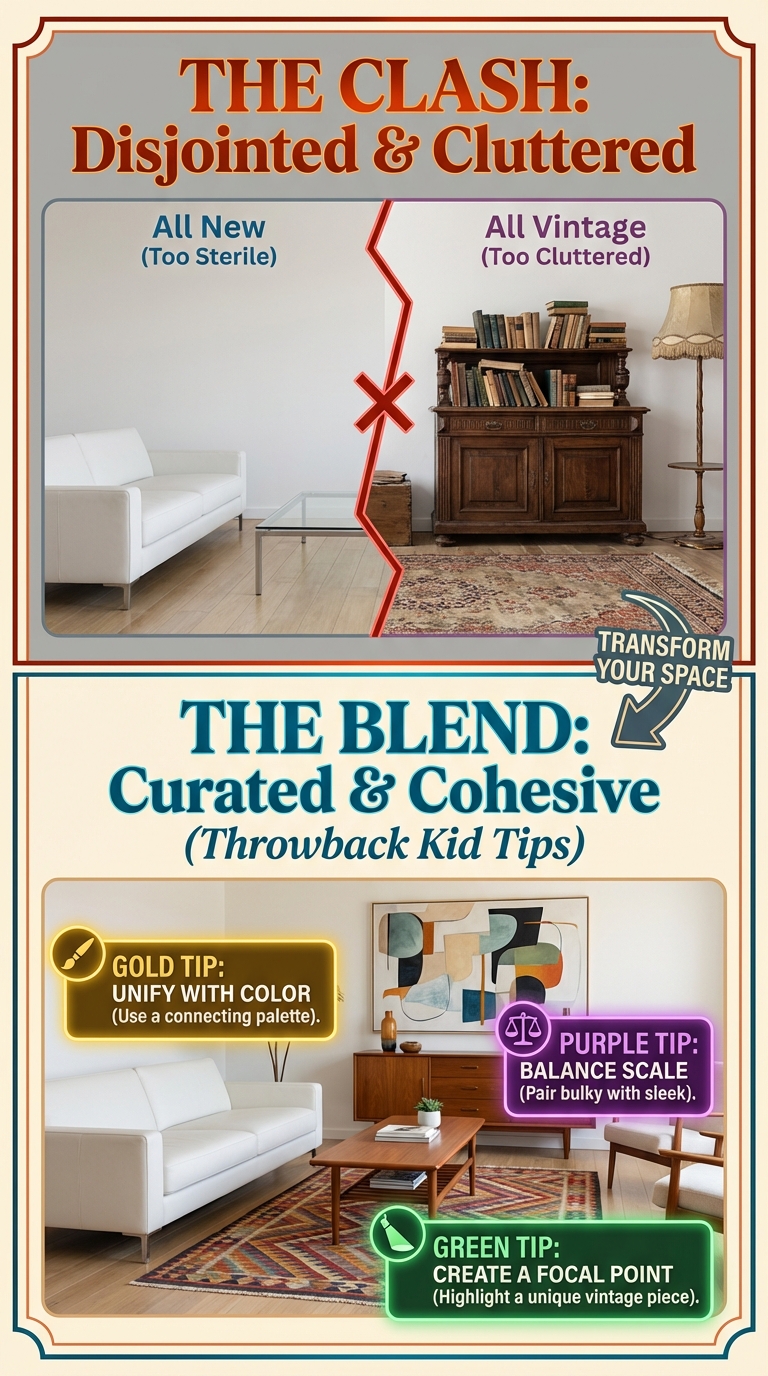
Designers talk about figure and ground. In perception research, this is the figure-ground relationship, where we piece the world visually into figure then ground. In a room, a carved vintage mirror is the figure and a calm wall is the ground. Crisp white or a single muted paint color lets the old piece stand out instead of disappearing into clutter.

How do you mix metal finishes across old and new pieces?
Vintage brass lamps, a chrome chair and modern black hardware can all live together if one finish leads. Pick a dominant metal, then use a second one two or three times so it doesn't look like a stray.
For mixing warm and cool metals, let brass or bronze be the warm voice and nickel or chrome the cool one, and keep one of them clearly in charge. In a living room, that might mean brass lamps and a coffee table frame, with a single chrome floor lamp repeating elsewhere. If you're mixing metals in a living room, spread them across different heights so they travel around the space.
Hardware is the cheapest fix. Swapping dated brass pulls on an old dresser for matte black ones makes it sit easily next to a new bed frame. Mixing matte black with polished nickel works too, because the contrast in sheen is obvious enough to look chosen. As an architect, I'd keep the shiniest finish for small accents and the matte one for larger items.
What sizes and clearances keep a mixed room working?
Scale is where mixed rooms go wrong. Older furniture was often built for smaller homes, and modern pieces tend to be deeper and chunkier.
- Leave about 14-18 inches between sofa and coffee table. If a vintage trunk is your table, aim for a height close to the sofa seat.
- Choose a rug big enough that at least the front legs of every seat sit on it. 8x10 and 9x12 cover most living rooms.
- Keep about 36 inches clear for main walkways. Protruding legs and molding on old pieces are easy to trip on.
- Hang a dining chandelier so its bottom edge is roughly 30-36 inches above the tabletop.
- Measure ceiling height before buying a tall vintage armoire, since they often run taller than modern pieces.
Seat depth can also clash. Many older armchairs are shallower than a modern sofa, so put a side table between them rather than facing them directly.
How do you start, step by step?
- Buy your sofa, mattress and main dining chairs new.
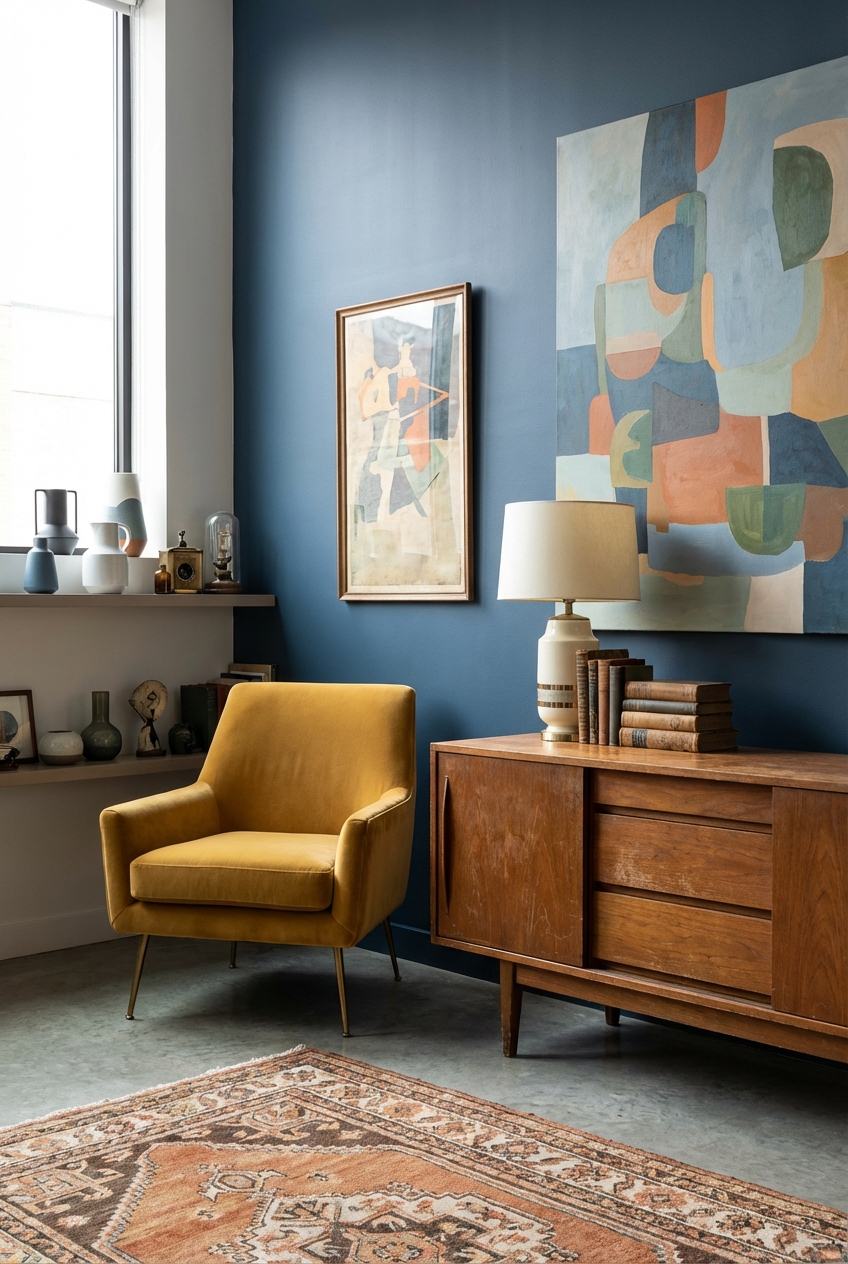
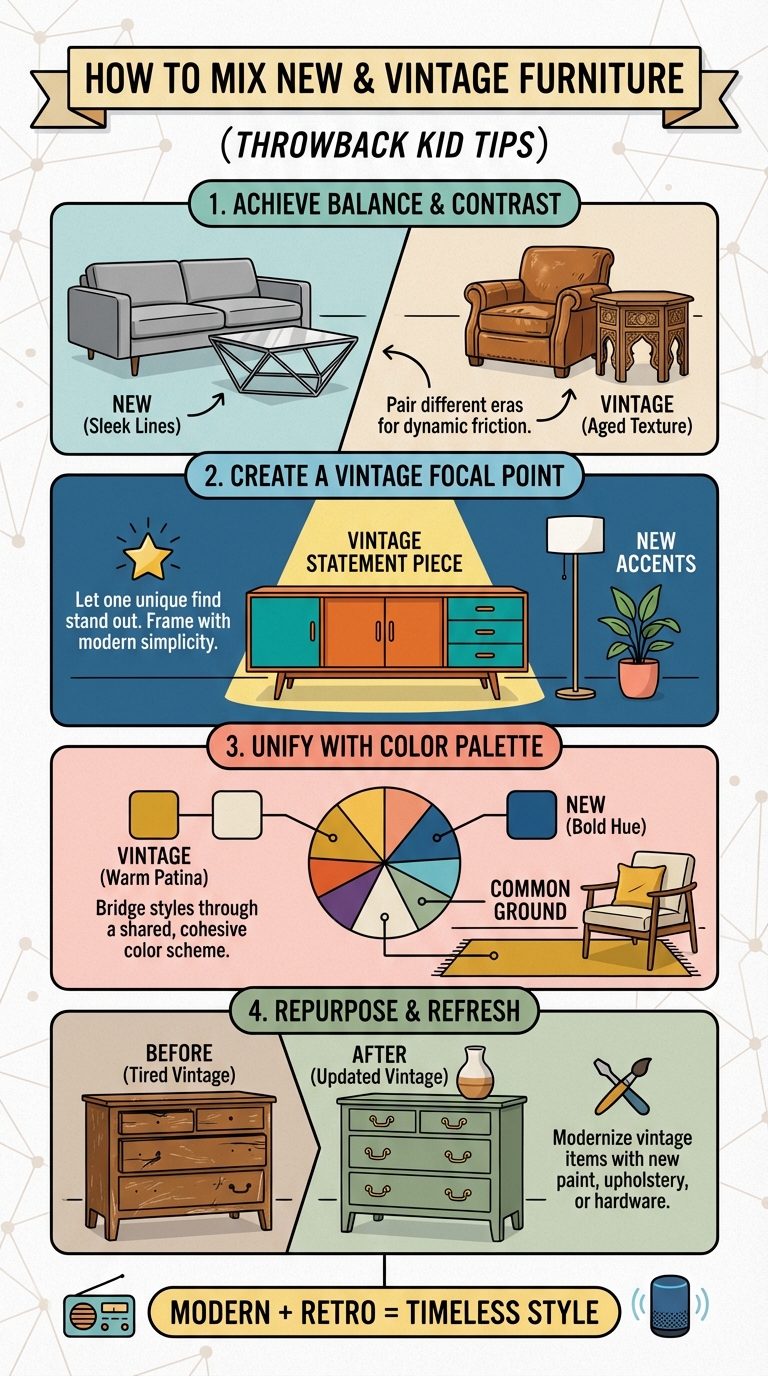
- Choose one character piece, such as a teak sideboard or a big mirror, and let it set the mood.
- Check wood undertones before anything else comes home.
- Bridge the eras with textiles: a vintage quilt on a modern bed, or antique rug pillows on a new sofa.
- Update hardware and lampshades on vintage pieces so they feel current.
A secondhand lamp with a new linen shade is one of the best-value moves here. Facebook Marketplace, yard sales and estate sales are good places to look for solid wood side tables, lamps and rugs.
Which vintage pieces need extra care?
Upholstered pieces are the exception to the thrifting rule. Old foam breaks down and can hold dust and odors, so if you love a vintage chair, I recommend budgeting for reupholstery with new foam and fabric. Check any vintage table for wobble before using it, and tighten or glue loose joints. If a piece smells musty after airing out and wiping, it may have mold, and it's best to pass.
For general freshening, wipe wood with diluted white vinegar, then use furniture wax. Baking soda in a drawer for a couple of days can help with lingering smells.
How does it work room by room?
Living room
Start with a new sofa and a vintage coffee table. Add a modern floor lamp beside a vintage leather armchair for a reading corner. For more ideas on retro touches, see cozy retro kid style.
Dining room
A modern table with vintage chairs works well in tight rooms, since older chairs are often smaller. Or put clear acrylic chairs around a heavy farmhouse table for contrast. Our post on mixing modern dining furniture with adventure decor goes further.
Bedroom
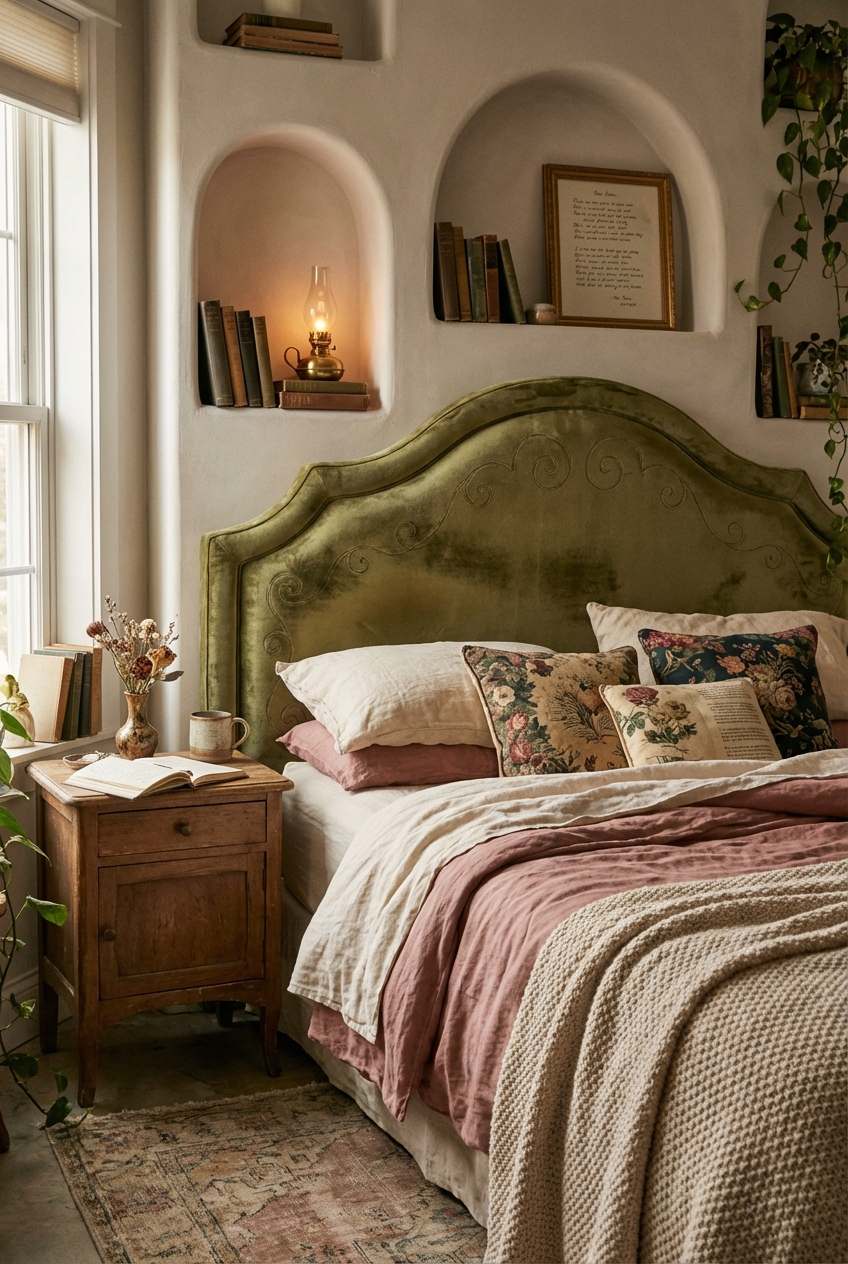
Keep this room softest: an upholstered new headboard, plus two vintage nightstands. They don't have to match if they're a similar height. Lighting helps too, so look at warm retro lighting ideas.
What are the most common mistakes?
Too many small vintage items is the big one. Group them on a tray so they read as a collection, and remove a few of the rest. Another is every piece having peg legs, so mix in a sofa with a plinth base or a skirt. If budget is tight, budget retro touches are a good place to begin.
Before you finish, check that each vintage piece has a modern partner, the wood undertones agree, and the lighting is layered with overhead, task and ambient sources.
Frequently asked questions
Is it okay to mix metals when decorating?
Yes. Choose one dominant finish and repeat a second one at least twice so it looks intentional. Keep a third to a small accent.
How do I stop vintage finds from making my house look old-fashioned?
Keep walls and larger pieces simple and modern, and use updated lighting. A vintage piece against a calm backdrop looks chosen rather than dated.
Can I mix different eras of vintage?
Yes, if something ties them together, such as a restrained color palette or similar visual weight. Sticking to two main eras keeps the room calm.
Is it okay to paint vintage furniture?
It depends. Leave rare, well-made pieces with good wood grain alone. A mass-produced piece with a dull finish but a good shape can take paint well.
Filed under
ArticlesMeet the author
Written by an architect.
Julio Arco is a passionate architect with years of experience in architecture, interior design, urban design, and housing. He studied at prestigious universities across North America and Europe.

- Name
- Julio Arco
- Job
- Architect and online interior designer
- Studied
- Architecture, ITESM · Urban Design and Housing, McGill
- Partner
- Thor, Australian Shepherd
- Thor’s title
- Head of quality control