How to Mix Two Different Table Lamps on a Sideboard
Mix two different table lamps on a sideboard with matching finishes, shades and bulbs, plus height, spacing and cord tips that work.

By Julio Arco
Architect and online interior designer
In this post
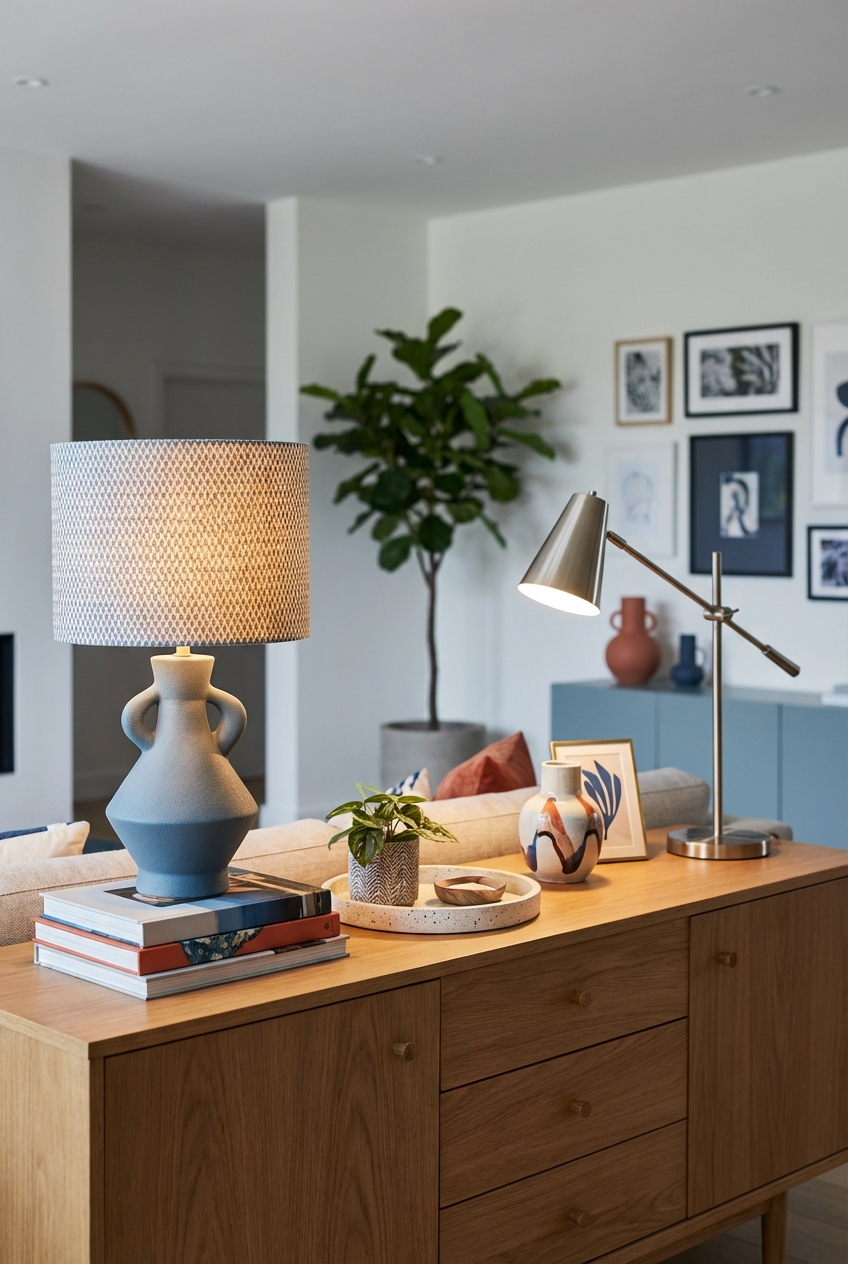
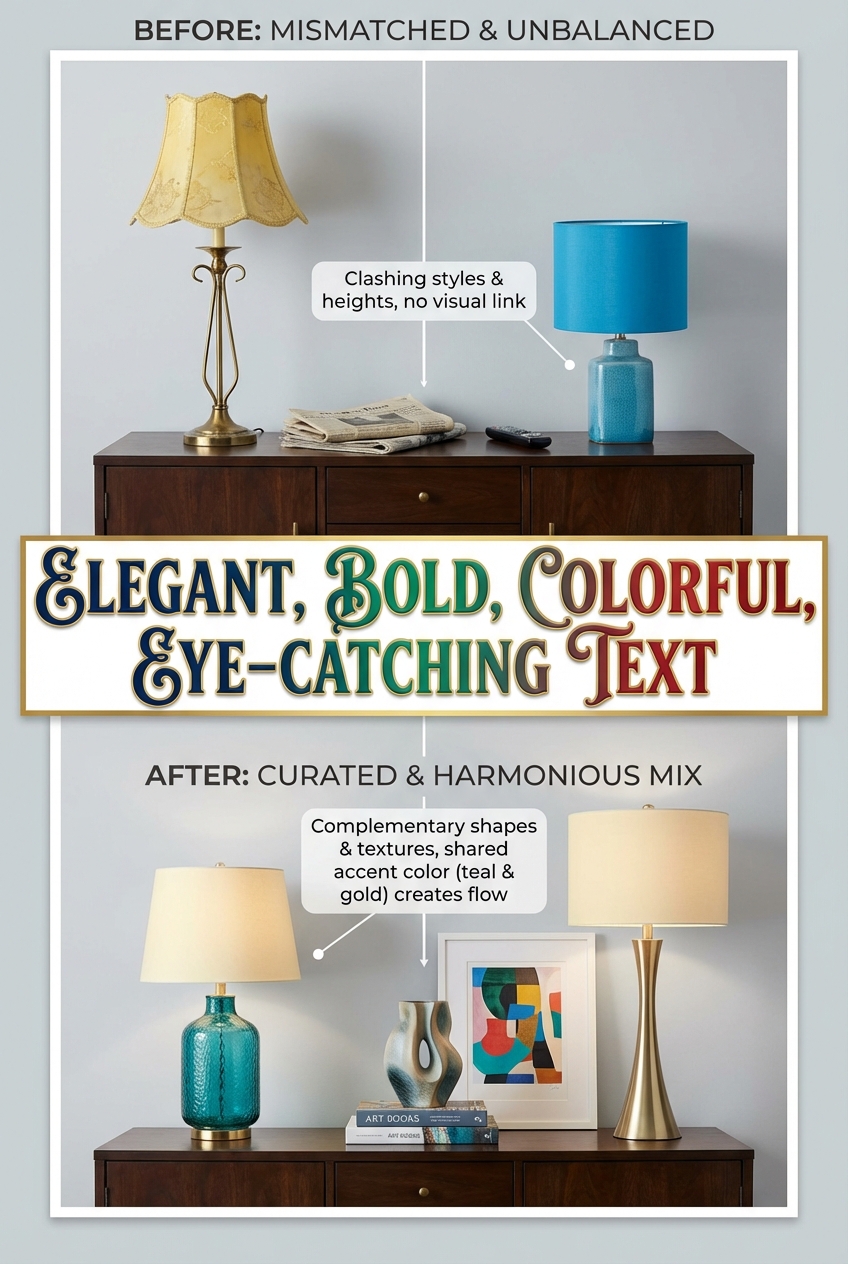
You can mix two different table lamps on a sideboard as long as they share one thing: a finish, a color family or a shade. Keep the tops within a few inches of each other in height, give each lamp a similar visual weight, and use the same bulb color in both.
If you inherited one great lamp and never found its mate, relax. A matched pair is the safe choice, but a deliberate mismatch usually looks more like a home someone actually lives in.
Why mismatched lamps work
Two identical lamps read as one repeated object. Two different lamps make your eye travel along the sideboard, which gives the piece more rhythm. The look suits eclectic and transitional rooms, collectors, and anyone building a room slowly rather than buying a set in one afternoon.
It also suits renters. Lamps move with you, so you can spend on two good pieces and reuse them in a different room later. For more ideas on what else goes on the surface, see our guide to styling a sideboard.
What should two different lamps have in common?
Pick one link and let everything else vary. Each of these works on its own.
A shared finish
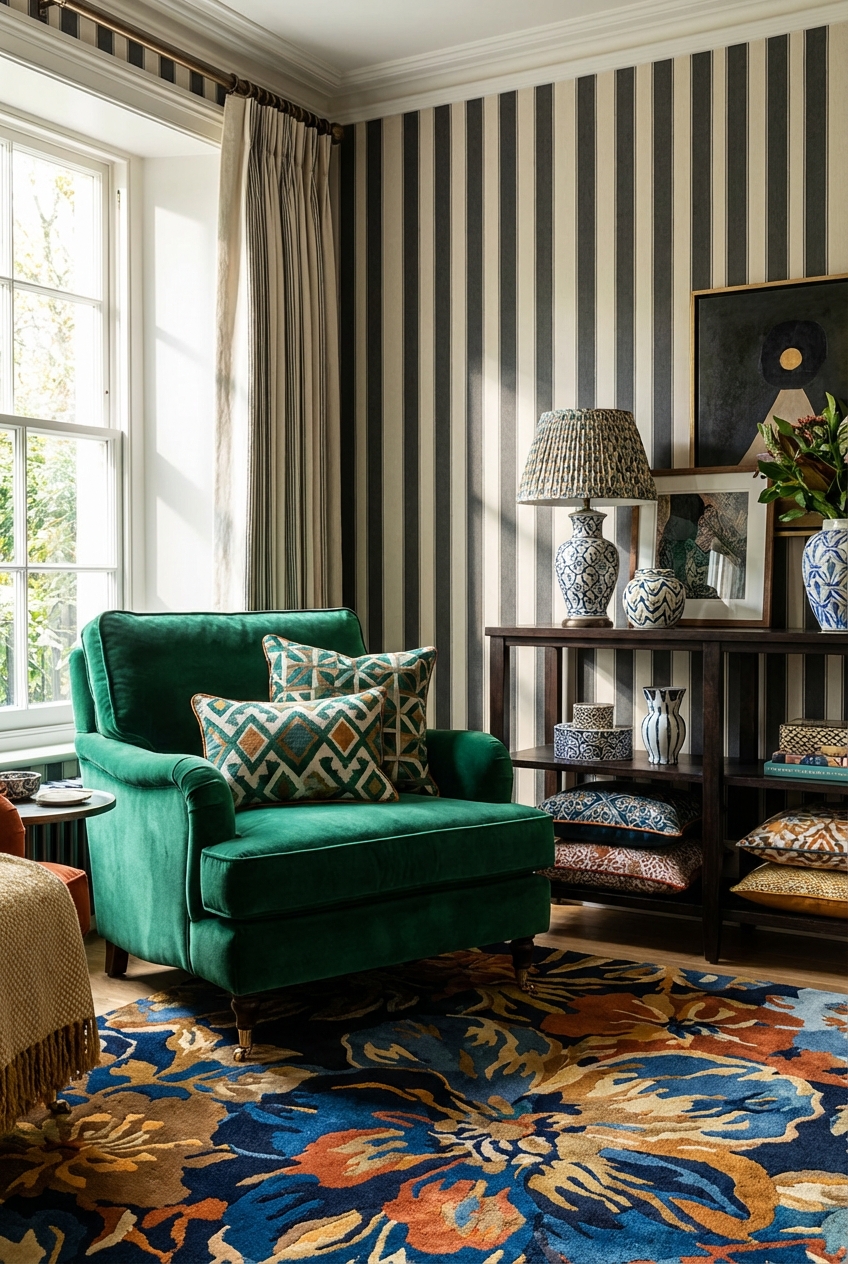
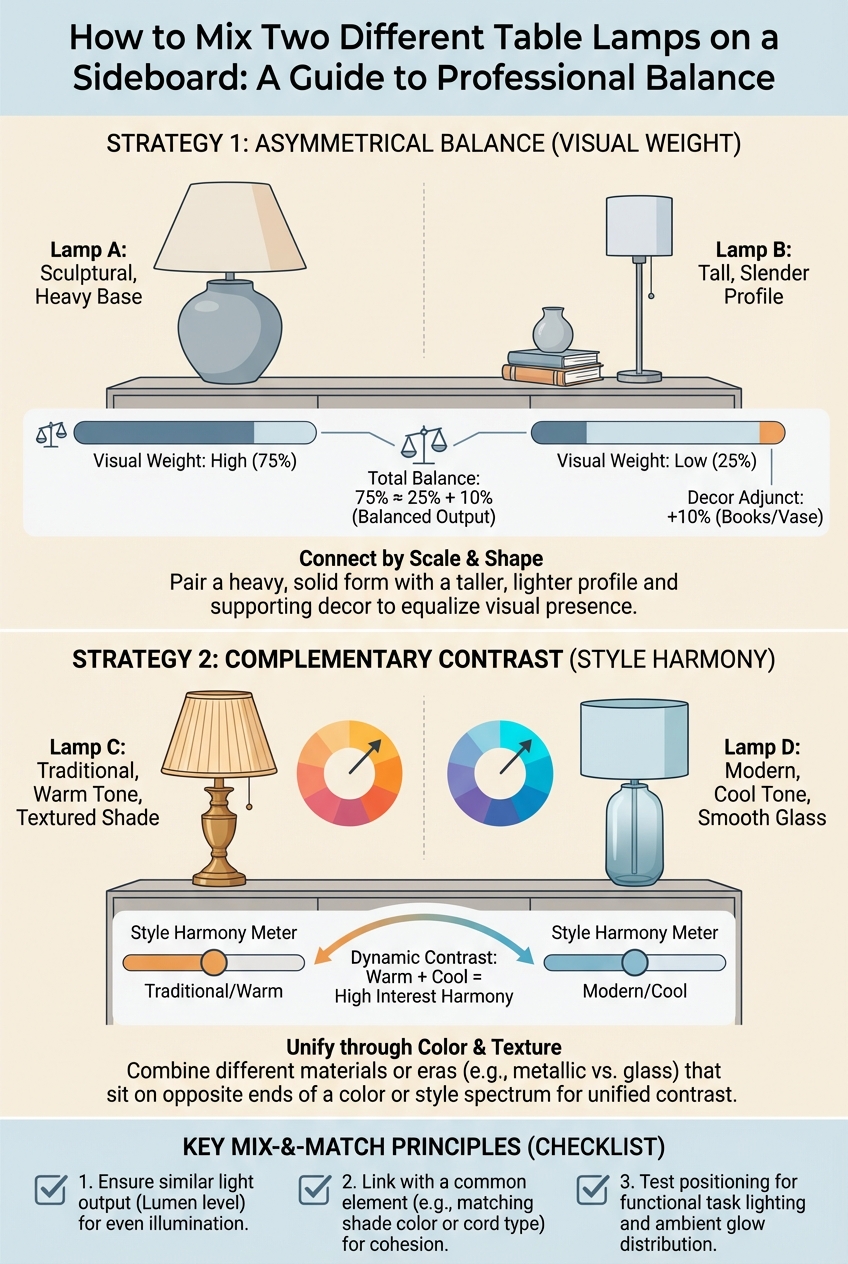
A tall, slim brass candlestick lamp next to a shorter, rounder brass lamp reads as a family because the metal matches. The same logic works for ceramic glazes and wood tones.
A shared color family
If the materials differ, say one glass and one stone, keep the colors close. Smoky gray glass beside charcoal concrete feels related even though the textures are far apart.
Matching shades
Shades are the most visible part of a lamp. Two very different bases look like a pair under identical white linen drum shades. You can also vary the shape (one round, one square) and keep the fabric the same.
How tall should the lamps be, and where do they go?
Aim for the top of the two shades to land within about 3-4 inches of each other. A bigger gap creates a stair-step look. If one lamp is short, raise it on a stack of books or a slab of stone.
Check the bottom edge of the shades too. If one sits much lower than the other, the sideboard can look tilted. A riser under the lower lamp brings the edges closer to the same line.
Divide the sideboard into thirds and put the lamps in the outer thirds, with the base a few inches in from each end. That leaves the middle open for a mirror, artwork, a tray or a long bowl that ties the two lamps together.
Balance visual weight
A thin iron lamp has little visual weight, and a big ceramic ginger jar has a lot. Pair a bulky lamp with a delicate one and the small one disappears. As an architect, I'd make the lighter lamp a little wider or taller, or give it a darker shade, so it holds its side.
Step by step: set up the pair
- Measure the sideboard. Leave a few inches between each base and the edge, plus space for cords and other decor.
- Choose an anchor lamp you love. It sets the style for the room.
- Pick a second lamp that shares one trait with the first (finish, color or shade) and differs in shape or height.
- Put the same bulb color in both. Two lamps with different bulbs look wrong the moment you switch them on at night.
- Style the gap with something horizontal, like a tray or bowl, so the lamps read as one composition.
- Deal with the cords last, using adhesive cord channels or clips down the back.
Which bulbs should you use?
Warm white, around 2700K, is the usual choice for living areas and suits warm white light for reading too. Color temperature is one of the main ways the U.S. Department of Energy describes the visual appearance of light, so it is worth checking the box rather than guessing.
Shade color changes how bright a lamp looks. A dark navy shade passes much less light than a white one, so the dark lamp can look dimmer even with an identical bulb. Test both in the evening and swap in a brighter bulb on the darker lamp if needed.
Common mistakes and quick fixes
- Dueling styles: a neon modern lamp next to a floral Victorian one rarely works. Keep the two within a step or two of each other, like rustic farmhouse and industrial metal.
- A busy backdrop: with patterned wallpaper, keep lamp shapes simple and shades neutral. A plain wall lets you try more complex silhouettes.
- Mismatched hardware: the harp and finial (the metal parts that hold the shade) should be similar in color, even if the bases are not.
- Switch mismatch: if one lamp has a pull chain and the other a cord switch, plug both into a smart plug or a power strip with a master switch.
Variations by room
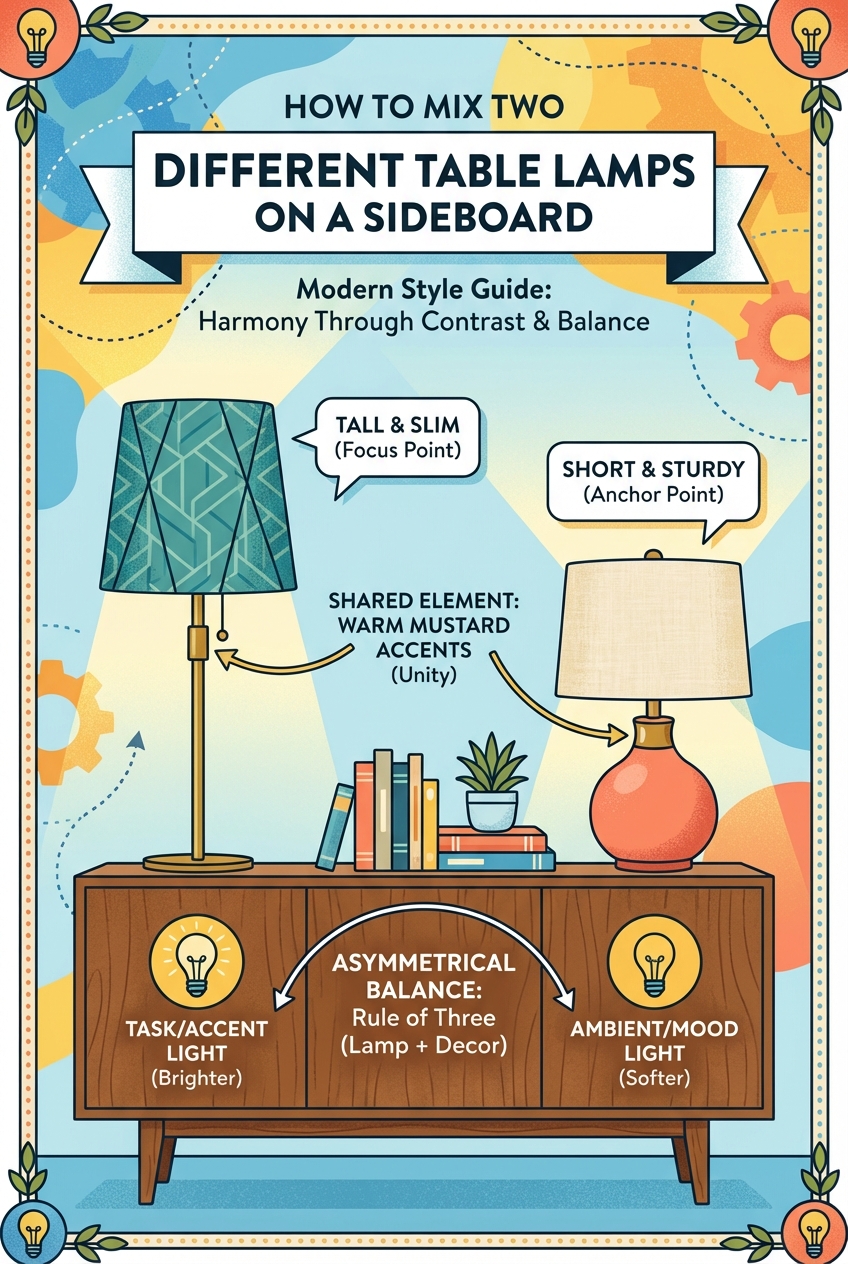
In an entryway, you can go bold: a tall skinny buffet lamp on one side and a shorter, wider one on the other. In a dining room, keep the materials refined and the colors quiet so the lamps support the table. On a living room credenza, one lamp can be a soft mood light and the other a reading lamp, and different jobs make different shapes easier to accept. If you are wondering about the count overall, this post covers how many lamps a living room needs.
Pet and safety check
- Choose bases heavy enough that a tail or a bump to the sideboard won't tip them.
- Keep shades from overhanging the front edge.
- Tuck cords out of reach if your dog or cat chews them, and check with your vet if you are worried about chewing habits.
Before you finish, step back about 10 feet and squint. If one lamp turns into a blob, it needs more contrast or a different shade. For more ways to refresh the piece itself, try these easy sideboard upgrades.
Frequently asked questions
Can I use two different colored shades on one sideboard?
It's possible, but harder to pull off. If the shades differ, keep the bases identical or at least very similar, and stay within one tonal family, such as forest green with olive.
Should mismatched lamps be the same brand or era?
No. Pairings from different eras often look best. Scale, finish and bulb color matter more than the brand.
How do I handle round and square shades together?
Repeat each shape nearby. A square picture frame next to the square shade makes the geometry look deliberate.
How far apart should the two lamps be?
Place them in the outer thirds of the sideboard, with the middle left open for a tray, art or books. They should not look crowded or competing for the same spot.
Filed under
ArticlesMeet the author
Written by an architect.
Julio Arco is a passionate architect with years of experience in architecture, interior design, urban design, and housing. He studied at prestigious universities across North America and Europe.

- Name
- Julio Arco
- Job
- Architect and online interior designer
- Studied
- Architecture, ITESM · Urban Design and Housing, McGill
- Partner
- Thor, Australian Shepherd
- Thor’s title
- Head of quality control