Scent Stacking Guide: Refresh Your Home Between Seasons
Use this scent stacking guide to refresh your home between seasons: clean first, layer base, accent and quick-fix scents, and avoid overdoing it.

By Julio Arco
Architect and online interior designer
In this post
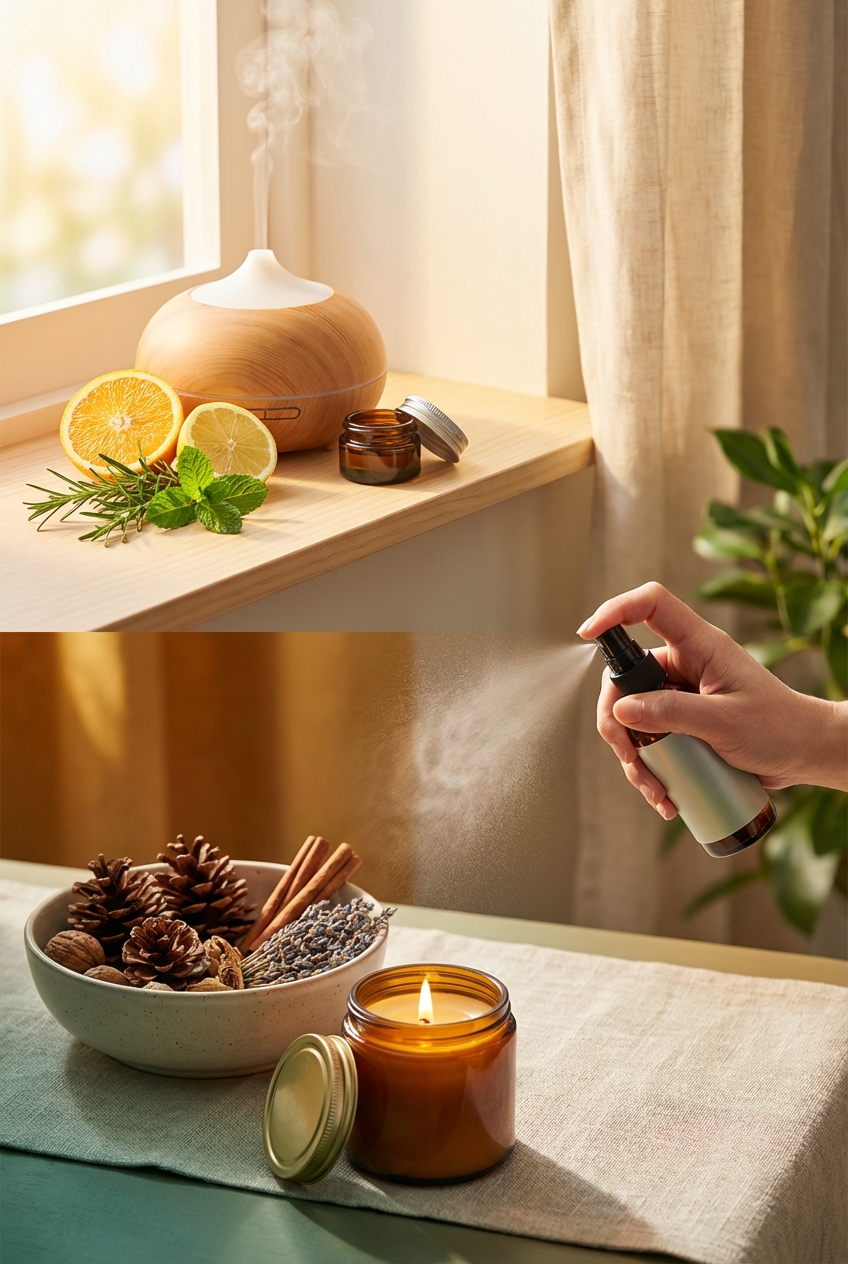
The fastest way to change how a home feels when the season turns is to clear out the old smell, then layer a few related scents on top of each other. Open the windows, wash or freshen the fabrics, and add a steady base scent, a stronger accent in the room you use most, and a quick spray for the moments that matter.
That layering is what people call scent stacking. If your house still smells like summer coconut when you're craving autumn, this guide walks you through the order that works.
What is scent stacking?
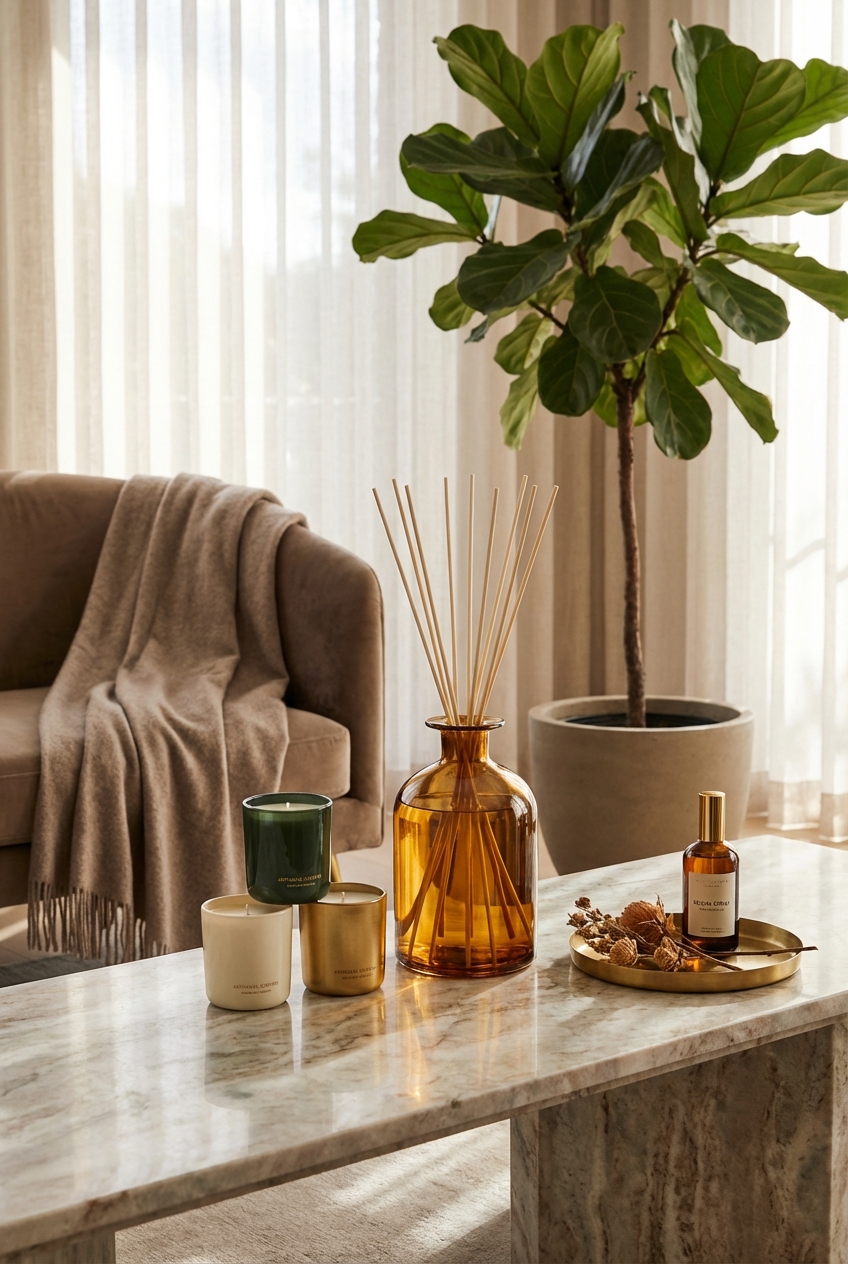
Scent stacking means combining several fragrance sources in one home so they read as a single, rounded smell instead of one loud candle. A reed diffuser gives a low background hum, a candle adds warmth in the evening, and a linen spray gives a quick lift. Each does a different job, and they share a scent family so they don't fight.
It works the way a good layered lighting plan does. One ceiling fixture lights a room, but ambient, task and accent light together make it feel considered. Scent behaves the same way.
Does scent layering actually work?
It does, with one condition: the layers have to be related. Two or three sources from the same family (citrus and herbs, or woods and amber) blend. Five unrelated scents in one open living area blur into a muddle. I haven't found a reliable shortcut around that, so keep the family tight and the number of sources small.
How to scent stack between seasons
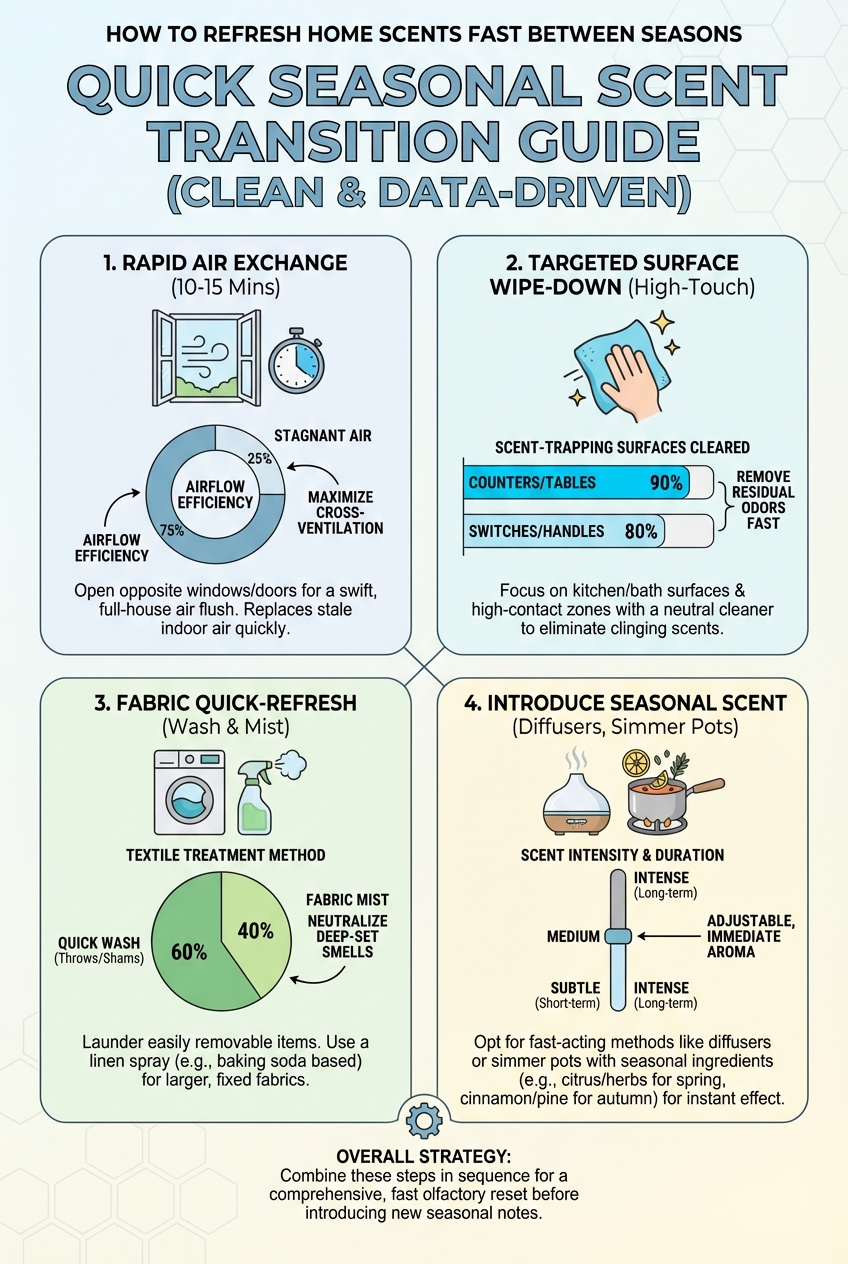
This is the correct order for layering fragrance in a home: clean first, then base, then accent, then a quick refresh layer. Skipping the first step is the most common reason a new scent smells off.
1. Clear the old scent
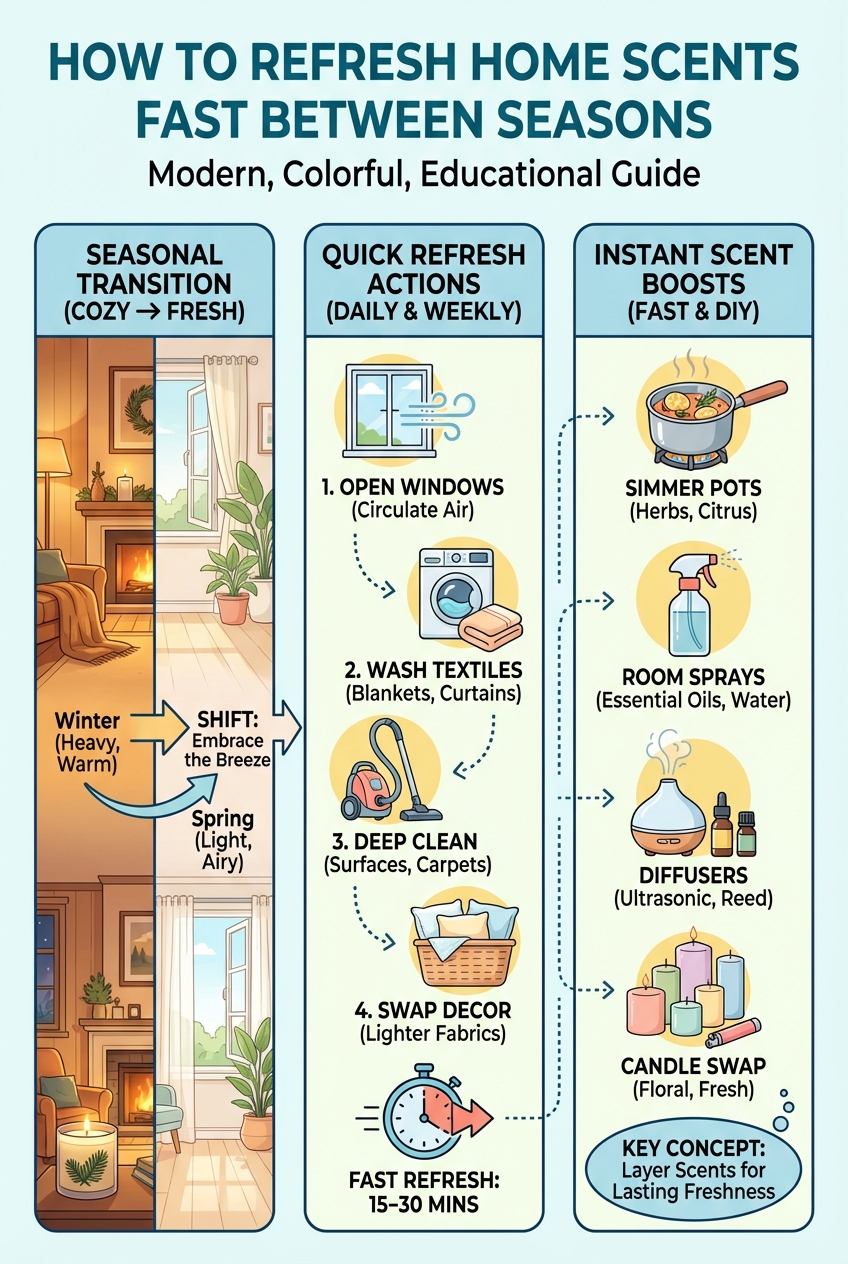
Open the windows for at least 30 minutes, even if it's cold. Put away half-burned candles and dried seasonal wreaths. Odors cling to textiles, so wash or steam clean what you can: curtains, throw pillows, rugs. Fresh scent on top of stale fabric just adds a floral layer to the problem. If you have a dog, the pet-specific plan in Pet Odor vs "Fresh Home" Scent covers what to neutralize first.
2. Pick one seasonal family
Choose a direction and stay in it for the main living areas. Some pairings that tend to work:
- Spring: green tea, jasmine, lemon, fresh linen
- Summer: sea salt, bergamot, grapefruit, coconut water
- Autumn: cardamom, sandalwood, fig, warm spice
- Winter: fir, amber, clove, soft woods
3. Lay the base
A reed diffuser in the entryway or hallway is always on, so it sets the baseline. Put it at roughly nose level on a console or mantel, where the door opening moves the air past it. Keep it away from screens and finished wood, since oils can mark surfaces.
4. Add the accent
This is the candle in the living room or the simmer pot in the kitchen. Sliced lemon, rosemary, cinnamon sticks or pine sprigs on a low stovetop simmer smell fresh and are easy to adjust. Never leave a pot unattended, and top up the water.

5. Finish with a refresh layer
A linen mist on the duvet or a quick room spray before guests arrive keeps the stack alive between candle sessions. Use sprays on fabrics you can spot test first.
How strong should each layer be?
Match the number of sources to the room, and use your nose as the measure. Light a candle, leave the room for about 15 minutes, then walk back in. If the scent hits you like a wall, move it to a bigger room or put it out. If you can barely detect it, add one source on the opposite side of the room so the scent circulates evenly.
Placement matters more than people expect. Keep a candle at least 12 inches from anything flammable, and keep open flames away from curtains. A candle right next to a drafty window loses its scent quickly. A spot near a return air vent pulls the fragrance into the ductwork instead of the room. As an architect, I'd treat airflow like a floor plan: think about where air actually travels before choosing where the scent goes.
Room-by-room scent choices
Entryway
Something welcoming and light: rain or citrus in spring, soft wood in winter. This is where the diffuser lives.
Kitchen
Cooking already produces plenty of smell, so keep this room clean and simple. Citrus and herbs like basil, thyme or rosemary hold up in any season. Skip heavy florals and bakery scents that compete with dinner.
Living room
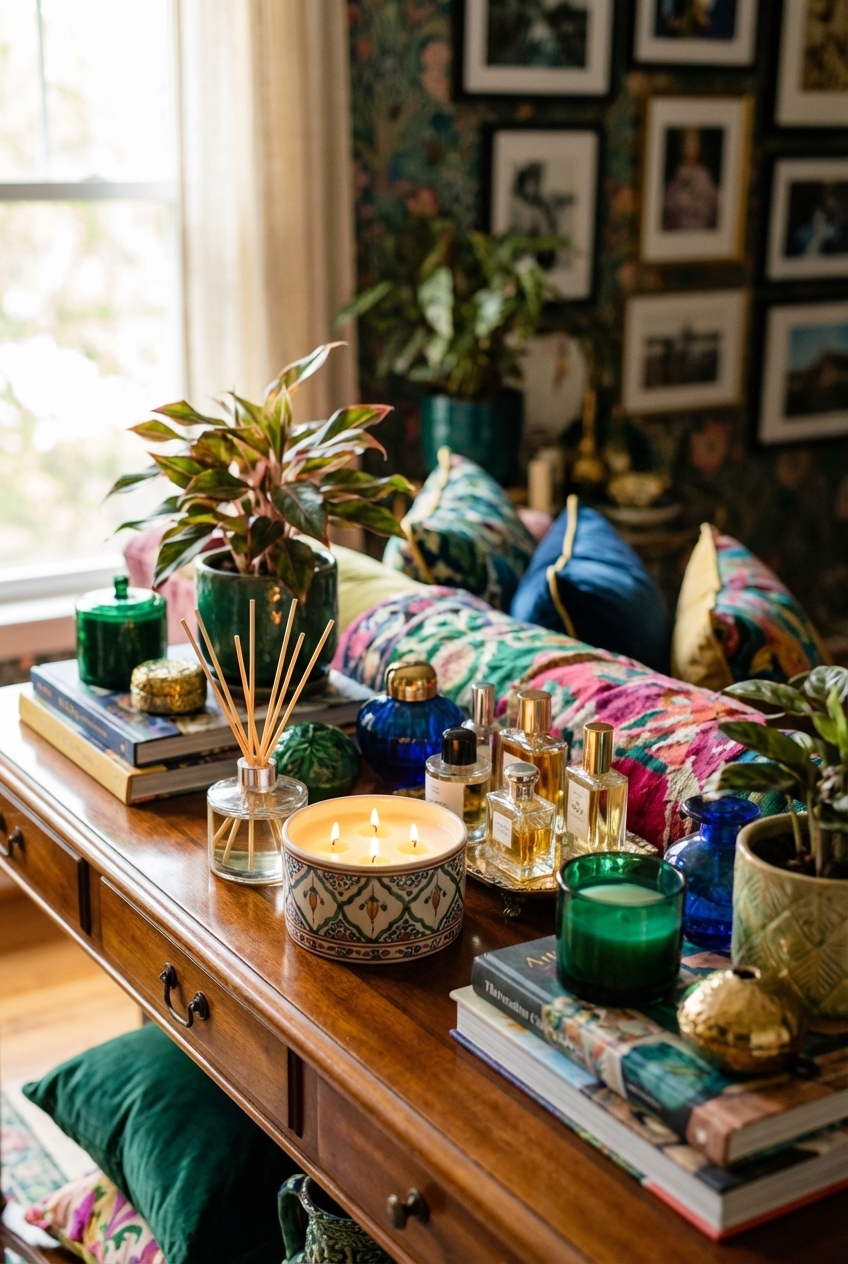
This is the room for your accent candle. In autumn, try sandalwood with a hint of amber. Heading into summer, sea salt with a lime top note is a good pairing. For more cohesion ideas, see scent stacking for maximal homes.
Bedroom
Go soft. Chamomile or a light floral suits spring, and a linen spray on the bedding at your weekly sheet change keeps it simple. I'd avoid sharp, zingy notes in here since they read as energizing.
Bathroom
Eucalyptus and aquatic notes feel clean and airy. One small diffuser is usually enough for a space this size.
Mistakes that ruin a stack
- Layering over odor. A floral spray over a damp dog bed gives you floral dog bed. Wash it, then scent the room.
- Too many families. A pine candle beside a tropical coconut diffuser clashes. Pick one direction per floor.
- Skipping candle care. Trim wicks to about 1/4 inch before each burn to limit soot, and let the first burn melt the wax across the whole surface so the candle doesn't tunnel.
- Never letting the nose rest. If everything starts to smell like nothing, take a day with the windows open and no fragrance at all.
Pets, kids and sensitive noses
Scented products add something to the air you breathe, so use fewer of them in small rooms and open a window now and then. Some essential oils are a problem for cats and dogs, so check with your vet before running a diffuser or using oils around them. For step-by-step oil use, see how to use essential oils to scent a room.
If you'd like a printable routine, the scent stacking checklist breaks the base, accent and refresh layers into tasks. And if you want to rotate scents by season rather than redoing everything, a scent closet keeps the options organized.
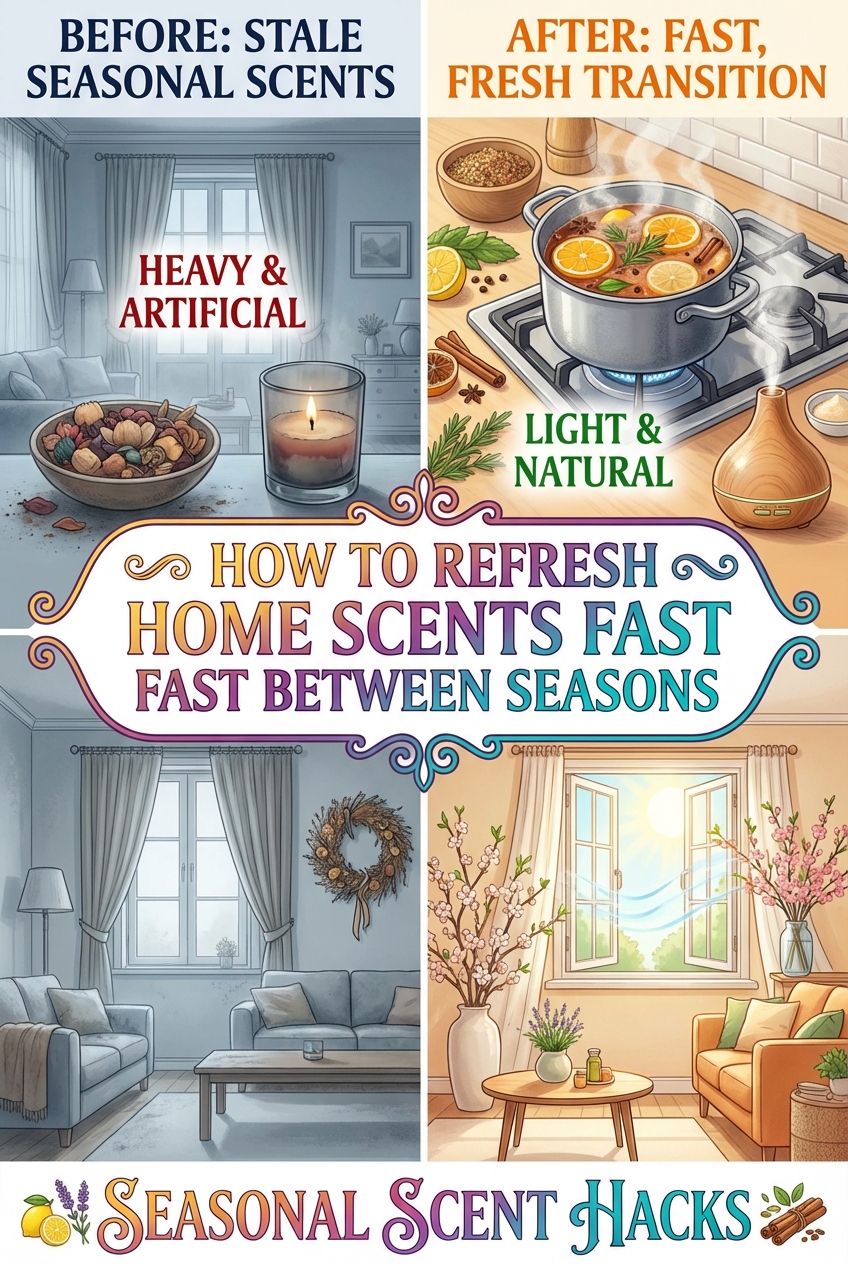
Before you buy anything new, do a one-day reset: open the windows, put away the old candles, and start the next season with a clean nose. Then add one layer at a time and stop when the room smells finished.
Frequently asked questions
What is the correct order for layering fragrance at home?
Start by clearing old odors and washing fabrics. Then add a steady base (reed diffuser), an accent (candle or simmer pot), and a quick refresh layer (linen or room spray).
Does scent layering actually work?
Yes, as long as the scents share a family such as citrus and herbs or woods and amber. Unrelated scents tend to blur into one muddled smell.
How many scents should I use in one room?
Two or three related sources is plenty for most rooms. Add more only if the room is large and the scent fades before it reaches the far side.
How long should I wait between seasonal scents?
A day with the windows open and no fragrance gives your nose a reset. Clear the old candles and diffusers first so the new scent isn't layered over them.
Filed under
ArticlesMeet the author
Written by an architect.
Julio Arco is a passionate architect with years of experience in architecture, interior design, urban design, and housing. He studied at prestigious universities across North America and Europe.

- Name
- Julio Arco
- Job
- Architect and online interior designer
- Studied
- Architecture, ITESM · Urban Design and Housing, McGill
- Partner
- Thor, Australian Shepherd
- Thor’s title
- Head of quality control