How to Style a Two-Tone Desk: Pairing Finishes That Work
Style a two-tone desk with contrasting woods, metals and textures. Get proportions, lighting, rug sizing and a step-by-step layering plan.

By Julio Arco
Architect and online interior designer
In this post
- What is a two-tone desk moment?
- How do you choose the two tones?
- Where do the two tones come from?
- What size and spacing should a two-tone desk have?
- How do you build the look step by step?
- Common mistakes and quick fixes
- How does a two-tone desk change by room?
- Check before you call it done
- Frequently asked questions
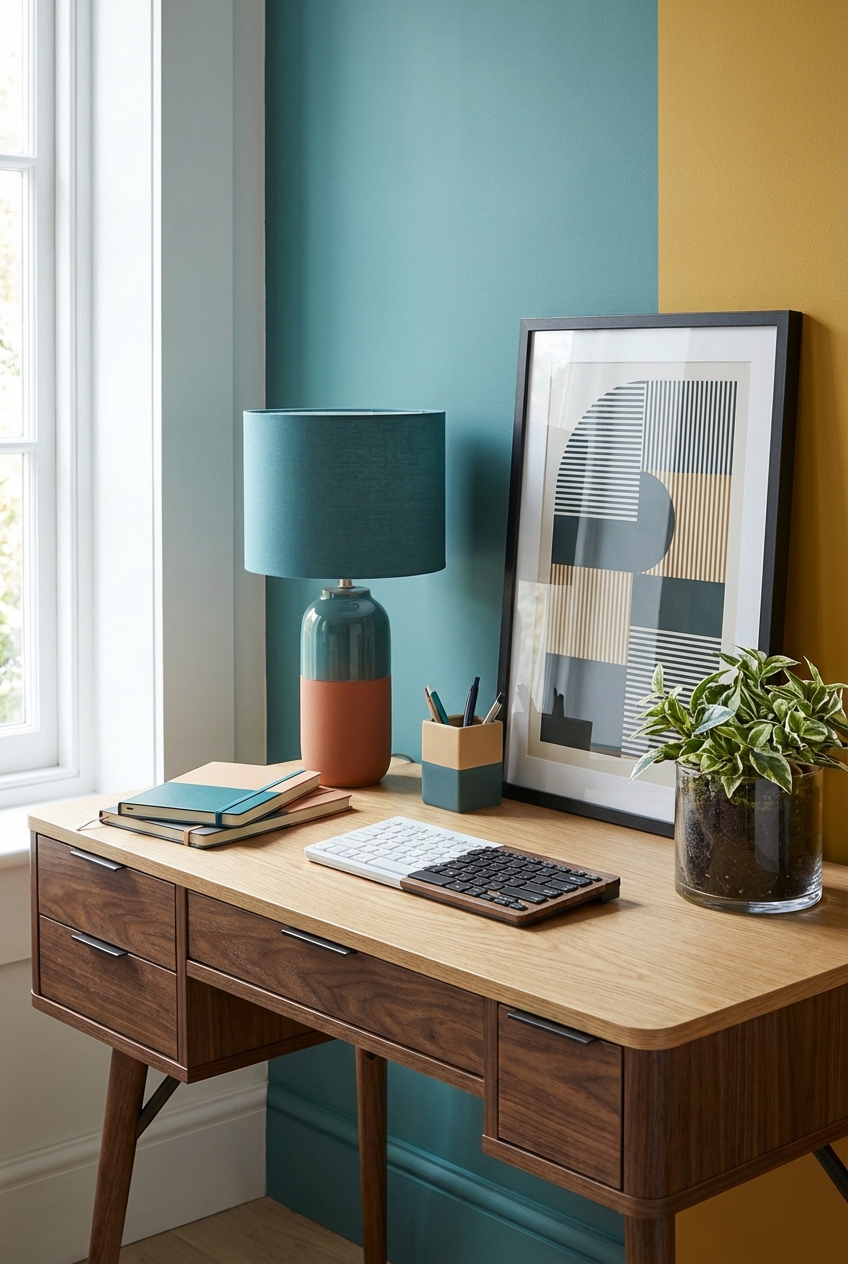
A two-tone desk pairs two contrasting finishes, such as pale wood with black metal or a painted top with walnut drawers, so the piece reads as designed instead of matched. Pick one dominant tone, add a second in roughly a third of the setup, and repeat each tone once or twice in the chair, lamp and accessories.
It's easy to treat the desk as pure function and let cords and paper stacks take over. A little contrast fixes that, and it doesn't take a big budget.
What is a two-tone desk moment?
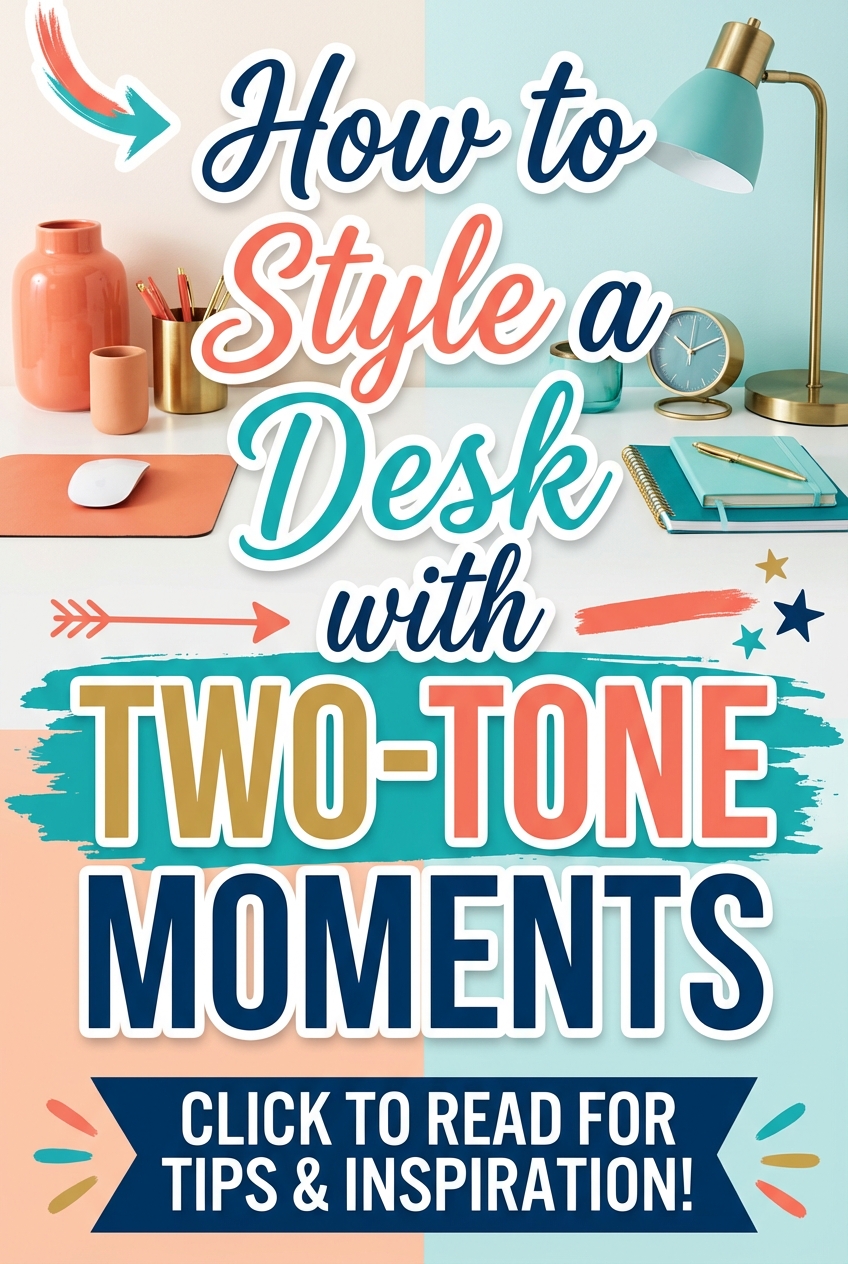
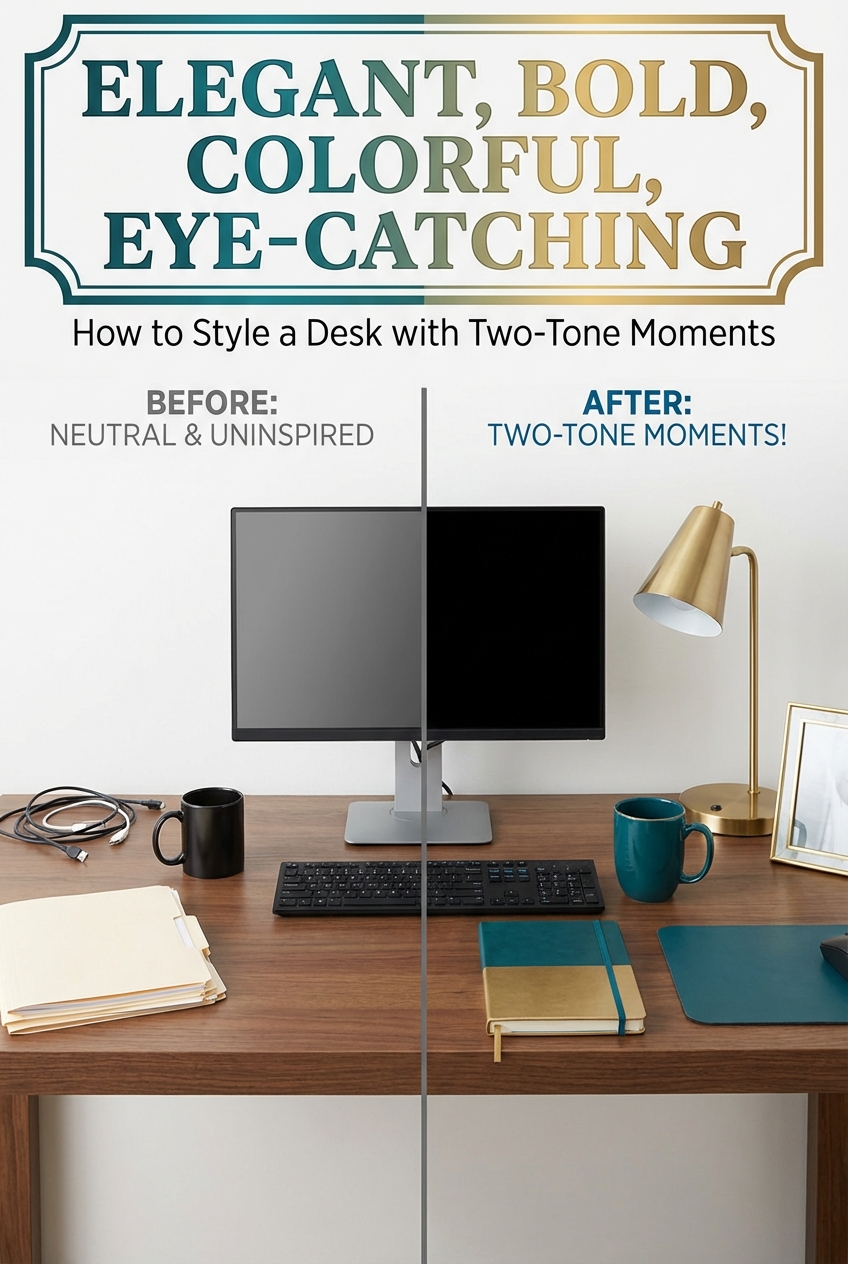
It's the small composition formed by the desk, chair, lamp and a few objects when two finishes talk to each other. Think of it as the opposite of the matching office set: instead of a desk, chair and shelf in the same cherry, you let a light surface meet a dark one.
Contrast also manages visual weight, which matters in small rooms. A solid dark desk can feel like a block in a compact living room, while a pale top on dark legs reads lighter because you can see the floor and the structure. If the desk lives in a corner of a shared room, two tones help it look like a deliberate piece of furniture instead of an afterthought.
How do you choose the two tones?
Start with value, meaning light versus dark. Two woods that are close in value, like medium oak and light maple, tend to look like a failed match. Go further apart: light oak with walnut, or any wood with matte black.
Then check undertones. Warm (yellow or red) and cool (grey or blue) finishes can coexist, but they look best when one tone leads. A grey-washed oak with matte silver works because both lean cool. If your floor is orange-toned wood, see how to tone down orange wood floors with furniture and decor before choosing a warm desk top.
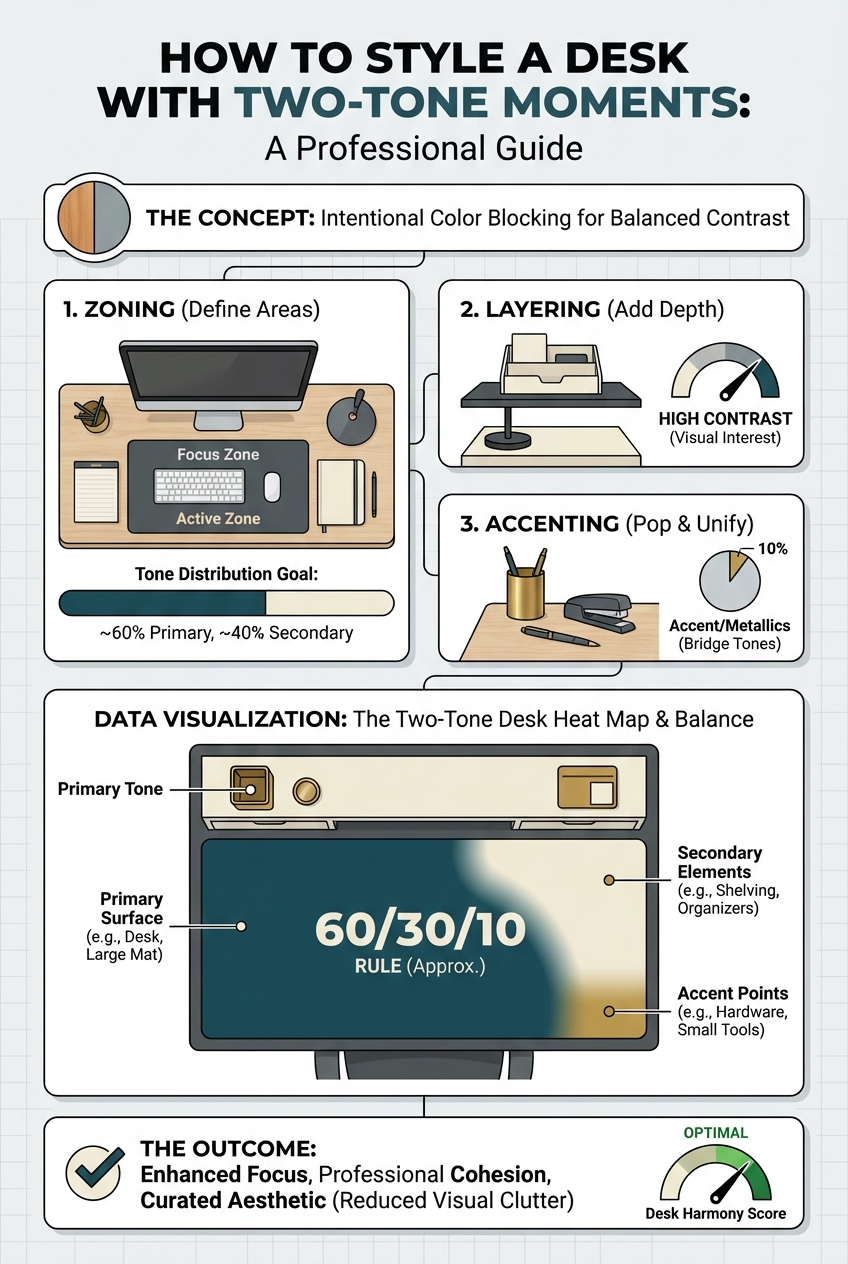
A simple ratio helps: about 60 percent of the visible finishes in one tone, 30 percent in the second, and a small accent of a third material such as brass or leather. Treat it as a guide, not a law.
Where do the two tones come from?
The desk itself
Look for a metal frame with a wood top, or painted drawer fronts on a walnut frame. The grain of wood against a flat painted or metal surface is what gives the contrast.
Hardware
If your desk is a single color, swap the pulls. Brushed brass or matte black handles on a navy desk are a cheap way to add a second tone, and the change is reversible if you rent.
Texture
Texture counts as a tone too. A glass top with a leather desk mat, a woven basket beside a metal desk, or a stone coaster on wood all add contrast without adding color.
The chair
The chair is the largest secondary element, so let it contrast with the desk. A dark desk pairs well with a cream or light grey upholstered chair. A pale wood desk takes a black sculptural chair nicely.
What size and spacing should a two-tone desk have?
For a primary workspace, I recommend a desk at least 48 inches wide and 24 inches deep. If the top is dark and heavy, leave generous empty wall or floor around it, about 36 inches where the room allows, so it doesn't crowd the space.
Ergonomics come before styling. OSHA's workstation guidance says the top of the monitor should sit at or just below eye level, and that elbows stay close to the body and are bent between 90 and 120 degrees. Raise a monitor on a stand in your second tone, but don't let decor push the screen or keyboard out of those positions.
Lamp scale
A lamp that's too small looks lost. Aim for a lamp roughly 18 to 24 inches tall, and make sure the shade sits low enough that the bulb isn't in your eyeline when seated. A lamp that carries both desk tones, like a black base with a brass arm, ties the setup together. Put it on the side opposite your writing hand to avoid shadows.
For bulbs, a color temperature between 3000K (warm white) and 4000K (neutral white) keeps the work area clear and still comfortable at home.
Rug size
On a hard floor, a rug anchors the whole vignette. All four desk legs and the chair, even when pulled back, should sit on it, which usually means at least 5 by 8 feet. If the chair has wheels, choose a low-pile or flatweave rug, since shag traps casters. Pick a rug that repeats one of your two tones, but avoid matching the desk legs exactly: a black desk on a black rug loses the contrast at floor level, while a light jute makes the legs stand out.
How do you build the look step by step?
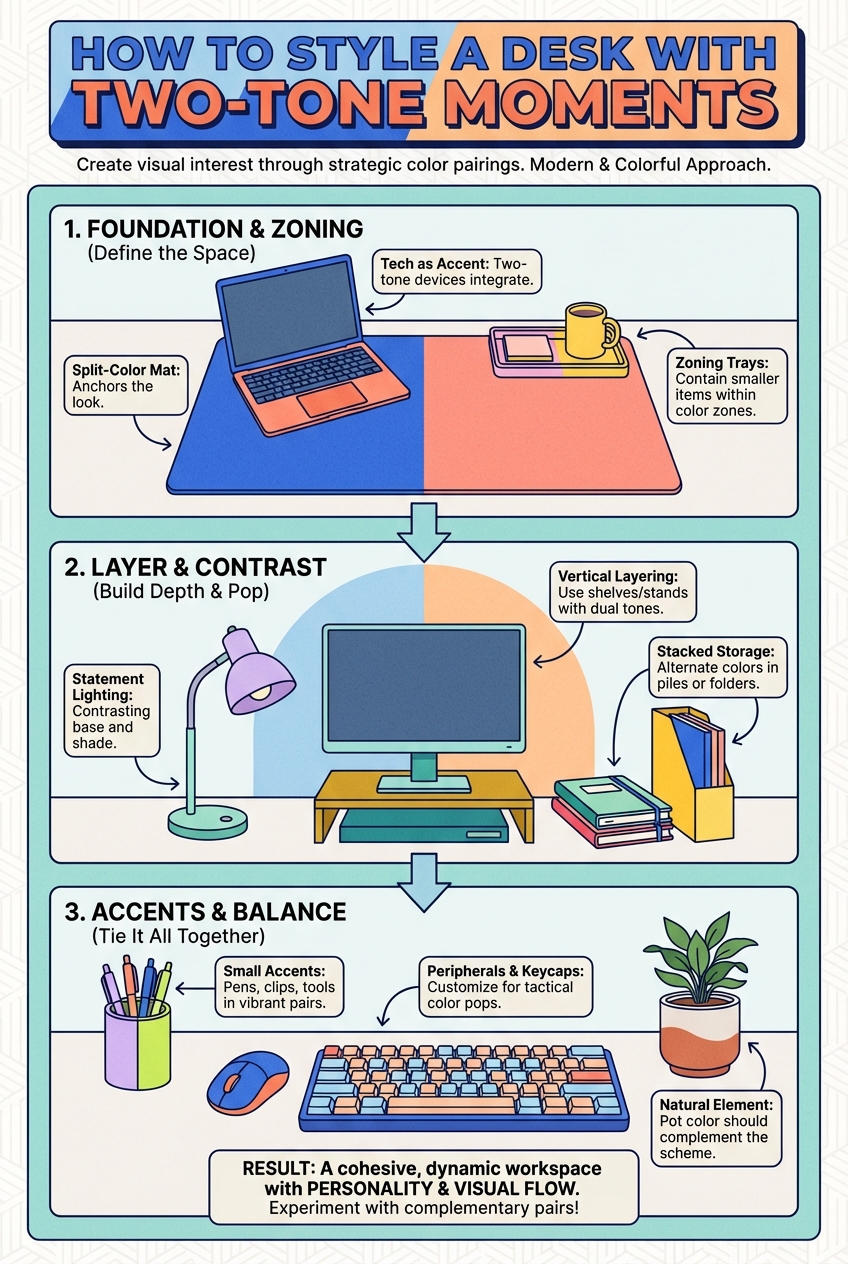
- Clear the desk completely. Place it so the screen sits side-on to a window if you can, which cuts glare.
- Decide your second tone. If the desk is one color, black, brass and oak are the easiest additions.
- Set the big items first: monitor or laptop stand, then lamp. Dark lamp on a light desk, lighter or metallic lamp on a dark one.
- Add a middle layer, such as a desk mat in a contrasting color and a tray for loose items. A stone or marble tray brings in a third texture. A tiered tray also works if your desk has room.
- Add height. A vase with one branch, a short stack of books topped with an object, or a framed print leaning on the wall breaks up the flat surface.
- Sit down and edit. Can you reach everything? Remove one item that doesn't earn its place.
Common mistakes and quick fixes
Contrast that's too close is the most frequent one. If it looks like a near match, push one finish darker or lighter.
Visible cables ruin a good composition fast. Use cord sleeves or channels in the color of the desk legs, and route wires behind them. As a bonus, tidy cords are harder for a curious dog or cat to chew or tug, though your vet is the right person to ask about any pet-safety concern.
Over-accessorizing leaves no room to work. Group objects in odd numbers, like a lamp, a tray and a plant, and keep the rest of the surface clear for your arms and laptop.
If you like a polished desk, it's worth looking at how a glam desk setup stays functional, since the same editing rules apply.
How does a two-tone desk change by room?
In a dedicated office you have room for scale. An L-shaped desk can have a wood main surface and a charcoal return, giving you one zone for the computer and one for writing.
In a living room nook, the desk should blend in. A slim console or secretary desk in a finish that echoes your coffee table, for instance brass legs repeated in the desk hardware, keeps the room coherent.
In a bedroom, keep it softer: a light oak desk with cream drawers feels calmer than black and white, and an upholstered chair adds warmth.
Check before you call it done
- Two clearly different materials or colors are visible.
- One tone dominates and the other supports.
- The chair contrasts with the desk.
- Cables are hidden or bundled.
- Texture varies: wood, metal, leather, stone or fabric.
- The desktop has open space to work.
- The rug fits both desk and chair.
- Walk past the desk from the doorway: does it look balanced from a distance?
One practical tip before buying: measure the door and hallway, because a large desk that looks right in the room still has to get in.
Frequently asked questions
Can I mix two different wood tones on one desk?
Yes. Keep one wood clearly darker than the other and check that their undertones are both warm or both cool. Avoid pairing two woods of the same color with very different grain.
How do I add a second tone to a white desk?
Start with hardware and accessories: wood or matte black pulls, a tan or navy leather desk mat, and a dark sculptural lamp. None of these require painting the desk.
What should I do with a desk that faces a wall?
Treat the wall as part of the composition. Shelving or art that repeats your two tones above the desk draws the eye up and keeps the desk from looking pushed against a flat surface.
What rug works best under an office chair?
A low-pile rug or flatweave such as jute lets wheels roll freely. If you want a plush rug, a clear chair mat on top allows movement and protects the fibers.
Filed under
ArticlesMeet the author
Written by an architect.
Julio Arco is a passionate architect with years of experience in architecture, interior design, urban design, and housing. He studied at prestigious universities across North America and Europe.

- Name
- Julio Arco
- Job
- Architect and online interior designer
- Studied
- Architecture, ITESM · Urban Design and Housing, McGill
- Partner
- Thor, Australian Shepherd
- Thor’s title
- Head of quality control