Themed Kids Room Decor: Afrohemian Style With African Prints
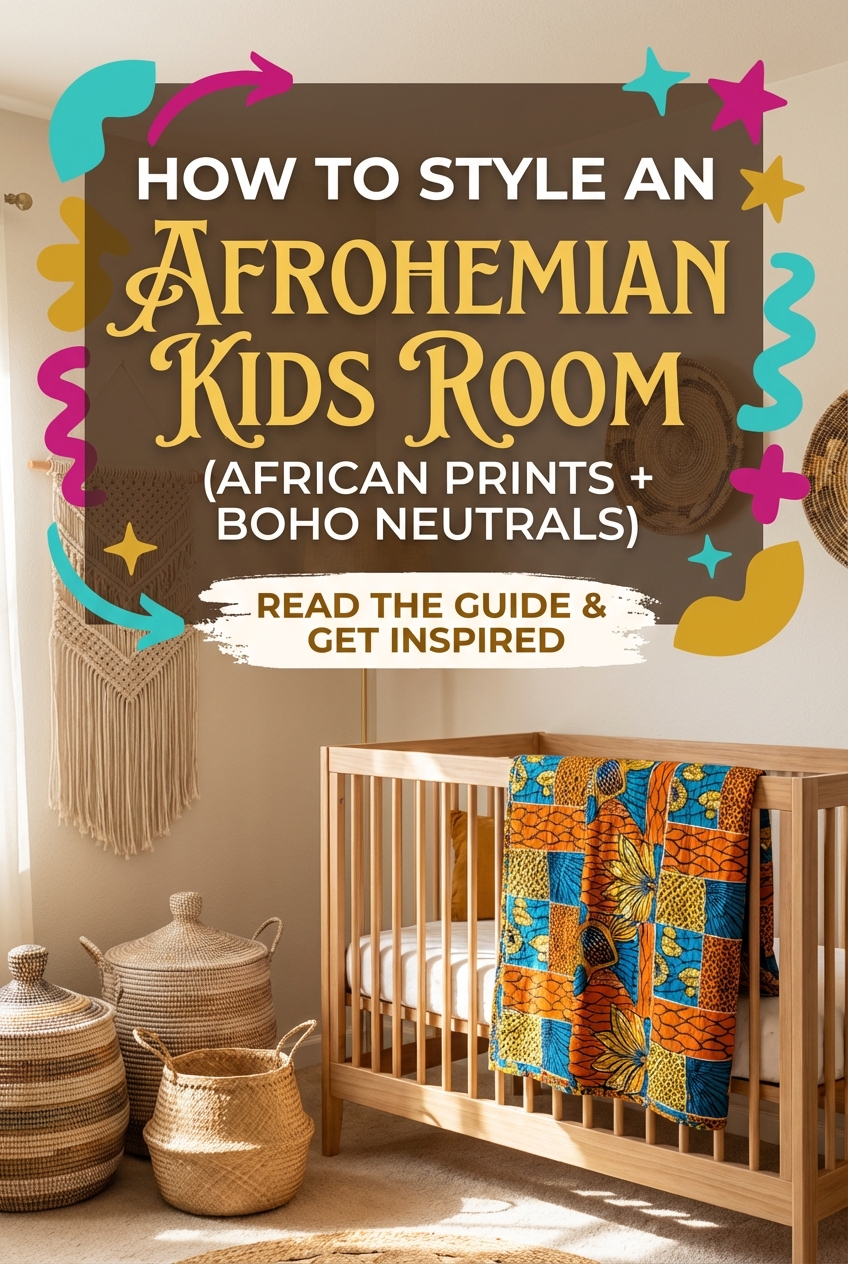
Themed kids room decor with an Afrohemian twist: African prints, boho neutrals, rug and art sizes, safe layouts and fixes for common mistakes.

By Julio Arco
Architect and online interior designer
In this post
- What is Afrohemian style in a kids room?
- What goes into the look?
- How should you lay out the room?
- How do you build it step by step?
- What are cool things to put in a kids room with this theme?
- How do you adapt it by age?
- What mistakes should you avoid?
- How do you keep the balance?
- Frequently asked questions
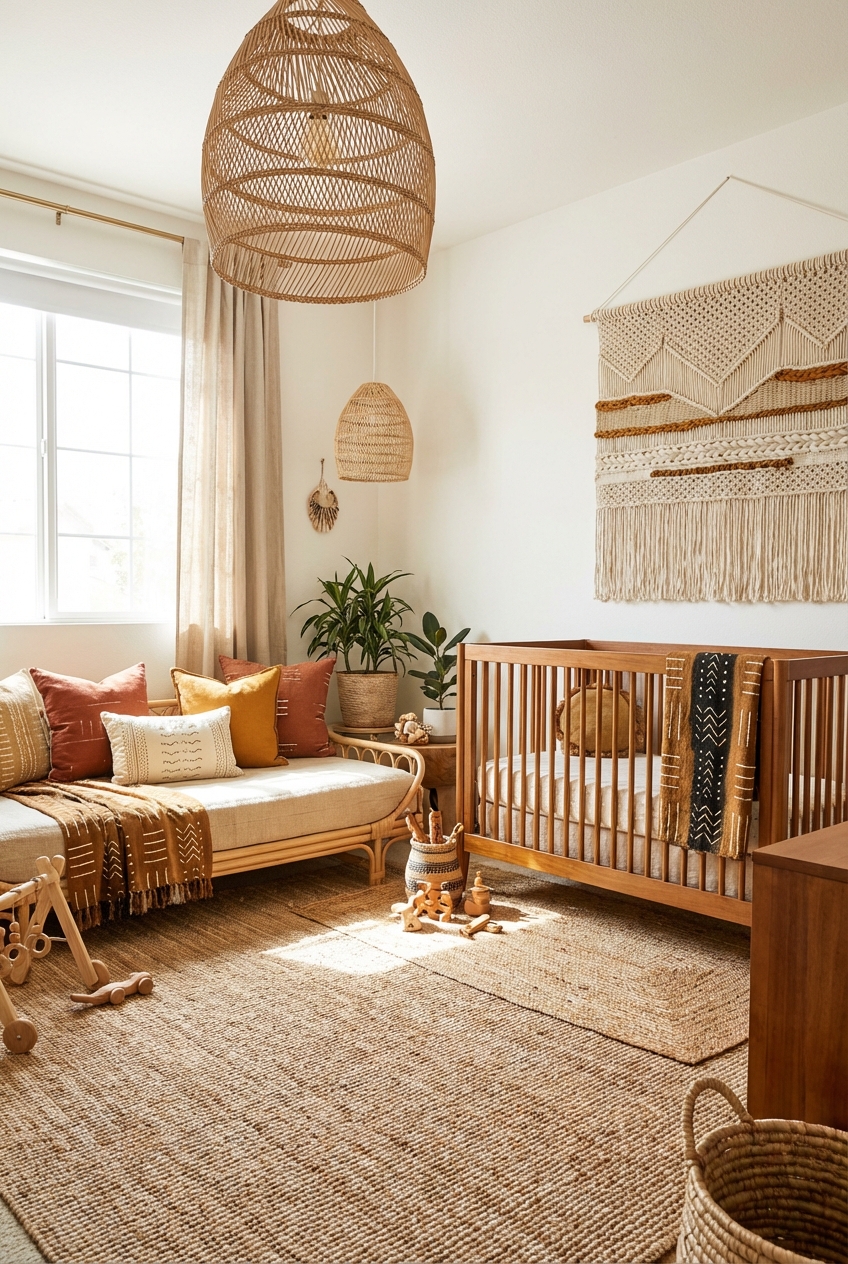
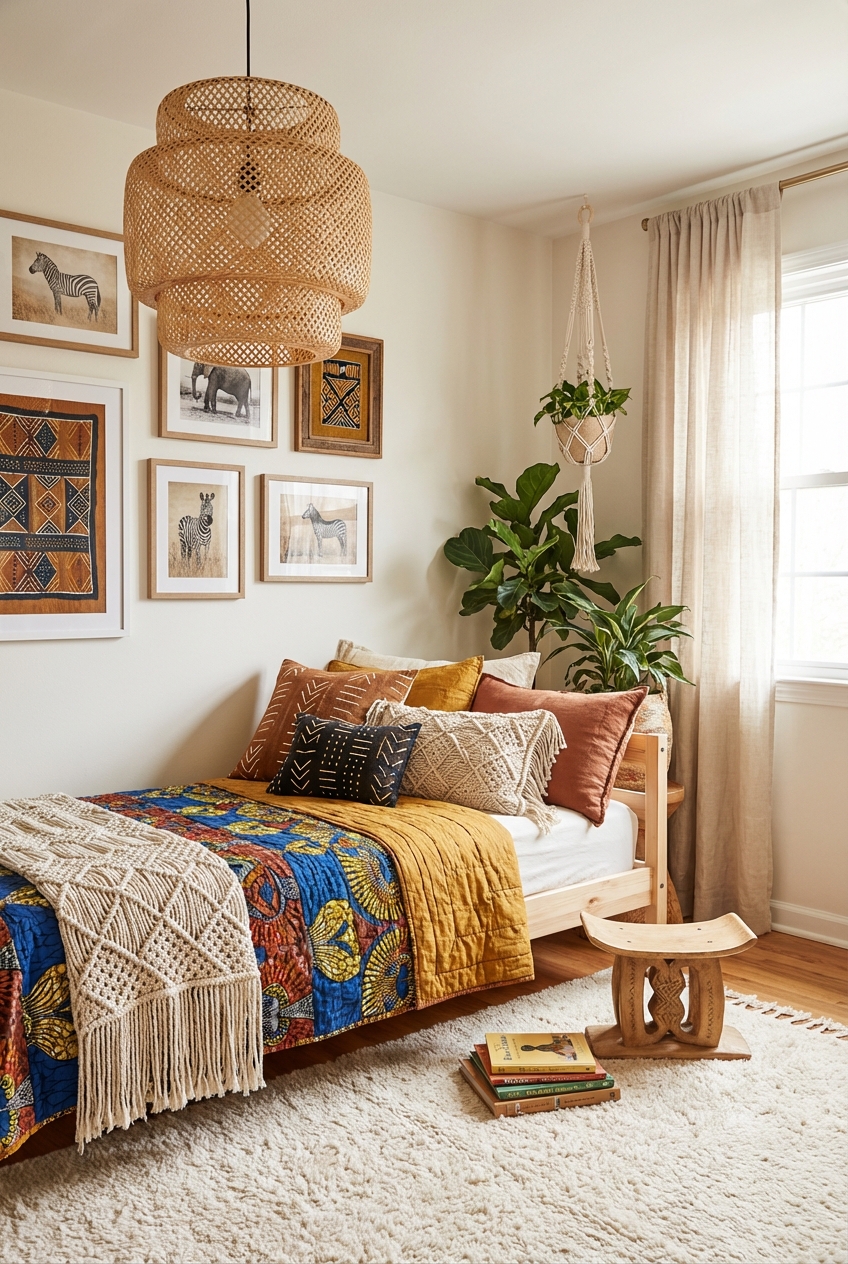
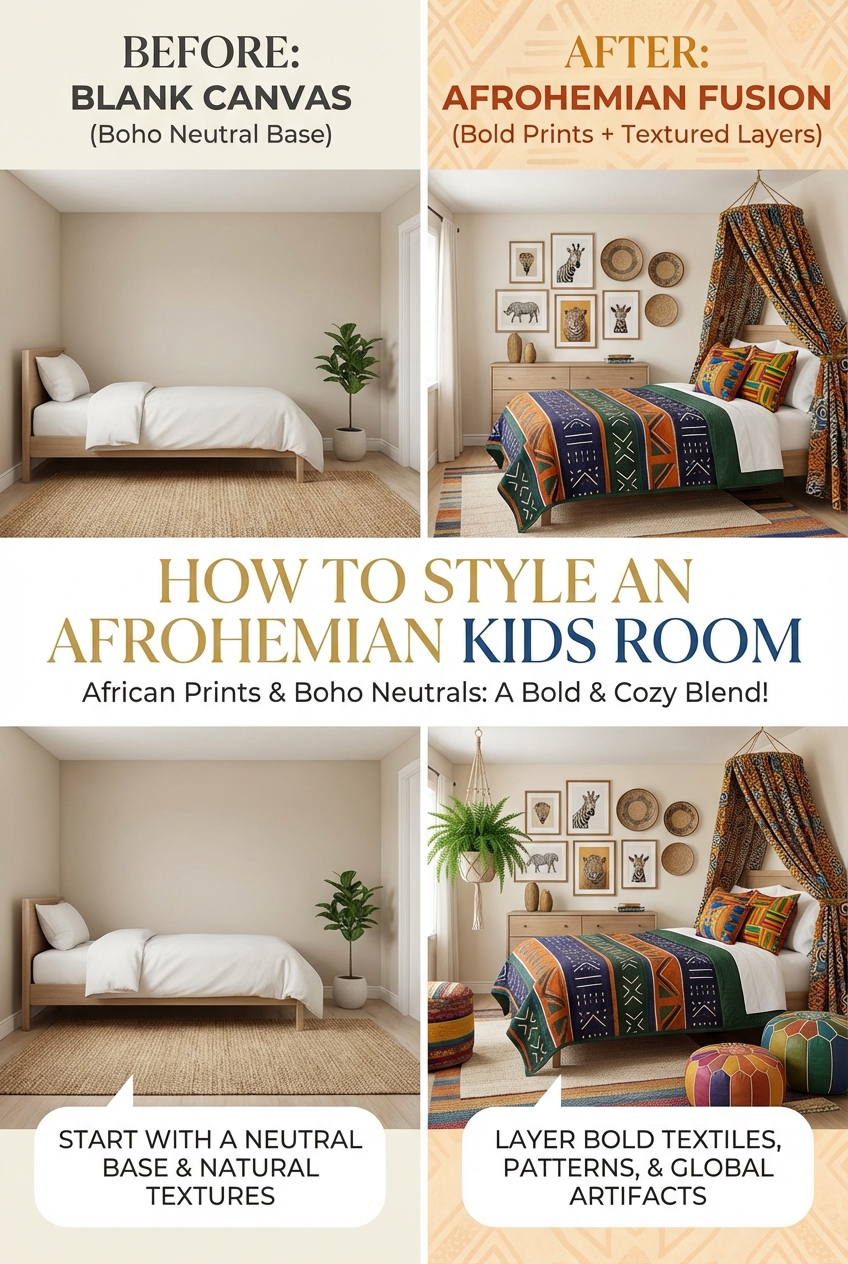
Afrohemian is one of the good themes for a kids room if you want something calm that still has personality. The recipe: a warm neutral base (sand, creamy white, clay), a few African-inspired graphic textiles such as black-and-white mudcloth, and plenty of natural texture like rattan, jute and light wood.
It also grows with your child. Geometric prints and earthy tones don't look babyish, so you can swap bedding and baskets later instead of redoing the whole room.
What is Afrohemian style in a kids room?
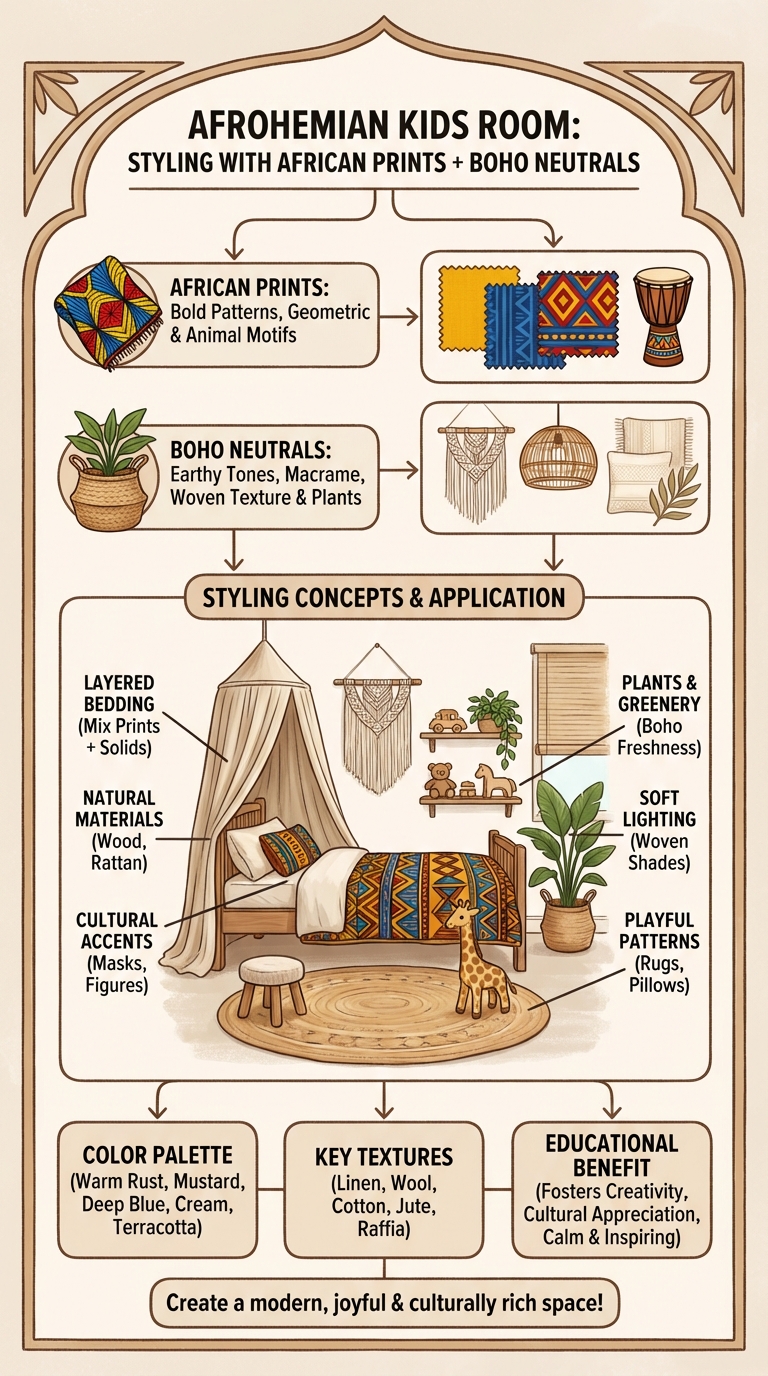
It blends African textile traditions, such as mudcloth (Bogolanfini), Kente and Kuba cloth, with the soft, relaxed side of bohemian design. The African pieces bring pattern and geometry. The boho pieces bring softness: macrame, low furniture, woven baskets.
It suits parents who prefer natural materials to plastic and like a collected look over a matching furniture set. If you want to see the same palette in other rooms, take a look at the Afro-Boho nursery color palette.
What goes into the look?
Graphic textiles
Mudcloth is traditionally hand-dyed, which gives deep black and cream contrast. Use it for pillows, a footstool cover or framed wall art. Repeating triangles, zig-zags and lines read as graphic but calm when you keep them to black and white or earth tones.
Natural fibers
Rattan, seagrass and jute add texture and hold up well. A seagrass toy trunk or a jute rug does a lot of work in one piece.
Earthy colors
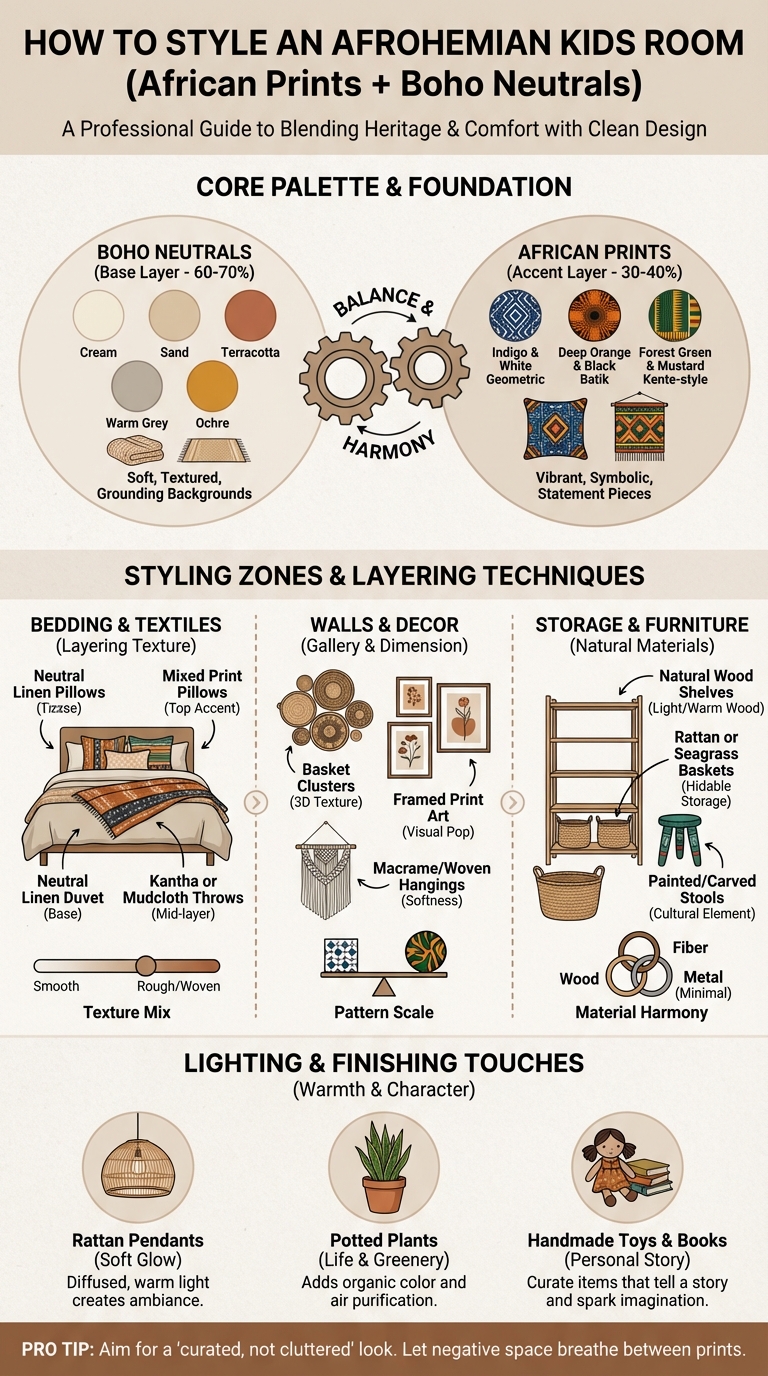
Start with warm white or pale sand on the walls, then layer clay, rust and mustard. Avoid cool whites with blue undertones, which can make wood and prints look flat and muddy.
Greenery
Keep plants non-toxic, and if you have a pet, check any plant with your vet before it comes home. Faux olive trees or dried palm spears in a tall floor vase add height without soil spills. Make sure anything dried is out of reach of small hands.
How should you lay out the room?
Layout comes before decor. These are established rules of thumb, so measure first.
- Rug: in a typical 10x12 bedroom, an 8x10 rug works. The front legs of the bed and any chair should sit on it, so the furniture feels anchored.
- Walkways: leave about 30 inches for main paths, and about 36 inches of clear space around a rocking or swivel chair.
- Curtains: hang the rod a few inches below the ceiling or 6 to 10 inches above the window frame, and extend it 8 to 12 inches past each side so the glass stays uncovered.
- Art height: the center of a main piece sits around 57-60 inches from the floor. In a playroom, hang a few pieces at about 24-30 inches so your child can actually look at them.
How do you build it step by step?
- Paint the walls warm white or pale sand.
- Lay a large rug, such as chunky wool in oatmeal or a flat-weave jute. If jute is scratchy for crawling knees, layer a soft cotton or sheepskin rug where your child plays.
- Choose one or two hero furniture pieces in a natural finish, like a light oak bed or a rattan daybed. Keep the rest simple.
- Add the prints: two mudcloth pillows on a chair, a Kente-patterned basket for toys. Keep throws and loose bedding out of a baby's sleep space.
- Hang woven baskets on the wall. They're lightweight and add texture, but fasten them securely.
- Use a floor lamp with a linen shade instead of harsh overhead light, and a warm nightlight (around 2700K).
What are cool things to put in a kids room with this theme?
Here are some unique decor ideas for kids rooms that fit the style and keep working as your child grows:
- A floor tent or reading nook made from mudcloth-inspired fabric.
- Wall-hung woven baskets as three-dimensional art.
- Low wooden shelves that display both toys and handmade objects.
- A small carved stool that works as a side table.
- Floor cushions and knit blankets for the "squish" factor.
- Baskets in different weaves to hide plastic toys.
For a different angle on the same idea, see how to add nostalgia to a neutral kids room, or browse Afrohemian wall art ideas for baskets, textiles and prints.
How do you adapt it by age?
Nursery
Use high-contrast black and white mudcloth near the changing table and a soft, oversized rug for tummy time. Anchor all wall decor and keep it lightweight.
Toddler and big kid room
Move to a low floor bed with a wooden frame, add bigger baskets for cleanup, and bring in deeper indigo or burnt orange through bedding and curtains.
Playroom
Prioritize durability. Choose a washable or easy-to-wipe rug, keep shelves low, and put the delicate handmade pieces higher up.
What mistakes should you avoid?
- Matching every pattern. If the rug, pillows and curtains all use the same print, the room feels like a set. Mix scales: a large pattern on the rug, a small tight one on pillows, and solids in between.
- Skipping softness. Hard wood and sharp graphics feel cold. Add knits, cushions and a plush rug.
- Fragile fabrics. A loose hand-woven textile will snag on upholstery. I recommend saving loose weaves for wall hangings and pillows, and choosing a tightly woven cotton print for anything people sit on. For a kid's room, washable "mudcloth-style" prints are far easier to live with than authentic cloth, which may bleed and need spot cleaning.
- White linen seating. Pick performance fabrics that look like linen but resist stains, especially if a dog or cat shares the sofa.
How do you keep the balance?
As an architect, I'd aim for roughly 60 percent neutrals, 30 percent texture and 10 percent bold print as a guideline, not a law. Pick one hero textile first, usually the rug or curtains, and pull the palette from it. Check the paint at midday and in the evening under lamps, and add a touch of black (a frame or lamp base) to ground the earth tones.
Before you call it done, check that heavy furniture is anchored to the wall, that rattan pieces have no splinters or sharp edges underneath, and that the rug has a non-slip pad. For anything involving wall anchoring or wiring, a licensed professional is the safer choice.
Frequently asked questions
What are some good themes for a kids room?
Popular picks include nature, space, animals, travel and global-inspired looks like Afrohemian. Choose a theme built on a neutral base with swappable accents, so it still works as interests change.
What are some cool things to put in a kids' room?
A reading nook, wall-hung woven baskets, low display shelves, floor cushions and a warm nightlight all add character. Pick items your child can use, not only look at.
Are African prints too busy for a sleeping space?
Not when the palette is tonal. Black and white or earthy brown prints stay calm, while neon or very high-contrast colors feel louder.
Is jute too rough for a nursery?
Natural jute can be scratchy for crawling babies. Choose a softer bleached or blended jute, or layer a plush rug where your child plays.
Filed under
ArticlesMeet the author
Written by an architect.
Julio Arco is a passionate architect with years of experience in architecture, interior design, urban design, and housing. He studied at prestigious universities across North America and Europe.

- Name
- Julio Arco
- Job
- Architect and online interior designer
- Studied
- Architecture, ITESM · Urban Design and Housing, McGill
- Partner
- Thor, Australian Shepherd
- Thor’s title
- Head of quality control