Picture Hanging Ideas for Vintage Posters in Kids Rooms

By Julio Arco
Architect and online interior designer
In this post
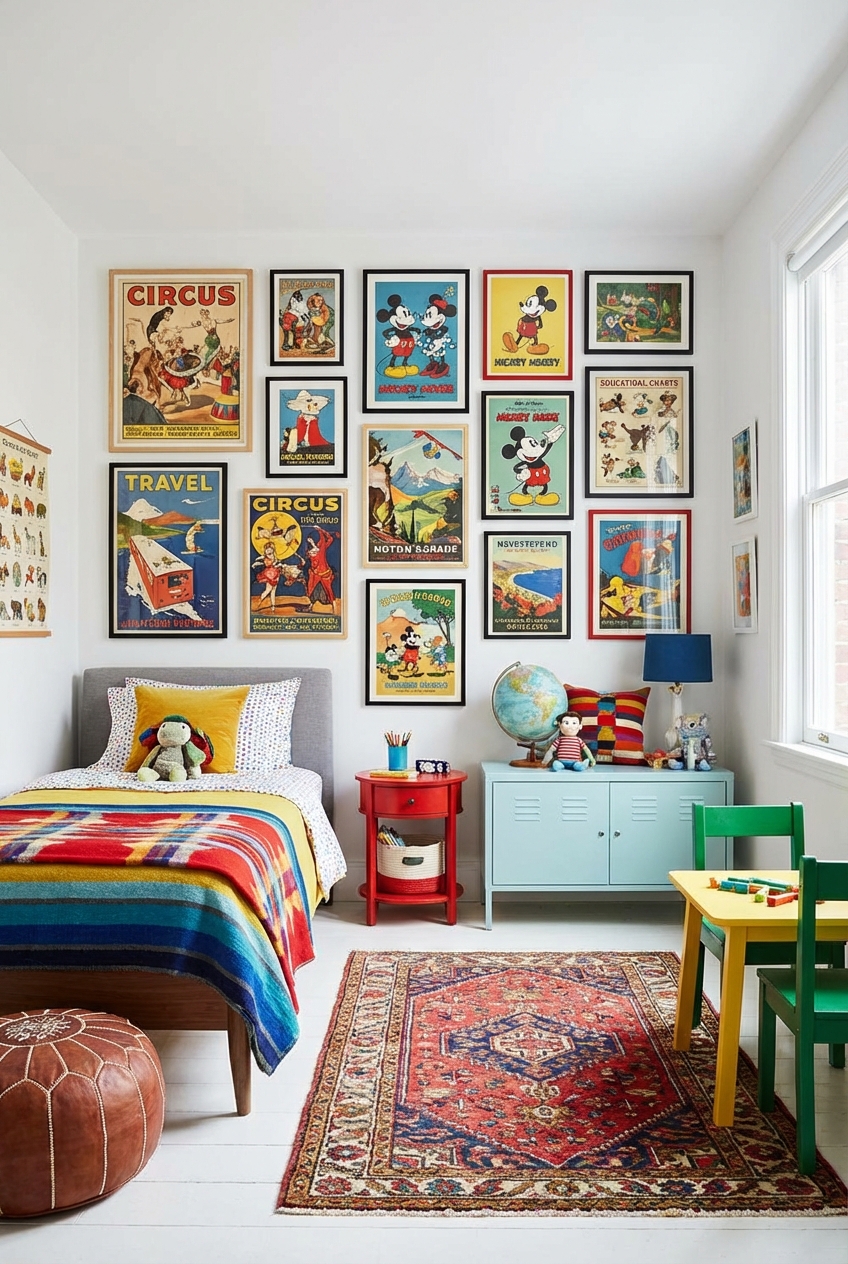
The easiest way to hang vintage posters in a kids room is to put them in acrylic frames, hang them lower than you would in a living room, and keep the group sized to the furniture below it. Add a bit of museum putty on the frame corners and the room stays tidy even when a ball goes astray.
Posters suit children's rooms well because they are cheap to swap, big on color and easy to change as interests change. Below are layouts, heights and hanging methods that work, plus what to skip.
How high to hang framed artwork in a kids room
The standard gallery rule puts the center of a piece at about 57 inches from the floor. That height is set for standing adults, and a child's room has a different audience. In a nursery, where you spend time sitting and rocking, I'd drop the center to roughly 50-54 inches. In a play area, go lower still so the child can actually look at the art.
Cornell's textile and design faculty put it plainly. Charlotte Jirousek writes, "Our most universal standard of measurement is the human body; that is, our experience of living in our own bodies." Measure from the person who lives there, not from a rule printed in a magazine.
Over a bed, dresser or changing table, leave about 6-10 inches between the furniture top and the bottom of the frame. Art that floats much higher feels disconnected from the piece below it.
How do you size posters to the furniture?
Aim for a poster or group that spans about two-thirds to three-quarters of the furniture's width. Smaller looks lost, wider overwhelms the piece. A single large vertical poster over a narrow dresser works. Over a twin bed, a horizontal poster or a row of two or three prints fills the space better.
Centering matters too. Placing the art on the center line of the furniture gives symmetrical balance, which Cornell's Principles of Design describes as equal "weight" on equal sides of a centrally placed fulcrum. In practice: find the middle of the bed, mark it, and build outward from there.
If you want a deeper look at scale, our guide to scale and spacing for kids wall decor goes through more examples.
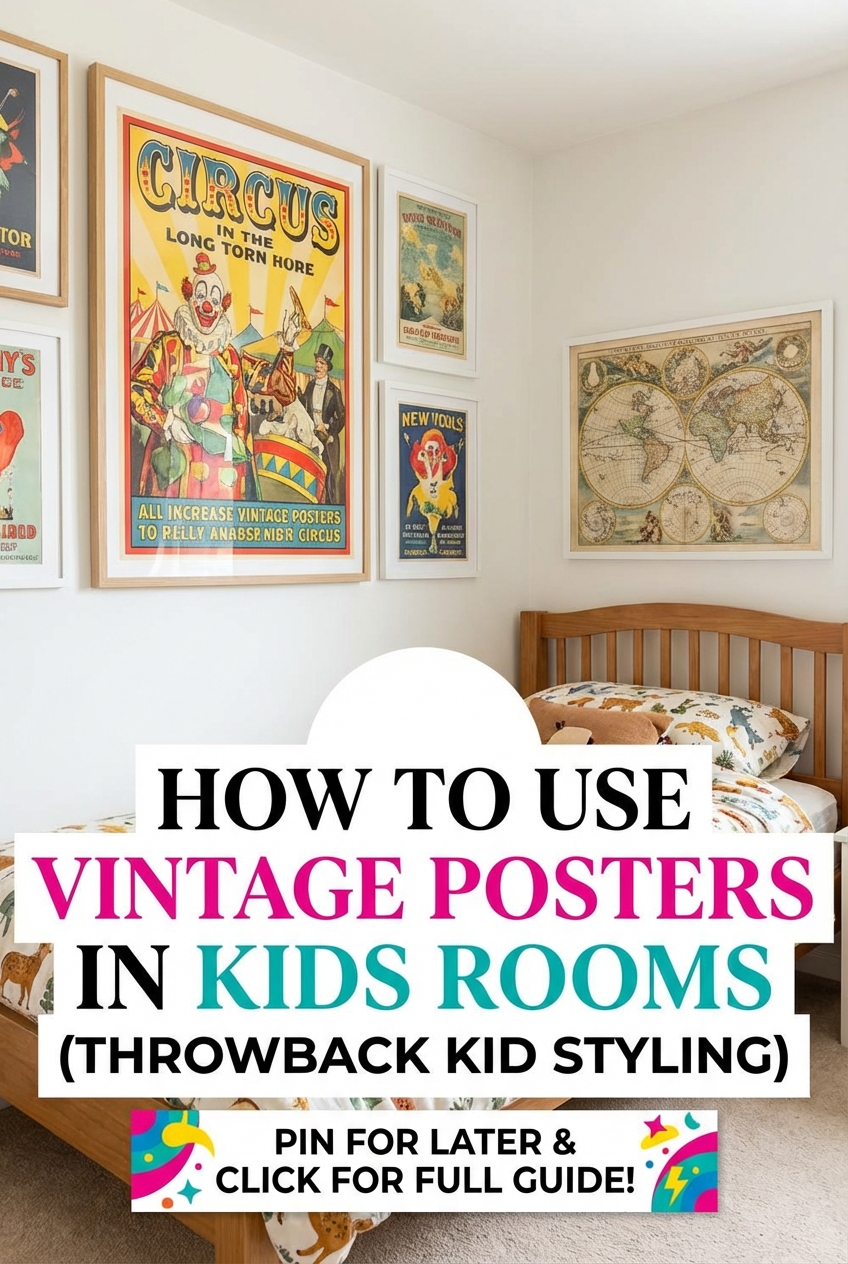
Gallery wall ideas with vintage posters
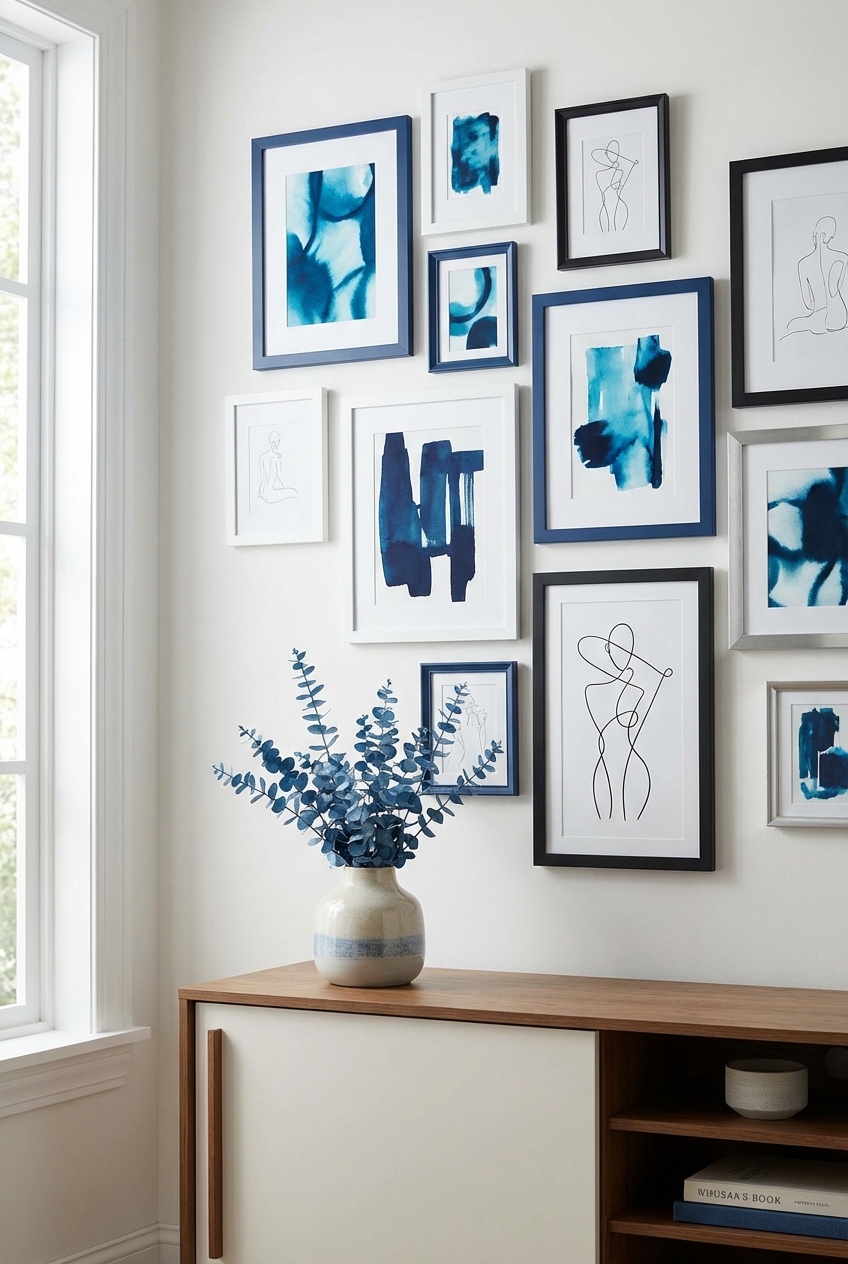
Posters come in non-standard sizes, so a gallery wall needs a plan. These layouts are forgiving.
- A grid of four, two over two, makes a solid block of color on a tall wall.
- One oversized poster flanked by two smaller ones gives a clear focal point.
- A single row at one height suits a low ceiling or a long wall over a bookshelf.
- A loose cluster with one hero poster works when you want a more casual look.
How to hang a gallery wall without guessing
- Trace each frame on kraft paper or newspaper and cut the shapes out.
- Tape the paper shapes to the wall and move them until the layout feels balanced.
- Keep gaps even, about 2-3 inches between frames. A tighter gap reads as one unit.
- Mark the hanging points through the paper, remove it, then hang and level each frame.
Mixing one big print with a few small ones keeps the wall from feeling monotonous. If every poster is the same size, the grid looks stiff.
Ways to hang pictures without nails
Renters and anyone wary of patching holes have good options.
- Adhesive strips work for light frames. Check the weight rating on the package and clean the wall first.
- Leaning a large frame on a dresser, low bookshelf or picture ledge needs no hardware at all and is easy to restyle.
- Picture ledges let you swap posters as often as you like.
I recommend a nail or screw into a stud or anchor for anything large, heavy or hung over a bed. Adhesive is fine for a small print, but a bunk bed or active play area is not the place to test its limits.
For a related weekend project, see these retro kids room upgrades.
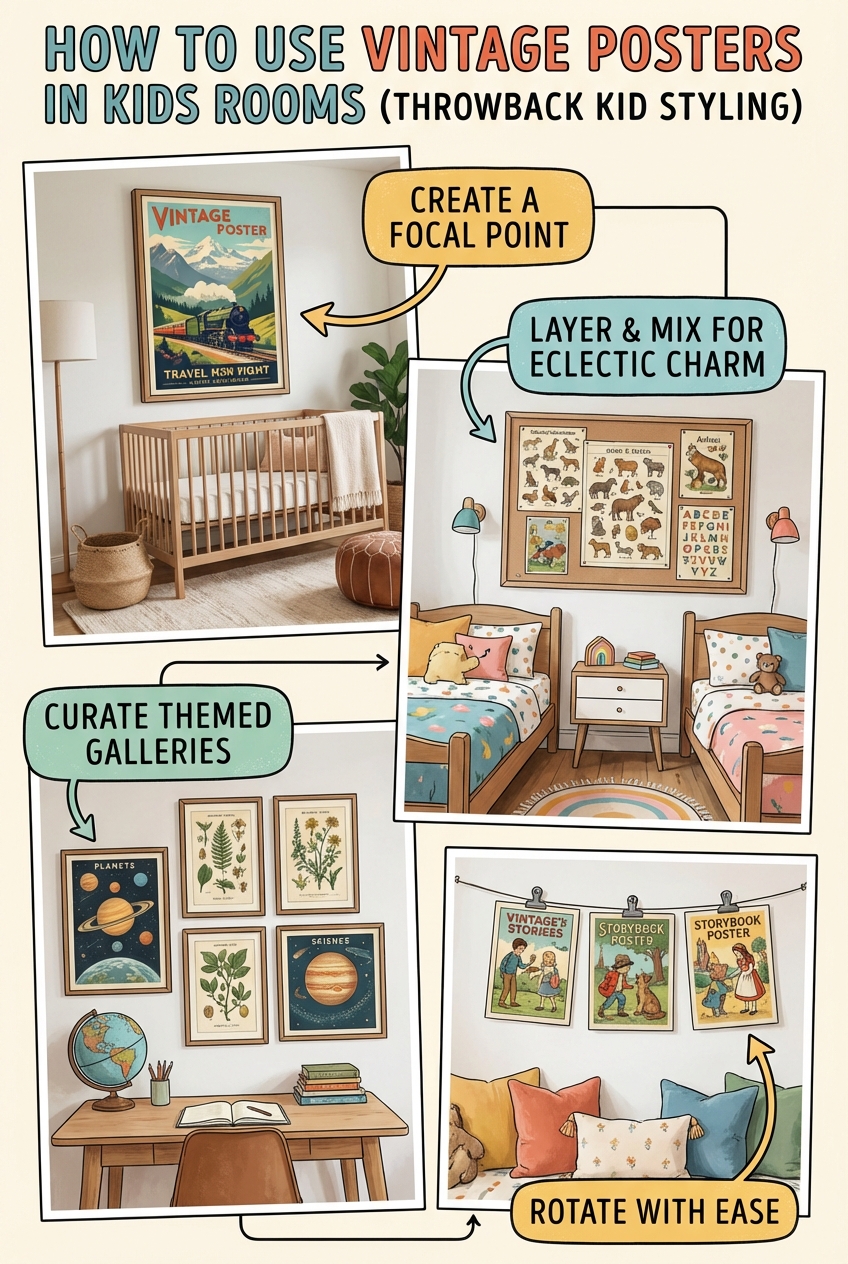
Creative ways to hang pictures without frames
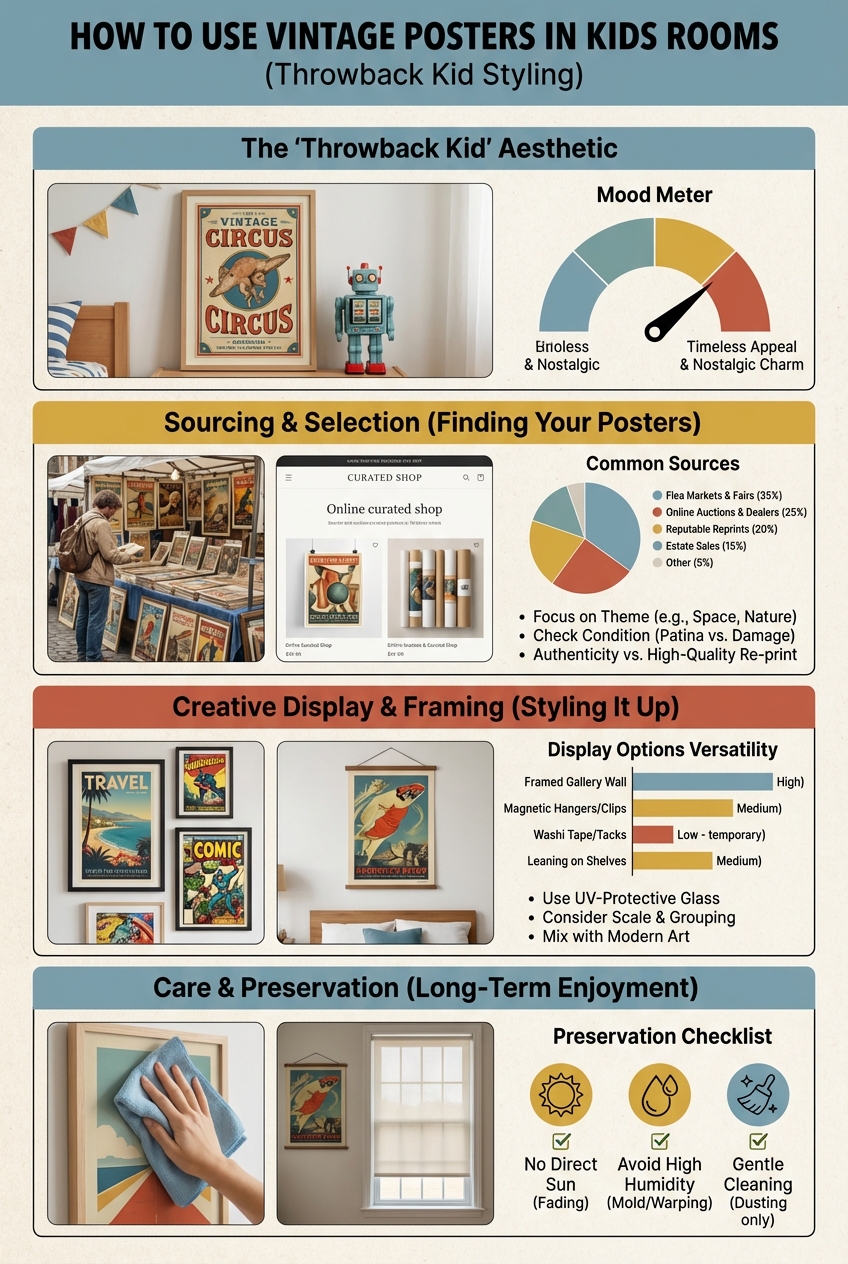
Frames are optional. Wooden poster hangers, the two strips that clamp the top and bottom edge, give a casual look and let you change art in a minute. Washi tape, bulletin-style cork rails and a wire with small clips also work well and cost little. Unframed paper can ripple or tear, so these suit reproductions better than rare originals.
When the print is valuable, frame it. As an architect, I'd choose acrylic instead of glass in any child's room. It resists shattering and many types offer UV protection, which helps with fading. Keep original prints out of direct sun, and clean acrylic with a soft microfiber cloth instead of glass cleaner, which can cloud it.
Common mistakes to avoid
- Hanging everything at adult eye level, so the art misses the child and the furniture.
- Using standard glass in a play zone.
- Choosing posters that are all one size.
- Pairing a bright white mat with cream-colored vintage paper, which makes the paper look dingy.
- Skipping the level. A crooked frame is the first thing people notice.
Museum putty on the bottom corners keeps frames straight through slammed doors and rough play. D-rings hold a frame closer to the wall than a wire, so it is less likely to tilt forward.
Matching posters to age and style
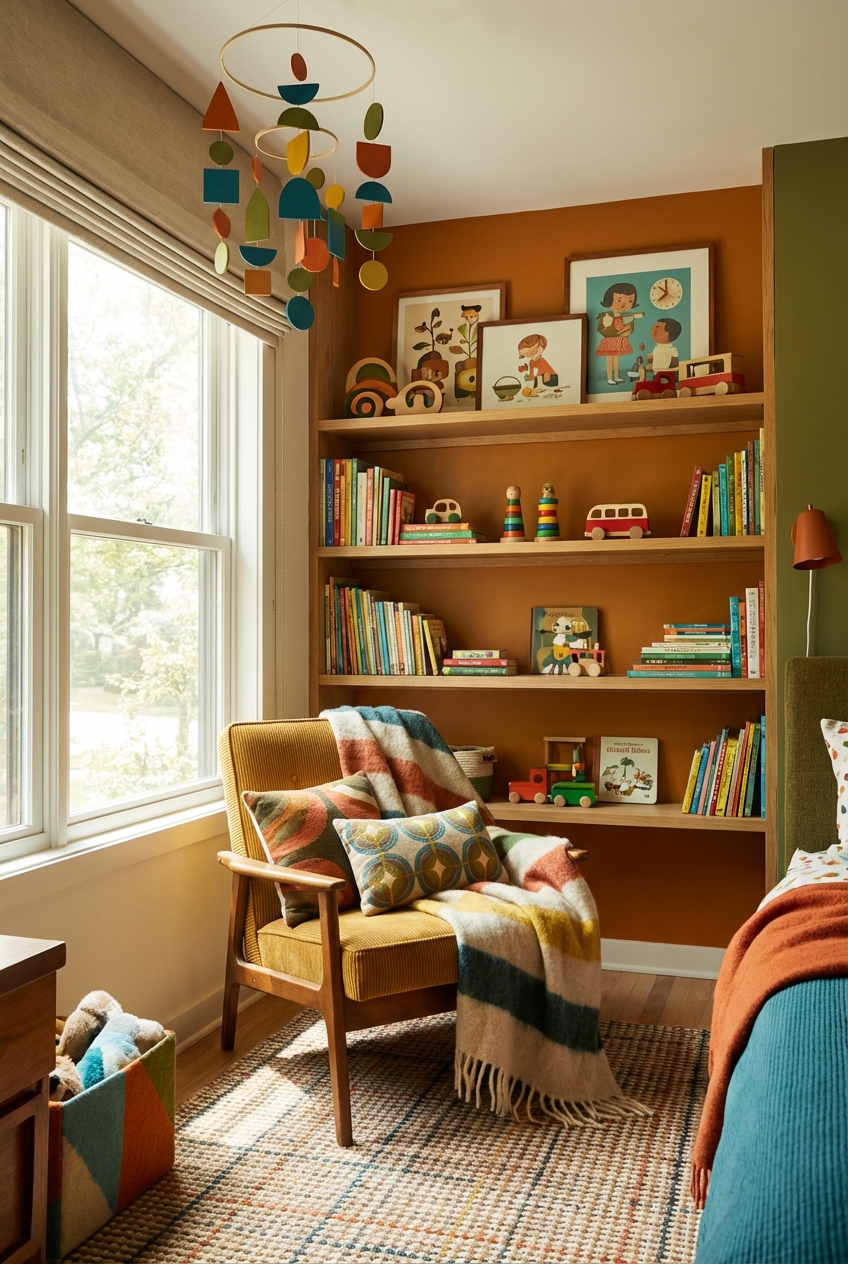
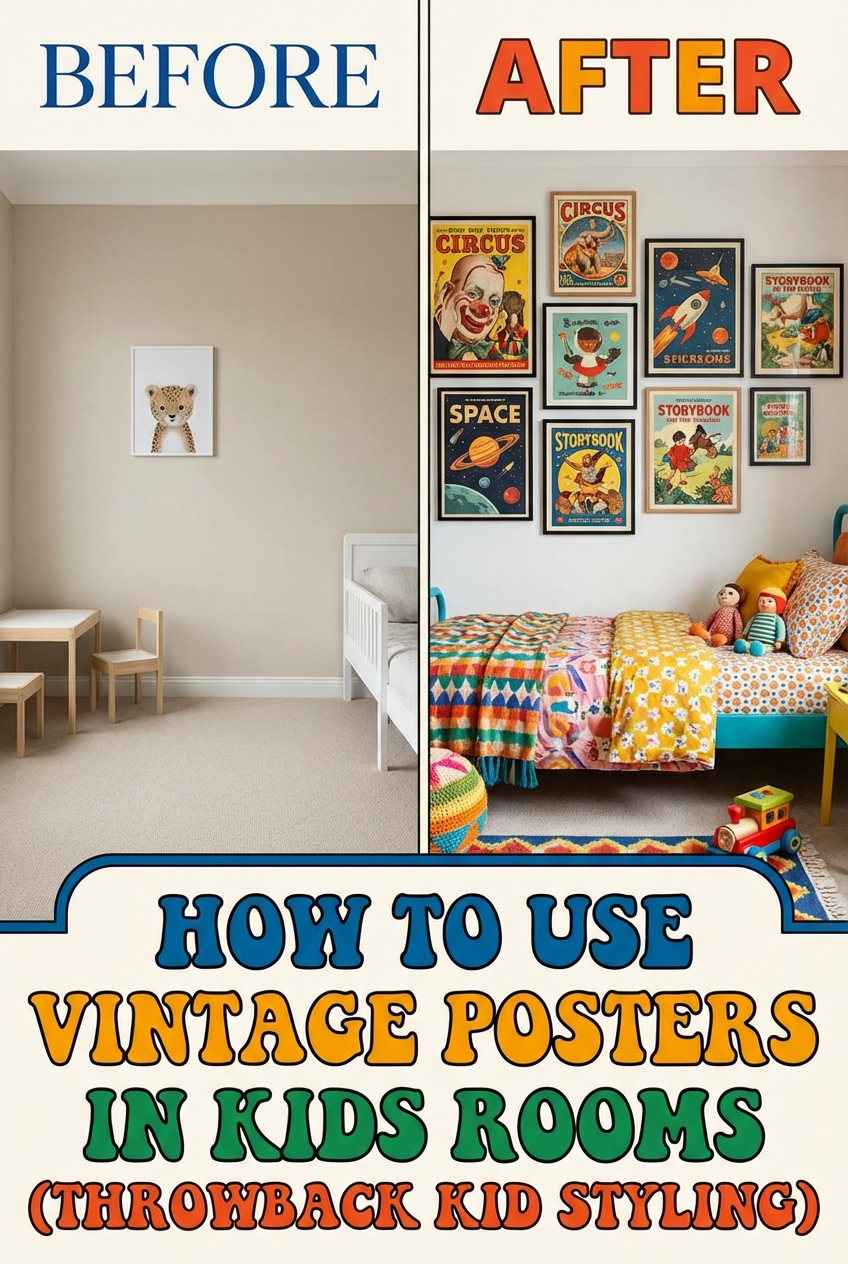
For a nursery, soft botanical prints, storybook illustrations or celestial maps in light wood frames keep things calm. Toddlers and elementary kids tend to love animals, circus art and vehicles. Teens may prefer maps, movie posters and moodier frames in black.
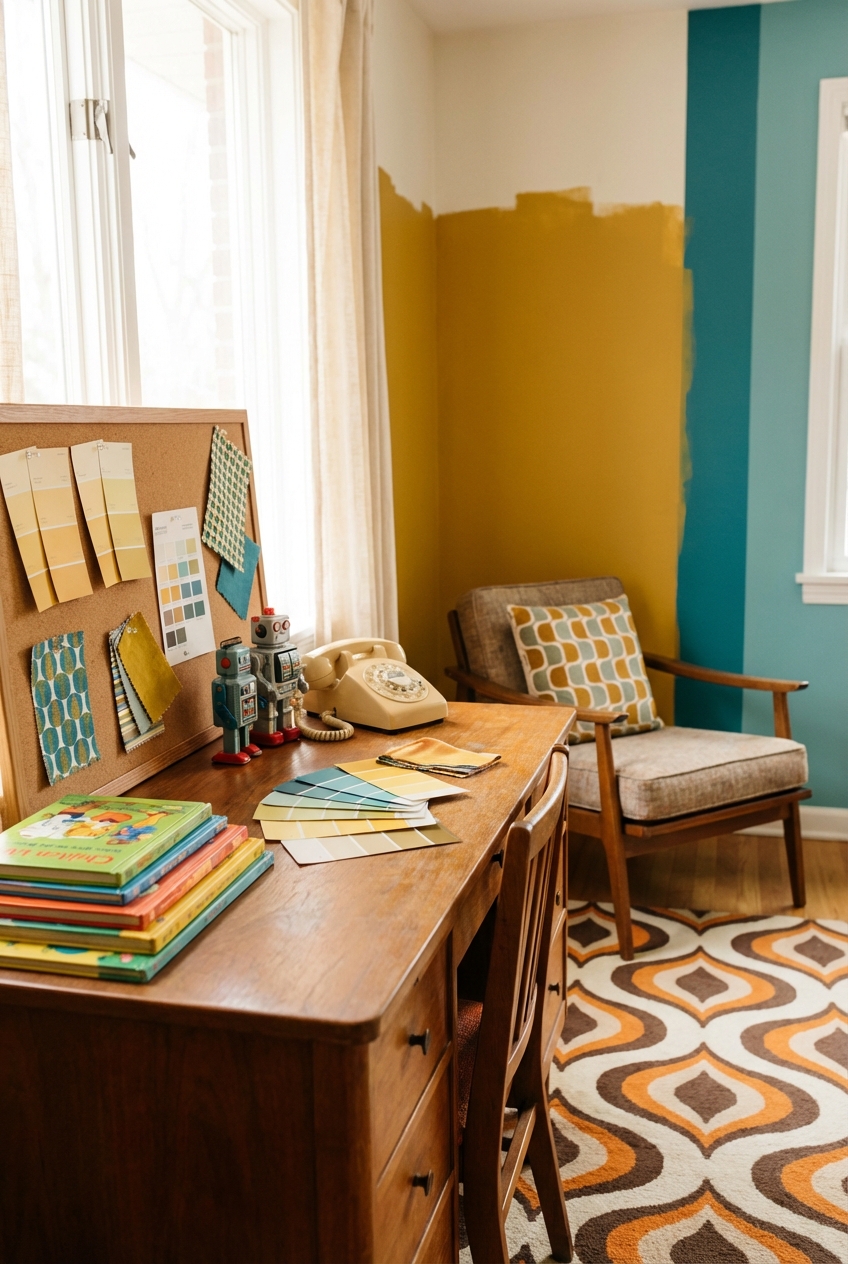
To tie the posters into the rest of the room, pull one or two colors from your hero poster for the rug or bedding. Our basics of cozy retro kid style and step-by-step retro refresh plan show how to build the rest of the room around them.
Frequently asked questions
What is the rule for hanging picture frames?
Center the artwork at about 57 inches from the floor and leave about 6-10 inches above furniture. In a kids room, go lower so the child can see the art.
What to hang a frame with?
Use a nail, screw or wall anchor for heavy frames, ideally into a stud. Adhesive strips suit light frames if you stay under the weight rating.
What are some creative ideas for hanging photos in frames on a wall?
Try a grid, a picture ledge, a hero print flanked by smaller ones, or a loose cluster. Lay the layout out with paper templates before you drill.
How do I clean acrylic frames?
Wipe with a soft microfiber cloth and a drop of mild dish soap in water. Skip glass cleaner, which can cloud acrylic.
Filed under
ArticlesMeet the author
Written by an architect.
Julio Arco is a passionate architect with years of experience in architecture, interior design, urban design, and housing. He studied at prestigious universities across North America and Europe.

- Name
- Julio Arco
- Job
- Architect and online interior designer
- Studied
- Architecture, ITESM · Urban Design and Housing, McGill
- Partner
- Thor, Australian Shepherd
- Thor’s title
- Head of quality control