Fridge Cabinet Ideas for Storage Above and Around
Fridge cabinet ideas that add storage above and beside your refrigerator: depths, clearances, panels and a step-by-step build plan.

By Julio Arco
Architect and online interior designer
In this post
- What is a fridge cabinet, and who is it for?
- Which parts make the built-in look work?
- How much clearance does a fridge need?
- How do you build a fridge surround step by step?
- What are the budget options?
- What mistakes should you avoid?
- Fridge cabinet ideas for different kitchens
- Finishing details that make it look right
- Frequently asked questions
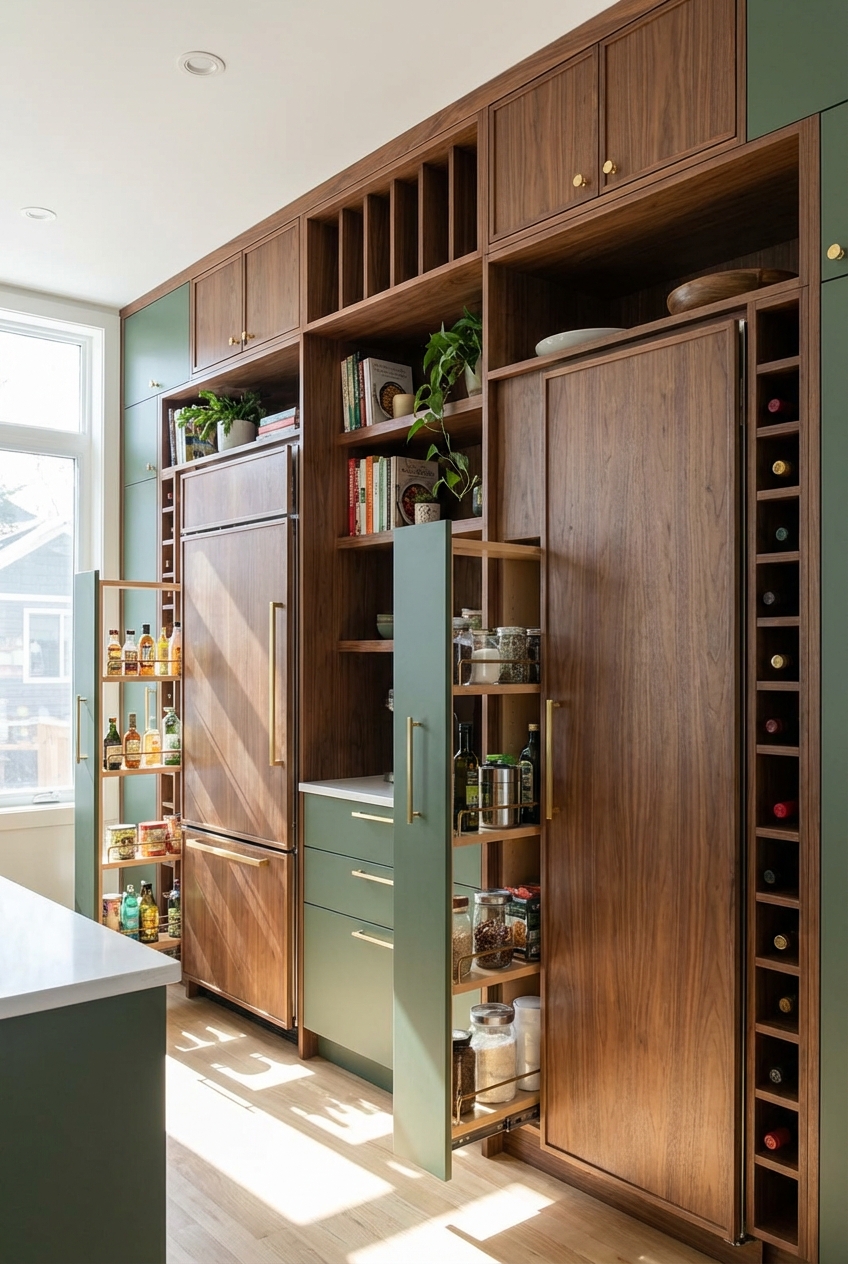
The best fridge cabinet ideas do two things: they box the refrigerator in with side panels so it looks built in, and they replace the shallow cabinet above it with a deeper one you can actually reach. Both changes turn dead space around the largest appliance in your kitchen into storage.
If your fridge sits in a gap with a thin 12-inch cabinet floating far above it, you're in good company. It's one of the most common kitchen layouts, and it's fixable without a full remodel.
What is a fridge cabinet, and who is it for?
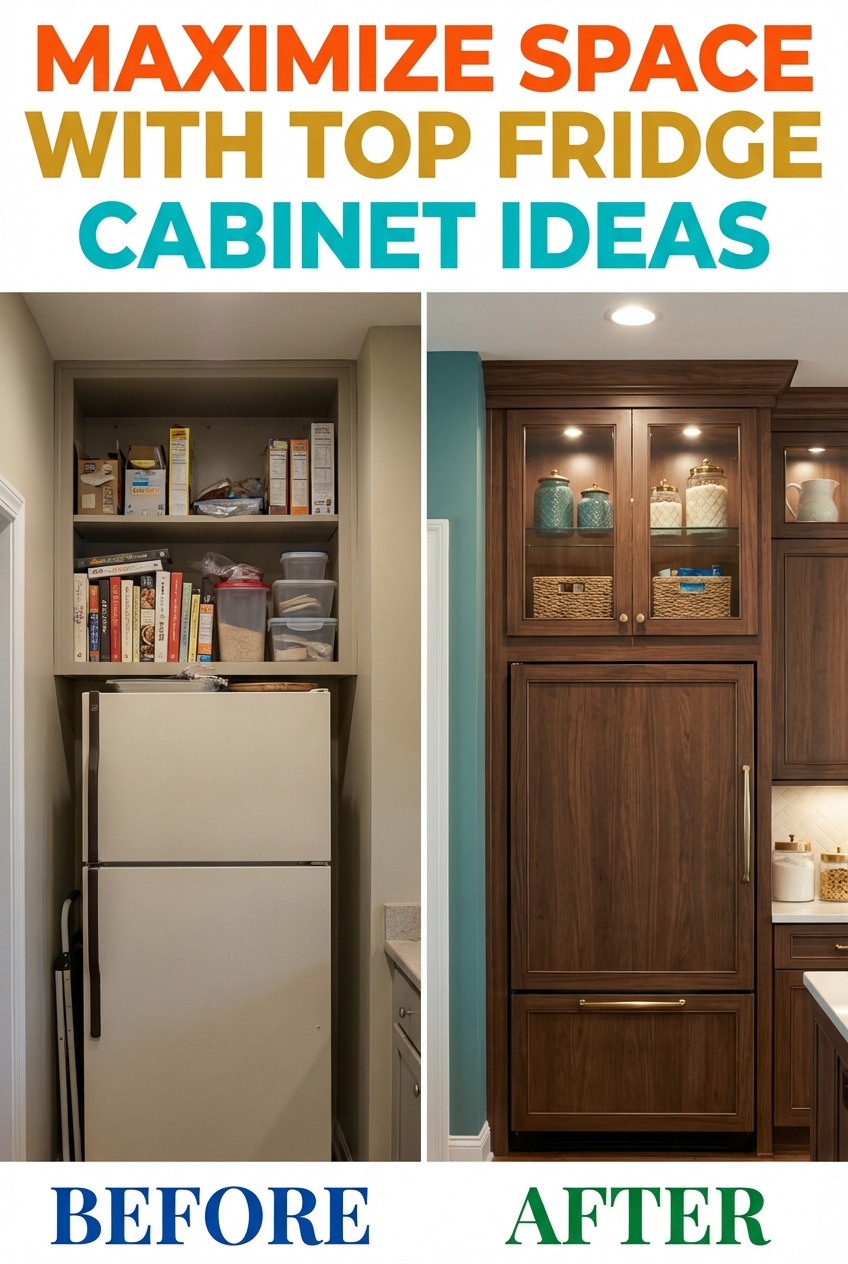
A fridge cabinet is the surround of panels, trim and an upper cabinet that frames the refrigerator. Instead of a steel box standing in a hole, you get a tidy alcove that matches the rest of your cabinetry.
It suits almost any kitchen. In a small galley, the upper cabinet gives you a home for platters, holiday linens and the appliances you use twice a year. In an open-plan room, the surround makes the fridge read as part of the cabinet wall instead of a free-standing machine. Renters can get a similar effect with freestanding pieces, covered below.
Which parts make the built-in look work?
- Side panels that run the full depth of the fridge, so you don't see its bare gray or black sides.
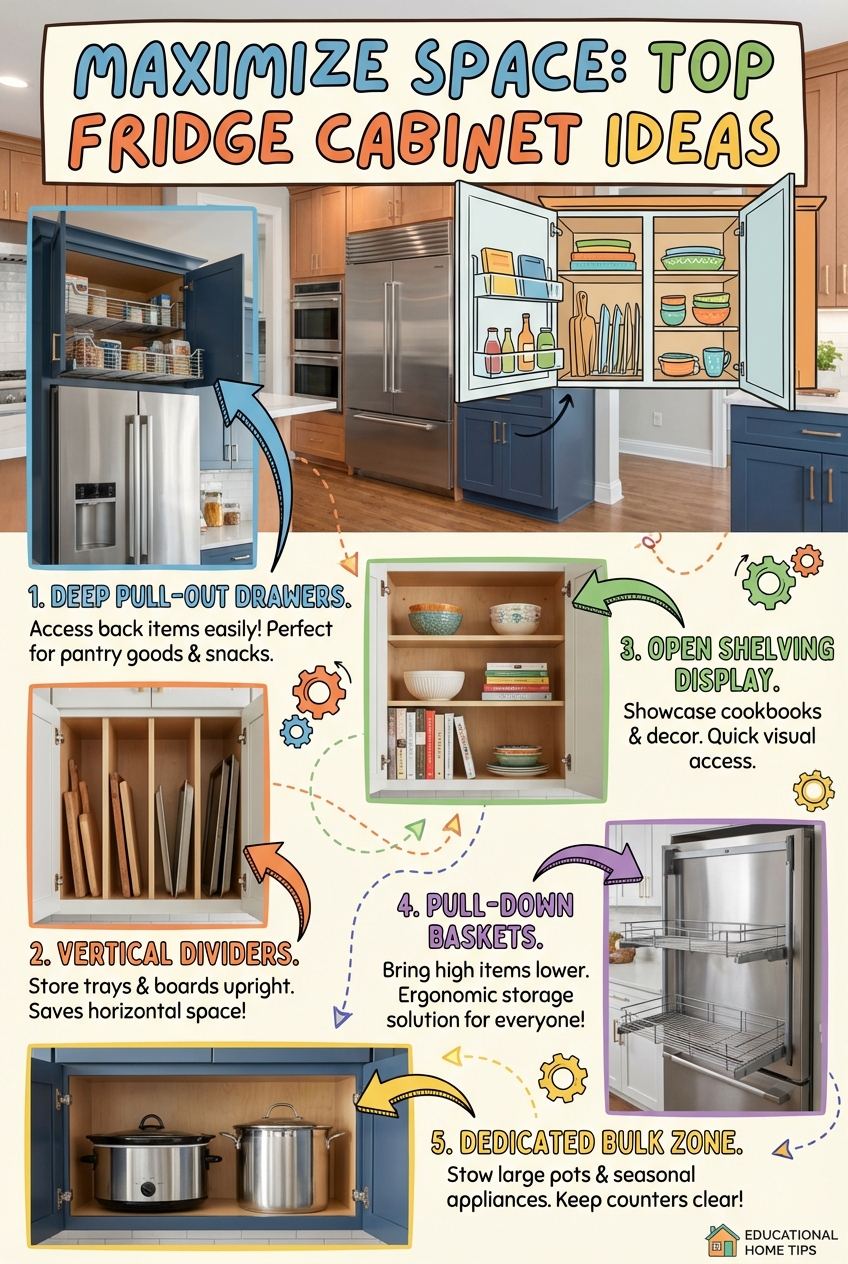
- A deep upper cabinet, ideally the same depth as your base cabinets (about 24 inches), set flush with the panels.
- Crown molding that continues across the top and ties into the rest of the kitchen.
- Filler strips that close the small gaps between the fridge and the panels.
- A toekick or baseboard wrapped around the bottom of the panels so the unit looks anchored.
A standard wall cabinet is around 12 inches deep, which is why the old arrangement leaves you stretching for things. Bringing the upper box forward to match the panels is the single biggest upgrade.

How much clearance does a fridge need?
Leave a little room on each side, about 1/4 to 1/2 inch, so you can slide the fridge out for cleaning without scraping the wood. Above the unit, leave a gap for airflow. Exact numbers vary by model, so read the installation sheet for yours and follow it over any rule of thumb, mine included.
For depth, counter-depth models are usually around 24 to 28 inches without handles, while standard-depth ones run deeper, often 32 to 36 inches. Panels should cover the body of the fridge and leave only the doors protruding.
As an architect, I recommend 3/4-inch plywood or furniture-grade MDF for the panels. Thin 1/4-inch skins tend to flex and look flimsy next to real cabinet boxes.
Check the door swing before you build
Open the doors fully and measure. If you wrap cabinets tightly around the front, the door can hit the cabinet edge and stop short of clearing the crisper drawers. A filler piece between the fridge and an adjacent wall or cabinet often solves it.
How do you build a fridge surround step by step?
- Measure the fridge height, width and depth at three points. Walls are rarely square, so use the largest number.
- Check the door swing and decide whether you need a filler.
- Fix the side panels to the floor with brackets or a cleat, and check them for plumb with a long level.
- Mount the upper cabinet into wall studs and through the panel sides. It's deep and heavy once loaded, so if you're unsure about your wall, bring in a licensed carpenter.
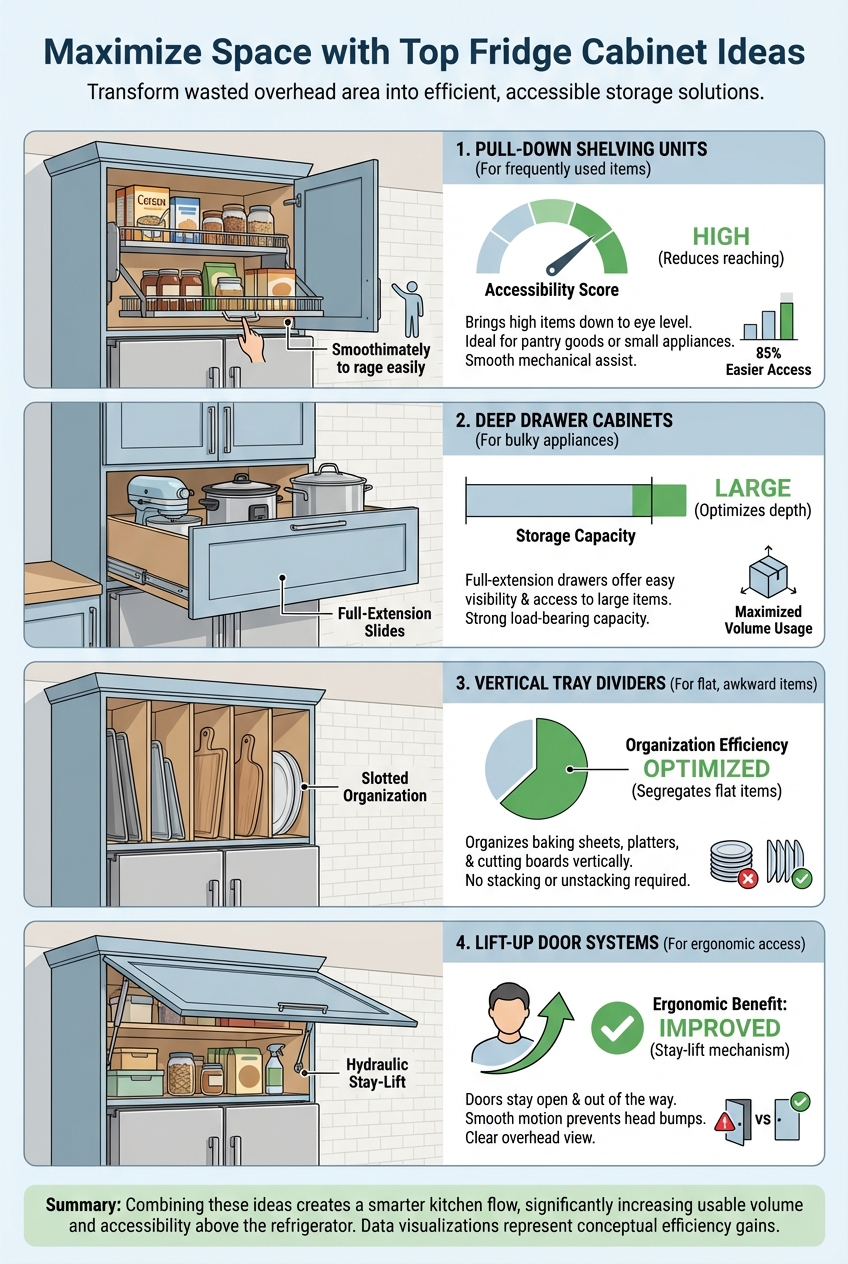
- Add organizers inside, such as vertical dividers for cookie sheets and cutting boards.
- Finish with crown molding and a scribe strip along the wall to hide gaps from uneven plaster or drywall.
If you need to add or rearrange interior shelves, this guide to adding shelving to a cabinet covers the basics.
What are the budget options?
Low effort: buy stock refrigerator end panels, paint them to match, and add a simple shelf above the fridge instead of a full cabinet. Moving an existing shallow cabinet forward on a wooden frame also works.
Middle: order a matching bridge cabinet from your cabinet maker, add plywood side panels in your door style, and have the trim installed. A pull-out rack in the upper box makes the high shelf usable.
Splurge: a panel-ready refrigerator that takes a custom front, cabinetry up to the ceiling, and lighting inside the cabinet and along the toekick. Prices vary widely by region and brand, so get quotes before you commit.
What mistakes should you avoid?
Sealing the fridge into a tight box is the big one. Refrigerators shed heat, and a motor that can't breathe works harder. Keep the top gap clear, don't seal the back against the wall, and consider a vent grille in the toekick or soffit.
Next is the water line. If your fridge has an ice maker, make sure you can reach the shut-off valve and that the line is long enough to pull the unit out. Cut an access panel in the side if needed.
Last, uneven floors. Shim the bottom of the panels, hide the gap with a toekick or base shoe, and level the fridge on its adjustable feet before you trim anything.
Fridge cabinet ideas for different kitchens
Small galley kitchens
Paint the exposed side of the end panel with chalkboard paint or attach a magnetic sheet. It keeps paper off the fridge door and gives you a spot for the grocery list.
Open-plan rooms
If the kitchen is visible from the sofa, make the fridge disappear. Panel-ready models and long appliance pulls that match your drawer hardware keep the cabinet wall calm.
Renters
Place two tall, narrow freestanding pantry cabinets on either side of the fridge and span them with a bridge shelf. Fasten them to each other, and to the wall only where your lease allows, and you can take the whole arrangement with you. For more kitchen storage in the same spirit, see how to organize a deep pantry.
Coffee bar or beverage corner
An under-counter fridge or wine cooler can be treated like a drawer, with the countertop wrapping down the side. If you're choosing one, these home bar fridges are a starting point.
Finishing details that make it look right
- Finish both faces of the side panels. The inside face shows when the fridge is pulled out or the doors are open.
- Choose appliance pulls for the fridge doors. They are much longer than cabinet knobs, which look tiny on a big door.
- Add a strip or puck light under the upper cabinet for task lighting at the fridge.
- Use clear bins in the deep upper cabinet and label them, so you don't need a step stool to hunt for the waffle iron.
- If a gap remains above the fridge, set a matching filler back from the cabinet face so air can still circulate.
For what to do with the top of the cabinet itself, this post on decorating above kitchen cabinets has ideas. In my practice I recommend hiding pocket-hole screws inside the cabinet box and scribing the wall-side panel to the wall, so no gap shows against the drywall.
Frequently asked questions
Can I build a cabinet around an old fridge?
Yes, but check the manual or the back of the unit first. Older models with exposed coils may need more airflow, so leave extra room and don't enclose the back.
Should I choose a counter-depth or standard-depth fridge?
Counter-depth sits nearly flush with 24-inch base cabinets and gives the cleanest look, but it holds less. With a standard-depth model, build deeper side panels to hide the bulk of the unit.
What is the best material for fridge side panels?
Veneered plywood holds screws well and handles moisture better than particle board. MDF is a good choice if you plan to paint, since it gives a smooth surface.
Filed under
ArticlesMeet the author
Written by an architect.
Julio Arco is a passionate architect with years of experience in architecture, interior design, urban design, and housing. He studied at prestigious universities across North America and Europe.

- Name
- Julio Arco
- Job
- Architect and online interior designer
- Studied
- Architecture, ITESM · Urban Design and Housing, McGill
- Partner
- Thor, Australian Shepherd
- Thor’s title
- Head of quality control