Burnt Orange Front Door Ideas for a Neo Deco Home

By Julio Arco
Architect and online interior designer
In this post
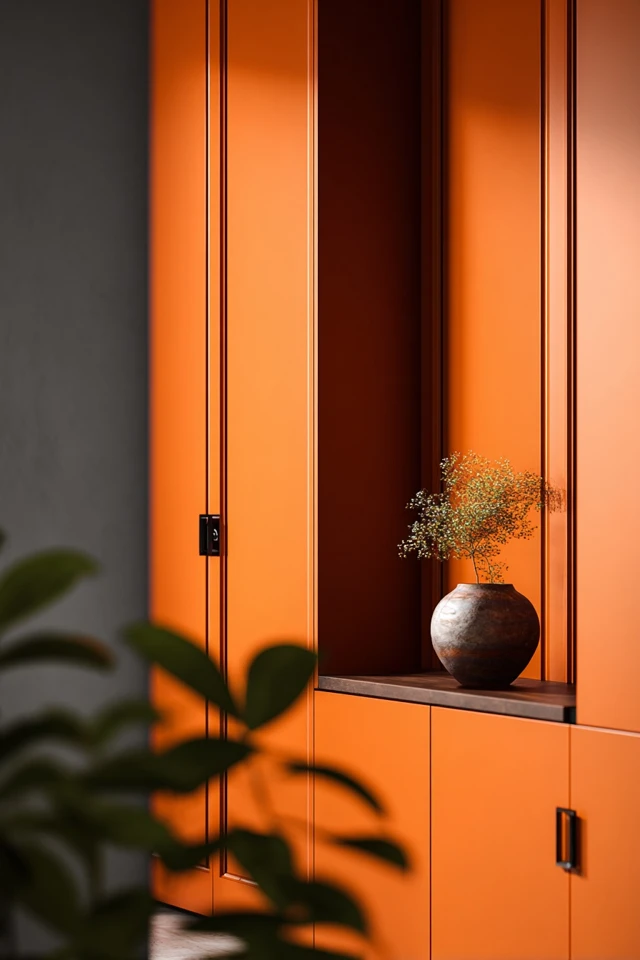
A burnt orange front door suits a Neo Deco home because it is warm, graphic and a little theatrical without being loud. Choose a shade that leans toward rust or terracotta, give it a satin or gloss finish, and pair it with brass or deep neutrals.
Neo Deco keeps the geometry and glamour of 1920s design and simplifies the palette. A single saturated door does that job well: one strong color, clean lines, good hardware.
What does a burnt orange front door say about a home?
The orange front door meaning most people reach for is welcome and warmth. That is a cultural association, not a measured rule, so treat it as a mood rather than a promise. Burnt orange reads as friendlier than black and less sugary than bright orange, which is why it works on a formal Deco facade without feeling stiff.
How to choose the right burnt orange shade
“Burnt orange” covers a wide range, so look at undertone before you look at the name. Outdoor light shifts color a lot, and a door gets sun, shade and evening light in one day.
- Rust-leaning shades have a brown or red undertone. They look rich against brick, dark stone and warm wood.
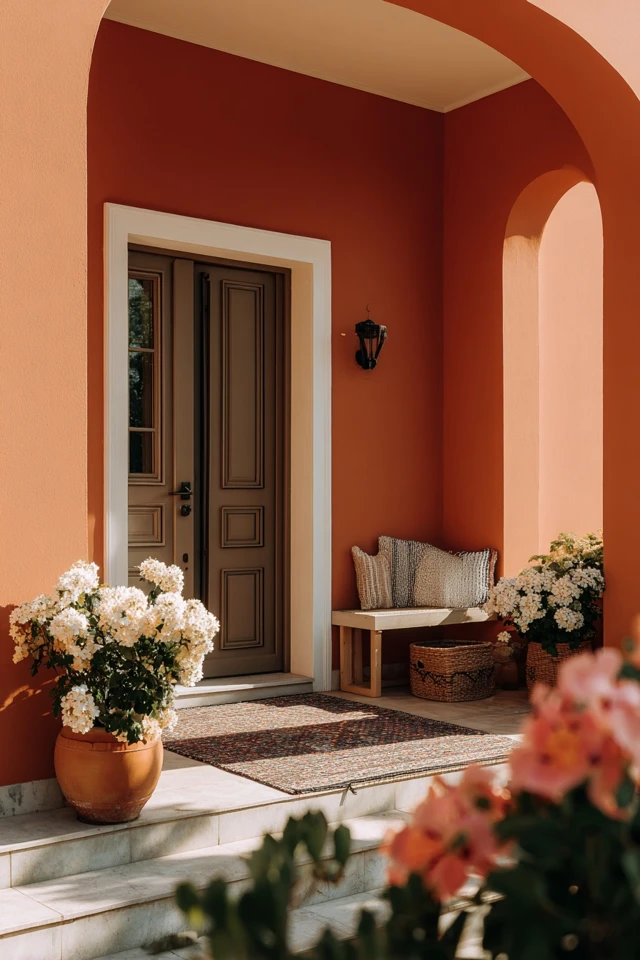
- A terracotta front door is softer and dustier. It suits stucco, plaster-toned walls and Miami-style Deco facades.
- Orange-leaning shades with a touch of yellow feel brighter and sunnier. They can look cheerful on a white or pale gray house, but they go orange fast in strong sun.
When you look for the best orange paint for a front door, buy sample pots rather than relying on a chip. Paint a large board, tape it to the door itself and check it in morning, midday and evening light. Look at it from the street too, since that is where most people will see it.
What color compliments burnt orange?
Orange sits opposite blue on the color wheel, so deep blues and blue-greens are the classic partners. In a Neo Deco setting, I'd start with these:
- Deep navy or ink blue on the house, shutters or planters. It makes the orange glow.
- Soft black on window frames and light fixtures, which gives the door a graphic outline.
- Cream or warm white trim, which keeps the door from feeling heavy.
- Emerald or forest green in the landscaping, a natural partner for a warm door.
If the house is brick, check the brick color first. Red-brown brick can fight an orange that is too red, so move toward a more brown or terracotta tone. Against gray stucco or cream render, a richer rust looks deliberate.
Gloss or satin: which finish works?
Glossy surfaces bounce light and make color look deeper and more lacquered. Matte finishes absorb light and soften the color. Art Deco was built on lacquer, chrome and glass, so a semi-gloss or gloss finish fits the style best.
Gloss shows every dent and brush mark, though. If your door is old, dented or has layers of paint on it, satin is the more forgiving choice and is easier to wipe clean. In a house with a dog that scratches at the door, I recommend satin: touch-ups blend in more easily than on high gloss.
Hardware, glass and door details
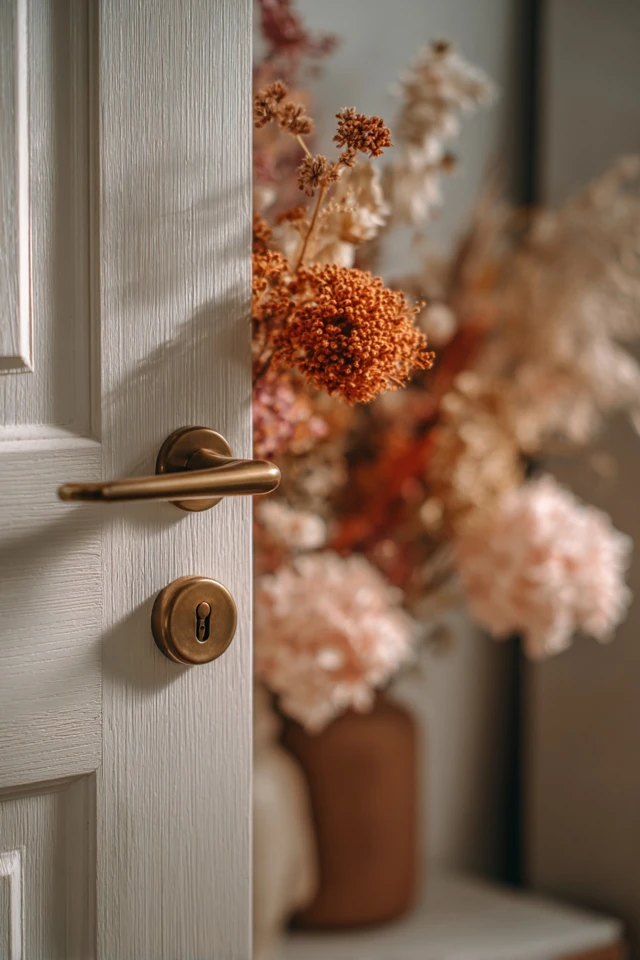
Brass is the natural partner for burnt orange. Unlacquered brass darkens over time and gets warmer, which looks good with a rust tone. Satin brass looks newer and cleaner. Matte black hardware gives a more modern, graphic result, while polished nickel can look cold against a very warm door unless the trim is cool white.
Geometry matters in Deco. Simple raised rectangular panels, a vertical row of small glass lites or a slim sidelight echo the style without ornament. If you are painting a flat slab door, adding panel molding first gives it the relief that makes the color look architectural.
How to paint a metal front door burnt orange
Many people want to paint a metal front door burnt orange, and the prep decides how long it lasts. Steel and fiberglass doors both take paint well when the surface is ready.
- Remove the hardware, or mask it carefully.
- Clean and degrease the surface, then rinse and let it dry.
- Scuff sand the old finish so new paint can grip, and sand off any rust until you reach bare metal.
- Prime bare metal with a primer made for metal, and follow the can for dry times.
- Apply two thin coats of exterior-grade burnt orange front door paint rather than one thick coat. Thin coats level out better and drip less.
Pick a day without direct midday sun or rain, and check the temperature range on the can. For wood doors the steps are similar, minus the metal primer. Sand, prime, then paint.
Trim, surroundings and a few things to avoid
Painting the trim the same orange (sometimes called color drenching) makes the door look wider and bolder. Painting it cream or warm white keeps the focus on the door panel. Either works, but pick one and commit.
Keep other bright colors nearby to a minimum. One burnt orange door with matching planters is a statement. Add a turquoise mat, a purple wreath and a yellow light and it turns into a clash. For ideas on lighting that suits a Deco entrance, see these Art Deco globe, tube and tiered fixtures.
If you are weighing other colors for the inside of the house, this guide to room colors for creativity covers how warm shades behave indoors. And if the door opens straight into a large shared space, cohesive Neo Deco decor for open concept homes shows how to carry the palette inside.
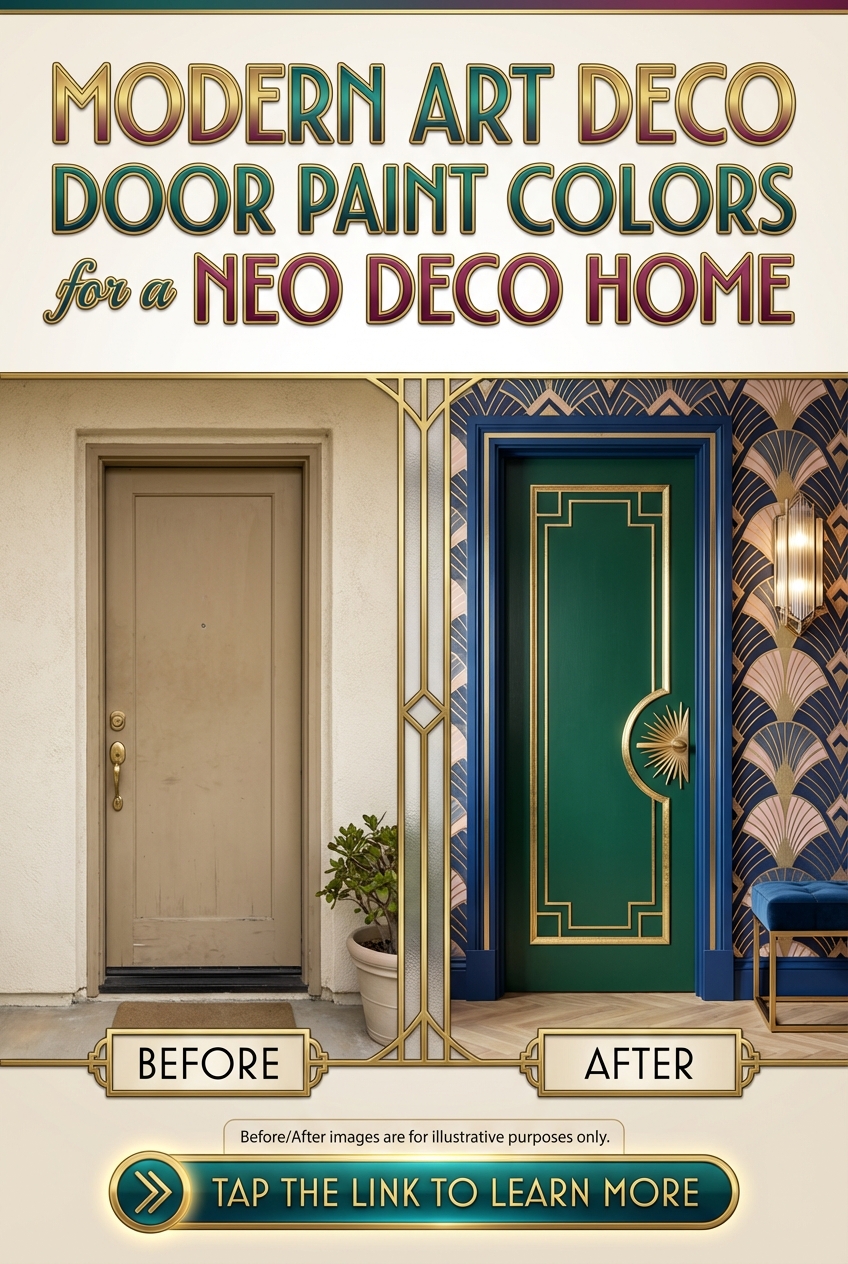
Whatever you choose, test the sample on the door itself before you buy a gallon.
Frequently asked questions
What does an orange front door signify?
Most people read it as warmth and welcome, with a bit of energy and confidence. That meaning is cultural and personal rather than a fixed rule, so choose the shade that feels right for your house.
Should the inside of the front door match the outside?
It can, but it doesn't have to. Many people paint the interior face a neutral or the wall color so the orange stays an outdoor statement.
How many coats of paint does a burnt orange door need?
Plan on primer plus two thin coats of color. Orange pigments can look patchy over a dark or glossy old finish, so a third coat is sometimes needed.
Filed under
ArticlesMeet the author
Written by an architect.
Julio Arco is a passionate architect with years of experience in architecture, interior design, urban design, and housing. He studied at prestigious universities across North America and Europe.

- Name
- Julio Arco
- Job
- Architect and online interior designer
- Studied
- Architecture, ITESM · Urban Design and Housing, McGill
- Partner
- Thor, Australian Shepherd
- Thor’s title
- Head of quality control