Aesthetic Rug Styles: Names, Patterns and Textures
Learn the main aesthetic rug styles, pattern names and textures, from traditional to modern lace, and how to match one to your room and size.

By Julio Arco
Architect and online interior designer
In this post
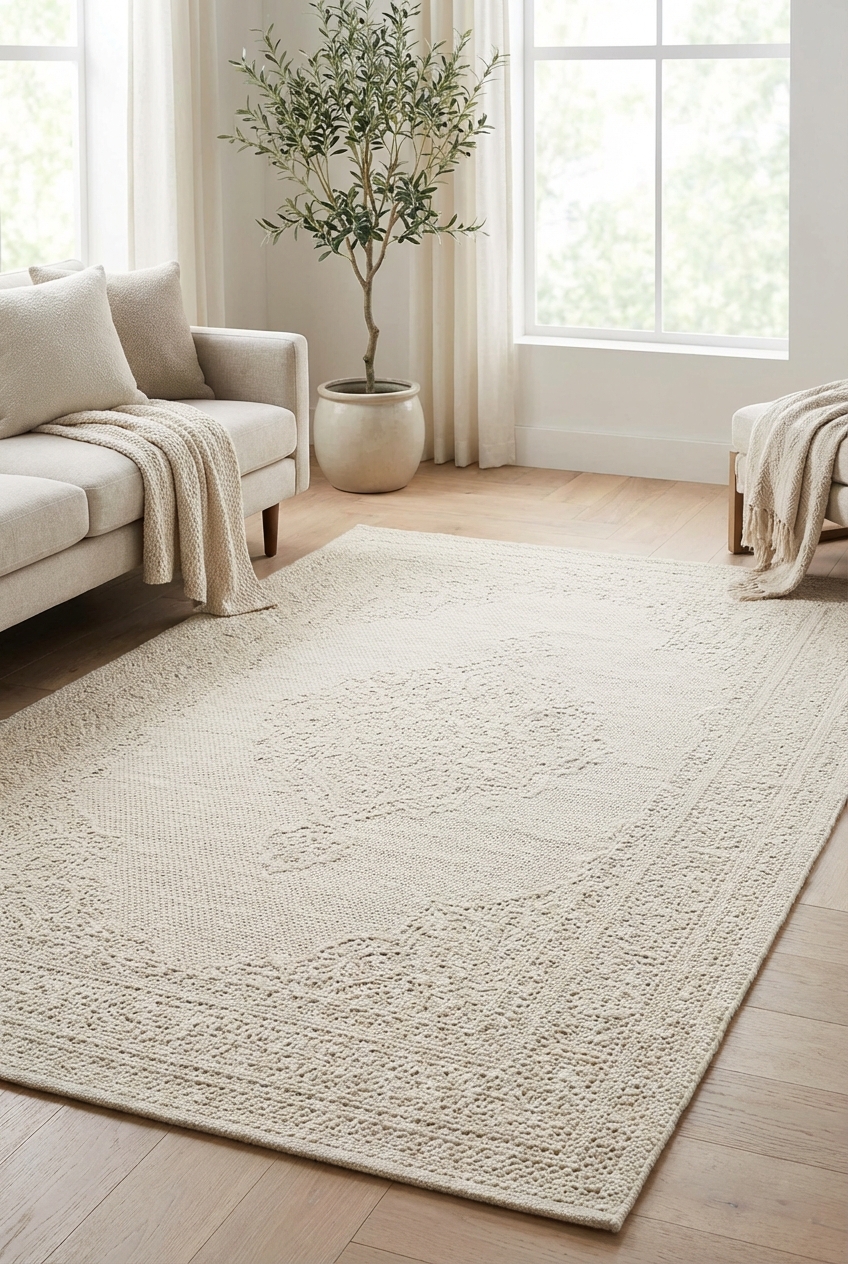
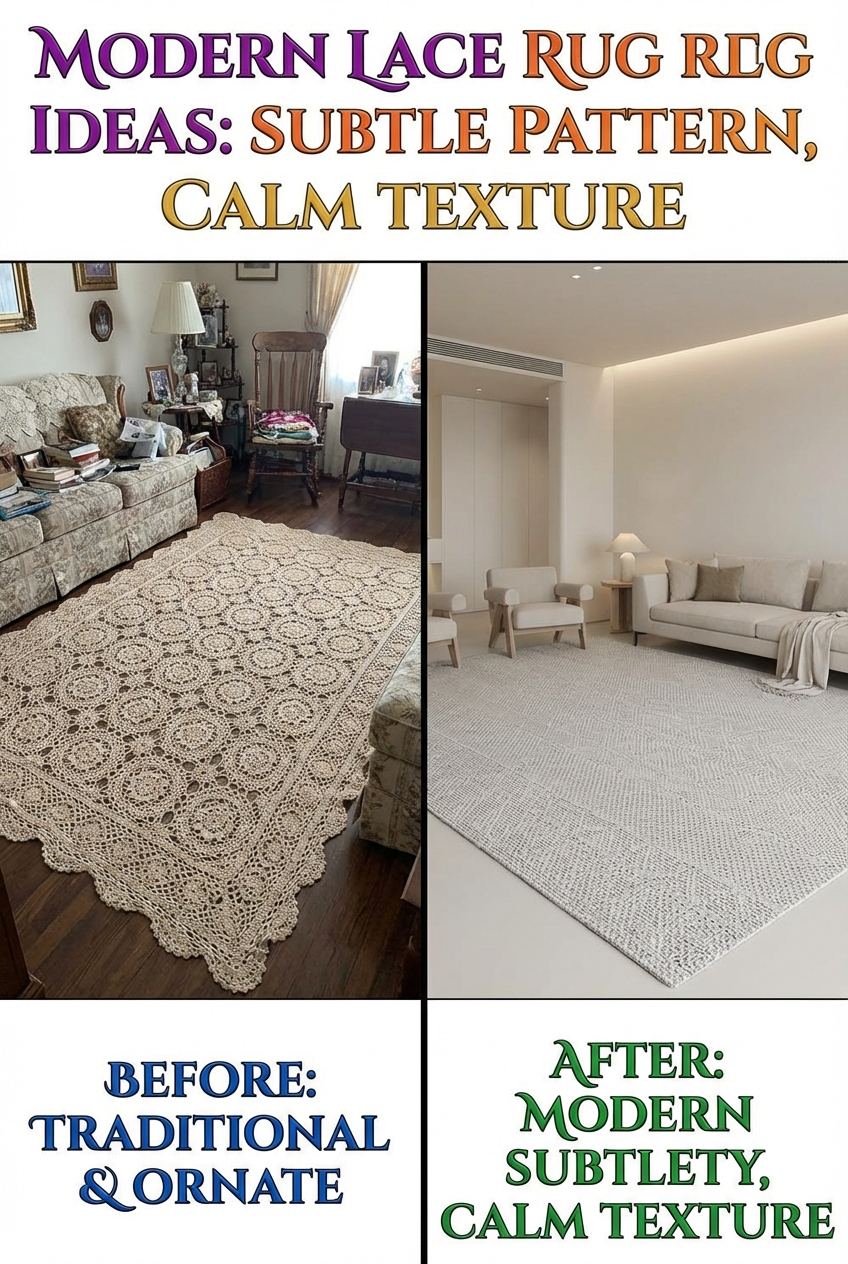
Most aesthetic rug styles fall into a few families: traditional, transitional, modern, and pattern-led (geometric, floral, tribal). A modern lace rug sits in the modern group. It uses a quiet, tone-on-tone pattern carved or woven into the pile, so the design shows up as texture and shadow instead of color.
If you're not sure which style is yours, that's normal. This guide names the main styles, explains how patterns and textures differ, and shows how to size and place a rug so it works in your room.
What are the different types of rug styles?
Here are the rug styles explained in plain terms, so you can recognize them in a shop or a photo.
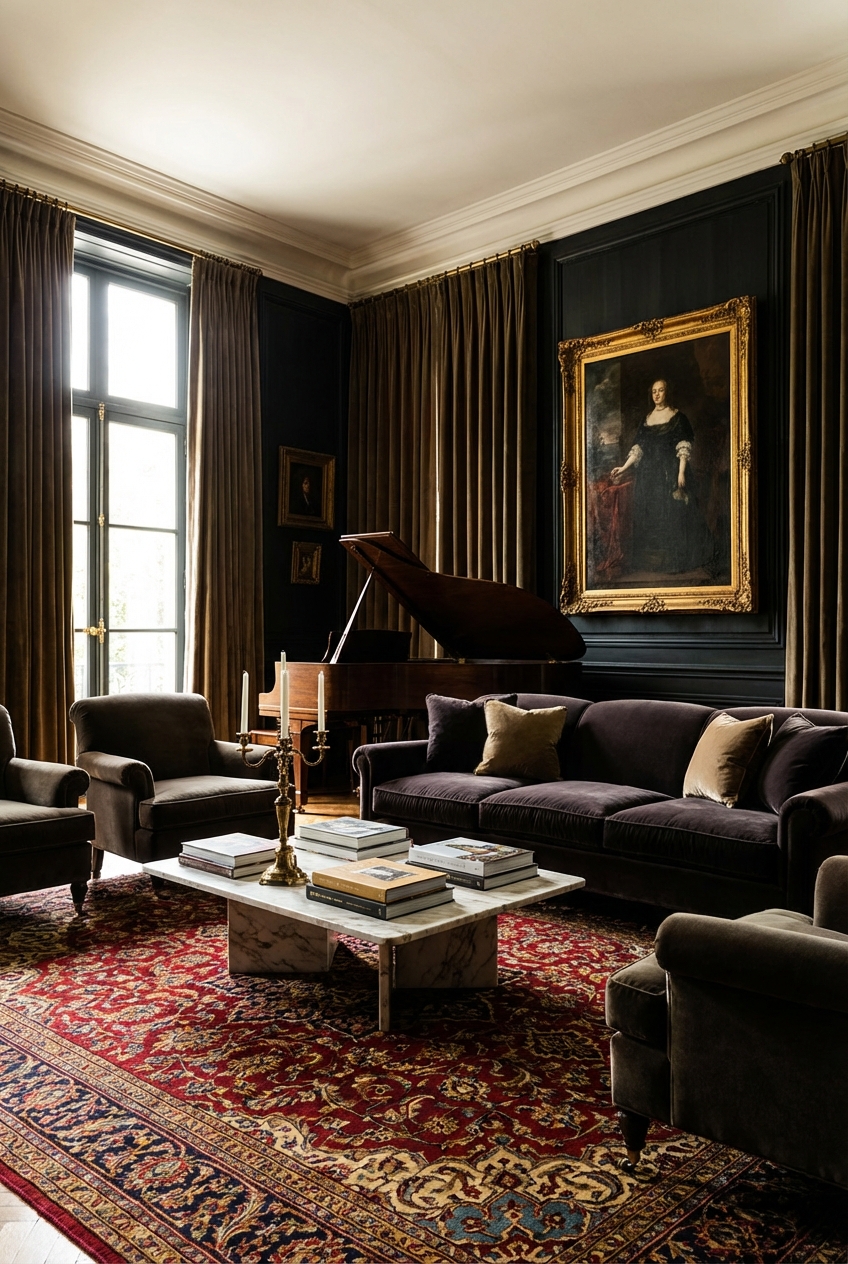
- Traditional: dense, ornate designs such as medallions, florals and borders, often in deep reds, blues and creams. Persian and oriental rugs are the classic examples.
- Transitional: traditional motifs simplified or faded, in softer palettes. A good bridge if your furniture mixes old and new.
- Contemporary and modern: fewer colors, larger shapes, abstract or textural designs. Lace-inspired rugs belong here.
- Tribal and geometric: repeated diamonds, stripes, zigzags and lattices, usually flat-woven or hand-knotted.
- Solid and textural: one color, with the interest coming from pile height, loops or carving.
Rug pattern names worth knowing
Rug pattern names help when you're searching online. The types of rug patterns you'll meet most often are:
- Medallion: a large central motif, common in traditional rugs.
- Trellis or lattice: interlocking lines, often Moroccan-inspired. This is the base of many lace-look designs.
- Herringbone and chevron: angled stripes that add movement.
- Floral: from realistic bouquets to loose, abstract blooms.
- Stripe: easy to align with a room's long axis.
- Abstract: brushstroke or cloud-like shapes with no repeat.
If you're asking what the cool rug patterns are right now, large-scale lattices and soft abstracts are the ones I'd point to. I can't back that up with trend data, so treat it as an opinion and trust what you'll still like in five years.
Types of rug textures and piles
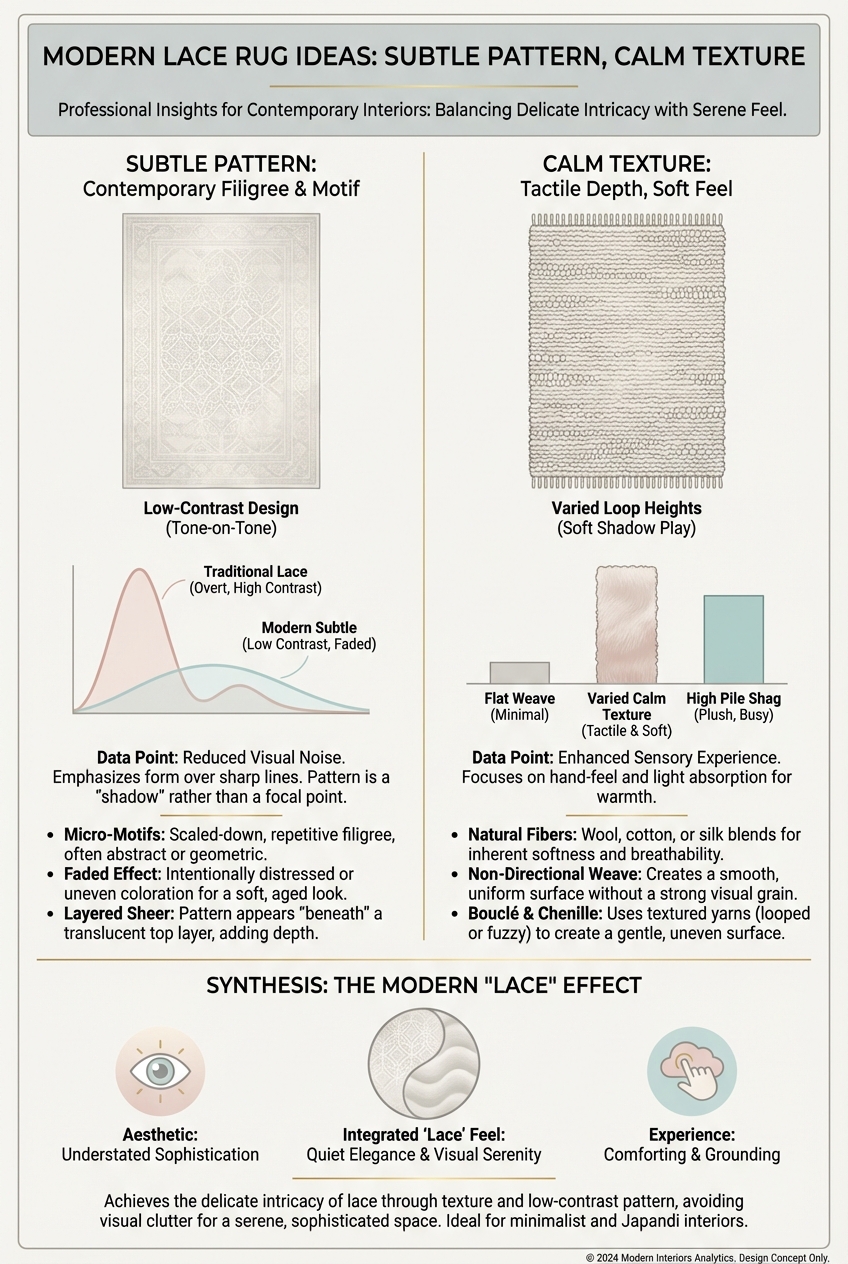
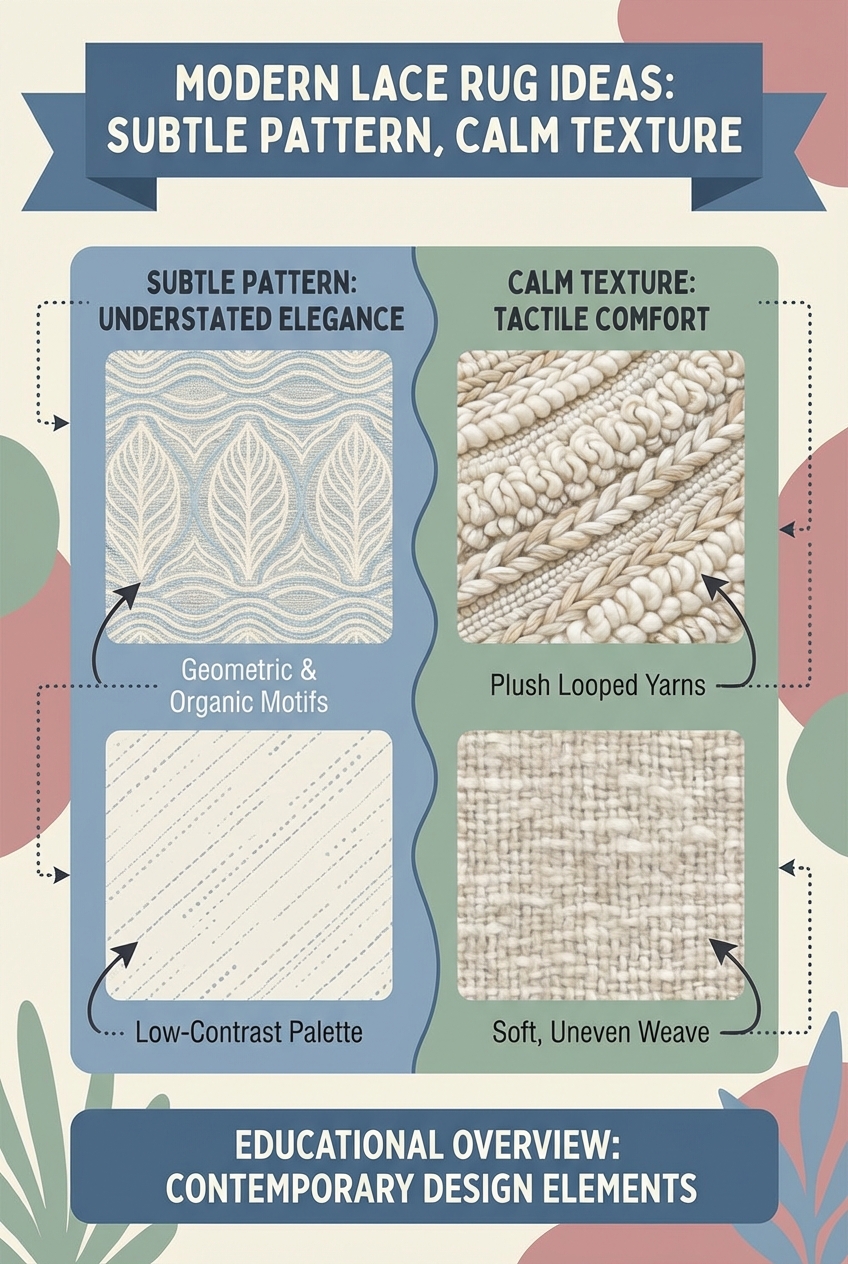
Texture is where a calm room gets its depth. A glossy surface bounces light, while a matte, carved one absorbs it and softens shadows. That is why a tone-on-tone rug can look busy up close and quiet from across the room.
- Flat-weave: no pile, thin, easy to vacuum, good under chairs and desks.
- Low pile: short, dense, practical for hallways and living rooms.
- High pile or shag: soft underfoot, harder to clean, better for bedrooms.
- Loop pile: uncut loops. Cats can snag claws in them, so cut pile is the safer pick if you have one.
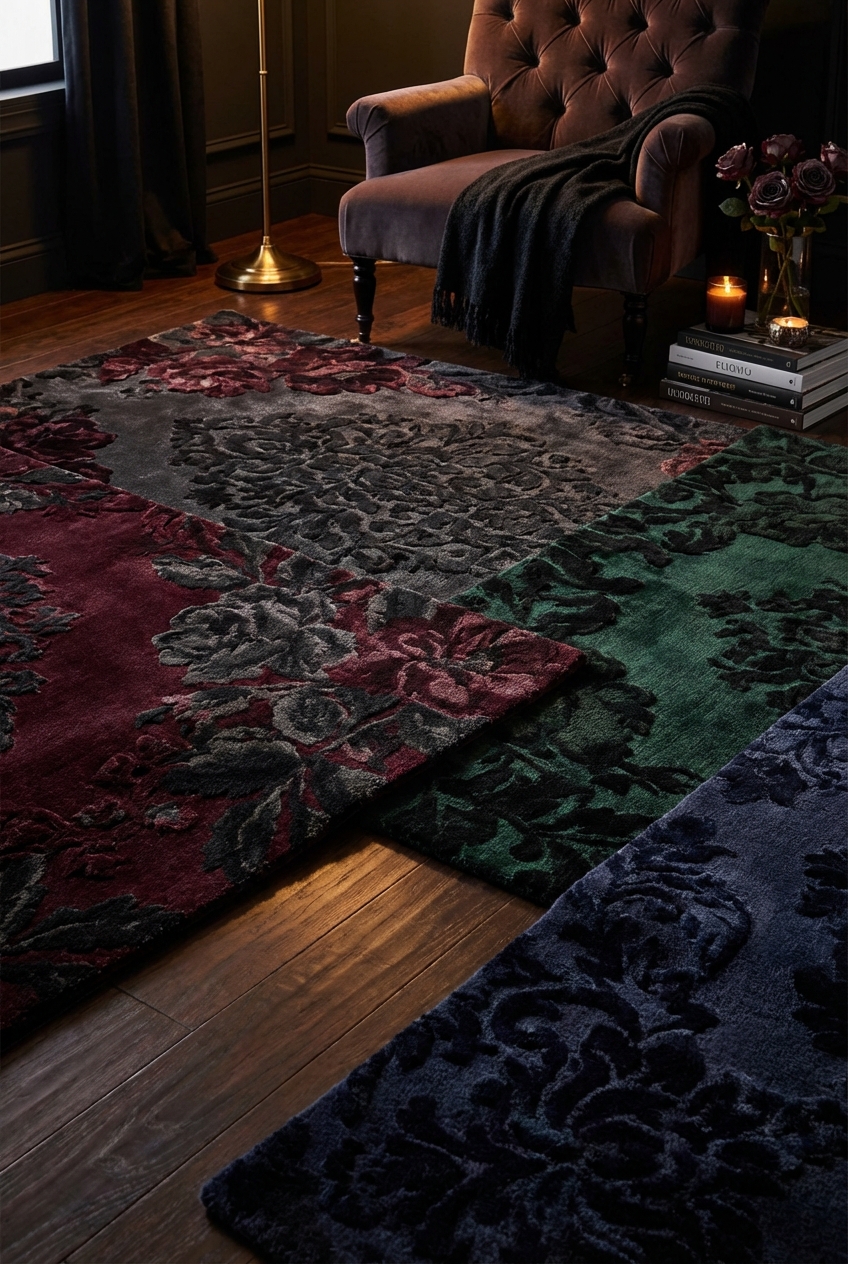
- High-low or carved pile: the pattern is cut at two heights. This is the technique behind modern lace rugs.
Wool holds its shape well in busy rooms. Viscose and silk blends add a soft sheen but suit low-traffic spaces such as bedrooms.
What makes a modern lace rug work?
Lace on a rug has little to do with doilies. The look comes from a narrow palette (ivory on cream, charcoal on slate), a pattern at a large scale, and soft, flowing lines. Oversized motifs read as contemporary, while tiny ones can feel fussy.
Warm neutrals like ivory or sand also hide the shadows in the low areas better than stark white, which can make those recesses look like dirt. Side light from a floor lamp will bring out the carving in the evening.
For more on this approach, see how to add lace texture without adding clutter. If you want something darker, dark rug patterns that still feel soft are worth a look.
How do you match a rug to your style and sofa?
Start with what's already in the room. If your sofa, curtains and pillows carry patterns, choose a solid or textural rug. If everything is plain, a patterned or carved rug becomes the third texture.
Should the rug be lighter or darker than the couch? Either works. I'd pick a rug that differs from the sofa by a clear step in tone, so the sofa doesn't blend into the floor. A rug the exact same shade as the sofa looks flat.
Keep one pattern in charge. As an architect, I'd let the rug lead and keep pillows and throws to small-scale patterns or solids.
Choosing the right rug size
Size matters more than pattern. Some established rules of thumb:
- Living room: at least the front legs of every seat should sit on the rug. All four legs is better.
- Dining room: the rug should extend about 24-30 inches past the table edge so chairs stay on it when pulled out.
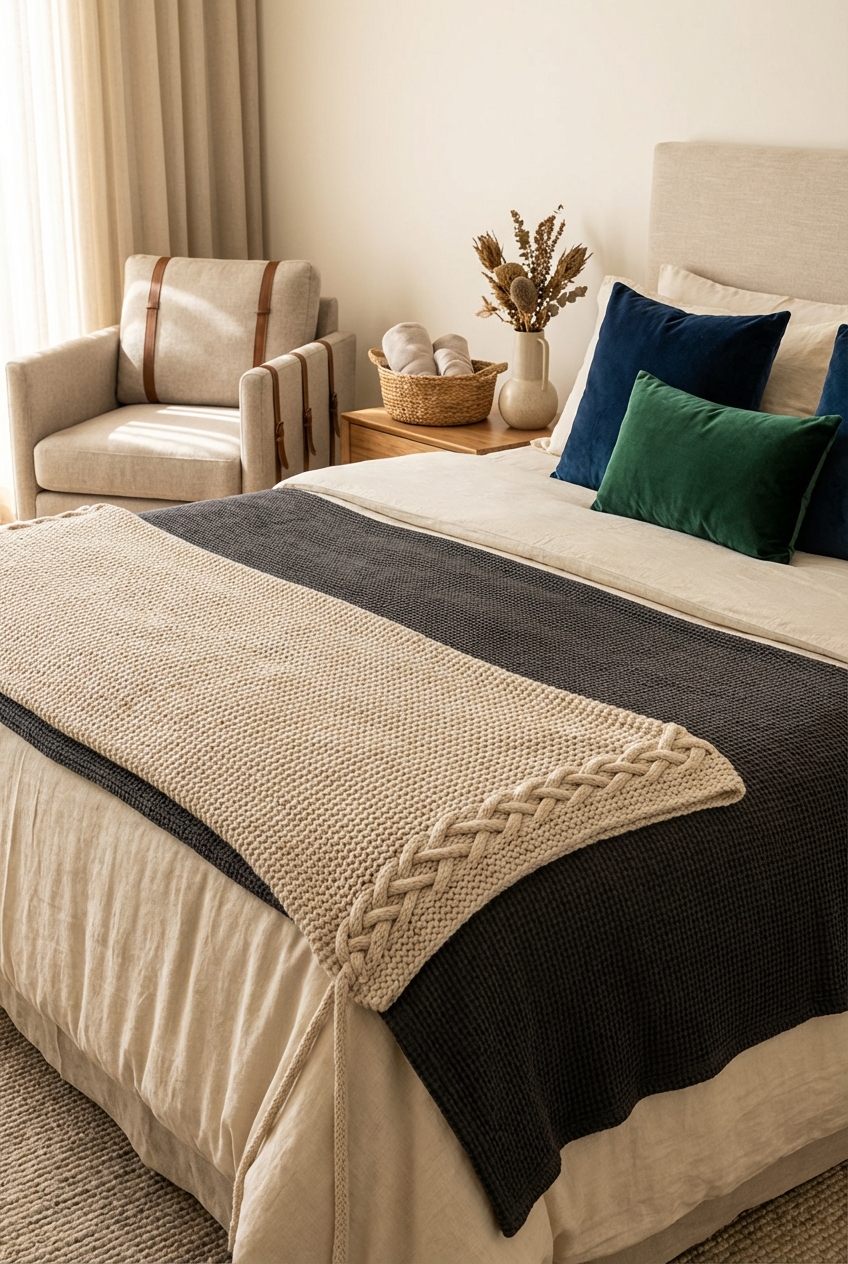
- Bedroom: a rug that reaches about two-thirds of the way under the bed, extending 18-24 inches beside and at the foot.
- Walkways: leave about 12-18 inches of bare floor between the rug and the walls in a standard room.
If you're torn between two sizes, I recommend the bigger one. Outline the rug with painter's tape before buying to see how much of the pattern furniture will cover.
Care, safety and pets
Carved or high-low rugs hide crumbs in the lower areas, so vacuum with suction only. A beater bar can fray raised fibers. Blot spills with a clean white cloth instead of rubbing.
Use a felt rug pad so the rug doesn't shift and distort the pattern. This is also a safety point: researchers describe loose throw rugs and area carpets with curled edges or folds as among the factors most often mentioned in the literature as unsafe and potentially raising fall risk. Flat edges and a pad matter, especially for older adults and for dogs that run through the hallway.
In an office, pick a low or flat-weave rug so chair wheels roll freely, and check that thick rugs clear your doors.
Frequently asked questions
What type of rugs are trending now?
Large-scale lattices, tone-on-tone textures and soft abstract patterns are common choices at the moment. Trends move, so pick a neutral palette you can live with for years.
Should your rug be lighter or darker than your couch?
Either works as long as there is a visible difference in tone. A rug that matches the sofa exactly can make the room look flat.
Do lace-style rugs shed?
Wool rugs commonly shed for the first few months, and regular vacuuming usually settles it. Synthetic versions shed less.
Can I use a textured rug if I have pets?
Yes. Choose cut pile over loop pile so claws don't snag, and check with your vet if your pet chews rugs.
Filed under
ArticlesMeet the author
Written by an architect.
Julio Arco is a passionate architect with years of experience in architecture, interior design, urban design, and housing. He studied at prestigious universities across North America and Europe.

- Name
- Julio Arco
- Job
- Architect and online interior designer
- Studied
- Architecture, ITESM · Urban Design and Housing, McGill
- Partner
- Thor, Australian Shepherd
- Thor’s title
- Head of quality control