Teen Bedroom Ideas: Moody, Minimal and Calm
Teen bedroom ideas for a moody, minimal room: color palette, layout rules, lighting, small-room and budget tips, and fixes for common mistakes.

By Julio Arco
Architect and online interior designer
In this post
- Who is this style for?
- How do you decorate your room as a teen in this style?
- What colors and materials work?
- What layout and size rules should you follow?
- How do you light a dark bedroom?
- What are good teen bedroom ideas for small rooms?
- How much does it cost? Teen bedroom ideas on a budget
- Which mistakes should you avoid?
- Frequently asked questions
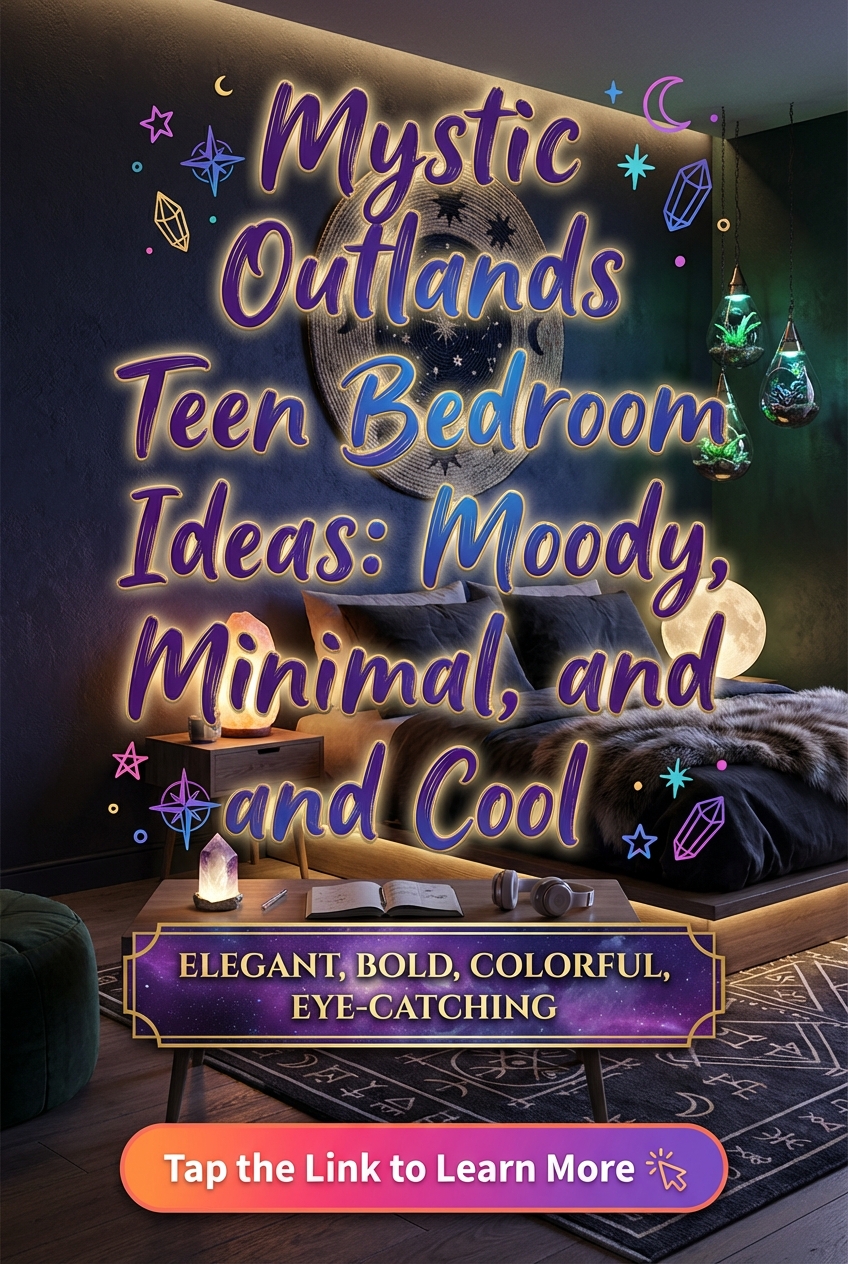
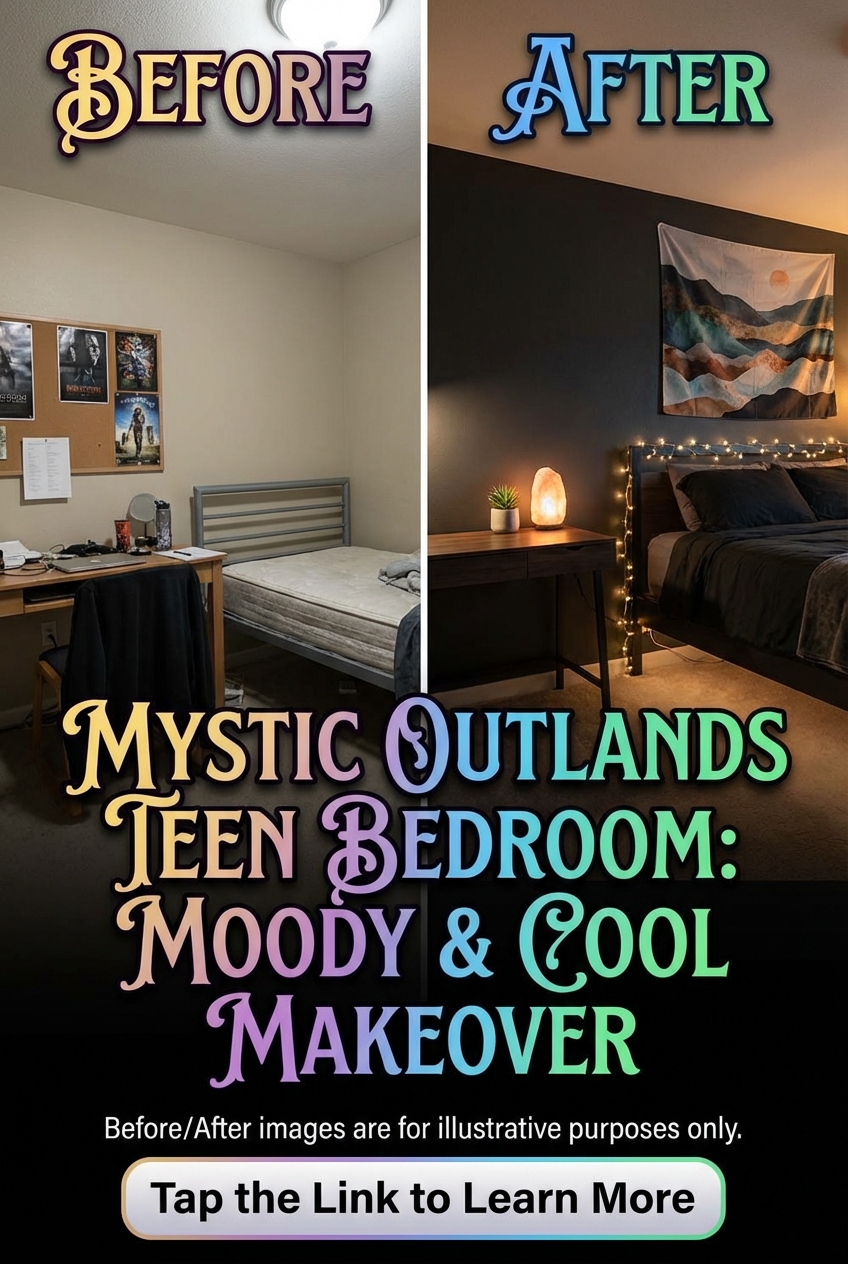
If your teen wants a room that feels cool and grown-up, a moody, minimal look works well. Use dark, earthy colors (charcoal, sage, slate), natural textures, warm layered lighting and only the furniture the room actually needs.
This Mystic Outlands approach borrows from foggy coastlines and high-desert plains: matte finishes, raw materials, little clutter. It also happens to make one of the more calming bedroom ideas for teens, because a quiet, low-contrast room is easier to study and unwind in.
Who is this style for?
It suits the teen who would rather read, game or sketch than host a crowd. It also suits families who don't want to redo the room in two years: dark neutrals and good materials age more gracefully than bright themes, and the room can later become a guest room or office.
The main risk is balance. Too dark and the room feels like a cave; too bare and it feels cold. Texture and warm light fix both.
How do you decorate your room as a teen in this style?
Start with a few decisions, in this order.
- Map the zones. Decide where to sleep, study and sit with a friend, and mark them on the floor with painter's tape.
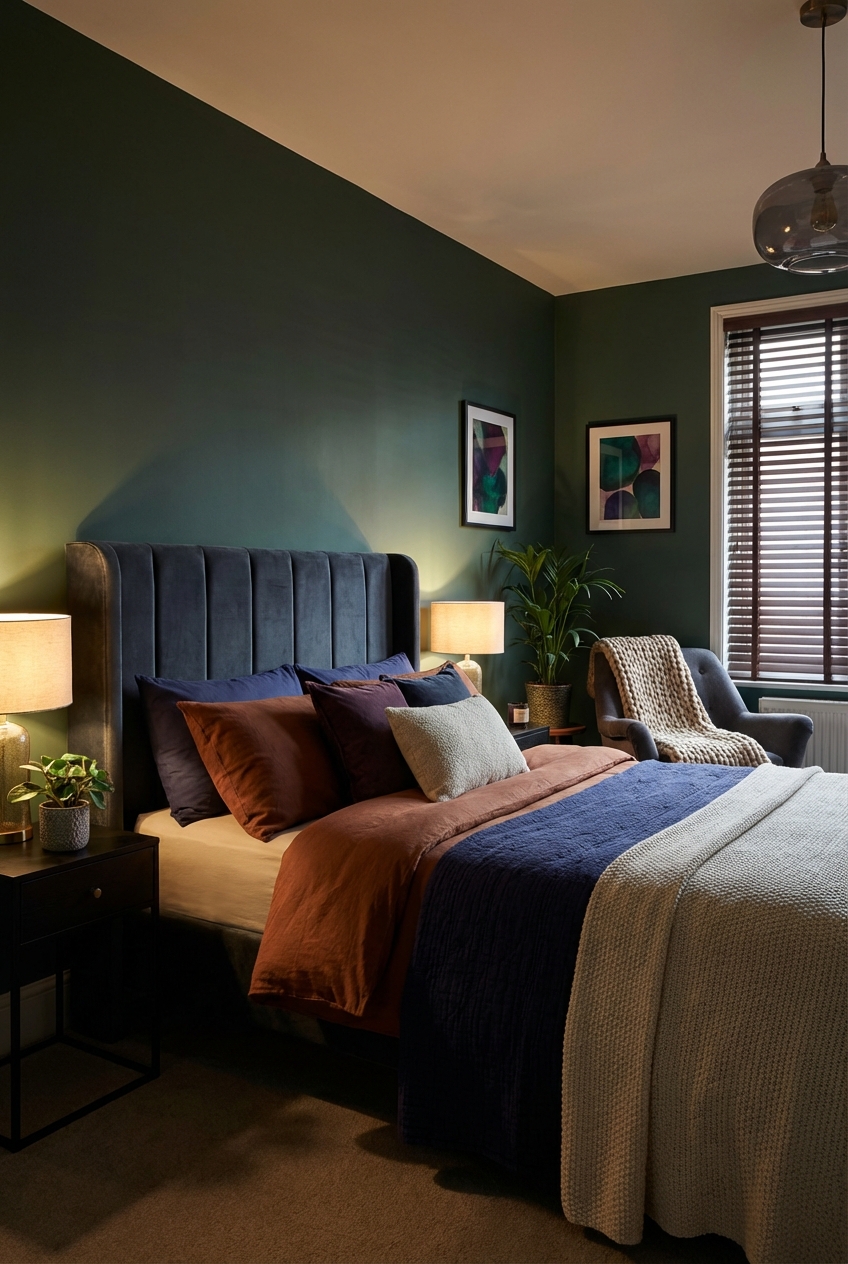
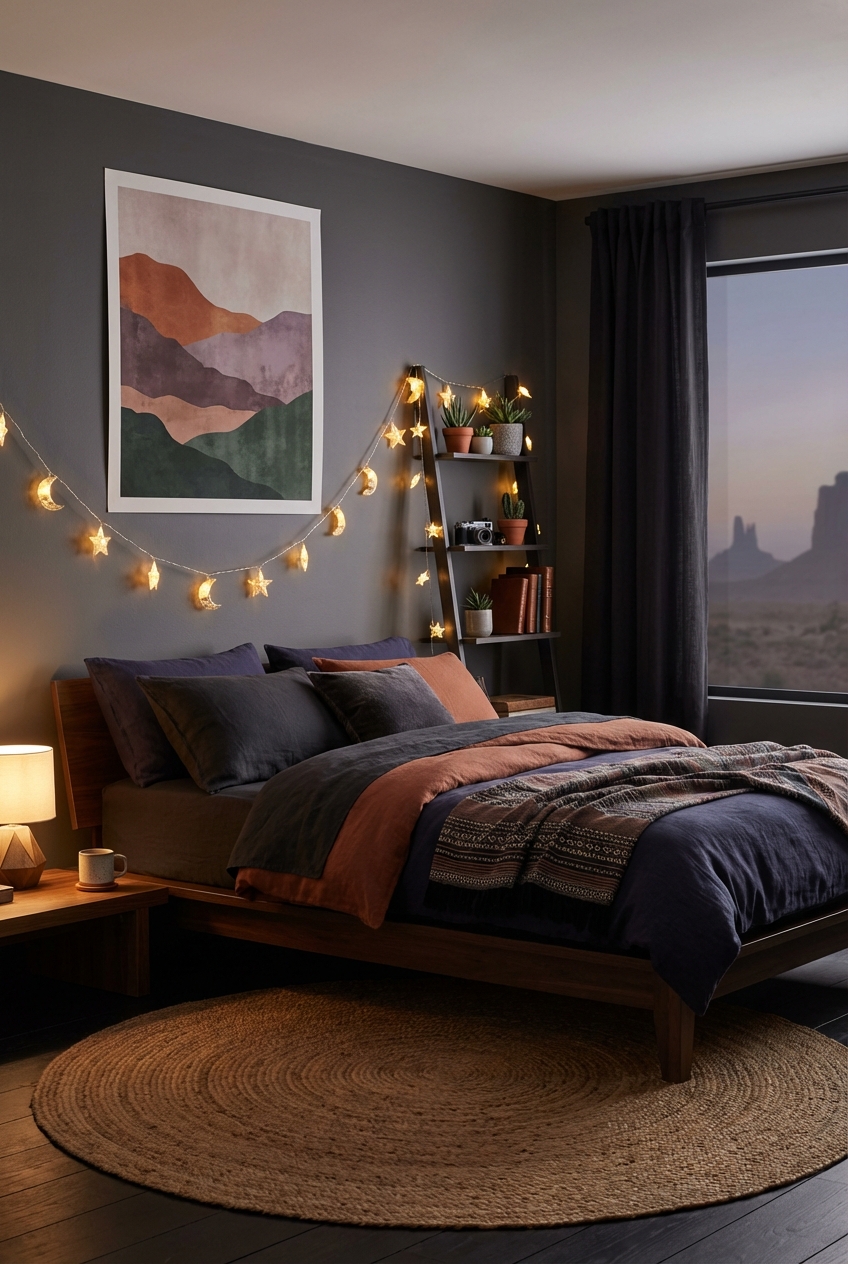
- Pick one hero color. A deep charcoal wall or a slate duvet sets the tone for everything else.
- Fix the lighting before the furniture. Swap the single ceiling fixture for a pendant, and add plug-in sconces by the bed to free up the nightstand.
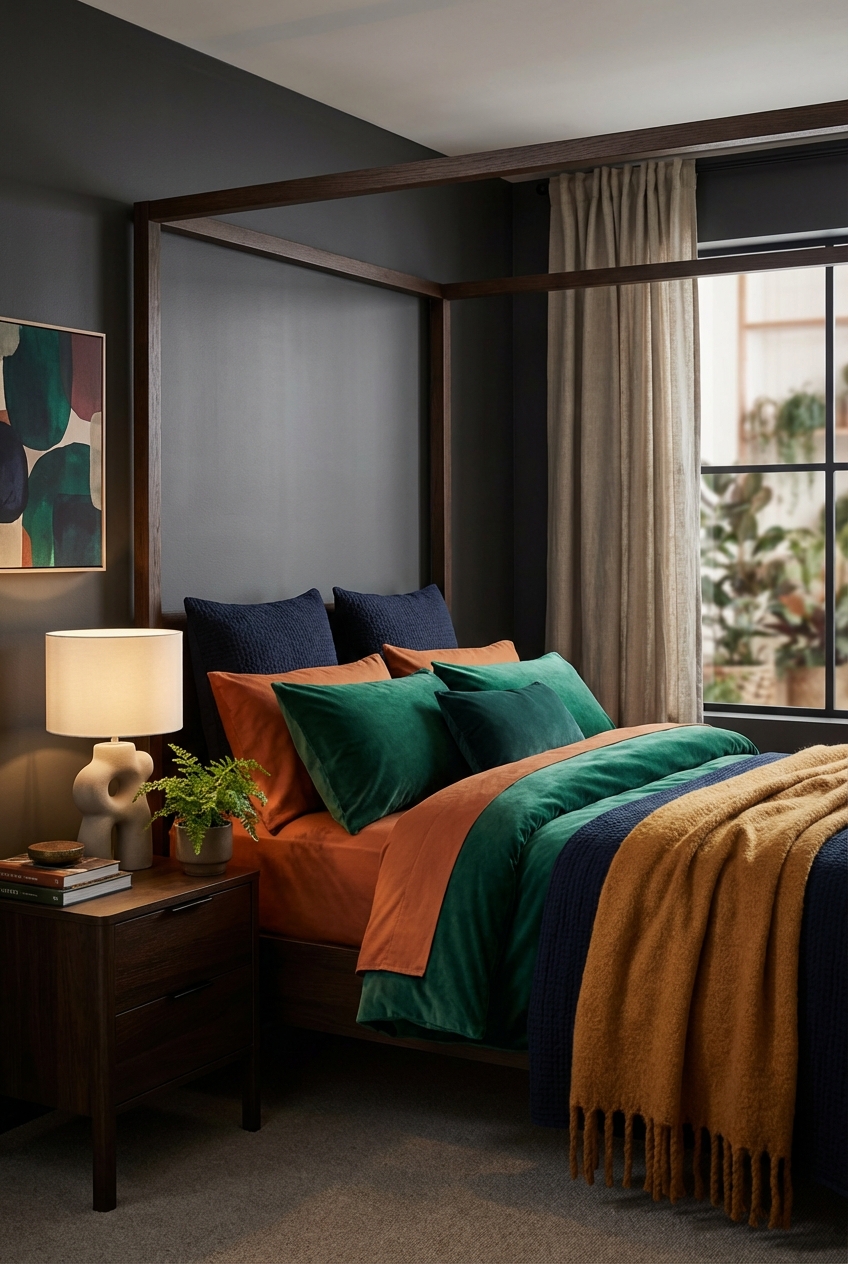
- Layer the bed. Linen sheets in bone or sand, a heavy duvet in the hero color, and a wool or knit throw at the foot.
- Choose one or two large art pieces, such as a misty forest print or an abstract stone texture, instead of a crowded gallery wall.
- Add a plant. A snake plant or ZZ plant copes with low light. If you share the home with a dog or cat, check with your vet before bringing in any plant.
For bedding in particular, see these linen, velvet and layered texture ideas.
What colors and materials work?
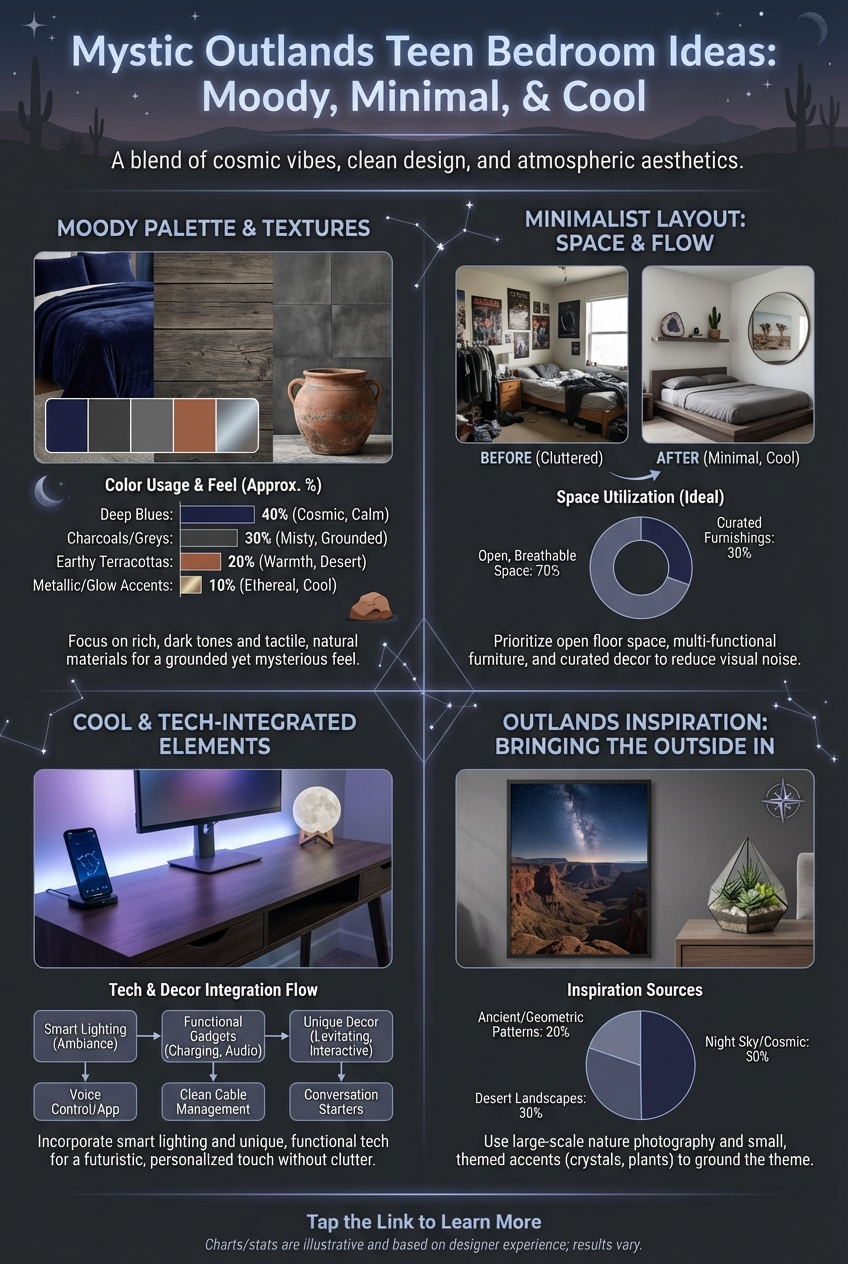
Build the palette from near-black or deep charcoal, desaturated greens, muddy browns and cool grays. Skip anything neon or primary.
With so little color, texture does the work: a leather headboard, a chunky wool rug, a concrete-look or solid wood desk. Choose matte finishes (flat or eggshell paint, matte black hardware, brushed metal). Glossy surfaces bounce light and create sharp reflections, while matte ones absorb it and keep shadows soft, which is the diffused mood you want here.
For decor, abstract beats literal: a framed topographic map, a piece of driftwood, a ceramic vase with dried branches. If the style appeals but you prefer something lighter, the minimalist starter kit shows a gentler version.
What layout and size rules should you follow?
As an architect, I start with the layout, because styling can't rescue a bad plan.
- Bed: center it on the main wall if space allows, with about 30 inches of walking room on each side. In a very small room a corner works, but anchor it with a rug.
- Rug: for a full or queen bed, an 8x10 foot rug is the usual choice, and it should extend about 24 inches past the sides of the bed. Low-pile wool or flat-weave jute suits the look. More ideas in these rug layering tricks.
- Desk: standard height is about 29-30 inches. Leave roughly 36-48 inches behind it so the chair pulls out. A wall-mounted desk keeps the floor clear.
- Curtains: hang the rod 6-10 inches above the window frame and let it extend 8-12 inches past each side. Heavy drapes in forest green or slate gray add to the mood.
How do you light a dark bedroom?
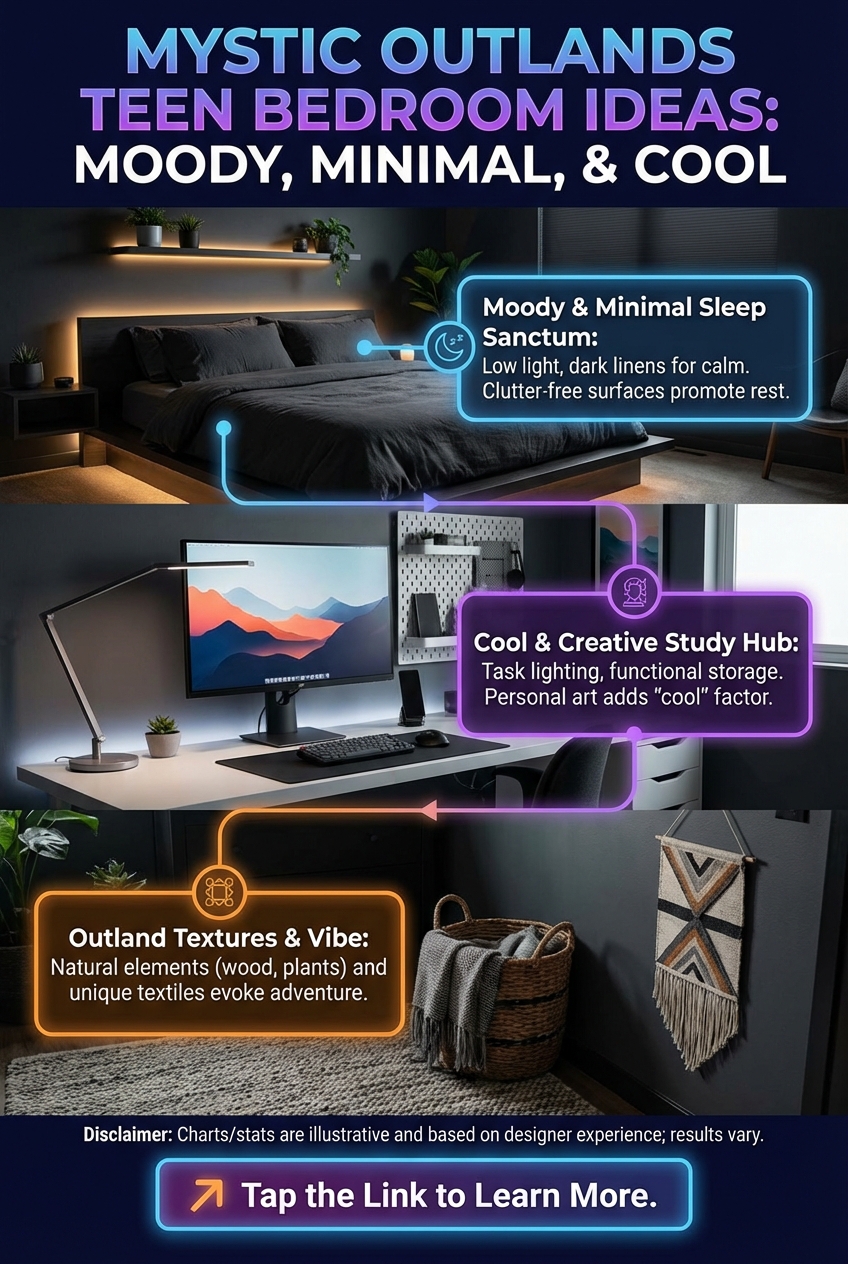
Dark paint with a single overhead bulb gives you the cave effect. I recommend at least three layers: ceiling, bedside and desk, with warm bulbs (2700K-3000K) rather than 5000K daylight bulbs, which make dark colors look clinical. Put the ceiling light on a dimmer.
Studying is fine in a moody room if the desk has its own focused LED lamp, so the overhead light isn't doing task work. Test paint swatches on every wall and look at them morning and evening before you commit. For more, read about common lighting mistakes.
What are good teen bedroom ideas for small rooms?
Drench the walls, trim and door in the same deep color. The corners read less sharply, and the room feels like a cozy jewel box instead of a cramped one. Then go vertical: a loft bed with a desk underneath, or a floating desk.
Store things out of sight (under-bed bins, a sleek wardrobe) so the minimalism is easy to keep. Choose fewer, larger pieces; several small tables make a small room look busier.
Sharing a room? Use matching bedding, one big rug across both sides, and a tall bookshelf as a divider. Renting? Peel-and-stick murals, a strong rug and swapped matte black drawer pulls carry the look, and the pulls can go back when you move.
How much does it cost? Teen bedroom ideas on a budget
You can do this at several price levels, and the order of spending matters more than the total.
- Low budget: paint and textiles first. Dark paint, secondhand wood furniture sanded and stained dark walnut, and a DIY textured canvas made with joint compound.
- Mid budget: a good mattress, a statement bed frame, a better rug and light fixtures, and perhaps paneled closet doors.
- Splurge: custom cabinetry for the study zone, upgraded window treatments, or a reclaimed wood or stone feature wall.
Prices vary a lot by region and brand, so price out your own list before you start.
Which mistakes should you avoid?
- Cool-toned bulbs. Switch to warm white.
- A bright white ceiling in a dark room. Paint it the wall color, or a shade or two lighter from the same swatch strip.
- Too many small knick-knacks. Group a few objects of different heights and leave empty space on shelves and desks.
- Mismatched metals. Keep to one finish, such as all matte black.
- Visible cords behind the desk. Bundle and hide them.
Dark matte paint shows scuffs and fingerprints more easily. I recommend a scuff-resistant matte finish and a small container of touch-up paint kept on hand.
Frequently asked questions
What are some good bedroom ideas for a 16-year-old girl?
Pick a calm palette she likes, add a wall of layered lighting (sconces, a desk lamp, a dimmer), and personalize with one or two large art pieces and soft textiles. Keep the base neutral so the room can change as her taste does.
How do I keep a minimal room from feeling empty?
Add texture and a few larger pieces: a big plant, a tall floor lamp, a chunky wool rug. These have visual weight without adding clutter.
Will dark walls make a small room feel smaller?
Not necessarily. Dark colors blur the corners, so the walls can seem to recede. Painting walls, trim and ceiling the same color increases that effect.
How do you style a girl's bedroom?
Start with the bed and lighting, then layer bedding in a few textures and keep art and decor limited to pieces she loves. Leave some surfaces clear so the room stays calm.
Filed under
ArticlesMeet the author
Written by an architect.
Julio Arco is a passionate architect with years of experience in architecture, interior design, urban design, and housing. He studied at prestigious universities across North America and Europe.

- Name
- Julio Arco
- Job
- Architect and online interior designer
- Studied
- Architecture, ITESM · Urban Design and Housing, McGill
- Partner
- Thor, Australian Shepherd
- Thor’s title
- Head of quality control