Aesthetic Bookshelf Styling: A Lived-In Poetcore Look

By Julio Arco
Architect and online interior designer
In this post
- What makes a shelf read as poetcore?
- How do you style a bookshelf step by step?
- What is the rule of three for shelves?
- How do you style bookshelves with lots of books?
- How do you style a bookshelf without books?
- How do you light a poetcore bookshelf?
- Common mistakes and quick fixes
- Adjusting the look room by room
- Frequently asked questions
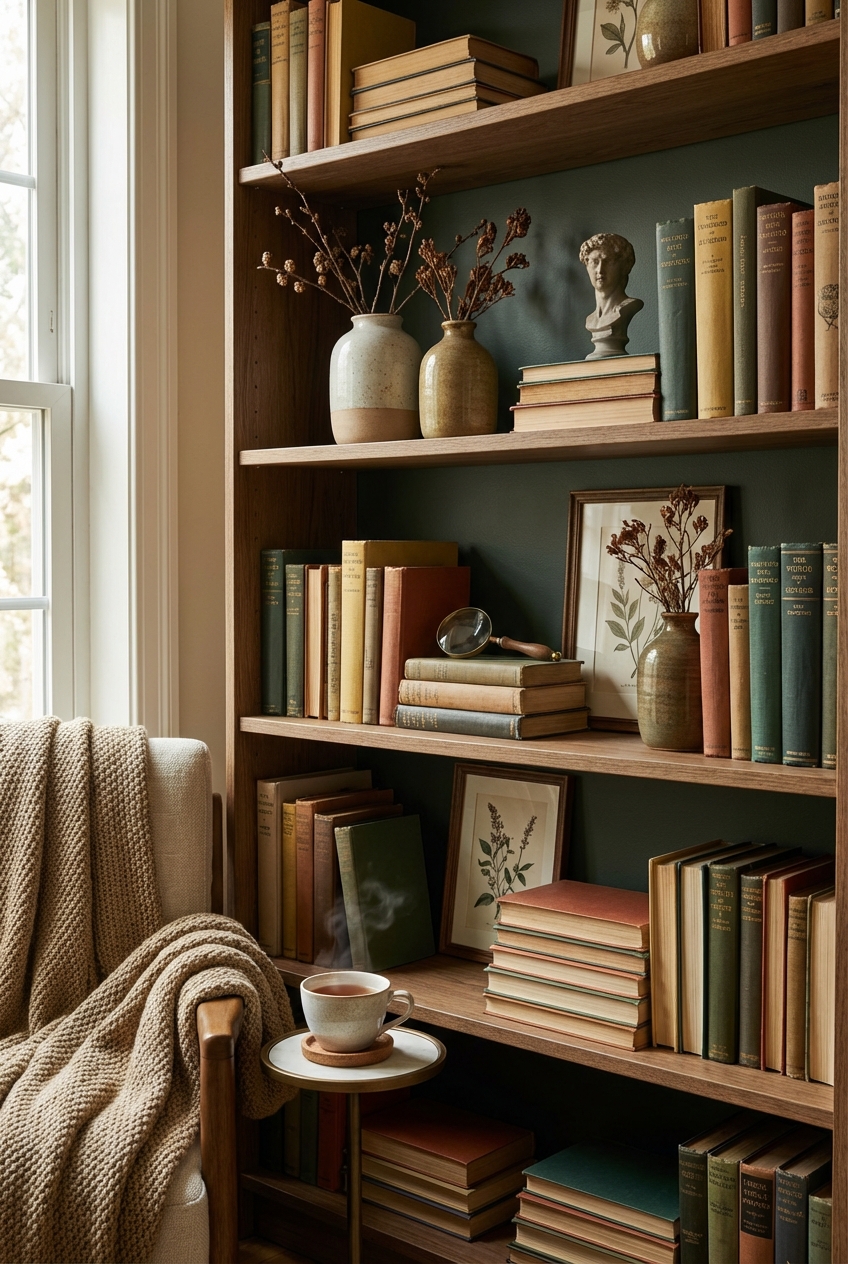
A bookshelf looks collected and lived-in when it has a clear mix of vertical and horizontal books, objects of different heights, a restrained palette and some empty space. Poetcore adds warm woods, aged brass, dried botanicals and soft light. It's easy to tip from curated into cluttered, so the steps below keep the layering under control.
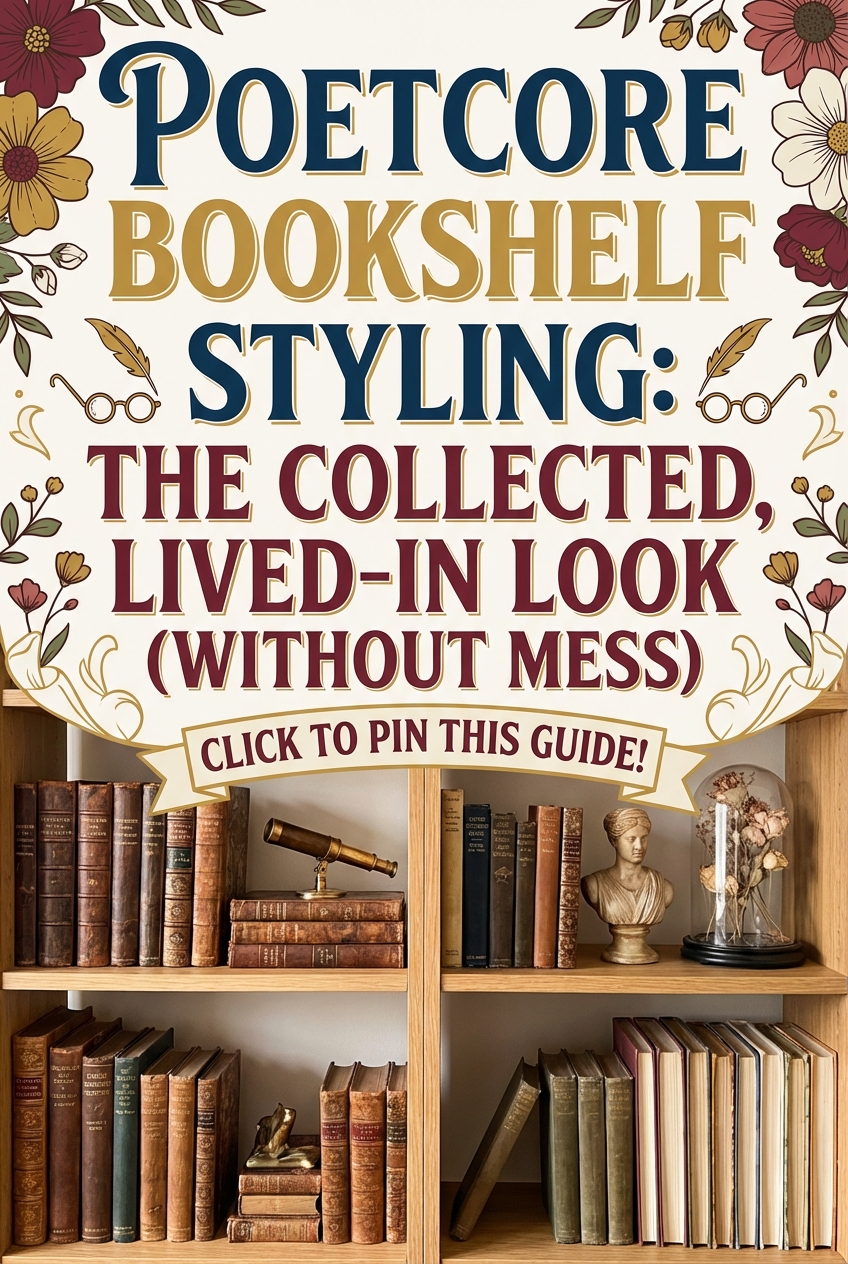
Poetcore is a literary offshoot of dark academia and cottagecore: worn leather, pressed flowers, a lamp that glows low. You can build it in an afternoon, on a thrifted pine bookcase or a wall of built-ins.
What makes a shelf read as poetcore?
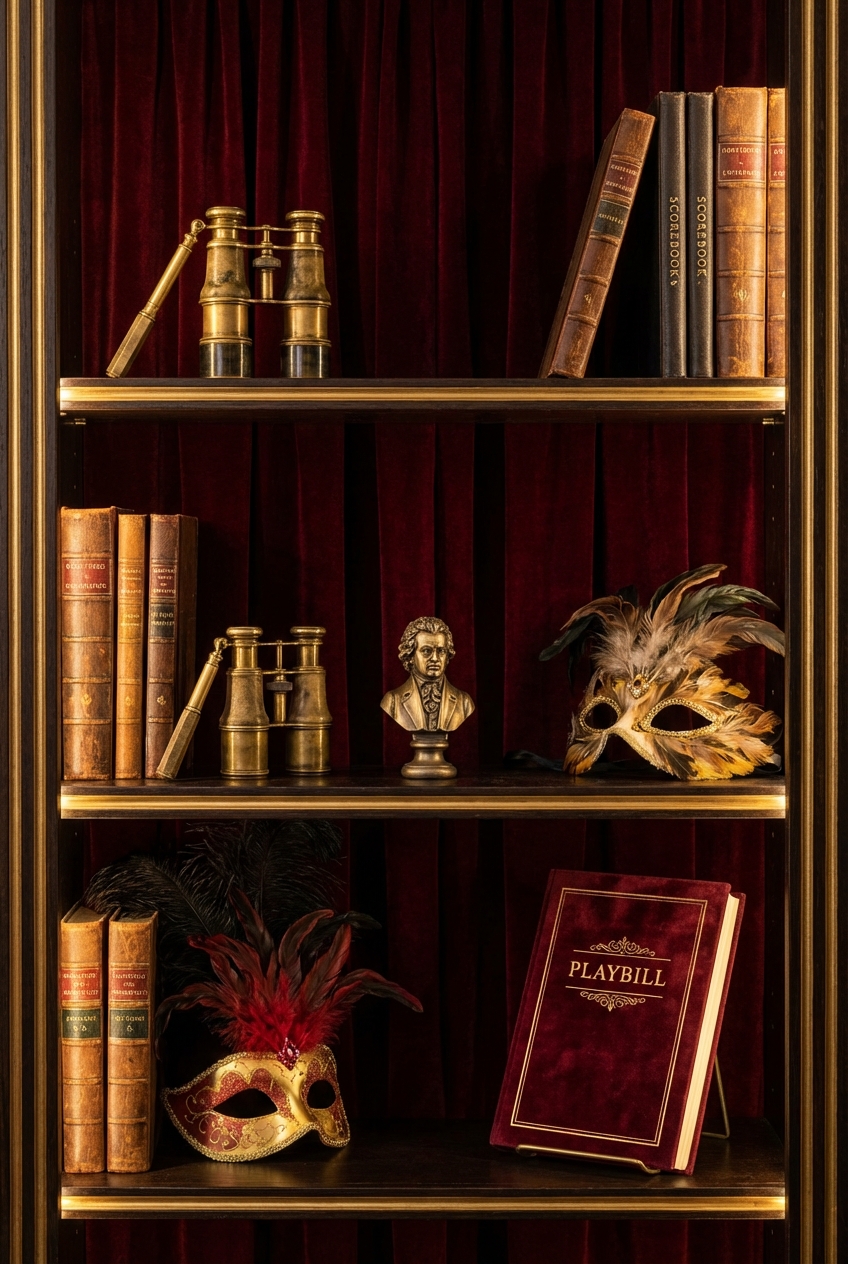
Three things carry the look: natural materials, a muted palette and objects that seem to have been set down mid-thought.
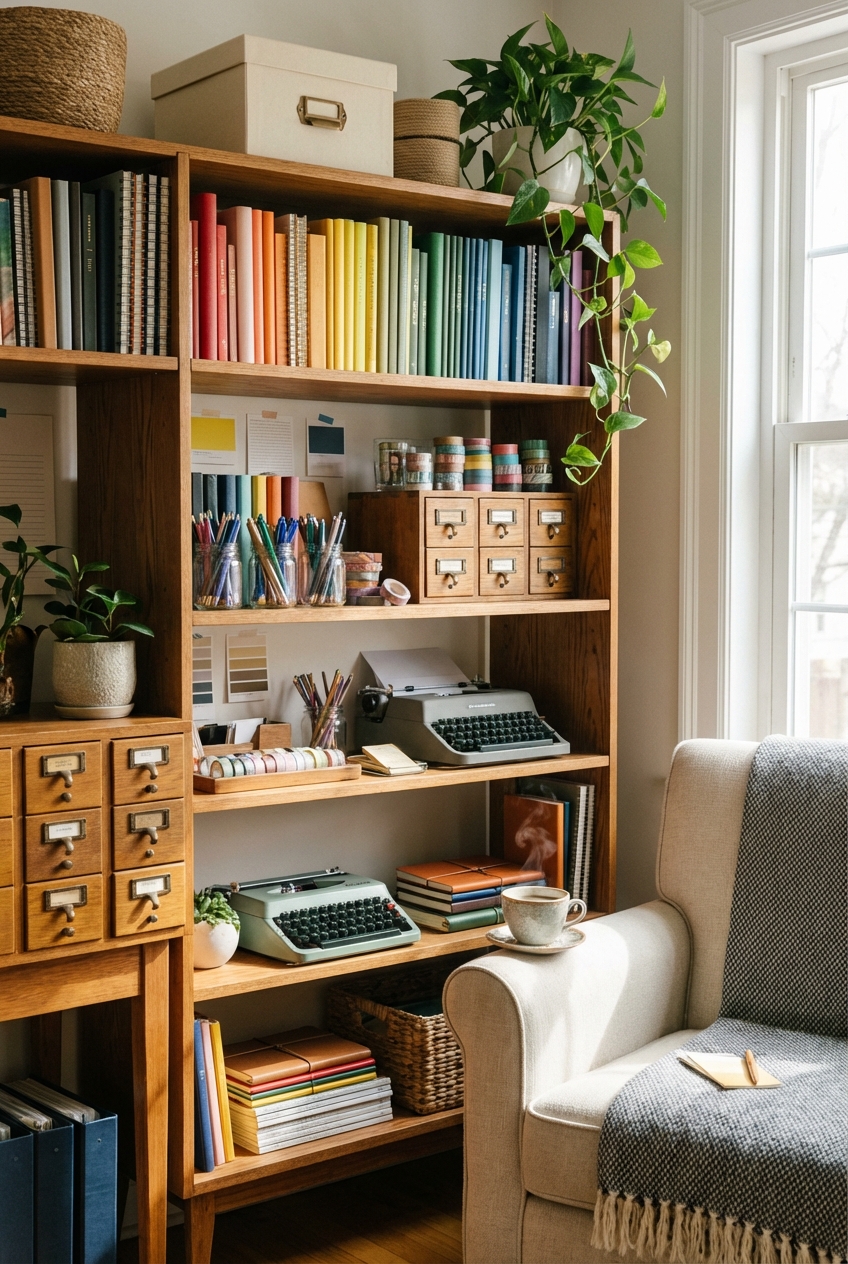
- Materials: solid or stained wood, unlacquered brass, leather, linen, stoneware. Glossy white laminate fights the mood. If you're stuck with it, line the back of the shelves with dark wallpaper or linen fabric.
- Palette: forest green, burgundy, navy, brown, cream and muted gold. If a few spines are neon, take off the dust jackets. The cloth boards underneath are usually calmer.
- Objects: brass candlesticks, dried eucalyptus or ferns, small framed sketches, hand-thrown ceramics, a magnifying glass, leather journals.
If you like this mood elsewhere in the house, the poetcore powder room ideas use the same ingredients.
How do you style a bookshelf step by step?
- Empty everything and clean the shelves. While you're at it, sort books by size and color family rather than by genre.
- Place the anchors first: the largest, heaviest books go on the bottom shelves or at the ends of middle shelves.
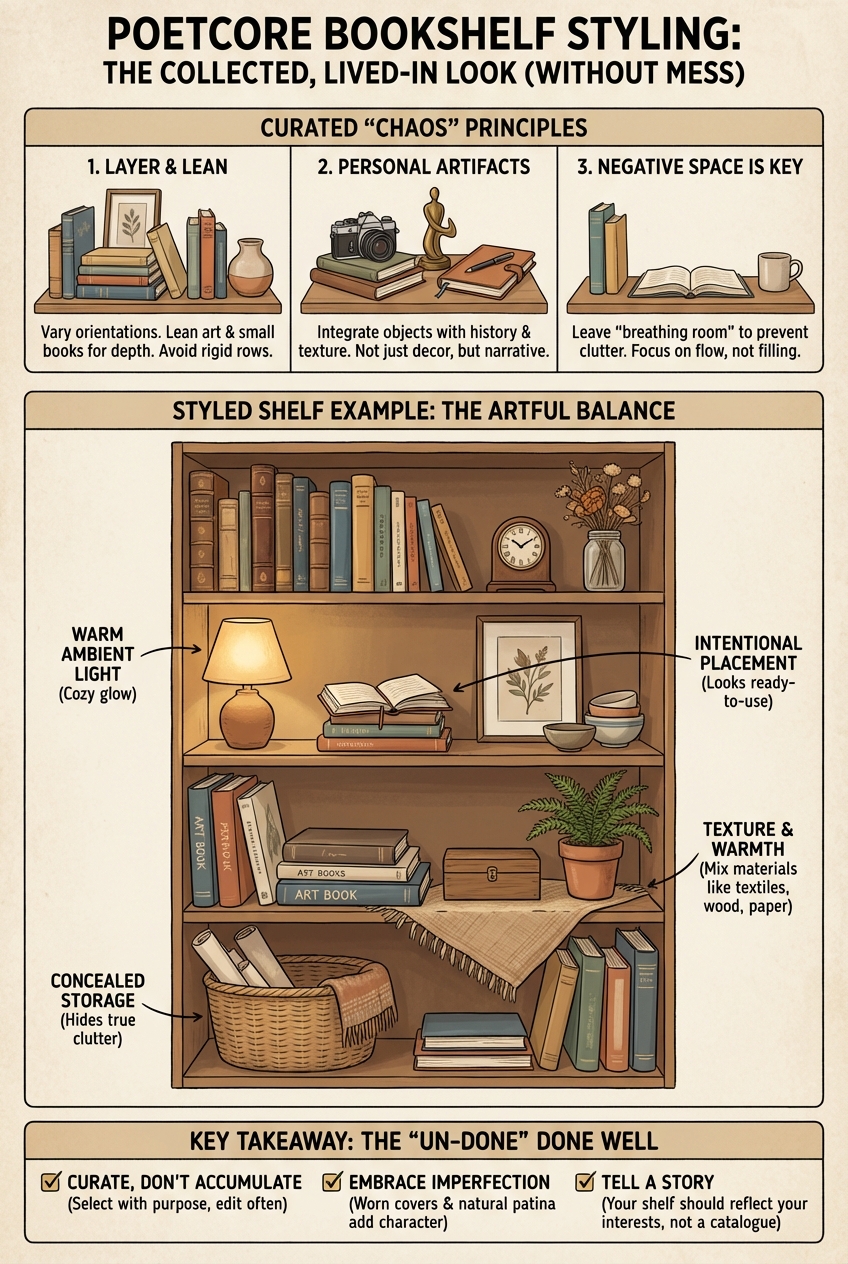
- Build horizontal stacks of 3-5 books at different heights. A 5-inch stack on a 12-inch-high shelf leaves about 7 inches of air for an object on top.
- Fill the gaps with vertical rows. Let a few lean. A slight tilt reads as read and reread.
- Lean small framed art against the back of the shelf.
- Layer the objects last: a bowl of river stones on a stack, a brass candlestick beside a row of spines.
- Add light (see below), then step back and remove one or two things.
What is the rule of three for shelves?
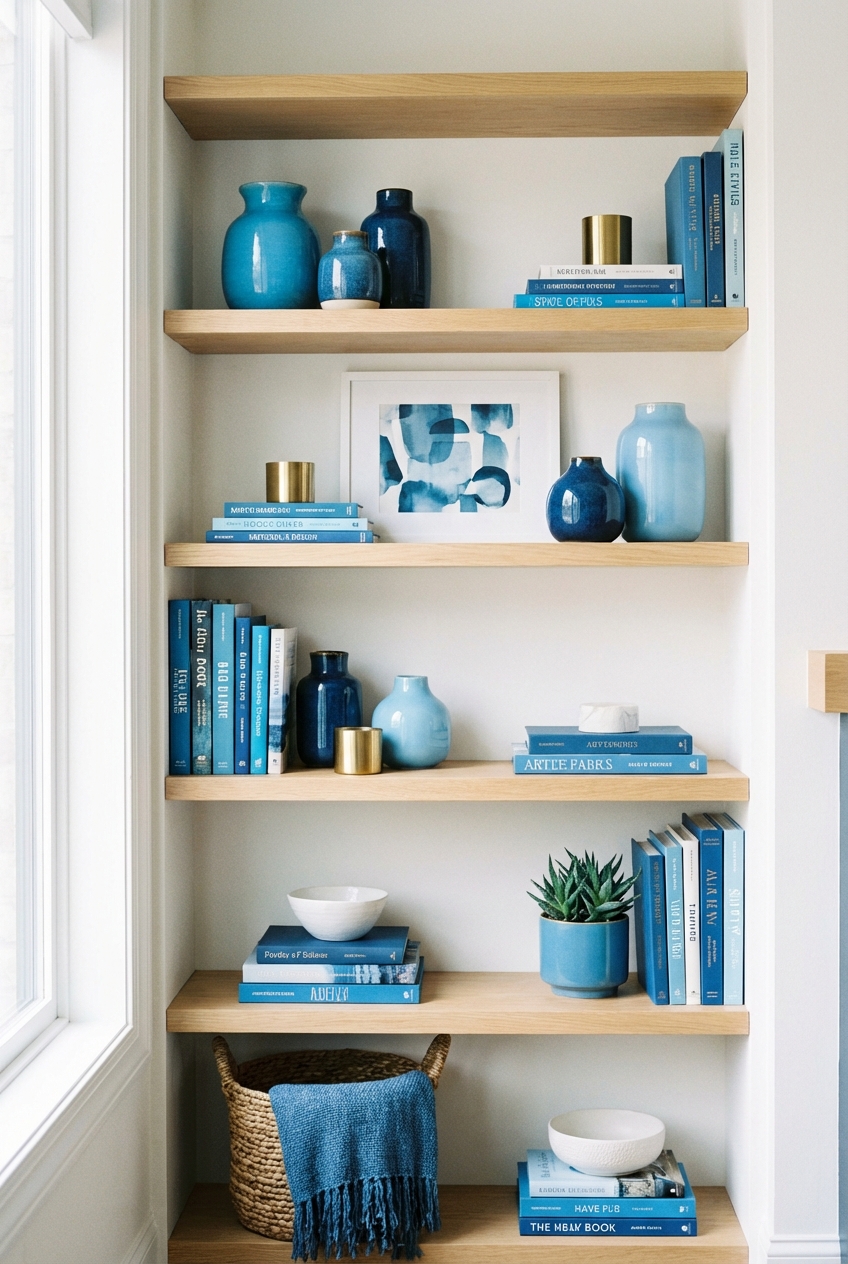
Group objects in odd numbers, usually three, with different heights, so the eye moves up and down instead of across. A tall vase, a medium stack of books and a low bowl is a classic trio. The rule is a guide, not a law: a single large object also works if it has room around it.
A related habit I recommend is to avoid centering everything. Put a tall stack on the left of one shelf and a sculptural piece on the right of the shelf below. That zig-zag keeps the eye moving and feels less stiff than mirrored symmetry.
How do you style bookshelves with lots of books?
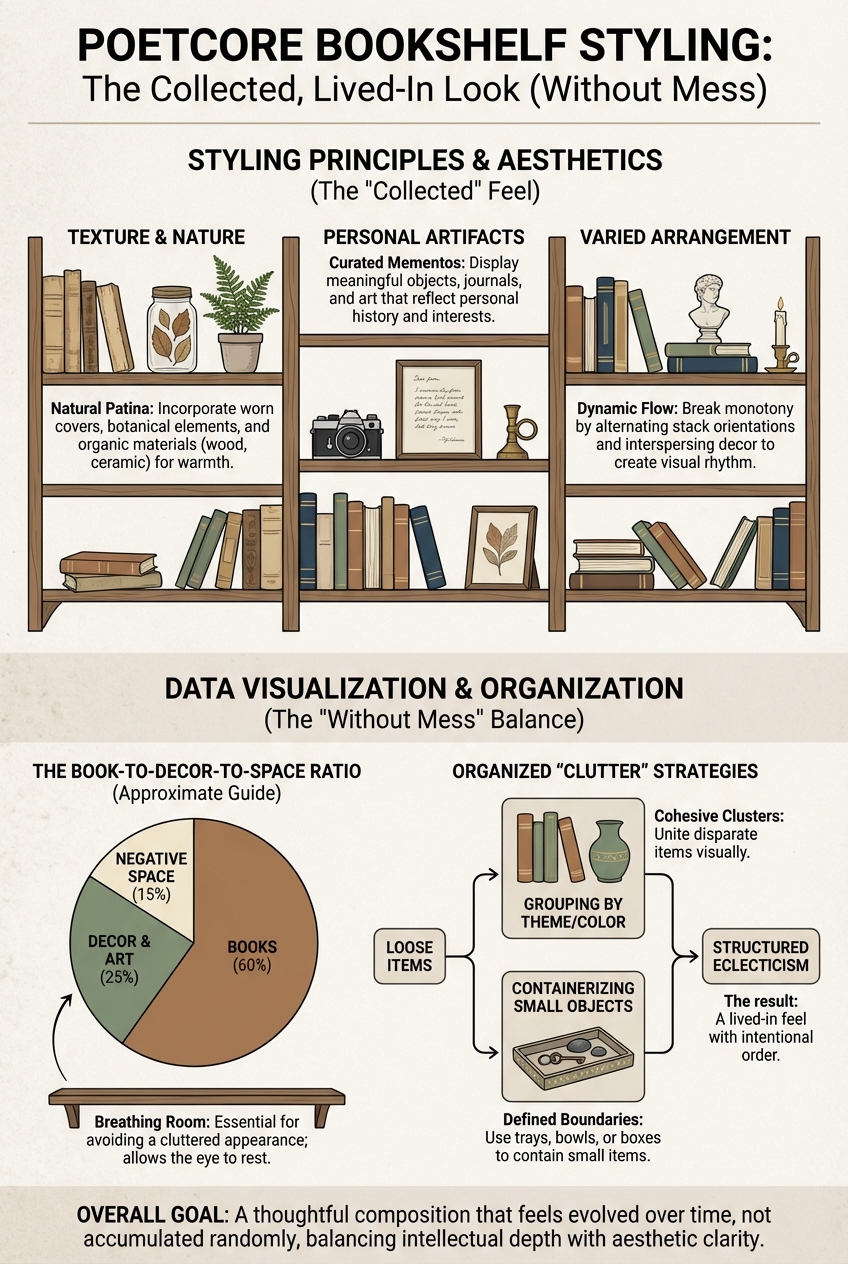
Break up long runs. A row of mismatched paperbacks is the usual culprit, so interrupt it with a horizontal stack or an object. Pull books to about an inch from the front edge on a standard 12-inch-deep shelf; the shadow behind them adds depth.
A rough split of 60% vertical and 40% horizontal gives you enough platforms for objects without hiding the books. Leaving some shelf area empty matters just as much. Roughly 10% open space, or a very low item, lets each piece read on its own. This is a figure-ground effect: the eye needs a calm background to pick out the objects. The Gestalt principle of figure-ground describes how we visually sort the world into figure and ground, and empty shelf space is your ground.
How do you style a bookshelf without books?
Swap quantity for texture. Use baskets, lidded boxes, ceramics, framed art and a few real books for weight. Keep the same rules: vary heights, ground small items on a tray or stack, and leave gaps. If you need filler, buy real used books by the foot or from library sales. Faux book boxes look flat next to the real thing.
For something quirkier, tuck in a vintage postcard in a small frame, a hourglass, a shell, or a pressed flower between glass. Poetcore forgives odd little treasures as long as the palette stays consistent. The Wilderkind bookshelf styling post goes in a more outdoorsy direction if you want a contrast.
How do you light a poetcore bookshelf?
Warm light (about 2700K) makes brass and wood glow. Battery puck lights hidden under the shelf lip give a downward wash with no wiring. A small lamp with a pleated shade on one shelf works too. For reading nooks, the poetcore reading lighting guide has more options. Use LED candles on shelves, especially if a dog's tail swings by.
Common mistakes and quick fixes
- Floating objects: a tiny item alone on a tall shelf looks lost. Ground it on a stack, a tray or beside a larger piece.
- Over-accessorizing: if you can't see the books, remove three items.
- Perfect symmetry: pair a tall vase on one side with a low, wide bowl on the other.
- A dark corner: add light so the shelf doesn't become a black hole.
- Overloaded shelves: books are heavy. If a shelf is bowing, redistribute the weight to lower shelves.
As an architect, I'd also anchor tall units to the wall if kids or pets are around, and use museum putty on fragile pieces.
Adjusting the look room by room
- Living room: the most formal version. Large art books, framed photos, and shelves that frame a fireplace or TV.
- Home office: hide cables and printer paper in vintage-style boxes, keep reference books within reach.
- Bedroom: softer, with a basket for blankets and only the books you read at night. Keep light dim.
- Kitchen or dining room: cookbooks, copper pots and jars of dried herbs.
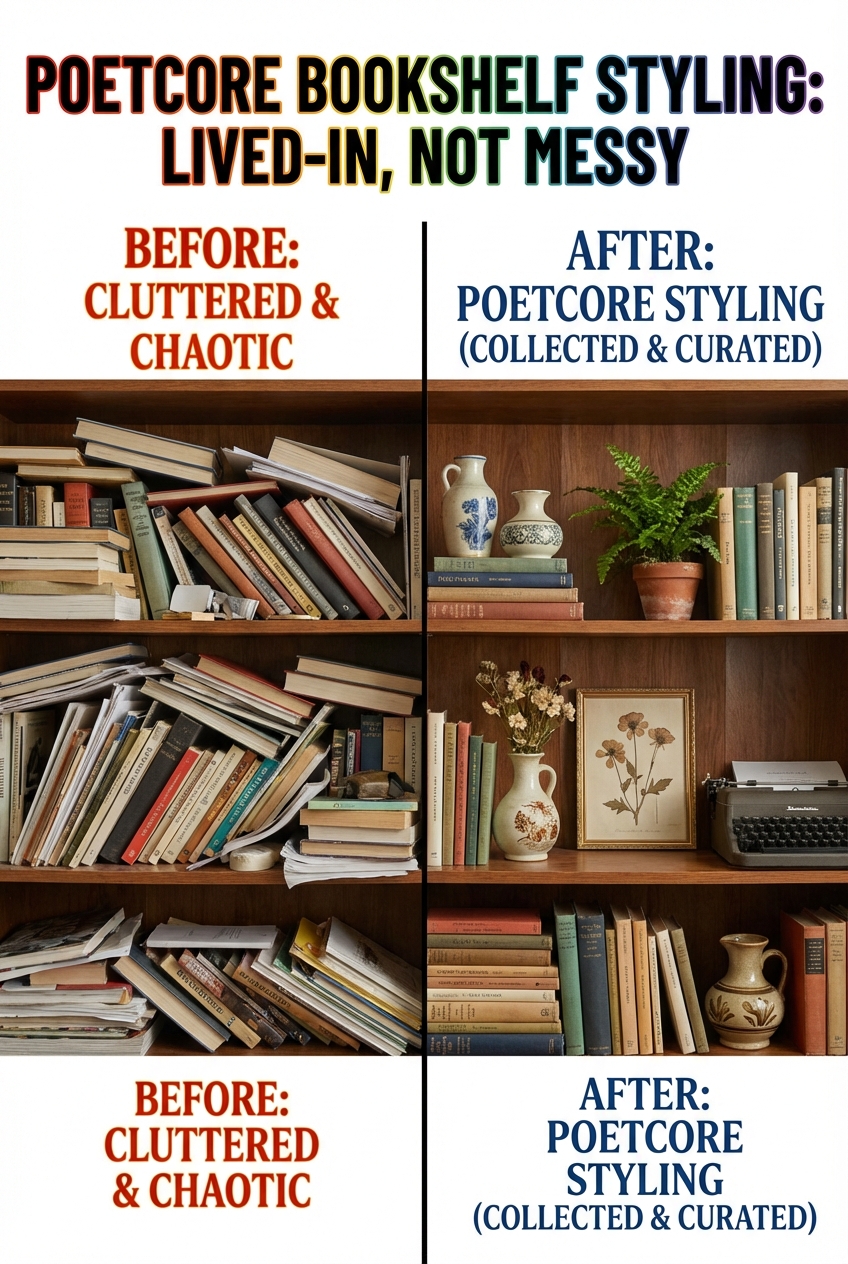
Dust gathers in layered shelves, so a soft duster once a week keeps things tidy. Rotate objects and books now and then; a shelf like this is never really finished.
Frequently asked questions
What is the bookshelf rule?
A common guideline is to mix vertical and horizontal books, vary object heights and leave some empty space. Roughly 60% vertical books and 10% open area is a handy starting point.
What are some quirky ideas for a bookcase?
Try dried botanicals, a small framed sketch, a vintage magnifying glass, an hourglass or a bowl of river stones on a book stack. Keep the palette consistent so the quirks look chosen.
How do I handle ugly modern books?
Remove the dust jackets, since the cloth boards underneath are often neutral. You can also group them on a lower shelf away from eye level.
Can I do this look in a rental?
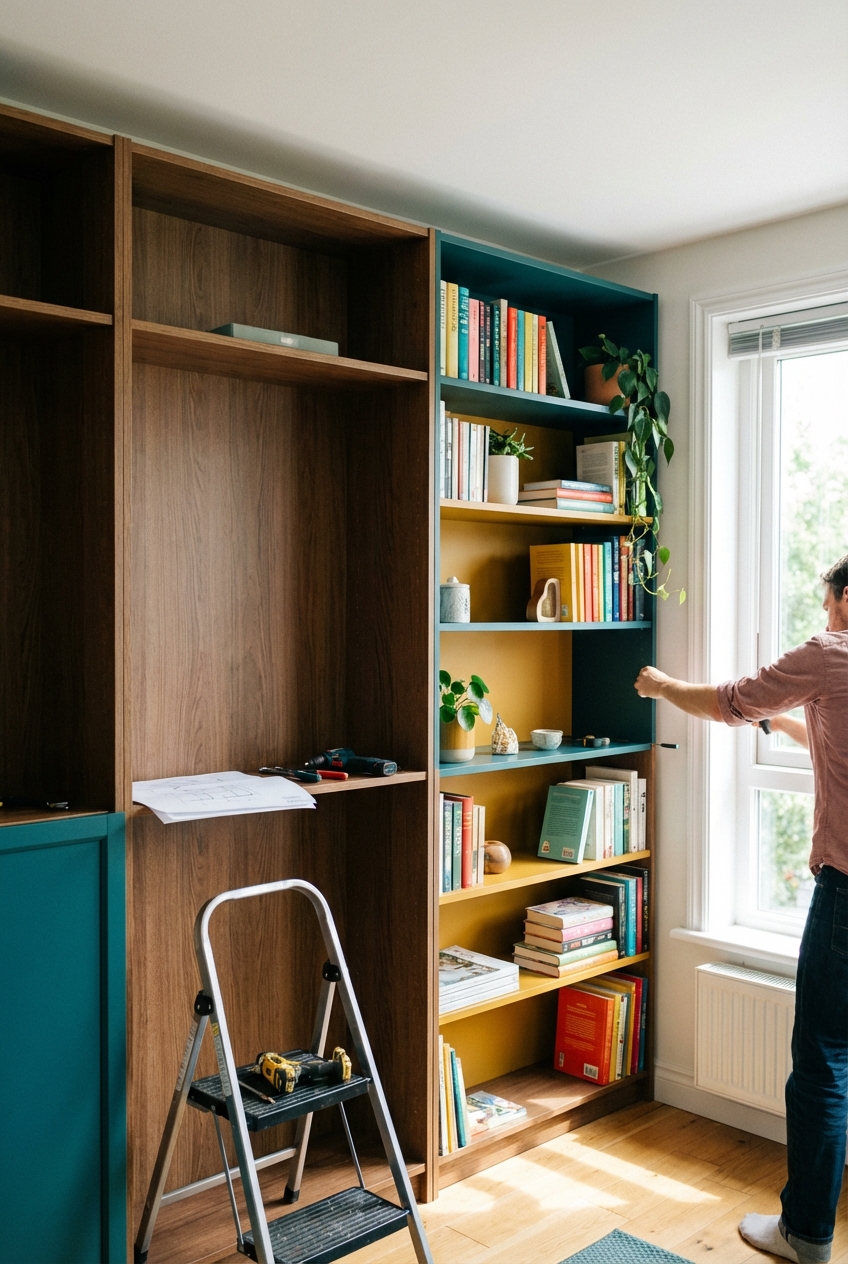
Yes. A dark wood bookcase adds contrast to plain walls, and peel-and-stick wallpaper on the back panel adds color without damaging the walls.
Filed under
ArticlesMeet the author
Written by an architect.
Julio Arco is a passionate architect with years of experience in architecture, interior design, urban design, and housing. He studied at prestigious universities across North America and Europe.

- Name
- Julio Arco
- Job
- Architect and online interior designer
- Studied
- Architecture, ITESM · Urban Design and Housing, McGill
- Partner
- Thor, Australian Shepherd
- Thor’s title
- Head of quality control