Poetcore Kitchen Runner Ideas: Washable Vintage Patterns
Choose a washable poetcore kitchen runner: vintage pattern names, flatweave textures, sizing rules and pads that keep it flat and safe.

By Julio Arco
Architect and online interior designer
In this post
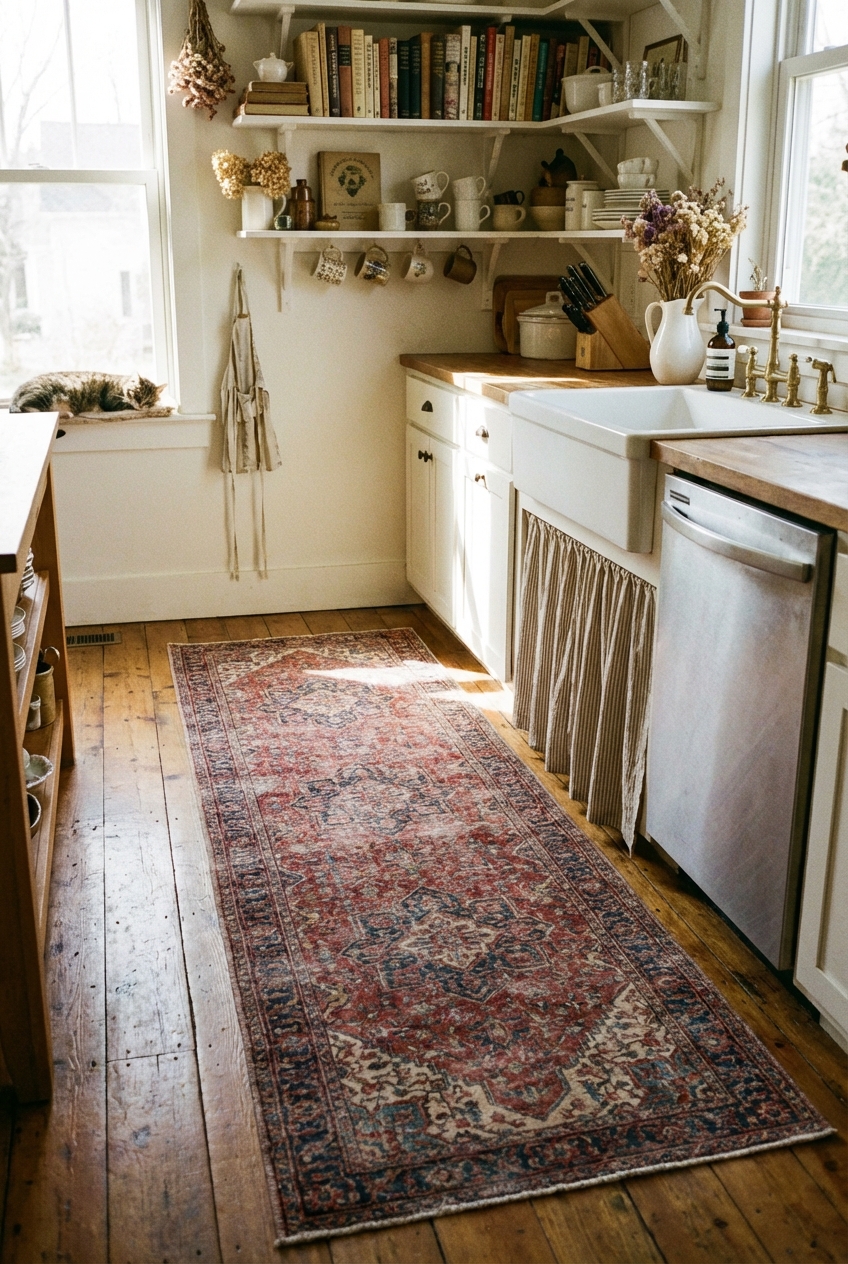
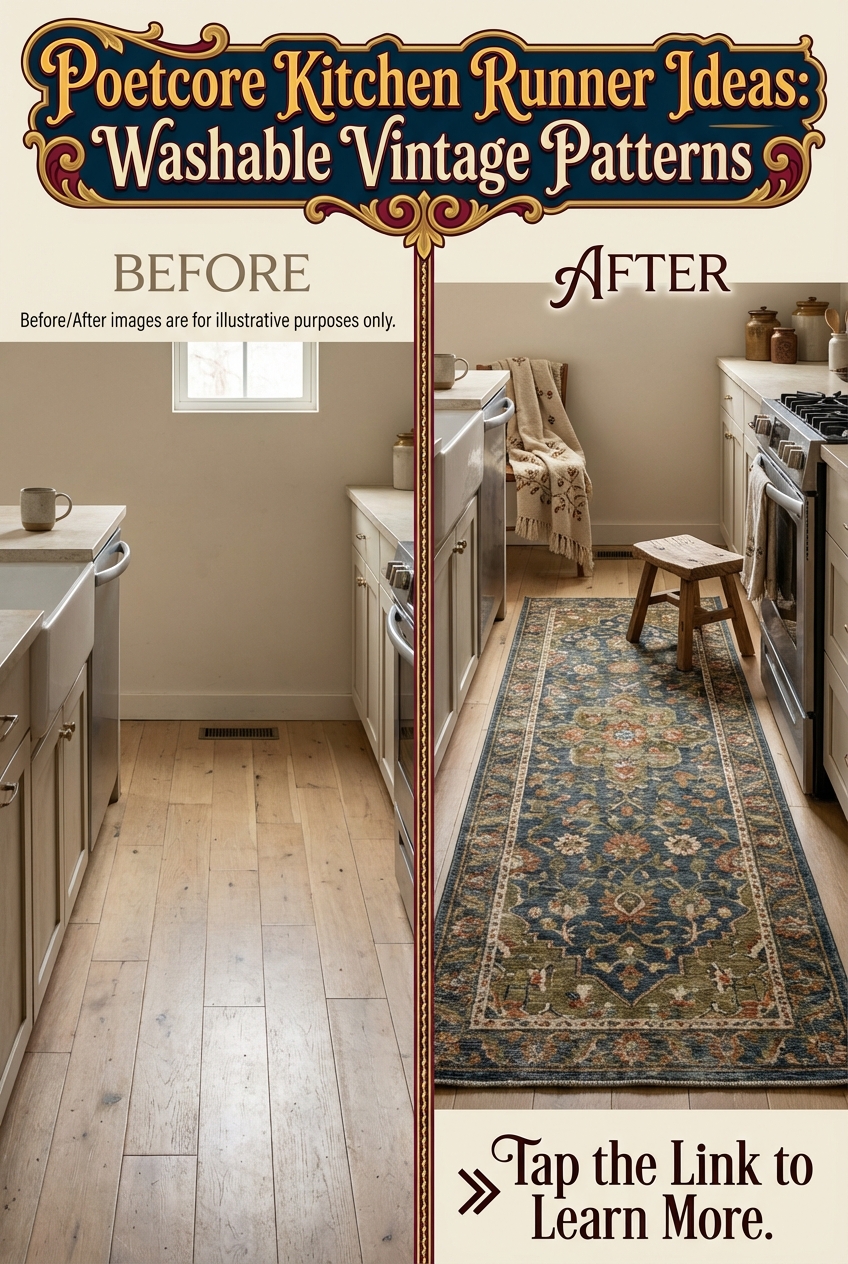
A poetcore kitchen runner is a long, low-pile rug with a faded, vintage-looking pattern in muted colors like parchment, sage, faded rose or ink. In a kitchen, let the pattern be old and the fabric be washable: a flatwoven polyester or chenille runner with a non-slip pad gives you the antique look without the heartbreak of a ruined heirloom.
It's a common problem. You want a kitchen that feels like a writer's retreat, and you also have muddy paws and tomato sauce. The good news is that printed washable runners handle both.
What makes a runner look poetcore?
Poetcore is the soft, nostalgic, library-meets-pantry look: dark wood, unlacquered brass, linen, warm light. The runner anchors it, so three things matter most: the pattern, the palette and the weave.
Which vintage rug patterns work best?
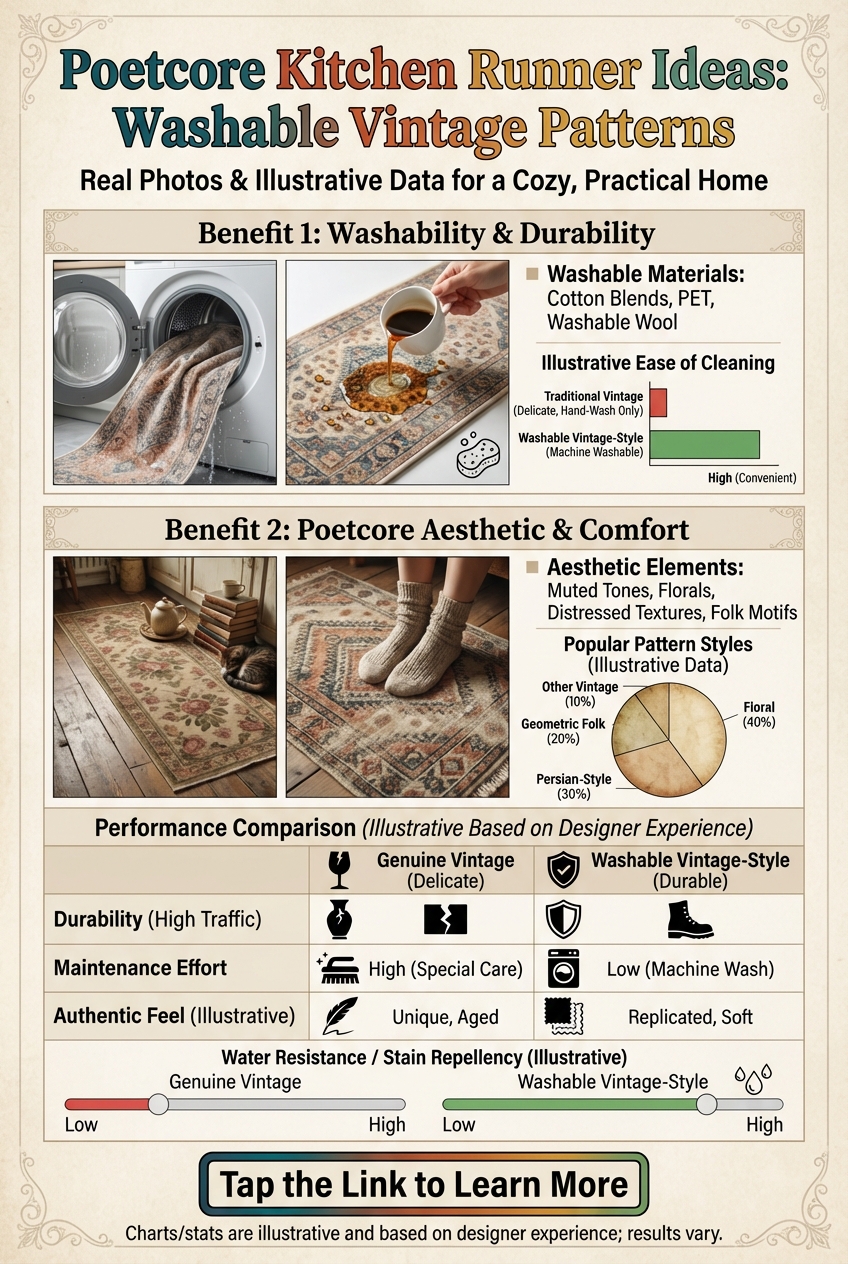
If you're asking what are some cool rug patterns for this style, start with the classic rug pattern names from traditional rugs: Heriz (bold geometric medallions), Oushak (soft, spacious florals in faded tones) and kilim-style stripes and diamonds. Among the types of rug patterns, these three have the worn, collected feel poetcore wants. For more on how pattern works as a design element, see our guide to patterns in interior design.
Look for a print that fades in and out, the digital version of what weavers call abrash, the natural color variation of old rugs. An evenly crisp print can read like a photocopy of an antique.
What colors should you choose?
Pick base tones such as oatmeal, taupe, charcoal or terracotta, then one or two accents: sage, dusty rose, faded denim or mustard. If you're still building the room's palette, this cream, walnut and soft brass palette pairs well with these rugs.
Which rug texture is best in a kitchen?
Among the types of rug textures, flatweave is the practical pick. Low pile sweeps and vacuums easily, and it echoes old kilims. Skip shag and high pile here, since they hold crumbs. Chenille feels softer and more traditional but tends to hold more dog hair. A smooth flat weave is thinner underfoot, so a cushioned pad makes up for it.

How big should a kitchen runner be?
A runner that's too small looks like a bathmat, and one that's too big looks like wall-to-wall carpet. Measure the aisle between your counters first.
- In a 36-48 inch aisle, a 24-30 inch wide runner leaves roughly 6-9 inches of bare floor on each side, which reads as a deliberate frame.
- Stop the runner a few inches short of the end of the cabinet run or island so it doesn't look squeezed in.
- Check the gap under the dishwasher and oven doors before you add a pad. A thick pad on a thin gap can make a door scrape.
Tape the outline on the floor with painter's tape and leave it for a day. Open the dishwasher, walk to the sink, carry something heavy. You'll know quickly if it works.
Keep it flat and safe
Washable rugs are light, so they slide and curl. Research on falls lists loose throw rugs and area carpets with curled edges or folds among the extrinsic factors most often described as unsafe and potentially raising fall risk. In a kitchen, where you carry hot pots, that matters.
As an architect, I recommend a felt-and-natural-rubber pad over a cheap PVC one, and a cushioned grip pad if you stand at the counter a lot. Check that the pad is labeled safe for your floor finish, particularly vinyl plank, since some rubber backings can stain it. Use corner grippers or rug tape made for rugs if edges lift, not heavy carpet tape that leaves residue.
Where does the runner go in each kitchen layout?
Galley kitchen
One long runner suits the aisle. If the kitchen is very long, two shorter runners with a small gap are easier to wash, since a very long runner gets heavy and can unbalance a home washing machine.
L-shaped kitchen
Put one runner in the main work zone, usually between sink and stove. If you want a second, use a small mat at the other station and keep a gap at the corner so they don't touch.
Kitchen with an island
Place it on the working side, not the barstool side, where stools will catch on the edge. Don't tuck it under the front feet of the fridge either, or you'll have to move the appliance to wash it.
Washing and care
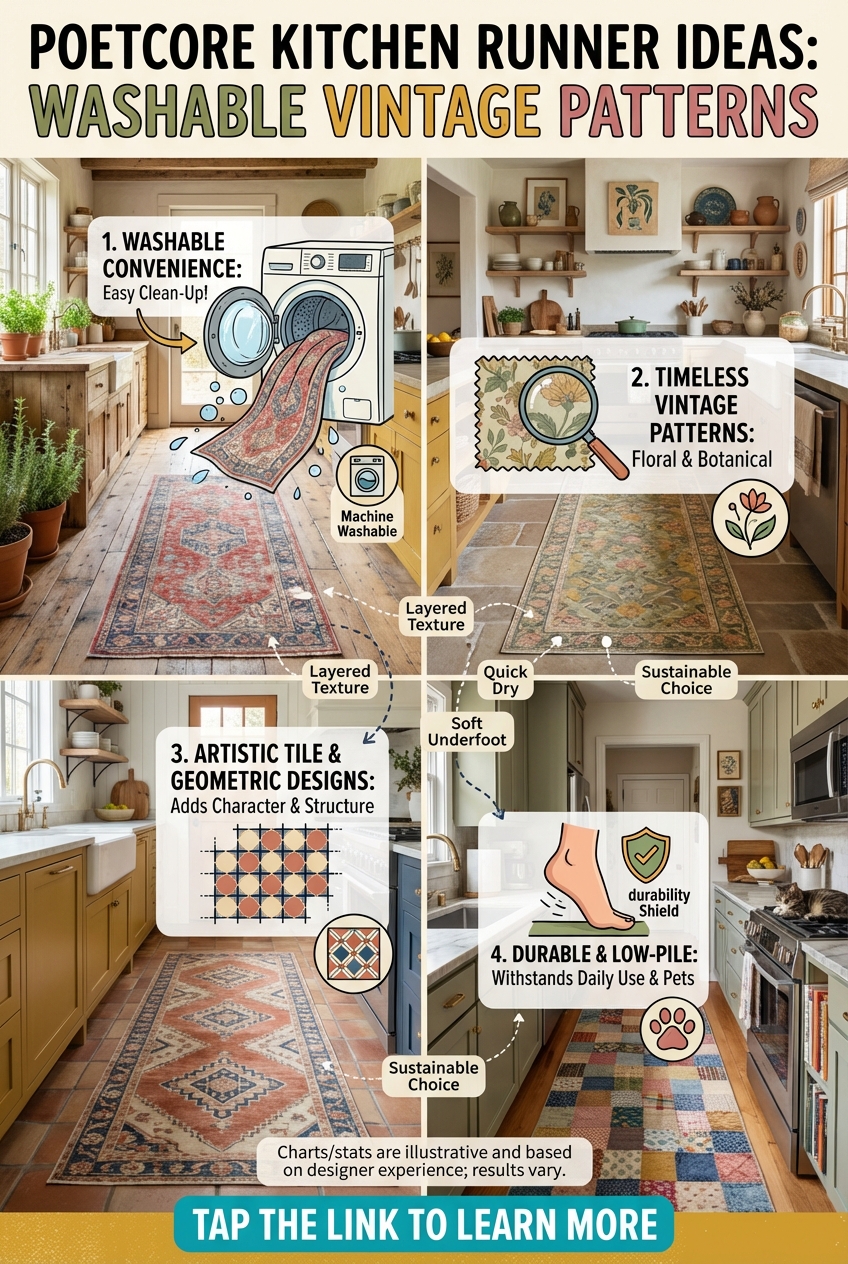
Pretreat grease spots with dish soap before the machine, and skip high dryer heat, which can set the stain. Vacuum weekly and wash only when needed, because frequent washing wears out the non-slip backing. Check the care label and your vet if a pet has skin sensitivities to detergents. If the kitchen gets strong direct sun, rotate the runner now and then so it fades evenly.
Styling around the runner
- Use warm light, around 2700-3000K, ideally on a dimmer. Our poetcore kitchen lighting ideas go deeper.
- Echo the darkest color in the rug with a wooden bowl, cutting board or pedestal stand.
- Swap chrome pulls for unlacquered brass or oil-rubbed bronze if the rug has rusty tones.
- Coordinate instead of matching: an olive thread in the rug and a terracotta towel looks collected, not staged.
For the rest of the house, the poetcore living room and vintage French country kitchen posts carry the same look further.
Frequently asked questions
What type of rugs are trending now?
Washable, low-pile rugs with faded vintage-style prints, such as Oushak and kilim looks in muted colors, are a popular choice for kitchens and hallways. Check current retailer collections for what's newest.
Do washable rugs actually come out clean?
Generally yes, but pretreat grease with dish soap first and avoid high heat, which can set the stain.
Can I put a runner in front of the sink?
Yes, it's a good spot because it catches drips that would otherwise make tile slippery. Use a grip pad so it stays put.
How often should I wash a kitchen runner?
Vacuum weekly and machine wash only when needed or after a spill, since frequent washing can wear down the non-slip backing.
Filed under
ArticlesMeet the author
Written by an architect.
Julio Arco is a passionate architect with years of experience in architecture, interior design, urban design, and housing. He studied at prestigious universities across North America and Europe.

- Name
- Julio Arco
- Job
- Architect and online interior designer
- Studied
- Architecture, ITESM · Urban Design and Housing, McGill
- Partner
- Thor, Australian Shepherd
- Thor’s title
- Head of quality control