Mudroom Storage Ideas for Shoes, Coats and Clutter
Mudroom storage ideas that work: benches with cubbies, lockers, hooks, shelves and shoe storage, plus small-space and budget DIY options.

By Julio Arco
Architect and online interior designer
In this post
- Measure the entry before you buy anything
- Storage benches with cubbies or drawers
- Lockers, tall cabinets and closets
- Wall hooks and floating shelves
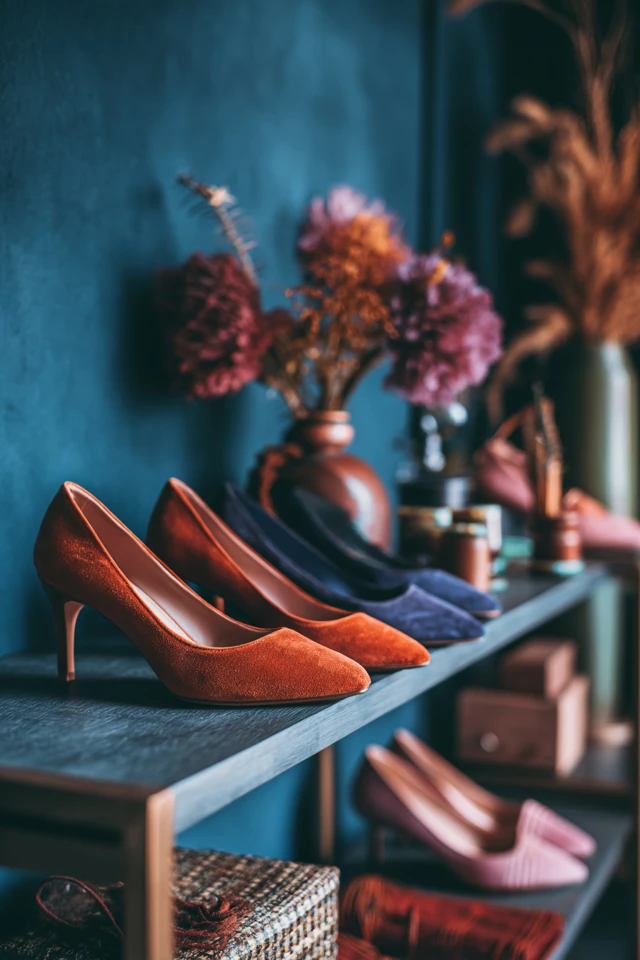
- Shoe storage that keeps up with real life
- Small mudroom storage ideas
- DIY and budget mudroom storage
- Style it so it looks intentional
- Frequently asked questions
The best mudroom storage gives every item a home you can reach in a few seconds: a bench to sit on, a hook at shoulder height for each person, and a place for shoes to dry off the floor. Start with those three things and add shelves, baskets or lockers as the space allows.
If your entry is a narrow hallway instead of a real room, don't worry. Most of these ideas scale down, and a shoe rack is often the piece that makes an entry look organized at a glance.
Measure the entry before you buy anything
Get a tape measure and write down the wall width, the ceiling height and where the door swings. Storage that blocks the door or squeezes the path is the most common mistake in small entries.
- Leave about 30-36 inches of clear path for walking in and out.
- A bench seat works best at about 16-19 inches high.
- Shelves for shoes need to be deep enough for the longest sole you own, so measure your largest boots first.
As an architect, I'd decide the bench and hook positions first, then fill in shelves around them. Furniture that fits the body is used daily, and furniture that doesn't becomes a coat pile.
Storage benches with cubbies or drawers
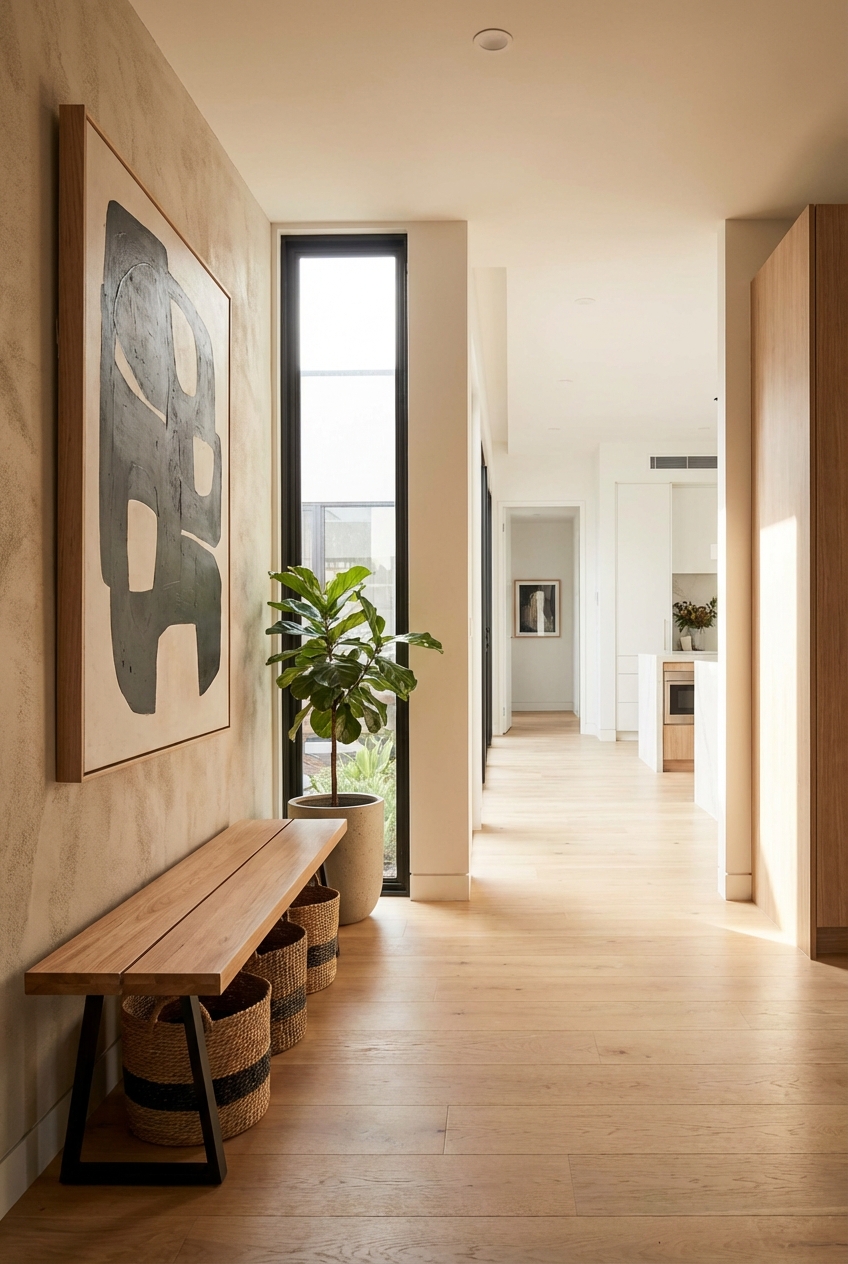
A bench is the anchor of most mudrooms because it handles sitting and storage in one footprint. Mudroom storage benches with cubbies hold one pair of shoes per cubby, which keeps families from digging through a shared heap. Drawers hide the odds and ends, like gloves and dog leashes.
Open cubbies look tidy only if you keep them edited. If you'd rather not think about it, choose a bench with a lift-up seat or doors, and put a washable cushion on top.
Lockers, tall cabinets and closets
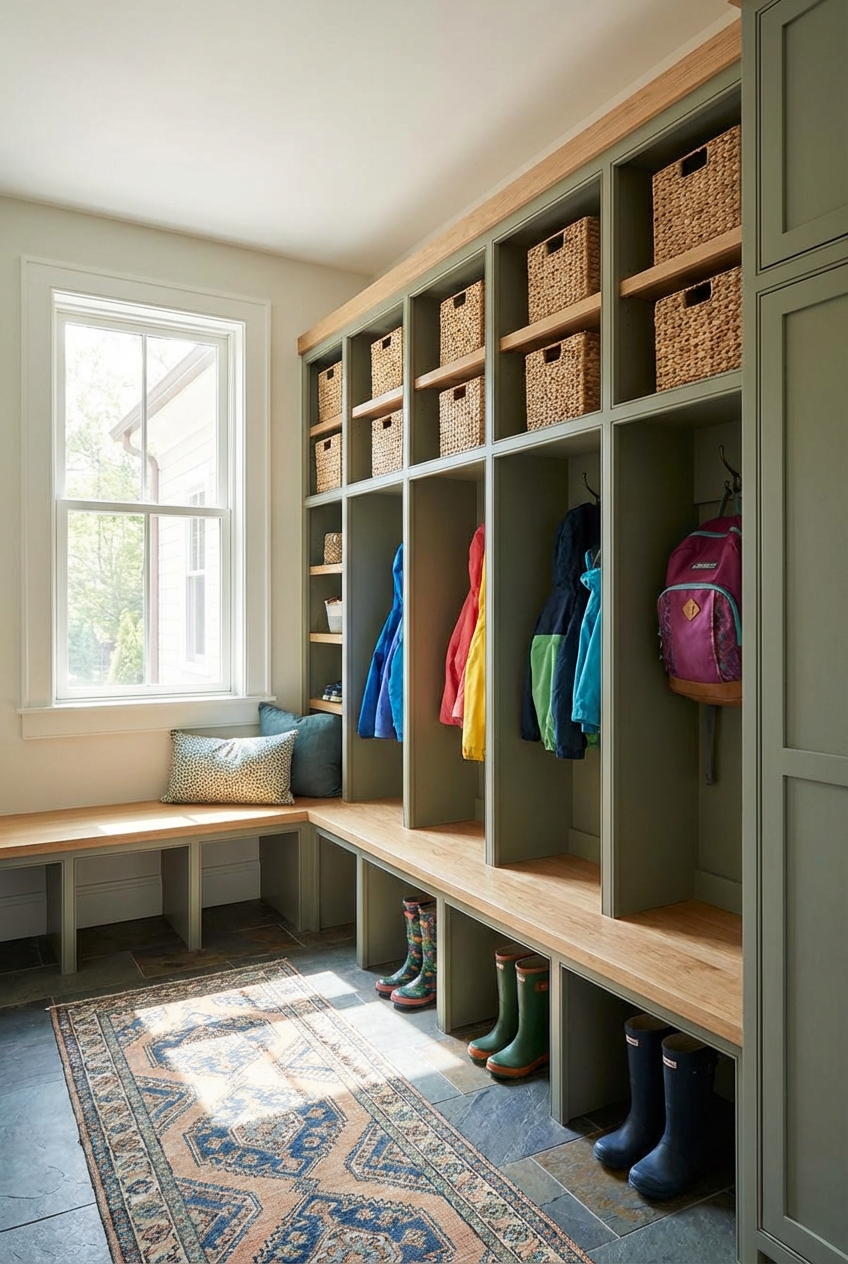
Lockers give each person a personal slot, which is why they suit families and busy households. Mudroom lockers with hooks and shelves usually combine a hook or two for coats, a shelf above for hats and bags, and a space below for shoes or a bin. People often call these units lockers, cubbies or a mudroom wall system.
Tall cabinets with doors are the better pick if visual calm matters to you, since they hide everything at once. If you have a coat closet by the door, you can turn it into mudroom storage by adding a shoe shelf on the floor, a double hanging rod and hooks on the inside of the door.
Wall hooks and floating shelves
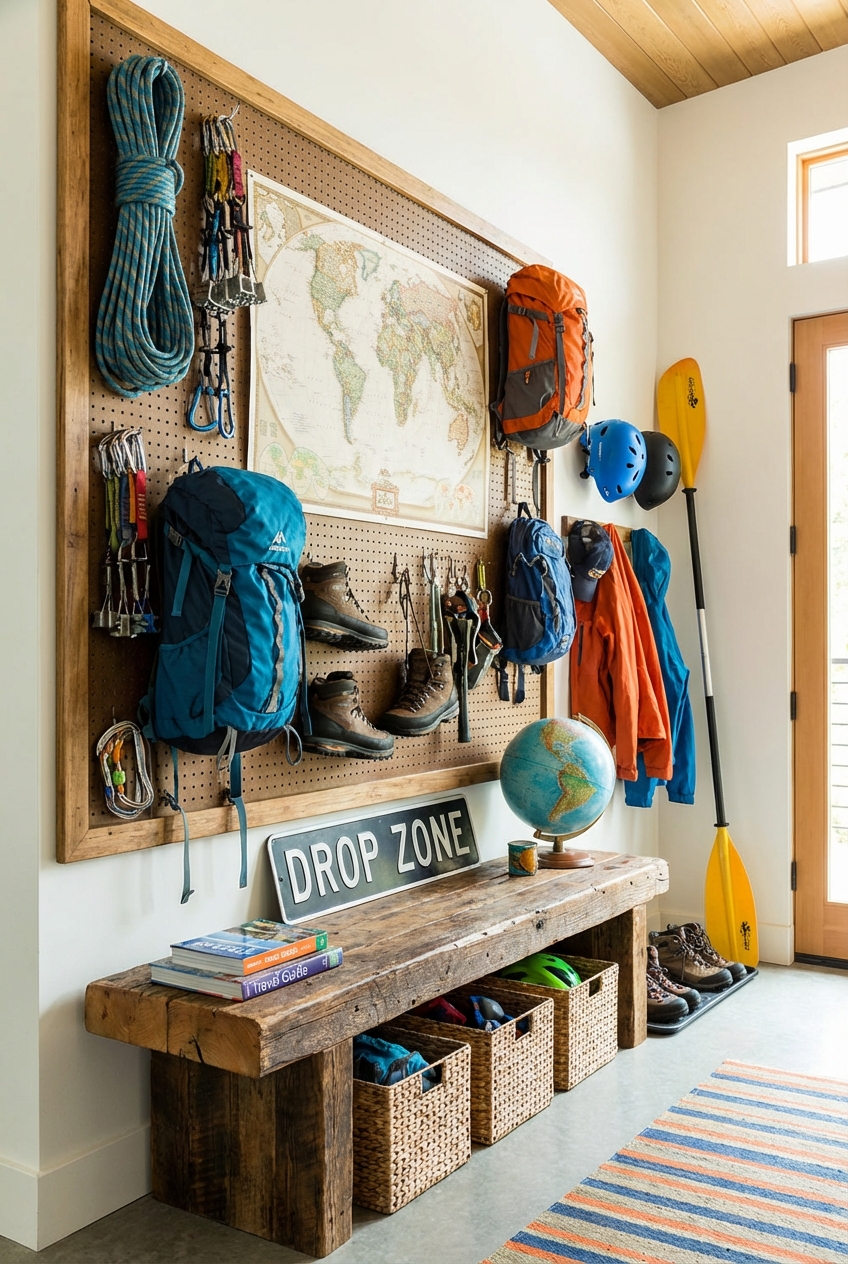
Hooks are the cheapest, fastest way to get coats off the floor. Mount adult hooks at about 60-66 inches and a lower row for kids. Add a shelf about 10-12 inches above the top hook row for hats, baskets and a small plant.
Floating shelves keep the floor clear, which makes a small entry feel larger and makes it easier to clean up dog hair and mud. Anchor them into studs or use proper wall anchors, especially if the shelf will hold heavy boots.
Shoe storage that keeps up with real life
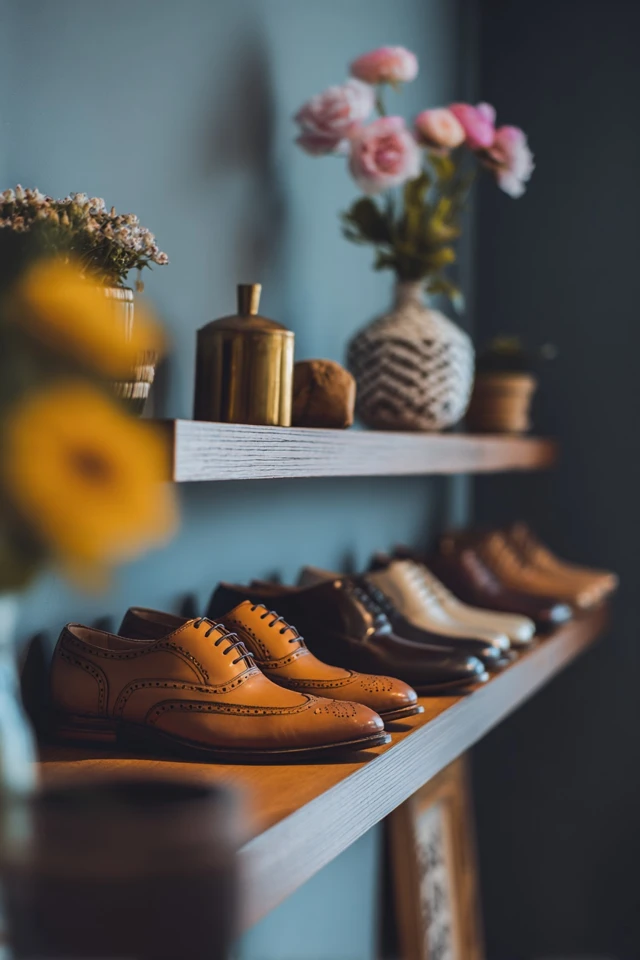
A shoe rack works only if it matches how your household behaves. Open racks dry wet shoes faster. Closed cabinets hide the mess but need ventilation, so choose slatted or perforated doors if you store damp footwear.
- Put a boot tray or a rubber mat under wet shoes to catch mud and melted snow.
- Angled shelves fit more pairs in less depth.
- Keep only the current season's shoes at the entry and store the rest elsewhere.
If you have a dog, give the muddy-paw zone its own spot: a washable mat near the door and a hook for the leash. Wipe-clean finishes like semi-gloss paint or sealed wood hold up better than raw surfaces.
Small mudroom storage ideas
Small mudroom storage ideas come down to going vertical and choosing pieces that do two jobs.
- Wall-mounted cubbies or a narrow floating shelf over a slim bench.
- A shallow shoe cabinet, which can be as little as 8-12 inches deep when it tips shoes forward.
- A mirror above the hooks, which bounces light and makes a tight entry feel wider.
- Light, matte wall colors, since glossy walls show every scuff in a high-traffic spot.
For entryway mudroom ideas in apartments, a bench, one row of hooks and a rack under it covers most daily needs. Check our apartment kitchen ideas if the entry opens straight into the cooking area and you want the two to look related.
DIY and budget mudroom storage
Mudroom storage ideas DIY style can be very cheap. A plank of wood on wall cleats becomes a hat shelf, and a row of hooks on a painted board gives you a coat rail without any carpentry. Stacked crates or secondhand cubbies turn into a bench base with a plywood top and a cushion.
- Paint a secondhand cabinet and swap the hardware.
- Use a sturdy hall tree or a bookcase turned on its side as a low bench with shelves.
- Label baskets by person or by use, such as sports gear or dog walking.
Anything that holds weight, like a wall-hung shelf or a bench against drywall, should go into studs. For electrical work, such as adding an outlet or light, hire a licensed electrician.
Style it so it looks intentional
Pick one material family and repeat it. Oak or walnut with woven baskets and matte black or brass hooks reads as a set, even when the pieces come from different places. Natural fibers and wood also hide wear better than painted surfaces.
Lighting changes how the corner feels. A warm overhead light with a small lamp or sconce keeps the entry flattering at night. If you want a similar approach to another small zone, the coffee corner ideas follow the same logic of one spot, one function, one finish.
What are the must-have items in a mudroom?
A place to sit, hooks for coats and bags, shoe storage, a mat or tray for wet items and a small surface or bowl for keys. Everything else is optional.
Keep food and pantry overflow out of the mudroom
Many mudrooms double as overflow pantries, but temperature matters. Ohio State University Extension notes that canned foods stored above 70 degrees F will have a shorter shelf life, and canned goods shouldn't be kept above 95 degrees F, such as in a garage. If your mudroom is unheated or sits next to a garage, keep pantry items in a cooler spot indoors.
Frequently asked questions
Does a mudroom add value to a house?
A mudroom can make a home more appealing because buyers like organized entries, but the effect on price varies by market. Ask a local real estate agent for your area.
What are some DIY, cheap storage ideas?
Wall hooks on a painted board, a plank shelf on cleats, a secondhand cabinet or bookcase turned into a bench, and labeled baskets all cost little. Secure anything heavy into studs.
What are mudroom lockers called?
They are usually called mudroom lockers, cubbies or locker-style storage units. Many include a bench, hooks, an upper shelf and a lower space for shoes or bins.
How deep should a mudroom bench be?
About 14-18 inches is comfortable for sitting while leaving room to walk. Go shallower in a narrow hallway.
Filed under
ArticlesMeet the author
Written by an architect.
Julio Arco is a passionate architect with years of experience in architecture, interior design, urban design, and housing. He studied at prestigious universities across North America and Europe.

- Name
- Julio Arco
- Job
- Architect and online interior designer
- Studied
- Architecture, ITESM · Urban Design and Housing, McGill
- Partner
- Thor, Australian Shepherd
- Thor’s title
- Head of quality control