Slanted Ceiling Room Ideas for Every Room Type

By Julio Arco
Architect and online interior designer

In this post
- What counts as usable space under a slope?
- Where does furniture go in a room with a sloped ceiling?
- Sloped ceiling bedroom ideas
- Should you paint the slope the same color as the walls?
- How do you light a slanted ceiling?
- How do you use the low zones for storage?
- Which materials suit a slanted ceiling?
- Making a small sloped room feel bigger
- Frequently asked questions
A slanted ceiling is easiest to handle when you stop fighting it: put low pieces under the slope, tall pieces against the full-height wall, and use the odd corners for built-in storage. Paint and lighting do the rest.
If you're wondering how to decorate a room with slanted ceilings, start with the plan below. It's very common to inherit an awkward angle, and most of the fixes are cheap.

What counts as usable space under a slope?
Before you buy anything, measure from the floor to the ceiling at several points, including the lowest one. Codes treat low zones differently from full-height ones. Minnesota's rules, for example, say that in rooms with sloped ceilings at least 50 percent of the required floor area must have a ceiling height of at least 7 feet, and no portion may be under 5 feet. Portland's code likewise says portions of a room with a ceiling height less than five feet may not be counted toward the overall room area.
Those rules matter if you're converting an attic into a legal bedroom. For decorating, the practical takeaway is simple: anything under about 5 feet is for storage, a low bed edge or a reading nook, not for walking. If you're converting space, check local requirements with your building department or a licensed professional.
Where does furniture go in a room with a sloped ceiling?
Think in heights. The best furniture for sloped ceilings is low, and it sits where the ceiling is lowest.
- Beds, daybeds and low sofas go under the slope. Leave the headboard end against the low side if you can, and keep your head clear when you sit up.
- Wardrobes, tall bookcases and dressers go against the tall wall.
- Choose pieces with visible legs. Seeing the floor underneath makes a tight room feel less crowded.
- Keep a clear path of about 30-36 inches to the main door and bed.
As an architect, I'd balance the room asymmetrically: a heavy low sofa under the steep side, a tall bookshelf on the opposite wall. The two weights offset each other and the room stops feeling lopsided.

Sloped ceiling bedroom ideas
In an attic bedroom, the bed is the biggest decision. Put it where you can stand at least on one side and get in without ducking. A low platform or storage bed under the slope adds drawers without adding height.
For a master bedroom with a slanted ceiling, a bed centered under the peak of a gable gives you a natural focal point, with matching nightstands and low lamps on either side. If the ceiling slopes to one side only, push the bed along the low wall and use wall-mounted sconces so nothing sits where you'd hit your head.
Pets are part of the layout, too. A dog bed tucked under the eave is a cozy spot, and it keeps the walkway free.
Should you paint the slope the same color as the walls?
It depends on what you want the room to do.
- Same light color on walls and slope: the corner between them blurs and the room reads bigger. This is my default for a small room with a slanted ceiling.
- Slope lighter than the walls: the ceiling feels higher and the lower wall grounds the room.
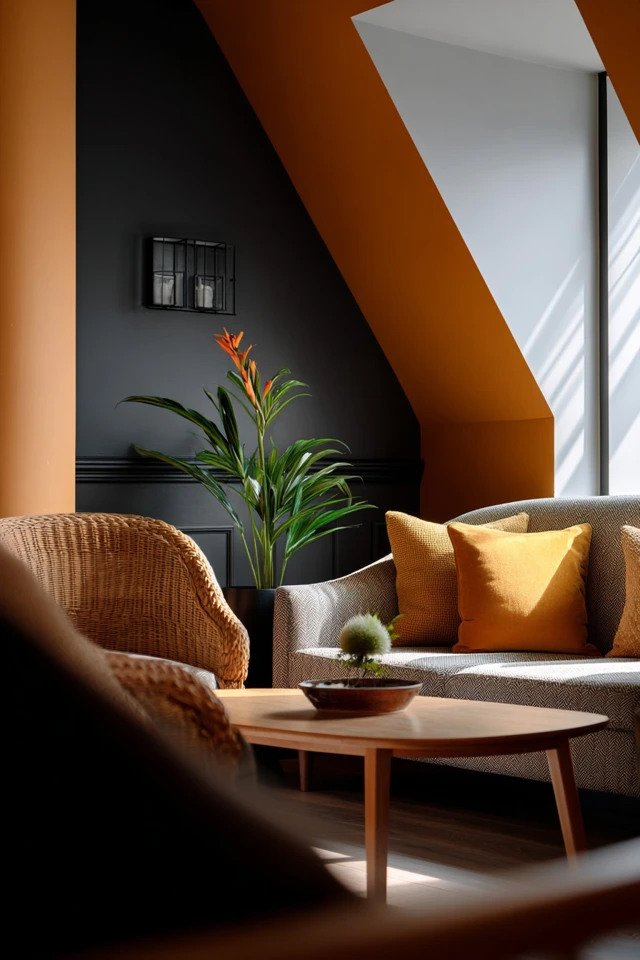
- Slope darker or in a saturated color: the room feels snug and enclosed, which suits a bedroom or a reading corner.
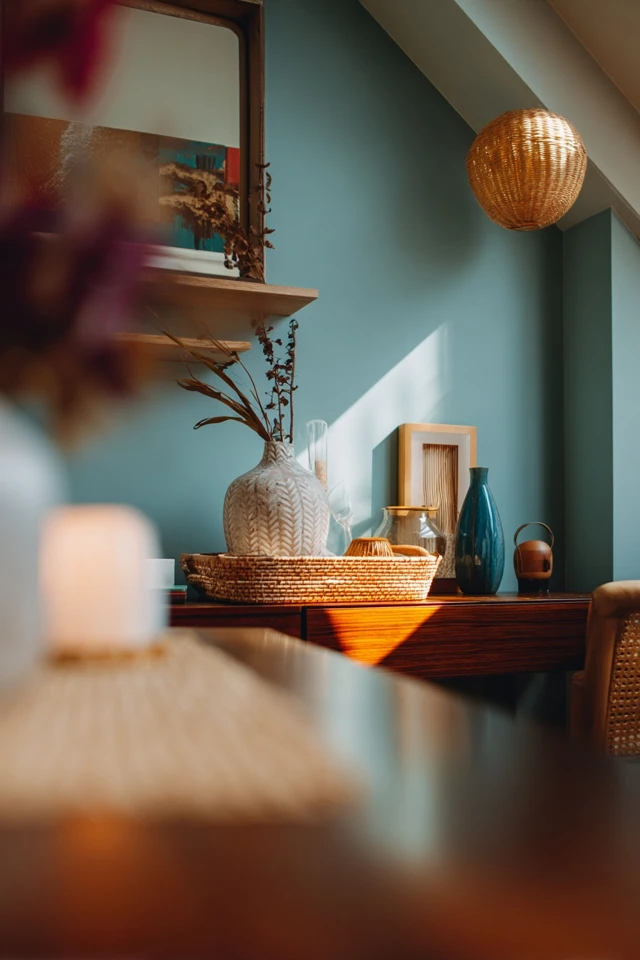
A matte finish is kinder here. Glossy paint on an angled plane bounces light and creates sharp glare, while matte absorbs it and softens shadows. Test large swatches on the slope and on the low wall, and look at them in morning and evening light before committing.
How do you light a slanted ceiling?
Overhead fixtures can be awkward on an angled plane, so layer the light instead.
- Ambient: recessed downlights or a pendant hung at the highest point.
- Task: a desk lamp, or an adjustable wall sconce by the bed or chair.
- Accent: a picture light or a small lamp in a niche.
Put dimmers on the main circuit. Wiring in a sloped ceiling can be tricky, so have a licensed electrician handle new fixtures. A mirror placed to catch light from a window or skylight is a free way to brighten the dark end of the room.
How do you use the low zones for storage?
The space under the eave is the one place you can't stand, so make it work hard. Built-in cabinetry that follows the roofline fits better than any off-the-shelf piece. Pull-out drawers, low cupboards and open cubbies all work, and a bench with drawers under the eave gives you seating and storage in the same footprint.
If a custom build isn't in the budget, use low rolling bins or baskets that slide in and out. For ideas that cost less, see these affordable slanted ceiling room ideas.
Which materials suit a slanted ceiling?
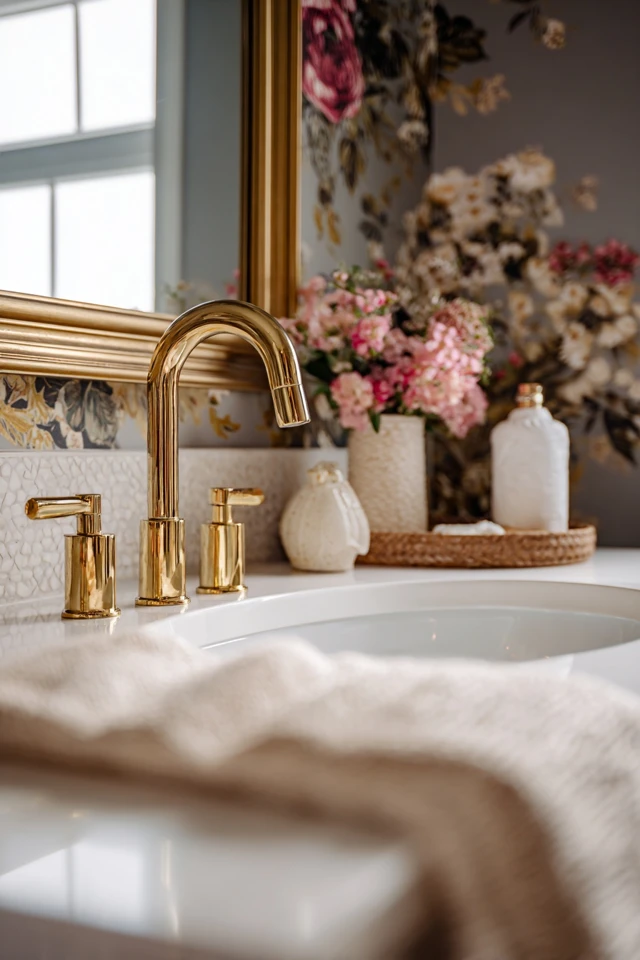
Wood paneling or tongue-and-groove on the slope adds warmth and a clear rhythm, and light wood reflects more daylight than dark. Limewash or matte plaster gives a soft, slightly varied surface. Wallpaper works on the low knee wall, where a pattern won't overwhelm you.
Soft finishes help with sound. Angled rooms can echo, so add a rug, curtains and upholstered pieces. If you have a dog, pick washable rugs and covers, since low spaces collect fur and dust.
Older houses often show their roof shape inside. The National Park Service notes that Greek Revival builders emphasized pedimented roofs, which is why many period attics have steep triangular gables worth showing off with simple, matte finishes.
Making a small sloped room feel bigger
- Keep the palette light and low in saturation.
- Use one flooring material throughout so the eye travels without interruption.
- Choose low, streamlined furniture and leave some wall bare.
- Hang art at eye level on the tall wall, not on the slope.
For more approaches, read our guides on slanted ceiling design tips for a cozy, modern look and how to decorate slanted ceilings. If you're after a warmer feel, the slanted ceiling styling guide covers textiles and color in more depth.
Frequently asked questions
What to do with a room with slanted ceilings?
Put low furniture and storage under the slope, keep tall pieces on the full-height wall, and use light, matte paint to soften the angle. Layer lighting with sconces and a pendant at the peak.
What kind of furniture is best for rooms with sloped ceilings?
Low, wide pieces with visible legs, such as platform beds, daybeds and low sofas, work best under the slope. Built-in drawers or benches follow the roofline and use dead space.
Should I paint a slanted ceiling the same color as the walls?
Using the same light color makes the room feel larger, while a darker slope feels cozier. Test swatches at different times of day first.
Can I build storage into a sloped ceiling?
Yes. Custom cabinetry, pull-out drawers and low cubbies that follow the roofline reclaim space under the eaves. Check with a licensed professional before altering any structural framing.
Filed under
ArticlesMeet the author
Written by an architect.
Julio Arco is a passionate architect with years of experience in architecture, interior design, urban design, and housing. He studied at prestigious universities across North America and Europe.

- Name
- Julio Arco
- Job
- Architect and online interior designer
- Studied
- Architecture, ITESM · Urban Design and Housing, McGill
- Partner
- Thor, Australian Shepherd
- Thor’s title
- Head of quality control