Playroom Ideas: A Modern, Minimal Space Theme
Playroom ideas for a space theme that grows with your kids: a deep-night palette, layered lighting, closed storage and easy-swap decor.

By Julio Arco
Architect and online interior designer
In this post
- What colors make a space theme without feeling like a cave?
- Which wall treatments still work when kids get older?
- How should you light a space-themed playroom?
- What should every playroom have?
- What are the best playroom storage ideas?
- Which soft goods make the room easy to update?
- A simple order of work
- Frequently asked questions
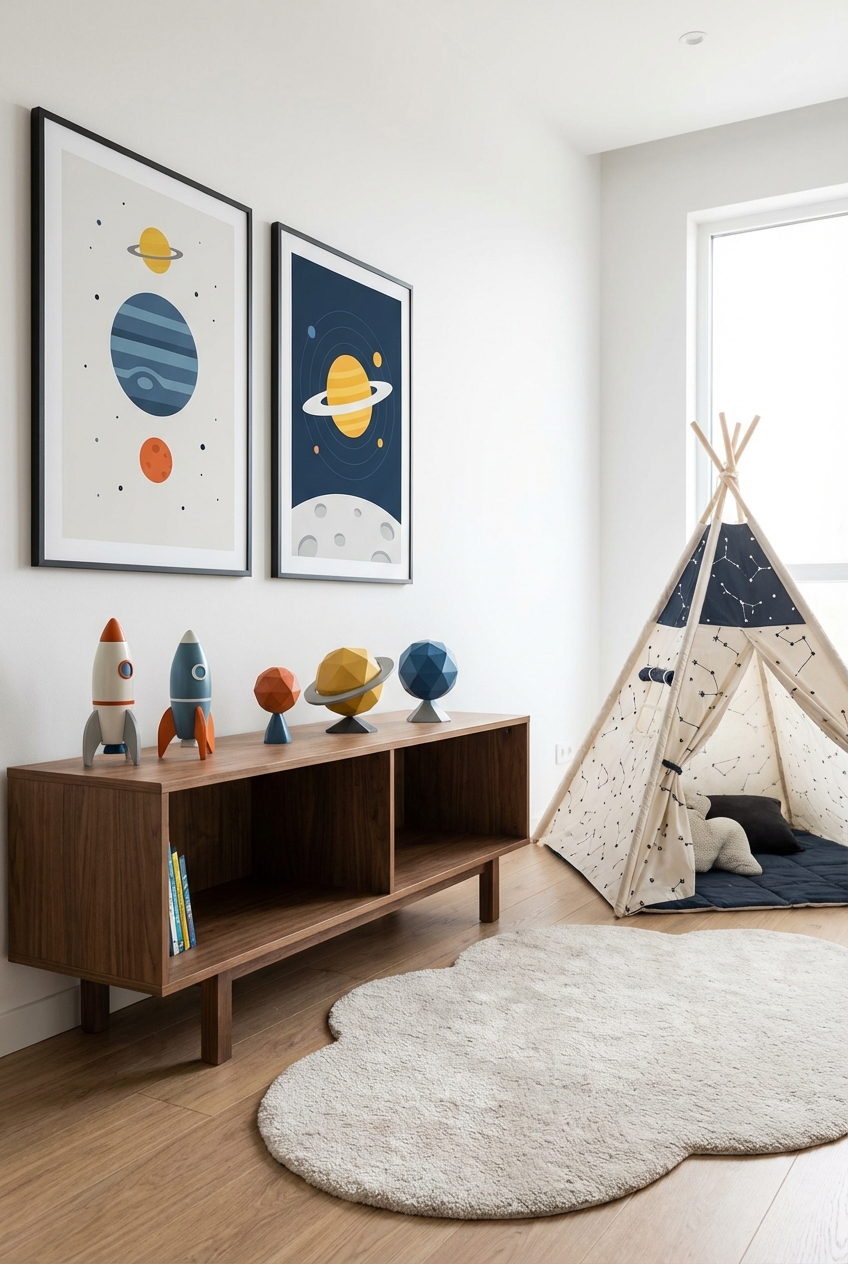
The easiest way to do a space-themed playroom is to borrow the mood of space, not the cartoon rockets: deep night-sky colors, geometric shapes, layered lighting and neutral furniture. The theme then lives in paint, light and a few swappable pieces, so it still works when your child outgrows astronauts.
These playroom ideas that grow with kids lean modern and minimal. They also work as small playroom ideas, since most of the advice is about keeping the floor open and the visual noise low.
What colors make a space theme without feeling like a cave?
Pitch-black walls in an average bedroom-sized room feel heavy and uninviting. Use deep charcoal, midnight blue or forest green as the anchor, then balance it with crisp white, cool gray and natural wood. The room reads as night sky and stays friendly.
A simple 60-30-10 split helps:
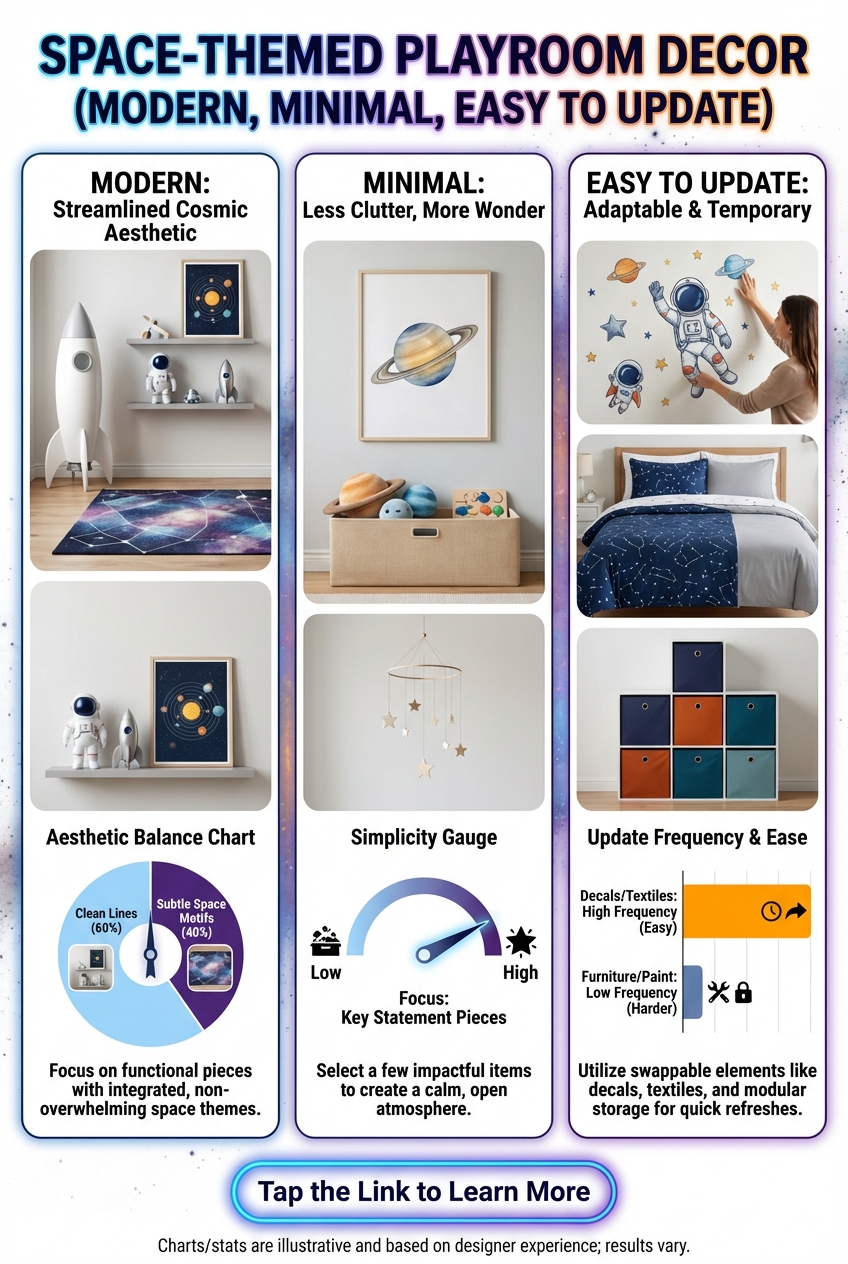
- 60%: soft cool gray or off-white on most walls, so the room stays bright enough for play.
- 30%: navy or charcoal on an accent wall, the ceiling, a rug or a sofa.
- 10%: metallics like gold, silver or copper, or a punchy ochre or terracotta, to act as stars and planet surfaces.
Use a flat or matte finish on dark walls. Gloss exaggerates every drywall flaw, while matte absorbs light and looks velvety. If you paint a wall navy, I'd paint the baseboards and window trim the same color. It's often called color drenching, and it makes the edges of the room less busy.
Which wall treatments still work when kids get older?
Geometry and abstraction age better than literal imagery. Skip the alien border and try color blocking: paint the lower part of the wall deep navy and leave the top white. It lowers the visual weight of the room, which feels cozy to small kids, and it hides scuffs where hands and toys hit.
Avoid splitting the wall exactly in half. With an 8-foot ceiling, put the line at about 32-36 inches (chair rail height) or about 60 inches for a higher split. With 9-foot ceilings you can go a bit higher.
Renter-friendly options
Vinyl star decals in white or gold are removable. Scatter them at random: cluster a few, then leave empty space, because real stars don't sit in a grid. Removable wallpaper in a terrazzo pattern suggests moon rock without printing planets on the wall.

How should you light a space-themed playroom?
Lighting sells the theme better than any toy. You need bright light for building and reading, and a dim, moody setting for movie nights and forts. Layer three types:
- Ambient: a dimmable overhead fixture. A Sputnik-style chandelier or globe pendant looks planetary and is a regular modern fixture.
- Task: sconces or adjustable floor lamps by reading spots. If wiring is a problem, plug-in sconces with cord covers work.
- Accent: LED strips behind bookshelves or under floating shelves for a soft glow.
Bulb color changes paint color. Warm white (2700K) can make navy look muddy, while soft white (about 3000K) keeps blues true without feeling clinical. Daylight bulbs (4000K and up) read too blue for a playroom. For new wiring or dimmer switches, hire a licensed electrician.
What should every playroom have?
Open floor, a spot to sit quietly, and storage kids can reach. Zoning makes this work even in a 10×10 room:
- Active zone: the center, kept clear for floor play.
- Quiet zone: a corner with a bean bag, small tent or reading chair.
- Storage zone: units along one wall.
Leave about 30-36 inches of clear path between major pieces. If you add a play table, toddler tables run about 20 inches high and older kids need roughly 24-26 inches. Choose round nesting tables or a soft ottoman over a coffee table with sharp corners.
As an architect, I recommend buying furniture in neutral wood or upholstery and letting bedding carry the theme. Furniture is the long-term purchase. Decor is the part you expect to replace.
What are the best playroom storage ideas?
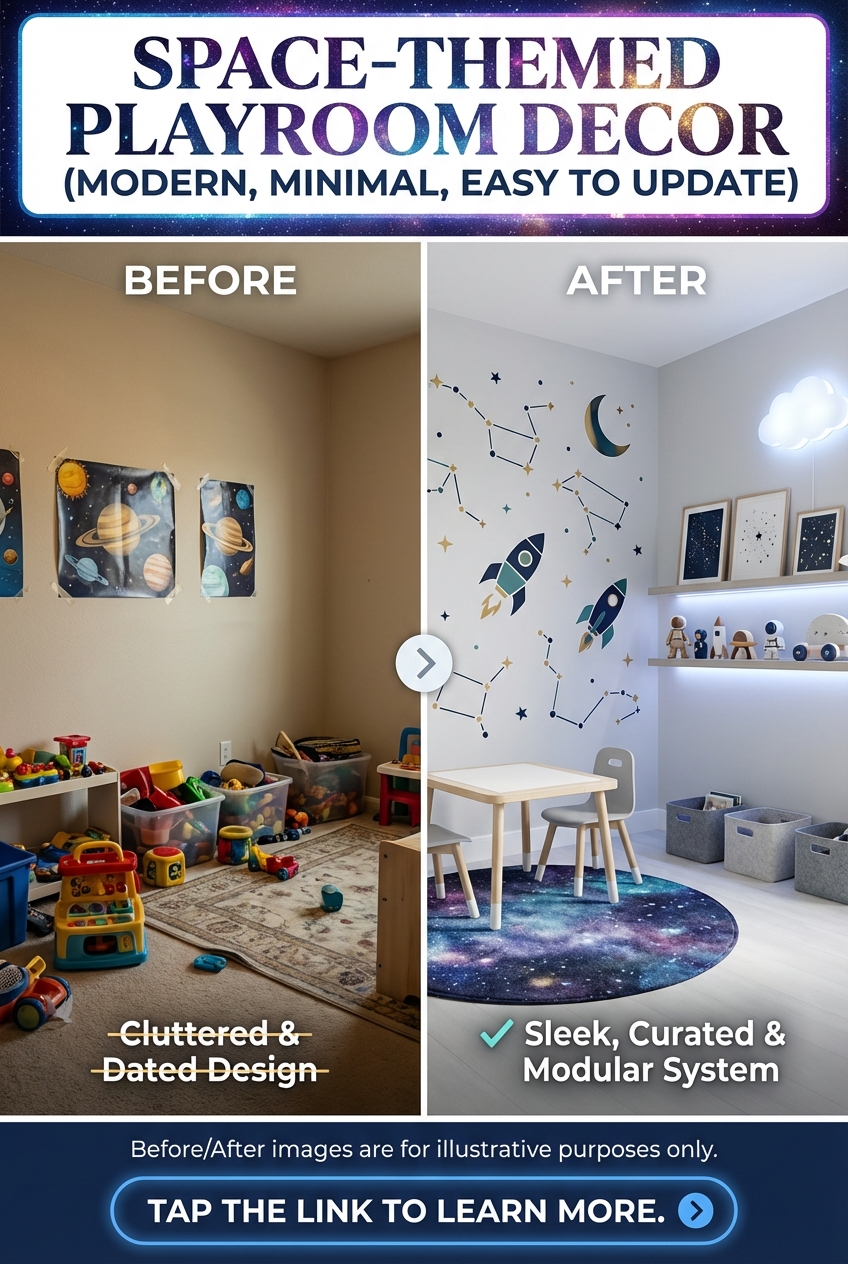
The visual noise of hundreds of colorful plastic toys is what makes a minimal room look messy. Hide most of it.
- Use opaque bins and cabinets with doors. Modular wardrobe or bookcase units with new fronts can work well.
- Keep storage under about 30 inches tall in a small room. Low units preserve sightlines and make the space feel bigger.
- Mix materials. Metal shelving or white oak warms up dark walls.
For Lego ships and minifigures, use floating shelves at different heights: shallow picture ledges (3-4 inches deep) for minifigures and deeper shelves (10-12 inches) for builds. If younger siblings share the room, mount the shelves around 48 inches or higher.
If you're also planning a room in an unusual spot, see these ideas for an attic playroom or an basement playroom.
Which soft goods make the room easy to update?
Rugs, pillows and art are the low-risk layer. If dinosaurs replace astronauts next year, you swap those and leave the paint and furniture alone.
Choosing a rug
Wool is durable and resists stains. Polypropylene is a good budget option and easy to clean. Keep the pile low, about 0.25-0.5 inches, because Play-Doh is hard to remove from shag and block towers topple on it.
Size matters more than most people expect. Put at least the front legs of sofas, chairs and storage units on the rug, and leave roughly 12-18 inches of bare floor around the edge of the room.
Art and textiles
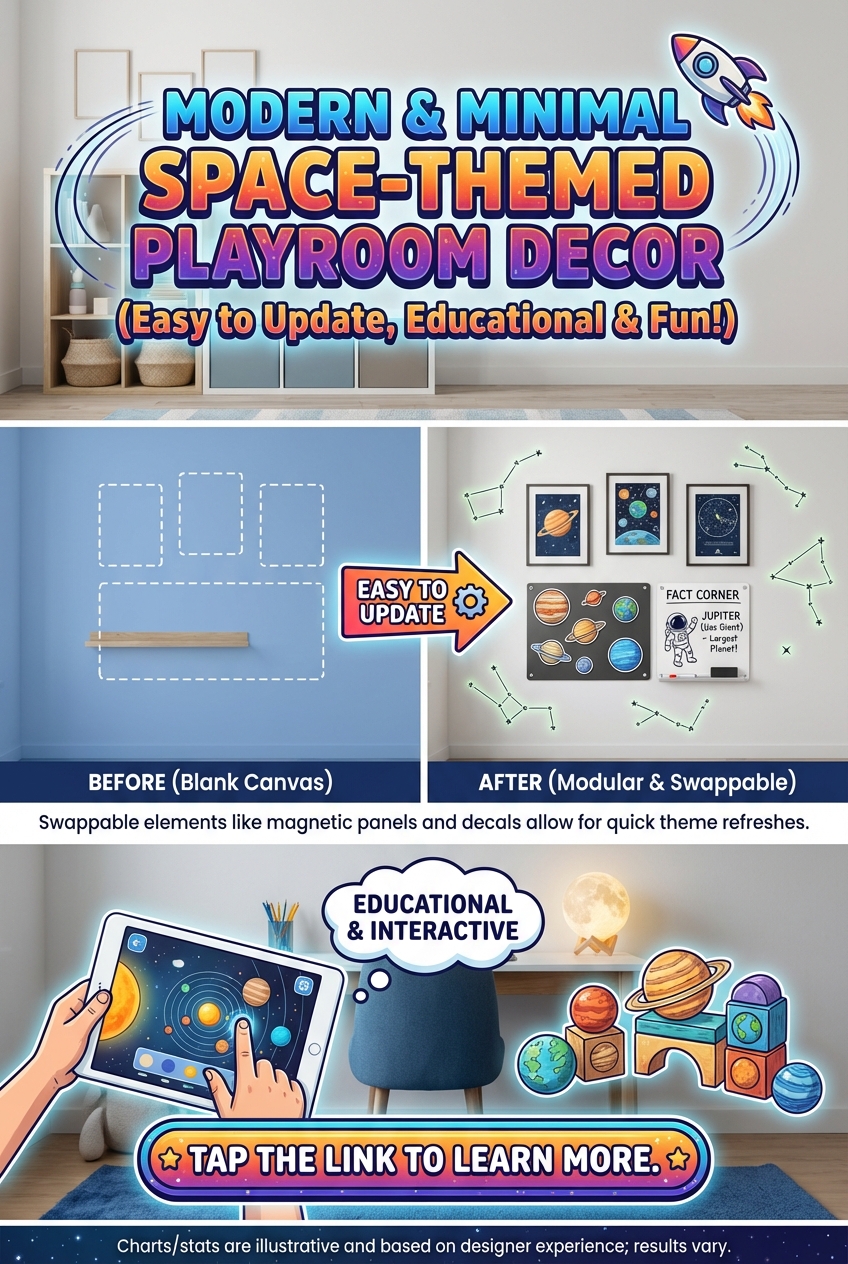
Vintage star charts, moon phases and geometric prints in simple wood or black frames with wide white mats look grown-up and won't date. Mix textures to warm up the cool palette: velvet pillows, linen curtains and a chunky knit throw. For more on keeping a kids' room from feeling themed, the not-themed nursery approach follows the same logic, and bold stripes and soft shapes is a brighter take.
A simple order of work
- Clear the room, patch and sand the walls, then paint the accent wall and a warm white on the ceiling and trim (unless you're drenching the trim).
- Add dimmable switches for the overhead light.
- Bring in a large rug (8×10 suits an average room), storage along the longest wall and comfortable seating.
- Style last: a moon lamp, star decals or galaxy bedding, plus floating shelves.
- Hang blackout curtains for movie nights, with the rod about 6-10 inches above the window frame.
- Take away about a fifth of the accessories you first set out.
Frequently asked questions
Is a dark space theme okay for a small room?
Yes, if you balance it. Dark walls soften corners, but you need good layered lighting and a lighter rug or floor to bounce light back up.
What are some ideas for a small playroom?
Keep storage low and closed, leave the center of the floor open, and use one dark accent wall with lighter walls elsewhere. Floating shelves and a ceiling projector add interest without using floor space.
How do I make a space theme work for siblings?
Space colors are naturally neutral: black, white, silver, gold and navy. Add personality through each child's bedding or reading nook instead of the shared decor.
What are some cool things to put in my playroom?
A star projector, a sensory swing hung from the ceiling, floating shelves for Lego builds and a cozy reading tent all suit a space theme. Have a licensed pro install anything that hangs from the ceiling.
Filed under
ArticlesMeet the author
Written by an architect.
Julio Arco is a passionate architect with years of experience in architecture, interior design, urban design, and housing. He studied at prestigious universities across North America and Europe.

- Name
- Julio Arco
- Job
- Architect and online interior designer
- Studied
- Architecture, ITESM · Urban Design and Housing, McGill
- Partner
- Thor, Australian Shepherd
- Thor’s title
- Head of quality control