Striped Bathroom Wallpaper Ideas for a Playful Upgrade
Staircase wallpaper ideas by pattern, from stripes to murals, plus which paper lasts on a stair wall and how to hang it without crooked lines.

By Julio Arco
Architect and online interior designer
In this post
- Why use wallpaper on a staircase?
- Striped wallpaper to stretch the wall
- Which patterns suit modern staircase wallpaper ideas?
- Small staircase wallpaper ideas
- What is the best wallpaper for a staircase wall?
- How do you put wallpaper on a staircase?
- How to decorate the wall once it's papered
- Frequently asked questions
Yes, you can put wallpaper on a staircase, and the stair wall is one of the best places for it. It's a tall, uninterrupted surface that you see from several angles, so a pattern has room to work. Pick a washable vinyl or non-woven paper, choose a pattern that suits how you move through the space, and plan the first strip carefully, because stair walls are rarely square.
Below are pattern ideas that work on stairs, how to choose the best wallpaper for a staircase wall, and the installation steps that matter most.
Why use wallpaper on a staircase?
A stairwell is often the plainest part of a home: long white walls, a few frames, maybe a scuff or two. Wallpaper gives that stretch a point of view without taking up floor space. It also covers the marks that come with traffic, since people brush past, carry laundry and (if you live with a dog) sprint up and down with claws and enthusiasm.
Stairs also change how a pattern reads. You see the wall rising as you climb, so the design is viewed from below, from above and from the landing. Choose something that still looks good at all three angles.
Striped wallpaper to stretch the wall
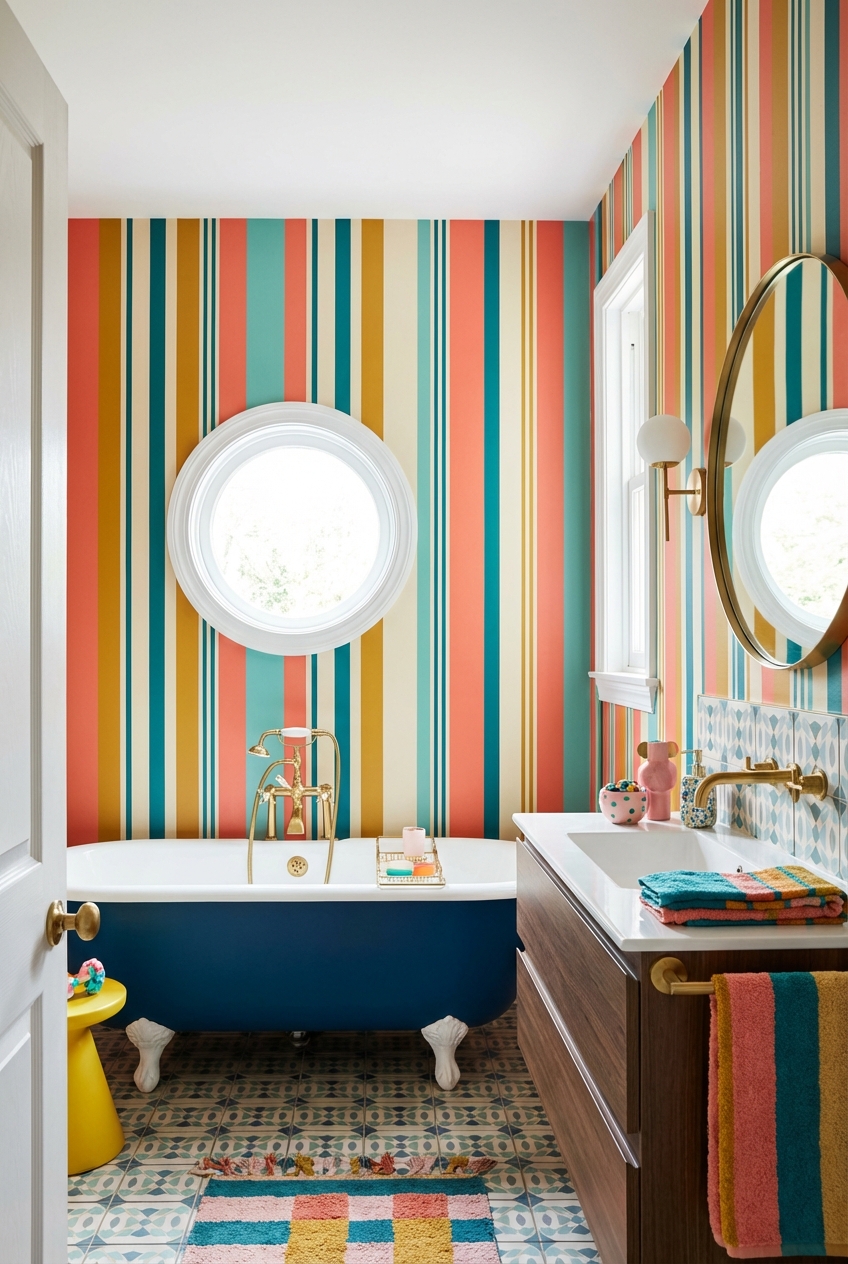
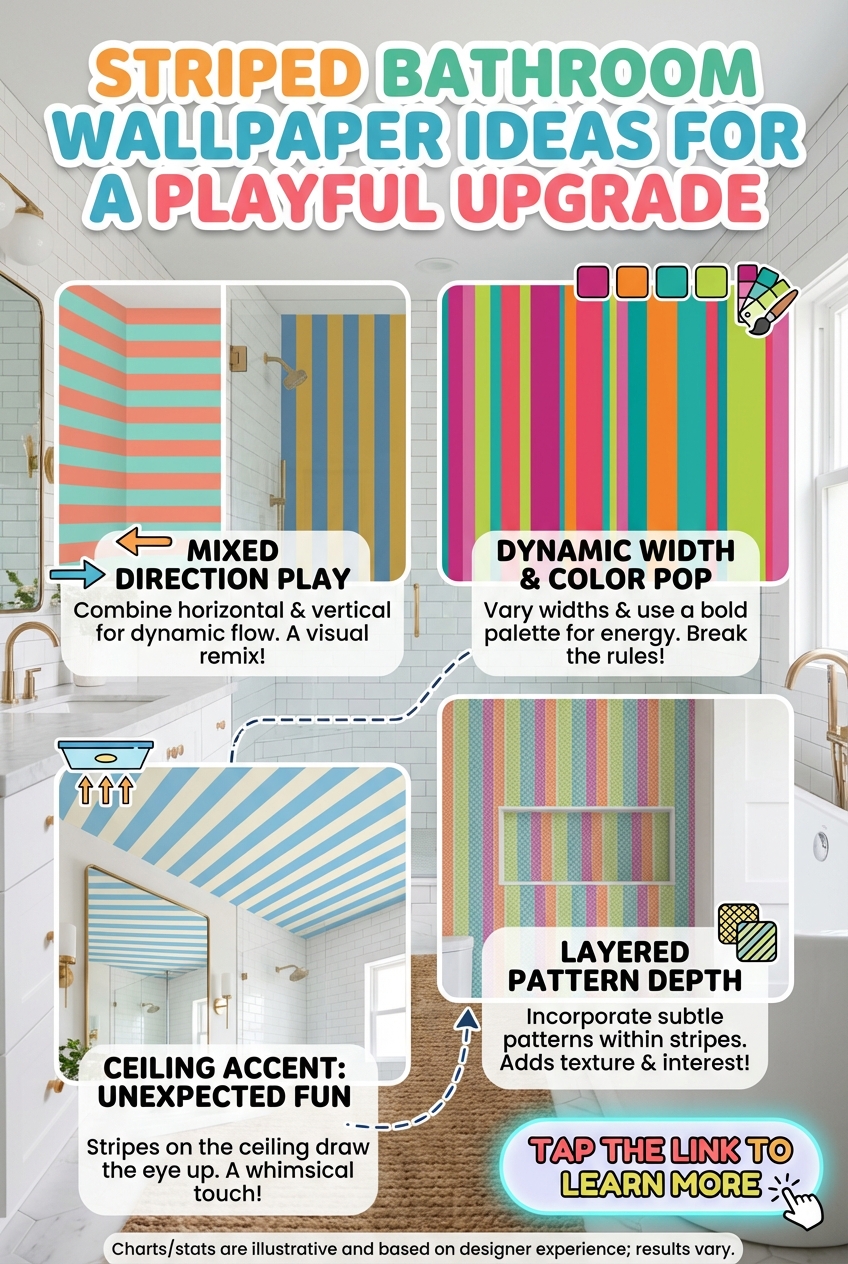
Vertical stripes draw the eye up and make a stairwell feel taller. They're a simple option and a safe one if you want pattern without a loud personality. A wide stripe in two close tones looks calm. A high-contrast stripe feels more energetic.
One catch: stripes show every error. If the wall leans or the strip drifts even slightly, you'll see it from the bottom step. On a stair wall that follows the slope of the treads, a stripe running parallel to the floor can also look odd, so keep stripes vertical unless you're confident about the layout. For more on living with stripes, see how to style striped and patterned upholstery.
Which patterns suit modern staircase wallpaper ideas?
For a modern look, stay with large-scale geometrics, soft abstract shapes, fine lines or a textured plain paper. Fewer colors read as cleaner. A single bold shape repeated at generous scale suits a modern house better than a busy small print.
Geometric and abstract
Geometric patterns hold up well on stairs because their repeat is easy to follow as you climb. Keep the palette to two or three colors, and let the pattern be the main event on the wall. Leave the banister and trim simple.
Florals and botanicals
A large floral or leafy design gives a stairwell a softer, almost garden-like feel. Dark backgrounds make it moody and traditional. Pale backgrounds keep it light. If you'd rather not commit to a loud print, the minimalist wallpaper ideas on this blog show quieter options.
Murals and 3D effects
A mural works well on a tall wall because the image keeps going as the wall rises. Landscapes, skies and tree scenes are common choices. A 3D wallpaper for a staircase wall, meaning a design that suggests depth through shading or relief, adds drama, but keep the rest of the stair plain so the wall doesn't compete with itself. Our post on playful 3D in a hallway covers the same balance.
Classic damask and traditional prints
Damask and other formal repeats suit older houses and panelled stairs. In a mid-tone or tone-on-tone colorway they look elegant without shouting. They pair well with a painted banister in a darker shade.

Small staircase wallpaper ideas
Narrow stairwells can take pattern too. Light backgrounds reflect more light, and a smaller or medium-scale design stops the wall from feeling heavy. A few specific options:
- A fine vertical stripe or tone-on-tone texture that adds interest without closing in the space.
- Wallpaper on one wall only, with the other painted in a color pulled from the pattern.
- A soft, low-contrast pattern if the stairs are dim, since strong contrast can look harsh in low light.
Skip very dark, high-contrast prints in a tight stairwell with little daylight. They can make a narrow passage feel tighter.
What is the best wallpaper for a staircase wall?
For durability, I recommend vinyl or non-woven paper with a wipeable surface. Stairs get bumped by bags, hands and paws, and a washable finish lets you wipe off scuffs instead of living with them. Non-woven paper is also forgiving to hang because you paste the wall and the paper doesn't stretch much.
Peel-and-stick works for renters or for a short-term change, but it needs a smooth, clean, well-cured painted wall, and long strips are harder to keep straight. Delicate papers such as grasscloth are better kept for the landing or an upper wall away from traffic, because they mark easily.
For choosing a pattern and finish more broadly, this wallpaper styling guide may help.

How do you put wallpaper on a staircase?
The work is the same as any wall, with two extra challenges: height and angles. If your stairs are steep or the wall is more than a comfortable ladder reach, hire a professional or get a second person and a stable platform. Don't improvise on a stair.
- Clean the wall, fill holes, sand smooth and prime. A primed surface helps adhesion and makes removal easier later.
- Draw a plumb line with a level or a weighted string where the first strip will go. Don't trust the corner or the stair stringer to be straight.
- Cut the first strip longer than the tallest point, then trim at the top and bottom. On stairs the bottom edge follows the angle of the treads, so trim to the line, not to a guess.
- Hang the strip along the plumb line and smooth from the center outward to push out air.
- Match the pattern on the next strip, butt the seams tightly and roll them flat.
- Trim with a sharp blade and a straightedge, and change the blade often so it cuts instead of tears.
Buy extra paper. Patterns with a large repeat waste more, and a stair wall with an angled edge uses more than its square footage suggests. Check the manufacturer's overage advice for your pattern.
How to decorate the wall once it's papered
Let the wallpaper do most of the work. A patterned wall rarely needs a dense gallery of frames, and busy art on a busy wall gets lost. If you want pictures, use a few larger frames with wide mats, and keep them at a consistent height along the slope.
- Lighting: soft, warm light along the stairs shows off texture and helps with safe footing. Ask a licensed electrician for any new wiring.
- Trim: paint the banister, skirting and ceiling in a color from the paper so the pattern looks planned.
- Landing: this is a good place for a mirror, a small console or a plant, so the pattern gets a pause.
If you're papering the stairs and the landing, the pattern should continue across both, or the landing should switch to a calmer coordinating paper or paint. The staircase wallpaper ideas post has more examples to browse, and this guide to making playful decor feel grown-up is useful if you want a bold print to feel mature.
Frequently asked questions
What is the best wallpaper to decorate a staircase?
A washable vinyl or non-woven paper in a medium to large pattern is the most practical choice. It resists scuffs and wipes clean, and the larger repeat reads well from below and above.
What is the latest staircase trend?
Bold murals, large geometric prints and moody botanicals are popular for stair walls. A plain textured paper is a quieter option if you prefer a calmer look.
Can you put wallpaper on a staircase?
Yes. Prepare and prime the wall, start from a plumb line, and use a ladder or platform that is stable at the full height. For a very tall or steep stairwell, a professional installer is the safer choice.
Should the landing match the staircase wallpaper?
It can continue the same paper, or you can switch to a coordinating paint color so the pattern gets a rest. Either way, keep the trim color consistent.
Filed under
ArticlesMeet the author
Written by an architect.
Julio Arco is a passionate architect with years of experience in architecture, interior design, urban design, and housing. He studied at prestigious universities across North America and Europe.

- Name
- Julio Arco
- Job
- Architect and online interior designer
- Studied
- Architecture, ITESM · Urban Design and Housing, McGill
- Partner
- Thor, Australian Shepherd
- Thor’s title
- Head of quality control