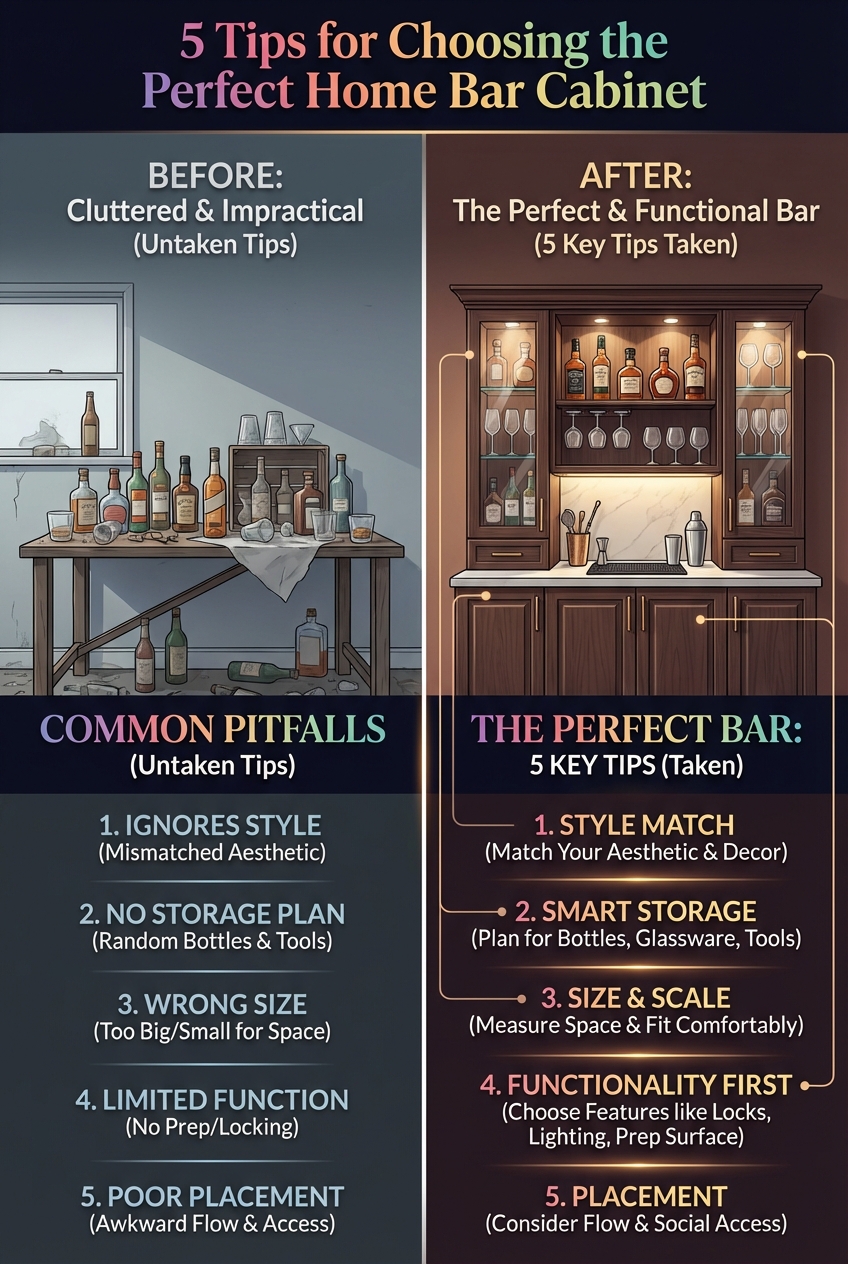
5 Tips for Choosing the Perfect Home Bar Cabinet
Home bar cabinet ideas for small rooms, living rooms and dining rooms, plus the sizes, surfaces and storage details that make a bar cabinet work.

By Julio Arco
Architect and online interior designer
In this post
The best bar cabinet for home use is the one that fits your bottles, survives spills and leaves enough room to open the doors. Measure your tallest bottle, pick a top that tolerates citrus and alcohol, and keep about 3 feet clear in front of it.
Many cabinets look great in a showroom and then fail at home because the shelves are too short, the top stains, or the doors hit a sofa. These five checks help you avoid that, and the room-by-room ideas below show how the same cabinet changes with its location.
1. Measure your bottles and glassware first
Line up every bottle you own and measure the tallest one. Many cabinets have fixed shelves about 12 inches apart, and some liqueur and spirit bottles need 14 or 15 inches. Adjustable shelves solve this, and they also let the bar change as your collection does.
Check glassware too. Tall highballs and wine stems are the usual problem. A stemware rack that holds glasses upside down frees shelf space and keeps stems from tipping when you move bottles.
2. Choose a top that can take spills
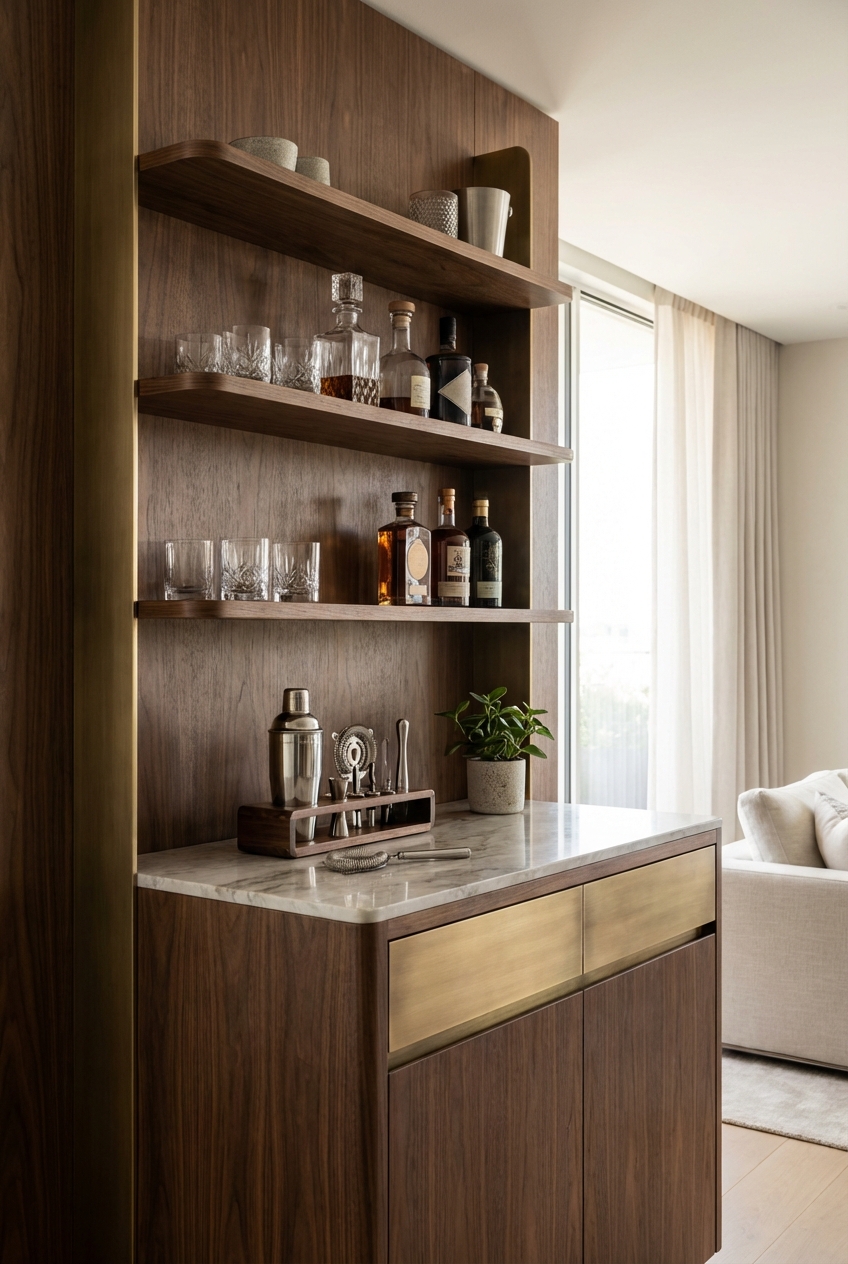
Stone, metal and well-sealed wood all work, but they behave differently. Unsealed marble is porous, and lime juice or other acids can etch it. A honed finish hides etch marks better than a polished one, so ask whether a stone top is sealed before you buy.
If you already own a wood cabinet with a delicate finish, use a tray under the bottles. A piece of tempered glass cut to fit the top is another option, and it's easy to wipe clean.
3. Get the size and clearances right
How tall and deep should a bar cabinet be?
A height of 34 to 36 inches matches a kitchen counter, which is comfortable for mixing drinks. Taller pieces, around 40 to 42 inches, work more like a bar top where guests can lean. Most bar cabinets are 18 to 22 inches deep. Much shallower and large bottles won't fit. Much deeper and things at the back get forgotten.
How much space do you need around it?
- Leave about 36 inches in front so doors can open without blocking a walkway.
- Keep roughly 4 feet between the bar and the back of a sofa or dining chair so guests can pass.
- If the cabinet sits on a rug, let the rug extend past the front of the cabinet so you aren't standing half on, half off the edge.
Liquor is heavy. A 750 ml bottle weighs roughly 3 pounds, so a full shelf adds up quickly. As an architect, I'd look for shelves about 3/4 inch thick or a center support, and metal legs over plastic ones on budget pieces.
4. Pick the details that make it work
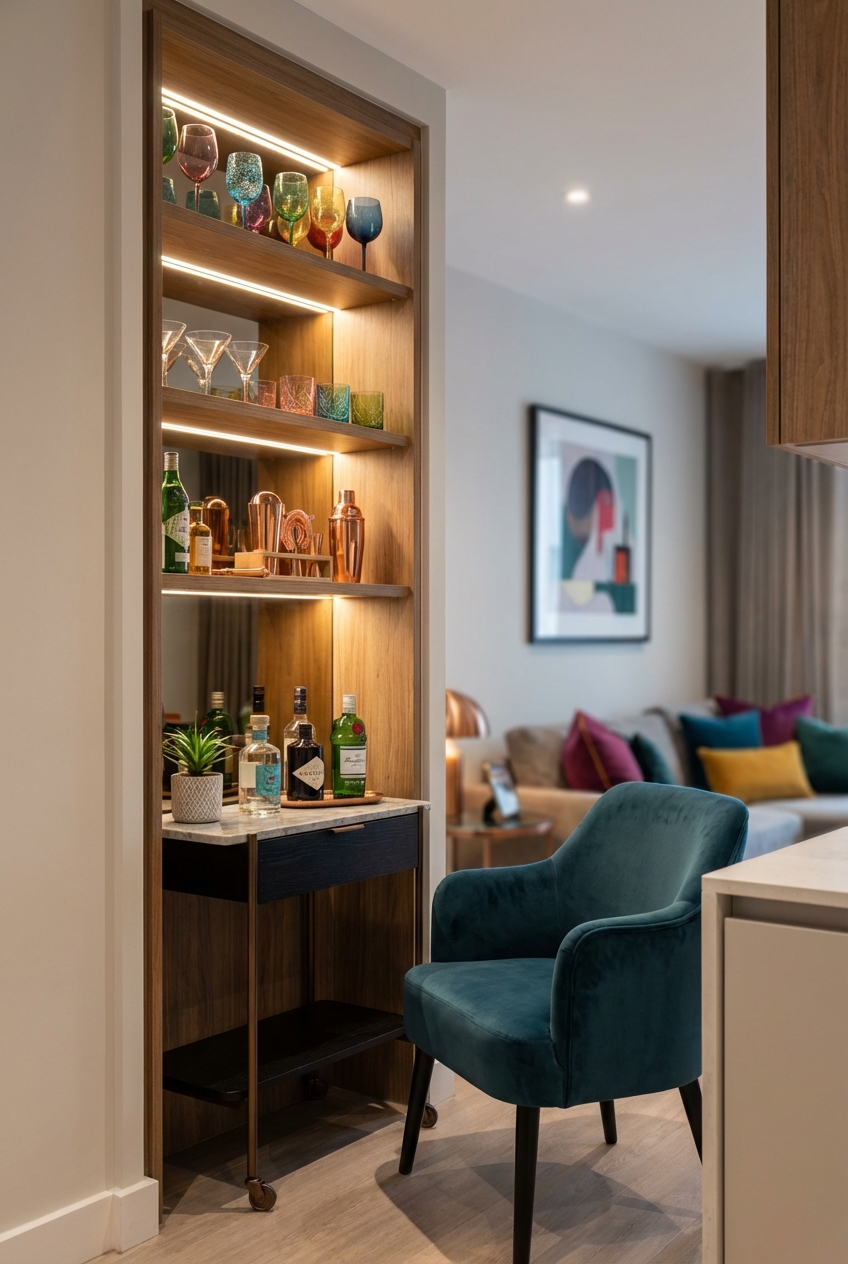
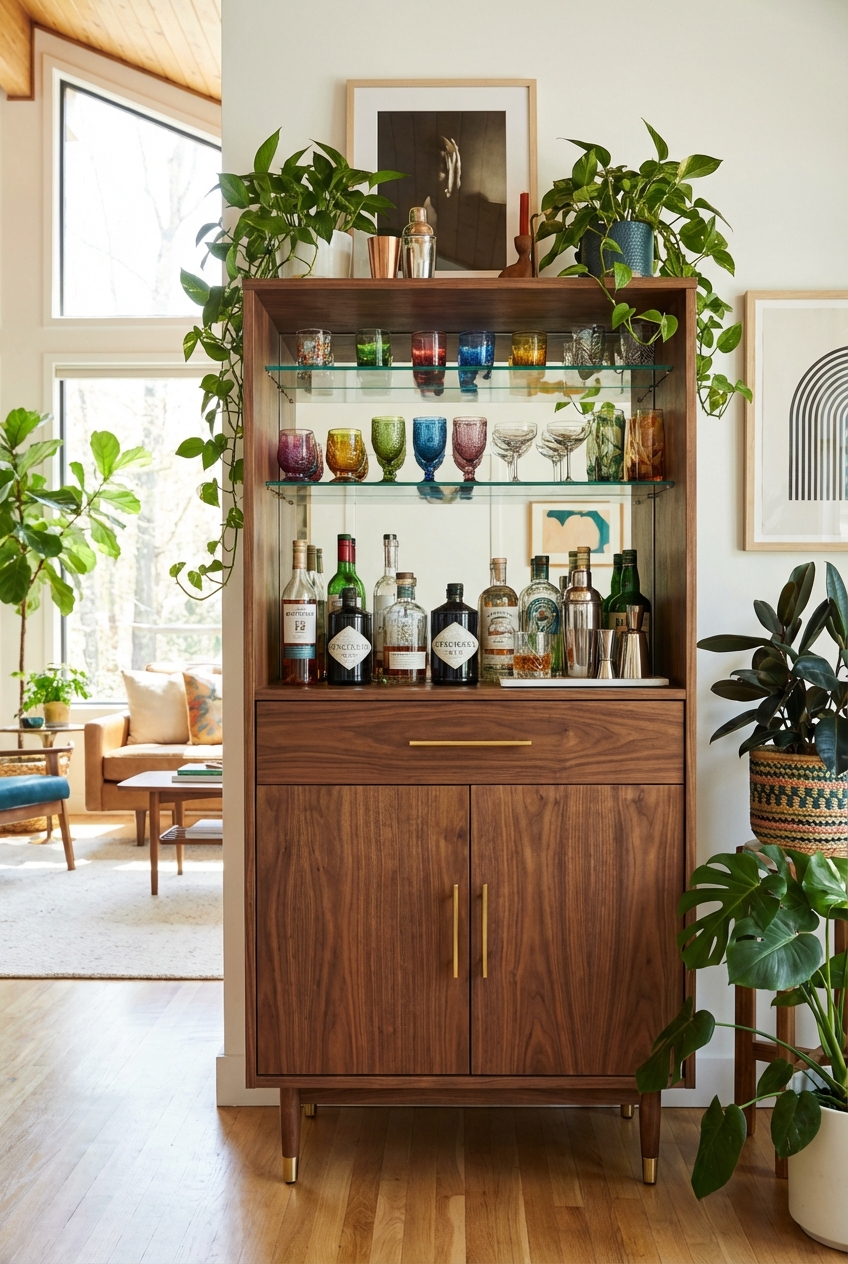
A mirrored back panel bounces light through glassware and keeps a deep cabinet from looking like a dark hole. Add battery-operated LED puck lights under the shelves if there's no outlet nearby. For a plugged-in setup, a warm white bulb (about 2700K to 3000K) suits an evening drink better than a cool daylight one.
Hardware gets touched every time you pour, so solid brass or steel pulls feel better than thin stamped metal. Hinges should feel firm, and doors should line up when closed. Adjustable feet matter on uneven floors, because they stop bottles from rattling.
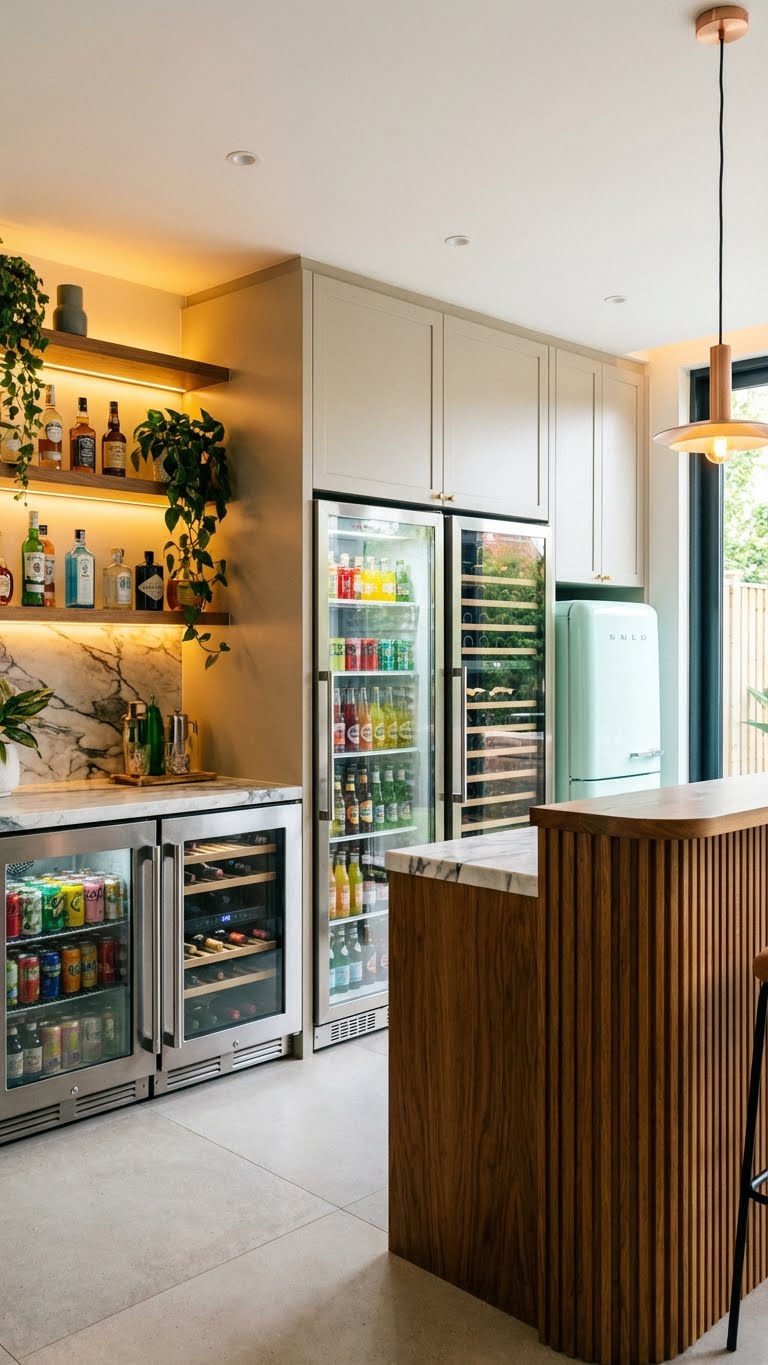
If you want a fridge in the cabinet, plan for airflow and an outlet behind it. I recommend checking the fridge maker's clearance specs first. Our guide to home bar fridges covers the options.
5. Match the cabinet to the room
Dining room
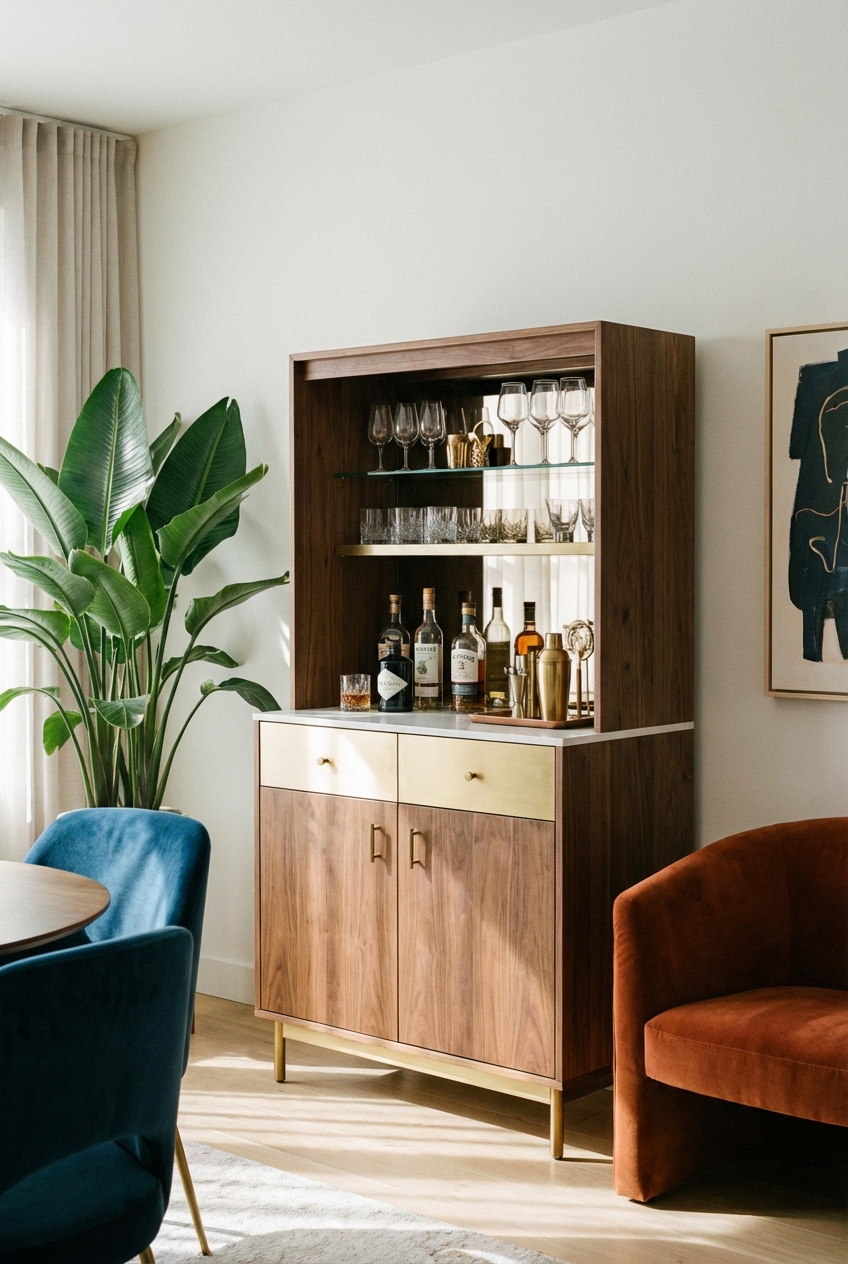
A longer, lower cabinet, about 60 to 72 inches wide, works as a sideboard. You can serve food on top and keep drinks inside. Match the wood tone to your table for a calm, formal look.
Living room
A taller cabinet, around 48 to 60 inches, saves floor space and draws the eye up. In a high-traffic room, sliding or folding doors keep you from bumping into an open door. For more layouts, see living room home bar ideas.
Small apartment or nook
These small home bar cabinet ideas save the most space: a corner cabinet, a narrow cabinet with glass doors so the room doesn't feel closed in, or a cart on wheels that moves between kitchen and living room. More compact setups are in tips for small home bar areas.
Where to put it, and where not to
Keep the cabinet out of direct sun and away from radiators and vents. Heat and light aren't kind to wine or spirits. If you also keep snacks or pantry items in the cabinet, the same logic applies: Ohio State University Extension notes that cabinets tend to be warmer above the range, near the dishwasher or next to the refrigerator exhaust, which makes them poor places to store food.
Also check the floor. If it bounces when you step near the spot, choose a heavier, low-profile cabinet so glassware doesn't clink. If you have a dog, keep bottles off the lowest shelf and use latching doors on low cabinets, and check with your vet about anything a pet might get into.
What do bar cabinets cost?
Prices vary widely, so treat these as rough ranges. Under about $700 you'll mostly find veneered engineered wood, which suits renters but has lower weight limits. Between about $1,200 and $2,500 you'll typically see solid wood, stone tops, soft-close hinges and stemware racks. Custom or designer pieces with built-in refrigeration can run well above that. Check each listing for the shelf weight rating.
How do you style the top?
Keep it uncrowded. Put a tray on one side for the shaker, jigger and bitters, and a lamp or a small vase on the other to balance it. A mirror or piece of art hung 8 to 10 inches above the cabinet frames the bar and makes it look planned. For ideas with a more restaurant feel, browse modern bar cabinet ideas.
Frequently asked questions
What is the best bar cabinet for home use?
Look for adjustable shelves, a sealed or easy-to-wipe top, sturdy hinges and a depth of about 18 to 22 inches. Size it to your tallest bottle and the room it will sit in.
What are some creative ideas for home bar units?
A corner cabinet, a bar cart on wheels, a sideboard fitted with a stemware rack, or a tall cabinet with a mirrored back all work. Pick based on the space you have.
Can I use a regular sideboard as a bar cabinet?
Yes, with a few changes. Add a stemware rack, check that the shelves can carry glass bottles, and note that many sideboards are lower than a comfortable mixing height.
Do I need a wine fridge inside the cabinet?
Only if you collect wine seriously. A fridge needs venting and an outlet, which adds cost and complexity, while a few horizontal racks are enough for most people.
Filed under
ArticlesMeet the author
Written by an architect.
Julio Arco is a passionate architect with years of experience in architecture, interior design, urban design, and housing. He studied at prestigious universities across North America and Europe.

- Name
- Julio Arco
- Job
- Architect and online interior designer
- Studied
- Architecture, ITESM · Urban Design and Housing, McGill
- Partner
- Thor, Australian Shepherd
- Thor’s title
- Head of quality control