Home Bar Cabinet Ideas for Small and Modern Spaces

By Julio Arco
Architect and online interior designer
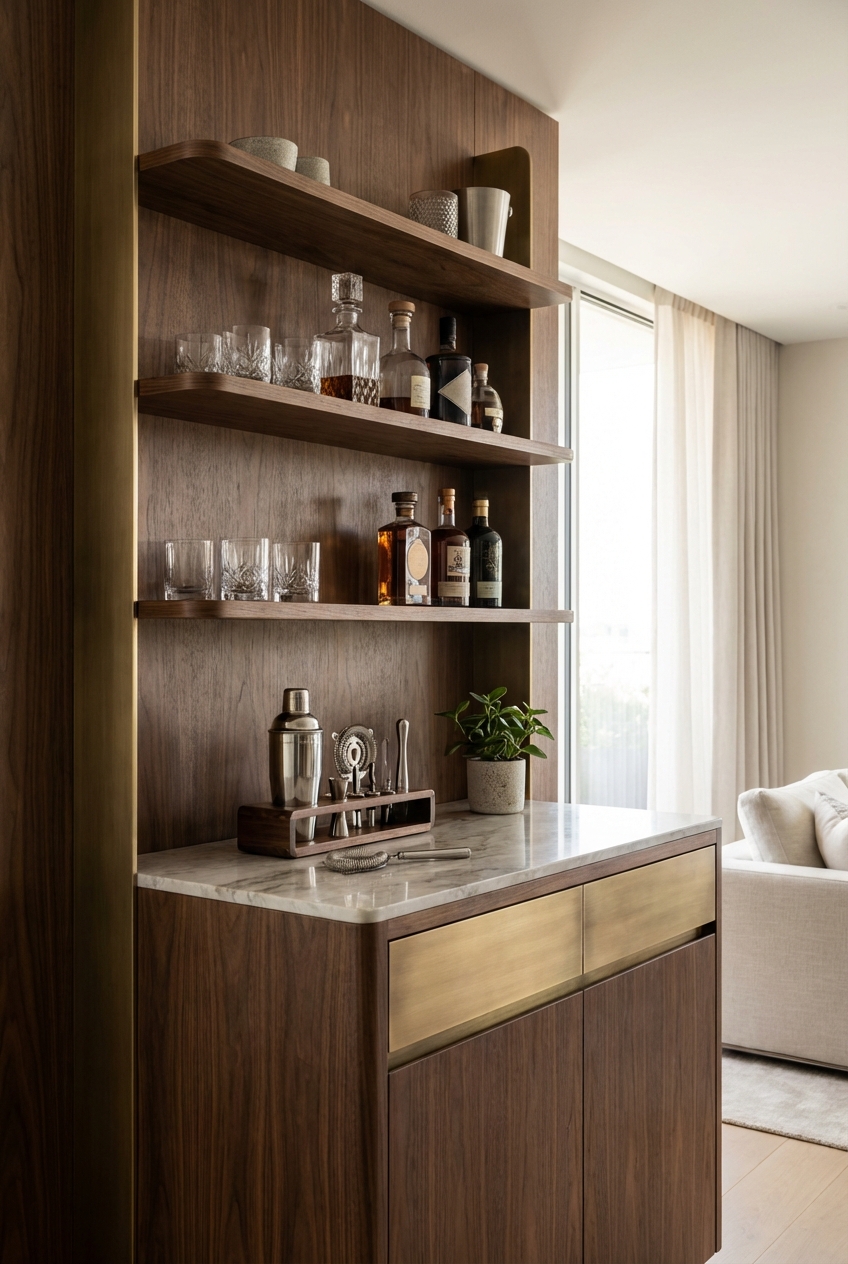
In this post
- What makes a modern bar cabinet look modern?
- How much space does a bar cabinet need?
- Creative ideas for home bar units, room by room
- Freestanding or built in?
- How to choose and set up your cabinet
- What does a bar cabinet cost?
- Common mistakes and quick fixes
- Protecting the top, and keeping kids and pets safe
- Styling it so it stays usable
- Frequently asked questions
A freestanding bar cabinet is the simplest way to add a drinks corner without plumbing or construction. It closes over the clutter, stores glassware and bottles in one piece, and can move with you if you rent.
The best bar cabinet for home use has adjustable shelves, about 36 inches of clear floor in front, and a top surface you can actually pour on. The ideas below are organized by room and size, with the measurements that make them work.
What makes a modern bar cabinet look modern?
Modern bar cabinet designs for home share clean lines, restrained ornament and a few deliberate materials. Think mid-century legs, Scandinavian simplicity or a slim industrial frame. Three details do most of the work.
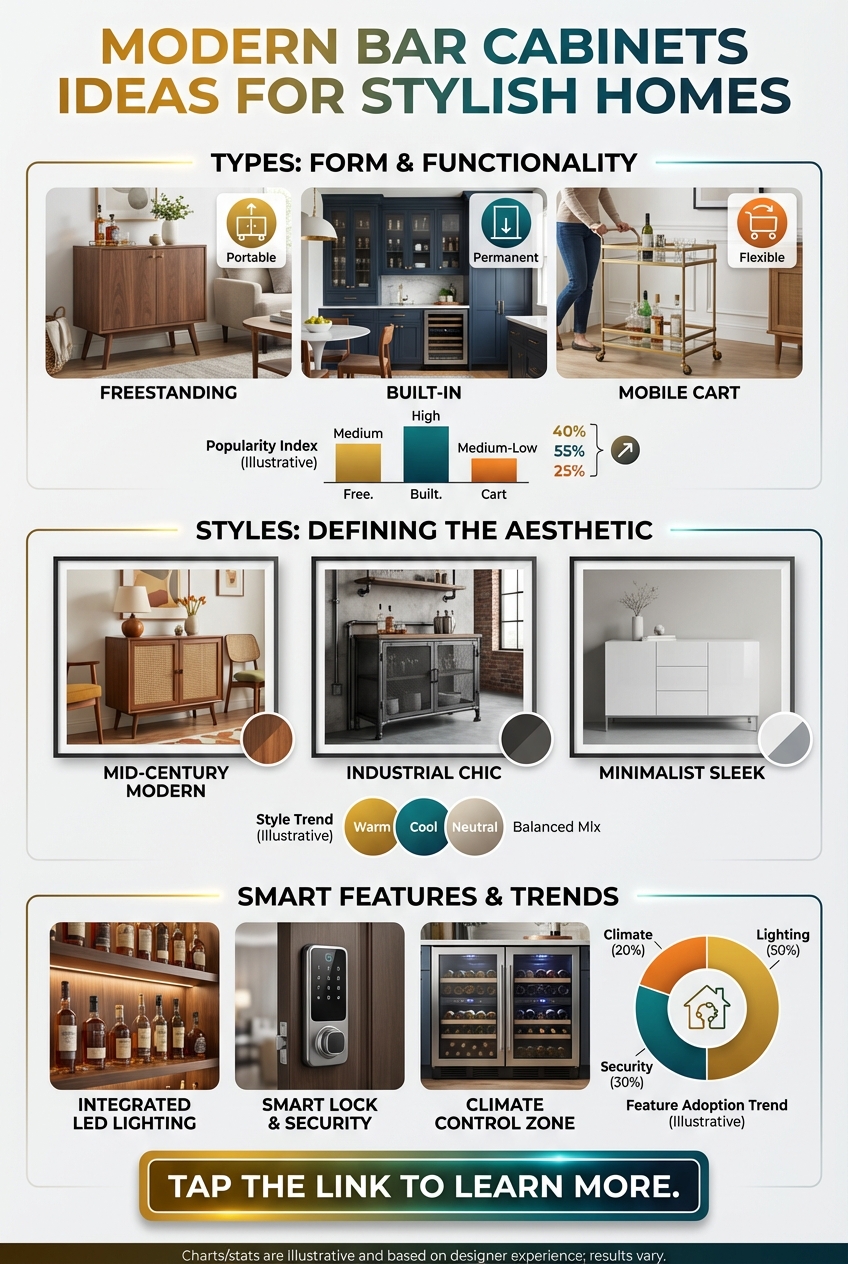
- Texture: fluted wood, woven cane or reeded glass fronts catch light and add depth without bulk. A flat plain box can read like office furniture.
- Hardware: brushed brass, matte black or chrome pulls act like jewelry. Push-latch doors give a handle-free look.
- Legs: slender tapered legs or a metal base leave a gap underneath, so light passes and the piece feels lighter in the room.
How much space does a bar cabinet need?
Leave about 36 inches in front so the doors open fully and someone can walk behind you while you pour. In a tight spot, 30 inches works, but it feels cramped.
Height matters too. A sideboard is usually 30 to 32 inches tall. A bar cabinet is more comfortable at about 36 to 42 inches, because you can stand and pour without hunching. Lower than that and it reads like a media console.
Check the inside as well. Wine bottles lying down need roughly 14 inches of depth, and an interior of 15 to 16 inches is more forgiving. As an architect, I'd always choose adjustable shelves: bottle heights vary a lot, and fixed shelves are the usual reason a tall bottle doesn't fit. Measure your tallest bottle or decanter before you buy.
Creative ideas for home bar units, room by room
Living room
Set the cabinet in a corner or perpendicular to the sofa group for a lounge feel. In a large room, a cabinet with a nicely finished back can also divide the space. Hang art or a mirror about 6 to 8 inches above it. If you're planning a full corner, see these living room home bar ideas.
Dining room
Here the cabinet doubles as a server for dessert plates, napkins and candles next to the wine. Flank it with two chairs or tall plants to widen its footprint on a long wall.
Hallway or nook
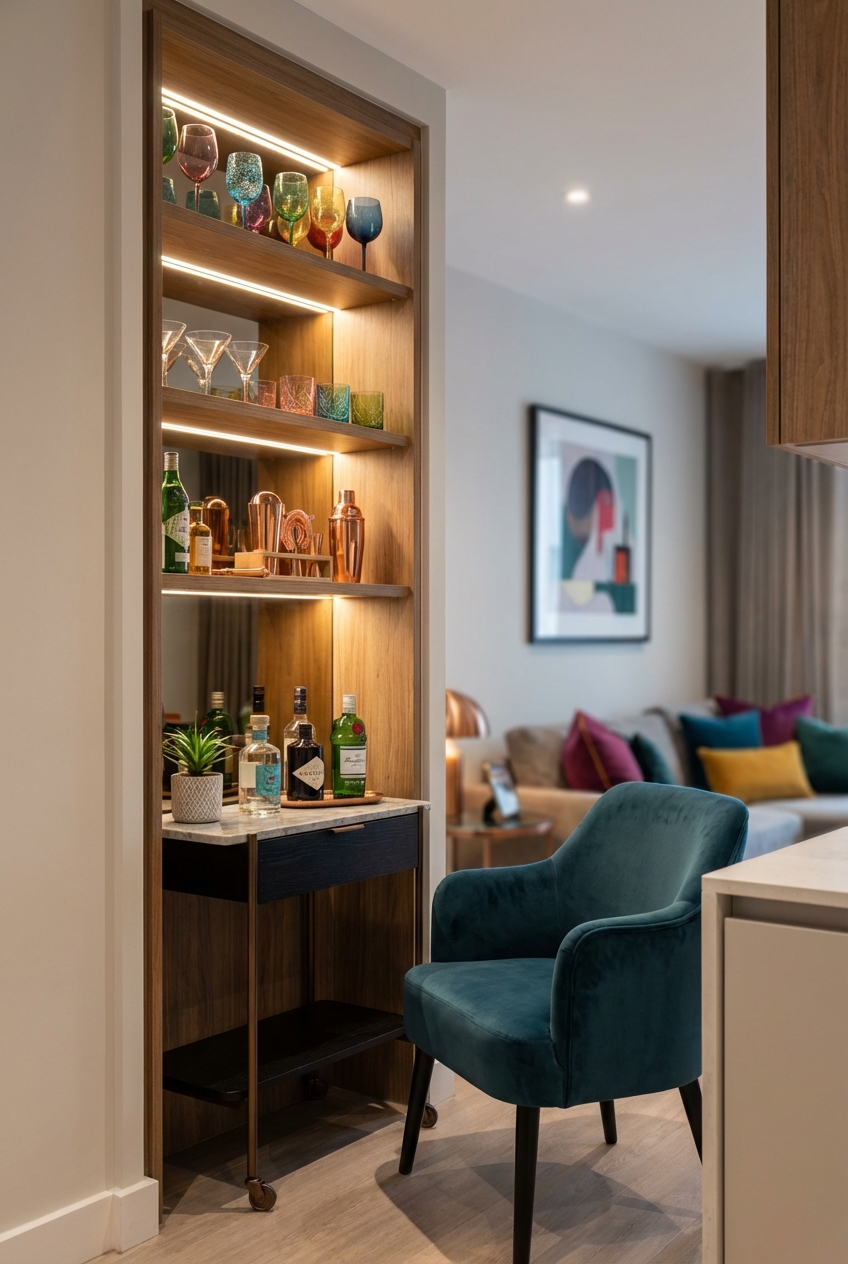
These are great small home bar cabinet ideas. A tall, narrow cabinet turns a dead alcove into a destination. Hallways are high traffic, so pick sliding or tambour doors that don't swing into the walkway.
Kitchen and pantry edges
A cabinet near the kitchen is handy, but placement matters. Cabinets above the range, beside the dishwasher or next to the refrigerator exhaust run warm. Ohio State University Extension says these spots suit dishes, pots and pans, but are too warm for food storage. Keep bar snacks and mixers elsewhere, and if you want a built in bar cabinet idea, plan it away from heat sources. A related look is a modern pantry door that hides a bar behind it.
Freestanding or built in?
Built in bar cabinet ideas look seamless and can include a sink or wine fridge, but they need contractors and often plumbing, and they stay when you move. A freestanding cabinet costs less, suits renters and can be repositioned. For most homes I recommend starting freestanding and building in only if you're sure of the location.
How to choose and set up your cabinet
- List what you own. Pull out every bottle, glass and tool. Lots of wine needs a rack; mostly spirits need vertical height.
- Tape it out. Outline the cabinet and the door swing on the floor with painter's tape and walk around it.
- Pick a finish with contrast. Matching woods exactly often looks dated. Pale oak floors pair well with dark walnut or matte black.
- Load heavy items low. Full bottles go on the bottom shelf and glassware above, which makes the piece more stable when the doors are open.
- Style the top lightly: a lamp, a piece of art and a tray. Keep the bottles inside.
For more on picking one, read these tips for choosing a home bar cabinet.
What does a bar cabinet cost?
Prices vary widely by retailer and region, so treat these as tiers rather than quotes.
- Budget: a basic storage cabinet or vintage find, with aftermarket legs and new hardware, painted a deep color. Particleboard and laminate don't like liquids, so use coasters.
- Mid-range: wood veneer bodies, solid legs, soft-close hinges, and details like fluting or a stone top.
- Splurge: solid hardwood, dovetailed drawers, sealed stone tops and interior lighting. These can be refinished if they get scratched.
A DIY route works well too: paint a basic cabinet, swap the hardware and add legs.
Common mistakes and quick fixes
- Door swing conflicts. Cabinets near corners, windows or curtains bang or snag. Keep about 6 inches from a corner or window treatment, and use a stop or a hinge that limits opening.
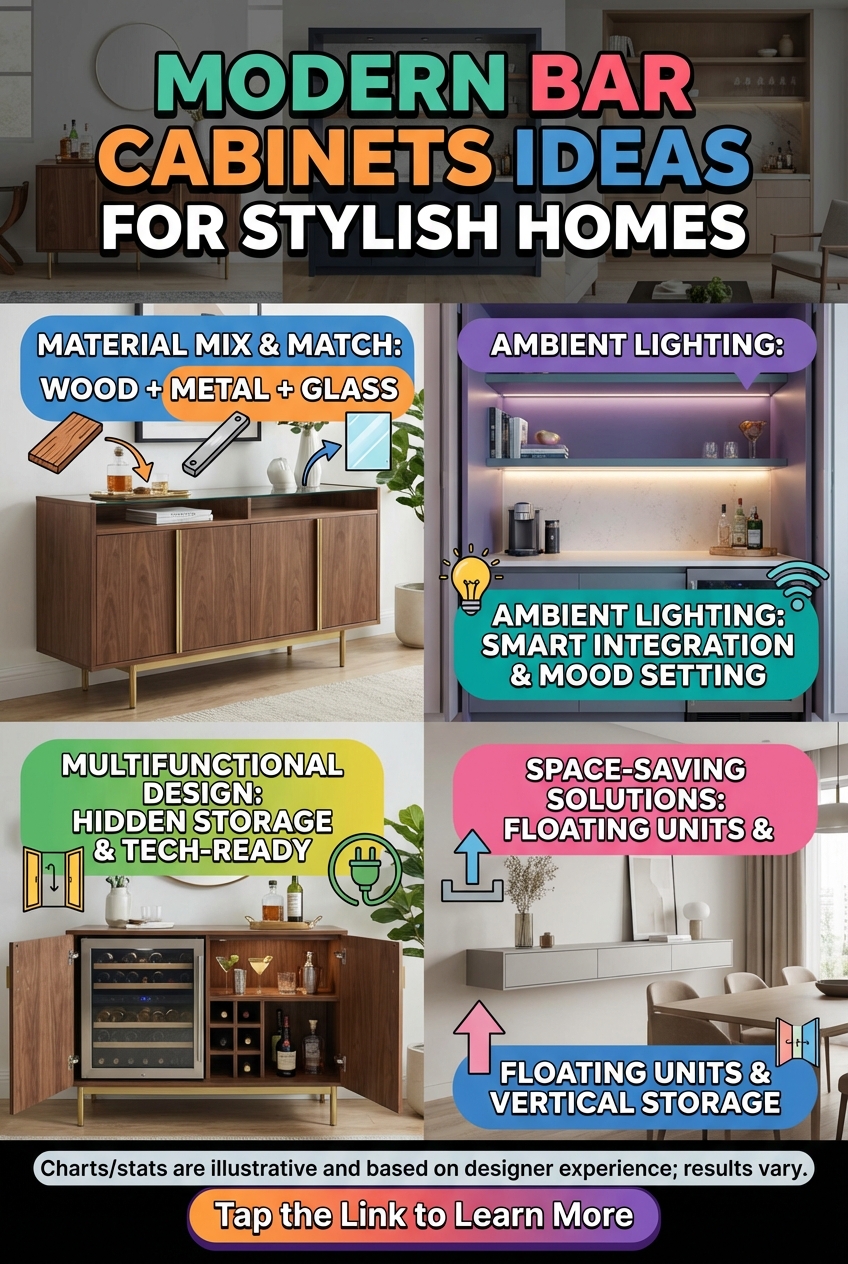
- A dark interior. Stick motion-sensor rechargeable LED strips under the shelves so you can read labels without switching on the big light.
- A crowded top. If it doesn't fit on one tray, it goes inside. You need room to pour.
- Sun exposure. Direct sun can fade the finish and isn't kind to wine or spirits. Place it out of direct light or add UV-blocking film.
Protecting the top, and keeping kids and pets safe
Alcohol and citrus damage wood finishes. A piece of tempered glass cut to fit, or a stone or metal tray for all pouring, protects the surface.
Closed doors keep glassware and bottles away from wagging tails and curious toddlers. Anchor tall cabinets to the wall with an anti-tip kit, since heavy bottles shift the center of gravity, and add a lock or magnetic child lock if little ones are around. If you keep dog treats or pet supplies in a lower cabinet, keep them separate from alcohol.
Styling it so it stays usable
- Use a leather or stone tray on top for the shaker and ice bucket.
- Add something alive, like a trailing pothos or eucalyptus in a vase.
- Vary heights: a lamp on one side, art leaning at the back, low tumblers on the tray.
- Balance textures: a rough ceramic bowl on a sleek lacquer cabinet, polished metal on rustic wood.
- Put a mirror behind it to reflect the bottles and light.
If you prefer a color-led look, a deep green cabinet pairs well with brass; see these dark green cabinet ideas.
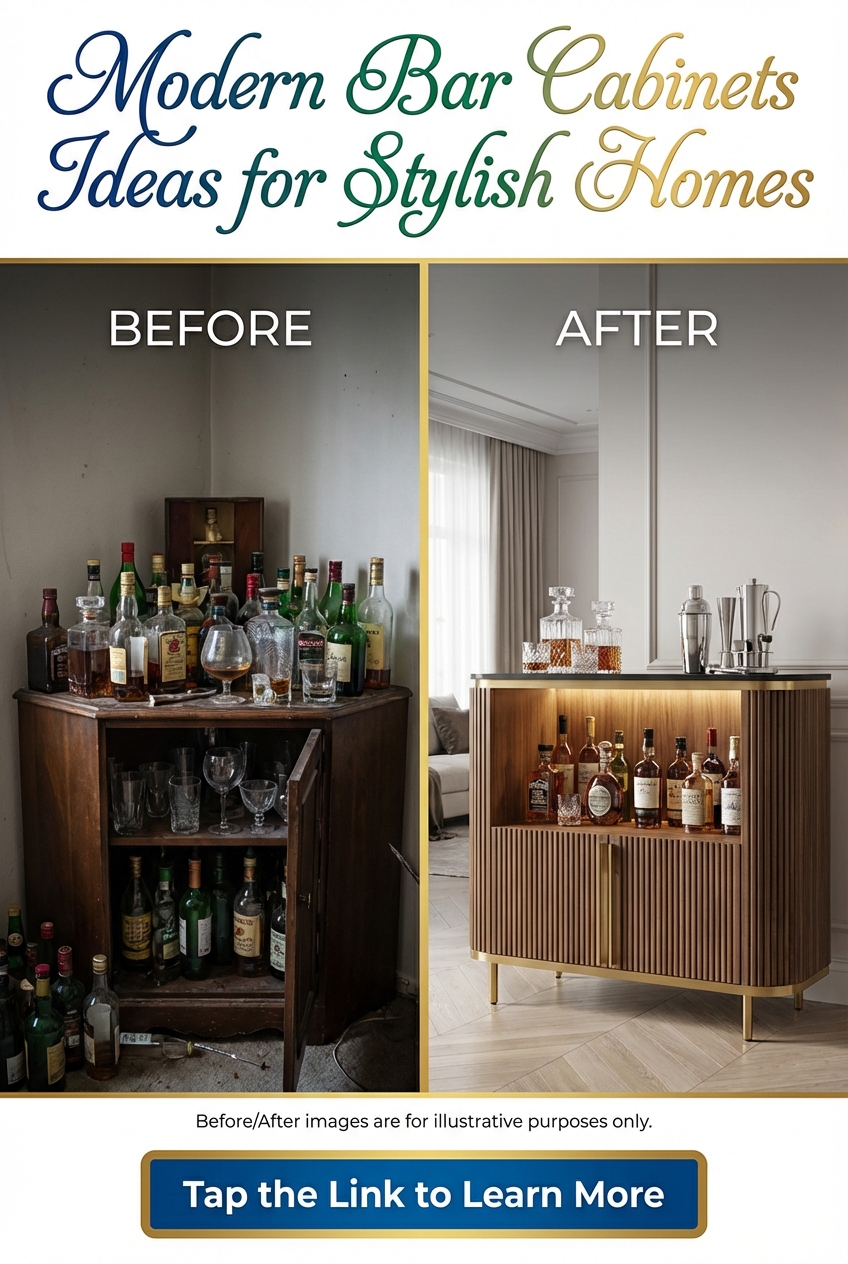
Cabinets also work beyond cocktails as coffee stations, record storage or a dining buffet, so choose a size that can change jobs later.
Frequently asked questions
What is the best bar cabinet for home use?
One with adjustable shelves, an interior depth of about 15 to 16 inches, doors that close over the clutter, and a top that can take a tray. Size it so you keep about 36 inches clear in front.
What are some good bar items for a home bar?
Start with a shaker, jigger, strainer, bottle opener, a few glass types you really use, and a tray to corral them. Add bottles gradually based on what you actually drink.
How do I organize the inside of a bar cabinet?
Use small shelf risers so back bottles are visible, and clear bins for openers, stoppers and picks. Keep the heaviest bottles on the lowest shelf.
Can I put a bar cabinet near a window?
You can, but avoid direct sun, which can fade the finish and affect wine and spirits. UV-blocking window film helps if there's no other spot.
Filed under
ArticlesMeet the author
Written by an architect.
Julio Arco is a passionate architect with years of experience in architecture, interior design, urban design, and housing. He studied at prestigious universities across North America and Europe.

- Name
- Julio Arco
- Job
- Architect and online interior designer
- Studied
- Architecture, ITESM · Urban Design and Housing, McGill
- Partner
- Thor, Australian Shepherd
- Thor’s title
- Head of quality control