Home Office Shelving Ideas for Small, Budget Spaces

By Julio Arco
Architect and online interior designer
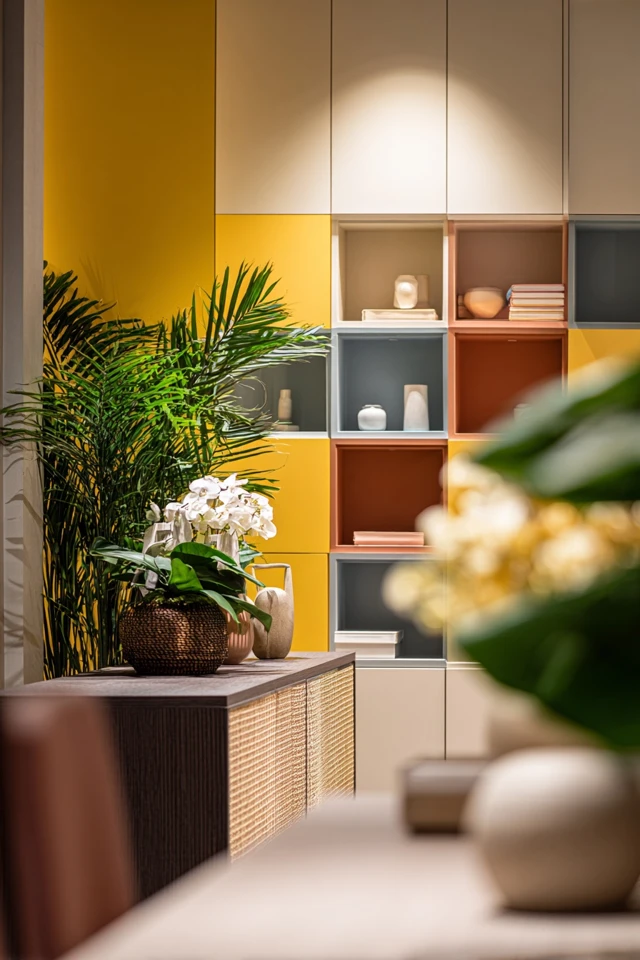
In this post
- What are the best small home office shelving ideas?
- Where should home office wall shelves go?
- What are good DIY home office shelving ideas?
- How do you store files on office shelves?
- How do you make office shelves look nice?
- What are some unique shelving ideas for an office?
- Which shelving materials hold up on a budget?
- Frequently asked questions
The best home office shelving is shallow, goes up the wall instead of across the floor, and keeps daily items within arm's reach. Floating shelves, a ladder unit or a few stacked cubbies can hold a surprising amount for very little money.
Below are the ideas that work best on a budget, with proportions you can measure before you buy anything.
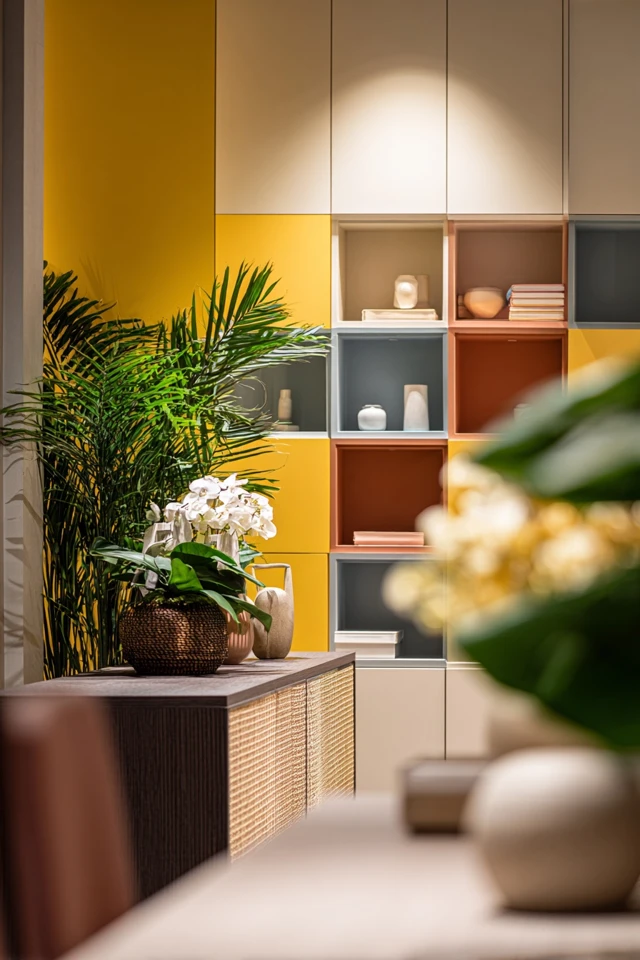
What are the best small home office shelving ideas?
In a small room, floor space is the scarce resource, so build up. Shelves that run from desk height toward the ceiling free the floor and keep the room from feeling crowded.
- Choose shallow shelves, about 8-10 inches deep. Deeper ones stick out into your head space and make the room feel tighter.
- Stack two or three floating shelves above the desk instead of one tall bookcase.
- Use open shelves for what you reach for daily and closed boxes or drawers for the rest.
- Leave the wall behind a window or door free so the room keeps its sightlines.
If your office is a corner of another room, a shelf unit can also act as a divider. Check the walkway too: leave about 30-36 inches for the main path through the room.
Short on space altogether? A garage can work, and we cover it in this home office in a garage guide.
Where should home office wall shelves go?
Put the shelves you use most within a comfortable reach of the chair. Reference books, a printer or a tray of supplies belong on the side of your dominant hand.
Height matters for your body as well. OSHA's computer workstation guidance says the top of the monitor should be at or just below eye level, so a shelf directly in front of the screen should sit above that line, not behind it. Heavy or frequently used items should stay between hip and shoulder height, which keeps your elbows close to your body. OSHA notes that working in a neutral position reduces stress and strain on muscles, tendons and the skeletal system.
Shelves behind the desk are a popular choice because they make a tidy backdrop for video calls. Keep them a little sparse there. A few grouped objects read better on camera than a wall of spines.
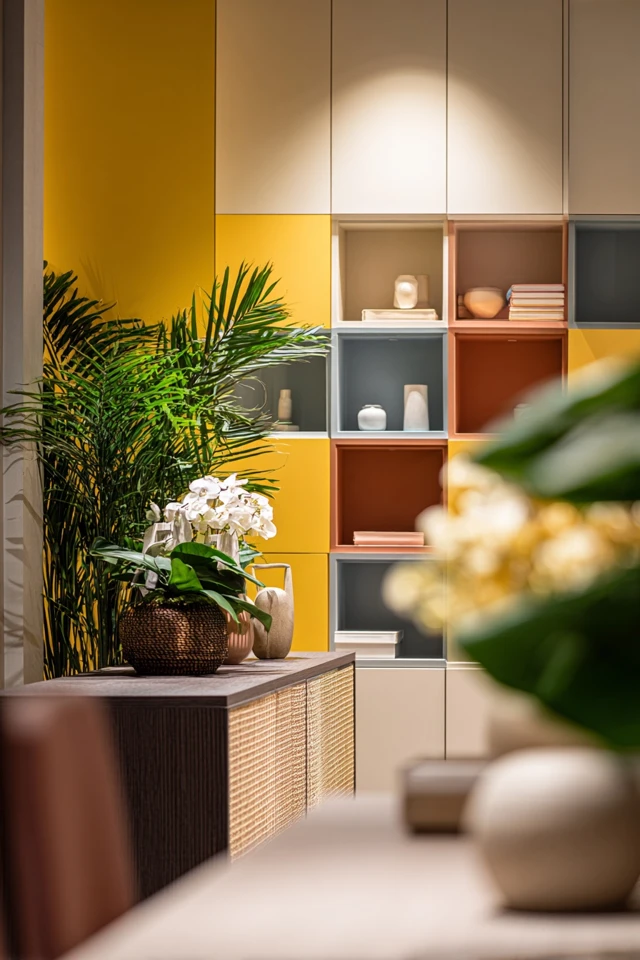
What are good DIY home office shelving ideas?
Most DIY shelving comes down to a board, brackets and a stud. A few options that cost little:
- Plain lumber or MDF boards, sanded and painted, on simple metal brackets.
- A leaning ladder shelf, which needs no drilling and suits renters.
- Wall-mounted cubbies made from stacked wooden crates, screwed together first and then to the wall.
- A faux built-in: run inexpensive bookcases wall to wall and add trim and paint so they look like one piece.
Is it cheaper to build or buy? Building from raw boards is usually cheaper per foot of shelf, but ready-made units save time and ship with hardware. For anything that holds heavy books, anchor into studs or use rated wall anchors. If you are unsure what is behind the wall, ask a licensed professional.
Need more budget furniture options? See these Ikea alternatives.
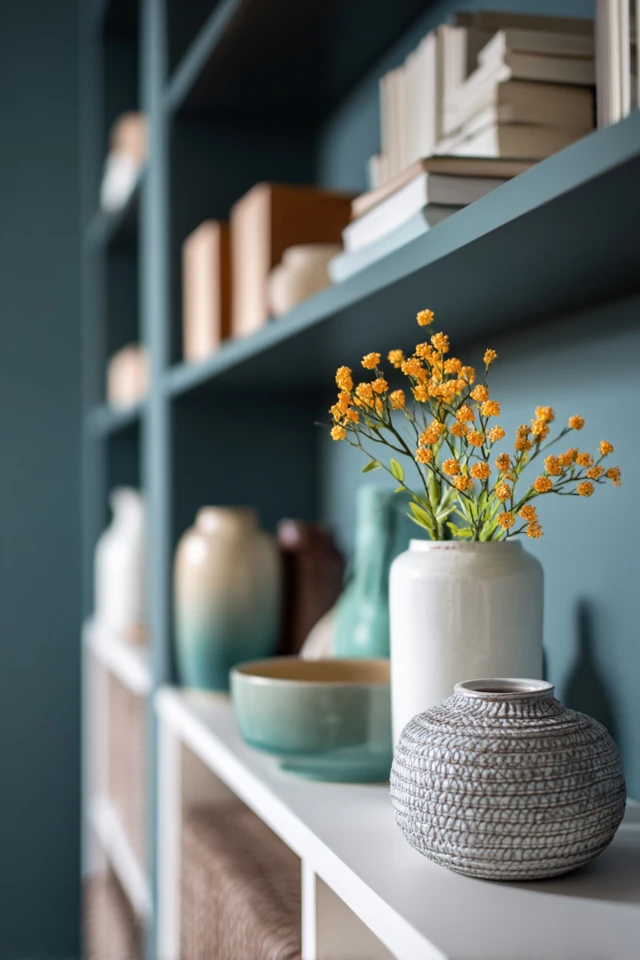
How do you store files on office shelves?
Office shelves for files work best when the containers match. Uniform file boxes or magazine holders turn paperwork into a quiet, even block, and labels on the front make retrieval quick.
Sort first. Keep current projects within reach, archive the rest in closed boxes on the upper or lower shelves, and recycle what you no longer need. Hide cables with a box or a clip along the back edge so cords don't hang down the wall.
One practical rule: do not let the shelf become a second desk. If a pile has no box, it has no place.
How do you make office shelves look nice?
Styling is mostly editing. Pick a limited palette, leave some empty space and repeat a few materials.
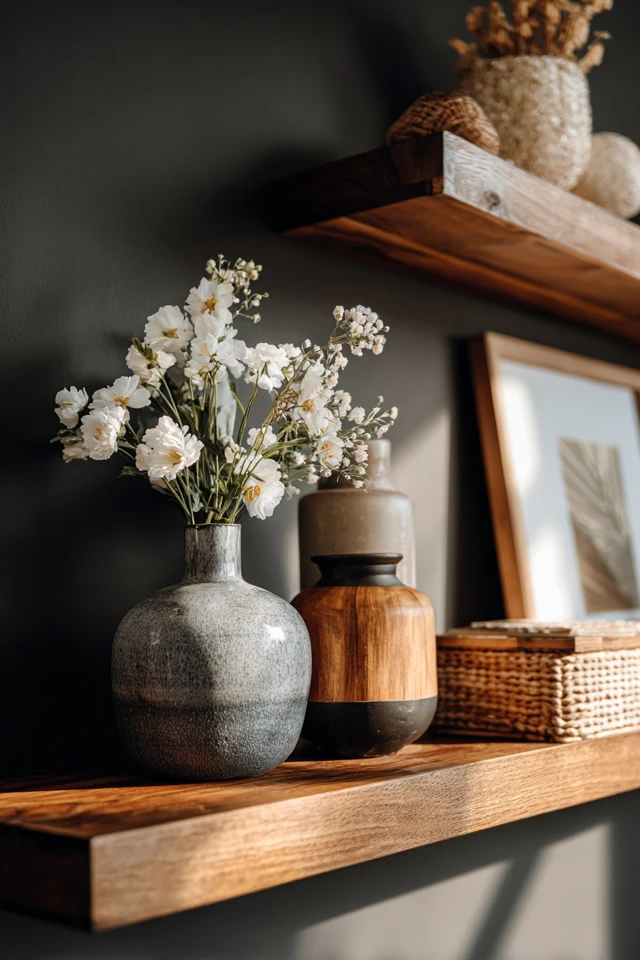
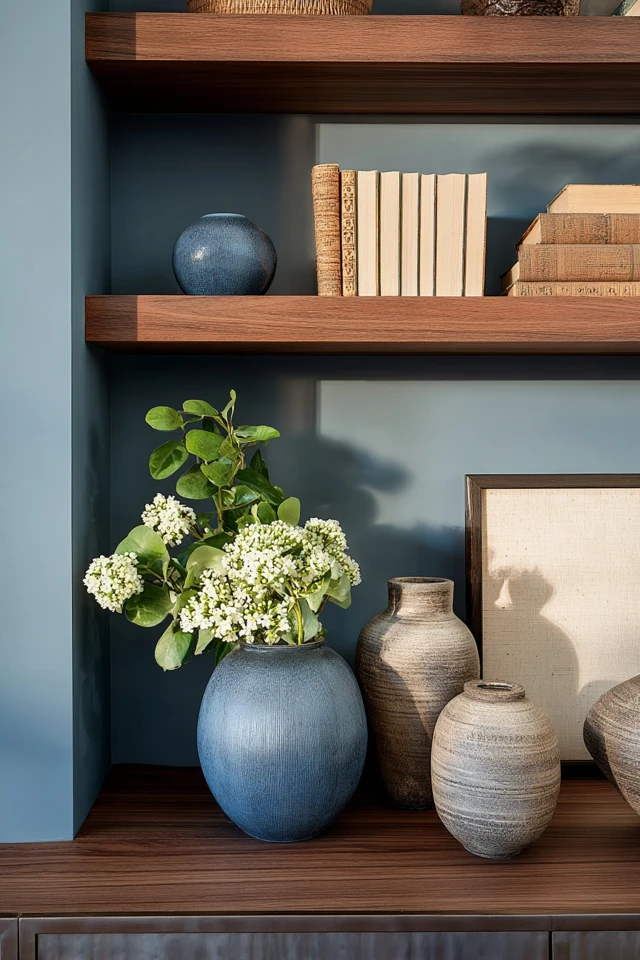
- Group items in odd numbers. The rule of three is a common styling habit: a stack of books, a small object and a plant or frame make a pleasing cluster.
- Vary heights so the eye moves along the shelf.
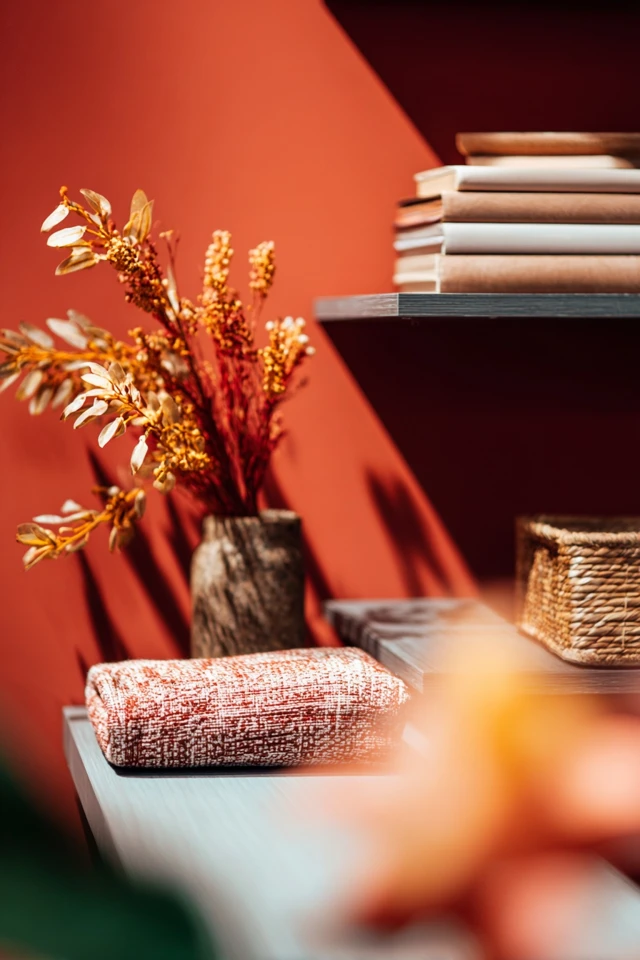
- Paint the back panel or the wall behind the shelves a muted accent to make objects stand out.
- Add an LED strip under a shelf for task light and a softer glow.
- Put heavier pieces, such as a ceramic pot, on lower shelves so the unit looks grounded.
A matte finish reduces glare under a desk lamp, while a glossy one bounces light around and shows every fingerprint. If you have a dog or cat that likes to patrol, keep breakables off the lowest shelf and fragile plants out of reach. Check with your vet about which plants are safe around pets.
Color can carry a lot of the style. If you are leaning toward a bright shade, our post on red offices shows how bold color behaves in a work room.
What are some unique shelving ideas for an office?
- A pegboard panel with small shelves, hooks and baskets that you can rearrange as projects change.
- Shelves that wrap around a window frame, using the awkward wall space.
- A closet turned into a workstation, with shelves fitted on the side walls.
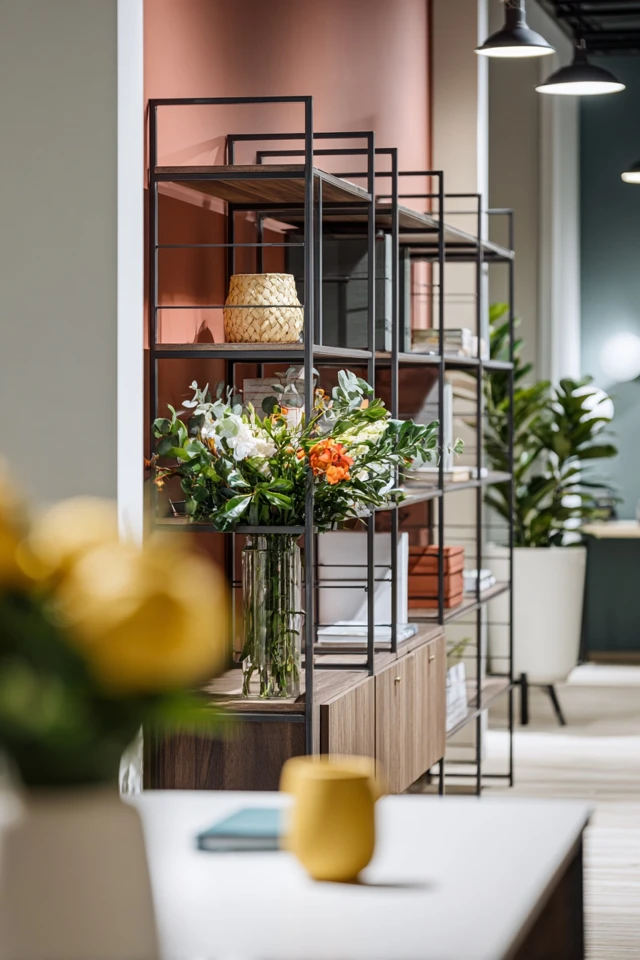
- A mix of open shelves and cabinets, so display and storage share one wall.
As an architect, I'd pick one unusual element and keep the rest simple. Three quirky ideas on one wall tend to compete with each other.
Which shelving materials hold up on a budget?
Solid wood is sturdy and takes paint or stain well. Plywood with an edge band is a good middle ground, and MDF is cheapest but sags under long spans of heavy books, so keep spans short or add a center support. Metal brackets and powder-coated steel are durable and add contrast to wood.
If you like a storage-rotation habit for supplies, a food safety specialist's advice applies loosely here too: Judy Harrison, Ph.D., suggests rotating non-perishable staple items in general storage once or twice a year. The same rhythm works for office supplies: go through the shelves twice a year and clear out what you don't use.
Frequently asked questions
What is the rule of three for shelves?
It is a styling guideline: group items in threes, such as books, an object and a plant, and vary their heights. Odd-numbered groups tend to look more natural than pairs.
Is it cheaper to build or buy shelves?
Building from boards and brackets usually costs less per foot of shelf. Ready-made units save time and include hardware, so the better choice depends on your tools and schedule.
How to make office shelves look nice?
Edit the contents, keep a limited color palette and leave some empty space. Matching boxes for paperwork and a painted back panel help the shelves look finished.
What are some unique shelving ideas?
Pegboard panels, shelves around a window frame and closet offices with fitted shelves are all inexpensive and different. Pick one and keep the rest of the wall simple.
Filed under
ArticlesMeet the author
Written by an architect.
Julio Arco is a passionate architect with years of experience in architecture, interior design, urban design, and housing. He studied at prestigious universities across North America and Europe.

- Name
- Julio Arco
- Job
- Architect and online interior designer
- Studied
- Architecture, ITESM · Urban Design and Housing, McGill
- Partner
- Thor, Australian Shepherd
- Thor’s title
- Head of quality control