Colorful Home Office Decor: Budget Ideas Built Around Red

By Julio Arco
Architect and online interior designer
In this post
The cheapest way to add color to a home office is to pick one red element and give it a calm neutral setting: a single painted wall, a rug, or a chair. Red is strong, so a little goes a long way, and you can always add more later.
Below are colorful home office ideas built around red, in the order I'd tackle them: wall first, then textiles, lighting and accessories, then the layout and ergonomics that keep the room working.
Is red a good color for a home office?
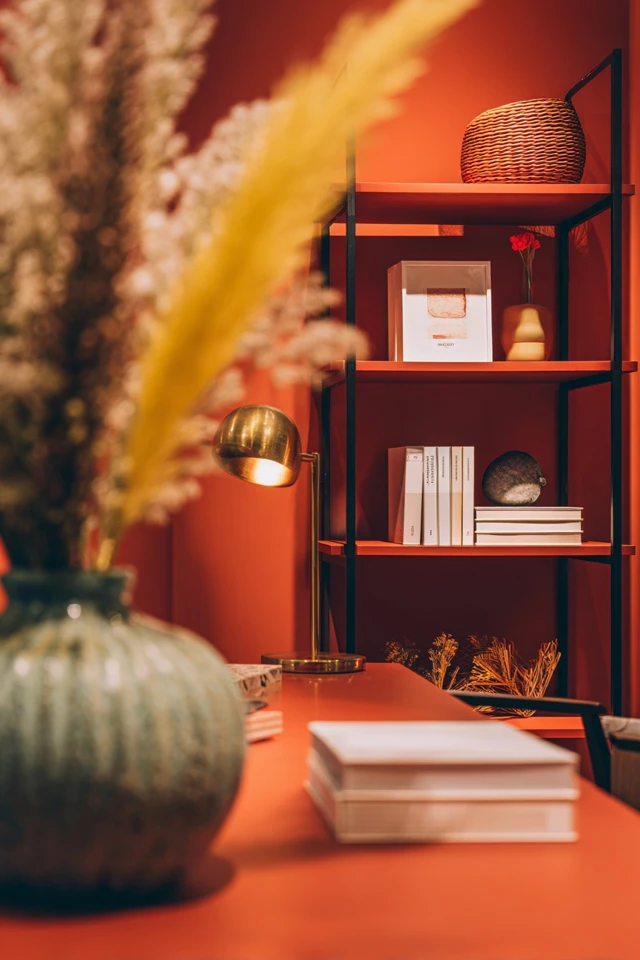
It can be, with limits. Red reads as warm and attention-grabbing, so it suits a creative corner or a wall you glance at, more than a surface you stare at for eight hours. Muted, earthy reds like terracotta and brick are easier to live with than a vivid fire-engine red.
Color effects depend on context. A recent study from Deakin University's Cognitive Neuroscience Unit looked at blue rather than red, but its finding is a useful reminder that wall color does more than decorate. Isabella S Bower and colleagues reported that "blue coloring of the built environment increases autonomic range and is associated with modulations of brain activity linked to emotional processing." I wouldn't stretch that to claim red boosts focus, but it supports testing a color in your own room before committing.
Start with a statement wall
A statement wall in a home office is the lowest-risk way to use a bold wall color. Paint the wall behind or beside your desk, not the whole room. If it sits behind you, it will show up on video calls and you won't stare at it all day.
Some practical choices:
- Pick a softer, brick or terracotta red for a wall you face, and a brighter red for one you only pass.
- Use a flat or matte finish on large surfaces. It hides wall flaws and cuts glare. Save satin or eggshell for trim and cabinet doors, which get wiped more.
- Buy sample pots and paint large swatches on two walls. Check them in morning and late-afternoon light, because red shifts more than most colors.
North-facing rooms get cooler light, so a warmer red keeps the wall from looking dull. In a bright south-facing room, a muted red keeps things from feeling hot.
Small colorful home office ideas
In a small room, a full red room can feel like a closet. Try these instead:
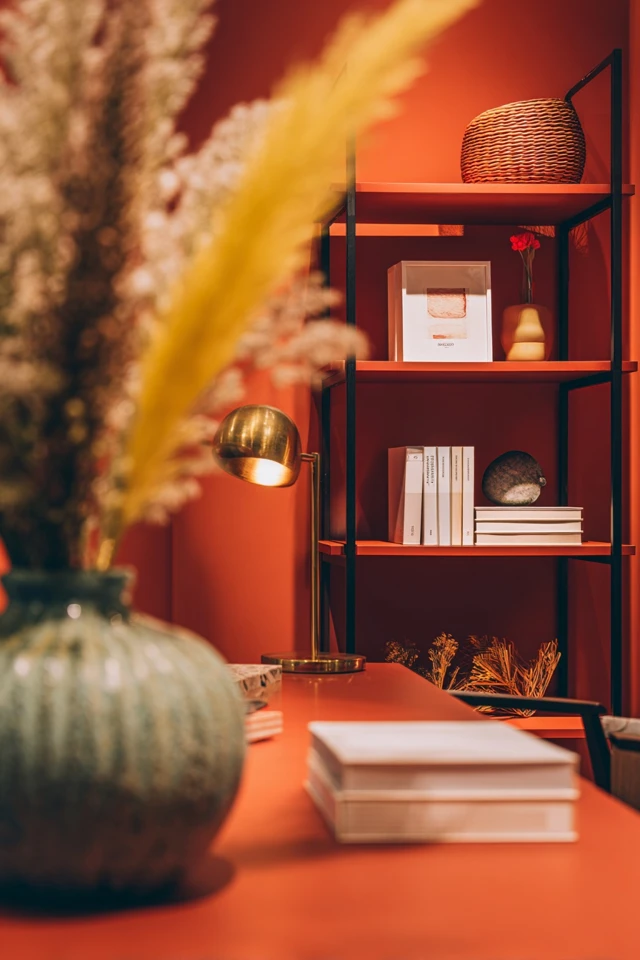
- Paint only the wall behind the desk, or just the lower half of one wall.
- Choose a lighter, pink-leaning red for walls and keep vivid red for small objects.
- Go vertical with shelves and a floating or slim desk so the floor stays open.
- Repaint a thrifted chair or cabinet in red and leave the walls white.
If you need more shelving, our office shelving ideas cover budget options that keep the floor clear.
Add color with rugs, textiles and accessories
If paint feels like too much, textiles are reversible. A red or red-patterned rug anchors the desk zone, and throw pillows, a lamp shade, a desk pad or a pinboard add small repeats of the same color so the eye moves around the room.
Keep the pattern scale varied. One bold geometric in small doses, paired with a calmer organic print, holds interest without turning busy. If a dog shares your office, choose a low-pile or flatweave rug and washable covers; both are easier to clean than a plush rug.
Keep a neutral base and let red be the accent
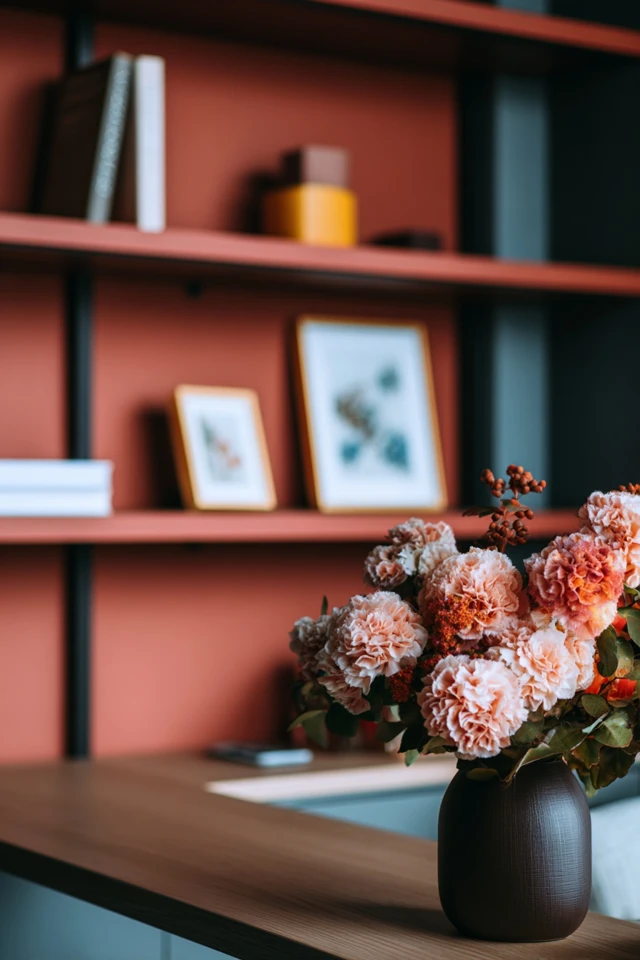
A modern home office design often works because the base is quiet: white or warm gray walls, a wood desk, simple storage. Red then reads as a deliberate choice. Navy, deep green or teal work as partners, and a plant or two adds a cool contrast to red's warmth.
Wood in medium to dark tones, leather, jute and woven baskets soften red. Brass or aged gold looks warm beside it, and matte black hardware gives a sharper, more modern edge. Use metals sparingly, on a lamp, drawer pulls or desk legs.
Yellow is another strong partner for red accents, and our post on what colors go with yellow can help you balance the two.
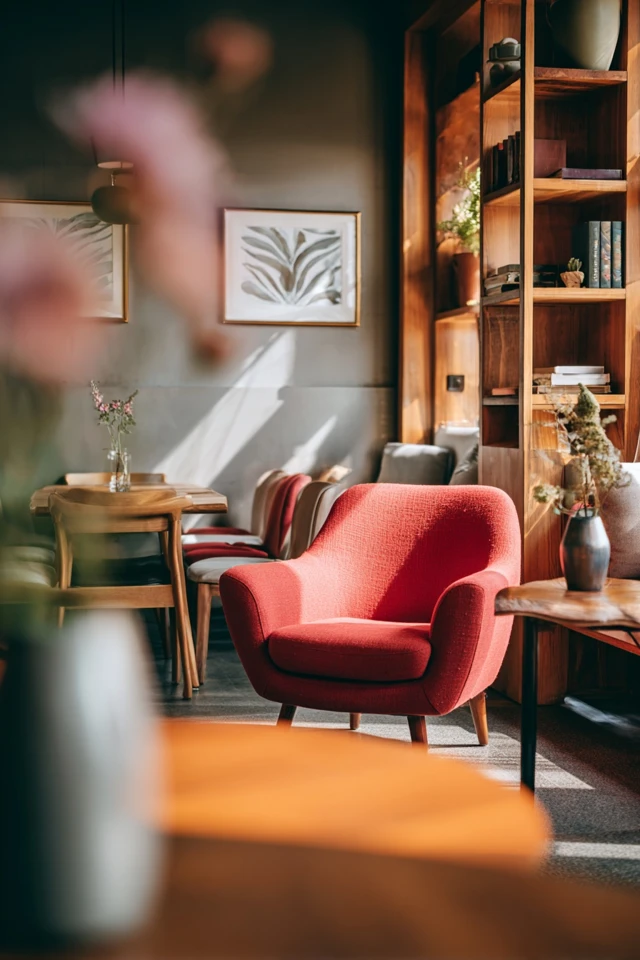
Layer the lighting
Lighting changes red more than any other color. Warm bulbs deepen it and make it cozy, while daylight shows its truest tone. Combine a dimmable desk lamp for tasks with softer ambient light, and you can shift the mood of the wall from morning to evening.
Place the desk so daylight comes from the side. That avoids screen glare and keeps the red wall from competing with your monitor.
Don't let color undermine the setup
A red wall won't make up for a bad chair. As an architect, I'd spend the first part of a budget on the workstation basics, then on color. OSHA's computer workstation guidance says the top of the monitor should be at or just below eye level, and that elbows stay in close to the body and are bent between 90 and 120 degrees.
If your office is in a garage or other non-standard space, see our garage home office ideas for layout help.
A simple zoning plan
Divide even a small office into a work zone (desk and task light), a storage zone (shelves, files) and, if space allows, a pause zone with a chair and plant. Red fits the pause zone well. I'd keep the most intense reds out of your direct line of sight at the desk.
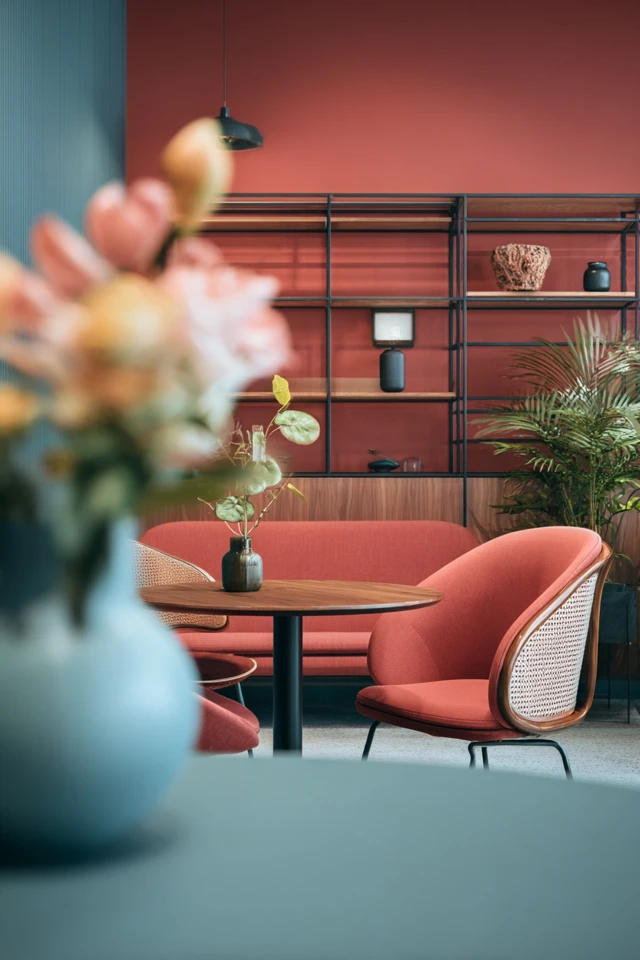
Start with one move this weekend: a red pillow, a repainted chair, or a large paint swatch taped to the wall for a few days. If you still like it by the end of the week, paint.
Frequently asked questions
How can I make a small red office feel larger?
Use a lighter red or limit it to one accent wall, and keep the other walls pale. Low-profile furniture and vertical storage keep the floor open.
What shade of red is best for focus?
Muted, earthy reds such as terracotta or brick are easier to work in for long periods than a vivid red. Reserve bright red for accents you don't face all day.
How do I stop red from feeling too intense?
Add cool accents like navy, teal or green plants, plus natural wood. Dimmable, warm lighting also lets you tone the room down.
Can I mix red with patterned fabrics?
Yes. Pair a larger neutral pattern with a smaller red pattern and keep the color story consistent. Test the swatches together first.
Filed under
ArticlesMeet the author
Written by an architect.
Julio Arco is a passionate architect with years of experience in architecture, interior design, urban design, and housing. He studied at prestigious universities across North America and Europe.

- Name
- Julio Arco
- Job
- Architect and online interior designer
- Studied
- Architecture, ITESM · Urban Design and Housing, McGill
- Partner
- Thor, Australian Shepherd
- Thor’s title
- Head of quality control