Reading Nook Ideas: Cozy, Cheap Setups for Any Corner
Reading nook ideas on a budget: where to put one, what to include, how to light it, and how to fit a cozy corner into a bedroom or small space.

By Julio Arco
Architect and online interior designer
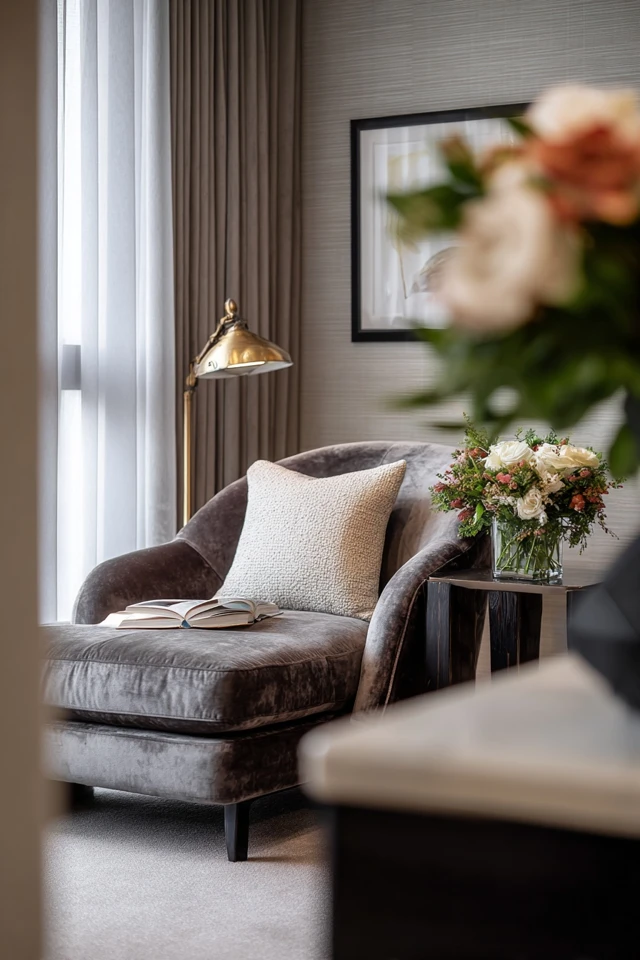
In this post
A good reading nook needs four things: a comfortable seat, a light you can aim at the page, a surface for your cup, and a spot that feels slightly separate from the rest of the room. You don't need a spare room or a big budget. A corner, a window ledge or the end of a bedroom will do.
Here's how to choose the spot, what to put in it, and how to do it cheaply.
Where should a reading nook go?
Start by walking around your home and looking for a spot that is already a little out of the way. Common candidates are the corner of a living room, the gap beside a staircase, a bedroom corner, or the area in front of a window.
Reading nook ideas with a window
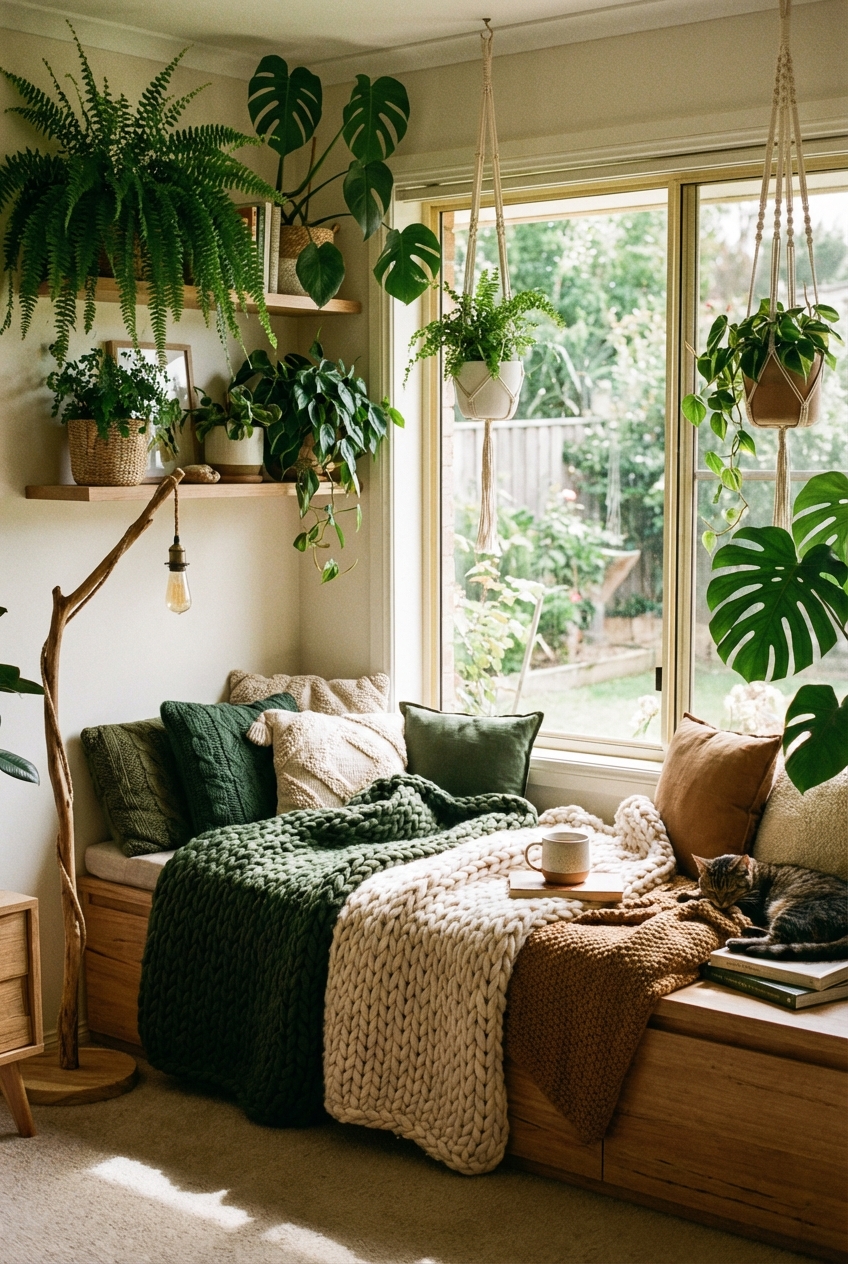
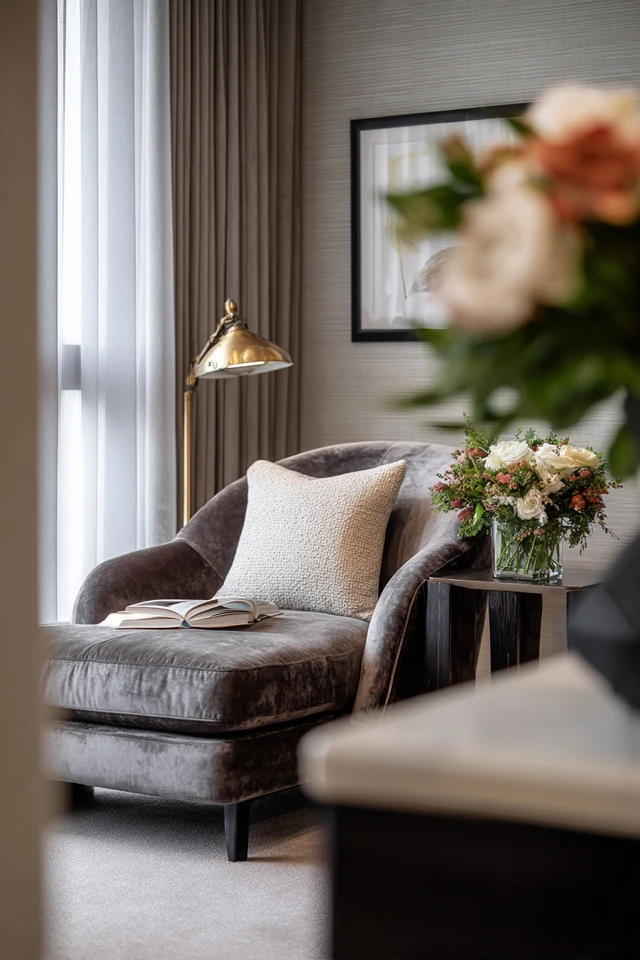
Daylight is free and easy on the eyes, so a window is the best starting point. Place the chair at a right angle to the glass or slightly to one side, so light falls across the page instead of straight into your eyes. A deep sill can work as a bench if you add a firm cushion. If glare is a problem in the afternoon, a sheer curtain softens it without making the corner dark.
Bedroom reading nook ideas
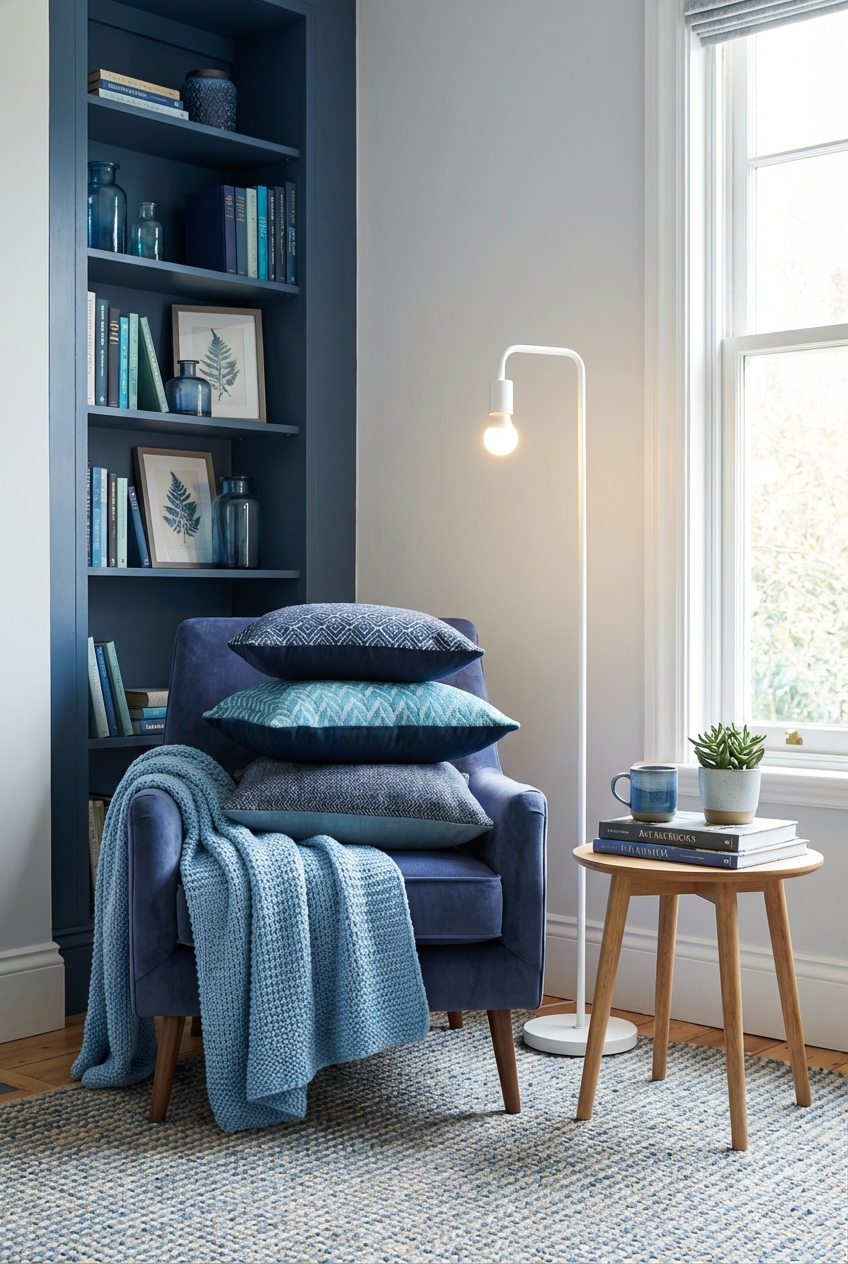
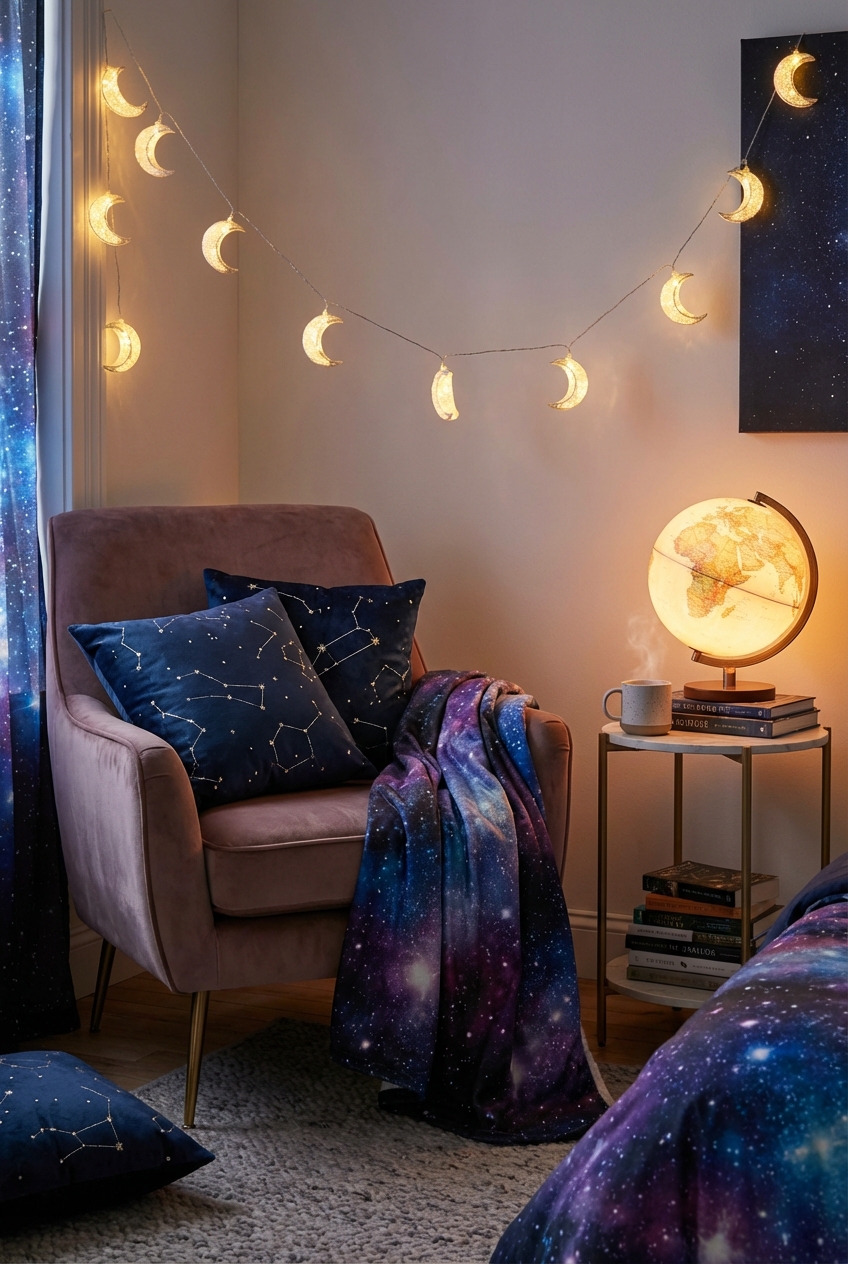
A bedroom nook works best away from the bed, so the chair doesn't become a clothes pile and the bed doesn't become the only place you sit. A corner opposite the headboard or beside a wardrobe is ideal. If space is tight, a small armchair and a narrow floor lamp are enough.
Reading nook ideas for small spaces
Small corners can still work. Pick a chair with a compact footprint and visible legs, which leaves floor showing and makes the corner feel lighter. Use the wall instead of the floor: a wall-mounted shelf or a slim bookcase holds books without eating space. Keep about 30-36 inches of clear path to the seat so the nook doesn't feel boxed in.
Things to put in a reading nook
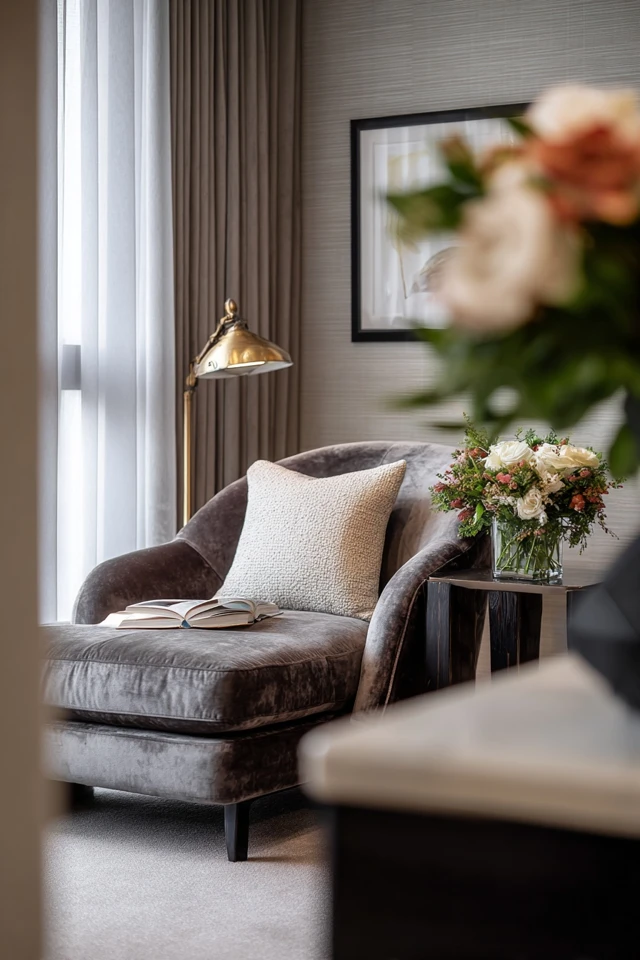
If you're wondering what belongs in a nook, this is the list I'd work through in order of priority:
- A chair or bench you can sit in for an hour without shifting. Test it in the store or, if secondhand, sit in it before you buy.
- A lamp you can direct at the page.
- A small table or stool for a drink and your current book.
- A throw and one or two cushions, including a firm one for lower-back support.
- A rug, even a small one, to mark the zone.
- Shelves, a basket or a stack of books within arm's reach.
A plant is optional, but a pothos or snake plant adds life for very little money. If you share your home with a dog or cat, check any plant against a pet-toxicity list and ask your vet if you're unsure.
For the table, the ideas in this roundup of side tables for reading nooks are a good place to start.
How to make a cheap reading nook
Spend on the chair and the light, and save on everything else. As an architect, I'd put most of the budget into a seat you actually want to sit in, because a nook with an uncomfortable chair goes unused.
- Look for a secondhand armchair with good proportions. Fabric can be cleaned or covered with a washable throw, which also helps if a dog claims the seat.
- Use what you already own: a dining chair with a cushion, a stool as a side table, a stack of books as a riser for a lamp.
- Buy a small rug, around 4x6 or 5x7 feet, to define the area. In a tight spot, a runner works.
- Add baskets and a wall shelf instead of a full bookcase.
- Repaint only if the corner needs it. A matte or eggshell finish keeps glare down.
If you like to build things, DIY options are simple: a window-seat cushion cut to size, floating shelves, or a plain plank bench with a cushion on top. For furniture that mimics pricier pieces, these affordable IKEA alternatives may help, and these budget shelving ideas work just as well beside a chair as in an office.

How to light a reading nook
Use two sources. An ambient light, such as a floor lamp or a shaded table lamp, gives the corner a warm base. A task light, like an adjustable arm lamp, puts light on the page. Place the task light on the side opposite your writing hand if you also take notes, otherwise either side is fine, as long as your hand doesn't cast a shadow on the text.
Check the bulb's color temperature. The Department of Energy notes that correlated color temperature is one of the primary metrics used to characterize the visual appearance of light. In practice, look at the Kelvin number on the box: lower numbers look warmer and suit evening reading, higher numbers look cooler and crisper.
LEDs are a sensible choice for a lamp you'll leave on for long stretches. The Department of Energy says good-quality white LED lighting products are expected to have a useful life of 30,000 to 50,000 hours or even longer, so you won't be changing bulbs often.
If you read late, keep the light low and pointed where you need it. The Department of Energy explains that "Light plays a key role in setting and regulating the body's biological clock." A dimmer or a warm bulb in the evening is a cheap way to respect that.
Colors, textiles and finish
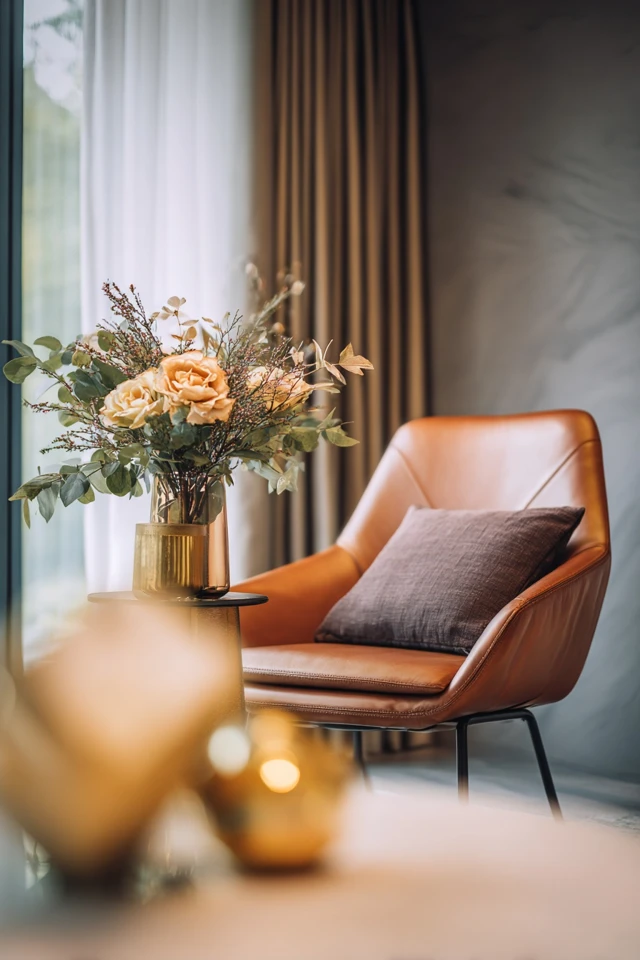
Pick a limited palette and repeat it. Two or three materials, such as wood, wool or linen, and a matte metal, are enough to make a corner look intentional. Warm tones like beige or terracotta suit evening reading. Cooler tones like sage or soft blue feel calm in a bright room.
Soft surfaces also help the sound. A rug, curtains and upholstered furniture absorb echo, which makes a corner quieter to sit in. Before you commit to a paint color, test a sample in the nook in morning and evening light, since the same shade can look quite different.
If the corner is part of a living room, a rug, a lamp and a bookcase are usually enough to separate it visually from the rest of the room. For a color boost, these yellow color pairings can inspire a cushion or lamp accent.
What about kids, kitchens and shared homes?
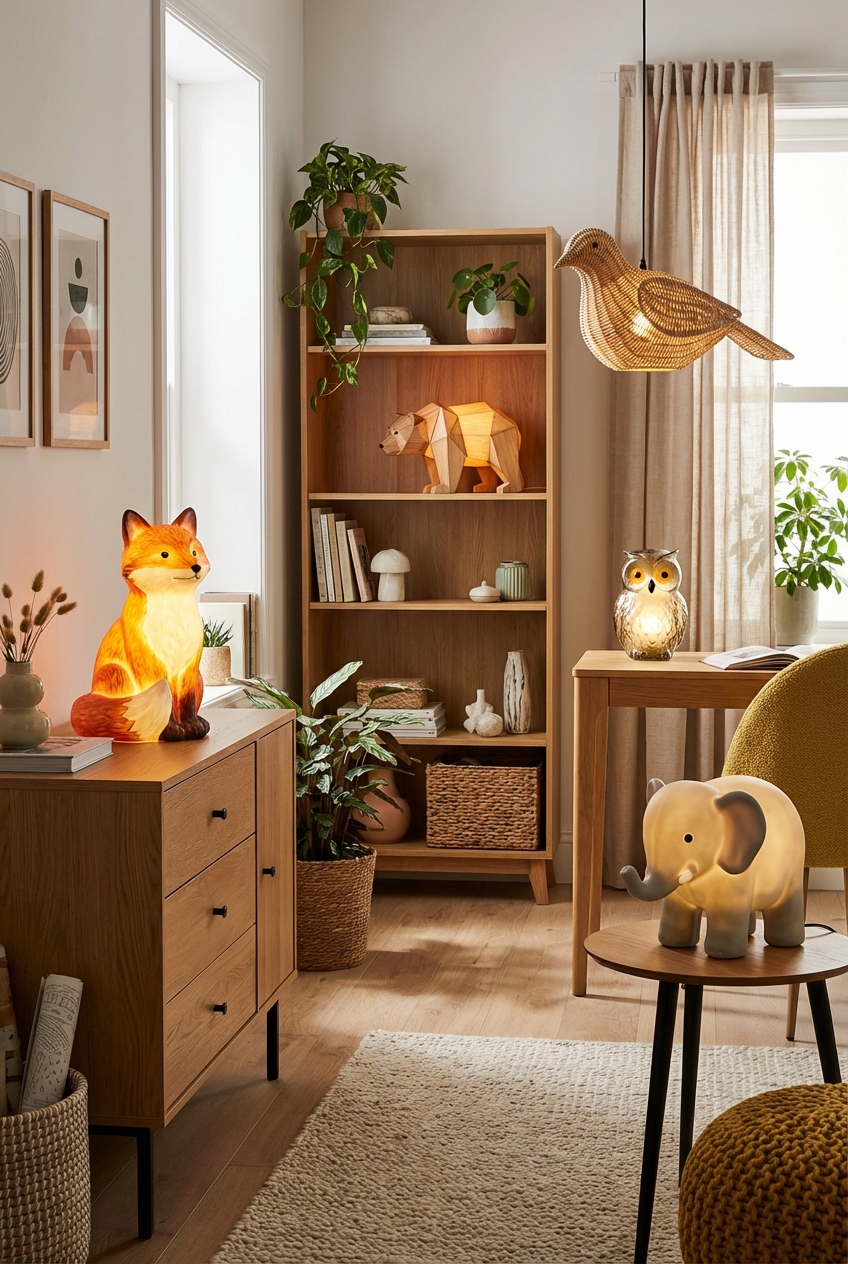
For children, drop the seat height. Floor cushions, a low shelf with books facing forward and a small rug make a corner they can reach on their own. Keep the lighting soft and the shelves low enough that nothing needs climbing.
A kitchen nook can be as simple as a bench or window seat at the end of the room, away from the cooking zone. Choose wipeable fabric and keep the lamp away from splashes.
In a shared home, a screen, a tall plant or a bookcase placed at an angle gives a nook a sense of privacy without building anything.
Frequently asked questions
What are some good things to put in a reading nook?
A comfortable chair, a lamp aimed at the page, a small table, a throw and a rug cover the basics. Add shelves or a basket for books within reach.
How to make a cheap reading nook?
Buy a secondhand armchair, reuse a stool or stack of books as a side table, and add a small rug and a lamp. Put money into the seat and the light first.
What are some good ideas for a reading nook in my kitchen?
A bench or window seat at the end of the room works well, set away from the stove. Choose a wipeable cushion and keep lamps clear of splashes.
Can you make a reading nook without natural light?
Yes. Combine a warm ambient lamp with an adjustable task light, and use light-colored textiles to keep the corner from feeling dim.
Filed under
ArticlesMeet the author
Written by an architect.
Julio Arco is a passionate architect with years of experience in architecture, interior design, urban design, and housing. He studied at prestigious universities across North America and Europe.

- Name
- Julio Arco
- Job
- Architect and online interior designer
- Studied
- Architecture, ITESM · Urban Design and Housing, McGill
- Partner
- Thor, Australian Shepherd
- Thor’s title
- Head of quality control