Live Edge Bathroom Vanity: Ideas, Wood and Care
See live edge bathroom vanity styles, from floating to vessel sink, plus how to pick the wood, finish it for wet rooms and keep it looking good.

By Julio Arco
Architect and online interior designer
In this post
- What makes a live edge vanity different from a standard one?
- Which vanity styles work best?
- What are good small live edge bathroom vanity ideas?
- How do you choose the wood?
- What finish holds up in a bathroom?
- How do you style a rustic live edge bathroom vanity?
- How do you keep it looking good?
- Frequently asked questions
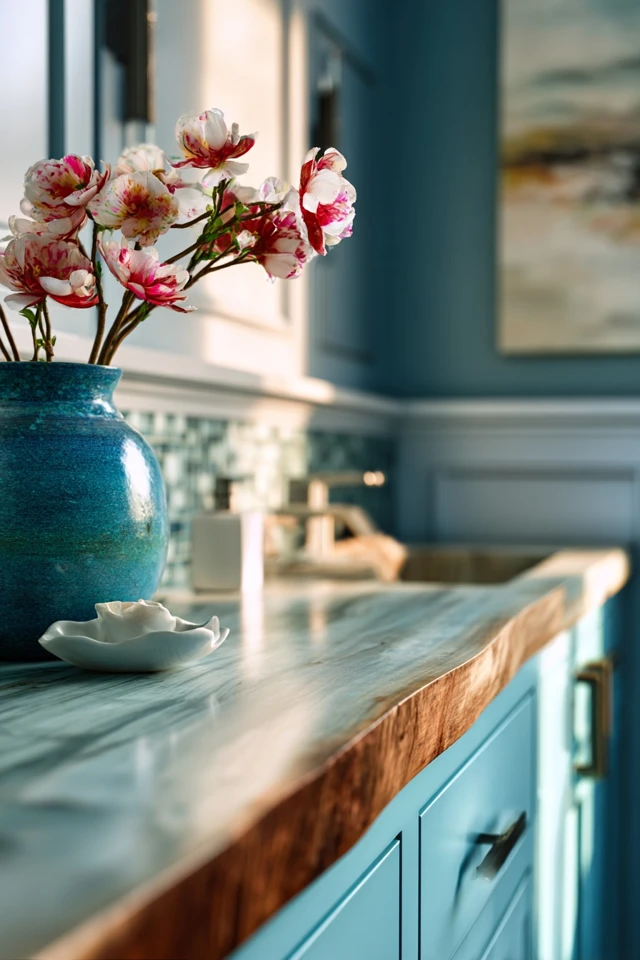
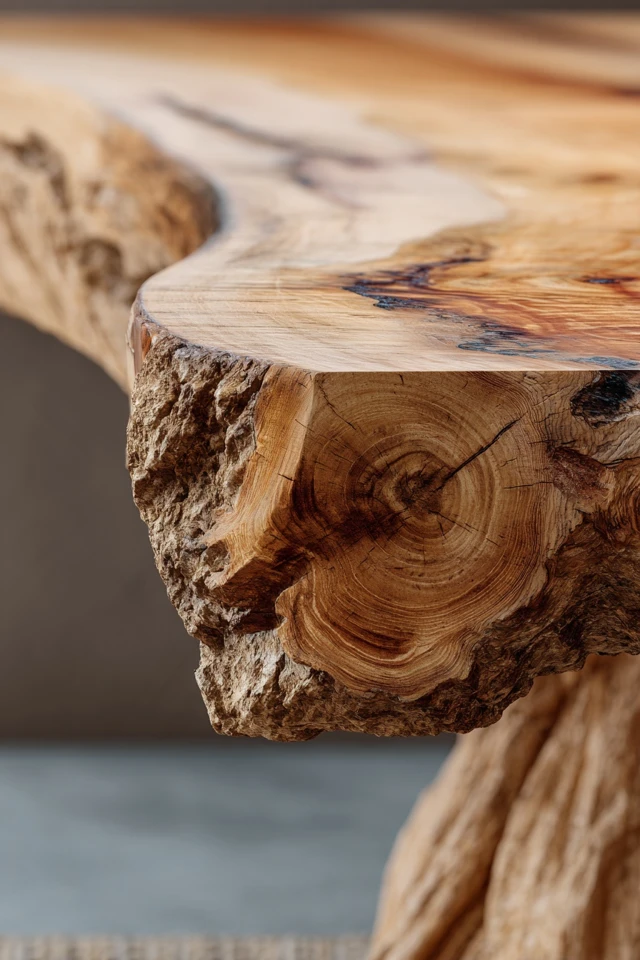
A live edge bathroom vanity is a solid wood slab that keeps the natural, uneven outline of the tree along one or both sides. It works best as the single organic element in a bathroom, with plain tile and simple hardware around it, and it needs a bathroom-grade finish and some yearly upkeep.
If you're torn between a slab and a standard cabinet, the short version is this: the slab gives you texture and a one-of-a-kind shape, while a standard vanity gives you more storage and less maintenance. Most people choose a hybrid, with a live edge top on a simple base.
What makes a live edge vanity different from a standard one?
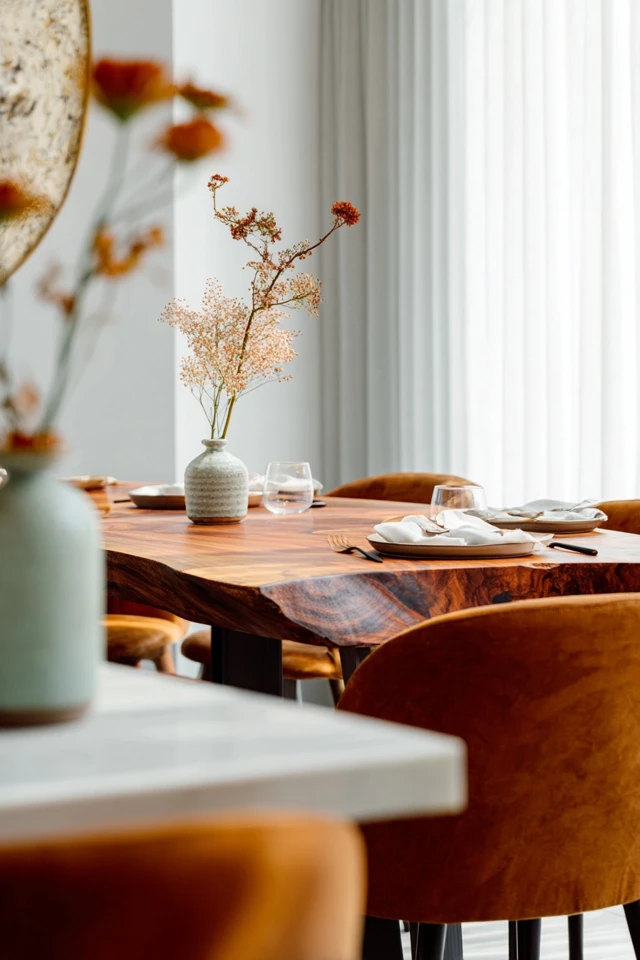
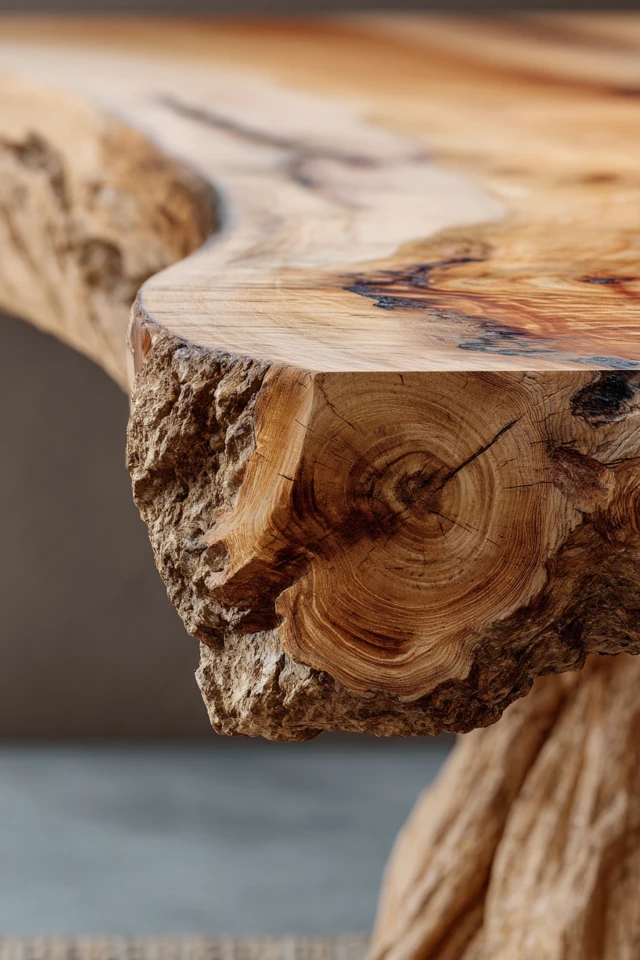
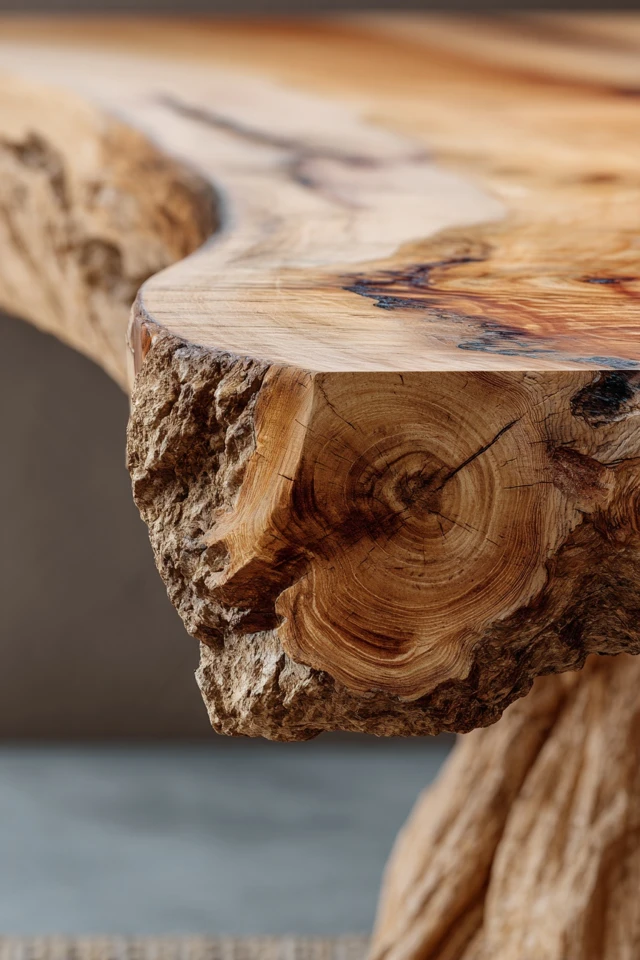
A standard vanity top is cut square, so every edge is straight and identical. A live edge top keeps the curve of the trunk, so no two are alike. Bark may be removed and the edge sanded smooth, but the wavy line stays.
That irregular line softens a bathroom full of hard, straight surfaces: tile, glass, mirror, porcelain. It also means plumbing cutouts, wall gaps and backsplash joints need more planning, because nothing is perfectly parallel to the wall.
Which vanity styles work best?
Floating live edge vanity
A floating live edge vanity is mounted to the wall with the floor visible underneath. It makes a bathroom feel lighter and makes mopping easy. The wall behind it must be framed to carry the weight of a thick slab plus a sink and water. I recommend having a licensed contractor confirm the blocking and brackets before you buy.
Live edge vanity with vessel sink
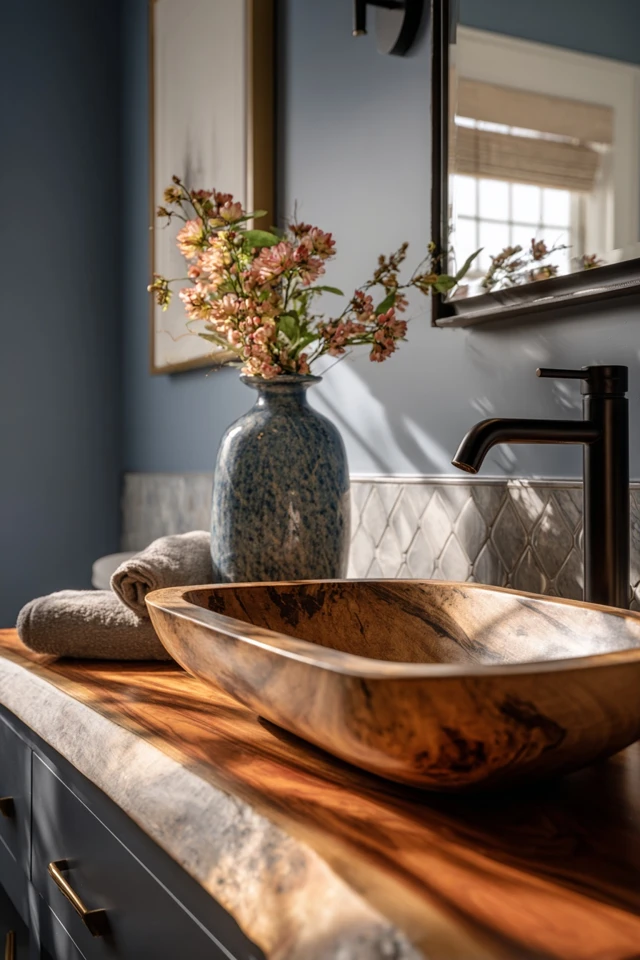
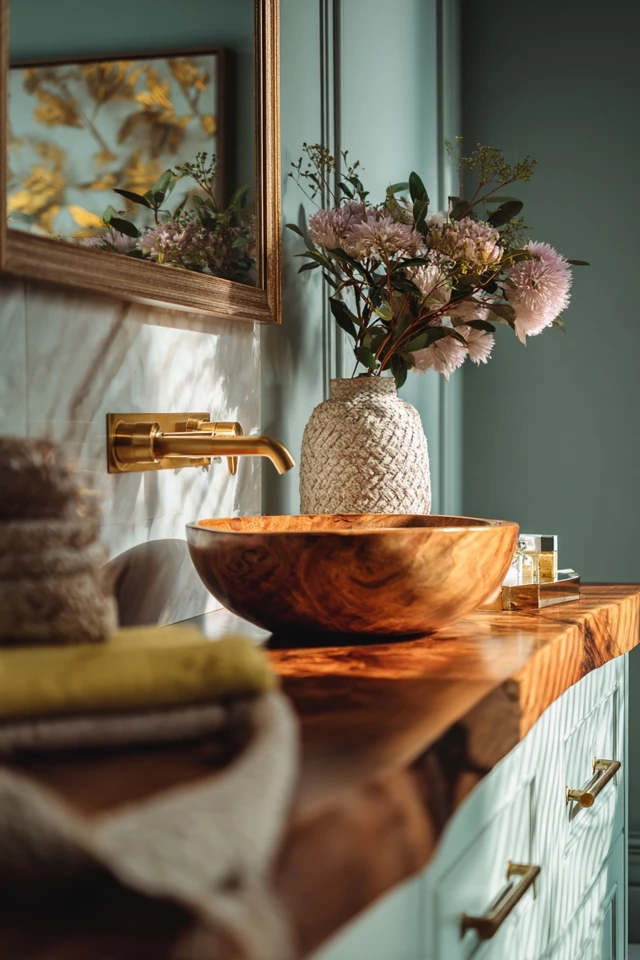
A live edge vanity with vessel sink shows off the wood, since the bowl sits on top and the slab stays uncut around it. The trade-off is splash: water lands on the wood instead of running into a bowl set below the surface. Choose a faucet tall enough to clear the rim and position it so the stream hits the bowl, not the slab. An undermount sink hides the cutout seam better and keeps the top easier to wipe.
Single slab or double
One slab can run roughly 24 to 72 inches. A single sink fits most bathrooms. For a shared bath, one long slab with two sinks gives a continuous grain, but it costs more and is harder to move through doorways, so measure the path from the entry to the bathroom first.
What are good small live edge bathroom vanity ideas?
In a powder room, a slab is often the only thing you need. For small live edge bathroom vanity ideas, these choices keep the room from feeling crowded:
- Pick a narrow, shallow slab, around 16 to 20 inches deep, and leave the edge irregular only on the visible side.
- Float it, so the floor continues under it.
- Use a frameless mirror and slim wall-mounted lighting.
- Add storage on the wall (a shelf or a recessed niche) instead of a bulky base.
- Keep the wall color light so a dark wood doesn't close the room in.
Long live edge shelves or a slab on a simple metal frame also work if you want the look but not a built-in piece.
How do you choose the wood?
Hardness, stability and grain matter more than the name on the tag. Dense woods such as walnut and white oak handle bathroom humidity better than soft ones. Walnut gives a deep brown that suits warm neutrals. White oak is lighter and pairs well with cool greys, sage and white tile. If you're building a palette around dark wood, colors that go with brown is a useful starting point.
Ask the seller whether the slab is kiln-dried. A slab that hasn't dried properly can cup or crack once it lives in a steamy room. Keep the bathroom fan working, because steady humidity is the biggest stress on any wood top.
What finish holds up in a bathroom?
A live edge bathroom vanity top needs a finish on every face, including the underside and the end grain, where water gets in fastest.
- Hardwax oil keeps a natural matte look and is easy to touch up locally. It needs reapplying periodically.
- A water-based polyurethane or similar film finish gives stronger splash protection but is harder to repair if it chips. Choose a low-VOC product.
- Epoxy sealed edges and tops are the most water resistant, with a glossy look that some people find less natural.
Oiled wood needs regular care. Iowa State University Extension makes the same point about butcher block counters, noting that, like soapstone, a butcher block counter needs to be oiled regularly. A wood bathroom top is no different.
How do you style a rustic live edge bathroom vanity?
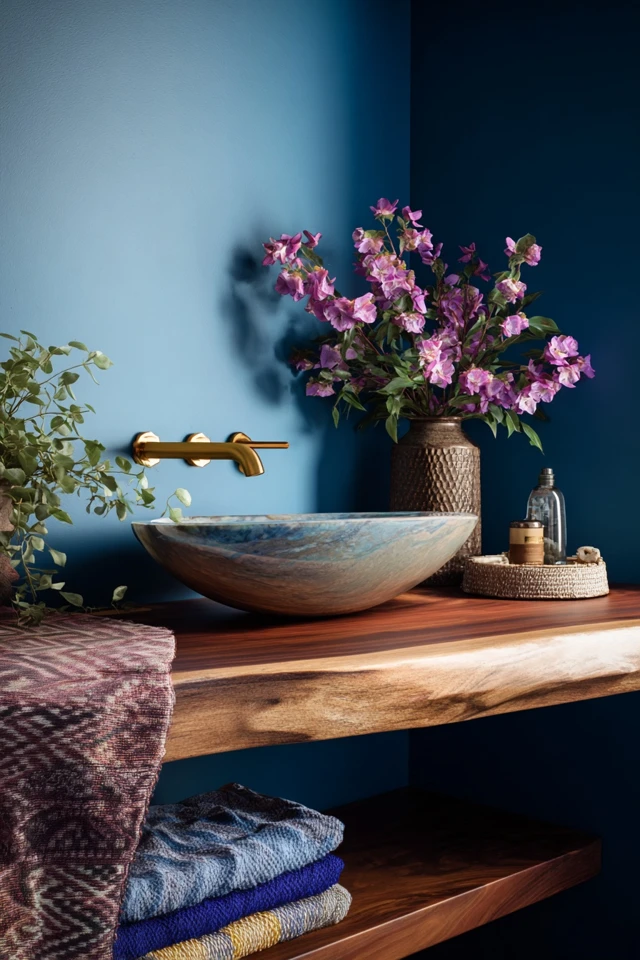
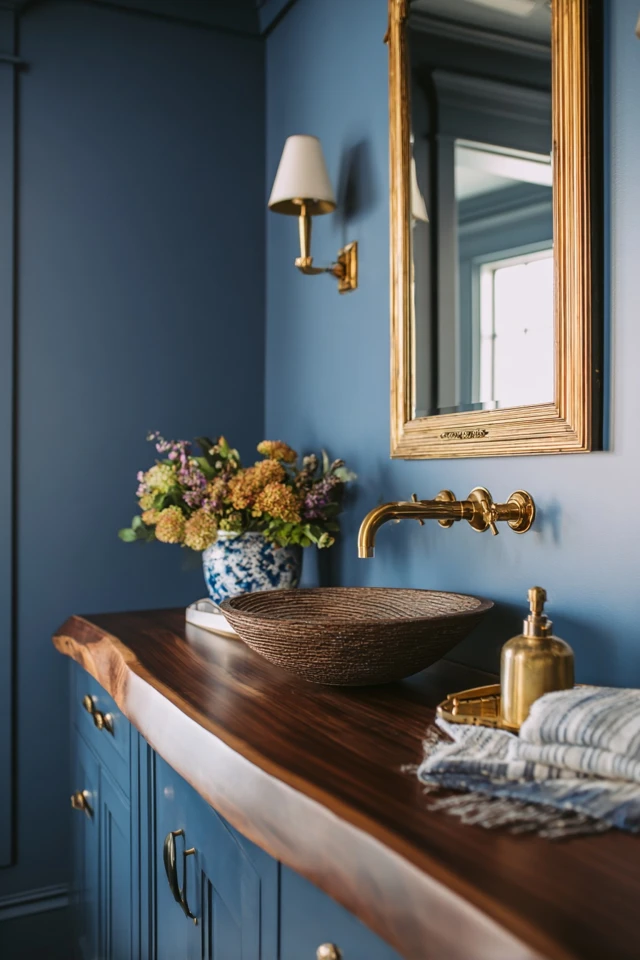
For a rustic live edge bathroom vanity, let the wood be the loudest thing in the room. Use plain white or stone-look tile, a calm wall color and one or two metal finishes. Brushed brass warms a pale wood, and black steel suits a softer palette.
Matte finishes keep glare down. Put sconces at eye level on either side of the mirror so your face isn't shadowed, and consider a narrow LED strip under a floating slab to wash the edge with light. Keep the top clear: a soap dispenser, a tray and a small plant are plenty. For more decorating angles, see live edge bathroom vanity decor and how to decorate a live edge bathroom countertop.
How do you keep it looking good?
- Wipe splashes and toothpaste right away, especially around the sink.
- Re-oil or touch up the finish on a schedule that matches the product's instructions.
- Use a mild soap and a damp cloth. Skip abrasive cleaners.
- Put a tray under bottles that leave rings.
- Run the exhaust fan during and after showers.
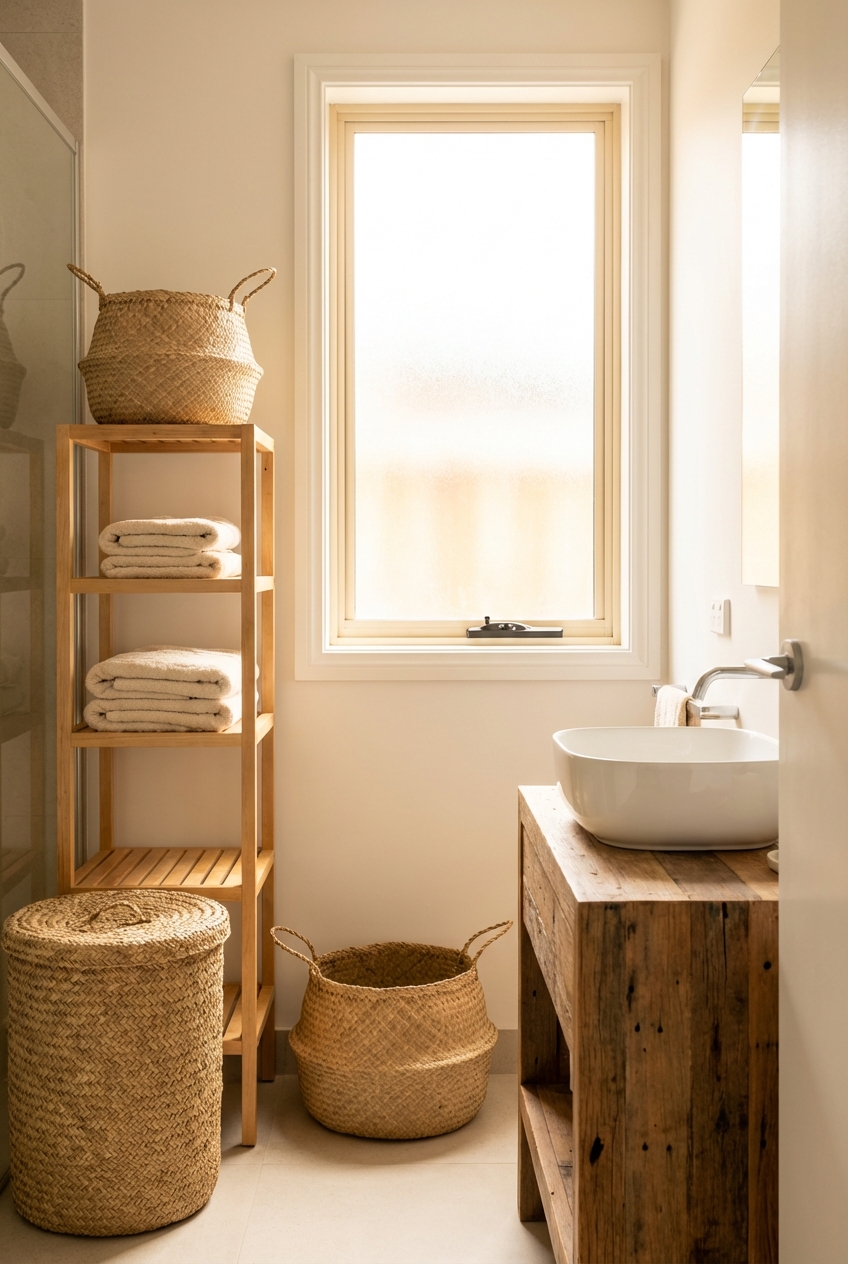
On a budget, a live edge shelf over a simple cabinet gives much of the look. A live edge countertop for bathroom use can also come from a reclaimed plank with a sealed, trimmed edge. Whichever route you take, I recommend sealing before installation, when the underside is still easy to reach.
Frequently asked questions
Can you use a live edge slab in a bathroom?
Yes, if the slab is kiln-dried, sealed on every face and kept ventilated. Dense species like walnut or white oak tend to cope better with humidity.
How do I protect a live edge vanity from water damage?
Seal the top, underside and end grain with a bathroom-rated finish, wipe up standing water and run the exhaust fan. Reapply the finish when water stops beading.
What are budget-friendly ways to get the live edge look?
Use a reclaimed plank with a sealed live edge, or put a live edge shelf above a plain cabinet. Both give the organic outline for less than a full custom slab.
How do I make a small bathroom feel larger with a heavy live edge vanity?
Float the vanity, choose a lighter wall color and keep the floor material continuous. A frameless mirror also helps the room feel open.
Filed under
ArticlesMeet the author
Written by an architect.
Julio Arco is a passionate architect with years of experience in architecture, interior design, urban design, and housing. He studied at prestigious universities across North America and Europe.

- Name
- Julio Arco
- Job
- Architect and online interior designer
- Studied
- Architecture, ITESM · Urban Design and Housing, McGill
- Partner
- Thor, Australian Shepherd
- Thor’s title
- Head of quality control