Beautiful Colors That Go With Brown Ideas for a Stylish Home
Find the colors that go with brown furniture and walls: cream, blue, green, rust and more, plus which shades to skip and how to test them at home.

By Julio Arco
Architect and online interior designer
In this post
- Which colors go best with brown furniture?
- How does brown work on the color wheel?
- What color compliments brown?
- White, cream and beige pairings
- Blue, green and other cool pairings
- Warm accents
- Paint colors for dark brown furniture
- What colors don't go well with brown?
- What makes brown pop?
- Pairing brown wood, leather and textiles
- Brown palettes by room and mood
- Frequently asked questions
Cream, warm white, soft blue, sage green and rust all work with brown. Pick one light neutral for the walls, one cool or muted color for balance, and one warm accent, and you have a palette that rarely goes wrong.
Brown is a neutral, so it's forgiving. The real decision is whether you want the room to feel airy, calm or cozy, and that tells you which partner to choose.
Which colors go best with brown furniture?
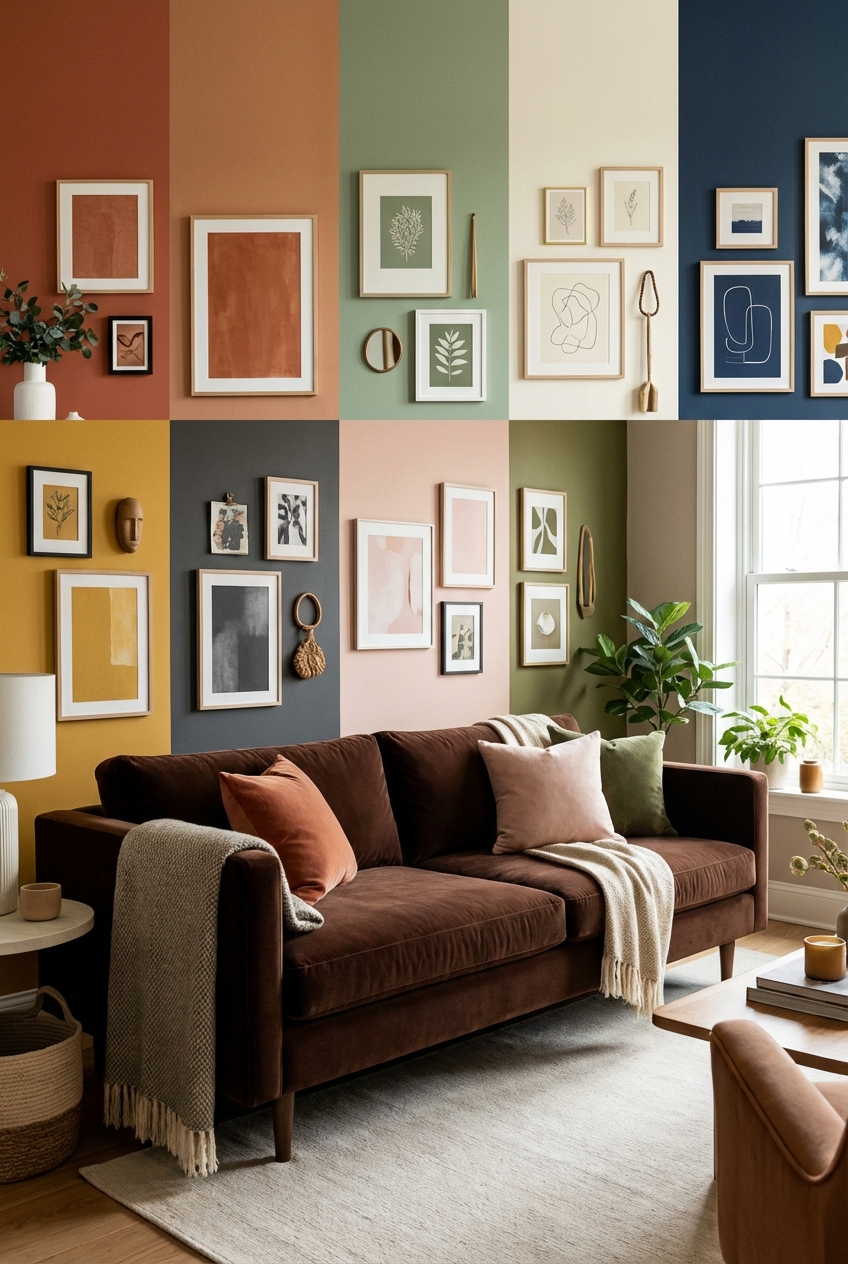
Start with the walls, because they take up the most visual space. For colors that go with brown furniture, the safest wall choices are warm whites, cream, soft beige and pale greige. They lift the room and let the wood or leather read as the star.
If you want a little more color, muted blue-gray, sage and dusty teal all sit comfortably behind brown pieces. Keep them soft. A saturated wall behind a big brown sofa tends to make both feel heavy.
How does brown work on the color wheel?
Brown is a darkened orange or red-orange, so it leans warm. Colors opposite orange on the wheel, the blues, sit across from it and give the strongest contrast. Colors next to it, such as ochre, rust and olive, give a quieter, related look.
That's a useful principle: contrast for energy, neighbors for calm. Pick based on the mood you want, not on a rule.
What color compliments brown?
Blue is the classic answer. Navy, denim and slate blue make brown look richer, and light blue keeps it from feeling dated. Green is a close second, especially sage, olive and deep forest.
Color can also affect how people respond to a space. In one study from Deakin University, Isabella Bower and colleagues reported that "blue coloring of the built environment increases autonomic range and is associated with modulations of brain activity linked to emotional processing." It's one study of a lab setup, not a promise about your living room, but it supports blue as a color that people notice and respond to.
White, cream and beige pairings
Light neutrals are the easiest route, and they matter most in small or dim rooms. Cream and warm white soften dark brown and bounce light back into the room. Cool bright white gives a crisper, more modern contrast, but it can look stark next to orange-toned wood.
Tip: hold a white swatch against your brown piece. If the white looks gray or blue next to it, choose one with a warmer undertone.
Blue, green and other cool pairings
Cool colors balance brown's warmth. Try them in larger doses (walls, curtains, a rug) when you want calm, and in small doses (pillows, art) when the room already has plenty going on.
- Navy and denim: sharp and classic against leather.
- Sage and olive: soft, natural, good with oak and walnut.
- Slate and gray-blue: modern, and good for rooms with lots of daylight.
- Teal: a livelier accent for velvet or ceramics.
Warm accents: rust, terracotta and mustard
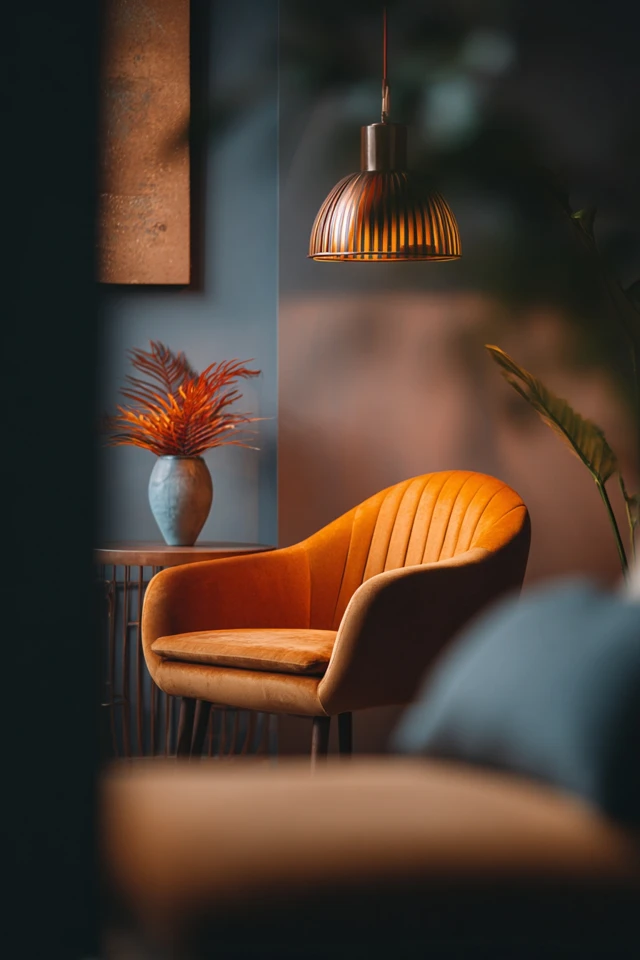
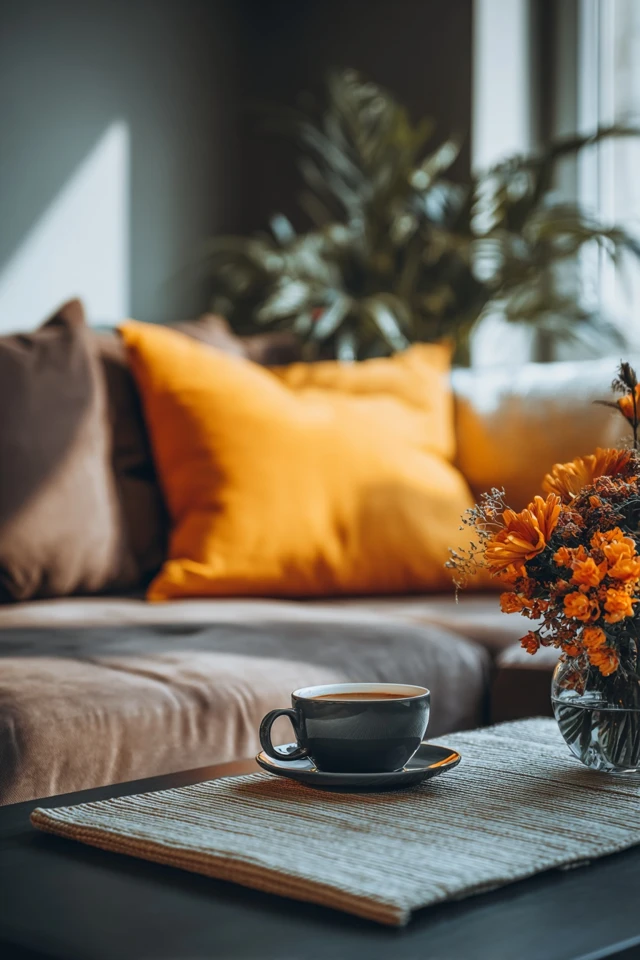
Warm colors next to brown create a cozy, layered look. Rust, terracotta, amber and clay all work, but they blur together if everything is the same depth. Vary the value: a pale wall, a mid-tone rug, and a deeper brown piece.
Terracotta planters are an easy way to add this without painting anything. If you share your home with a dog or cat, check with your vet before choosing houseplants, since some are toxic to pets.
Paint colors for dark brown furniture
Dark brown absorbs light, so the wall behind it does a lot of work. For colors that go with dark brown furniture, I recommend going lighter than you think: cream, soft sage, pale blue-gray or warm greige. Dark walls with dark furniture can look rich in a large, bright room, but in most homes they just shrink the space.
When you're choosing paint colors that go with brown furniture, buy sample pots and paint a large patch on two walls. Look at them in morning light, afternoon light and with your lamps on. The same paint reads very differently in each.
What colors don't go well with brown?
Few colors are truly off limits, but some combinations are harder to get right:
- Black with dark brown, unless there's a lighter color between them. The two merge and the room looks muddy.
- Bright, cool pinks or neon shades, which clash with brown's warm undertone.
- Mid-tone brown walls with mid-tone brown furniture, which leaves no contrast and flattens the room.
- Yellow-green that's too acidic, which can look sickly against reddish wood.
Most of these can be fixed by changing the value (lighter or darker) or the undertone, rather than dropping the color.
What makes brown pop?
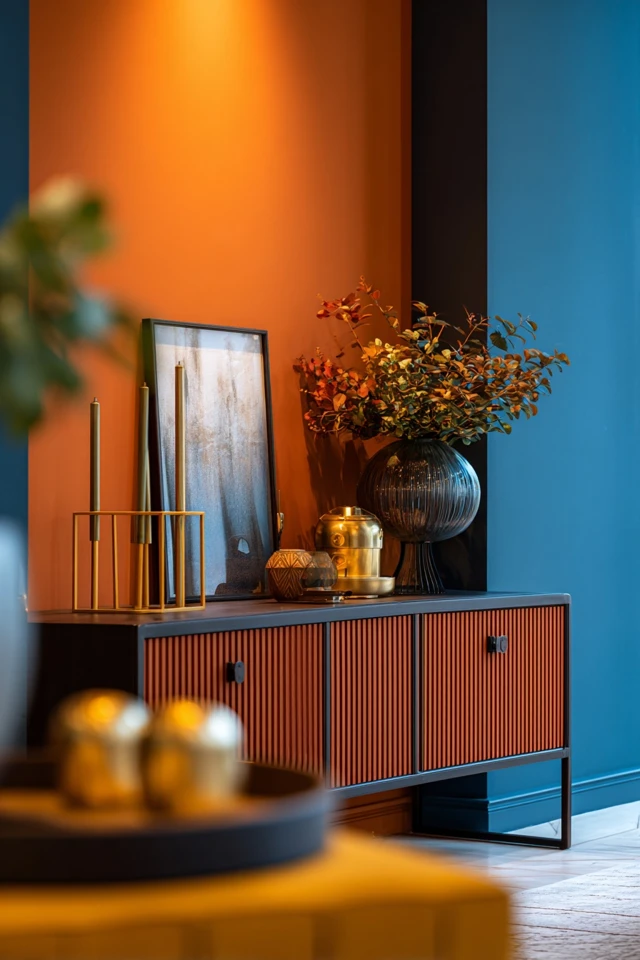
Contrast does it. Light walls, a pale rug or cream upholstery make brown stand out. Metallics help too: brass and bronze pick up brown's warmth, while brushed nickel cools it down.

Pairing brown wood, leather and textiles
Texture keeps an all-brown room from looking flat. A leather sofa, a wool throw, a linen curtain and a sisal rug each hold light differently. Glossy surfaces bounce light and create sharp highlights, while matte and woven ones absorb it and soften the room.
If you have pets, pick washable covers and tightly woven fabrics in mid-tones. Cream is lovely, but it shows everything, so I'd save the lightest shade for pillows you can toss in the wash.
For more ideas, see wall color and decor for brown furniture and more colors that compliment brown.
Brown palettes by room and mood
A simple three-color rule helps: one dominant color, one secondary, one accent, roughly 60-30-10. Brown can be any of the three.
- Calm living room: cream walls (60), brown sofa (30), sage accents (10).
- Cozy den: warm greige walls, brown leather, rust and brass. A TV room suits this well.
- Fresh and modern: white walls, walnut furniture, navy and black in small touches.
- Workspace: soft blue-gray walls and brown wood, as in a home office where you want focus without a cold look.
Whatever you choose, test it at different times of day and let the lighting decide the final shade.
Frequently asked questions
What color compliments brown?
Blue is the classic complement, from navy to soft blue-gray. Cream, sage green and rust also pair well, depending on how bright or cozy you want the room.
What color makes brown pop out?
Light, high-contrast colors such as cream, warm white and pale blue make brown stand out. Brass or bronze accents add a warm highlight.
What is the 3 color rule?
It's a guideline of using one dominant color, one secondary and one accent, often in a 60-30-10 split. Brown can fill any of those roles.
What colors don't go well with brown?
Black next to dark brown, neon or cool bright pinks, and mid-tone brown on both walls and furniture tend to look muddy or clash. Adjusting value or undertone usually fixes them.
Filed under
ArticlesMeet the author
Written by an architect.
Julio Arco is a passionate architect with years of experience in architecture, interior design, urban design, and housing. He studied at prestigious universities across North America and Europe.

- Name
- Julio Arco
- Job
- Architect and online interior designer
- Studied
- Architecture, ITESM · Urban Design and Housing, McGill
- Partner
- Thor, Australian Shepherd
- Thor’s title
- Head of quality control