French Country Tile Floors: Materials, Layout and Grout

By Julio Arco
Architect and online interior designer
In this post
- Which materials look like French country tile?
- What finish, edge and color should you choose?
- What tile size and grout width work best?
- What to put on the floor for decor once the tile is down
- How do you install a French country tile floor?
- How does the style change from room to room?
- What does it cost, and how do you care for it?
- Frequently asked questions
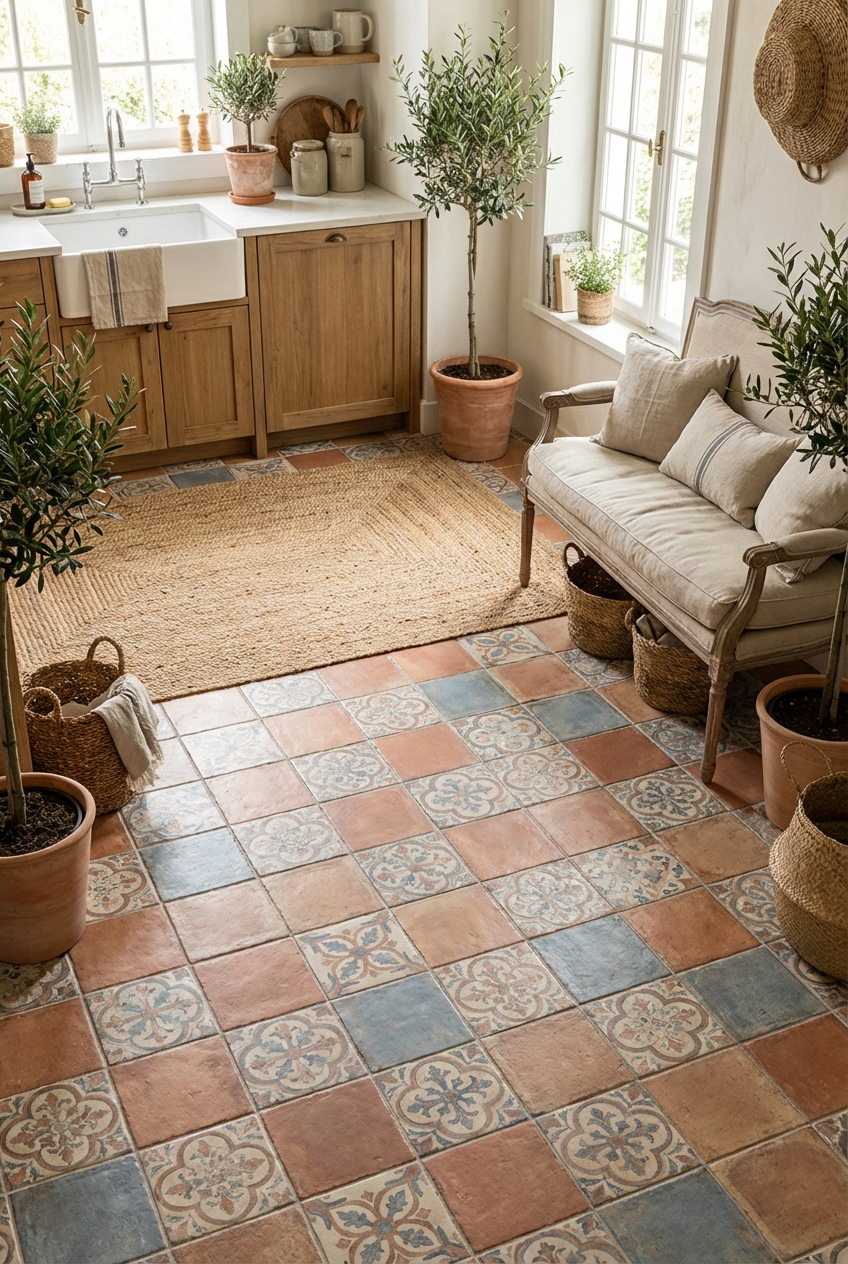
A French country tile floor comes down to three choices: a natural material such as terracotta or limestone, a matte or tumbled finish, and warm color that varies from tile to tile. Get those right and the floor looks like it has been there for a century, which is exactly the goal.
It also suits busy households. Texture and slight variation hide crumbs, paw prints and small scratches far better than glossy, uniform tile does.
Which materials look like French country tile?
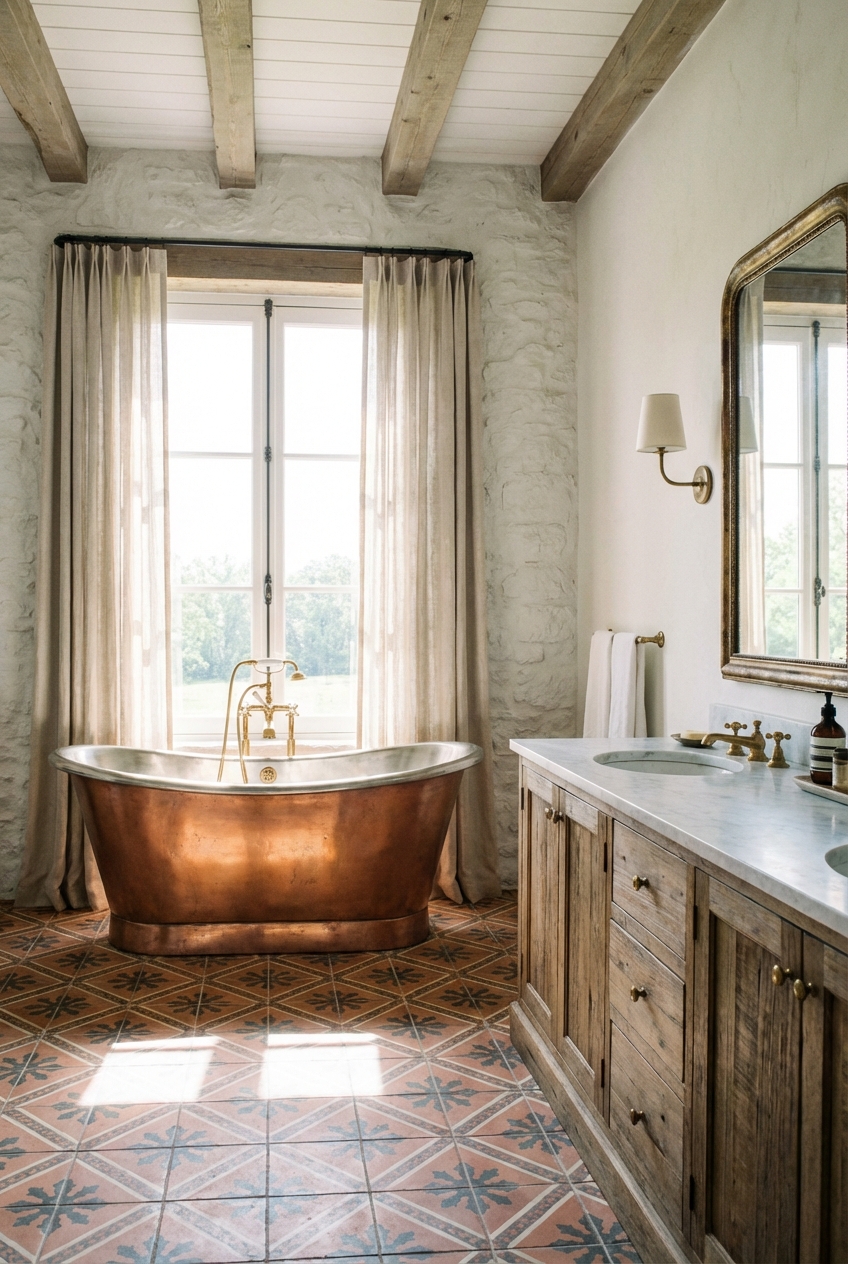
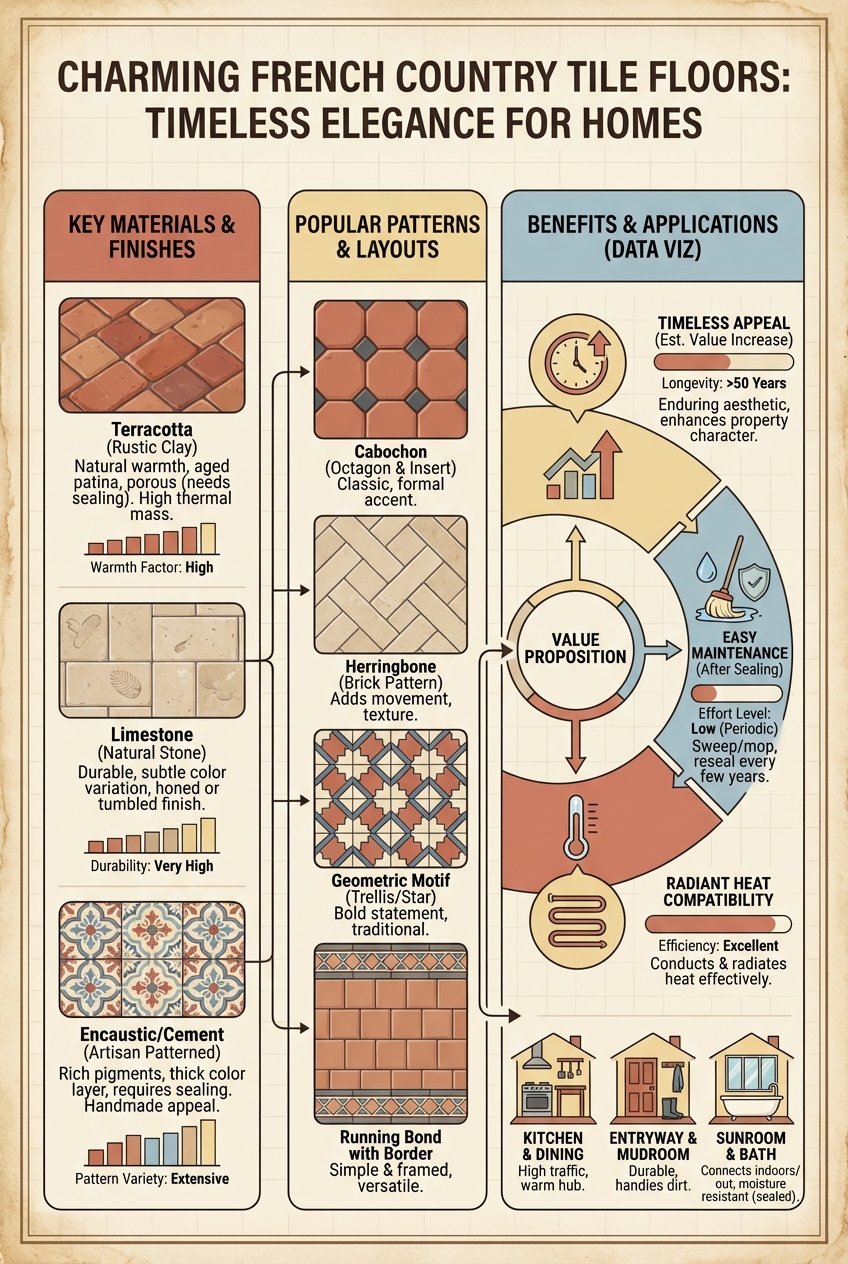
Terracotta, limestone and tumbled travertine or marble are the classic choices. Stone-look porcelain is the practical stand-in.
Terracotta runs from pale peach to deep burnt orange. It is porous and feels warmer underfoot than standard glazed ceramic, so it suits kitchens and sunrooms. It needs sealing to resist stains.
Limestone is the quieter option, usually in creams and tans, sometimes with fossil marks in the surface. It gives antique wood furniture a calm backdrop. Stone-look porcelain copies both looks, is non-porous and needs less upkeep, so it works well if you want the style without the sealing routine.
What finish, edge and color should you choose?
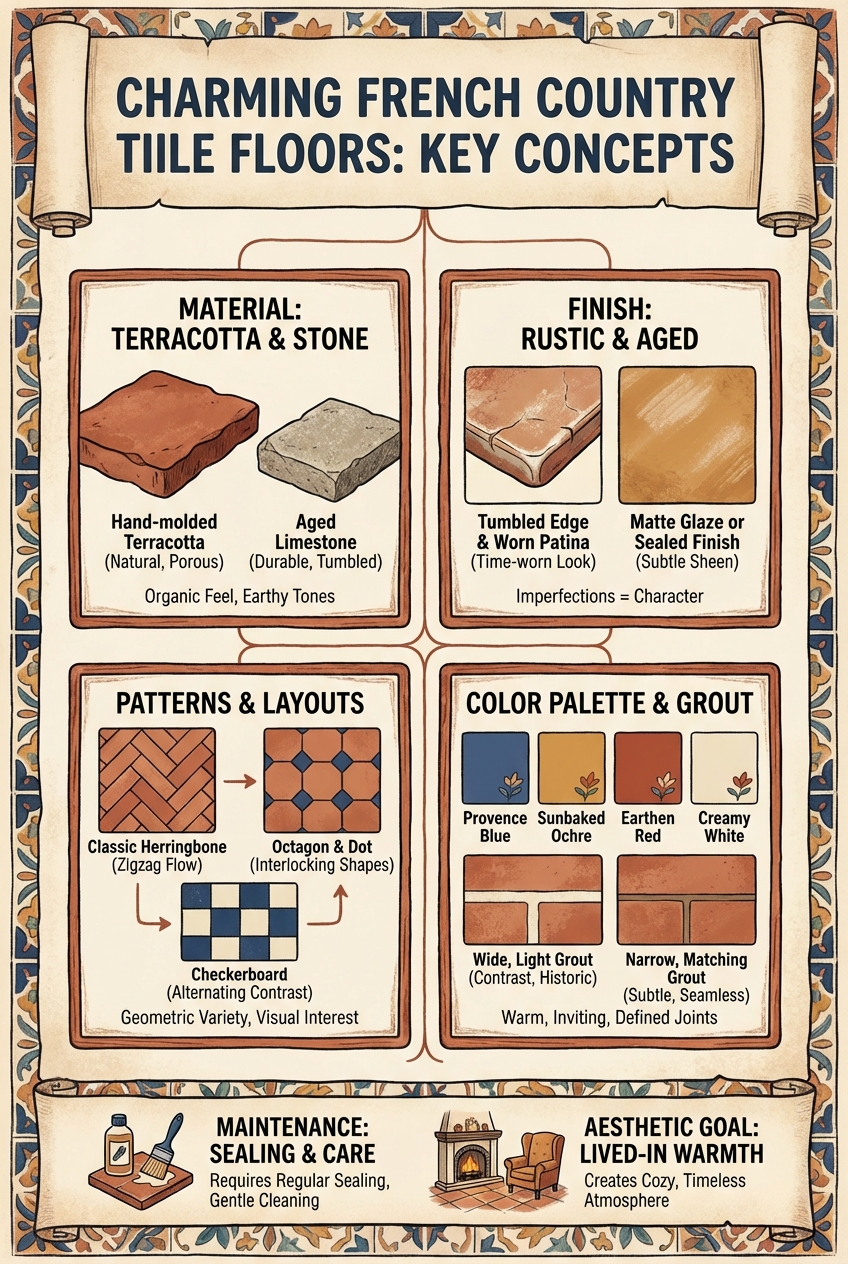
Pick honed, matte or tumbled surfaces. Tumbled and pillowed edges are softer than sharp, rectified ones, and they allow slightly wider grout lines that read as old-world. A polished finish reflects light in sharp glints and pushes the room toward a showroom look, the opposite of what you want here.
Look for tonal movement. Within one box you should see three or four slight shade differences, so the floor doesn't look like a printed sheet.
For the best color combination for floors and walls, keep the floor warm (ochre, cream, muted brick) and put walls a step lighter, in chalky white, soft cream or a pale gray. If the room faces north, choose warmer floor tones, because cool light turns gray stone colder. Look at samples in your own room, morning and evening, before you order.
What tile size and grout width work best?
In a small room, larger tiles such as 12x12 or 16x16 inches mean fewer grout lines, so the floor feels calmer and the room a little bigger. In a large kitchen or great room, 16x24 inch rectangles or a multi-size Versailles pattern look right.
Aim for a grout joint of about 3/16 to 1/4 inch in a color close to the dust or sand tones in the stone. Bright white grout draws a grid across the floor and looks too modern. Ask the installer for a grout mockup on two sample tiles, because grout dries lighter than it looks wet.
Small tiles still have a place. Use 4x4 or 6x6 pieces as an inset panel under the table and keep larger tile for the main field.

What to put on the floor for decor once the tile is down
A wool or flat-weave rug is the obvious answer, and it softens a hard floor for bare feet and paws. As an architect, I'd leave a visible band of tile around it, roughly 12 to 18 inches to the wall in a larger room, so the floor still frames the space.
Rugs on tile can slide. A review of rug and carpet injuries from the National Institutes of Health notes that loose throw rugs and area carpets with curled edges or folds are among the factors most often cited as unsafe and as raising fall risk. Use a proper rug pad and replace any rug whose corners curl. If furniture is the thing that creeps, see how to stop your sofa from sliding on tile floors.
Other floor decoration ideas that suit this style: a large clay pot with an olive tree, painted cane-back chairs, and unlacquered brass or wrought iron hardware, whose aging finish echoes the tile. If you have a plant-chewing dog or cat, check with your vet before choosing plants.
How do you install a French country tile floor?
Stone is heavy and brittle, so I recommend a licensed tile installer unless you have done this before. The order of work matters more than any single product.
- Choose the material: real stone for texture and longevity, or stone-look porcelain for easier care and a tighter budget.
- Dry lay at least three boxes on the floor and mix them so dark and light tiles are spread evenly.
- Prepare the subfloor. It must be level and stiff, since any flex cracks stone. An uncoupling membrane helps protect the tile from small movements.
- Use white thin-set under light limestone. Gray mortar can bleed through porous stone and stain it.
- Apply a pre-sealer or grout release to terracotta and limestone before grouting, so the grout pigment doesn't settle in the pores.
- Grout, then clean with a damp, not soaking, sponge. A flush joint, level with the tile, suits the rustic look.
- Once the grout cures, apply two coats of penetrating sealer.
If you are renovating fully, consider electric underfloor heating under the tile, installed by a licensed electrician. Stone is cold in winter. Also compare the tile thickness (often 1/2 to 3/4 inch) with the neighboring floor, so you don't create a tripping lip at the doorway.
How does the style change from room to room?
Kitchen
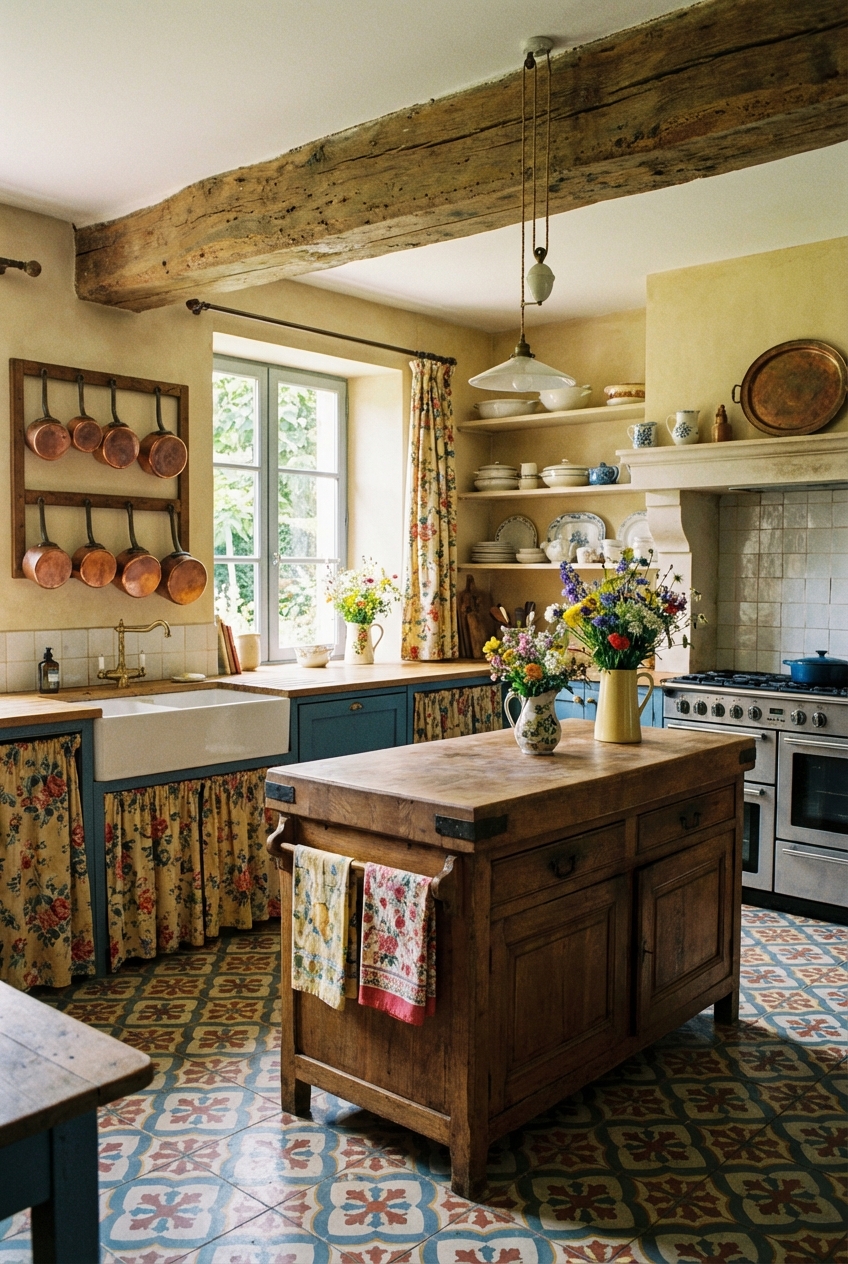
Tumbled limestone in a Versailles pattern in a mid-toned tan or gray hides crumbs, dog hair and water spots. It pairs naturally with the cabinets and details in these vintage French country kitchen ideas.
Mudroom or entry
This is the place to go rustic: brick-look tile or terracotta hexagons, with a darker grout that hides tracked-in dirt.
Bathroom
Use the same stone in two sizes, for instance larger rectangles on the floor and a small mosaic in the shower, where more grout lines give better grip. For wet areas, ask for the tile's DCOF slip rating and look for 0.42 or higher. More bathroom styling is in modern French country bathroom design ideas.
Sunroom or patio
A thick terracotta or gauged slate can run from inside to the terrace and make the two spaces read as one.
What does it cost, and how do you care for it?
Materials-only ranges vary by region, but roughly: stone-look porcelain at $3-$7 per square foot, authentic travertine, limestone or Saltillo terracotta at $10-$20, and reclaimed French stone or antique brick at $35-$100 or more, plus shipping and specialist installation.
Clean with a pH-neutral stone cleaner and a damp mop. Skip vinegar and bleach, which can damage sealer and stone. For shine on porcelain, these steps to make tiles shine apply.
Before you commit to real stone, do a stain test: put a spoonful of red wine on a sample, wait 15 minutes and wipe it off. It shows you how much sealing and care that tile will need.
Frequently asked questions
What is the best color combination for floors and walls?
With warm terracotta or limestone, walls in soft cream, chalky white or pale gray usually work well. Keep the wall slightly lighter than the floor so the stone stays the focus.
What to put on the floor for decor?
Rugs are the most common choice, but a pad underneath and a visible band of floor around the edge matter. Potted plants and a wooden bench or chairs add warmth without covering the tile.
Can I install French country tile over existing tile?
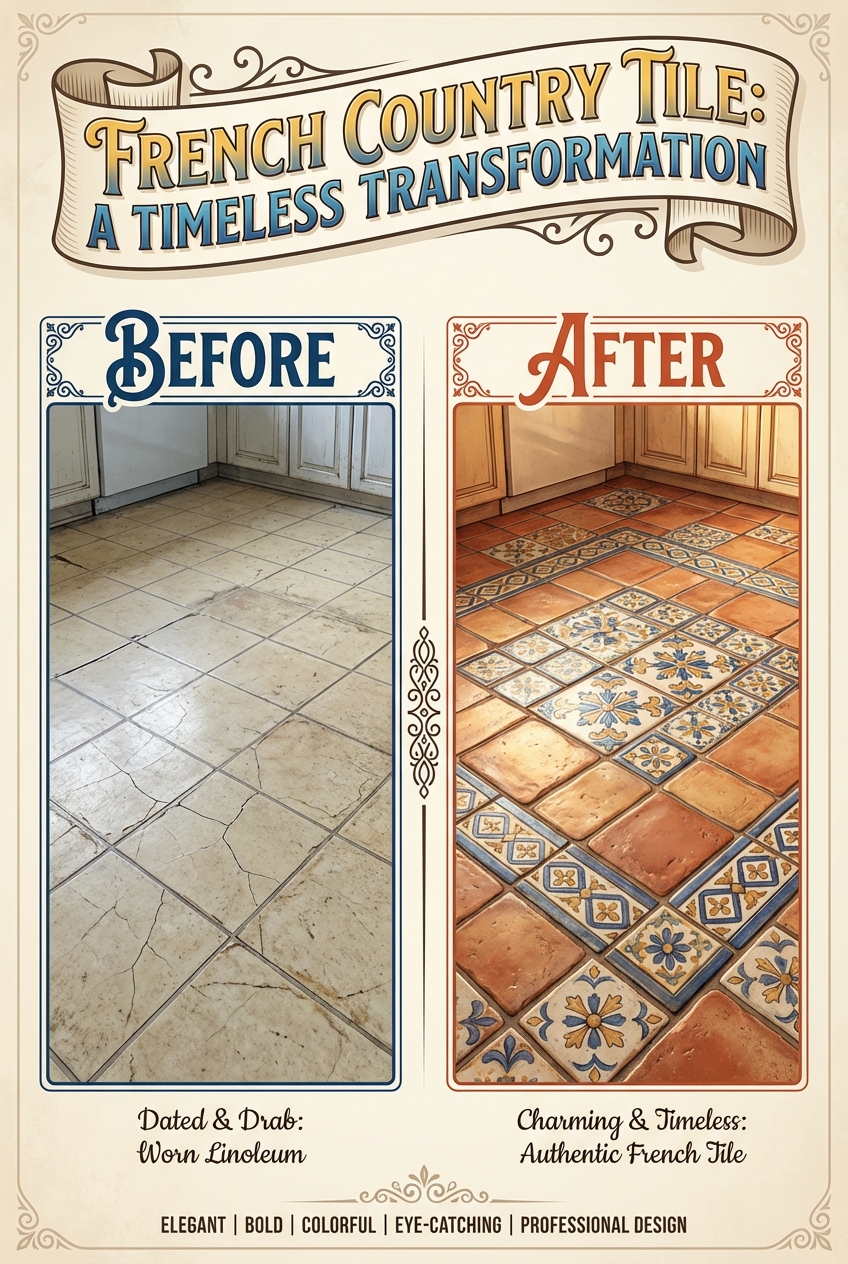
It is possible, but heavy, thick stone adds height that causes trouble at doors and baseboards. Removing the old floor is usually the cleaner result.
Will the grout turn dark over time?
Unsealed grout and a very wet mop push dirt into the joints. Sealing it and mopping with a well-wrung mop slows this, and epoxy grout is a more stain-resistant option.
Filed under
ArticlesMeet the author
Written by an architect.
Julio Arco is a passionate architect with years of experience in architecture, interior design, urban design, and housing. He studied at prestigious universities across North America and Europe.

- Name
- Julio Arco
- Job
- Architect and online interior designer
- Studied
- Architecture, ITESM · Urban Design and Housing, McGill
- Partner
- Thor, Australian Shepherd
- Thor’s title
- Head of quality control