Modern French Country Bathroom Design Ideas

By Julio Arco
Architect and online interior designer
In this post
- How to choose bathroom style
- What are the signature ingredients?
- What sizes and proportions keep it looking right?
- How do you recreate the look step by step?
- Where does mixing bathroom styles help, and where does it hurt?
- What mistakes should you avoid?
- How does it change room by room?
- What finishing touches complete the room?
- Frequently asked questions
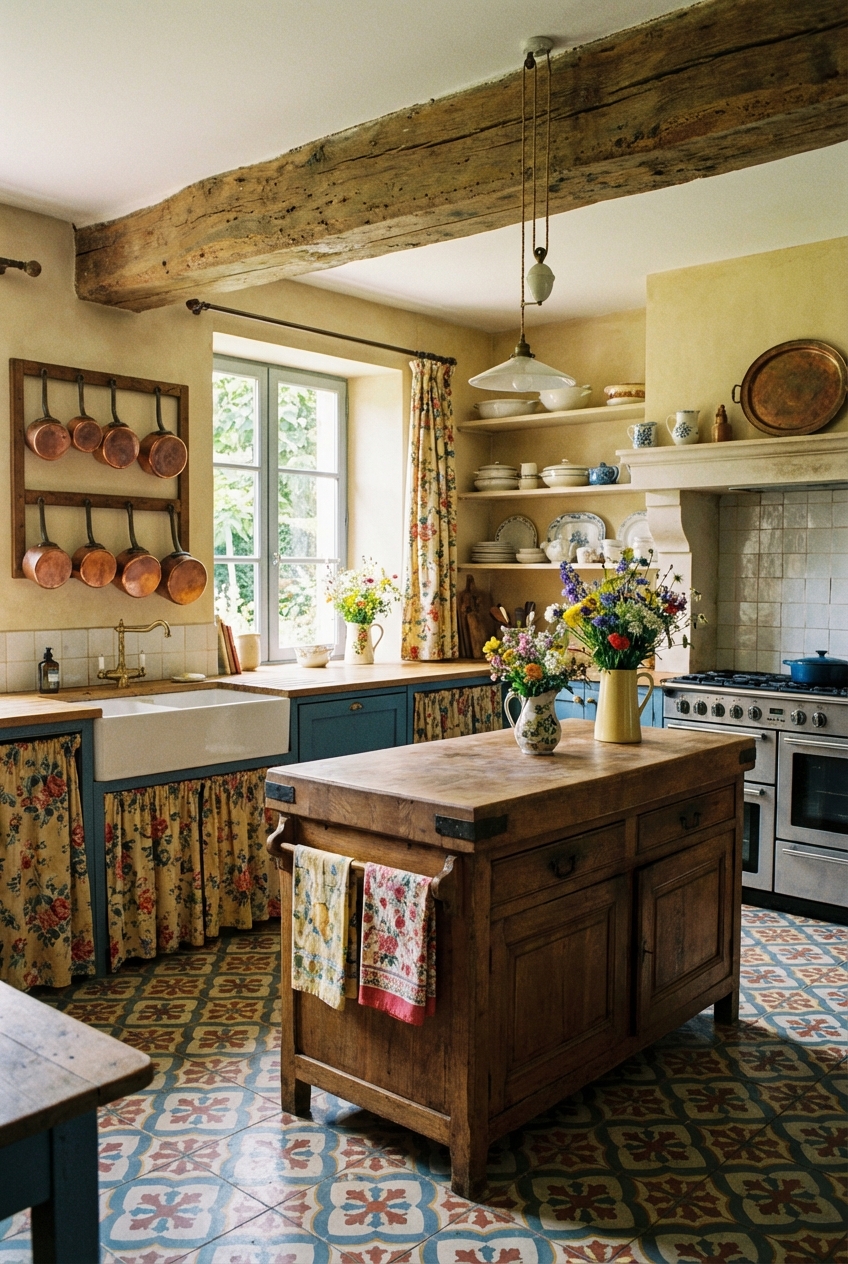
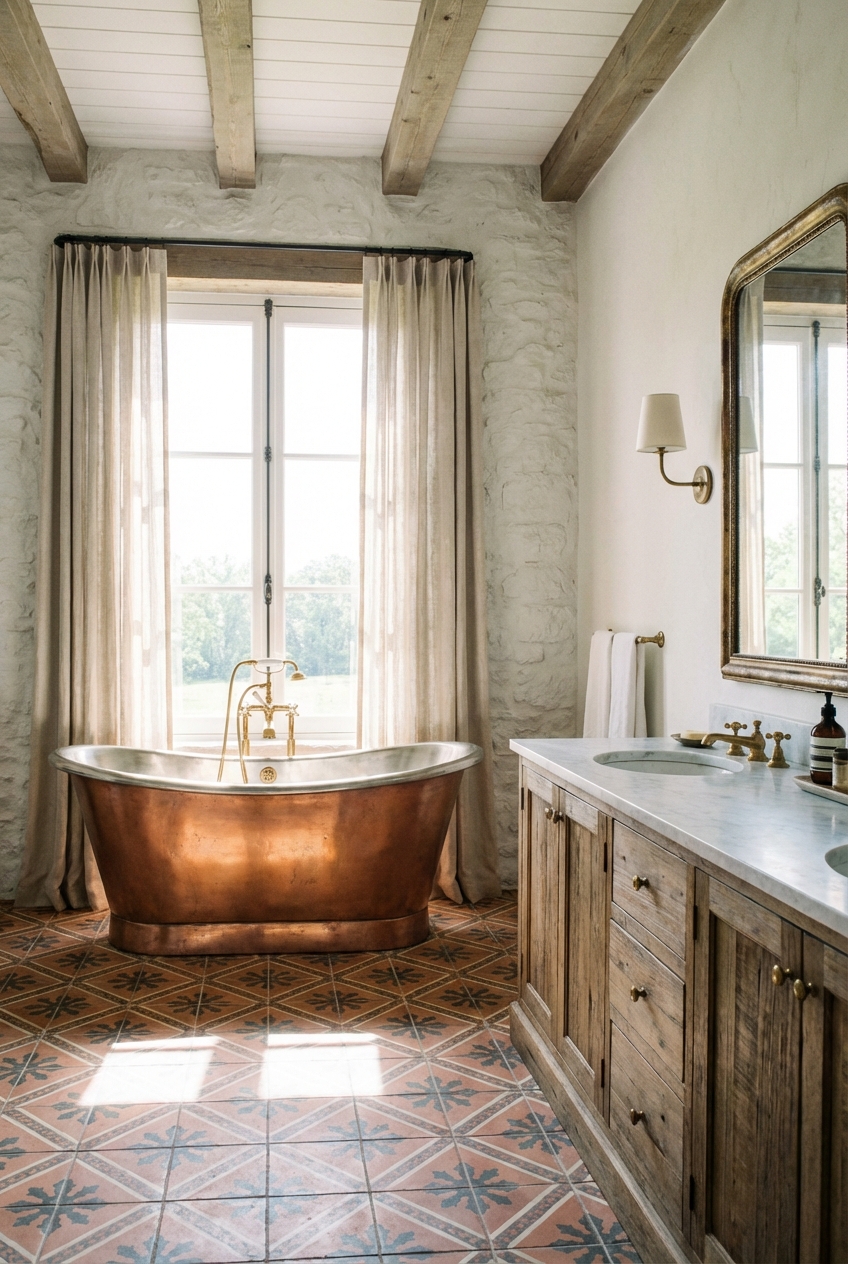
A modern French country bathroom pairs warm, weathered textures (aged brass, tumbled stone, a vanity that looks like furniture) with clean lines and very little clutter. Think warm whites, one or two natural materials, soft light and a single vintage piece per zone.
It sits in the middle of rustic and sleek, which makes it a close cousin of transitional bathroom design. Below you'll find the palette, the materials, the measurements that keep it looking intentional, and the mistakes that make it feel fussy.
How to choose bathroom style: is French country right for you?
If clinical, all-white bathrooms feel cold to you but heavy farmhouse looks feel dated, this style is a sensible middle. It also suits older homes, where a furniture-like vanity and a tumbled floor respect the architecture, and it gives new construction some character.
It's forgiving, too. Matte finishes, patinated metal and textured stone hide fingerprints, water spots and daily wear better than high-gloss surfaces. If you have kids, or a dog that insists on supervising bath time, that matters.
If you've looked at rustic bathroom ideas and found them too dark or too chunky, French country is the lighter version: pale walls, softer wood tones, refined hardware.
What are the signature ingredients?
A vanity that looks like furniture
Skip the standard toe-kick cabinet. Look for a vanity with legs, a washstand shape or open shelving underneath. A vintage dresser or sideboard converted with a stone top and a sink is a good budget route, as long as the top is sealed against water.
Natural stone, or a good imitation
Marble is the classic choice, and it will etch (dull in spots) when acidic products touch it. In this style, that softening reads as patina. If you want a surface that stays the way it was installed, porcelain tile that mimics limestone or travertine is a calmer option, especially in a kids' bath. Soapstone is another traditional pick, though Iowa State University Extension notes that it needs regular oiling even though it doesn't need sealing.
Wood you can see
A beam, a floating shelf or a stool next to the tub brings in the warmth. Aim for light to medium oak or weathered pine instead of dark cherry or mahogany, which can make a small room feel closed in.
Metals with a living finish
Unlacquered brass and polished nickel age gracefully. A bridge faucet, where an exposed pipe joins the hot and cold handles, is the most recognizable French country detail. If you shop for one, look for the WaterSense label: the EPA says a bathroom remodel with WaterSense fixtures can save nearly 10,000 gallons of water every year.

What sizes and proportions keep it looking right?
Most failed bathroom makeovers come down to scale, not taste. These are established rules of thumb:
- Vanity height is usually 34 to 36 inches. With a vessel sink, choose a lower base so the rim doesn't end up too high.
- Allow about 30 inches of width per person at a double vanity so nobody bumps elbows.
- Mount sconces at about 60 to 66 inches above the floor, one on each side of the mirror, to light the face evenly. Overhead recessed lights alone cast shadows under the eyes and chin.
- Give a freestanding tub roughly 12 inches of clearance from walls where you can. In a small room, a back-to-wall freestanding tub gives the look without a gap that's impossible to clean.
- Keep a vanity runner a few inches shorter than the vanity on each end.
On rugs, I recommend thin, flat-woven or low-pile ones with a non-slip pad. The U.S. Access Board points out that thick, cushiony or loose carpet impairs accessibility, particularly for wheelchair maneuvering, and a thick bath rug is also easy to trip on.
How do you recreate the look step by step?
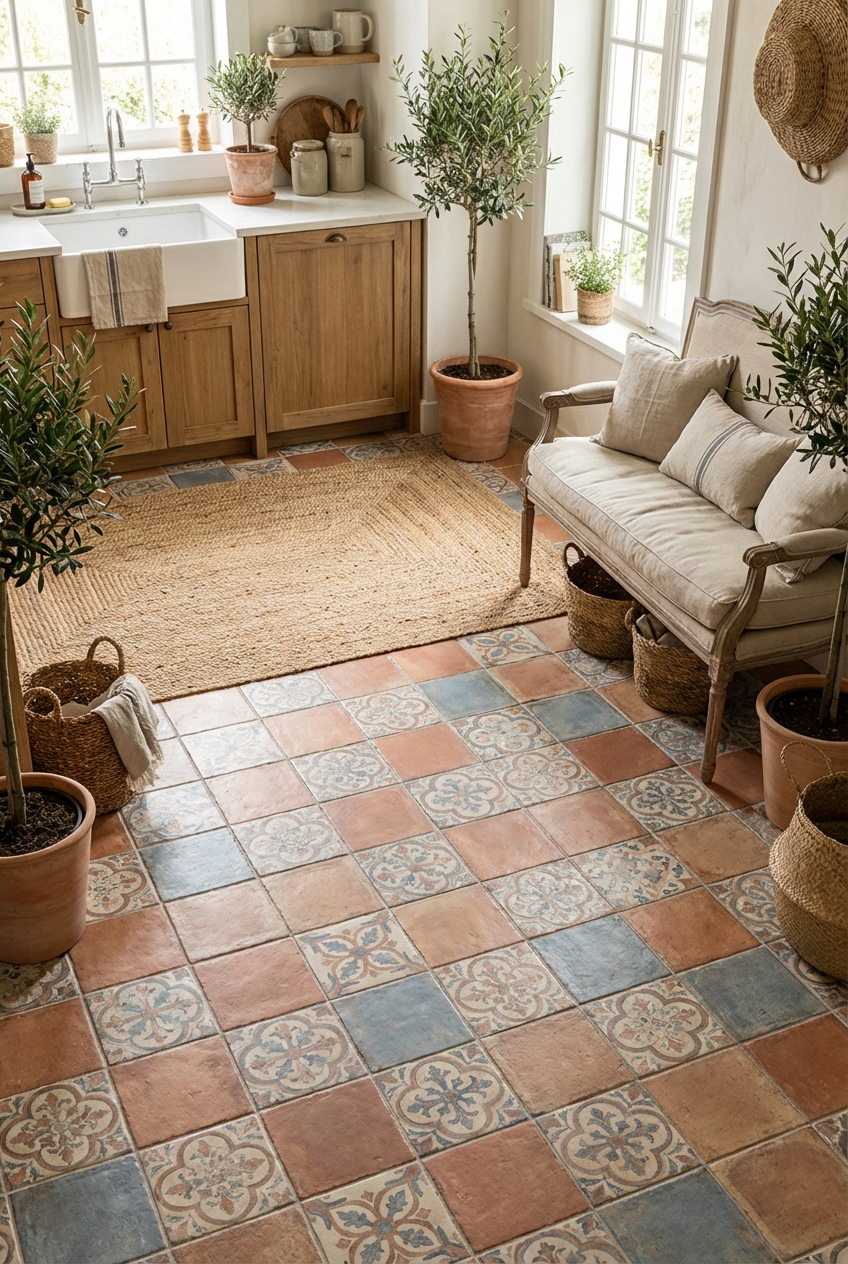
- Start with the floor. Tumbled marble or matte hex tile fits best. Glossy tile looks too contemporary and gets slippery when wet.
- Choose the anchor piece, either the vanity or the tub. A clawfoot tub in matte white, soft grey or sage sets the tone right away.
- Pick a primary metal for the faucet and shower fixtures, then repeat it on hooks and hardware.
- Soften with textiles: linen Roman shades, waffle-knit or Turkish towels, a small upholstered stool. If you want window ideas beyond shades, see these window treatment ideas for French doors.
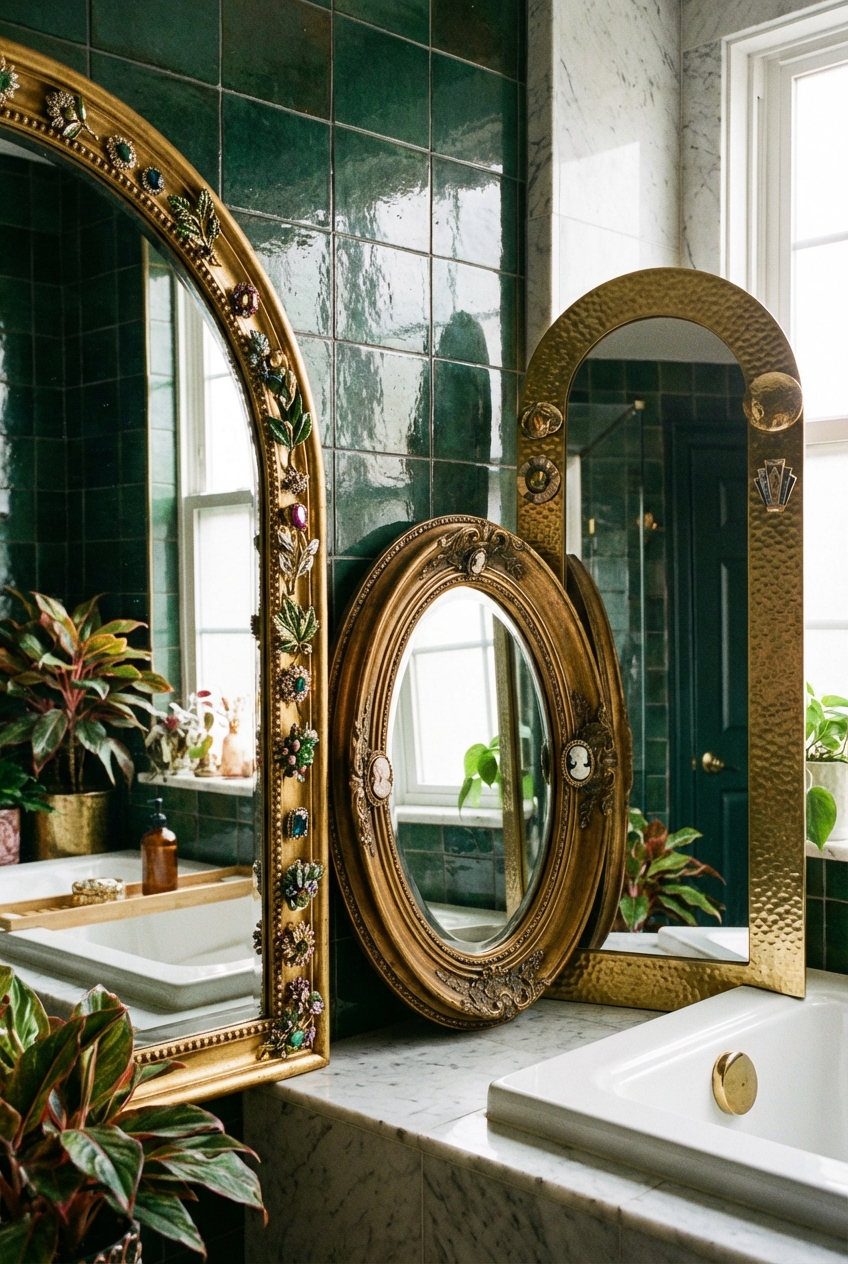
- Add one or two genuine vintage items, such as a gilded mirror, botanical prints or a stoneware crock for toothbrushes.
Where does mixing bathroom styles help, and where does it hurt?
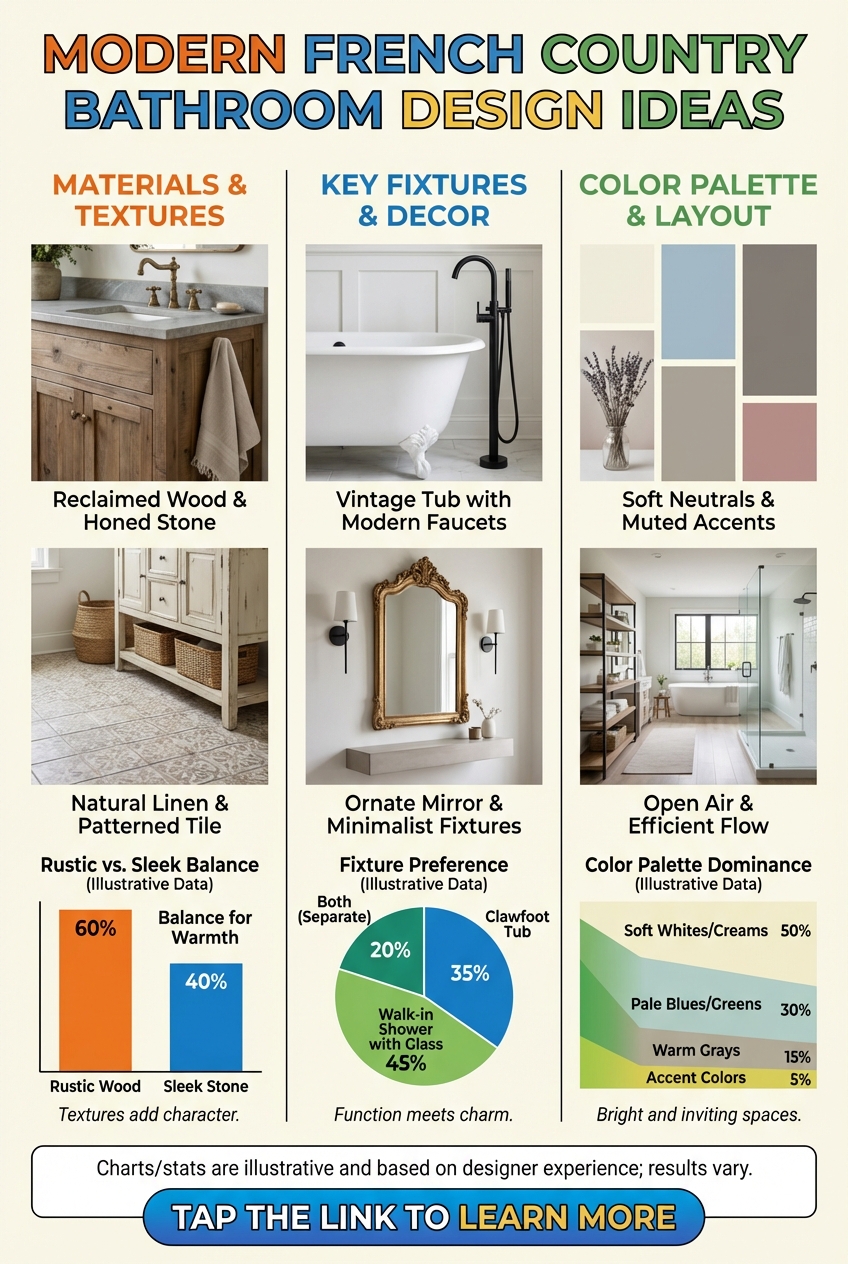
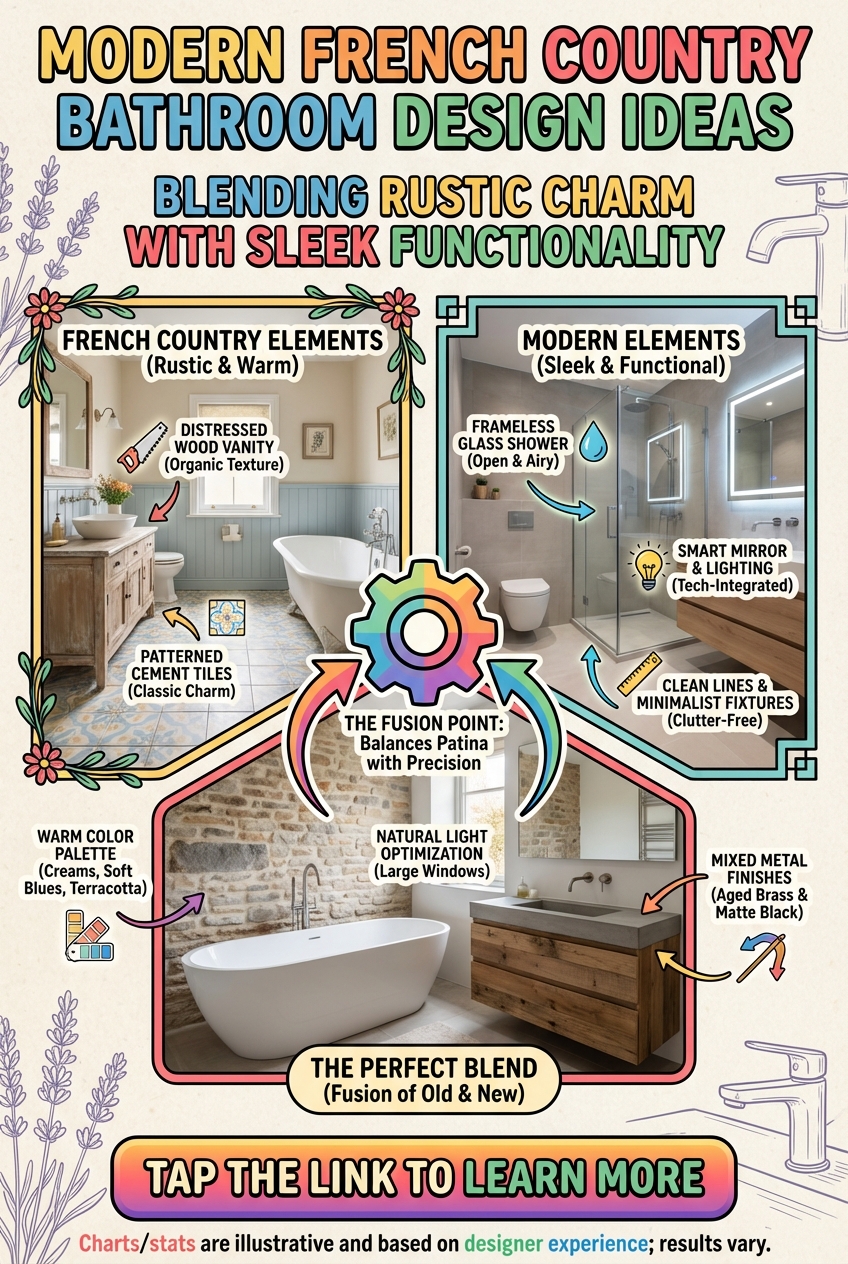
Mixing bathroom styles is what makes this look modern. The trick is contrast: pair a rustic reclaimed-wood vanity with a clean marble top and simple lighting, or rough plaster walls with a smooth, modern tub. As an architect, I'd allow one distressed or very old-looking element per zone and keep everything else quiet.
Metals follow the same logic. Brass faucet, iron or nickel lights: the variety looks collected over time. If you want a more streamlined cousin of this look, compare it with a mid-century modern bathroom, where lines are cleaner and wood is warmer and darker.
What mistakes should you avoid?
- Cool white bulbs. Use about 2700K to 3000K. Daylight bulbs at 4000K or higher can make warm wood and brass look grey or green.
- Matching every metal. A single finish everywhere looks like a showroom.
- Forgetting storage. Furniture vanities and freestanding tubs have less built-in storage, so add a linen cabinet, a ladder shelf or an open cabinet for towels.
- Bright white grout with aged-look tile. It creates a harsh grid. A biscuit, linen or silver-grey grout blends better.
- Over-distressing. Distressed vanity, mirror and shelves together look cluttered, not old.
How does it change room by room?
Powder room
With no shower moisture, you can go bolder: a floral wallpaper or a deep sage paint, and more delicate antiques.
Primary bath
Among master bathroom styles, French country works well because it leans toward a spa feel. Keep it airy, give the tub its own zone and, if two people share the room, use a double vanity.
Guest or kids' bath and small bathrooms
Choose durable surfaces: wood-look porcelain floors, a quartz top that resists toothpaste and makeup stains, simple shaker doors. In a small room, a vanity on legs shows more floor, which makes the space feel larger, and light colors keep it open. If walls need some interest, wainscoting adds French character without much bulk.
What finishing touches complete the room?
- White or cream waffle-knit or linen-trimmed towels.
- Glass or ceramic soap dispensers instead of branded plastic.
- A sprig of eucalyptus or a small olive tree in a terracotta pot. If a pet shares the home, check any plant with your vet first.
- One oversized landscape or a few small sketches in gold frames.
- Knobs with knurled or beaded edges for a tactile detail.
For the floor, French country tile floors are a good place to find pattern ideas that match the rest of the room.
Frequently asked questions
Can I do French country in a small bathroom?
Yes. A vanity on legs shows more floor, which makes the room feel bigger. Stick to a light palette and limit wood and stone to one or two pieces.
Is marble too high-maintenance for a bathroom?
Marble etches when it meets acidic products, so it suits you only if you like a worn, lived-in surface. If you want it to stay unchanged, porcelain or quartz that mimics marble is easier to live with.
What is the best paint color for a French country bathroom?
Warm whites and creams with a slight yellow or red undertone work better than blue-leaning whites. Soft greys, sage and dusty blue are good secondary colors.
How do I make it feel modern and not just old?
Keep the layout simple, use clean-lined glass shower enclosures and avoid heavily ornate or scalloped cabinetry. Let one vintage element carry the old-world feel.
Filed under
ArticlesMeet the author
Written by an architect.
Julio Arco is a passionate architect with years of experience in architecture, interior design, urban design, and housing. He studied at prestigious universities across North America and Europe.

- Name
- Julio Arco
- Job
- Architect and online interior designer
- Studied
- Architecture, ITESM · Urban Design and Housing, McGill
- Partner
- Thor, Australian Shepherd
- Thor’s title
- Head of quality control