Corner Drawers Makeover: Easy Ideas for Beginners
A beginner-friendly corner drawers makeover: sand, prime and paint the fronts, swap the pulls, add an accent wall behind them and organize the insides.

By Julio Arco
Architect and online interior designer
In this post
- What do you need for a corner drawers makeover?
- How do you prep and paint the drawer fronts?
- Which color and finish work best in a corner?
- How do you choose pulls that fit the scale?
- Can an accent wall make the drawers look better?
- How should you organize inside the drawers?
- How do you keep the corner feeling finished?
- Frequently asked questions
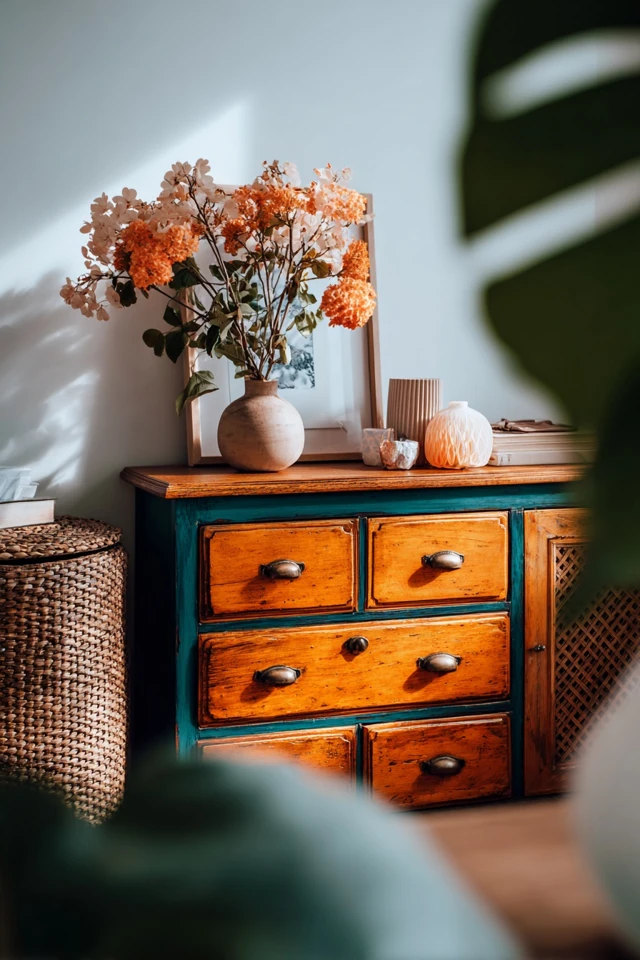
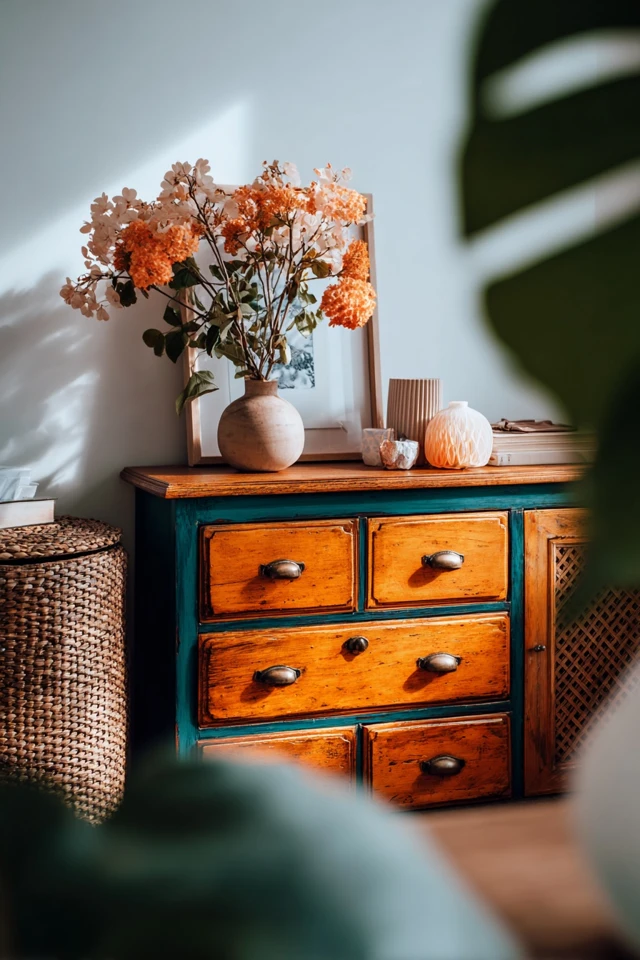
A corner drawers makeover is a weekend project: remove the pulls, sand lightly, prime, paint the fronts with a durable furniture paint, add new hardware and sort what's inside. You don't need special skills, and most of the result comes from two choices, the color and the pulls.
Corner units get overlooked because they sit where two walls meet and nobody looks there on purpose. That's also why they're a forgiving first project. If a coat goes on a little uneven, it's hardly the center of the room.
What do you need for a corner drawers makeover?
Gather the basics before you start so you don't stop halfway with a half-painted dresser:
- Screwdriver and a zip bag for screws
- Fine sandpaper (about 180-220 grit) and a tack cloth or damp rag
- Bonding primer
- Furniture or cabinet paint in satin or semi-gloss
- A small foam roller and an angled brush
- New pulls, plus a tape measure to match the hole spacing
- Painter's tape and a drop cloth
Measure the corner, the drawer depth and the clearance around the unit first. Sketch where things will go. Five minutes with a tape measure saves a lot of second-guessing later.
How do you prep and paint the drawer fronts?
Take the drawers out, remove the hardware and clean off grease and dust. Sand just enough to dull the old finish, wipe it down, then prime. Two thin coats of paint beat one thick coat every time, and thin coats don't drip or show roller marks.
Let each coat dry as long as the can says, and let the paint cure before you stack things inside. Fresh paint scratches and sticks easily. Keep the room ventilated, choose a low-VOC, water-based product when you can, and keep pets out of the room until it's dry.
Which color and finish work best in a corner?
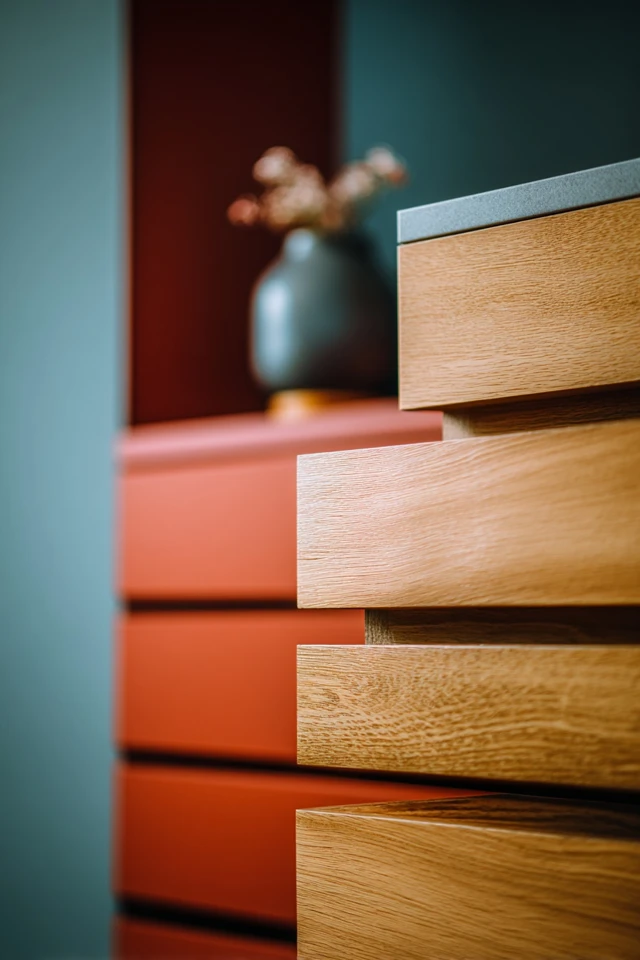
Light colors reflect more light and make a tight corner feel more open. Warm neutrals like cream or soft taupe feel cozy. If you want a focal point, a muted green, terracotta or navy on the drawer fronts adds personality without taking over the room.
Finish matters as much as color. Glossy and semi-gloss surfaces bounce light and show fingerprints. Matte and satin finishes absorb light, soften shadows and hide smudges, which is useful on drawers you open daily. As an architect, I'd go with satin for a first project: it's easy to wipe clean and forgiving to apply.
Paint a test patch on the back of a drawer and look at it in morning light and under your lamps. Color shifts a lot between the two.
How do you choose pulls that fit the scale?
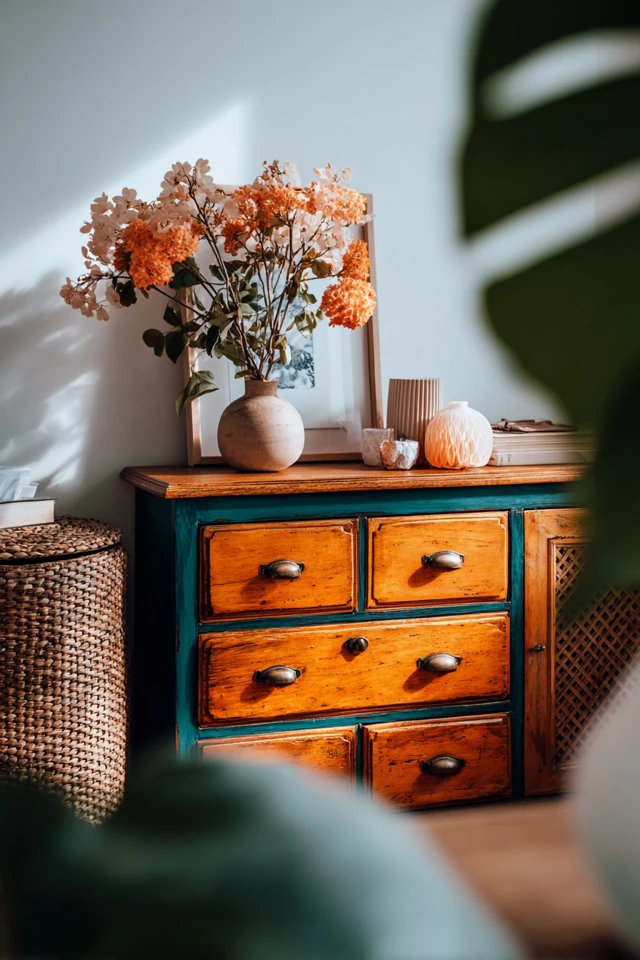
Match the pull size to the drawer face. Oversized handles overwhelm a small front, and tiny knobs disappear on a wide one. As a rule of thumb, a pull about a third to half the width of the drawer looks balanced.
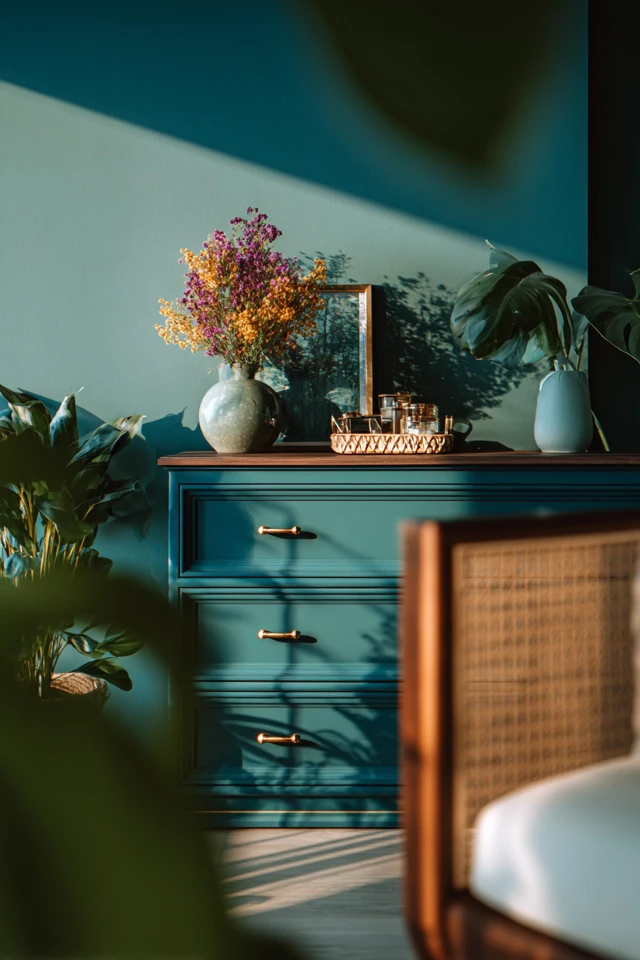
Echo a metal you already have in the room, like the lamp base or a picture frame, so the corner looks connected to everything else. Check the distance between the existing screw holes before you buy, because mismatched spacing means drilling new holes and patching old ones. If the unit is in a home office, the same logic applies to the rest of the furniture; there are more ideas in this home office makeover guide.
Can an accent wall make the drawers look better?
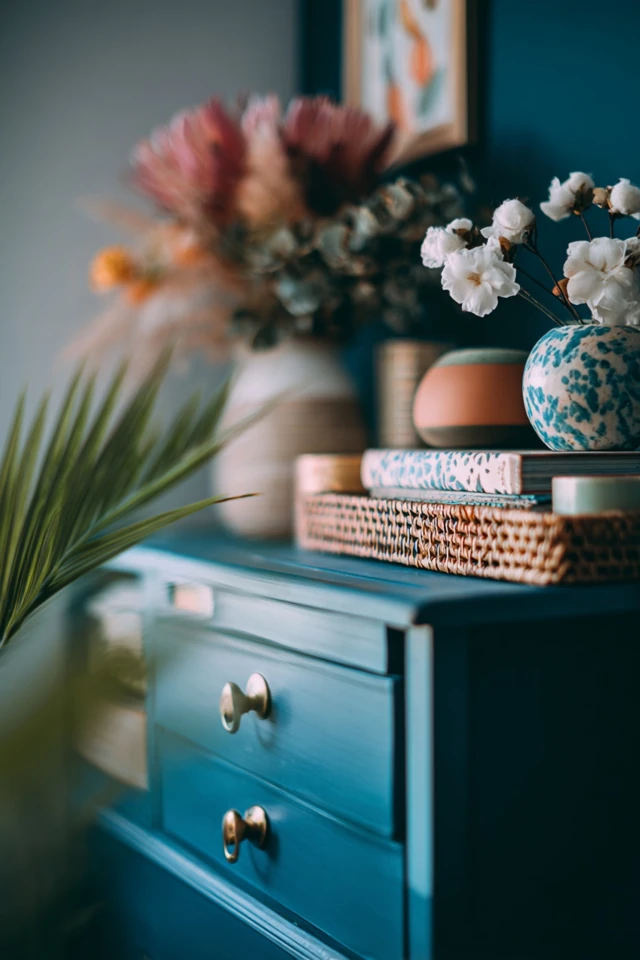
Yes, and it's the easiest way to give a plain corner some presence. A painted wall behind the drawers frames them and makes the unit read as a deliberate vignette. Pick the method that suits your skill level and your lease:
- A diy painted geometric accent wall: a simple arch, block or angled stripe in painter's tape and one contrasting color.
- A paneled accent wall diy: thin wood strips or molding glued to the wall in a grid, then painted the same color as the wall.
- A peel and stick accent wall: removable wallpaper that suits renters, though results depend on how smooth the wall is.
- A faux wallpaper accent wall: a textured or printed panel behind the unit, limited to the corner so the cost stays small.
Keep the pattern quiet if the drawer fronts are bold, and the other way around. One of the two should do the talking. For a color-led, softer approach, the ombre design ideas on this blog work well on a single wall.
How should you organize inside the drawers?
Ask yourself what you reach for most and how often. Put that in the top drawer. Use dividers, small trays and labeled bins so each category has a home, and add a washable liner that wipes clean. Clear containers help you see the contents at a glance.
If the corner is dim, a slim battery or plug-in LED strip under the top edge makes it easier to find things. For wiring beyond a plug-in strip, hire a licensed electrician.
How do you keep the corner feeling finished?
Add a shallow basket or tray on top for the things you grab daily, and keep the surface short on objects. A woven basket, a plant stand or a small lamp adds texture that echoes the drawer finish. If your style leans vintage, the shabby chic ideas have good pull and finish combinations to borrow.
Take before and after photos, and note which changes made the corner easier to use. When you tackle the next room, you'll know what to repeat.
Frequently asked questions
What are some creative ways to accent a wall?
Paint a geometric shape, add a grid of wood molding, or apply removable wallpaper to one wall. For a corner unit, a small accent panel behind the drawers is enough.
What are some cheap DIY accent wall ideas?
Painter's tape with a single can of paint is the lowest-cost option. Thin molding for a paneled look and a single roll of peel and stick wallpaper are also budget-friendly.
What is the rule for accent walls?
Choose one wall that people see first when they enter the room, and make it the only bold surface. Keep the other walls and big furniture quieter so the room stays balanced.
Do I need to sand drawers before painting?
A light sanding helps paint grip, and a bonding primer covers glossy or laminate surfaces. Skipping both often leads to peeling at the edges.
Filed under
ArticlesMeet the author
Written by an architect.
Julio Arco is a passionate architect with years of experience in architecture, interior design, urban design, and housing. He studied at prestigious universities across North America and Europe.

- Name
- Julio Arco
- Job
- Architect and online interior designer
- Studied
- Architecture, ITESM · Urban Design and Housing, McGill
- Partner
- Thor, Australian Shepherd
- Thor’s title
- Head of quality control