Exotic Bedroom Ideas Styling Guide for a Warm, Inviting Home
Zen bedroom ideas that work in real homes: calm colors, minimal furniture, natural textures, smart storage and layout tips, even for small rooms and dogs.

By Julio Arco
Architect and online interior designer
In this post
- How do you make your bedroom zen?
- Declutter and use closed storage
- Which zen bedroom color ideas work best?
- Choose natural materials and textures
- What zen bedroom furniture do you need?
- Small zen bedroom ideas
- What to put in a zen room
- Light, sound and the details that finish the room
- Frequently asked questions
To make a bedroom feel zen, remove what you don't need, keep the colors quiet, let in daylight, and choose natural materials with a bit of texture. A calm room is mostly about what you leave out.
If your bedroom currently doubles as a storage closet and laundry staging area, don't worry. That's very common, and most of the fixes below cost little.
How do you make your bedroom zen?
Start with the order that gives the biggest change for the least money: clear surfaces, simplify the palette, then adjust furniture and lighting. Buying new things comes last.
- Take everything off the floor, nightstands and dresser top. Put back only what you use daily.
- Pick one base color and one or two supporting tones.
- Remove furniture that doesn't serve sleep, dressing or storage.
- Add one natural material and one plant or branch.
- Switch to warm, dimmable light at the bed.
Declutter and use closed storage
Visual noise keeps a room feeling busy even when it's technically clean. Closed storage does more for calm than open shelving, because you don't see the contents. Under-bed drawers, a lidded bench and a dresser with solid fronts all work.
Keep the nightstand to a lamp, one book and a glass of water. Anything else goes in a drawer. If a dog sleeps in your room, give the bed a defined corner and keep the leash and toys in a lidded basket so they don't spread across the floor.
Which zen bedroom color ideas work best?
Soft, low-contrast colors read as restful: warm white, sand, greige, pale clay, muted sage and soft stone. Saturated colors are lively, so keep them to small accents if you use them at all.
Light changes everything. A north-facing room looks cooler and grayer, so lean toward warm whites and sand. A sunny room can handle cooler greens and grays. Test paint samples on two walls and look at them in the morning and at night before committing.
Keep matte finishes on walls. Glossy paint bounces light and shows every flaw, while matte absorbs it and softens shadows, which suits a room meant for winding down.
Choose natural materials and textures
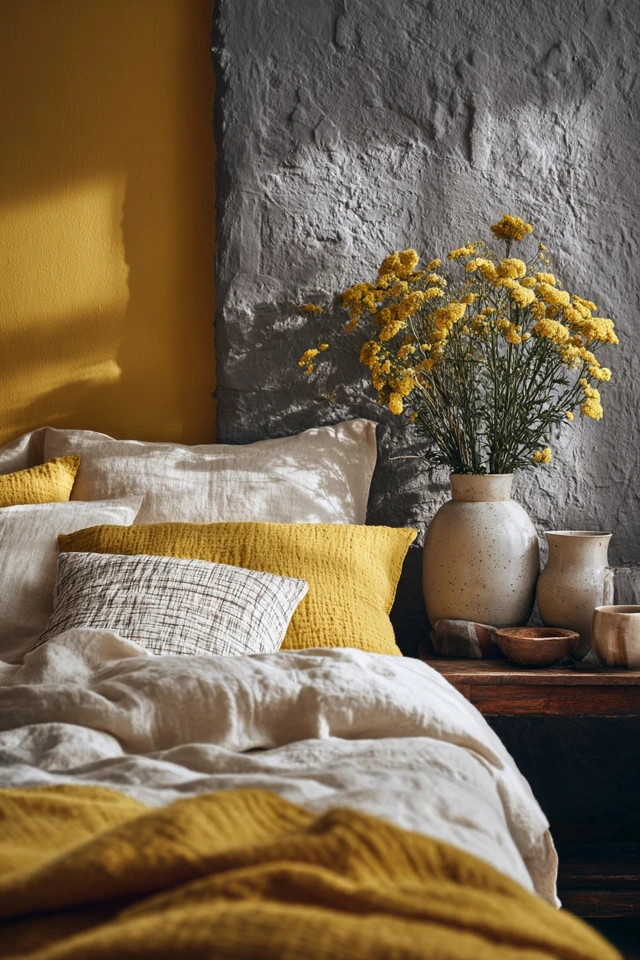
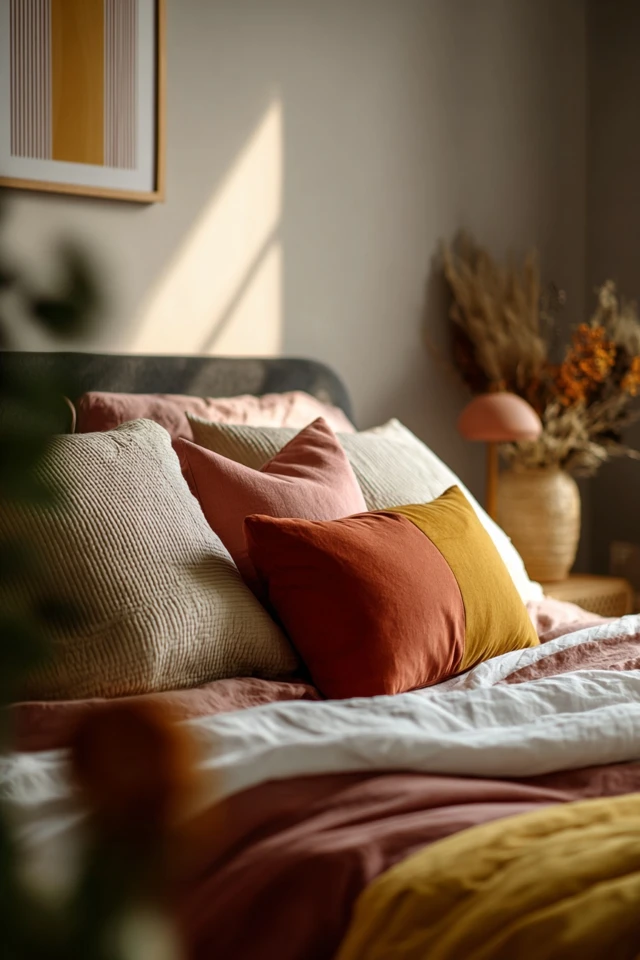
A zen room stays interesting through texture, not pattern. Use linen or cotton bedding, a wool or jute rug, and wood in a light or mid tone. Limewash or matte plaster on a wall adds depth without color.
Keep wood finishes consistent, so the bed, nightstands and a bench look related. For pet households, washable cotton or linen covers and a low-pile wool or flatweave rug are easier to live with than a high-pile shag.
What zen bedroom furniture do you need?
Less than you probably have. A bed, two surfaces beside it, and storage are enough for most rooms. Low platform beds and furniture with visible legs keep sightlines open, which makes a room feel larger.
As an architect, I'd choose a simple headboard or none at all, and spend the savings on better bedding and a good lamp. Leave about 24 inches on each side of the bed for walking, and keep the path from door to bed clear.
Small zen bedroom ideas
In a small room, subtract before you add. A few approaches that help:
- Use a bed with built-in drawers instead of a separate dresser.
- Mount lamps or sconces on the wall to free the nightstand.
- Keep curtains the same color as the wall so the window doesn't cut the room visually.
- Hang a mirror opposite a window to bounce daylight.
- Use a single rug large enough that the bed sits partly on it.
For more on keeping a bedroom pared back, see our simple bedroom design guide, and if you're working with limited square footage overall, the 1 bedroom apartment ideas may help.
What to put in a zen room
Choose a few objects with meaning and give each room to breathe. Good candidates are a plant, a single piece of art, a ceramic bowl, a wool throw and a soft lamp. One plant is enough; a snake plant or pothos is easy to keep, but both can be harmful to pets, so check with your vet before bringing one home if your dog or cat chews leaves.
A pet can add to the calm. Cornell's College of Veterinary Medicine reports that 75% of pet owners say their animals help reduce their stress and provide a sense of purpose. A good dog bed in the corner is a legitimate part of a restful room.
Light, sound and the details that finish the room
Use layered, warm light: a ceiling fixture on a dimmer, a bedside lamp, and nothing harsh. Let daylight in during the day with sheer curtains, and add a heavier layer or blackout lining for sleep.
Soft surfaces absorb sound. A rug, curtains and an upholstered headboard all make a room quieter. If you like a Japanese-inspired look, keep lines low and simple, use wood and paper-like textures, and leave floor and wall space empty on purpose.
On a tight budget, paint, bedding and decluttering do the most. Thrifted wood furniture with a clean finish fits the style well. If you want a deeper dive on color, our tropical bedroom guide shows how a bolder palette behaves, which is useful as a contrast to a quiet scheme.
Frequently asked questions
What are some good things to put in a zen room?
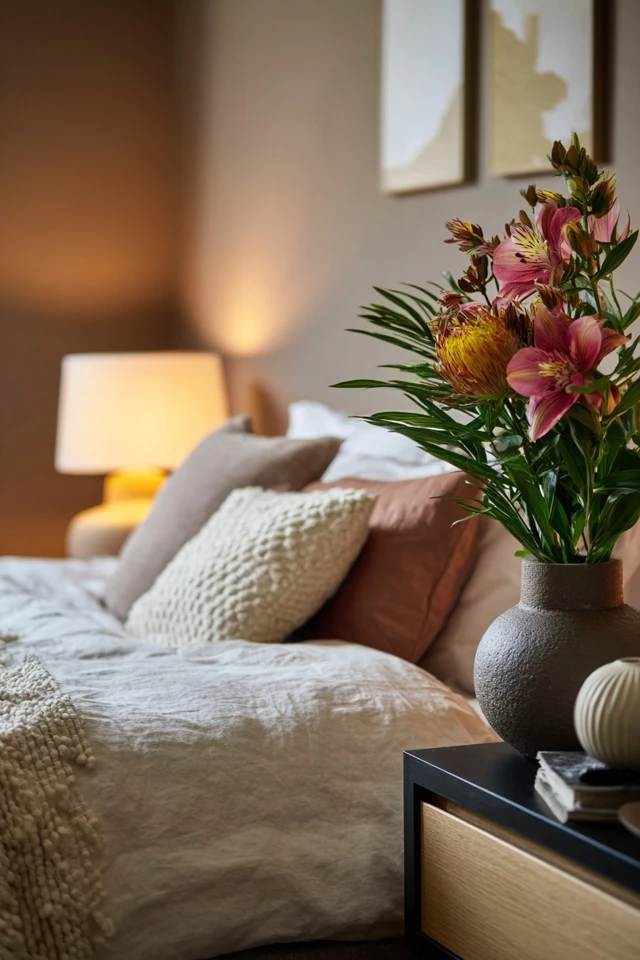
A plant, a soft lamp, a wool or linen throw, one piece of art and a ceramic or wooden object are plenty. Keep surfaces mostly empty.
What are the 7 golden rules for bedroom design?
There is no official list, but common principles are a clear layout, a focal bed, layered lighting, a limited palette, comfortable textiles, enough storage and a clear path to move around.
Can you do a zen bedroom on a budget?
Yes. Declutter, repaint in a soft neutral, swap in plain cotton or linen bedding and use a thrifted wooden piece. Most of the effect comes from removing items.
Filed under
ArticlesMeet the author
Written by an architect.
Julio Arco is a passionate architect with years of experience in architecture, interior design, urban design, and housing. He studied at prestigious universities across North America and Europe.

- Name
- Julio Arco
- Job
- Architect and online interior designer
- Studied
- Architecture, ITESM · Urban Design and Housing, McGill
- Partner
- Thor, Australian Shepherd
- Thor’s title
- Head of quality control