Pool Deck Ideas: Materials, Layouts and Budget Picks
Pool deck ideas for above ground and inground pools: wood, composite, concrete and pavers, plus cheap surround options and safe layouts.

By Julio Arco
Architect and online interior designer
In this post
The best pool deck is one that stays cool underfoot, drains water, grips when wet and fits your budget. For most backyards that means a light-colored composite or textured paver surface for a permanent look, pressure-treated wood or deck tiles if money is tight, and a partial deck if you don't need to cover the whole perimeter.
Below you'll find ideas sorted by pool type, material and budget, plus the layout measurements I'd check before buying a single board.
What are the best options for decking around a pool?
Four materials cover most pools: wood, composite, concrete and pavers. Each trades cost, heat and upkeep differently.
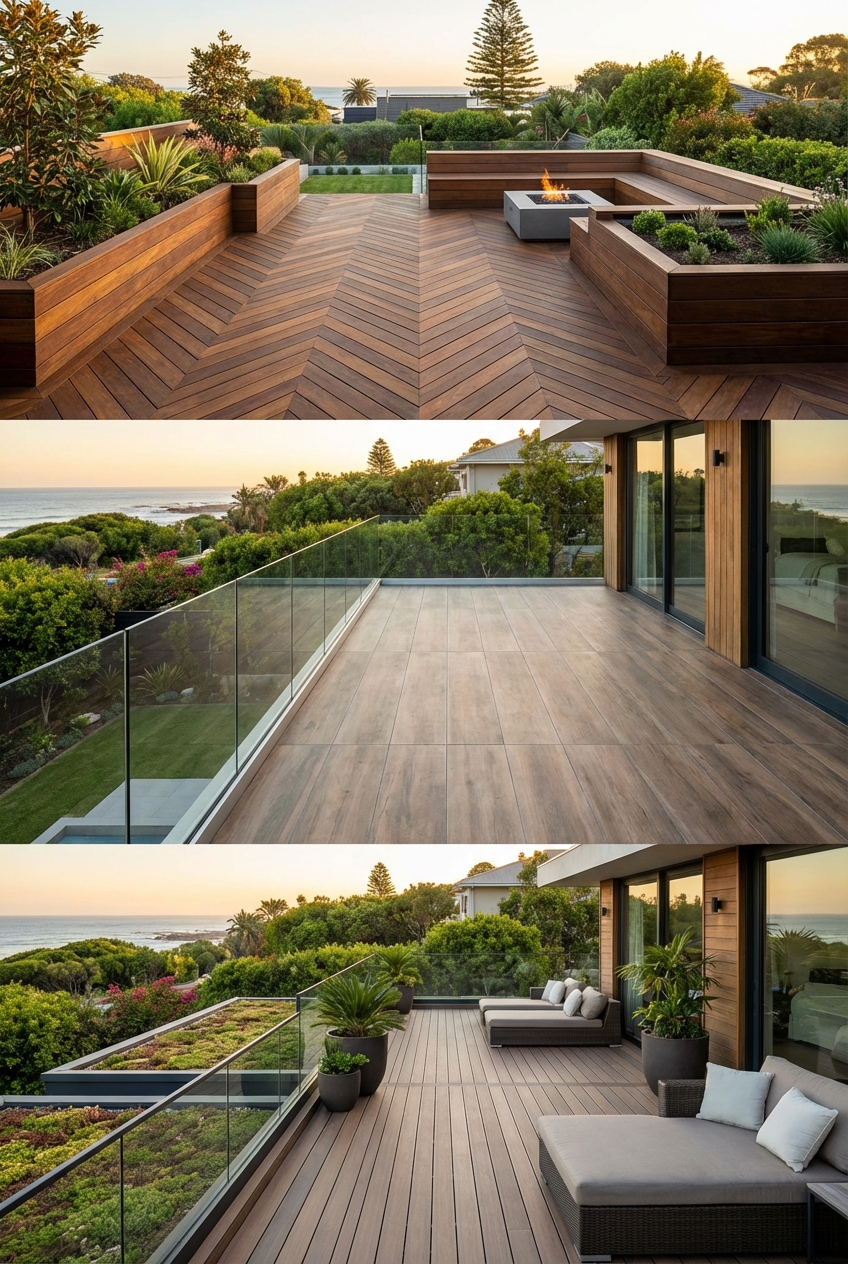
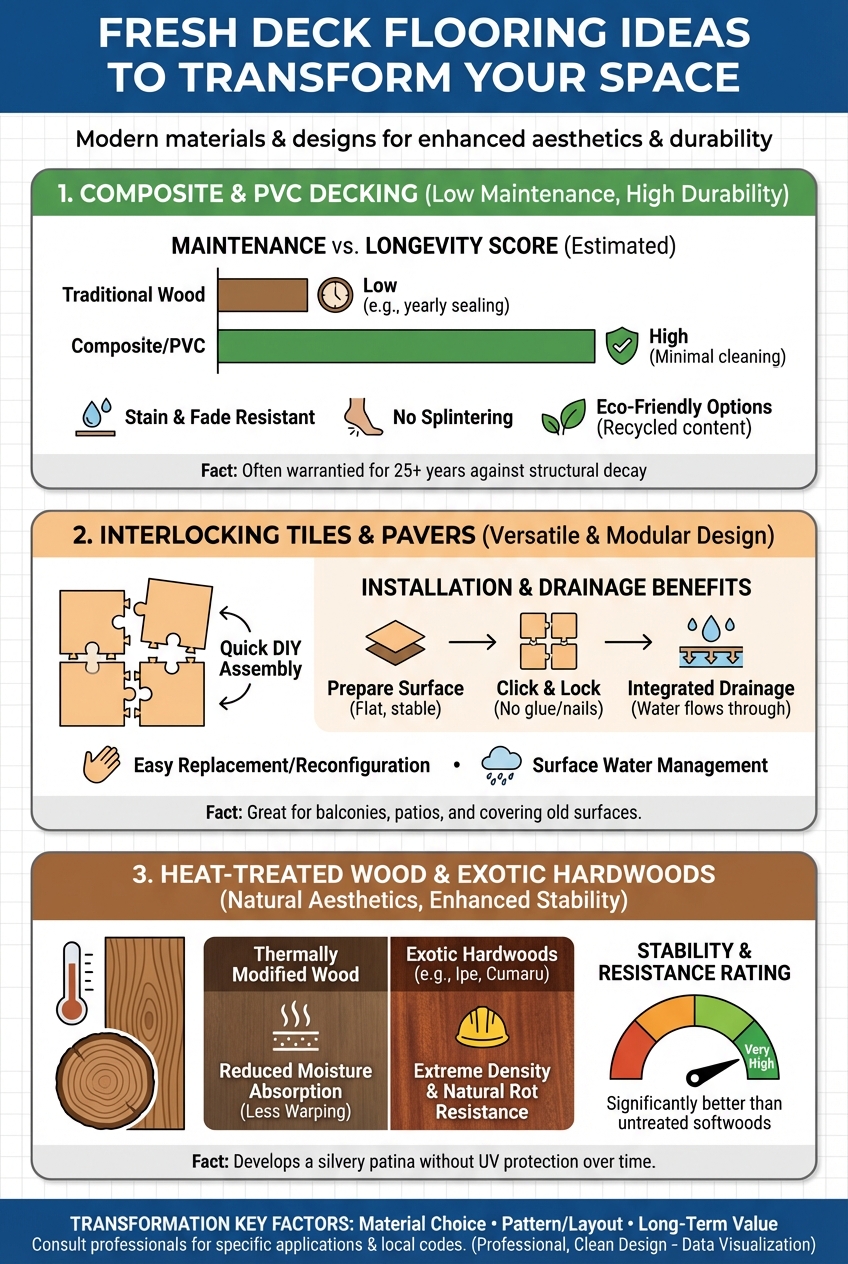
Wooden pool deck ideas
Wooden pool deck ideas start with pressure-treated pine, the cheapest choice, and go up to dense hardwoods like Ipe. Wood looks warm and natural, but it needs sealing or staining on a regular schedule, and splinters are a real concern around bare feet. Cedar sits in the middle: it resists rot well and has a classic look. If you go with wood, sand and seal the surface, and leave small gaps between boards so water can drain.
Composite and PVC decking
Capped composite gives you a wood-like grain without annual staining. Boards expand with heat, so follow the manufacturer's spacing guidance. Dark colors get hot in direct sun. Around a pool I'd choose light tans, sands or light grays, and I'd test a sample board in the sun before ordering.
Concrete pool deck ideas
Concrete is the standard surround for inground pools because it is durable and can be shaped to any outline. A broom finish gives grip when wet. Stamped or stained concrete can imitate stone, and a lighter tone stays more comfortable for bare feet. Concrete cracks over time, so ask your installer about control joints.
Pavers and stone
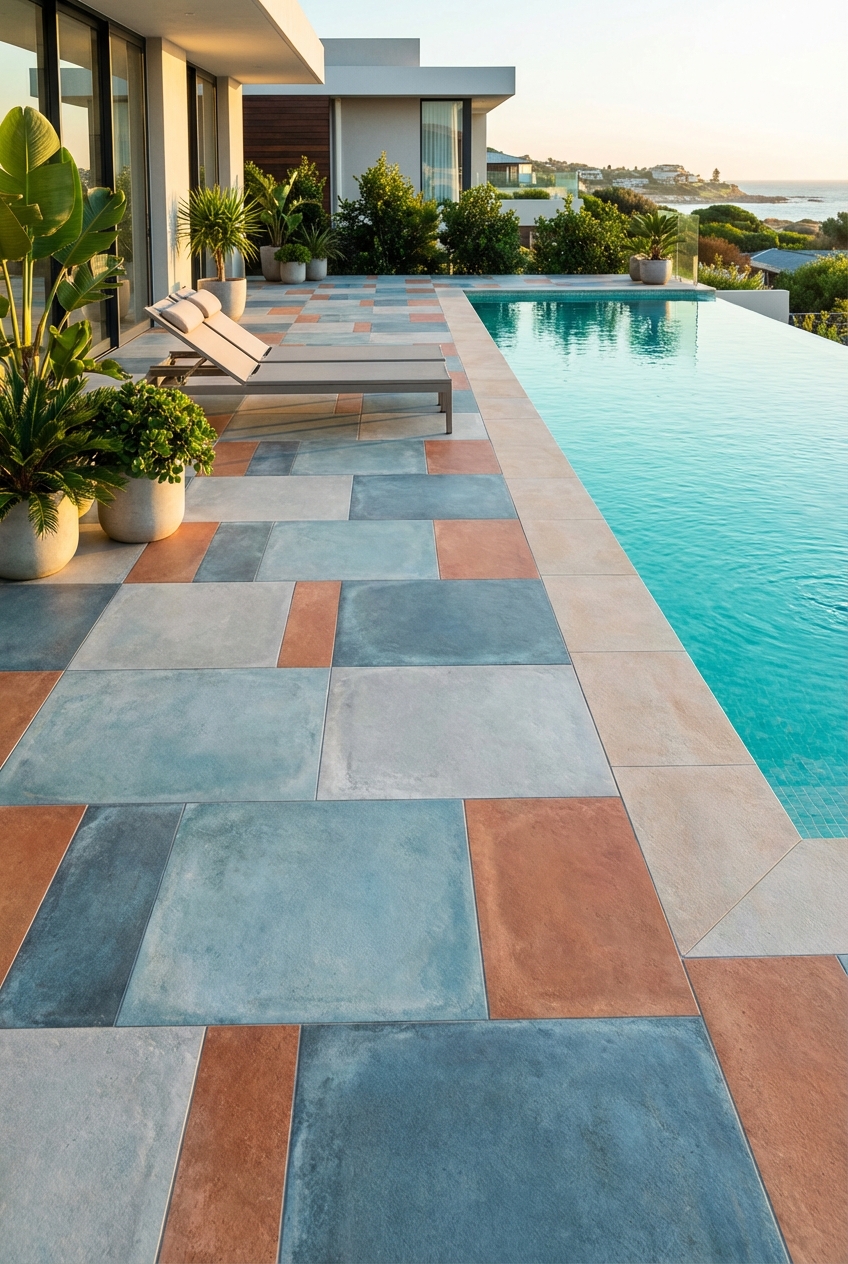
Pavers (concrete, travertine or textured porcelain) are laid in individual pieces, so a damaged one can be replaced without breaking up the whole surround. Choose a textured, slip-resistant finish rather than a polished one, since the surface will be wet most of the time.
Above ground pool deck ideas
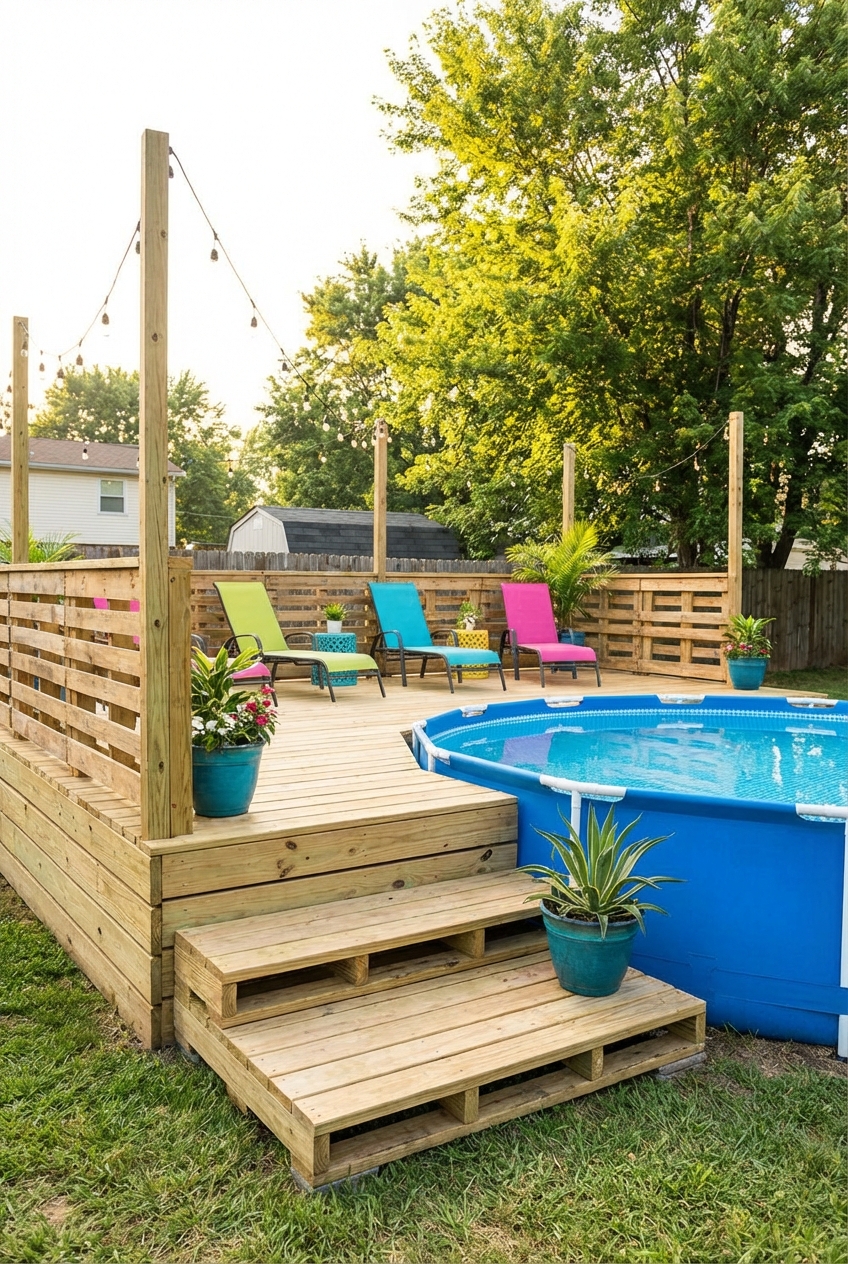
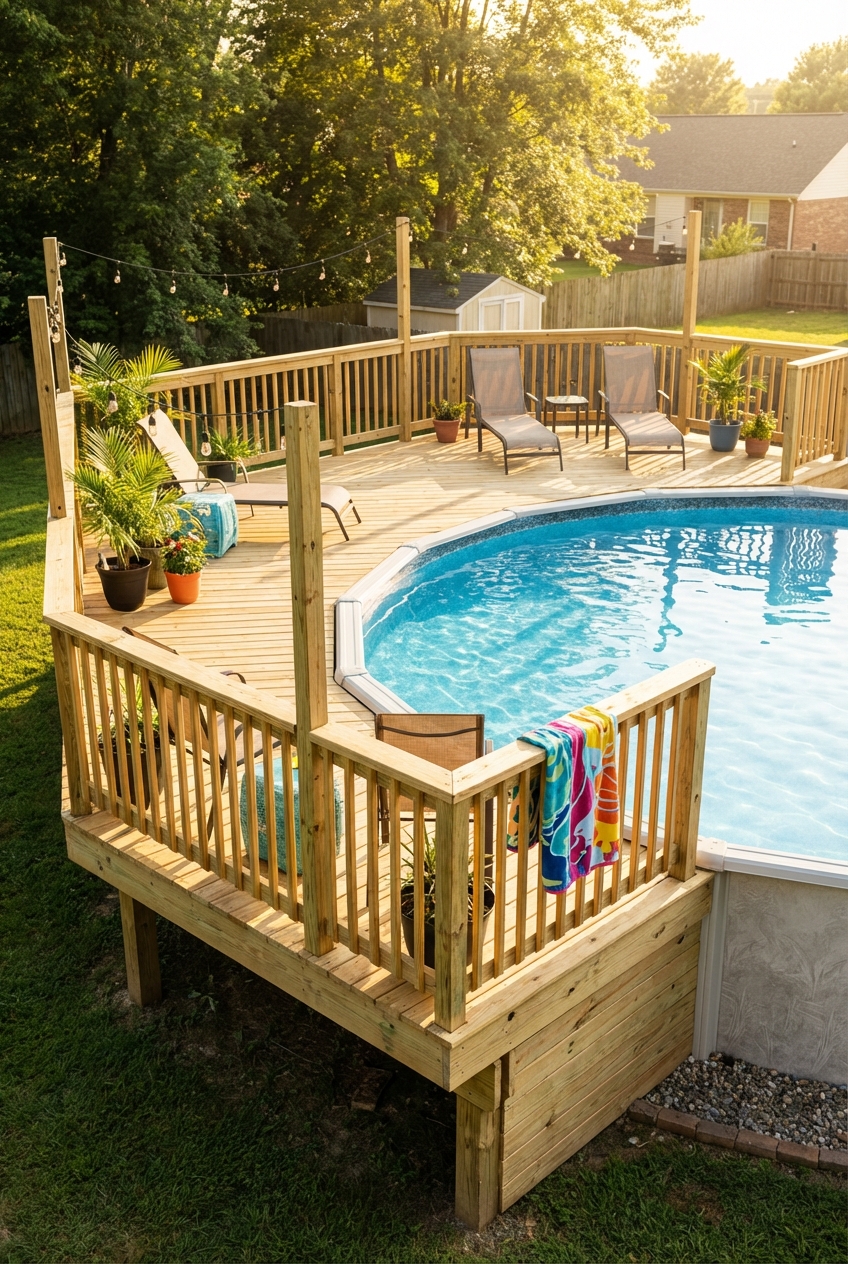
An above ground pool needs a deck that reaches the top rail, so the structure matters more than the surface. The deck must be framed independently of the pool wall, with a gate or lockable access, and railings that meet your local code. Check your local building department before you build, and hire a licensed professional for the structural framing if you're unsure.
Common layouts:
- A side deck along one edge with stairs, which is the cheapest way to get safe entry.
- An L-shaped deck that wraps two sides and leaves room for a lounge area.
- A full wraparound deck that makes the pool feel built in, at the highest cost.
Leave about 12 inches of open space under the joists, or use lattice that lets air through, so moisture doesn't rot the frame from below.
Inground pool deck ideas
With an inground pool, the surround sits at ground level, so drainage is the first job. Slope the surface gently away from the pool and house. Beyond that, think in zones: a clear walking path of about 3 feet, a lounging area, and a dining spot with about 36 inches of clearance around the table so chairs can slide out.
If you have a dog, a wide, non-slip path to the water makes it easier for them to get in and out. Our guide to pet-friendly flooring options covers which surfaces handle claws and wet paws best.
Pool deck ideas for oval pools
Oval and round pools leave awkward curved gaps around a rectangular deck. Two approaches work. A rectangular deck can meet the pool at its widest side, with the curved edges filled by gravel or planting. Or you can follow the curve with pavers or poured concrete for an even border all the way around. For oval pools I'd pick the first if you're on a budget, since straight cuts are cheaper than curved ones.
Pool deck ideas on a budget
Pool deck ideas on a budget usually come down to covering less area and using simpler materials. If you're searching for cheap pool surround ideas, these hold up well:
- Pressure-treated pine, stained a modern tone, is the lowest-cost wood option.
- Interlocking deck tiles can go over an existing slab, which also suits renters.
- Pea gravel or crushed stone around the edge costs little, but it migrates into the water and can be uncomfortable barefoot.
- A partial deck, just a landing by the steps and one lounge platform, instead of a full surround.
- Rubber or outdoor mats in the main walking path.
I'd put the money into the parts that affect safety: grip underfoot, a stable frame and proper drainage. Skip decorative extras first.
What are some creative ideas for pool surrounds?
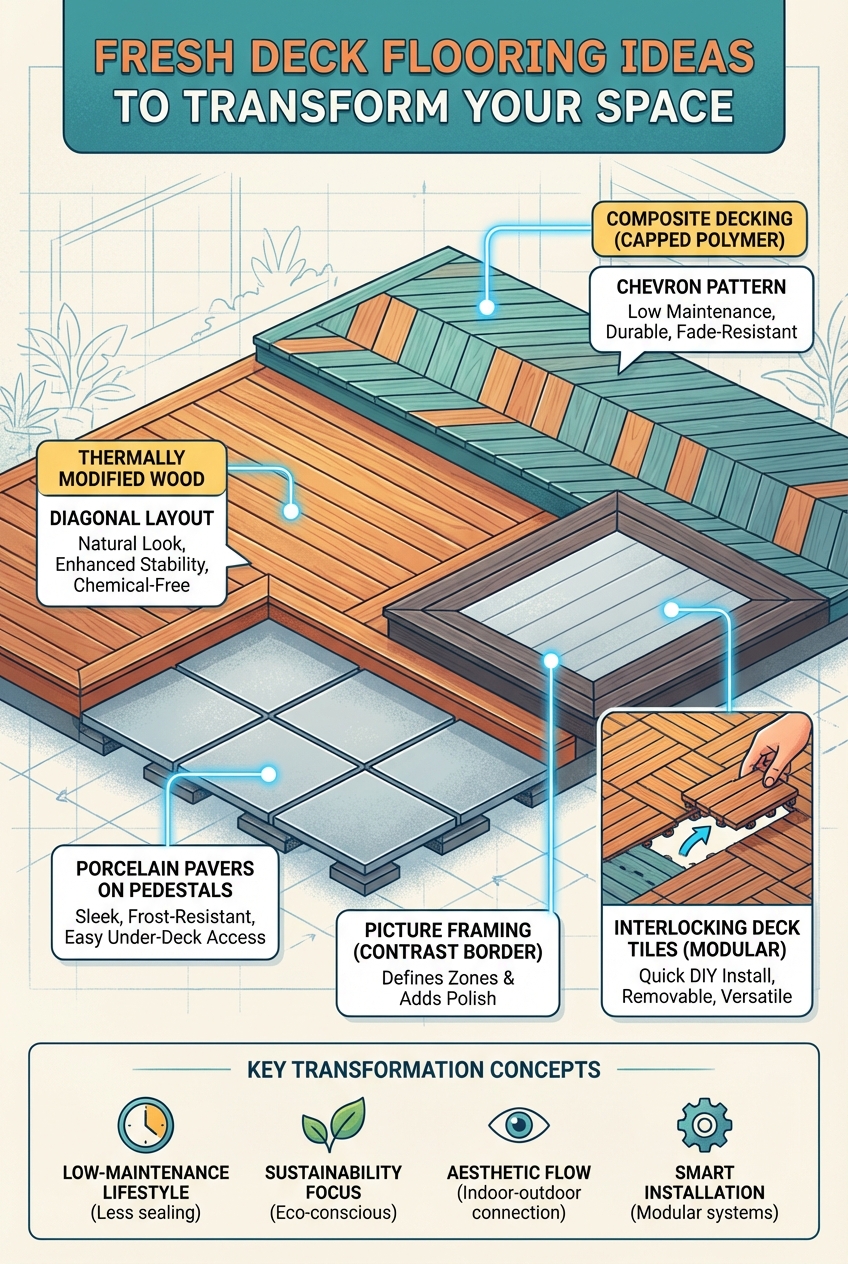
- Mix materials: wood for the lounge area, pavers near the water.
- Add a picture-frame border of boards running perpendicular to the main decking, which hides cut ends.
- Run boards in a different direction to separate a dining zone from the lounge zone.
- Set low-voltage lights into stair risers or the deck edge so the perimeter is visible at night.
- Plant low ground covers or planting beds at the edges. According to Colorado State University Extension, plants that are low-growing (generally less than 24 inches) and spread easily are suitable ground cover plants.
For planting, Penn State Extension advises against plastic or synthetic landscape cloth, which can increase erosion and water runoff. Deb Christopher, a Master Gardener in Westmoreland County, adds in the same source: "If disease or pest problems arise, the entire monoculture planting may be killed. Instead, consider planting drifts or groups of single species, providing a patchwork-quilt effect."
Safety and installation tips
- Choose a textured, slip-resistant finish and avoid polished surfaces near the water.
- Leave a gap of about 1/8 to 1/4 inch between wood boards, and follow the manufacturer's guidance for composite.
- Use stainless steel or triple-coated deck screws. Near salt water, 316-grade stainless is the usual choice.
- Seal cut ends of wood boards before installing them.
- Don't lay new decking over old boards. It traps moisture and adds weight your frame may not be designed for.
- Run a hose over the finished surface to check that water doesn't pool in corners.
If the structure involves railings, stairs or an elevated frame, a licensed contractor and a local permit check are worth it.
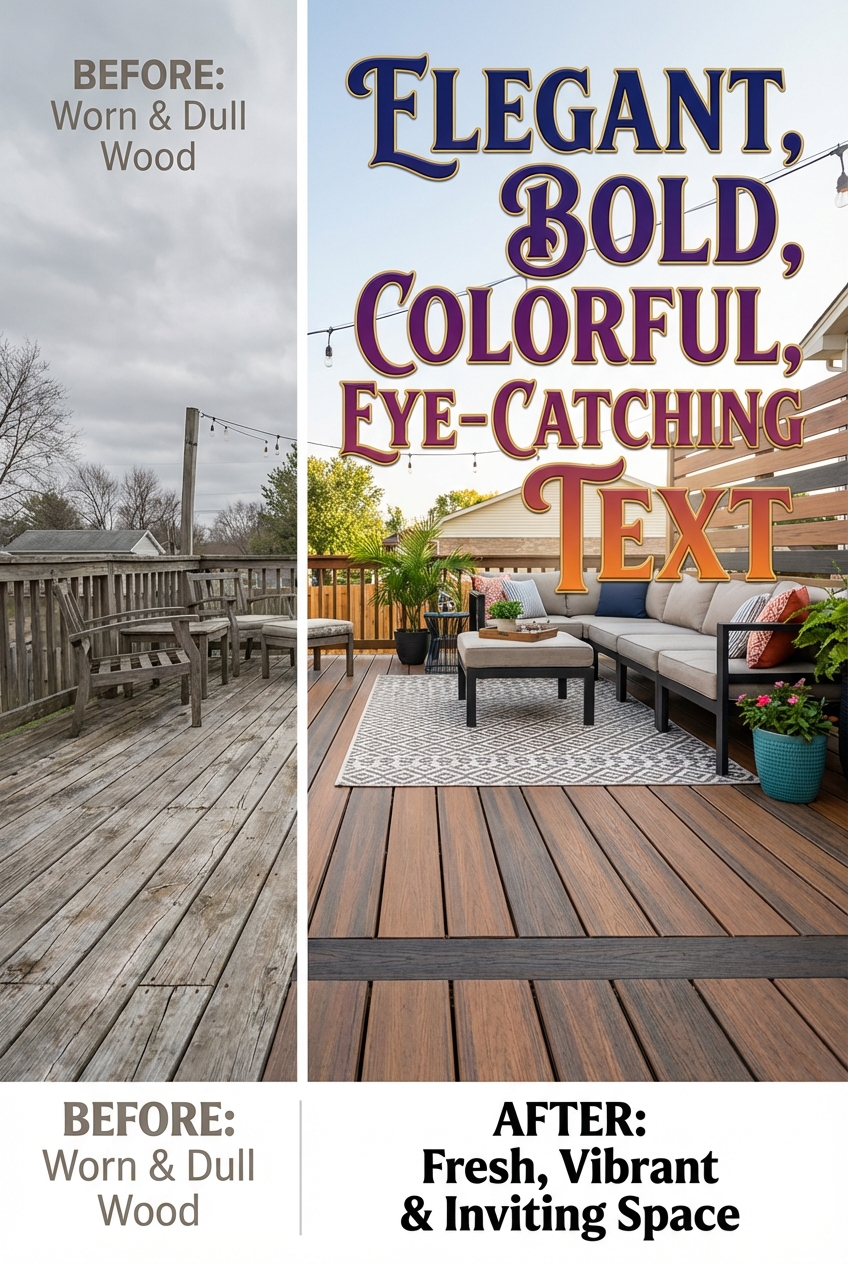
Before you commit to a color, put a sample board or paver in direct afternoon sun and walk on it barefoot. That five-minute test tells you more than any product photo.
Frequently asked questions
What are the cheapest options for pool surrounds?
Pressure-treated pine, interlocking deck tiles over an existing slab, and gravel edging cost the least. A partial deck that covers only the entry and one lounge area also cuts material and labor.
What are some inexpensive ideas for a pool deck?
Stain pressure-treated boards in a modern tone, cover old concrete with deck tiles, and build a small landing instead of a full wraparound. Spend on grip and drainage, not decoration.
Should a pool deck be a light or dark color?
Light tans, sands and light grays stay more comfortable for bare feet in direct sun. Dark colors absorb more heat, so test a sample in the sun first.
Is a partial deck enough for a pool?
Yes, for many backyards. A landing at the steps, a clear walking path and one lounge platform cover most use, and it costs less than a full surround.
Filed under
ArticlesMeet the author
Written by an architect.
Julio Arco is a passionate architect with years of experience in architecture, interior design, urban design, and housing. He studied at prestigious universities across North America and Europe.

- Name
- Julio Arco
- Job
- Architect and online interior designer
- Studied
- Architecture, ITESM · Urban Design and Housing, McGill
- Partner
- Thor, Australian Shepherd
- Thor’s title
- Head of quality control