Pool Deck Ideas: Concrete, Wood and Budget Surrounds
Pool deck ideas for above ground and inground pools: concrete finishes, wood decking, pavers and budget surrounds, plus layout and safety tips.

By Julio Arco
Architect and online interior designer
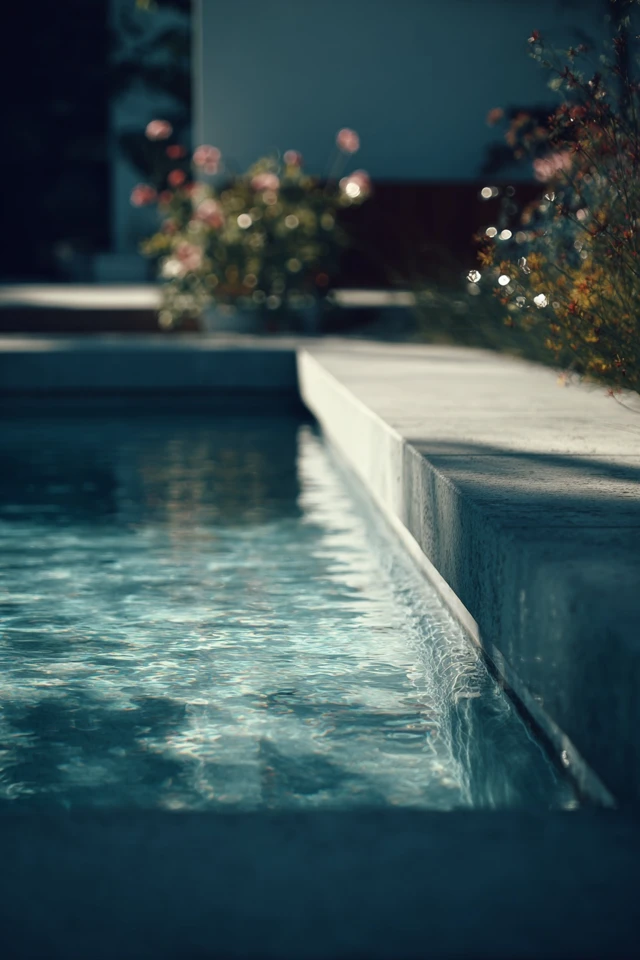
In this post
The simplest good pool deck is a mid-tone, non-slip surface with a clear path around the water, one or two materials repeated, and a few soft layers like plants and cushions. Concrete is the most common choice for inground pools because it is durable and takes many finishes. Wood or composite works well when you want something warmer underfoot.
Below are the options I'd look at first, how each behaves in sun and water, and where you can save money without making the deck unsafe.
Concrete pool deck ideas
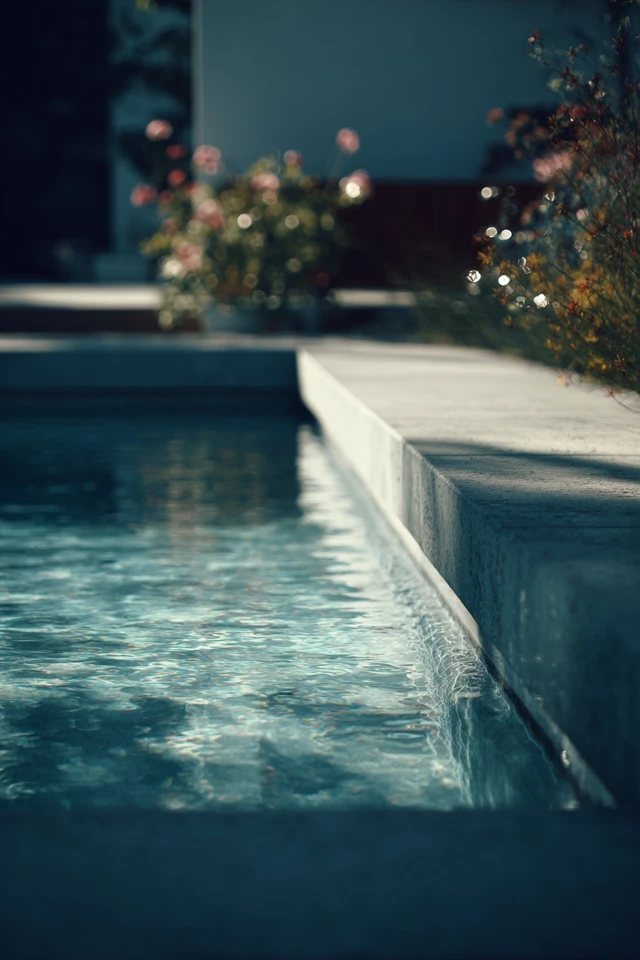
Concrete is flexible because the finish changes the look and the grip. These are the four you'll hear about most:
- Broom finish: a light texture that gives traction. It looks casual and suits most homes.
- Exposed aggregate: small stones show at the surface. It's slip-resistant and fits rustic, Mediterranean or craftsman styles.
- Stamped concrete: imitates pavers or stone. Pattern repetition can look obvious, so the quality of the installer matters.
- Polished concrete: sleek and modern, but slick when wet. Near the water I'd add a non-slip treatment or keep polished areas to dry lounge zones.
Joint lines are a free design tool. A simple grid or a few radial scores guide the eye, mark zones and give the slab somewhere to crack neatly. If your slab is already poured and plain, our plain concrete pool makeover ideas cover cheaper ways to refresh it.
Which color of pool deck is most comfortable?
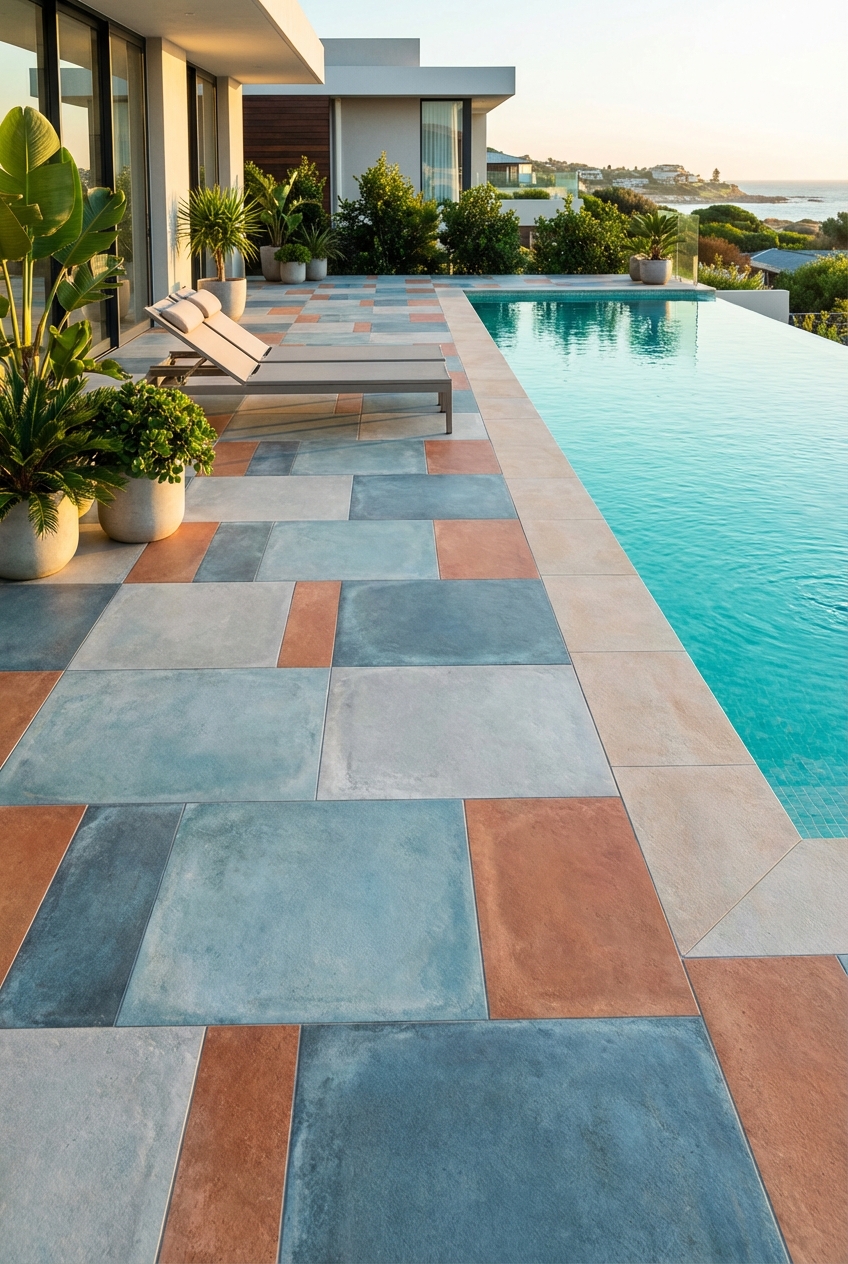
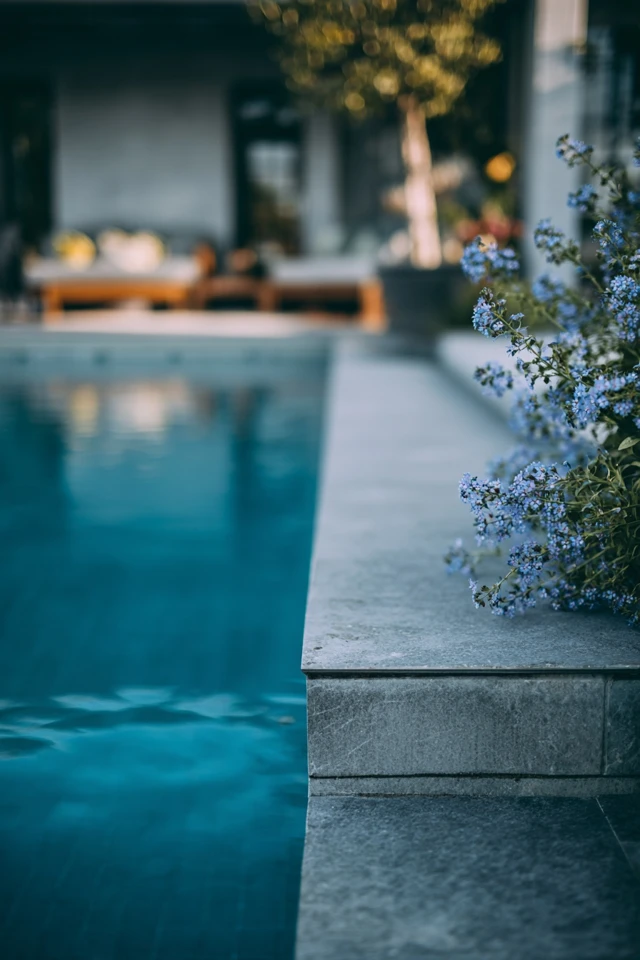
Go for mid-range. Very dark concrete soaks up heat and gets uncomfortable on bare feet, and very pale concrete throws glare back at you. Warm sandy tones feel inviting and hide dirt well. Cool light grays make the water look crisp and suit modern houses.
Test samples outdoors at noon and again in late afternoon, because natural light shifts color a lot. In shaded spots, a slightly warmer tone offsets the cool cast of shadow. Pets matter here too: if a dog uses the deck, check the surface with your hand in full sun before you trust it.
Wooden pool deck ideas
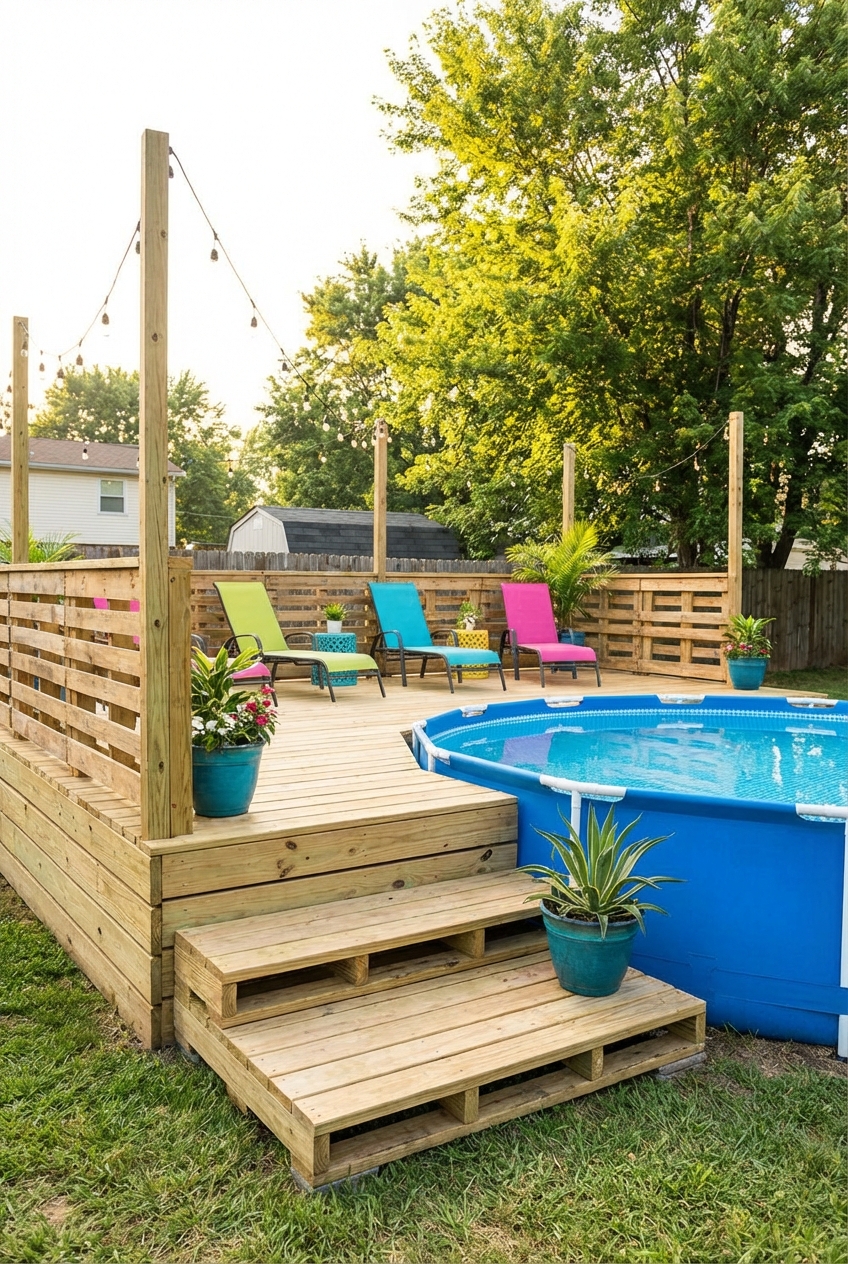
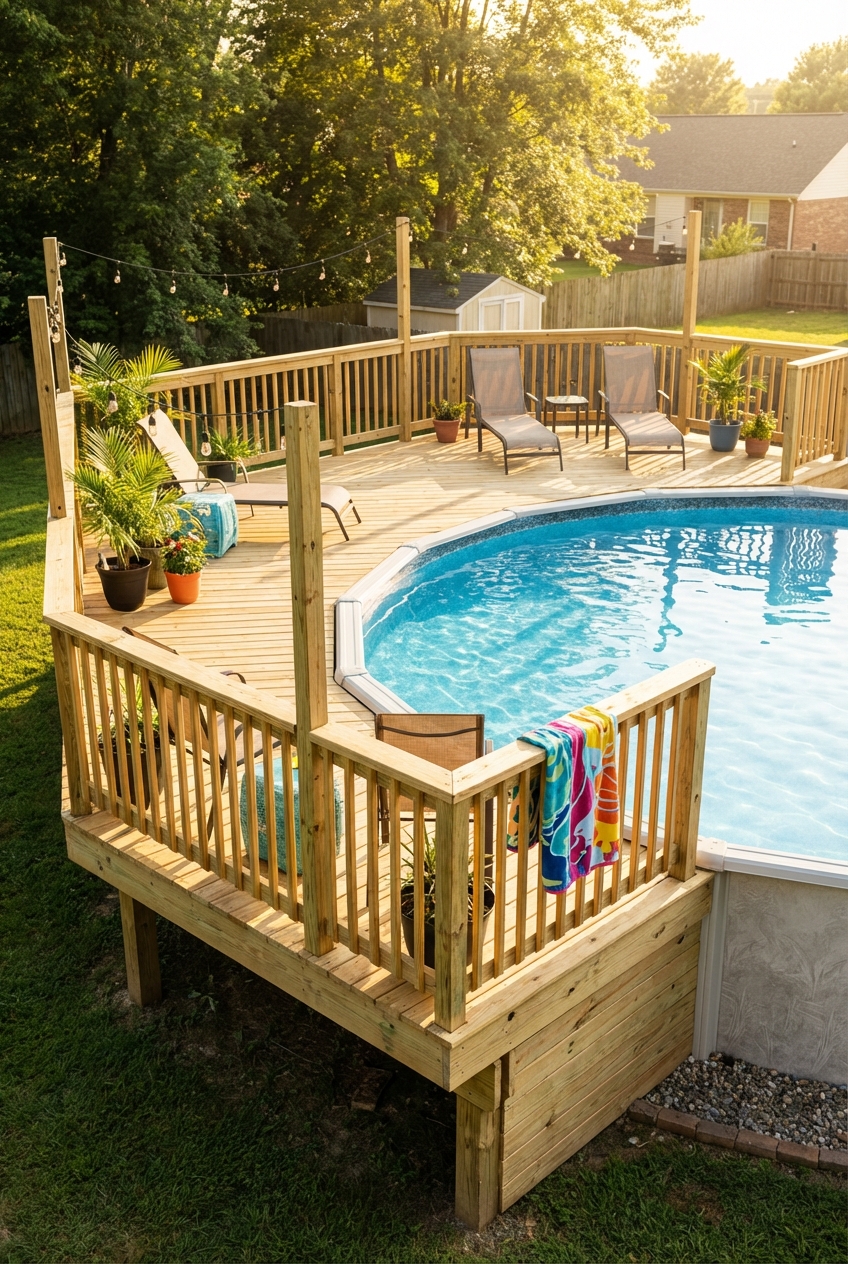
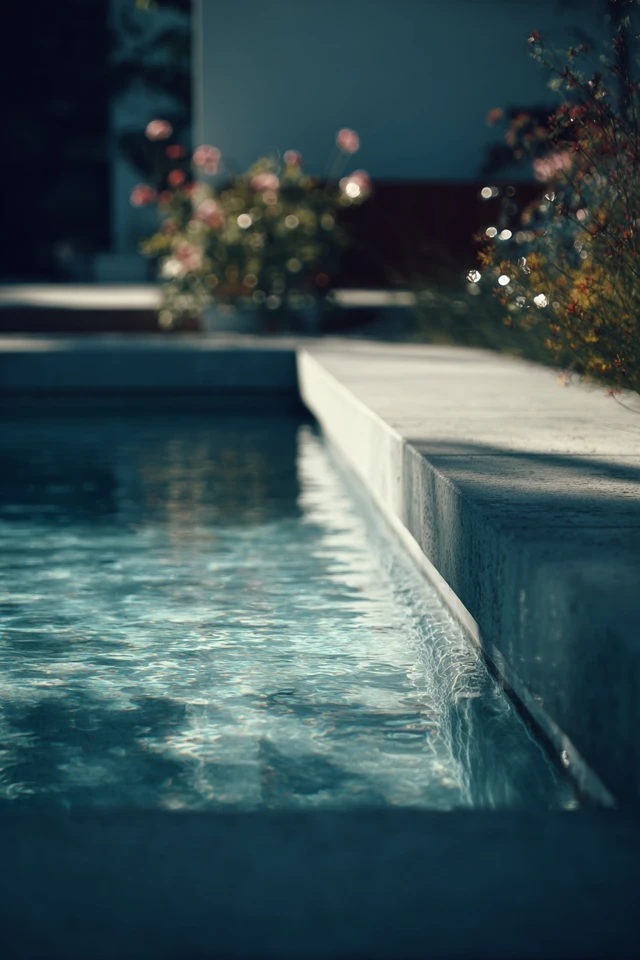
Wood and composite decking soften a hard, bright surface and are the usual pick for above ground pools, where a deck also gives you a way in. A full deck around the pool feels like a resort. A partial deck on one or two sides is cheaper and leaves room for lawn, gravel or planting.
Wood also works as an accent next to concrete: a timber lounge platform on one side of a gray slab adds warmth without paying to deck the whole perimeter. Pick boards with a grooved or textured face, leave gaps for drainage, and have a licensed contractor check the structure and railings for any raised deck, since falls and rotted framing are real hazards.
Pool deck ideas on a budget
If you're after cheap pool surround ideas, start with what is cheapest per square foot and still safe:
- Keep or resurface the existing concrete with a stain or a non-slip coating instead of replacing it.
- Lay pea gravel or crushed stone over compacted base for areas away from the water's edge. Check that it drains well and stays out of the pool.
- Build a small deck only where you need it, such as the entry steps and one lounge area.
- Use outdoor rugs, planters and cushions for color, since they are easy to change later.
Avoid putting plastic landscape cloth under the soil or planting beds around the deck. Penn State Extension does not recommend plastic or synthetic landscape cloth because it can increase erosion and water runoff.
Inground pool deck ideas: layout and flow
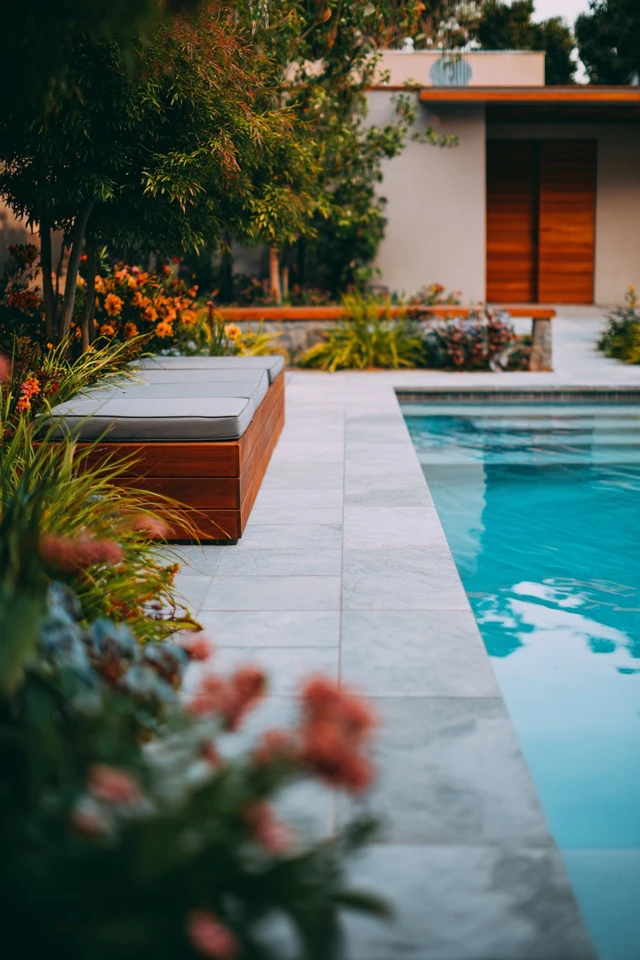
For inground pool deck ideas, think in zones before you pick materials. A wet zone right at the water, a lounging zone, and a dining or shade zone each need a different amount of space. Keep a clear walking path, roughly 36 inches wide or more, so nobody trips over furniture, and keep sightlines open for watching swimmers.
Scale matters. Penn State Extension describes scale as the relative size of the elements in the whole design, which is why tiny bistro chairs look lost on a big deck and a large sectional crowds a small one. A pergola can break up a large deck into smaller groups; see our pergola ideas for shade options.
Pool deck ideas for oval pools and other shapes
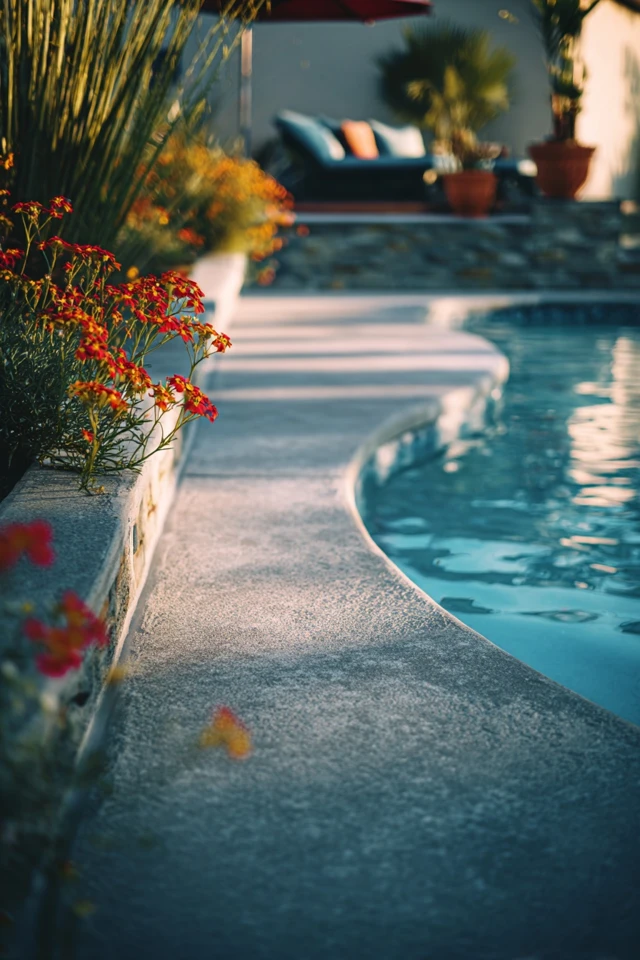
Curved pools look best with edges that echo the curve. For an oval pool, a concrete band that follows the shape, with a wider bulge on one side for seating, avoids narrow leftover corners. On a rectangular pool, straight joint lines running parallel to the water make the space read longer.
Above ground oval pools are usually easiest with a deck on the long side only, where it also serves as the entrance.
Creative pool surround ideas
Planting softens a hardscape. Penn State Extension calls unity the harmonizing quality that ties a design together, so repeat a few plants and materials rather than adding one of everything. Master Gardener Deb Christopher of Westmoreland County puts the planting side well in Penn State Extension's groundcover article:
"If disease or pest problems arise, the entire monoculture planting may be killed. Instead, consider planting drifts or groups of single species, providing a patchwork-quilt effect."
Other ideas that work: layered lighting (path lights, uplights on plants, dimmable fixtures over dining), potted grasses on the deck edge, and a contrasting tile band to mark the transition from lounge area to walkway. Dogs that dig in beds will do better with groundcovers and containers than with fresh mulch.
Safety and installation checks
- Use non-slip finishes in every wet zone and round off sharp edges.
- Slope the deck away from the pool and from the house foundation so water drains.
- Choose a sealer rated for pool chemicals and plan to clean and reseal on a schedule.
- Hire licensed professionals for structural decks, electrical lighting and fencing.
As an architect, I recommend sampling at full size before you commit: pour or lay a small test patch and look at it wet, dry, in sun and in shade.
Frequently asked questions
What are the best options for decking around a pool?
Concrete, pavers and composite or wood decking are the most common. Concrete suits inground pools, while wood or composite is a usual pick for above ground pools and for warmer-feeling lounge areas.
What are the cheapest options for pool surrounds?
Resurfacing existing concrete, using gravel away from the water, and building only a partial deck cost the least. Add color with rugs and planters rather than new paving.
How can I make a small pool area feel larger?
Use lighter, cool-toned finishes and joint lines that run lengthwise. Keep furniture in scale and the walkway clear.
How do I choose between exposed aggregate and polished concrete?
Exposed aggregate grips better when wet and suits rustic or coastal looks. Polished concrete looks sleek but usually needs a non-slip treatment near the water.
Filed under
ArticlesMeet the author
Written by an architect.
Julio Arco is a passionate architect with years of experience in architecture, interior design, urban design, and housing. He studied at prestigious universities across North America and Europe.

- Name
- Julio Arco
- Job
- Architect and online interior designer
- Studied
- Architecture, ITESM · Urban Design and Housing, McGill
- Partner
- Thor, Australian Shepherd
- Thor’s title
- Head of quality control